
All Hallows-by-the-Tower, City of London
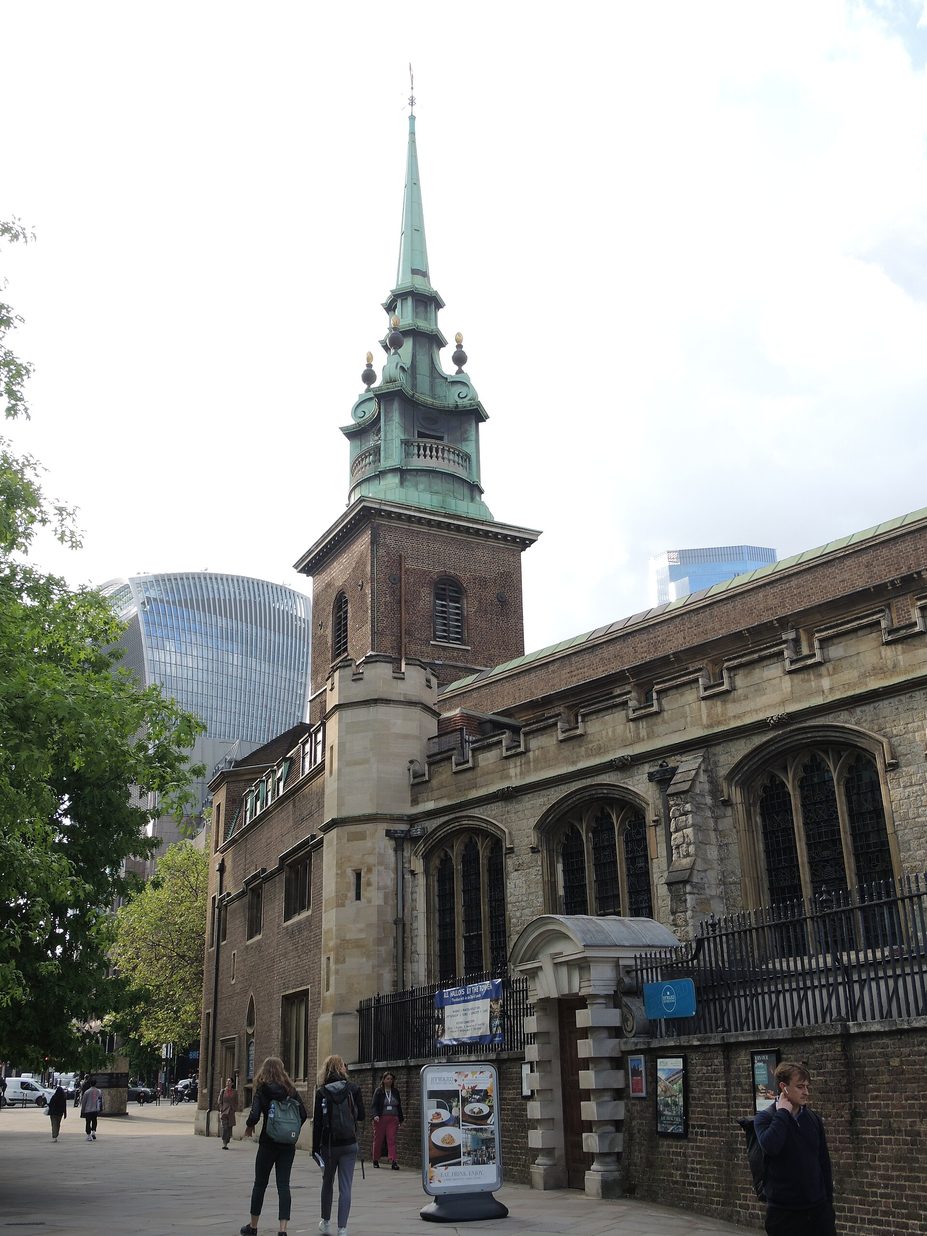
Beside the Tower of London, All Hallows-by-the-Tower claims to be the oldest church in the City. Behind its brick tower and copper spire are a Saxon arch built with Roman tiles, a Roman floor in the crypt, a font cover by Grinling Gibbons, and a church rebuilt after the Blitz.
Seeing more than one church? All Hallows is the last stop of our City of London church walk, a route on foot of about 5 km from St Clement Danes on the Strand to All Hallows by the Tower, linking seven churches, with maps, timings and the sights in between.
A church on Tower Hill for well over a thousand years
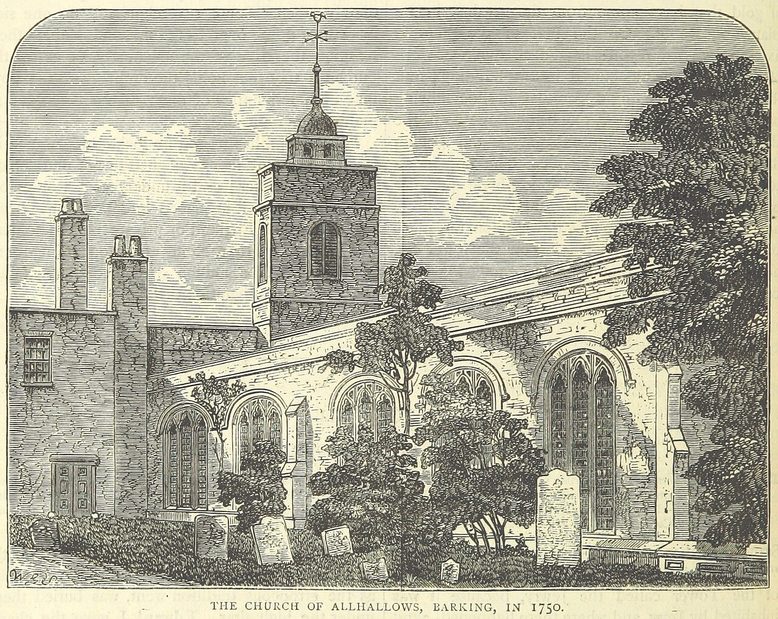
The church says it was founded by the Abbey of Barking in 675, about four hundred years before the Tower of London, and for centuries it was known as All Hallows Barking. The evidence for that date is slight, but Domesday Book in 1086 records Barking Abbey holding “28 houses and half a church” in London, usually taken to be this one. All Hallows claims to be the oldest church in the City of London, and its round-headed Saxon arch, built partly of reused Roman tiles, is believed to be the oldest surviving arch in the City.
Executions, fire and a wedding
Standing so close to Tower Hill, the church received the bodies of people beheaded there for temporary burial. Bishop John Fisher and the Earl of Surrey were buried here and later moved, and Archbishop William Laud, executed in 1645, lay here for about twenty years. William Penn, the founder of Pennsylvania, was baptised here in 1644. A gunpowder explosion nearby in 1649 or 1650 (accounts differ) badly damaged the church, and the brick tower was rebuilt in 1658–59.
In the Great Fire of 1666 Samuel Pepys climbed this tower to watch the City burn. The church survived, and it credits Admiral Sir William Penn, whose men made firebreaks. In 1797 John Quincy Adams, later President of the United States, married Louisa Catherine Johnson here.
Toc H, the Blitz and the rebuild
From 1922 to 1962 the vicar was “Tubby” Clayton, founder of the Toc H movement, and All Hallows became its guild church. In the 1920s the medieval crypt chapel was rediscovered and a Roman floor was found beneath the church. In 1940 a bomb gutted the building, leaving the tower and walls; the blast also fully revealed the Saxon arch. The architects Seely & Paget rebuilt the church in concrete, with a new roof and steeple, and it was rededicated in 1957. It is listed Grade I.
The visitor’s cheat sheet
| Where | Byward Street, London EC3R 5BJ, beside the Tower of London |
|---|---|
| Opening hours | Monday–Friday 8am–5pm; Saturday 10am–5pm; Sunday 12.30pm–5pm. Closed on Bank Holidays; times may vary with staff availability, and other listings differ, so check before you go |
| Admission | Free, with donations welcome (the church’s pages give no price; check before you go) |
| Services | Parish Eucharist Sunday 11am; weekday services Tuesday–Friday 8.30am; Taizé Prayer Wednesday 6pm |
| Tours | Volunteer guides in the church most weekdays 10.30am–1.30pm and 2–4pm, on demand; pre-booked group tours £5 a head; free audio tour on the izi.travel app |
| Concerts | Lunchtime organ recitals are advertised for Thursdays, 1.10–2pm, but the church does not confirm them; check with the church |
| Access | Level access to the main church, shop and café; the crypt is down a narrow staircase |
| Toilets | Not listed by the church; other listings mention accessible toilets nearby, so check at the desk |
| How long | An hour, more with a guided tour |
Hours and admission checked against the official site in November 2026. They change; the official site is always the last word.
What to see
Outside: tower and porch
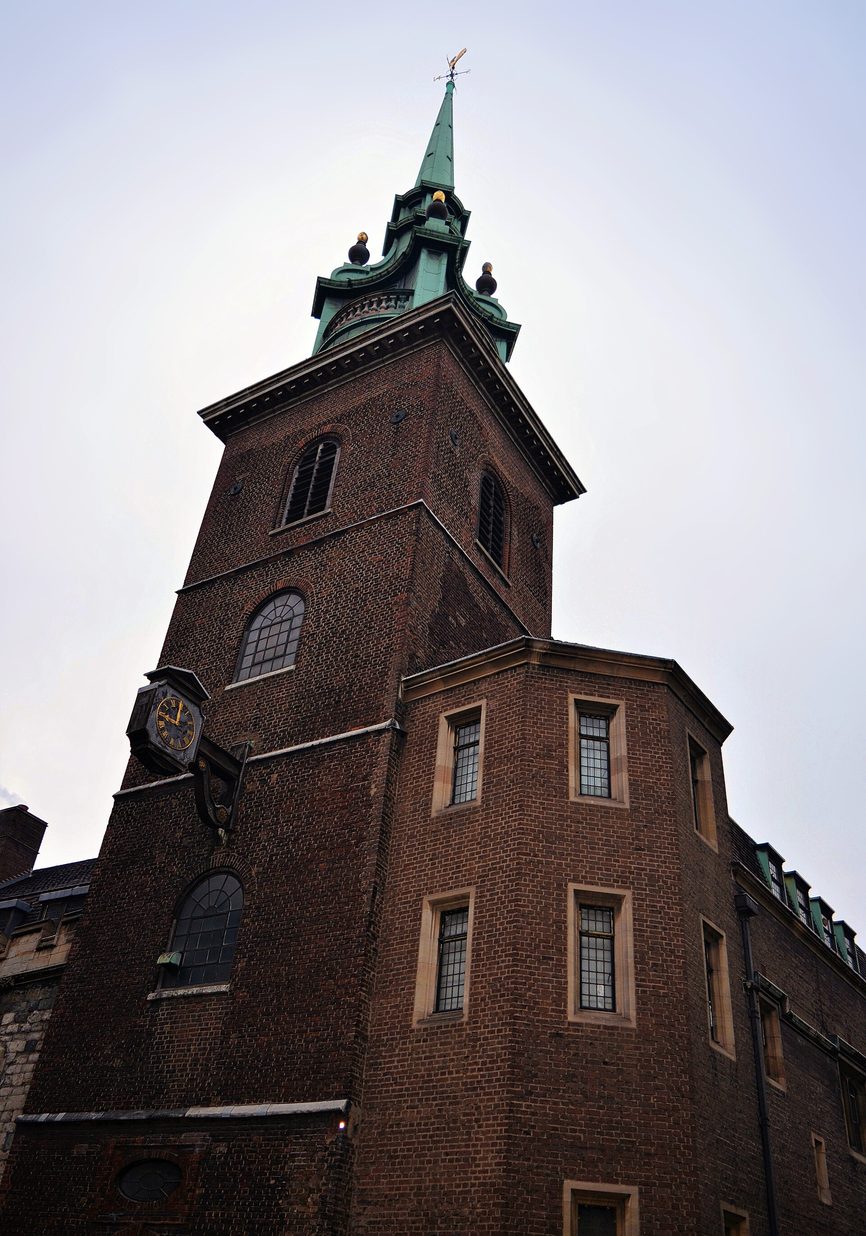
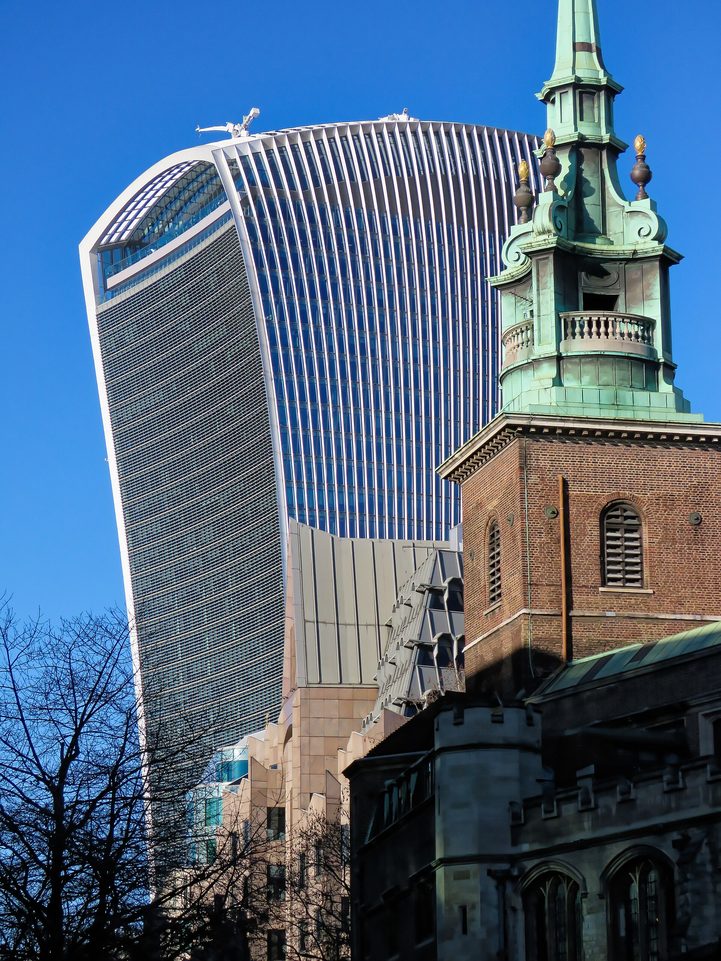
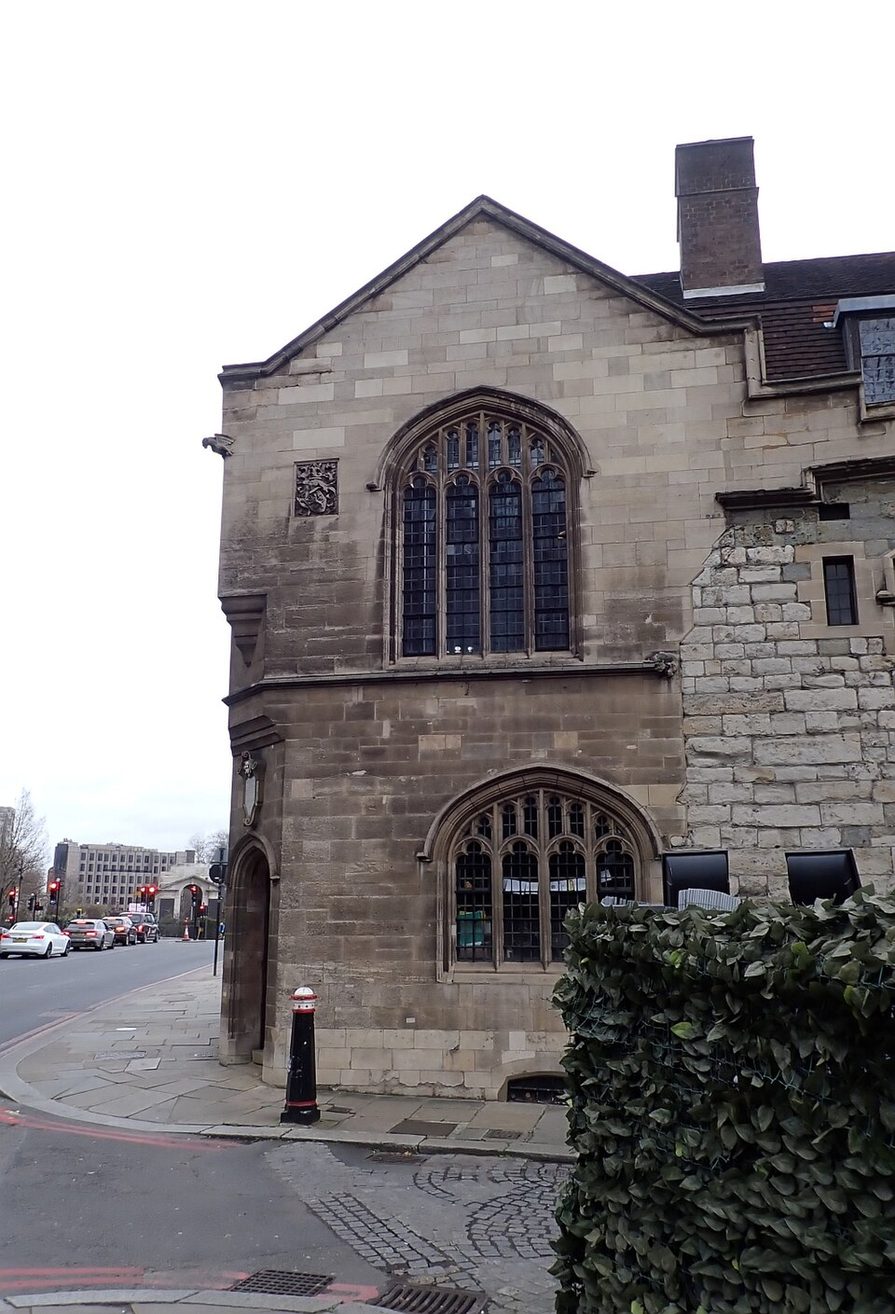
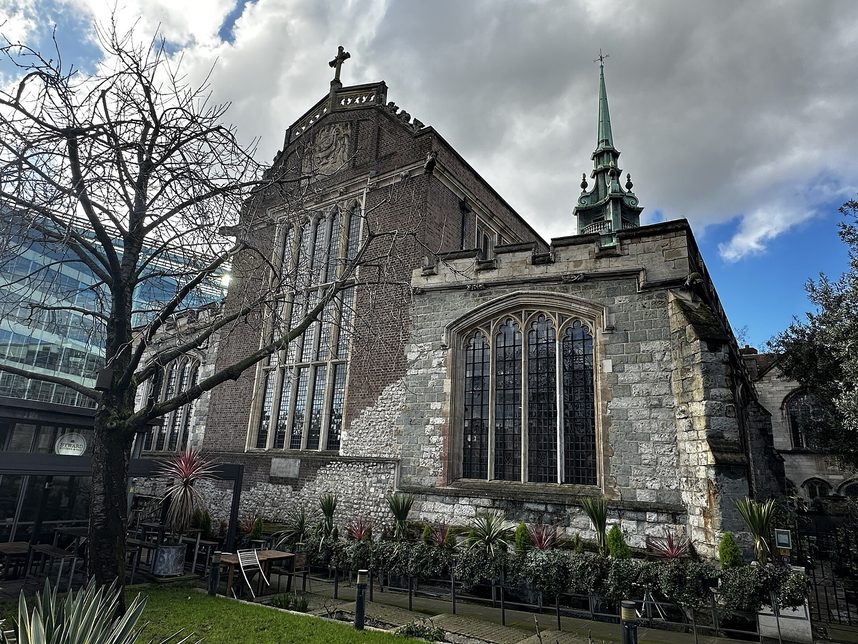
Start outside. The brick tower of 1658–59, with its Portland stone balustrade and green copper spire, is the part Pepys climbed. On the north side is a red-brick Gothic porch and vestry of the late nineteenth or early twentieth century, and at the west end an arched doorway made with Roman brick.
The Saxon arch
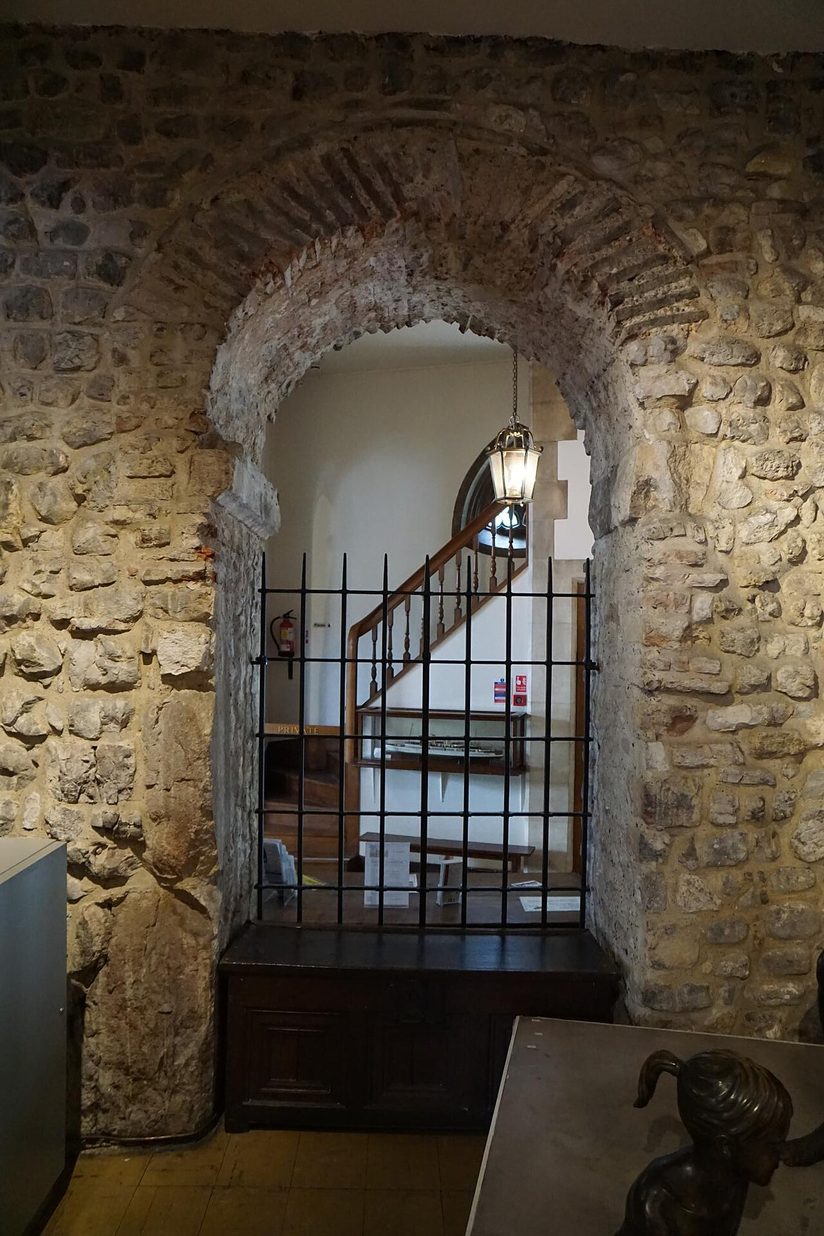
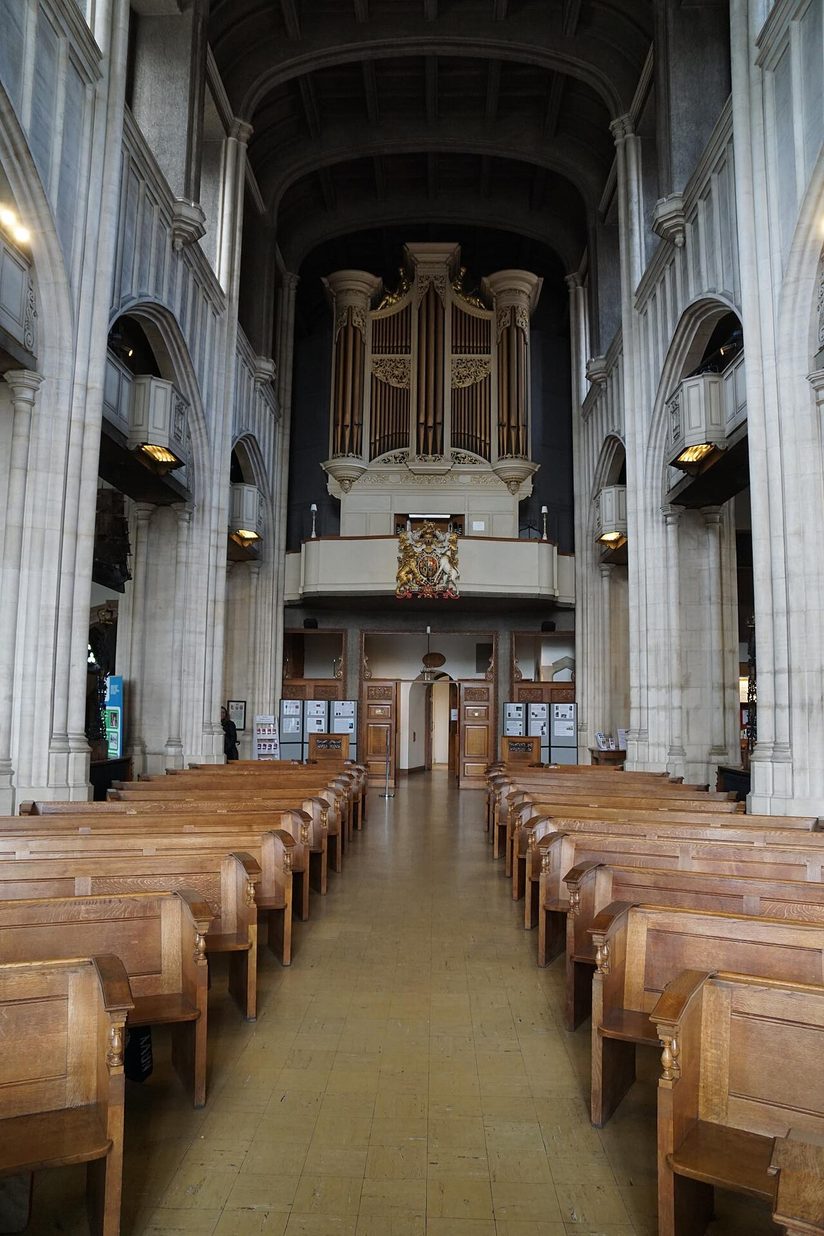
Inside, at the west end of the nave, is the Saxon arch: rough stone and reused Roman tiles, with no keystone. The church traditionally dates it to the later seventh century, though it could belong to any time before the Normans. The bomb of 1940 blew down the wall covering it and revealed its full extent.
The font and its cover
The limewood font cover is by Grinling Gibbons, made in 1682 and paid for by a Mr James Foyle; Gibbons received £12. The font beneath is of Gibraltar limestone, shaped by a Sicilian prisoner of war named Tulipani, and is a memorial to the Royal Engineers’ tunnellers. There is more fine carved woodwork around the church.
The nave and pulpit
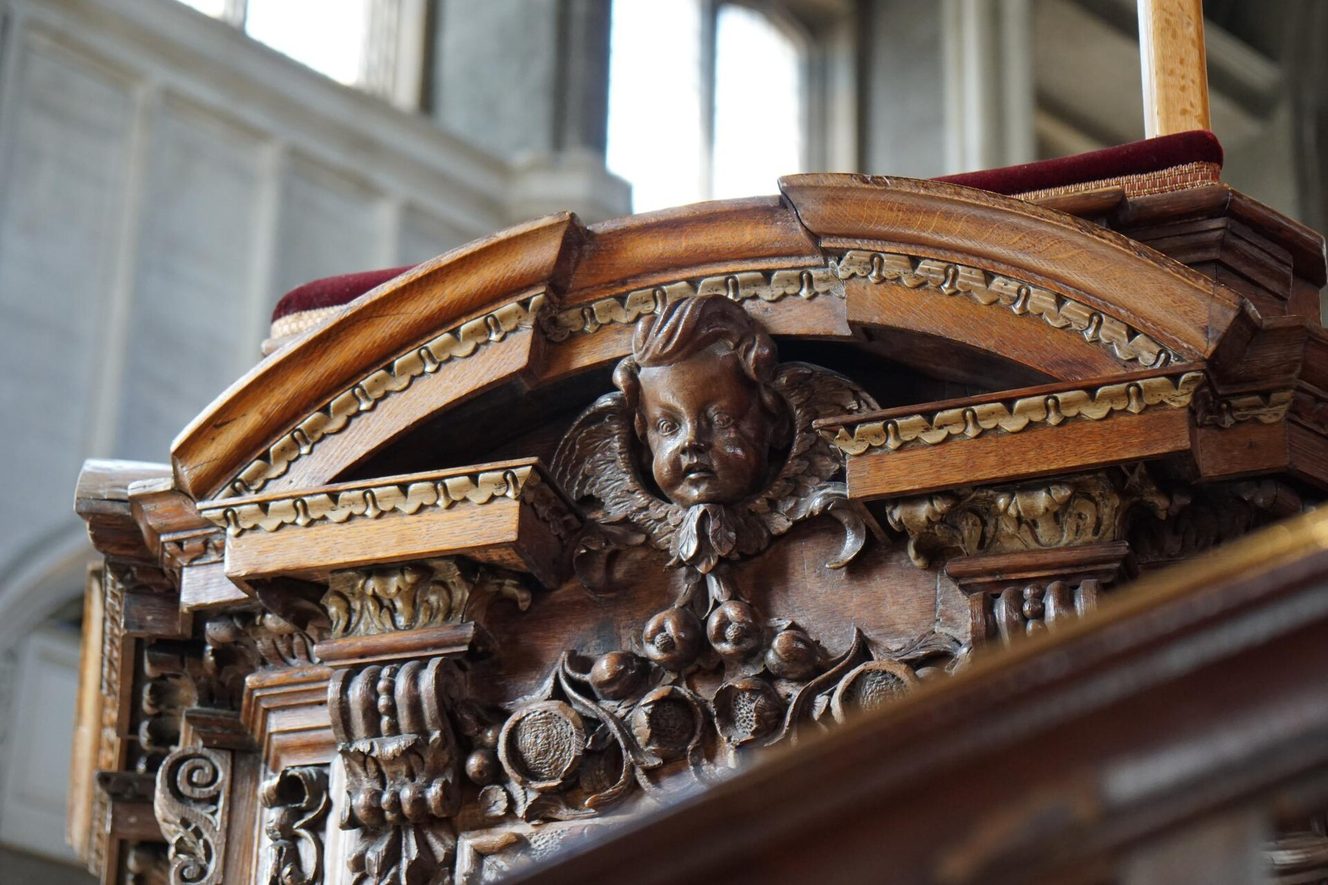
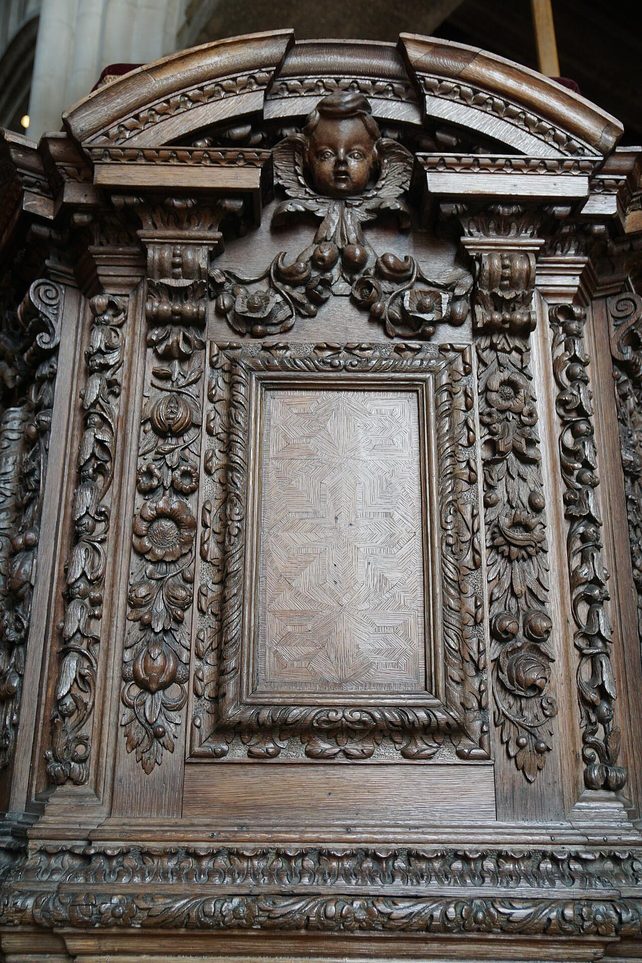
Walk east up the nave. The pulpit, of about 1670, is carved in the manner of Gibbons, though not by him; it came from St Swithin, London Stone, a church lost in the bombing, and its tester bears three pilgrim shells. In the nave lies a bronze effigy of Tubby Clayton by Cecil Thomas, one of the sculptor’s last works, with a dog on a cushion at his feet.
Monuments and brasses
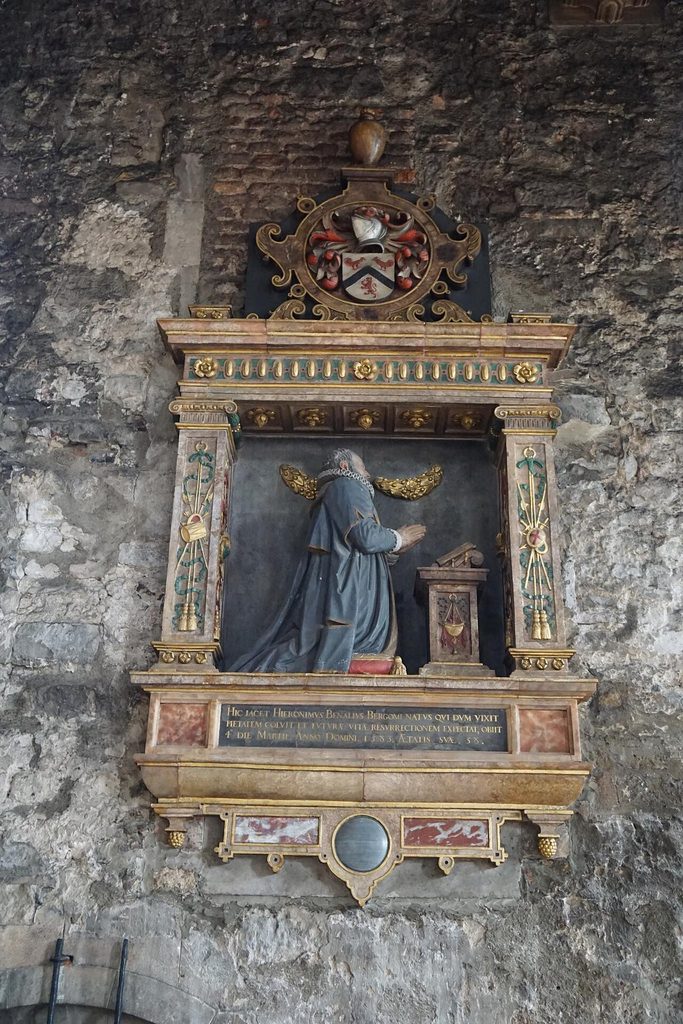
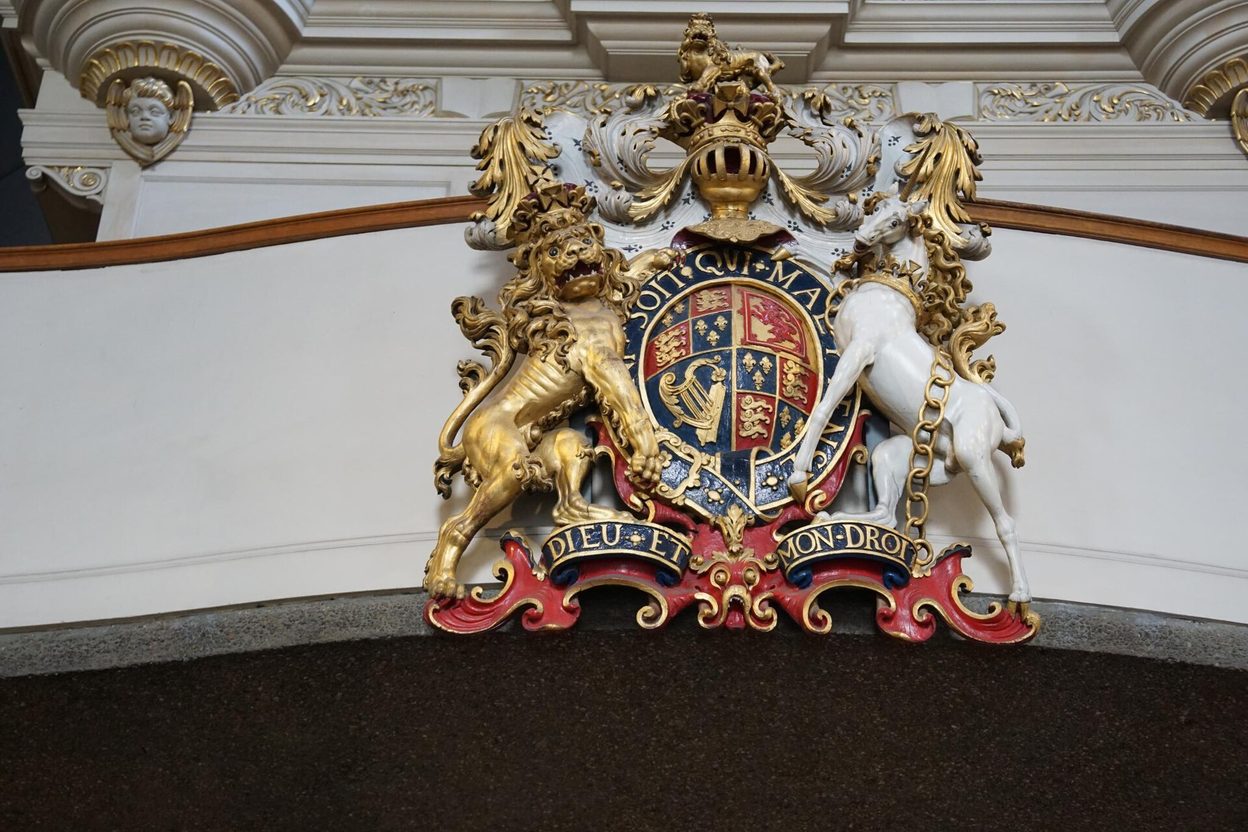
In the north aisle is the monument to Hieronimus Benalius, an Italian from Bergamo who lived in Seething Lane and died in 1583. Near the sanctuary are two Tudor brasses: the Resurrection Brass of about 1500, the only survivor of a set of five, and the brass of Andrew Evyngar, a salter who died in 1533, shown with his wife and children. Look out too for the carved royal arms.
The Mariners’ Chapel and the Lady Chapel
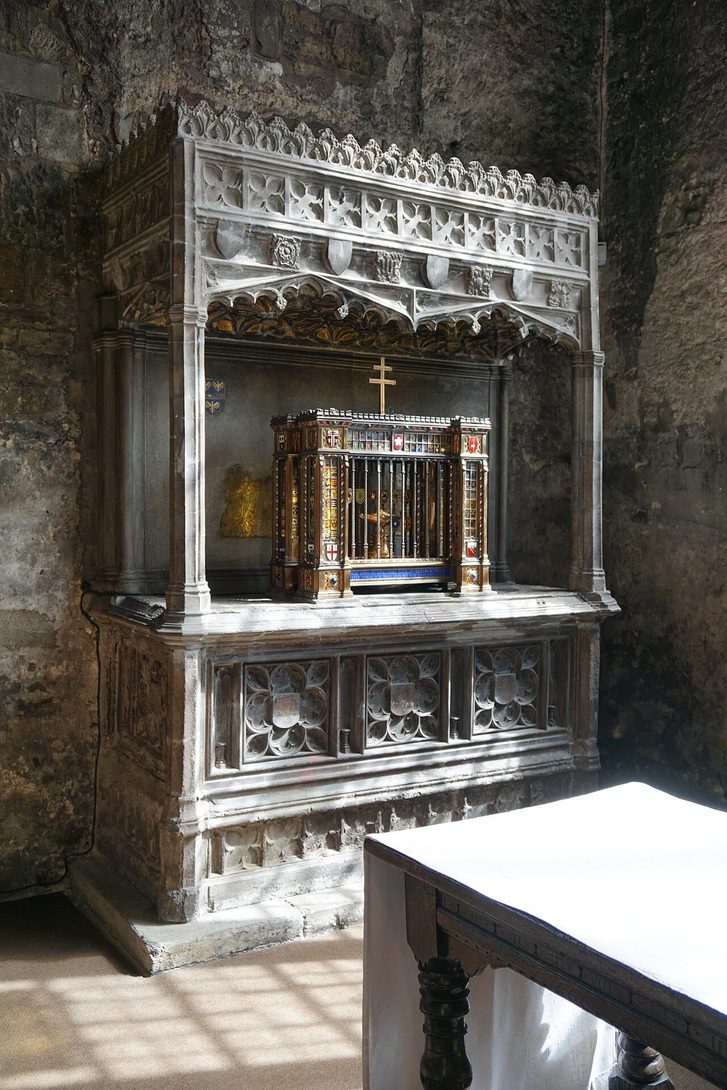
On the south side, the Mariners’ Chapel has ship models, a memorial book of the Maritime Foundation and a crucifix of wood from the Cutty Sark; its ivory figure is said to come from an Armada flagship. Shackleton’s crow’s nest, from his ship the Quest, now stands in the south aisle. In the Lady Chapel is the Purbeck marble tomb of Alderman John Croke, dated 1477, with brasses of him, his wife and their thirteen children; it was wrecked in 1940 and later restored. Nearby is the Toc H lamp given by the Prince of Wales in 1922.
The sanctuary
The Tate Panel is four painted panels from a winged altarpiece of about 1500, by an unknown artist, possibly from Bruges; it was given to the church in 1957 by Tate & Lyle. Above the high altar is a Last Supper mural by Brian Thomas.
The crypt museum
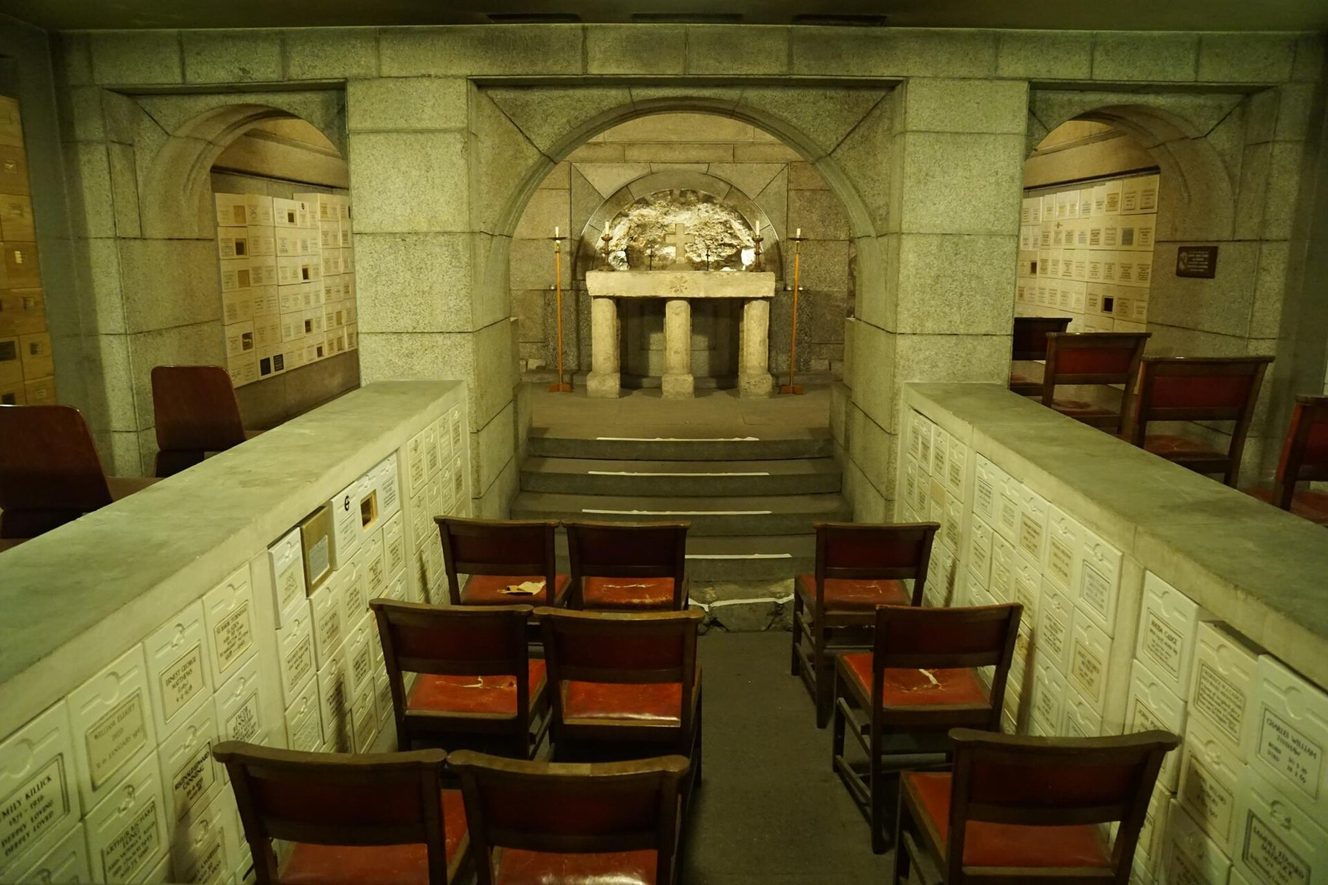
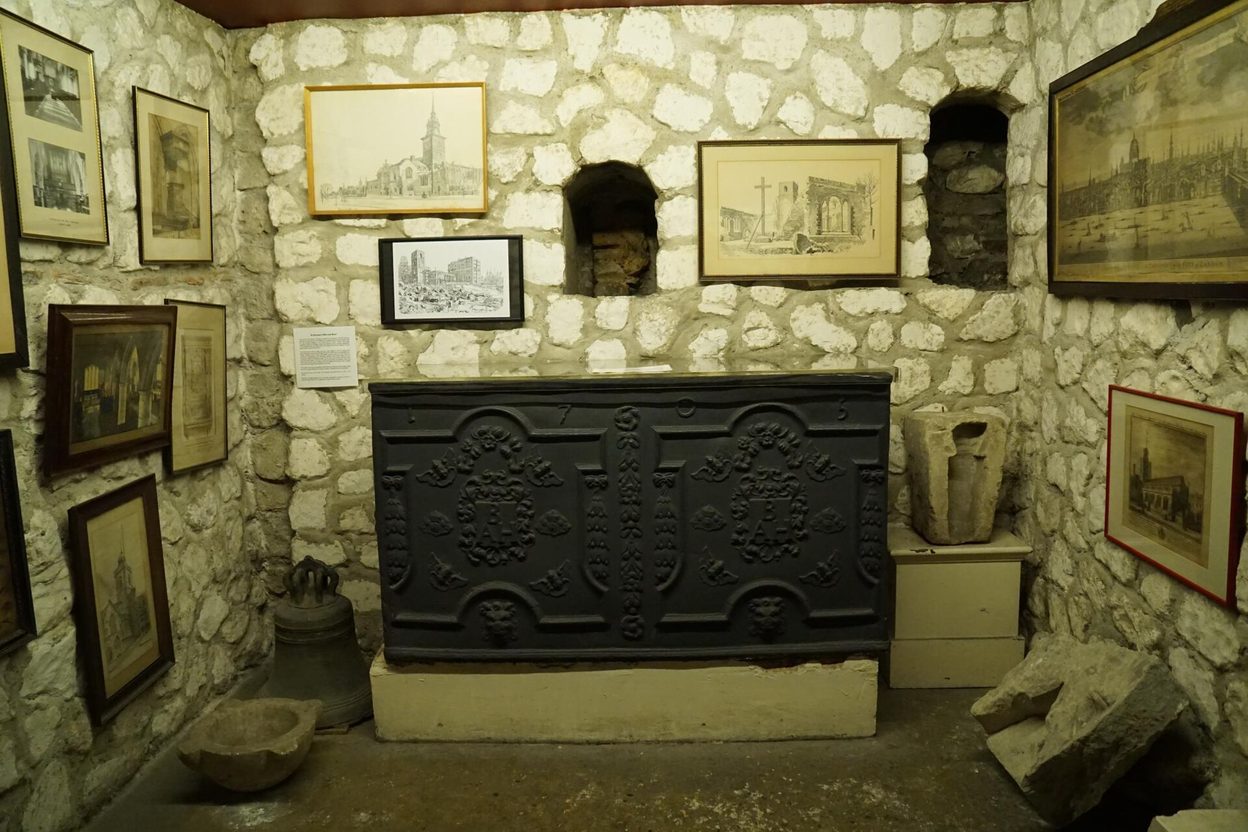
Finish by going down the stairs to the undercroft. Here is a patch of plain red Roman floor of the late second century, crossed by the foundation of a Saxon wall, and a model of Roman London made in the 1920s. Cases hold church plate, Saxon stonework and the registers recording Penn’s baptism and the Adams wedding, alongside an altar of stone from the crusader castle at Athlit. The small St Francis Chapel dates from about 1280.

A note on our pictures
Some of the church’s best modern art is still in copyright, so we describe it rather than show it: Brian Thomas’s Last Supper mural above the high altar; Cecil Thomas’s effigy of Tubby Clayton; the carving by the Tasmanian-born woodcarver Ellen Nora Payne in the rebuilt church; and other modern sculpture and stained glass.
Getting there
All Hallows is on Byward Street, beside the Tower of London. The nearest Underground stations are Tower Hill, Monument and Bank; Tower Hill is a few minutes’ walk, a railway station is within about 250 metres, and a bus stop is close by. Nearby are St Olave Hart Street, Pepys’s church in Seething Lane, and the Tower itself.
Where to stay
The City and the streets around Tower Hill have plenty of hotels, and the rest of London is a short Tube ride away.
This link goes to Booking.com. This site earns nothing from it at present — it is here because it is the quickest way to check what is actually available.
Don’t miss
- The Saxon arch Built with Roman tiles; its full extent was revealed by a bomb in 1940.
- The Gibbons font cover Limewood carving of 1682.
- The Roman pavement A second-century floor in the crypt.
- The Croke tomb Purbeck marble and brasses, dated 1477.
Insider tips
Come on a weekday morning or early afternoon. Guides are usually there from 10.30am to 1.30pm and 2pm to 4pm, and will show you round on request; arrive before 3.30pm.
Download the audio tour. The free izi.travel audio guide covers Roman London, the Templars, the Tower executions and the Adams wedding.
Christmas 2026. Follow the Star family activities and storytelling on 5 December (from late morning), Carols by Candlelight on 10 December at 6.30pm, Taizé Prayers around the Crib on 16 December at 6pm, Nine Lessons and Carols on 20 December at 4pm, Midnight Mass at 11.30pm on Christmas Eve and a Christmas Day Eucharist at 11am.
Common questions
Is All Hallows really the oldest church in the City of London?
The church says so, and dates its founding by Barking Abbey to 675. The evidence for that date is slight, and the Saxon arch is more carefully described as believed to be the oldest surviving arch in the City.
When is it open?
The church gives Monday to Friday 8am–5pm, Saturday 10am–5pm and Sunday 12.30pm–5pm, and says times may vary with staff availability. It is closed on Bank Holidays. Other listings give different hours, so check before you go.
Does it cost anything?
Entry to the church and the crypt museum has been free, with donations welcome; the church’s own pages do not state a price. Pre-booked group tours cost £5 a head.
Do I need to book a tour?
Not as an individual: guides are usually in the church on weekdays from 10.30am to 1.30pm and 2pm to 4pm, and tours start on demand (arrive before 3.30pm). Groups of more than five must book through the church office.
Can I go down to the crypt?
Yes. The crypt museum is reached by a narrow staircase, so it is not step-free, although the main church has level access.
What happens at Christmas 2026?
Follow the Star family activities and storytelling on 5 December (from late morning), Carols by Candlelight on 10 December at 6.30pm, Taizé Prayers around the Crib on 16 December at 6pm, Nine Lessons and Carols on 20 December at 4pm, Midnight Mass at 11.30pm on Christmas Eve and a Christmas Day Eucharist at 11am.
More English churches
- St Bartholomew the Great — the City’s great Norman church
- Temple Church — the round church of the Knights Templar
- St Margaret’s, Westminster — the parish church beside Westminster Abbey
See all the cathedrals and churches worth visiting in England →