
The City of London Church Walk
A day on foot through the old City of London, from the RAF’s church on its island in the Strand to the ancient arch of All Hallows beside the Tower. On the way are seven churches — the Templars’ round church, Wren’s St Bride’s, St Paul’s Cathedral, Norman St Bartholomew the Great and the church of the Bow Bells among them — and, between them, Dr Johnson’s house, a garden memorial to heroic self-sacrifice, the Monument and a ruined church gone to garden. About 5.2 kilometres, almost all of it on the level, west to east.
The walk at a glance
| Start | St Clement Danes, Strand; Temple station is about 5 minutes’ walk |
|---|---|
| Finish | All Hallows-by-the-Tower, Byward Street; Tower Hill station is a few minutes’ walk |
| Distance | About 5.2 km |
| Walking time | About 70 minutes in all |
| Allow | A long day with visits, or two half-days split at St Paul’s |
| Best days | Tuesday to Friday; Wednesday to Friday is safest. Check Temple Church’s calendar, especially in December |
| Terrain | Pavements, narrow lanes and some cobbles; one climb, up Ludgate Hill to St Paul’s |
| Paid entry | St Paul’s, Temple Church, Dr Johnson’s House and the Monument; the other churches are free |
Hours and admission checked against the official site in November 2026. They change; the official site is always the last word.
The day you choose matters more than anything else. Temple Church opens to sightseers on weekdays only, St Stephen Walbrook is usually closed at weekends, Dr Johnson’s House is shut on Mondays and St Paul’s is closed to sightseers on Sundays, except for the Dome Galleries from mid-March to late October. So walk it from Tuesday to Friday — Wednesday to Friday if you can, since St Clement Danes’s own home page gives only those weekdays (other pages of its website say Monday to Friday). Walk west to east, too: the two churches with the shortest hours, St Clement Danes and Temple Church, come first, and the walk ends beside Tower Hill station.
The route
Open the route in Google Maps (walking directions). The maps are drawn for this site from OpenStreetMap data; numbers match the stops below, and the dark circles are the seven churches. The two detail maps cover the lanes around Fleet Street (stops 1–5) and the eastern City (stops 9–13).
Before you set off
- Check Temple Church’s calendar for your day. It is usually open to sightseers from 10am to 4pm on weekdays, but in December 2026 it is closed on many weekdays too. When we read its events page on 28 November, it was open for sightseeing only on 2, 4, 7, 8, 10, 11, 14, 15, 17 and 21 December; 16 December had no entry, and nothing was listed from 29 December. Look at the calendar on the church’s website before you fix the date.
- Book St Paul’s online for a dated slot. In December it has several early closes: last entry 3pm on Thursday 10 December, 2.45pm on Saturday 12 December, 3.30pm on Monday 21 December and 1.15pm on 23 and 24 December, with late openings on 2 December (10.15am) and 19 December (1pm). On Christmas Day it is open for worship only. In February 2027 it is closed to visitors on 10 February, with last entry at 11am on 11 February. The cathedral’s list of planned closures is worth a look before you travel.
- Do not walk it between Christmas Eve and 2 January. Dr Johnson’s House is closed from 24 December 2026 to 1 January 2027, the Monument from 24 to 26 December, Postman’s Park on 25 and 26 December and 1 January, and the churches are closed or keep reduced hours over the bank holidays (25 and 28 December and 1 January).
- Watch the light in winter. Postman’s Park and the St Dunstan-in-the-East garden are open from 8am to 7pm or dusk, whichever is earlier, so in December they are shut by about 4pm. Carol services, which run from late November to 22 December at St Paul’s, St Bride’s and St Bartholomew the Great, crowd the churches or close them early.
- What it costs. Five of the seven churches are free, with donations welcome, and so are Postman’s Park, the St Dunstan garden and the new London Museum at Smithfield. You pay at St Paul’s (£27 for an adult; one page of its website showed £26, so check when you book), Temple Church (£5, £3 concessions), Dr Johnson’s House (£10) and the Monument (£6, children £3): about £48 for an adult who goes into everything, at the prices we read in November 2026.
Stop by stop
1. St Clement Danes
Start at Temple station (District and Circle lines) and walk up Temple Place and Arundel Street to the Strand, about five minutes. St Clement Danes stands on its island in the road beside the Royal Courts of Justice: a Wren church with a steeple by James Gibbs, gutted in the Blitz in 1941 and restored in the 1950s as the Central Church of the Royal Air Force, with the slate badges of RAF units set in its floor. Its pages give different weekday hours, so arrive at 10.30am, when it should be open either way. The steeple has been under restoration since 2024; check whether the scaffolding is still up. For tea, Twinings, on its site at 216 Strand since 1706, is about 70 metres east on the opposite side of the road, almost facing the Royal Courts of Justice, but it opens only at 11am (11.30am on Thursdays).
St Clement Danes — from the full guide
| Opening hours | The church’s pages differ: Wednesday–Friday 10.30am–3.30pm (home page) or Monday–Friday 10am–3.30pm (events page and RAF); weekends 10am–3pm. Usually closed on bank holidays and from after the Christmas Day service into early January; check before you go |
|---|---|
| Admission | No admission charge is listed; donations welcome |
| How long | Forty-five minutes to an hour |
2. The Temple Bar Memorial
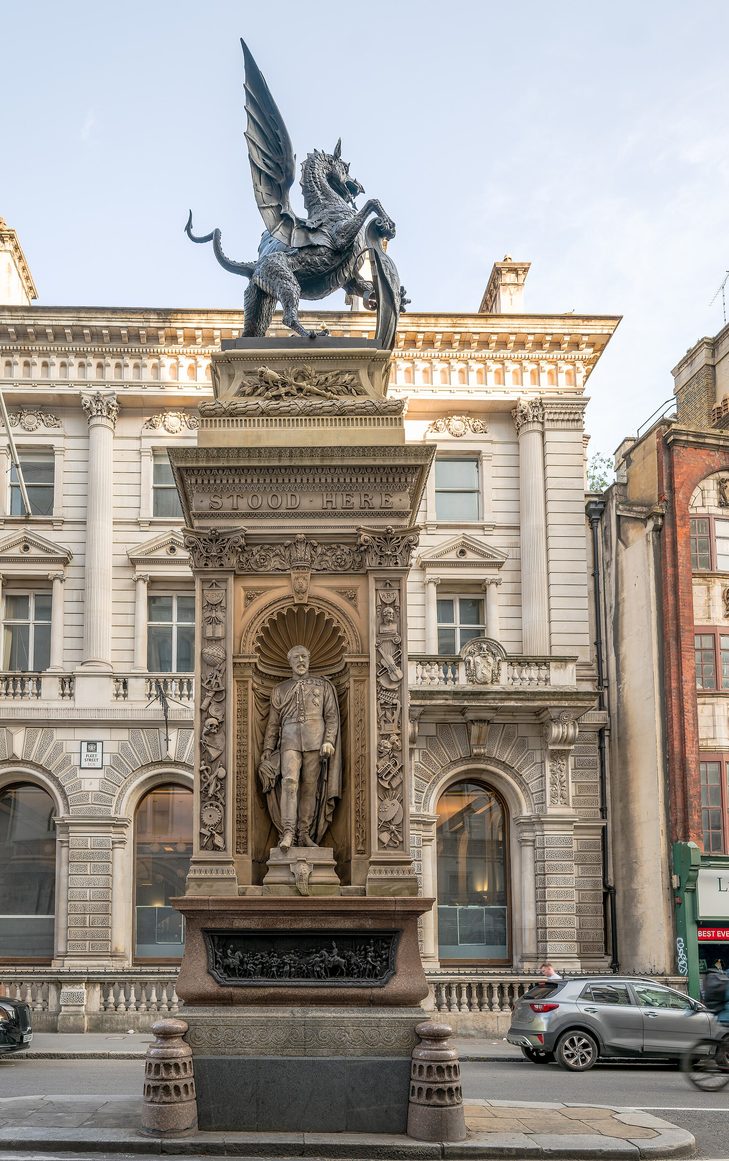
Three minutes east along the north side of the Strand, past the long Gothic front of the Royal Courts of Justice, the road becomes Fleet Street at the Temple Bar Memorial. Designed by Horace Jones and put up in 1880, it takes its name from Wren’s Temple Bar gateway, which stood here until it was taken down in 1878; it carries statues of Queen Victoria and Edward VII by Boehm, and on top a winged beast by Charles Bell Birch that is usually called a griffin but is in fact a dragon. You will meet Wren’s gateway itself later in the day, beside St Paul’s.
3. Temple Church
Cross to the south side of Fleet Street. At No. 17 is the Inner Temple Gateway, with the timber-framed Prince Henry’s Room above it; go through the arch and down Inner Temple Lane, then into Church Court for the west door, two or three minutes in all. The lanes belong to a working legal precinct, so check on the day that the gate is open. The church was built by the Knights Templar: its round nave, modelled on the Holy Sepulchre in Jerusalem, was consecrated in 1185 and its Gothic chancel in 1240, and on the floor of the Round lie the stone knights, William Marshal among them.
Temple Church — from the full guide
| Opening hours | Usually Mon–Fri 10am–4pm; closed to sightseers at weekends; hours vary with services and events — check the Temple Church website |
|---|---|
| Admission | Visitor ticket, about £5 for adults, less for concessions; children free; services free |
| How long | 30 minutes to an hour |
4. Dr Johnson’s House
Go back up Inner Temple Lane, cross Fleet Street to the north side and turn up the narrow Johnson’s Court into Gough Square, about six minutes. No. 17 was built around 1700 by the wool merchant Richard Gough, and Samuel Johnson lived here from 1748 to 1759; the Grade I house has been a museum since 1914. It is open from Tuesday to Saturday, 10am to 5pm (last entry 4.30pm), and on Sundays from noon to 4pm, and is closed on Mondays. Adults pay £10, students £9 and children aged five to sixteen £5; on Friday afternoons, from 2pm, adult entry is £5. In December it closes early on Wednesday 2 December (open 10am to 1pm) and Saturday 12 December (10am to 2pm). There are seven steps up to the door and no step-free access.
Leave by Hind Court and Wine Office Court, past Ye Olde Cheshire Cheese, rebuilt in 1667 after the Great Fire, to come back out on Fleet Street.
5. St Bride’s Church
About five minutes on, a few steps down St Bride’s Avenue on the south side of Fleet Street, is Wren’s St Bride’s, with the tall tiered steeple, long the church of the printers and journalists. It was gutted in the Blitz and rebuilt in the 1950s, and its free crypt museum reaches back through Saxon walls to a Roman pavement. On most Tuesdays there is a free lunchtime recital at 1.15pm; check its What’s On calendar.
St Bride’s Church — from the full guide
| Opening hours | Monday–Friday 8am–5pm; Saturday 10am–3.30pm; Sunday 10am–6.30pm. Closed Monday bank holidays and some days around Christmas, New Year and Easter: check before you go |
|---|---|
| Admission | Free (crypt museum also free, normally open during church hours); donations welcome |
| How long | Forty-five minutes to an hour, with the crypt |
6. St Paul’s Cathedral
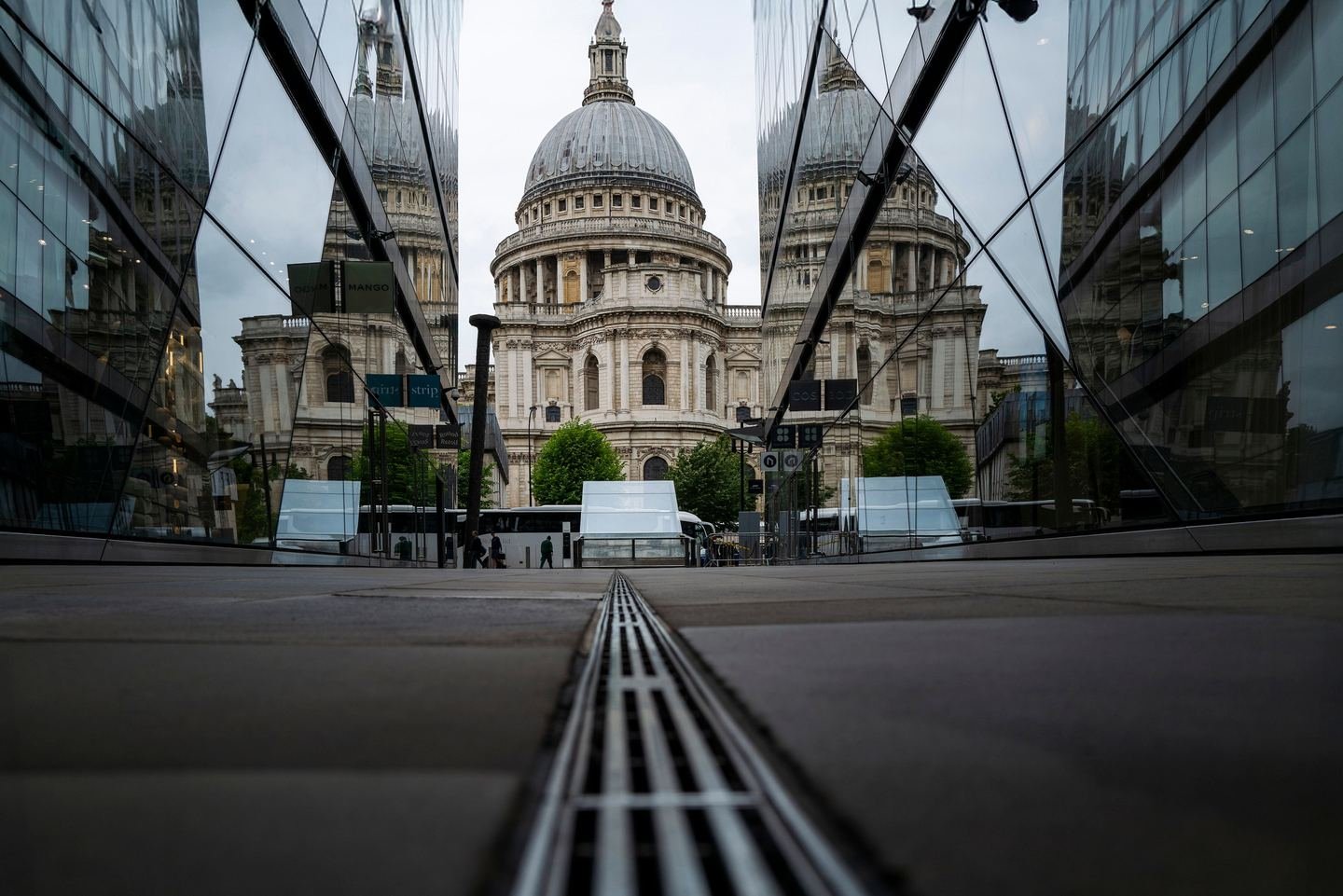
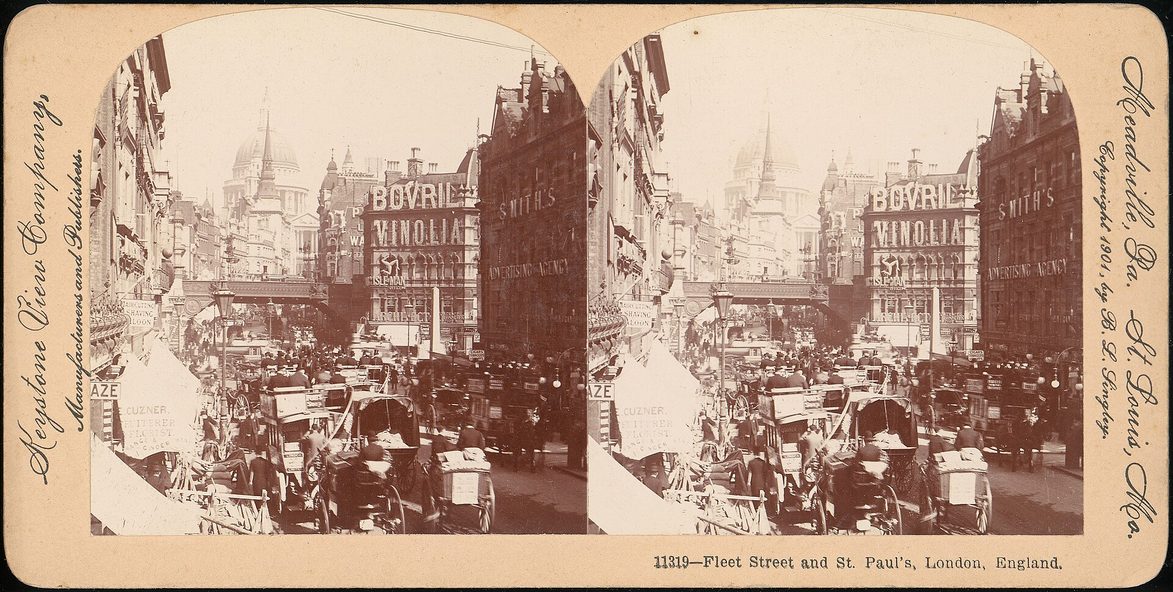
Take Bride Lane back to Fleet Street and walk east to Ludgate Circus, then up Ludgate Hill, the one real climb of the day, with the dome filling the end of the street: eight minutes to the steps of the west front. Wren’s cathedral took from 1675 to 1710 to build, under one architect from start to finish. Allow at least 75 minutes inside, more if you climb: it is 528 steps to the Golden Gallery, with no lift. The Dome Galleries are reached by stairs only; check the cathedral’s calendar for the day you go. There is no cloakroom.
St Paul’s Cathedral — from the full guide
| Opening hours | Monday to Saturday for sightseeing, doors from 8.30am and the building closing at 4.30pm, with last entry usually around 4pm. Sundays are for worship only, except for a separate dome-gallery arrangement between mid-March and late October |
|---|---|
| Admission | Adult £27; seniors and students £24; children 6–17 £10.50; under-5s free. During the summer offer, late June to early September, the adult price is £24. Each price has a higher ‘with donation’ version — the lower one is the real price. Includes the floor, the crypt, the dome galleries and a multimedia guide |
| How long | Two hours without the climb, three with it |
7. Postman’s Park
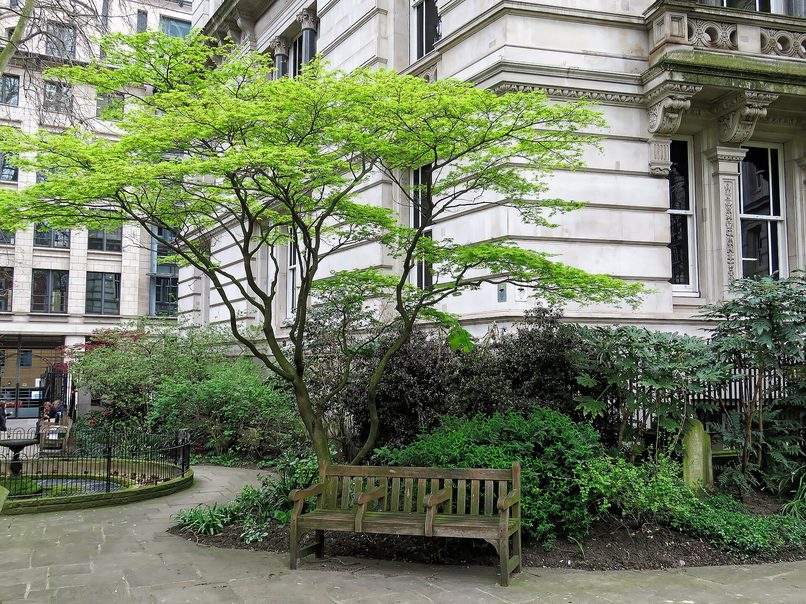
From the north side of the churchyard, go through Paternoster Square, where Wren’s Temple Bar gateway of 1669–72 now stands: dismantled in 1878, about 2,700 stones, it spent more than a century at Theobalds Park before it came back to the City and reopened here in 2004. Out by Panyer Alley to Newgate Street, cross, and go north up King Edward Street; the park is on the right, on the east side, about seven minutes in all. Postman’s Park, a public garden since 1880 on old churchyards including that of St Botolph Aldersgate, holds G. F. Watts’s Memorial to Heroic Self-Sacrifice, unveiled in 1900: 54 tablets commemorating 62 people, the last added in 2009. It is open from 8am to 7pm or dusk, whichever is earlier.
8. St Bartholomew the Great
Head north up King Edward Street and Little Britain to West Smithfield, five minutes (a little more if you go round by the Henry VIII Gate of St Bartholomew’s Hospital, with its statue of the king). The hospital and the priory church were both founded by Rahere in 1123. A Tudor half-timbered gatehouse leads along the churchyard path, where the nave once stood, to the west door of the Norman choir: London’s oldest surviving parish church, dark and heavy with round arches.
Across the square is Smithfield Market, the Victorian wholesale meat market, which trades through the small hours on weekdays, from about 2am until 7am, so the buying is over long before you arrive. Its future is unsettled: a plan to move it to Dagenham was dropped in 2024, and the City and the Greater London Authority have since looked at Albert Island in Newham instead, but no moving date has been confirmed. Beside it, the new London Museum opened in the old General Market on 28 November 2026; its galleries are free; book a free ticket online and check its hours before you go.
St Bartholomew the Great — from the full guide
| Opening hours | Mon–Sat 10am–5pm; Sundays between services; may close for weddings, concerts and filming |
|---|---|
| Admission | Free; donations welcome |
| How long | 30 minutes to an hour |
9. St Mary-le-Bow
The longest leg, about 12 minutes: back south down Little Britain and King Edward Street, along Angel Street and through the lanes to Cheapside (follow the map); the church fronts Cheapside, and Bow Churchyard lies behind it. This is the church of the Bow Bells, rebuilt by Wren after the Great Fire with one of his finest steeples, gutted in 1941 and restored above a Norman crypt of about 1080. The Café Below in the crypt has closed; the crypt now holds the Humble Grape wine bar (weekdays from noon, lunch until 3pm). For Guildhall, add about half a kilometre.
St Mary-le-Bow — from the full guide
| Opening hours | Monday to Friday 7.30am–6pm; weekends usually about 10am–3pm, but these vary — check before you go |
|---|---|
| Admission | Free (donations welcome); the church lists no charge |
| How long | 30–45 minutes |
10. St Stephen Walbrook
Five minutes by Bow Churchyard, Well Court and Pancras Lane bring you to Walbrook and St Stephen’s, at No. 39, next to the Mansion House. Wren rebuilt it in 1672–79, with the steeple following in 1713–17, and its domed interior is often described as his rehearsal for St Paul’s. The Samaritans were founded here by Chad Varah in 1953, and the round stone altar of 1987 is by Henry Moore. Entry is free. Opening hours are uncertain: the church’s website and A Church Near You both give weekdays from 10.30am to 3.30pm, the National Churches Trust lists slightly different times on each weekday, and it is usually closed at weekends. Go before 3.30pm to be safe.
11. The Monument
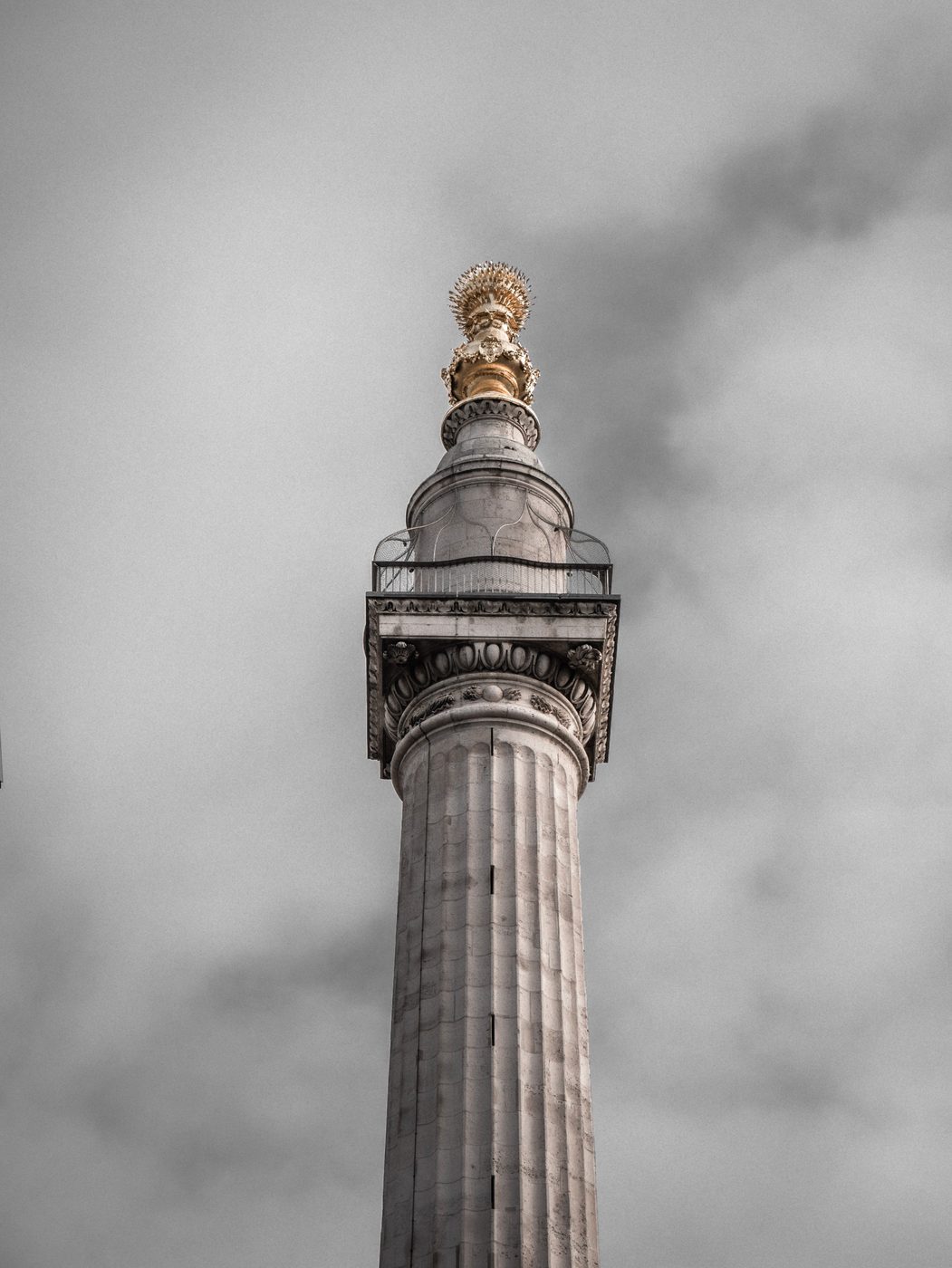
Carry on past St Mary Woolnoth at Bank junction and down King William Street and Fish Street Hill, about eight minutes. The Monument to the Great Fire is 61 metres high, with 311 steps inside and a gilded urn of flames on top. It is open daily from 9.30am to 1pm and 2pm to 6pm, with last entry at 12.30pm and 5.30pm, and tickets cost £6 for adults and £3 for children. It is closed from 24 to 26 December and opens at 10am on 1 January; its website also mentions a closure on 3 December without giving the year, so check if you plan to go that day.
12. St Dunstan-in-the-East
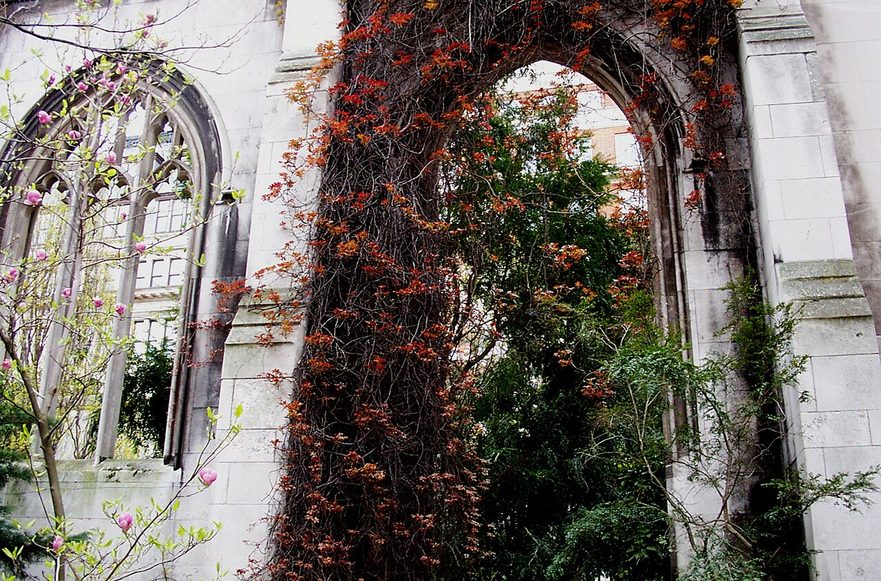
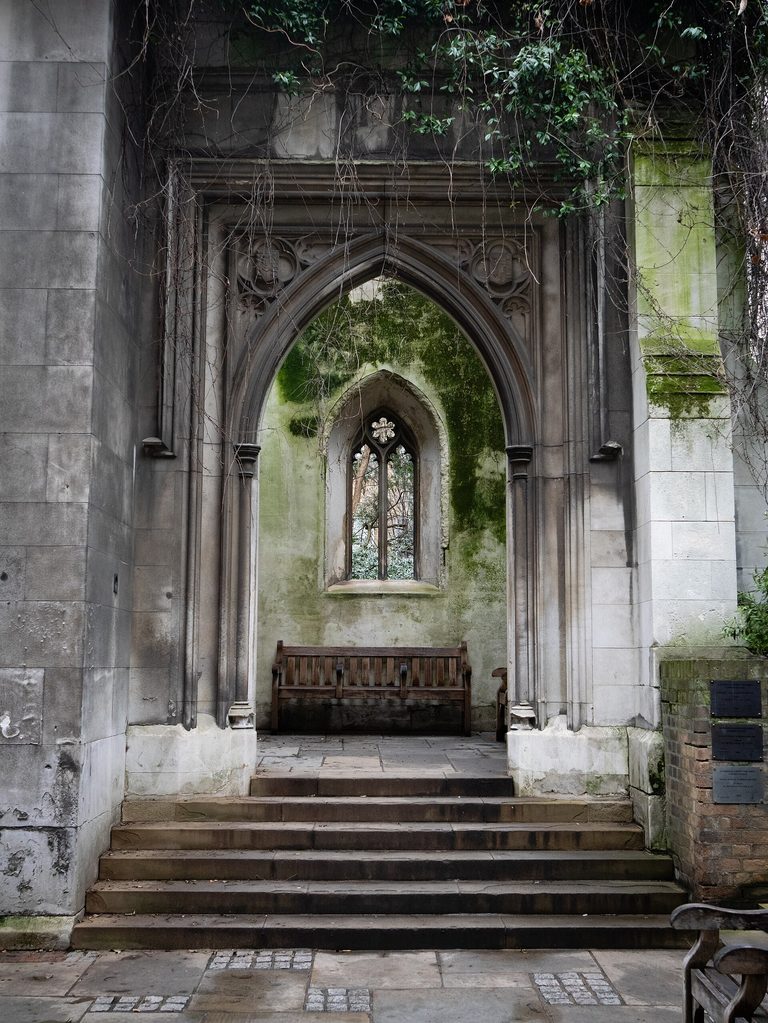
Five minutes east along Lower Thames Street (a short detour to St Magnus the Martyr, at the foot of Fish Street Hill, if you want it) and up St Mary at Hill and St Dunstan’s Lane is the loveliest surprise of the day. St Dunstan’s was damaged in the Great Fire, repaired by Wren, who added the tower and steeple in 1695–1701, rebuilt in 1817–21 and bombed in 1941; the shell has been a public garden since 1971, owned by the City of London Corporation, with ivy and creepers over the window tracery. It is free, and open from 8am to 7pm or dusk, whichever is earlier; the entrance is on St Dunstan’s Hill and Idol Lane.
13. All Hallows-by-the-Tower
Four minutes down St Dunstan’s Hill and along Great Tower Street and Byward Street to the corner of Seething Lane. All Hallows claims to be the oldest church in the City: behind its brick tower and copper spire are an arch of reused Roman tiles that the church dates to Saxon times, a Roman floor in the crypt and a font cover by Grinling Gibbons, and it was from this tower that Samuel Pepys watched the Great Fire. The church gives its hours with a warning that they can change with staff availability, so check before you go. The Tower of London is about six minutes beyond.
All Hallows-by-the-Tower — from the full guide
| Opening hours | Monday–Friday 8am–5pm; Saturday 10am–5pm; Sunday 12.30pm–5pm. Closed on Bank Holidays; times may vary with staff availability, and other listings differ, so check before you go |
|---|---|
| Admission | Free, with donations welcome (the church’s pages give no price; check before you go) |
| How long | An hour, more with a guided tour |
Getting back
Tower Hill (District and Circle lines) and Tower Gateway on the DLR are both a few minutes’ walk from All Hallows. To leave the walk early, St Paul’s station (Central line) is beside the cathedral and Postman’s Park, Mansion House (District and Circle) is beside St Stephen Walbrook, and Bank and Monument stations cover the stretch after that. From St Bartholomew the Great, Farringdon, on the Elizabeth line, is about nine minutes’ walk by Cloth Fair and Cowcross Street. Bus 15 runs between Charing Cross and Blackwall by way of Aldwych, St Paul’s, Cannon Street and the Tower of London, which shadows much of the route; check TfL for current times.
Suggested timings
| Stop | One long day (spring and summer) | Two half-days (essential in winter) |
|---|---|---|
| St Clement Danes | 10.30 | Day one, 10.30 |
| Temple Bar Memorial | 10.50 | 10.50 |
| Temple Church | 11.00 | 11.00 |
| Dr Johnson’s House | 11.35 | 11.35 |
| St Bride’s | 12.20 | 12.20, then lunch |
| St Paul’s Cathedral | 12.50, then a sandwich in Paternoster Square | 13.45 (last entry usually 4pm) |
| Postman’s Park | 14.30 | Day two, 10.00 |
| St Bartholomew the Great | 14.45 | 10.15 |
| St Mary-le-Bow | 15.30 | 11.00 |
| St Stephen Walbrook | 15.50 (may already be closed) | 11.25 |
| The Monument | 16.10, from outside | 11.50, climb before the 12.30pm last entry |
| St Dunstan-in-the-East | 16.20 | 12.30 |
| All Hallows-by-the-Tower | 16.35; afterwards, walk back to climb the Monument by its 5.30pm last entry | 12.45 |
The long day is tight. Seven churches, a museum and a 311-step climb do not fit comfortably between 10.30am and 5pm, and St Stephen Walbrook’s interior is the usual casualty. The Monument stays open later than All Hallows, so if you are running late, look at it on the way past and come back to climb it at the end, about nine minutes’ walk. In winter, with the gardens shut by about 4pm, split the walk at St Paul’s: the western half one day, ending in the cathedral, and the eastern half another morning, starting from St Paul’s station. With only three hours, walk Temple Church, St Bride’s, St Paul’s and St Mary-le-Bow, about 1.7 kilometres.
Practical information
Toilets
The City’s attended public toilets on the route are in Paternoster Square, by St Paul’s Chapter House, and at Tower Hill (Tower Place, opposite the Tower of London): both open from 8am to 8pm on weekdays and 9am to 5pm at weekends (Tower Hill until 7pm at weekends from June to October), with accessible and baby-changing facilities and a charge of about £1, waived for RADAR key holders. St Mary-le-Bow has an accessible toilet; St Bride’s opens its accessible toilets only during services, and at Dr Johnson’s House the toilets are down a steep stair.
Food and drink
Ye Olde Cheshire Cheese at 145 Fleet Street, a Samuel Smith’s pub off Wine Office Court, is the historic stop for lunch on the western half; check its opening times before you go. Paternoster Square, beside St Paul’s, is the obvious place for a quick lunch on the long day. Under St Mary-le-Bow, the Humble Grape on Bow Lane is a wine bar open on weekdays from noon, with lunch from noon to 3pm; it is closed from 25 December to 4 January and reopens at 4pm on 5 January.
Accessibility
The route is almost level apart from Ludgate Hill, but the Inner Temple lanes and the ruin paths at St Dunstan’s are uneven, and the cobbles in the Temple can be slippery in the wet. St Bride’s has step-free entry by a side door off St Bride’s Avenue (its crypt is down about twenty steps); at St Bartholomew the Great the path from the Tudor gatehouse to the west door is step-free; St Mary-le-Bow is step-free to the main church; and All Hallows has level access to the main church, with the crypt down a narrow stair. St Paul’s gives free tickets to disabled visitors, but there is no lift to the galleries. Dr Johnson’s House has seven steps at the door and no step-free access, and the Monument is 311 steps with no alternative.
Insider tips
Johnson on a Friday. From 2pm on Fridays adult entry to Dr Johnson’s House drops to £5. Worth knowing if you split the walk and have a Friday afternoon to spare.
Bring a pound for St Paul’s, if it applies. UK visitors receiving Universal Credit, Pension Credit or Employment Support Allowance can buy admission for £1 for one adult and up to four children; see the cathedral guide.
Christmas in the City. St Bartholomew the Great holds carol services from 29 November to 22 December, Midnight Mass at 11pm on Christmas Eve and Epiphany carols on 10 January 2027. Lovely to attend, but on those days plan your sightseeing round them.
Common questions
How long is the City of London church walk?
About 5.2 kilometres from St Clement Danes to All Hallows-by-the-Tower, or roughly 70 minutes of walking. With visits it fills a long day; in winter, split it into two half-days at St Paul’s.
Which day is best?
Tuesday to Friday, and Wednesday to Friday if you can. Temple Church opens to sightseers on weekdays only, Dr Johnson’s House is closed on Mondays and St Paul’s is closed to sightseers on Sundays, except for the Dome Galleries from mid-March to late October. In December 2026 Temple Church is also closed on many weekdays, so check its calendar first.
How much does the walk cost?
Five of the seven churches are free. You pay at St Paul’s (£27 for an adult) and Temple Church (£5), and also at Dr Johnson’s House (£10) and the Monument (£6): about £48 for an adult who goes into everything.
Can I do it in winter?
Yes, but split it in two. Postman’s Park and the St Dunstan-in-the-East garden close at dusk, which in December means by about 4pm, and carol services crowd or close the churches. Avoid 24 December to 2 January, when Dr Johnson’s House is closed (24 December to 1 January), the Monument closes from 24 to 26 December and the churches keep bank-holiday hours.
Is the walk step-free?
The route itself is almost level apart from Ludgate Hill, and St Bride’s, St Bartholomew the Great, St Mary-le-Bow and All Hallows have step-free access to the main church. Dr Johnson’s House and the Monument have none, and St Paul’s has no lift to its galleries.
The churches on this walk
- St Clement Danes — the Central Church of the RAF
- Temple Church — the round church of the Knights Templar
- St Bride’s Church — Wren’s tiered steeple, the journalists’ church
- St Paul’s Cathedral — Wren’s dome
- St Bartholomew the Great — London’s oldest surviving parish church
- St Mary-le-Bow — the church of the Bow Bells
- All Hallows-by-the-Tower — the oldest church in the City, by its own account
With another day in London, two more great churches lie just off the route: Southwark Cathedral, across London Bridge from the Monument, and Westminster Abbey, west of the Strand.