
St Mary-le-Bow, Cheapside
On Cheapside, in the heart of the City of London, St Mary-le-Bow is the church of the Bow Bells. Wren rebuilt it after the Great Fire with one of his finest steeples, the Blitz gutted it in 1941, and it was restored in the 1950s and 60s above a Norman crypt dating from about 1080.
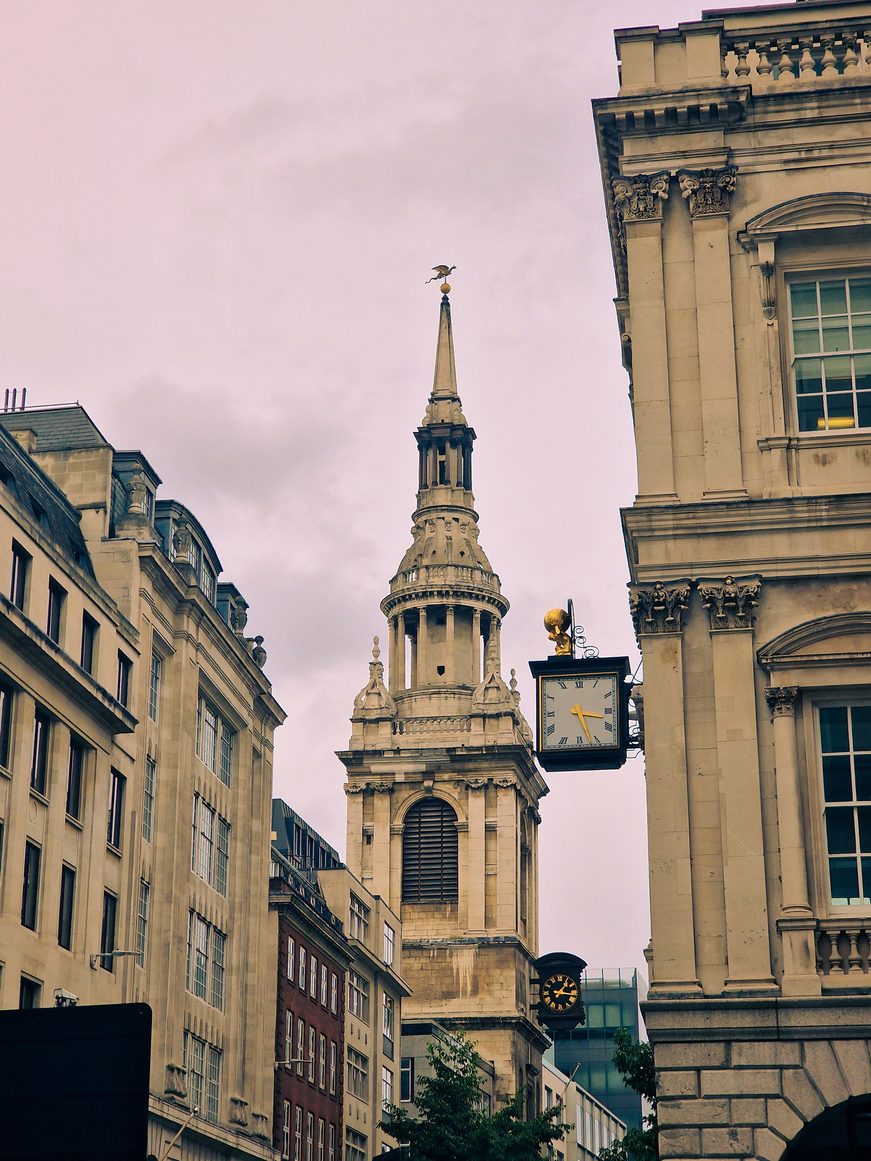
“St Mary of the Arches”
A church stood here by about 1080, when Archbishop Lanfranc is said to have built it in Caen stone, the same stone as the Tower of London. Its arched undercroft gave the church its name: “le Bow” is thought to come from de arcubus, “of the arches”. It gave its name to the Court of Arches, the senior church court of the Province of Canterbury.
Its medieval story was eventful. Chronicles record a storm wrecking the upper church in 1091; in 1196 the tower was set alight to smoke out the rebel William Fitz Osbert; and in 1271 part of the tower fell, with loss of life. From at least 1469 the bell rang the nine o’clock curfew. The tower gained stone lanterns in 1512, and the old church stood until the Great Fire of 1666.
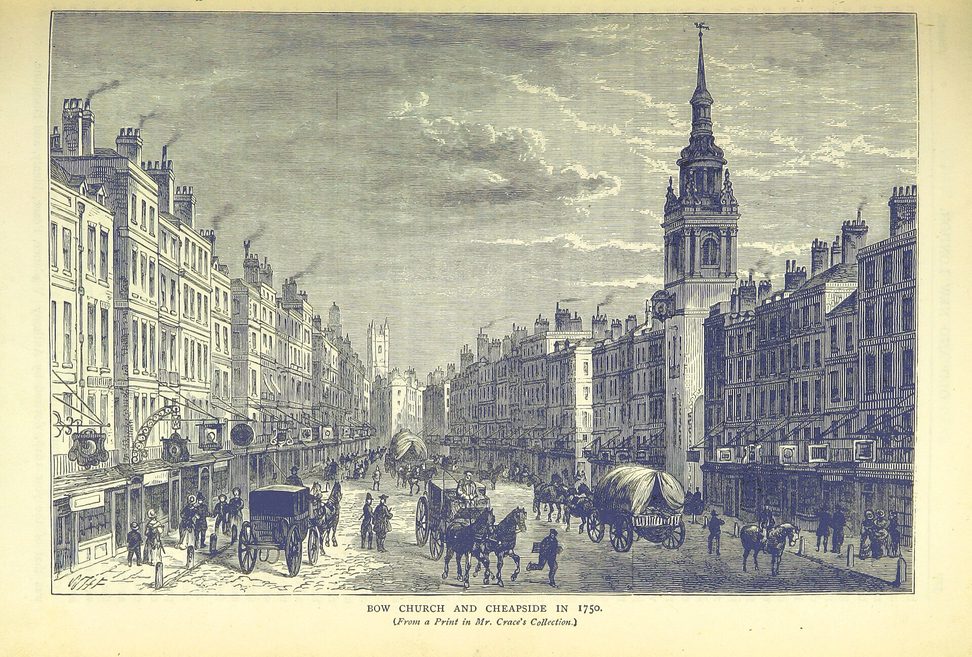
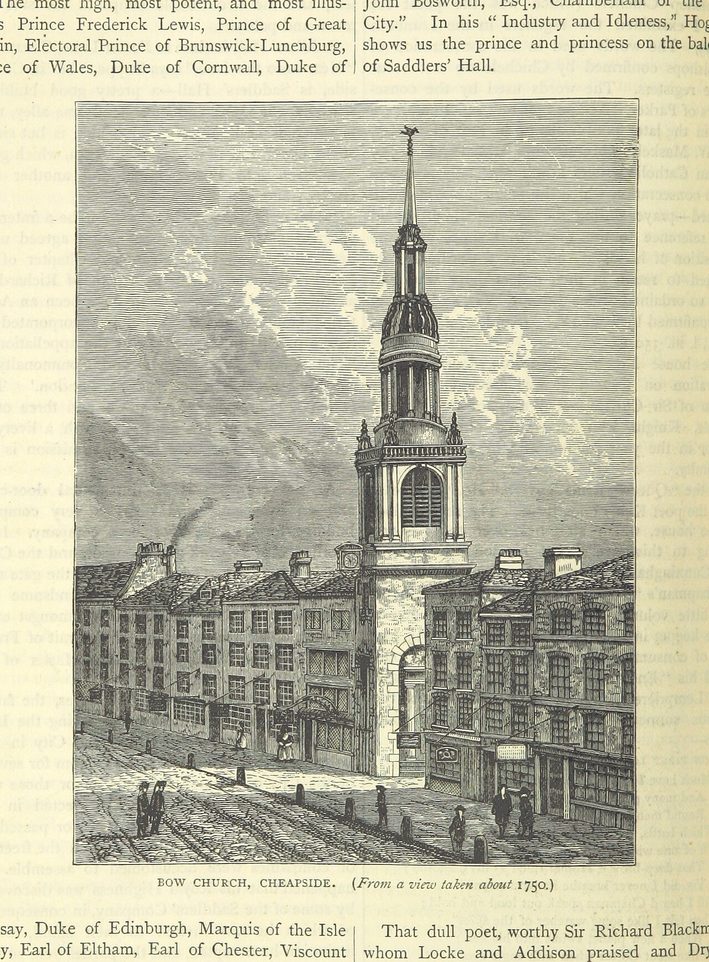
Wren’s church and steeple
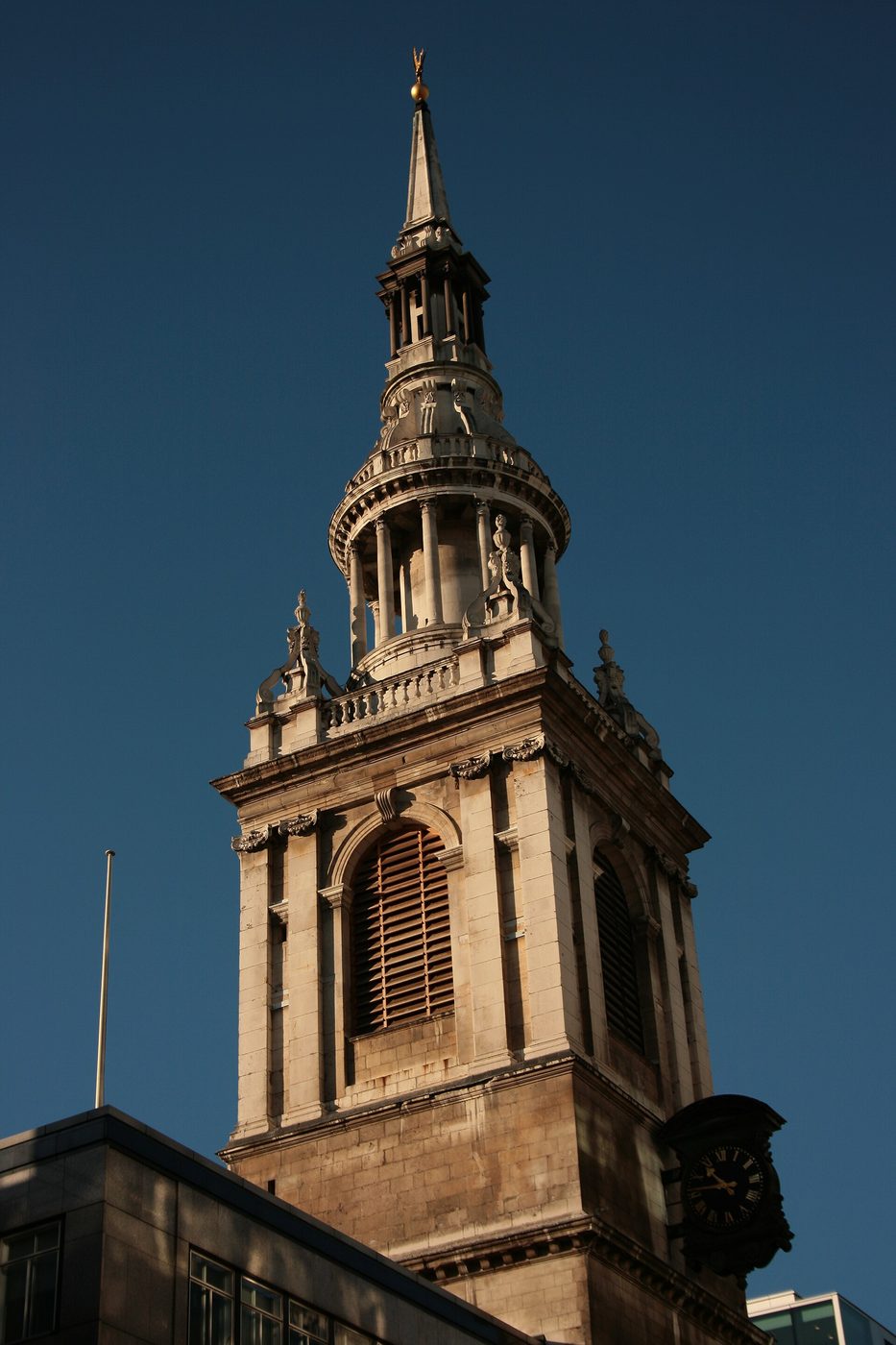
St Mary-le-Bow was the first parish on Wren’s rebuilding list in 1670, and the mason’s contract was signed that August. The body of the church was finished by 1673 and the steeple by about 1680; the whole cost £15,421. At 221 feet 9 inches (about 67.6 metres), the steeple is the third highest of his churches, after St Paul’s and St Bride’s, and it climbs from a square tower to a ring of twelve columns, flying buttresses, a second colonnaded stage and a slim pinnacle topped by a winged dragon weathervane. George Gwilt rebuilt the upper spire in 1820.
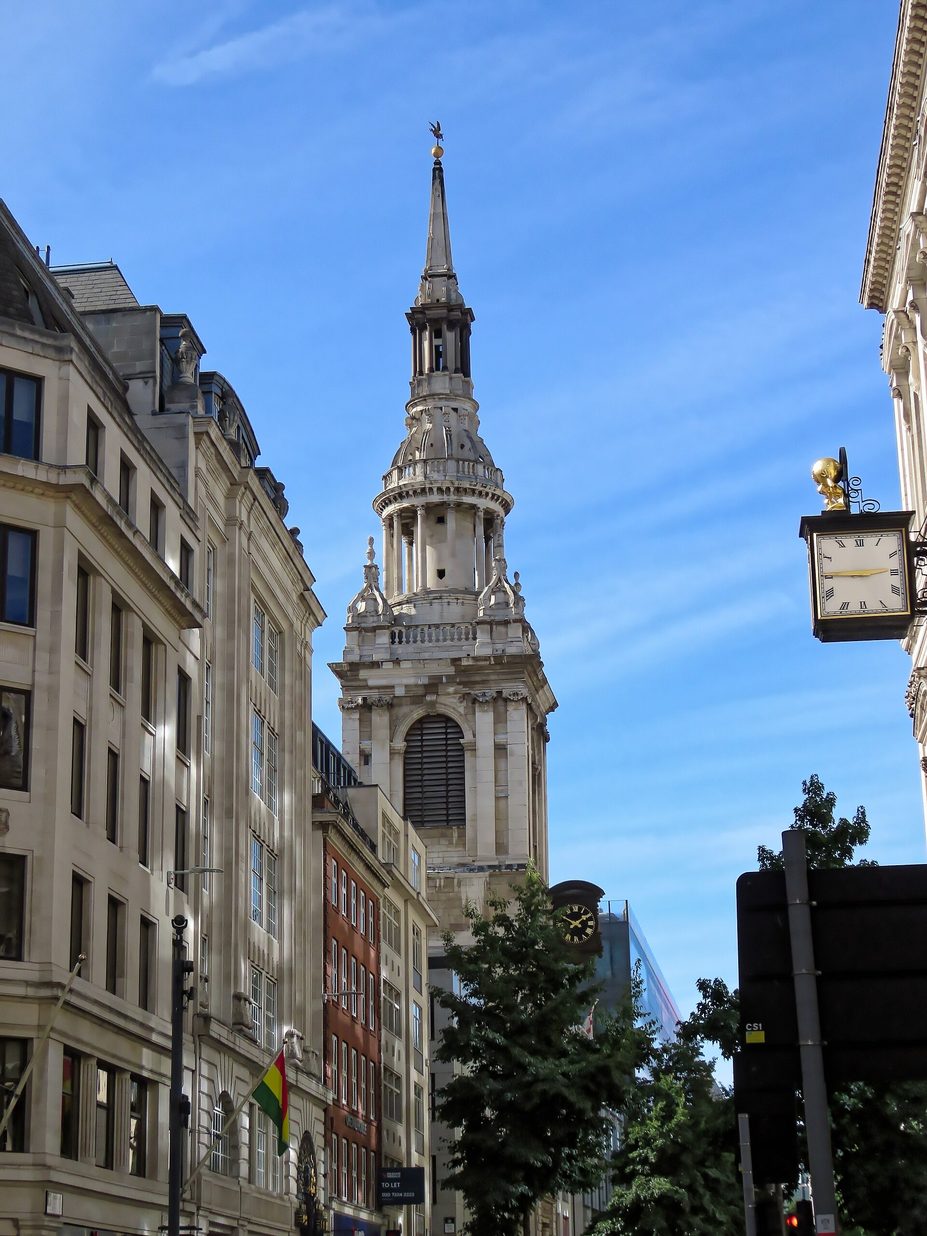
Bow Bells
The bells are the most famous in London. Legend says they called Dick Whittington back to London, and by tradition anyone born within their sound is a Cockney. A ring of twelve was recast in 1933 and destroyed in 1941; the present bells date from 1956 (see below). A recording of Bow Bells was long used by the BBC World Service as its interval signal (the church and other sources differ on whether it dates from 1926 or after 1933).
The Blitz and the rebuilding
On the night of 10–11 May 1941 incendiary bombs gutted the church and the bells crashed to the ground. Wren’s walls and steeple survived, and between 1956 and 1964 the architect Laurence King rebuilt the interior, close to the old design but with all new fittings. Twelve new bells, cast at Whitechapel in 1956, were first rung on 21 December 1961; their inscriptions spell D WHITTINGTON. Trinity Church, Wall Street, in New York, whose parish was founded in 1697 “according to the use of St Mary-le-Bow”, helped pay for the work. The church is listed Grade I.
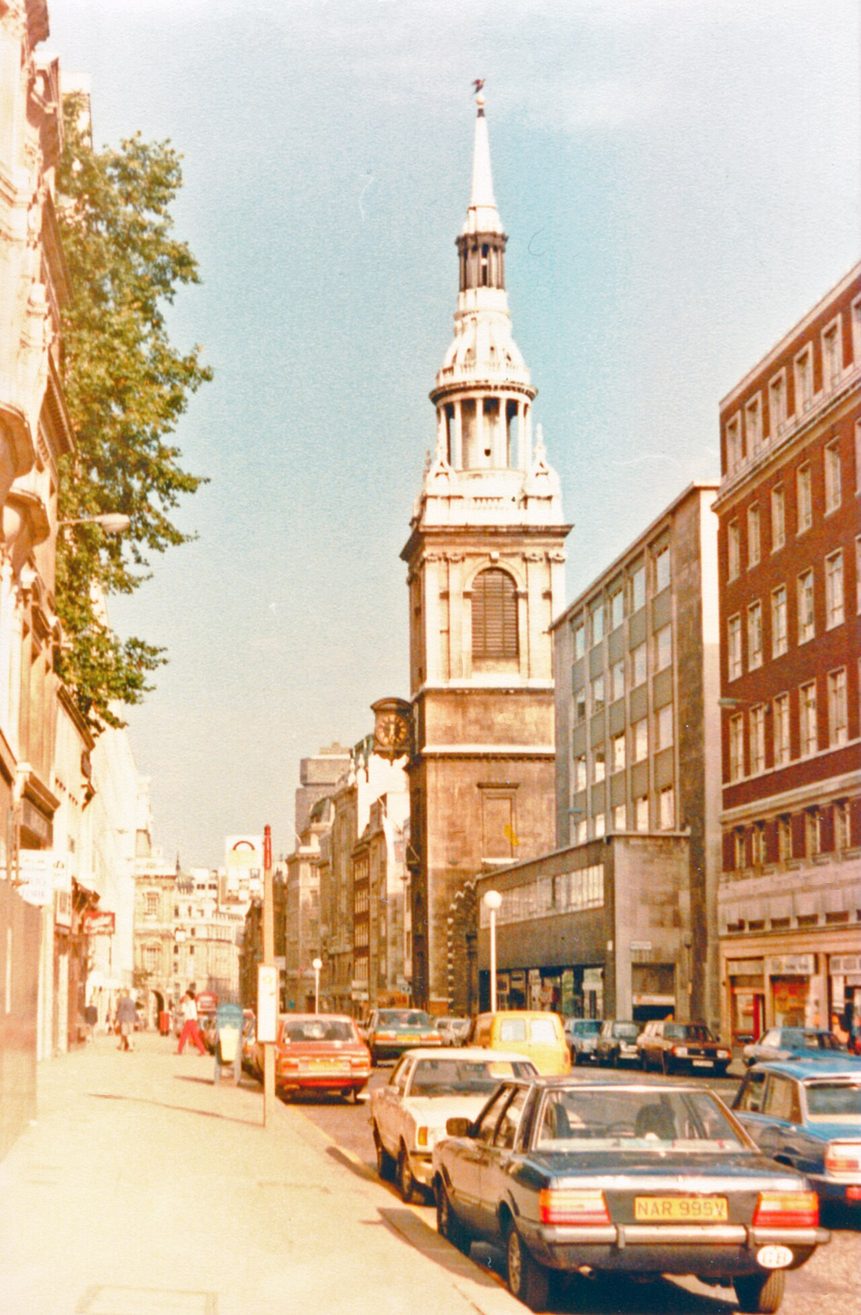
The visitor’s cheat sheet
| Where | Cheapside, London EC2V 6AU; Bow Churchyard and Bow Lane run beside the church |
|---|---|
| Opening hours | Monday to Friday 7.30am–6pm; weekends usually about 10am–3pm, but these vary — check before you go |
| Admission | Free (donations welcome); the church lists no charge |
| Services | Short Morning Prayer on weekdays (8.30am, 8am on Tuesday) and Evening Prayer at 5.45pm; Mass on Monday evening and at lunchtime on Tuesday, Wednesday and Thursday (also 8.15am Tuesday); Sung Compline on Thursday evenings |
| Concerts | Lunchtime organ and other recitals through the year; see the church website |
| Access | Step-free access to the main church, Wren Vestry and Vestibule |
| Toilets | Accessible toilet on site |
| How long | 30–45 minutes |
Hours and admission checked against the official site in November 2026. They change; the official site is always the last word.
What to see
The church is entered from Cheapside and Bow Churchyard.
The steeple from Cheapside
Start on Cheapside and look up. The tower has four stages, and the open colonnades of the spire are best seen against the sky; at the top, look for the dragon. The clock chimes a quarter tune written by Sir Charles Villiers Stanford in 1904.
The churchyard and Captain John Smith
Walk round into Bow Churchyard, re-landscaped in 2008–09. Here stands a bronze statue of Captain John Smith of Jamestown, Virginia, given by the Jamestown Foundation of Virginia and unveiled in 1960. It is a loose copy of William Couper’s statue at Jamestown.
The tower lobby
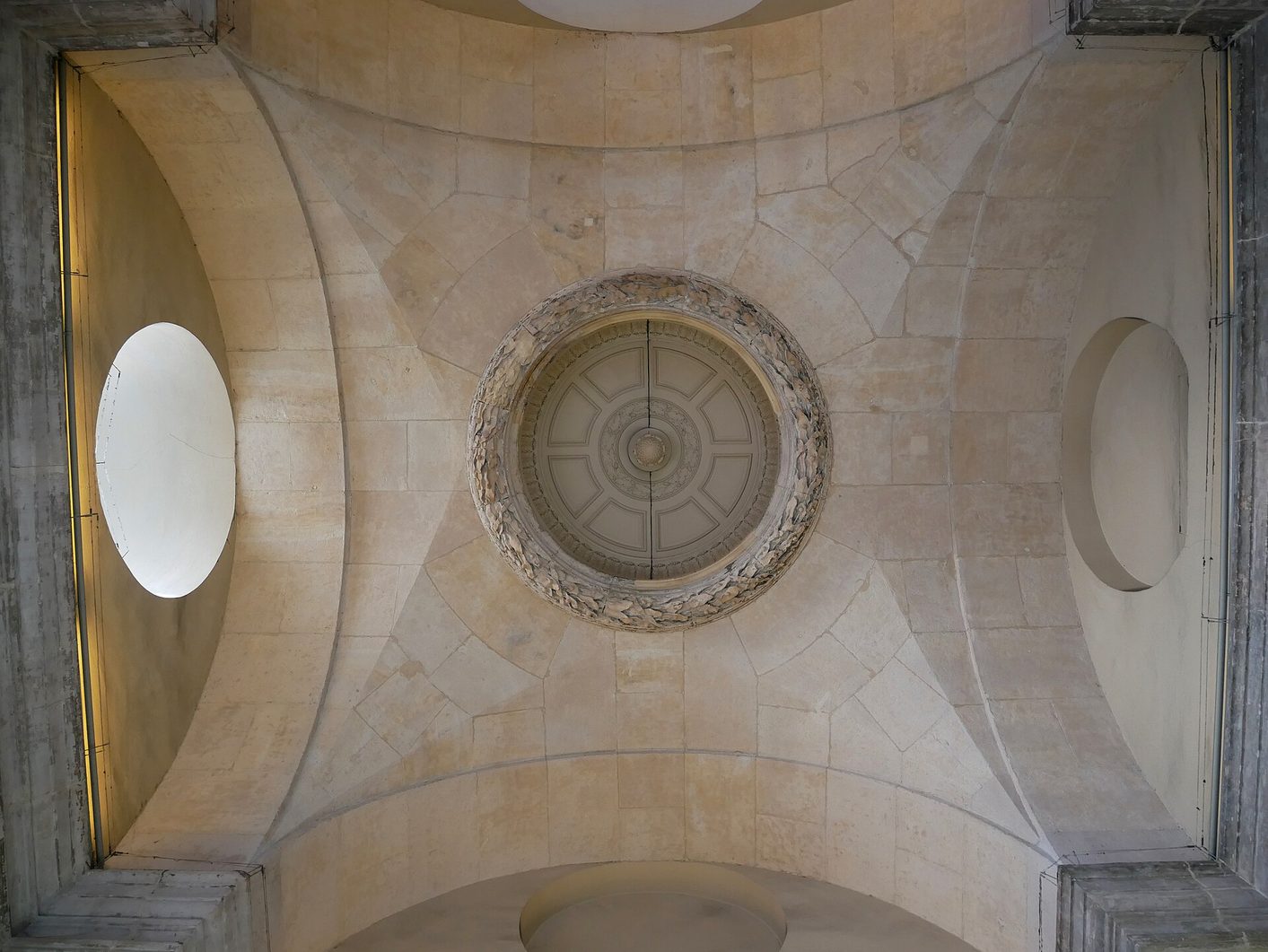
Before going into the nave, look up at the stone vault inside the base of the tower, with its round central boss. The bells hang about 100 feet above the ground.
The nave
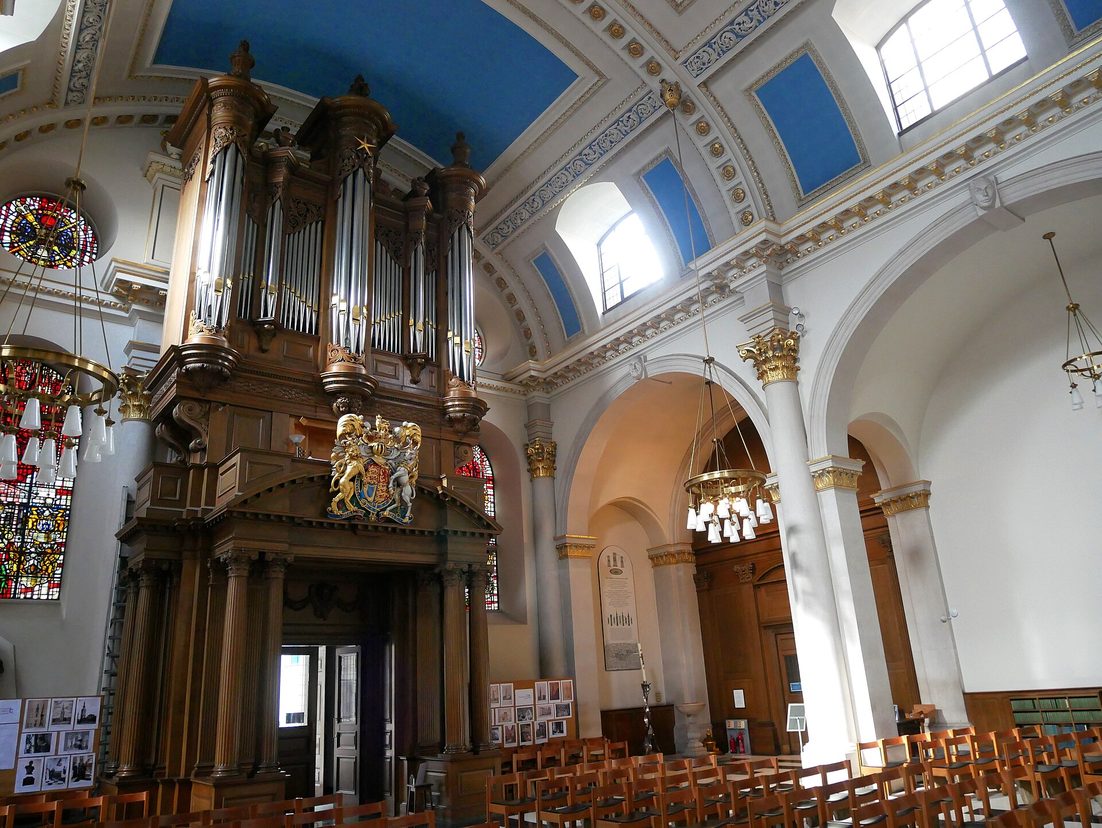
King’s interior is light and spacious: a three-bay nave with round arches and Corinthian capitals, and a tunnel vault painted in blue and white panels, hung with chandeliers. The pulpit and the font, like everything inside, belong to the post-war rebuilding.
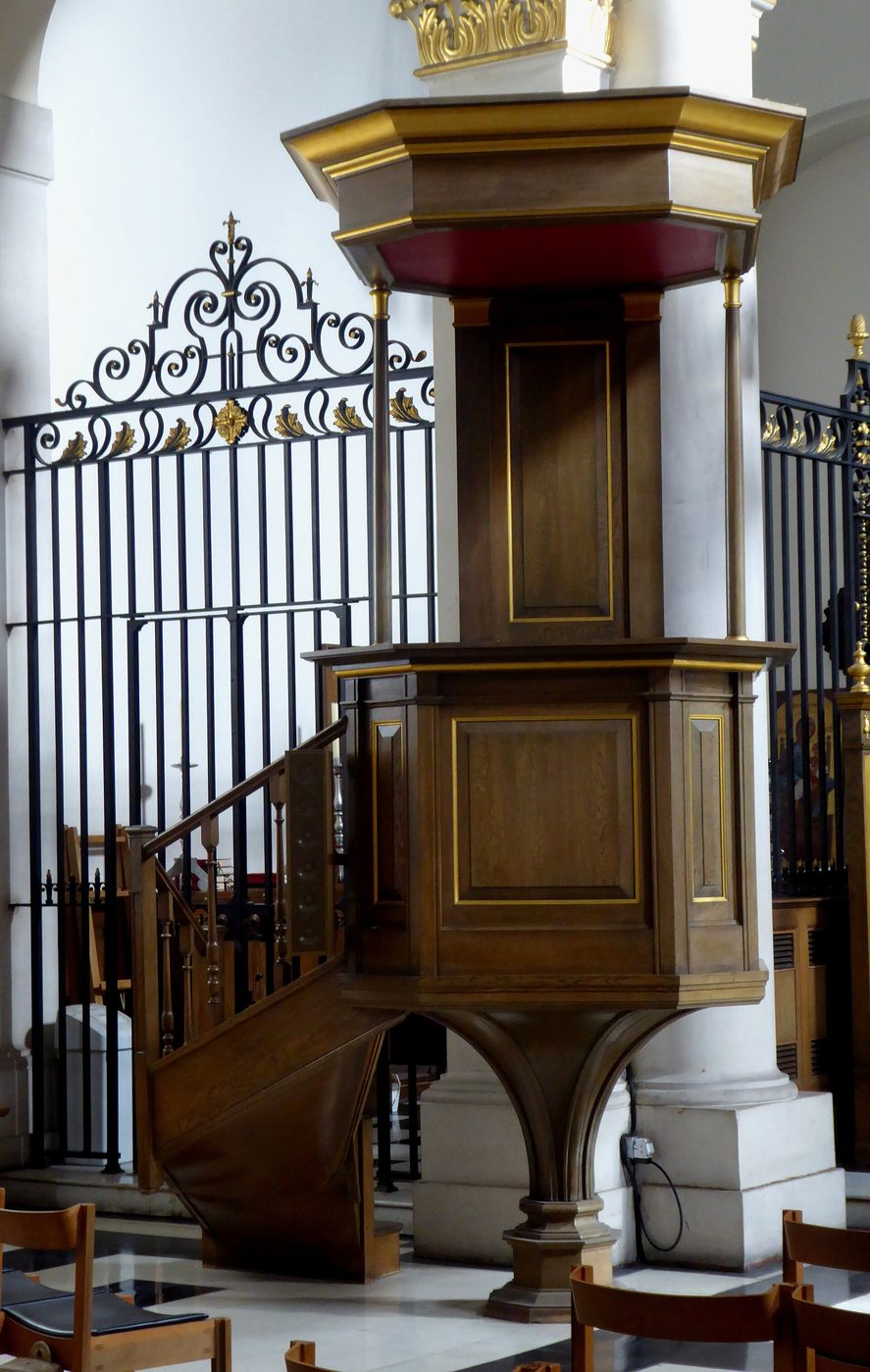
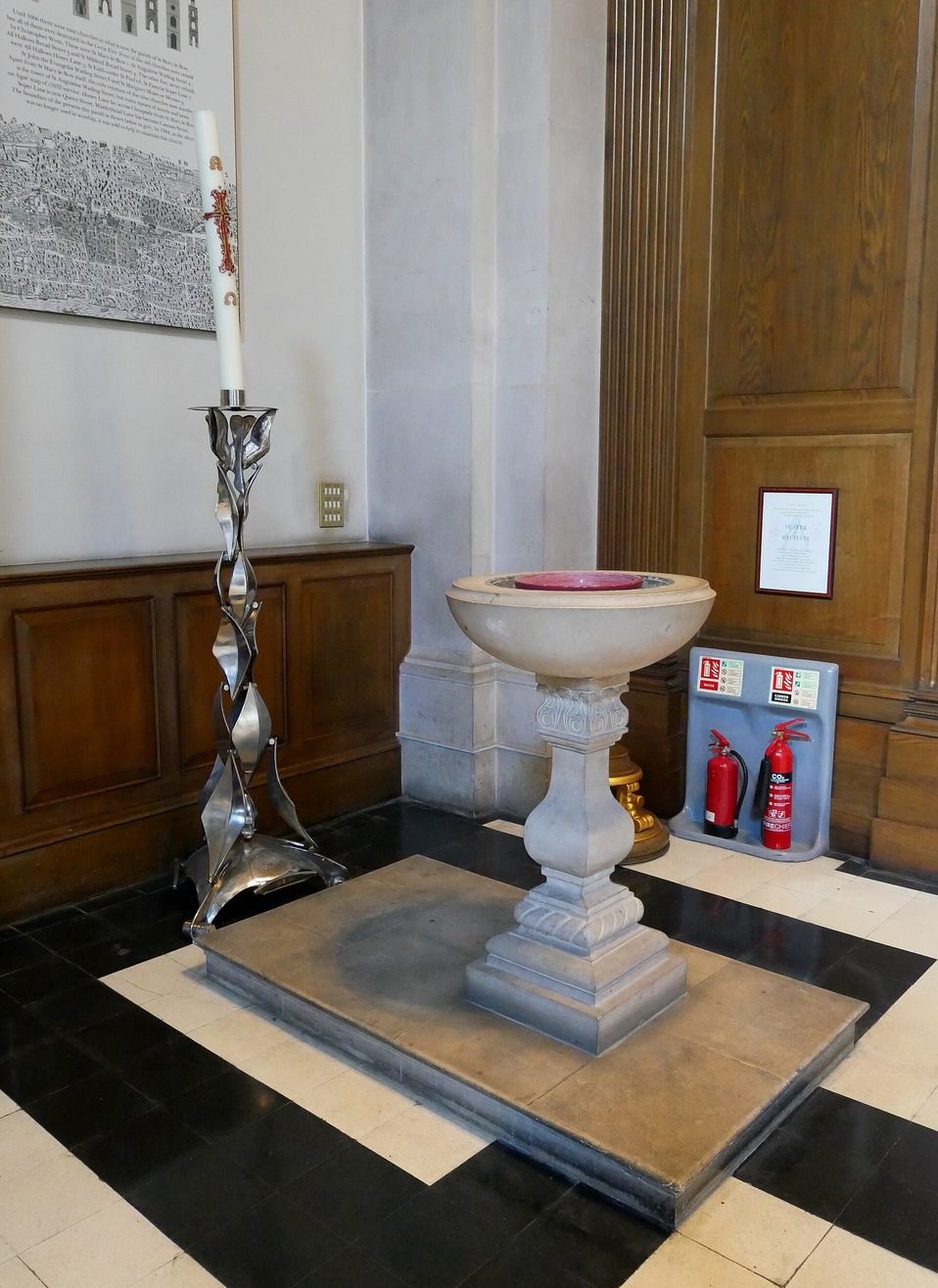
The east windows
The stained glass, all by John Hayward, was installed in 1963–64. The east wall shows Christ in Majesty, seated, with seven stars in his right hand and a dove above. To the left the Virgin Mary holds Wren’s church, her feet on the crypt arches, among the seventeen Wren churches that survived the war; to the right St Paul, with sword and book, stands among eleven more churches and the cathedral.
The organ and the west windows
Turn west. The organ, by Kenneth Tickell & Company, was installed in 2010 in the case of 1964 on the west gallery, beneath the royal arms; one of its stops is named “Bow Bells”. The west windows are Hayward’s too, filled with the seals, buildings and arms of the City, including Guildhall, Mansion House and the livery companies, and with Thomas Becket, who was born in a house across Cheapside.
Australia remembered
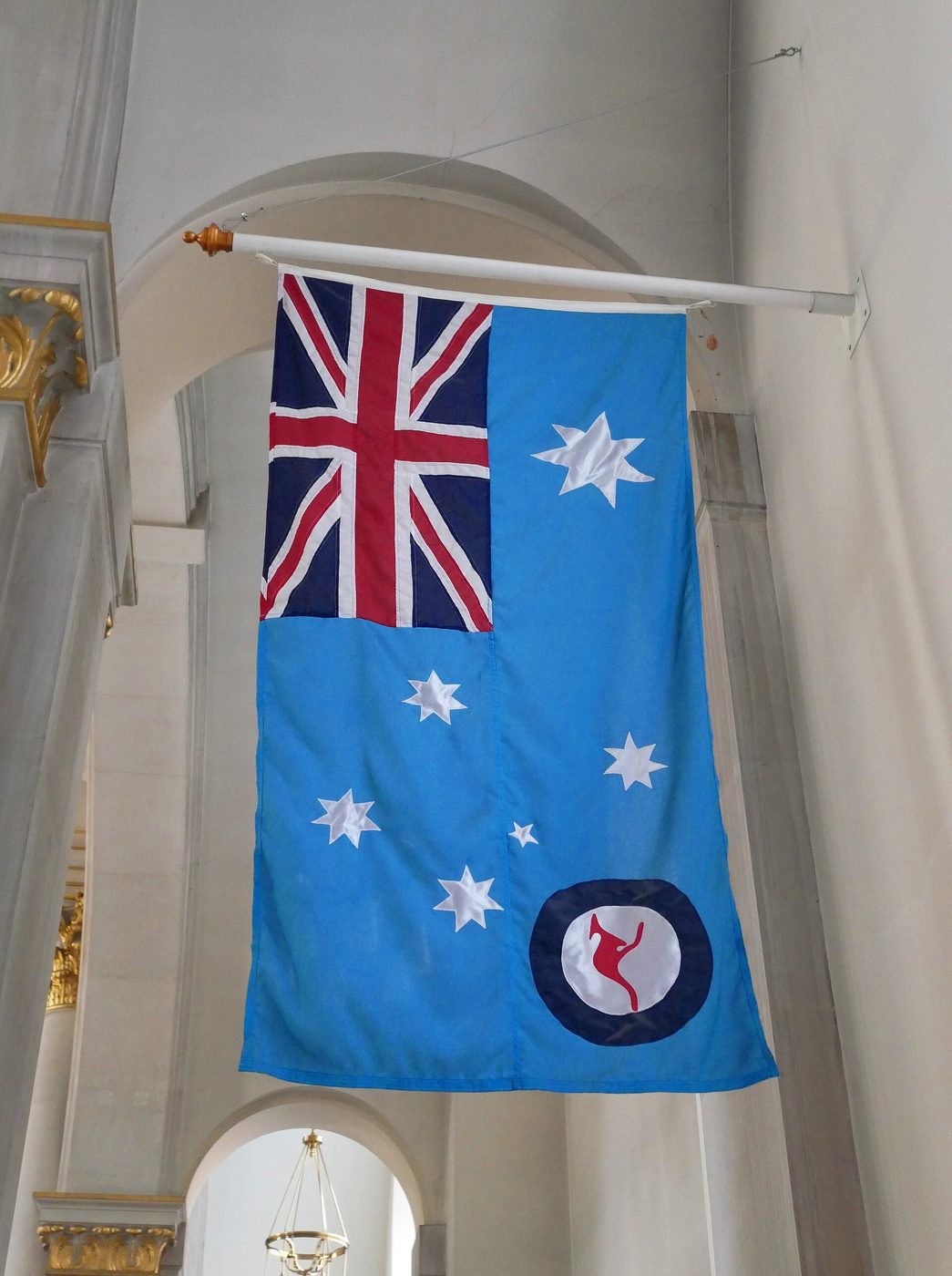
Admiral Arthur Phillip, who led the First Fleet and was the first Governor of New South Wales, was born in nearby Bread Street in 1738 and baptised in one of the parishes now united with Bow. The church says his bronze memorial stands inside, and it holds a commemorative service for him each year. A Royal Australian Air Force ensign also hangs in the church.
The Norman crypt
Below the church is the crypt of about 1080, originally an undercroft, with a wide central space and narrow aisles; the church reckons around 60 per cent of the late eleventh-century fabric survives, and Roman brick is reused in it. Part of it is now the Crypt Chapel of the Holy Spirit, used for silent prayer and a Thursday lunchtime Mass. The crypt also houses a wine bar, Humble Grape, which took over from the former Café Below in late 2025 and, at the time of writing, opens on weekdays only.
A note on our pictures. John Hayward, who made the stained glass, died in 2007, so his windows are still in copyright and we do not show them. For the same reason there are no photographs here of the hanging crucifix, the modern statues in the church, including a Mother and Child, or the John Smith statue of 1960, which we leave out for the same reason.
Getting there
The church gives walking times of about three minutes from St Paul’s (Central line) and Mansion House (District and Circle lines), and five minutes from Bank. There are bus stops nearby, and the church website gives no parking information, so public transport is the easiest way to arrive. St Paul’s Cathedral is a few minutes’ walk west, and Wren’s St Mary Aldermary and St Stephen Walbrook are close by. Bow Lane, a pedestrian lane, runs beside the church.
Where to stay
The City is busy on weekdays and quiet at weekends; there are hotels around St Paul’s and across central London.
This link goes to Booking.com. This site earns nothing from it at present — it is here because it is the quickest way to check what is actually available.
Don’t miss
- The steeple Wren’s colonnades and the dragon vane, from Cheapside.
- The east windows Christ in Majesty among the City churches.
- The Norman crypt Arches from about 1080.
- The bells Listen for the Stanford quarter chimes.
Insider tips
Come at lunchtime. On many weekdays there is a lunchtime recital or Mass; the church lists recitals on 8 December 2026 and 14 and 21 January 2027.
Christmas. In 2026 there is an Advent carol service at 1pm on 1 December and the parish carol service at 1.05pm on 17 December.
Weekend visits. Weekend hours are shorter and vary, so check the church website before a Saturday or Sunday trip.
Common questions
When is St Mary-le-Bow open?
The church gives Monday to Friday, 7.30am to 6pm. Weekends are usually about 10am to 3pm; check first.
Is it free to visit?
The church mentions no charge and invites visitors to come inside; donations are welcome.
Can I see the Norman crypt?
Part of the crypt is the Crypt Chapel of the Holy Spirit, used for prayer and a Thursday lunchtime Mass. The crypt is also home to a wine bar, Humble Grape, which at the time of writing opens on weekdays from noon.
Is the Café Below still there?
No. The café in the crypt has closed, and Humble Grape opened there in late 2025, so older guidebooks are out of date.
What does “born within the sound of Bow Bells” mean?
By tradition, a true Cockney is born within earshot of these bells. A 2012 study suggested that today they would carry only over the eastern City and Shoreditch.
Can I climb the tower?
No; the tower and bells are not open to visitors. The bells are rung for services by the church’s own ringers.
More English churches
- St Paul’s Cathedral — Wren’s cathedral, a few minutes away
- St Bride’s Church — Wren’s tallest parish steeple, on Fleet Street
- Temple Church — the round church of the Knights Templar
See all the cathedrals and churches worth visiting in England →