
St Margaret’s Church, Westminster
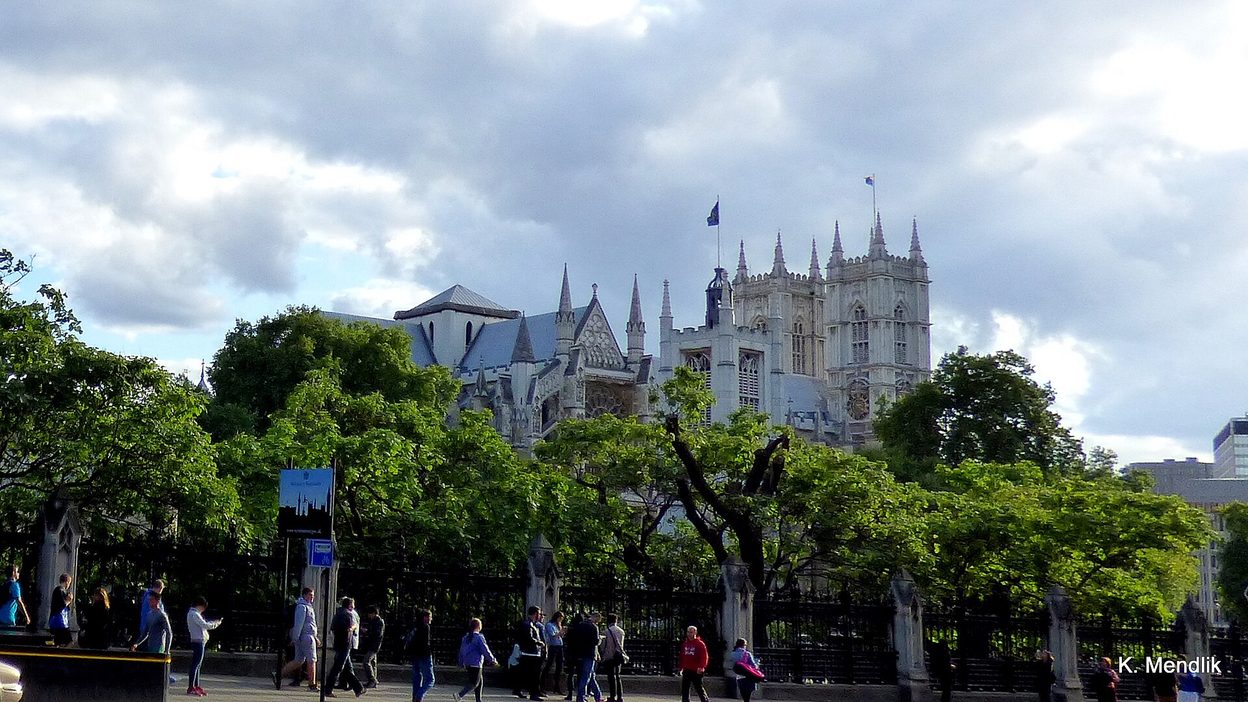
In the shadow of Westminster Abbey, facing Parliament Square, St Margaret’s is a late-medieval parish church that has served as the church of the House of Commons since the seventeenth century. Inside are a sixteenth-century Flemish east window, Sir Walter Raleigh’s grave and a row of modern windows by John Piper, and entry is free.
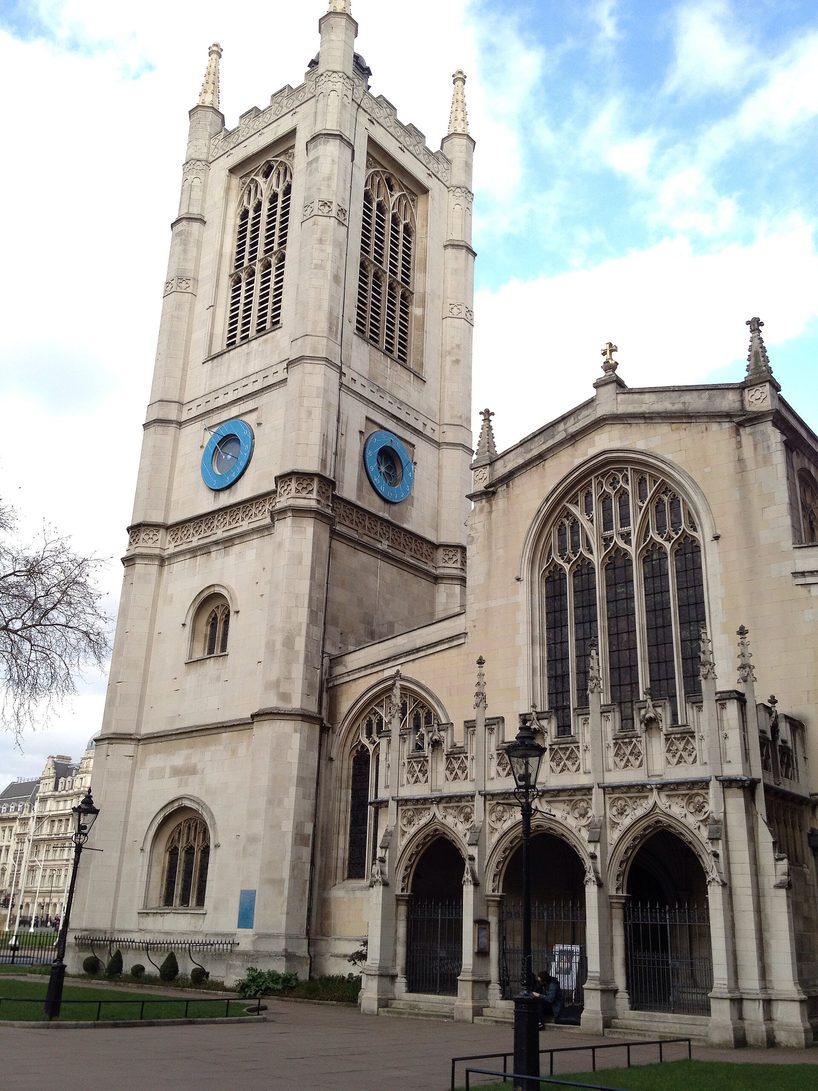
The people’s church beside the Abbey
St Margaret’s was founded in the twelfth century by the Benedictine monks of Westminster, so that the people living around the Abbey could worship apart from the monks; an older tradition credits Edward the Confessor. The church you see today was rebuilt from the late fifteenth century by masons of the Abbey works, among them Robert Stowell and Henry Redman, and consecrated on 9 April 1523. Historic England dates the nave and aisles to about 1504, the tower begun in 1515 and the chancel to about 1518.
It came close to disappearing in the 1540s, when the Duke of Somerset planned to take its stone for his new Somerset House; armed parishioners turned his men away. In 1614 it became the church of the House of Commons, preferred by Puritan members to the Abbey, and Commons services are still held here. The Abbey still calls it “the parish church of the House of Commons”.
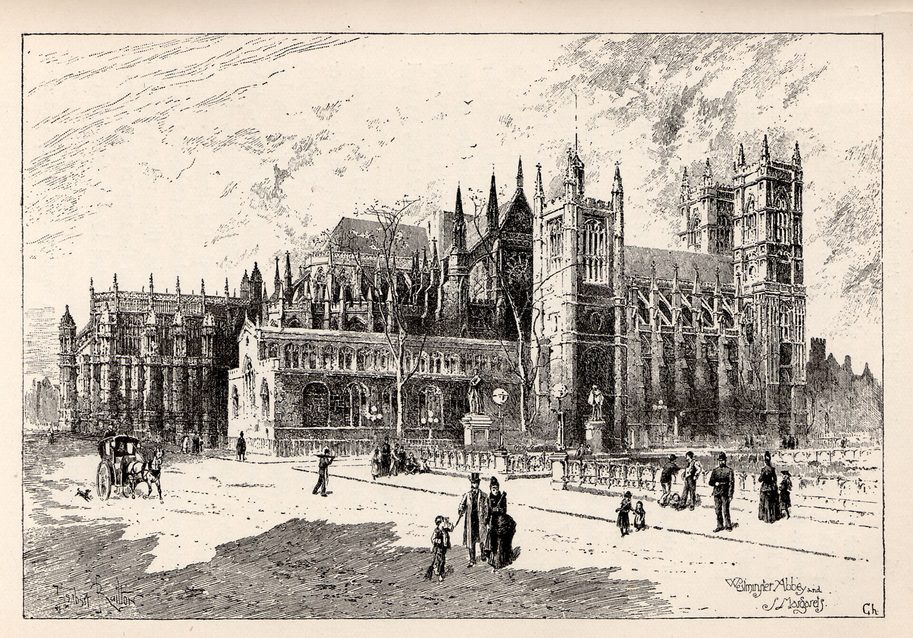
Galleries, a new tower and a Victorian restoration
Galleries were put into the north aisle in 1641 and the south aisle in 1681, the second given by Sir John Cutler. After the Restoration, in 1661, the bodies of Parliamentarians were taken out of the Abbey and reburied in a pit in the churchyard here. In about 1735–38 John James rebuilt the tower and the church was refaced in Portland stone. In 1758 the parish bought its great east window for 400 guineas. The church was restored in the later nineteenth century, with major work by Sir George Gilbert Scott in 1878.
Blast damage in 1940–42 destroyed much of the Victorian glass in the south aisle, which was replaced by John Piper’s windows in 1967. The church was listed Grade I in 1958. Since 1972 it has been under the Dean and Chapter of Westminster Abbey, and in 1987 it became part of a World Heritage Site with the Abbey and the Palace of Westminster.
Weddings and graves
St Margaret’s has long been a fashionable place to marry. The poet Edmund Waller married here in 1631, Samuel Pepys on 1 December 1655 and John Milton, to Katherine Woodcock, on 12 November 1656. Winston Churchill married Clementine Hozier here on 12 September 1908, and Lord Mountbatten married Edwina Ashley on 18 July 1922. Among those buried here are the printer William Caxton (died about 1491–92), the poet John Skelton, Sir Walter Raleigh, buried on the day of his execution in Old Palace Yard in 1618, the etcher Wenceslas Hollar (1677), Thomas Blood (1680), the scholar Elizabeth Elstob (1756) and the writer Ignatius Sancho (1780, in the detached burial ground).
The visitor’s cheat sheet
| Where | Margaret Street, London SW1P 3JX; on the north-east side of Westminster Abbey, facing Parliament Square |
|---|---|
| Opening hours | Monday to Friday 11am–3.30pm; Saturday 11am–3pm (the Abbey’s pages differ slightly); closed to visitors on Sundays (services only). It occasionally closes for special services – check the Abbey website before you go |
| Admission | Free, and separate from the Westminster Abbey ticket; security checks on entry |
| Services | Sundays 6pm Sung Eucharist with the St Margaret’s Choristers; said weekday services (times change at short notice – check the Abbey website) |
| Access | A ramp for wheelchair users; a hearing loop |
| Toilets | Check with the verger on the day |
| How long | Half an hour to an hour |
Hours and admission checked against the official site in November 2026. They change; the official site is always the last word.
What to see
Outside
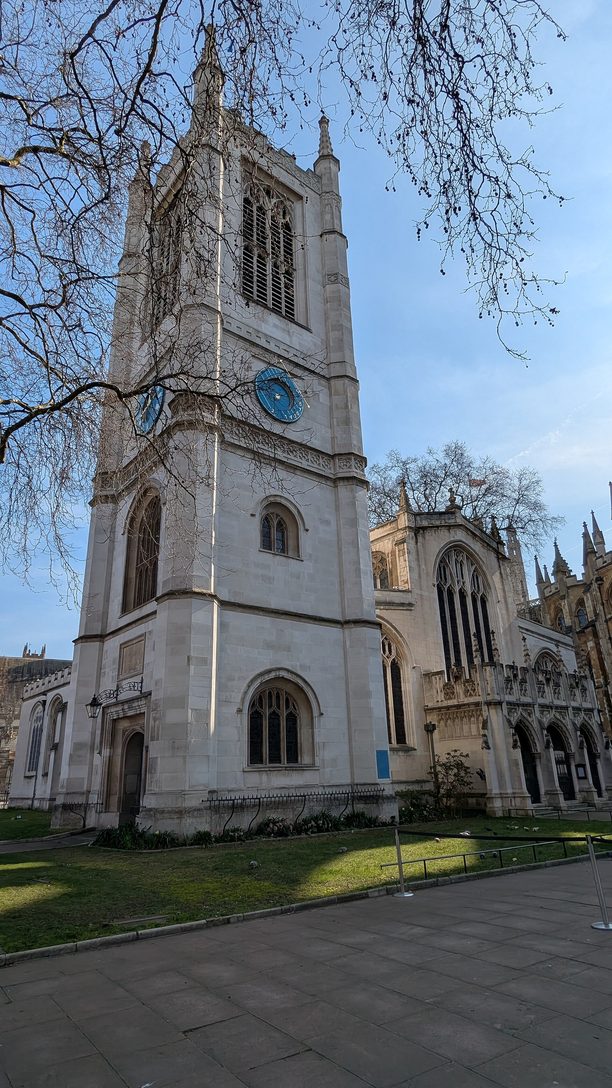
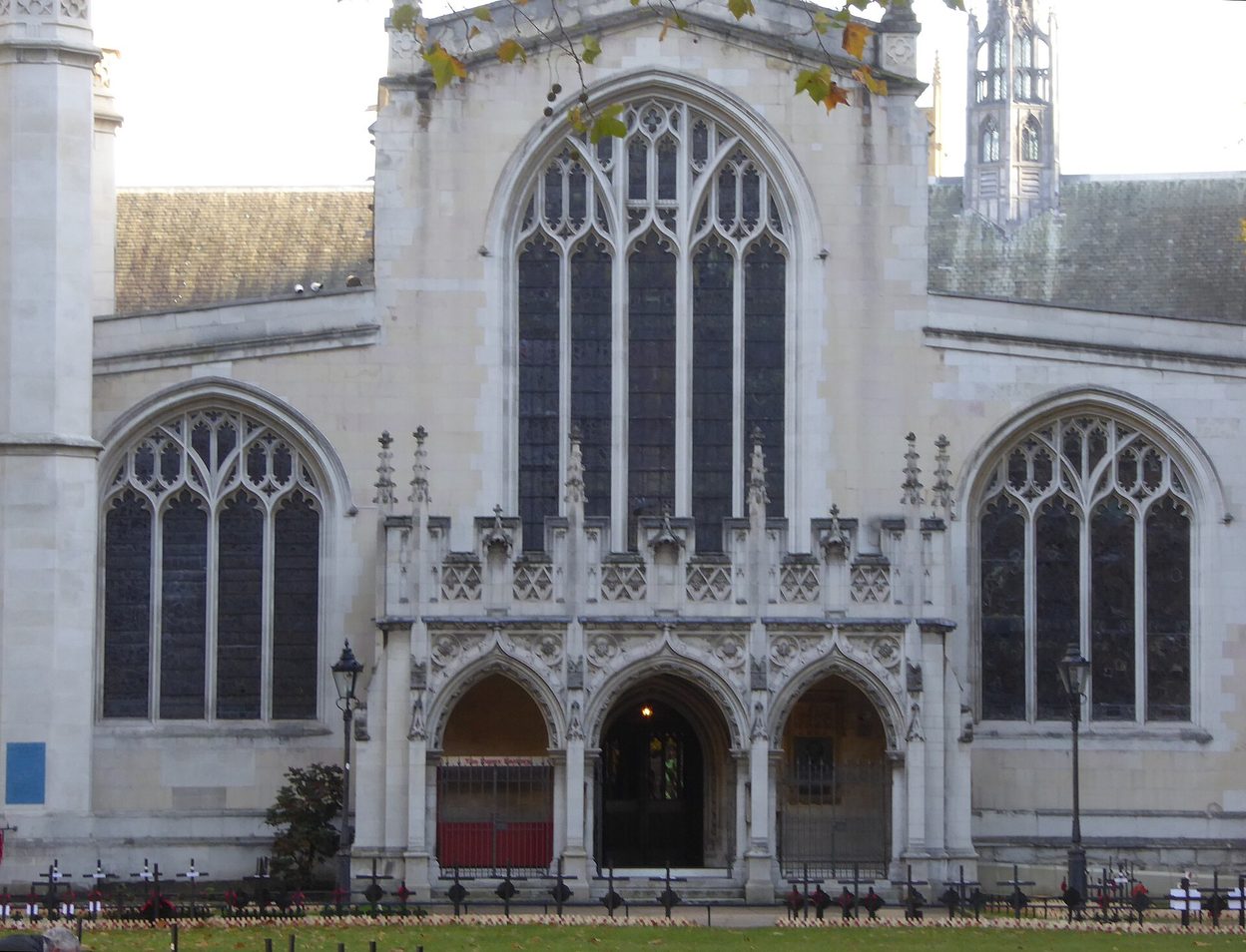
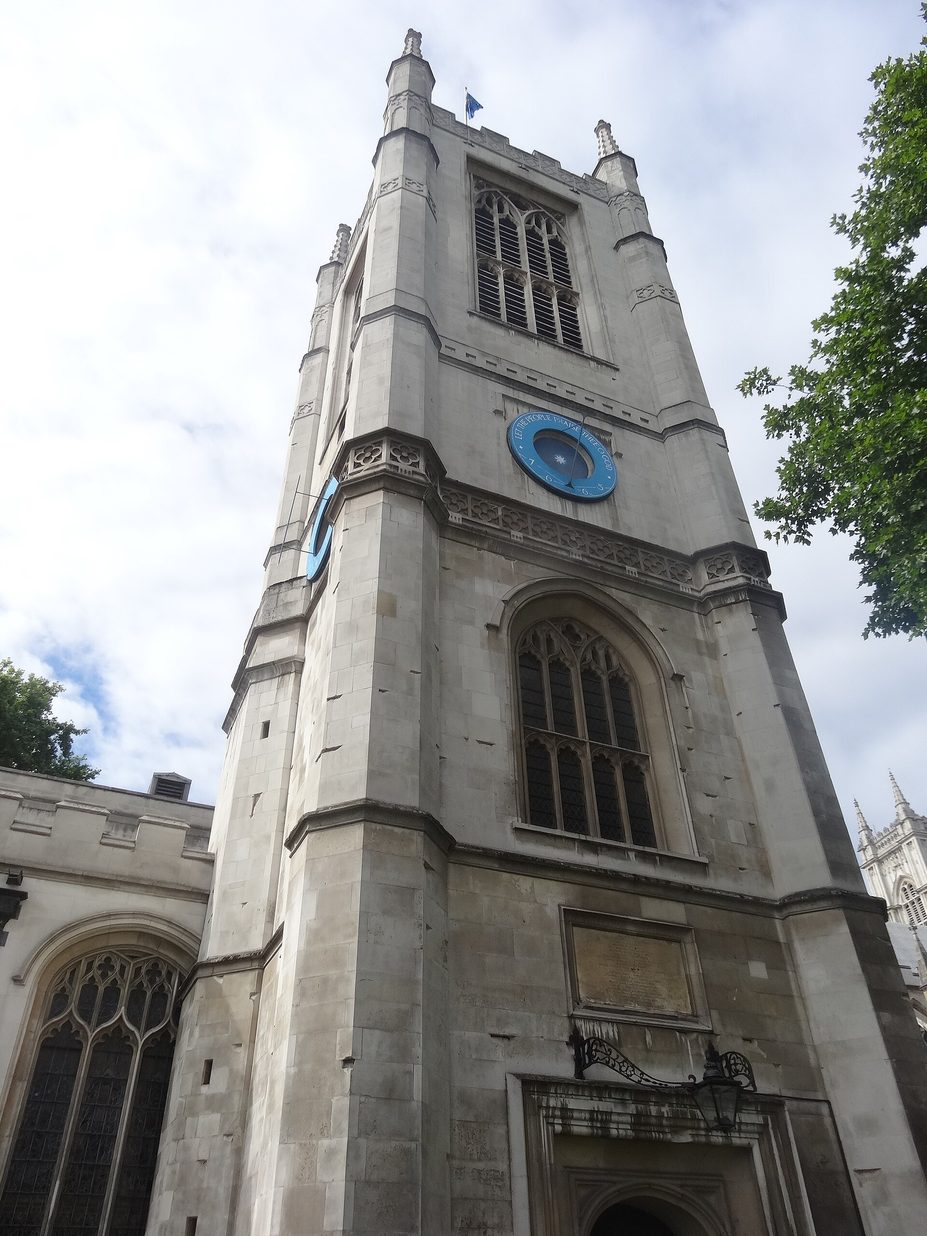
Start on the Parliament Square side. The church is Tudor Gothic beneath its eighteenth-century Portland stone, with John James’s square tower and its blue clock at the west end and a pinnacled porch under a large Perpendicular window on the north side. On the wall to the left of the west entrance is a memorial to the Parliamentarians reburied in 1661.
The nave and the east window
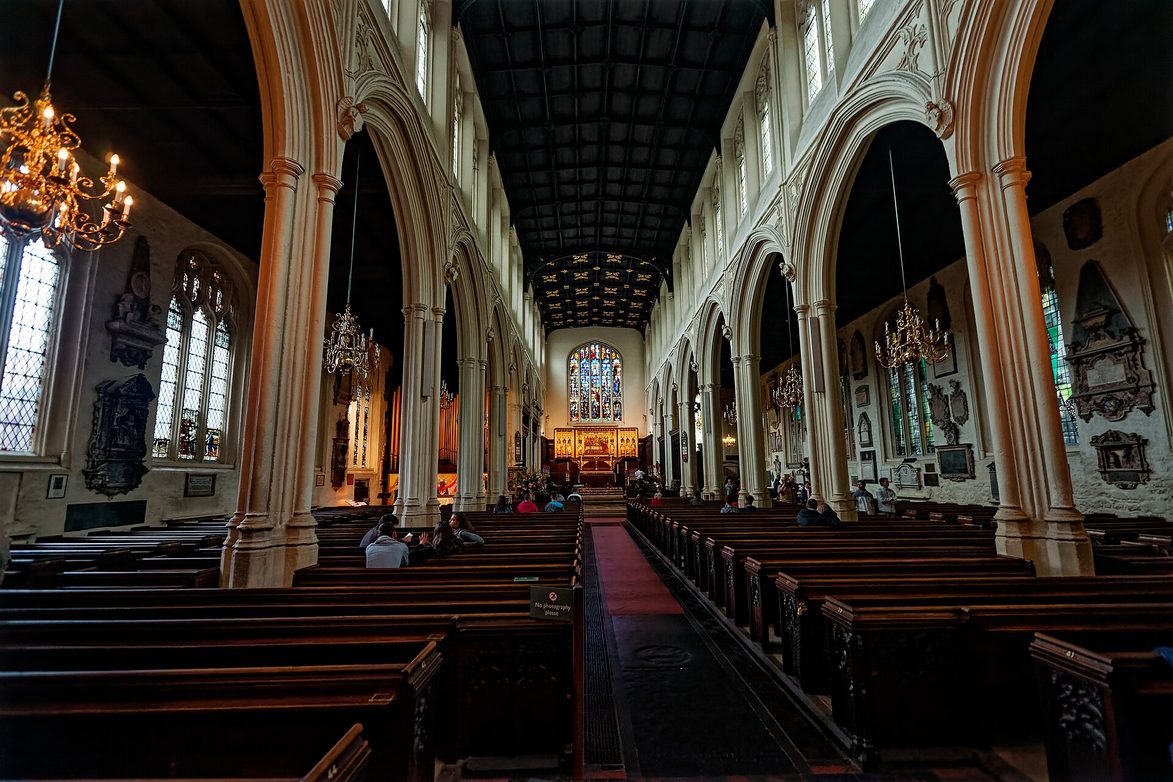
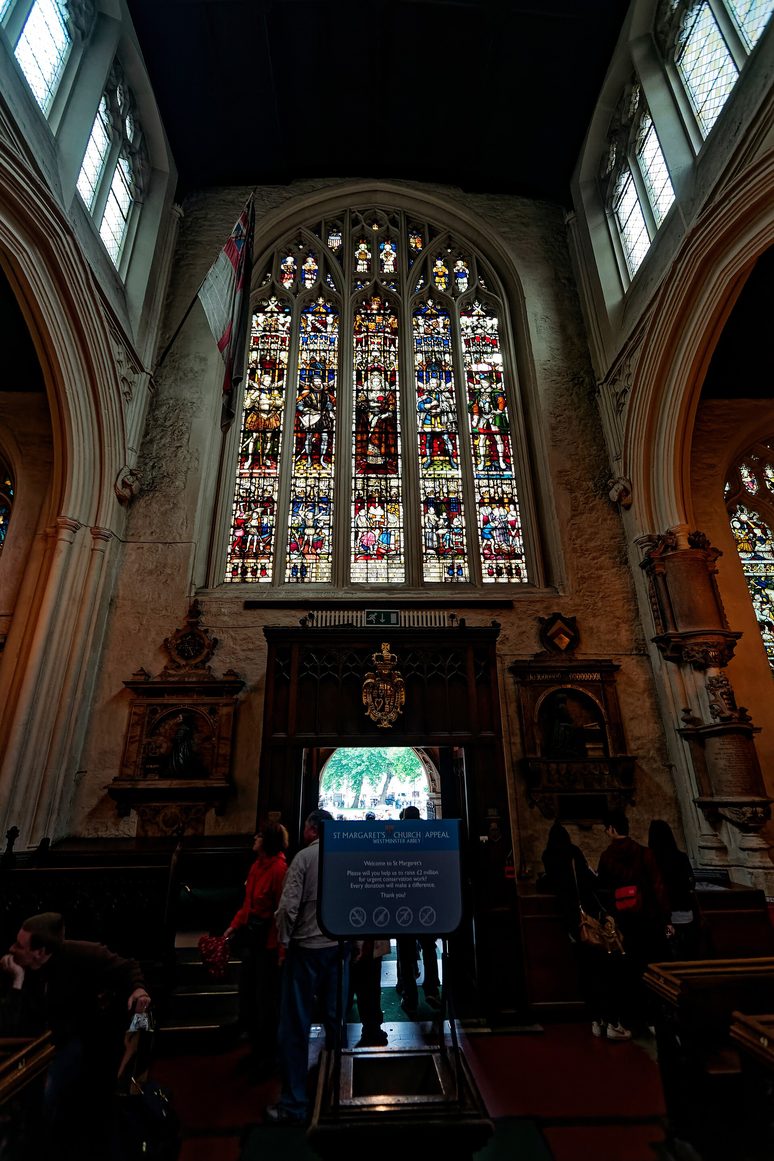
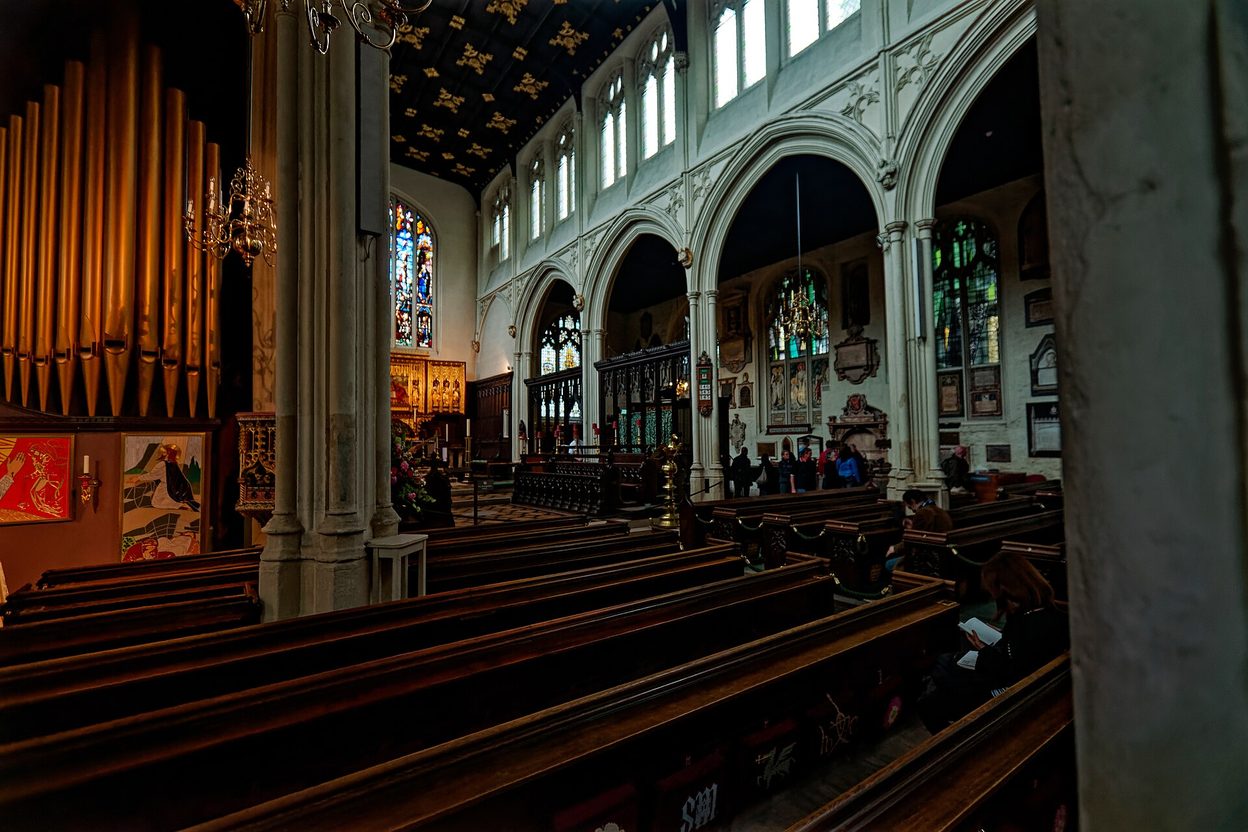
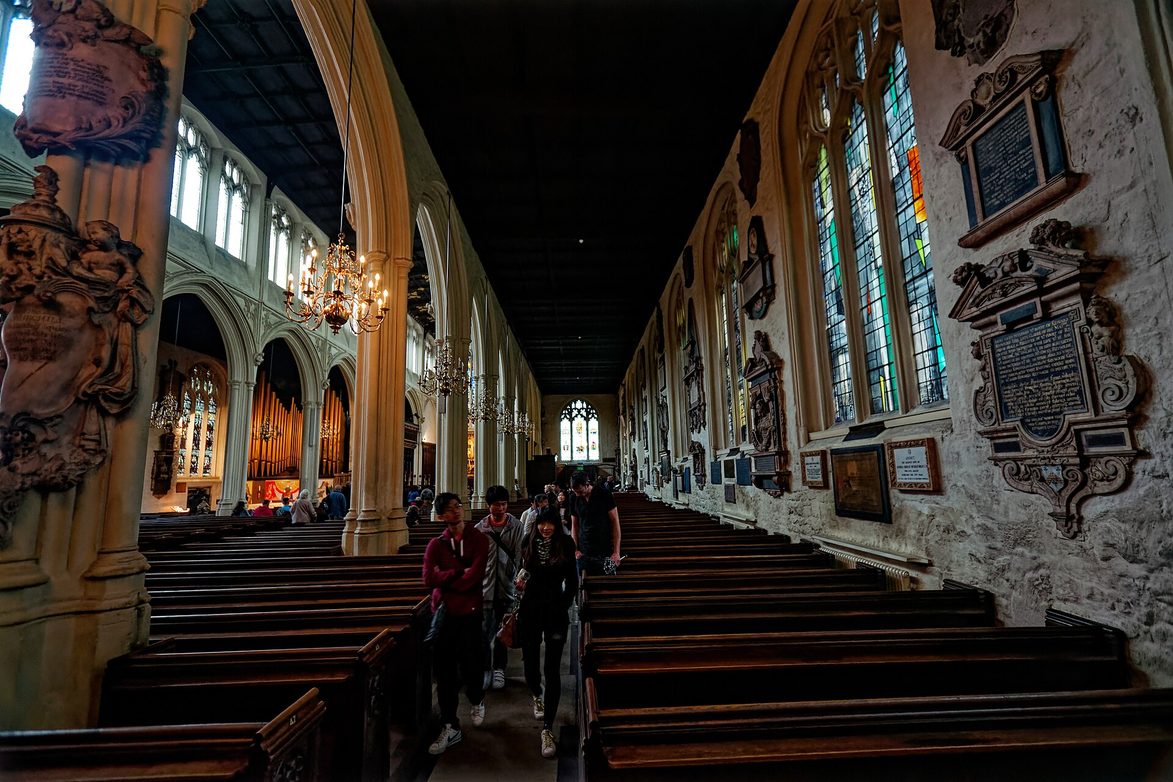
Inside, nave and chancel run together as one long space of eight bays on slender shafted piers, under a panelled roof, lit by chandeliers. Walk east to the great window above the altar, a Crucifixion in Flemish glass of the early sixteenth century, with kneeling figures at its foot. The Abbey says it was probably made between 1515 and 1526 and commemorates the marriage of Henry VIII and Catherine of Aragon; other accounts date it to about 1509, or say it was meant for Henry VII’s Chapel in the Abbey. Its makers are not known. After a long journey through country houses it was bought by the parish in 1758, which led to a seven-year lawsuit over its “popish” imagery; a silver-gilt loving cup, given to the parish afterwards, recalls it. It was taken out for safety in both world wars.
The south aisle
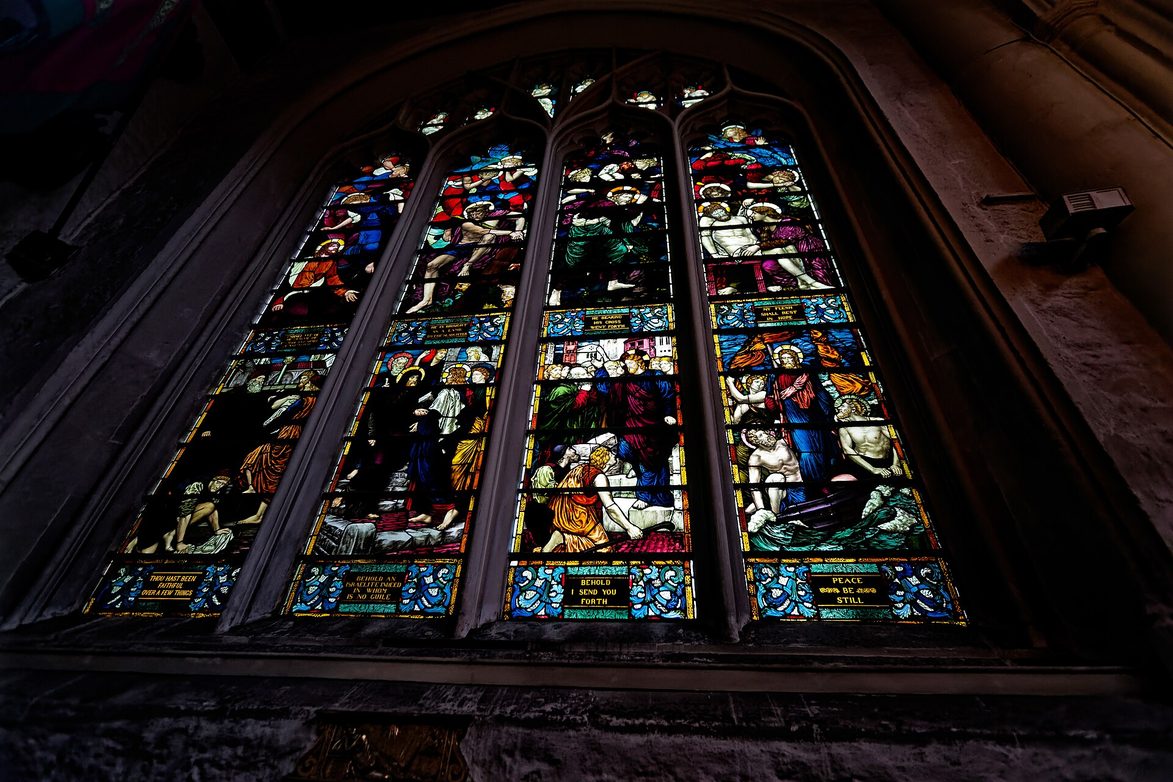
Come back down the south aisle, where eight windows by John Piper, made by Patrick Reyntiens, were dedicated by the Bishop of London on 15 January 1967. They are mostly silvery grey glass with pale greens, yellows and blues; the Abbey speaks of their “total impression of living radiance”. Some commemorate Canon Carnegie and his wife, Peter Kemp-Welch, Clarence Fletcher and Richard Costain. At the west end of the aisle is a window by Henry Holiday of 1882.
The west end
The west window of the nave, of 1882, is by Clayton & Bell. Look too for the Raleigh memorial window, also by Clayton & Bell, paid for by public subscription in the United States and inscribed as “placed here by subscription from the United States of America”. The Abbey also records a surviving Clayton & Bell window to Milton. Turn round for the organ case at the west end.
The north aisle and the monuments
Finish in the north aisle, with windows by Edward Frampton of 1888 and 1891. Among the many wall monuments, look for the Jacobean tomb of Marie, Lady Dudley (died 1600), with her kneeling husband Richard Montpesson; the bust of Cornelius Van Dun (1577); and the monument to Elizabeth Corbett with an epitaph by Alexander Pope. Elsewhere in the church a tablet put up by the Roxburghe Club in 1820 recalls Caxton’s press at the Abbey in 1477; a Caxton window of 1882 was destroyed in 1940. There is also a plaque to Olaudah Equiano.
A note on our pictures. We do not show John Piper’s south-aisle windows. Piper died in 1992 and Patrick Reyntiens, who made them, more recently, so the windows are still in copyright. The 1894 drawing by Herbert Railton is long out of copyright.
Getting there
St Margaret’s stands between Westminster Abbey and Parliament Square, a few minutes’ walk from Westminster Underground station (District, Circle and Jubilee lines). St James’s Park station (District and Circle lines) is a little further, and many buses stop in Parliament Square and Victoria Street. The Palace of Westminster and Big Ben are just across the square, and the Jewel Tower is close by. Westminster Abbey charges for entry and keeps its own hours; St Margaret’s is separate and free, so it is easy to fit in before or after a visit to the Abbey.
Where to stay
Central London has places to stay at every price, and Westminster is easy to reach from most of them.
This link goes to Booking.com. This site earns nothing from it at present — it is here because it is the quickest way to check what is actually available.
Don’t miss
- The east window Flemish glass of the early 1500s.
- The Piper windows Silvery modern glass in the south aisle.
- Raleigh’s grave Buried here in 1618.
- The Lady Dudley tomb A Jacobean monument with a kneeling figure.
Insider tips
Pair it with the Abbey. St Margaret’s needs no ticket and is next door, so look in before or after Westminster Abbey.
Hear the choir. The Sunday 6pm Sung Eucharist is sung by the St Margaret’s Choristers, girls aged 11 to 17.
Check on the day. As a working church tied to Parliament and the Abbey, it sometimes closes for special services; the Abbey’s daily calendar lists its hours.
Common questions
Is St Margaret’s free to visit?
Yes. The Abbey says St Margaret’s is open for visiting free of charge, and it is separate from the Westminster Abbey ticket. Worshippers at services also enter free.
When is St Margaret’s open?
The Abbey gives Monday to Friday 11am–3.30pm and Saturday 11am–3pm; it is closed to visitors on Sundays, when it is open for services. It occasionally closes for special services, so check the Abbey website before you go.
Is it part of the Westminster Abbey ticket?
No. It has its own hours and there is no charge. There are security checks on entry.
Who is buried at St Margaret’s?
Among others, William Caxton (died about 1491–92), Sir Walter Raleigh (1618), Wenceslas Hollar (1677) and Ignatius Sancho (1780, in the church’s burial ground at Christchurch Gardens).
Can I take photographs?
Personal photographs are welcome during visiting hours, but not video, flash, extra lighting, selfie sticks or tripods. Photographing children needs the consent of an accompanying adult, and professional photography needs the Abbey Press Office’s approval.
Who has married at St Margaret’s?
Samuel Pepys in 1655, John Milton in 1656 and Winston Churchill, who married Clementine Hozier here on 12 September 1908, are among the best known.
More English churches
- Westminster Abbey — its neighbour, across the lawn
- Westminster Cathedral — the Catholic cathedral, about a kilometre away
- St Paul’s, Covent Garden — another London parish church
See all the cathedrals and churches worth visiting in England →