
St Paul’s Church, Covent Garden
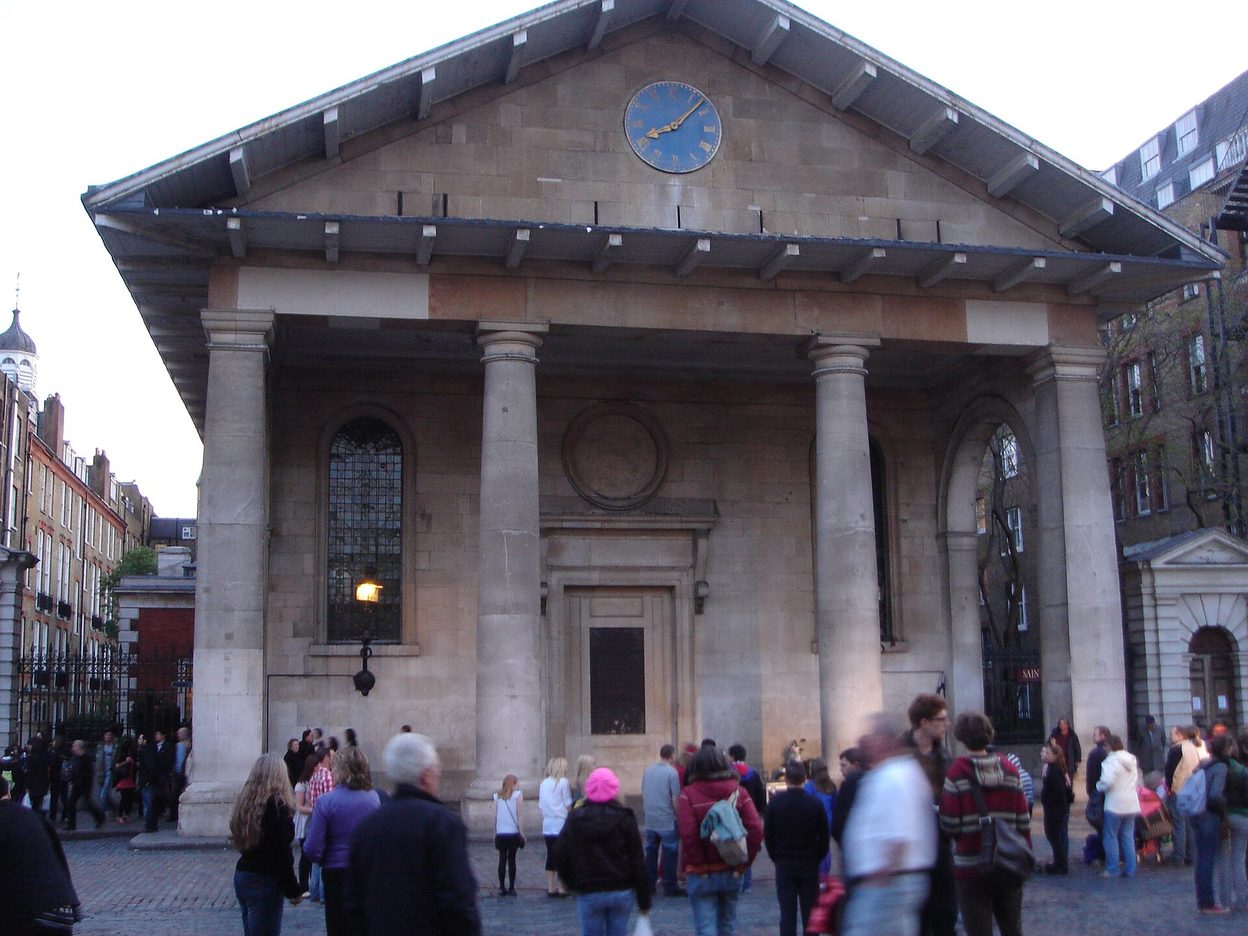
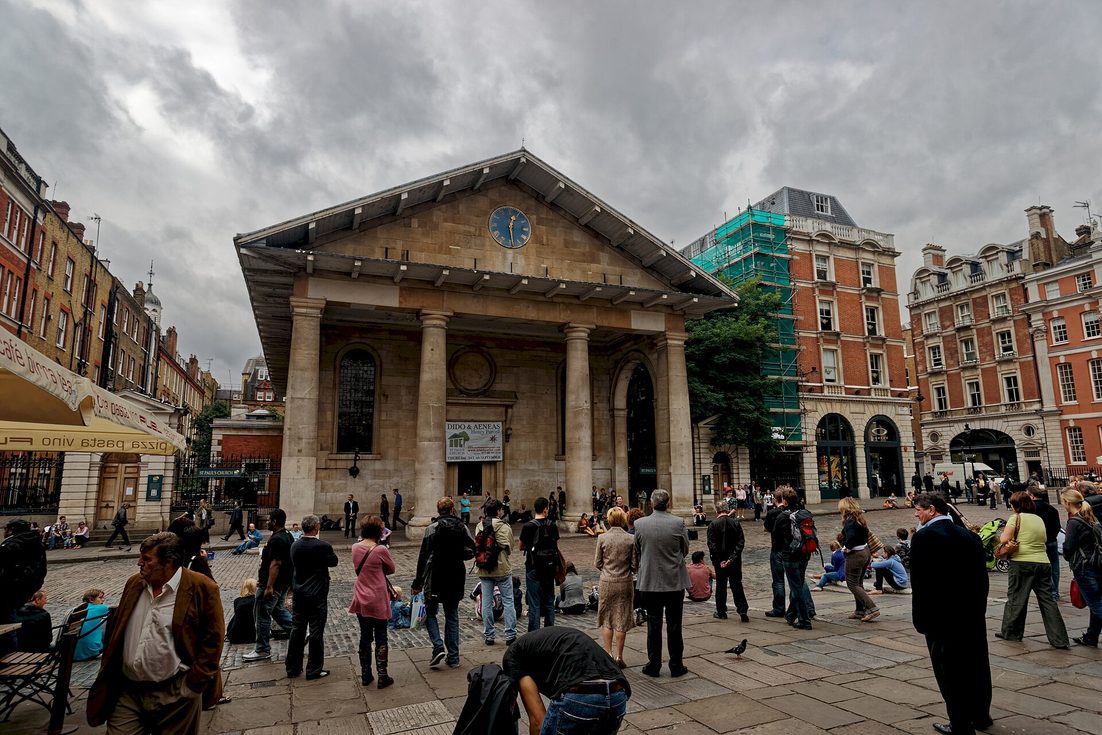
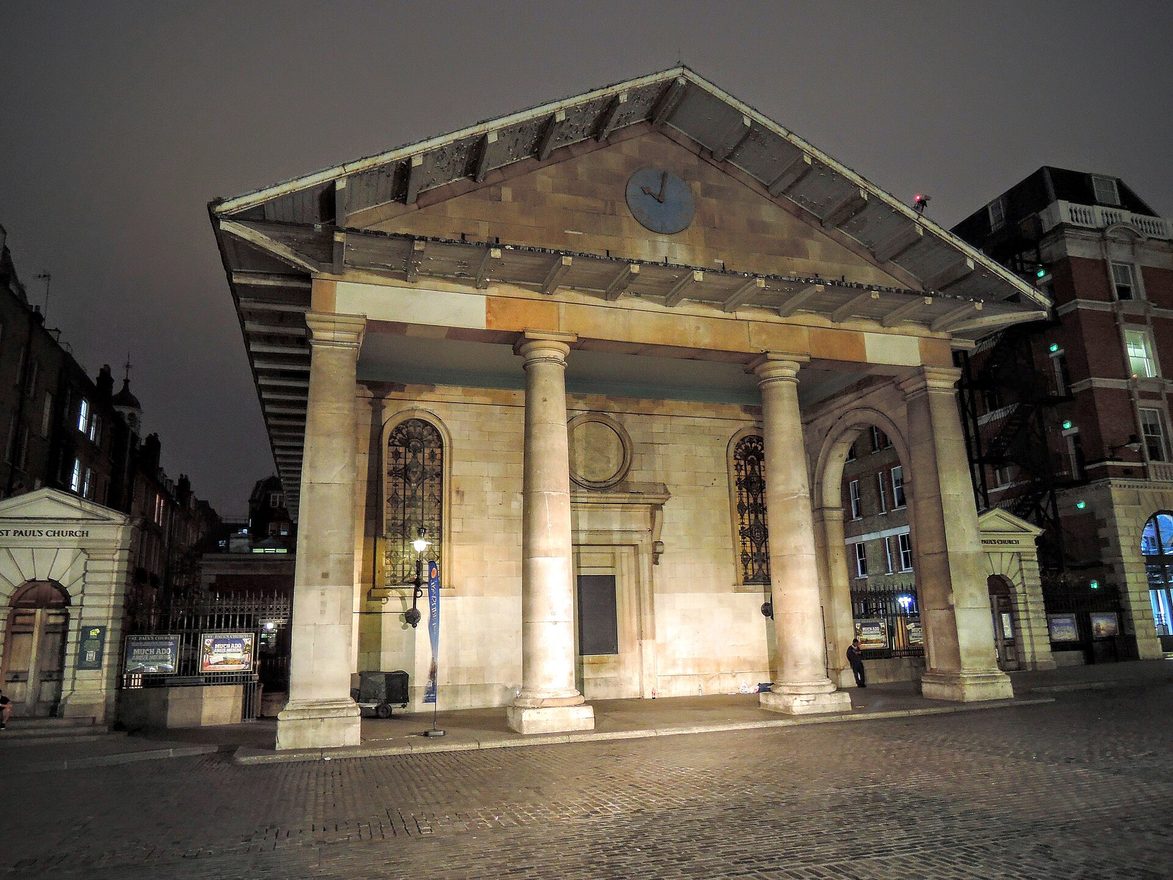
Known as the Actors’ Church, St Paul’s is the plain, temple-like church that Inigo Jones built in the 1630s on the west side of the Covent Garden piazza. Its great portico, where Pepys watched a puppet show in 1662, is not a door at all; inside, the walls are lined with memorials to the people of the theatre.
The handsomest barn in England
In 1630 Francis Russell, the 4th Earl of Bedford, obtained a licence to develop his land at Covent Garden, and the next year he commissioned a square, or piazza, and a church to go with it. The design is credited to Inigo Jones, though documentary evidence for his authorship is lacking. Building began in 1631 and the church has been in use since 1633 (the listing description gives 1631–38); it is reported to have cost the Bedford estate £4,886.
The church is a Tuscan temple, modelled on the Etruscan temple described by the Roman writer Vitruvius. According to a story retold by Horace Walpole in 1782, the earl wanted a church “not much better than a barn”, and Jones replied, “Then you shall have the handsomest barn in England.” The story, often repeated, is not backed by contemporary evidence.
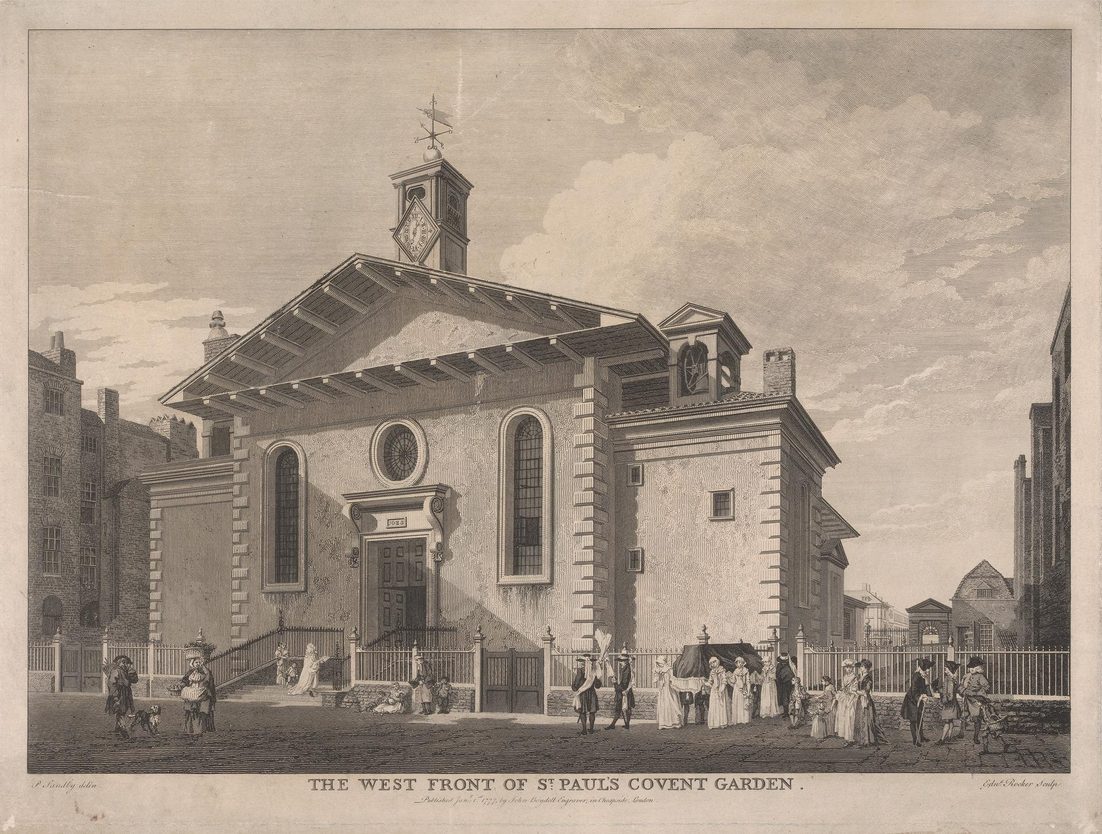
Jones meant the main entrance to face the piazza. The Bishop of London insisted on a traditional altar at the east end, and the church was turned round: the altar now stands behind the great portico, and the real entrance is the plainer west end, reached through the churchyard.
Puppets, plague and fire
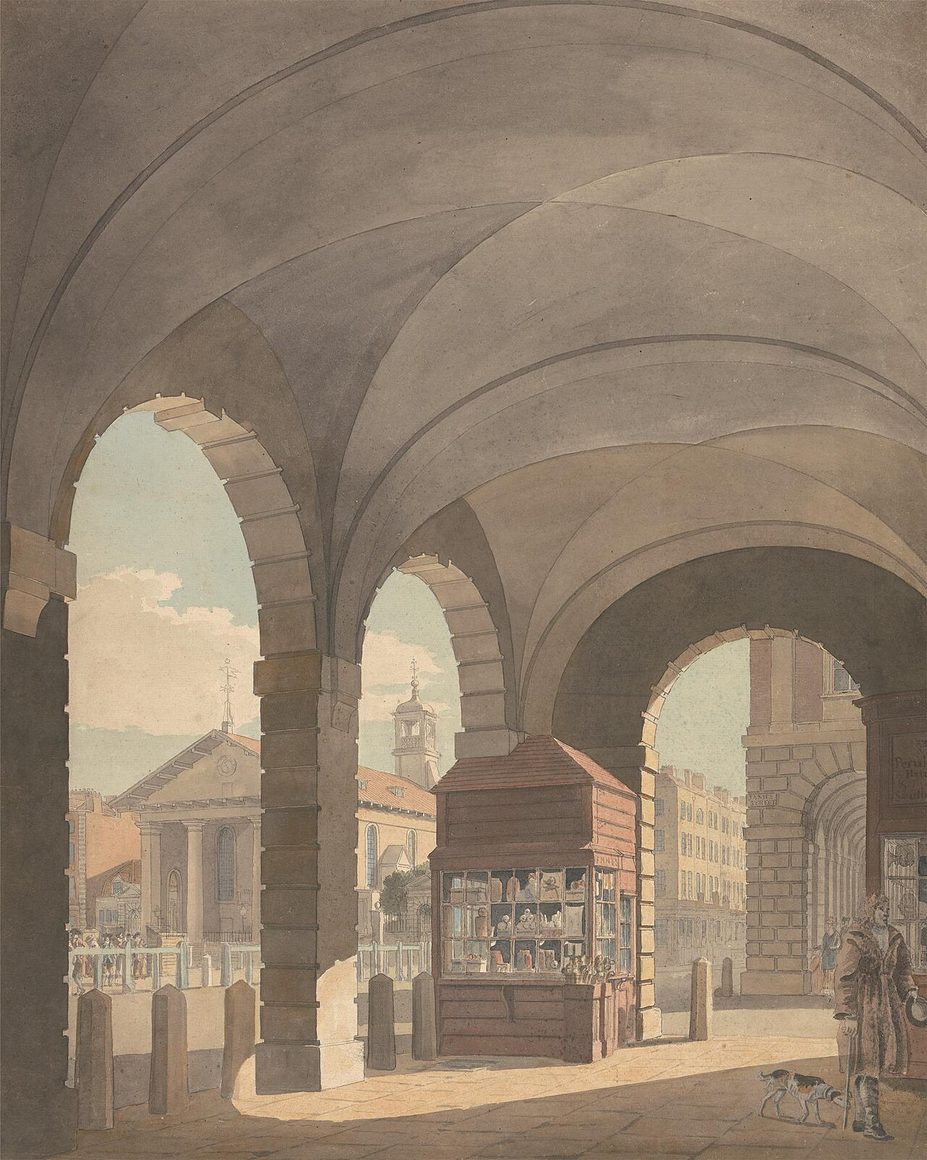
On 9 May 1662 Samuel Pepys recorded an “Italian puppet play” under the portico. Later tradition calls it the first recorded Punch and Judy show in England, and a May Fayre with Punch and Judy still marks it each year. Soon afterwards Theatre Royal Drury Lane, and in 1732 the Covent Garden Theatre (now the Royal Opera House), opened in the parish, and the church’s link with the stage began.
In 1665 victims of the plague were buried in the churchyard. In 1789 Thomas Hardwick restored the church, and in September 1795 a fire started by workmen on the roof burnt out the interior. The outer walls survived, along with the parish records (one account also says the pulpit was saved, though the listing text dates the pulpit to the early 19th century), and Hardwick rebuilt the church following Jones’s design; it was reconsecrated on 1 August 1798.
Burials ended in the 1850s, and in 1882 the churchyard was opened as a public garden. William Butterfield raised the chancel floor in 1871–72, Henry Clutton altered the side arches and removed the bell-turret in 1878–82, and the walls were refaced in red brick in 1888. The church was listed Grade I in 1958, and the narthex at the west end was restored in 2017.
The visitor’s cheat sheet
| Where | Bedford Street, Covent Garden, London WC2E 9ED; the portico faces the west side of the piazza |
|---|---|
| Opening hours | The church says usually 9am–5.30pm on weekdays; it can close for events, so phone 020 7836 5221 before you go. Weekend opening is not stated by the church and other listings differ |
| Admission | Free; donations welcome. Concerts and theatre are ticketed |
| Services | Sunday Eucharist 11am; Sung Evensong 4pm on the second Sunday of the month; Wednesday Eucharist 1.10pm; Morning Prayer 8.30am Tuesday–Friday |
| Access | Wheelchair access from Bedford Street and Henrietta Street, with a ramp at the steps into the nave |
| Toilets | None listed for visitors; there are plenty of cafés around the piazza |
| How long | Half an hour to an hour, with time in the garden |
Hours and admission checked against the official site in November 2026. They change; the official site is always the last word.
What to see
The portico on the piazza
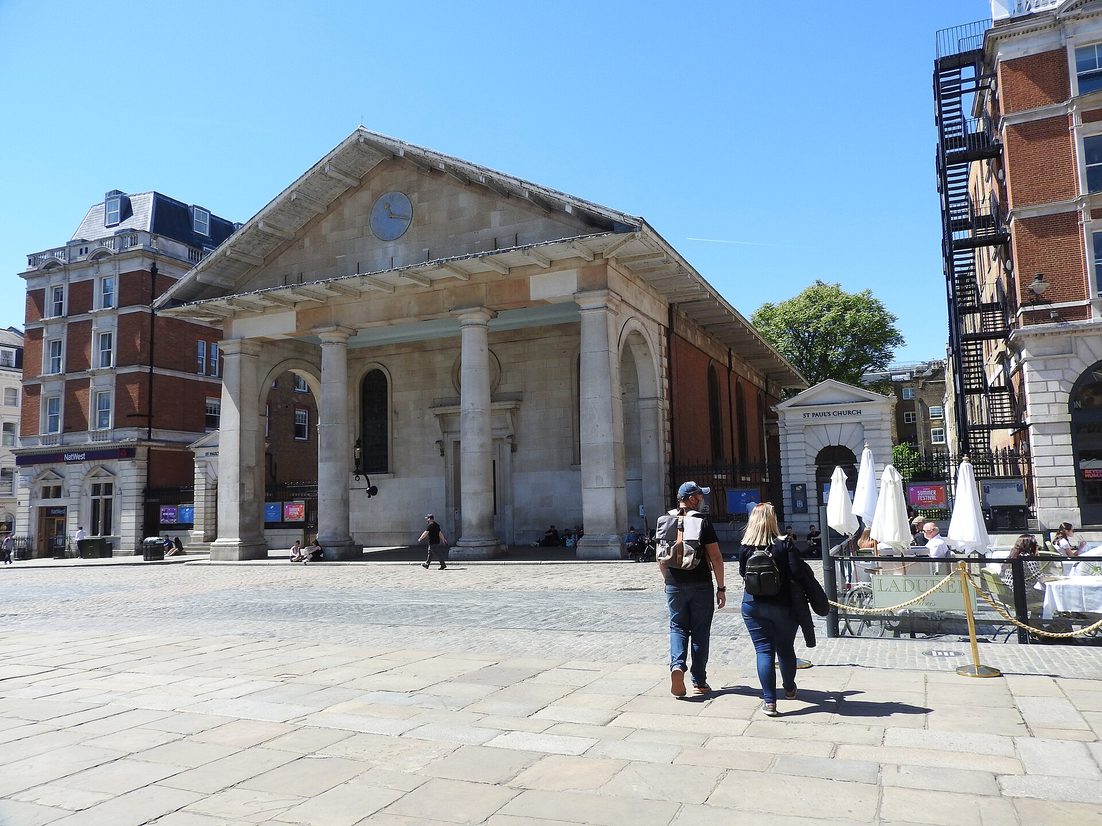
Start in the piazza, where the east portico of four Tuscan columns rises under its wide pediment and clock. The central door is a false one: the altar is on the other side of the wall. This is where Pepys saw his puppets, and where Bernard Shaw set the opening scene of Pygmalion, the meeting of Professor Higgins and Eliza Doolittle that returns in My Fair Lady.
The churchyard garden
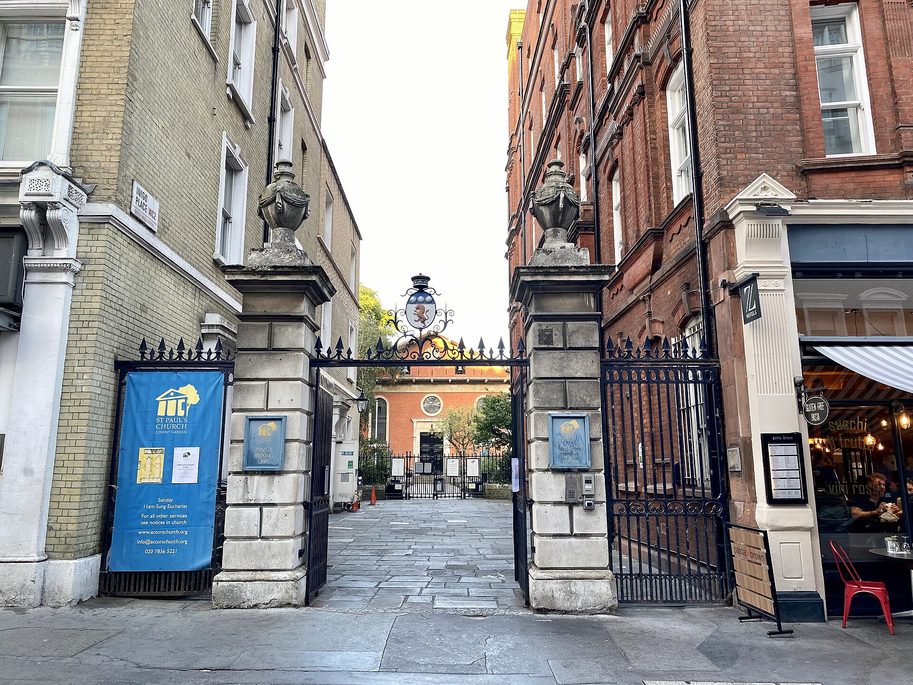
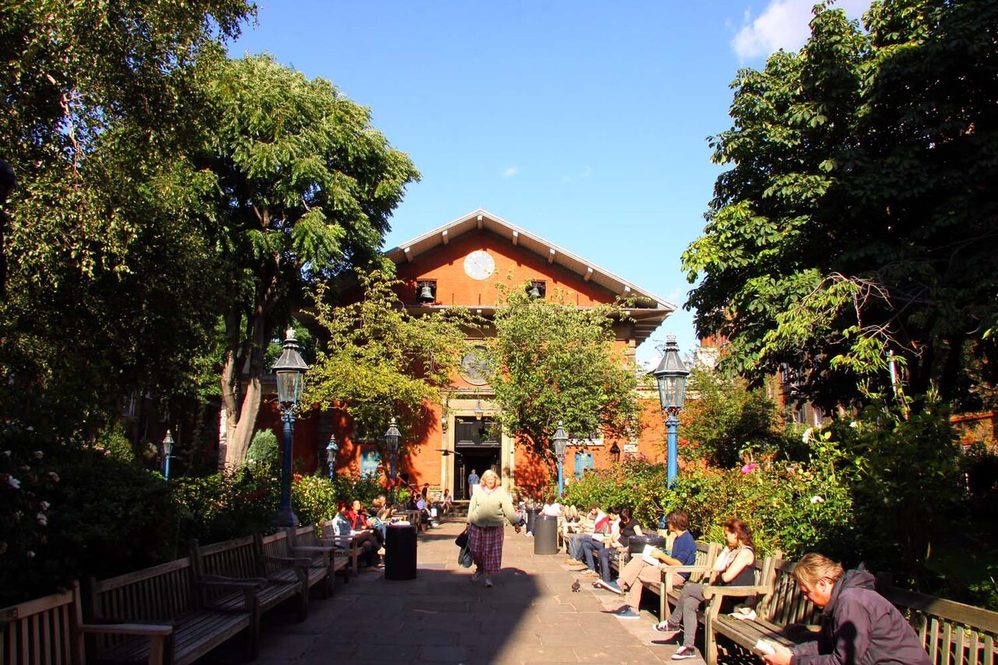
Walk round to King Street, Henrietta Street or Bedford Street and through one of the gateways into the churchyard, which the church calls a leafy oasis open to all. It was the burial ground until the 1850s; among those buried at the church are the woodcarver Grinling Gibbons, the composer Thomas Arne, the painter Sir Peter Lely, the watercolourist Thomas Girtin, the playwright William Wycherley and the poet Samuel Butler. The headstones have gone; there are two lawns, gas lamps and benches dedicated to actors, and one lawn is rested in winter.
The narthex and the Gibbons carving
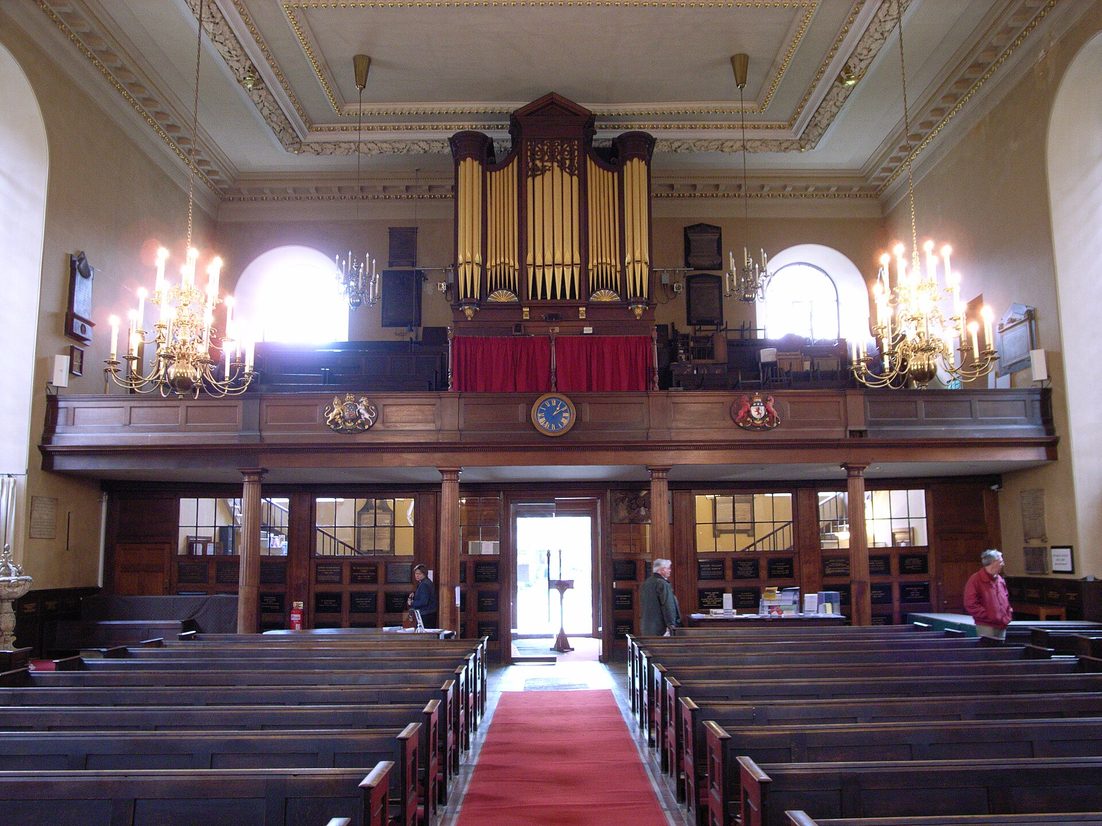
Go in at the west end. In the narthex, on the right, is a carved wreath given by the Dean and Chapter of St Paul’s Cathedral and installed here in 1965; it is presented as the church’s one carving by Grinling Gibbons. Above the doors is the west gallery with the organ.
The nave and the theatre memorials
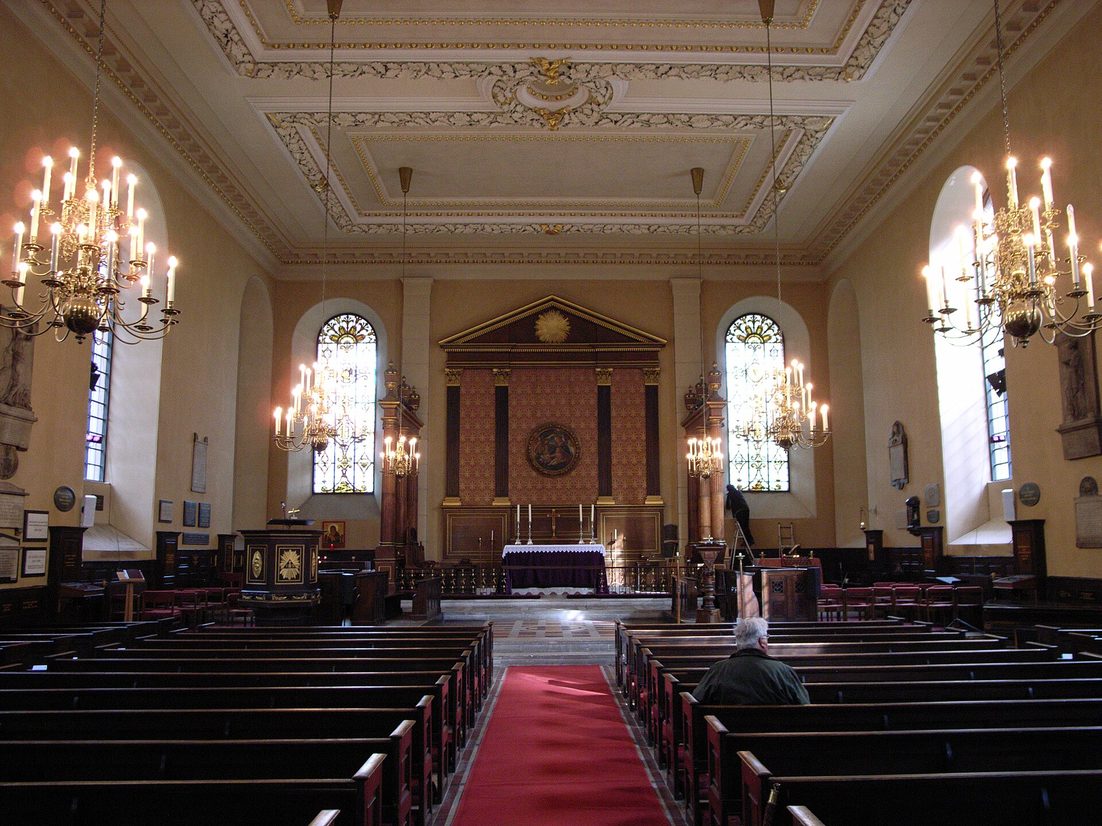
The nave is one wide, plain room under a coffered ceiling, with chandeliers and a dark red wall at the east end. The walls are lined with plaques to parishioners and to the people of the theatre. Names to look for include Charlie Chaplin, Vivien Leigh, Noël Coward, Boris Karloff and Ivor Novello. On the north side, the memorial to Thomas Arne carries a carved line of music: the opening of “Rule, Britannia!”. A memorial book for theatre professionals lies in the left aisle.
The pulpit, Ellen Terry and the Icon Chapel
The pulpit on the north side is, the church says, thought to be by Grinling Gibbons or one of his pupils. On the south wall a fine monument holds the ashes of Ellen Terry, and the ashes of Dame Edith Evans lie in a vault under the south altar. The Icon Chapel is kept for silent prayer; its icon, commissioned in 2004 and painted by Regan O’Callaghan, shows the Madonna and Child with St Paul and St Genesius, patron saint of actors, with the masks of comedy and tragedy. In Advent and at Christmas a crib takes its place.
The sanctuary
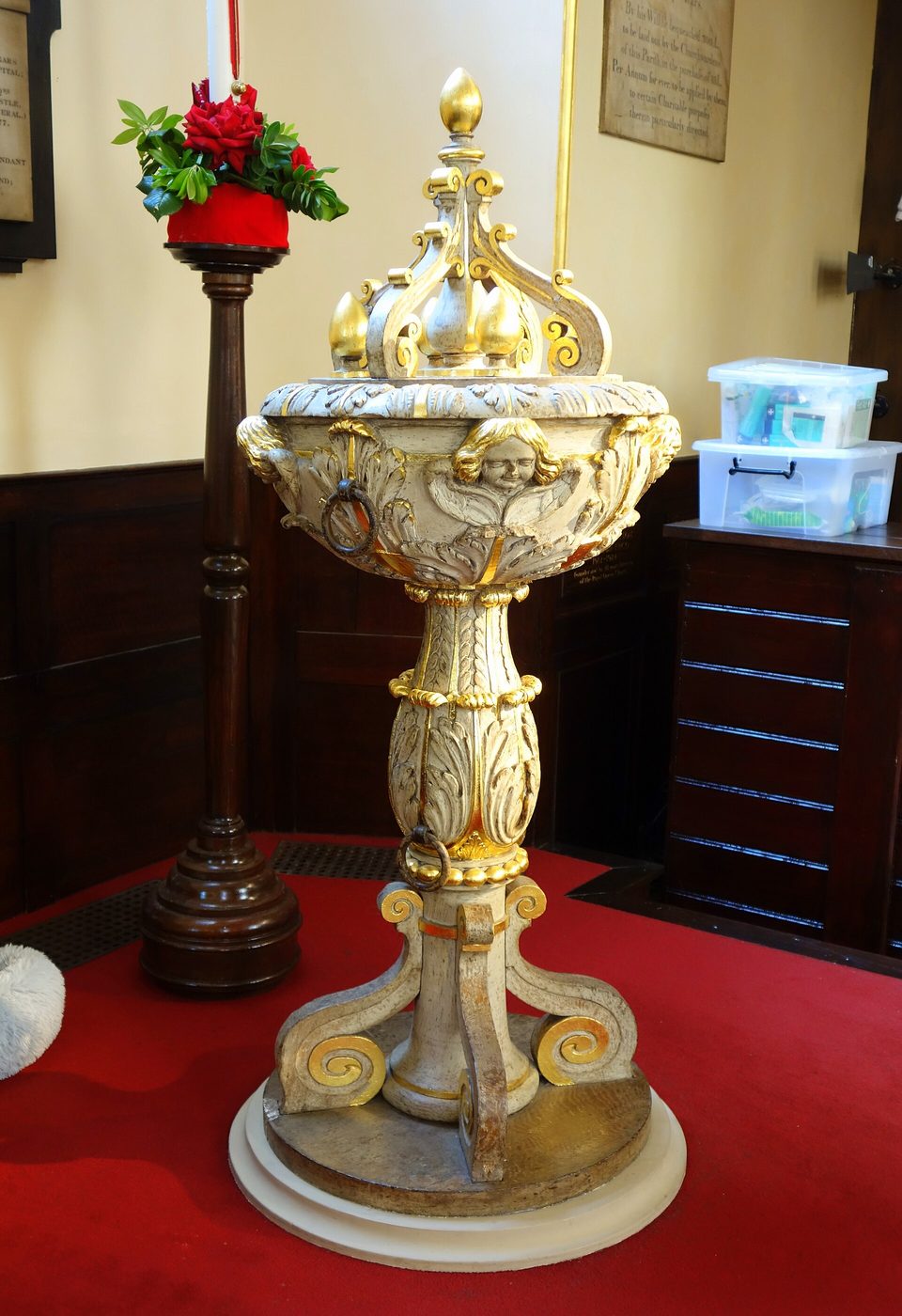
Finish at the east end, where a copy of a Botticelli Madonna and Child hangs above the altar. The Blessed Sacrament Chapel is marked by a light. On the south wall a book records Queen Elizabeth II’s visit on 19 February 1988, and a visitor record near it was signed by King Charles III and Queen Camilla when they visited on 17 May 2023. The church also has a white and gilt font with a decorated cover.
A note on our pictures. The icon in the Icon Chapel and the modern sculpture in the churchyard are recent works still in copyright, so we describe the icon in words and do not show either.
Getting there
The church is on the west side of Covent Garden piazza, with its entrance on Bedford Street. The nearest Underground station is Covent Garden (Piccadilly line), a few minutes’ walk. The church names Charing Cross (National Rail and Underground) and Leicester Square (Northern and Piccadilly lines) as its closest stations; each is a short walk away. The Royal Opera House and the London Transport Museum are close by.
Where to stay
Covent Garden, the Strand and the West End have hotels of every price range within walking distance.
This link goes to Booking.com. This site earns nothing from it at present — it is here because it is the quickest way to check what is actually available.
Don’t miss
- The portico Pepys’s puppets and Eliza Doolittle’s stage.
- The theatre memorials Chaplin, Leigh, Coward and many more.
- The Gibbons carving A carved gift from St Paul’s Cathedral, linked to Gibbons.
- The churchyard garden A quiet green space off the piazza.
Insider tips
Phone first. Concerts, rehearsals and theatre can close the church, so ring the office on 020 7836 5221 before a special trip.
Use the side gates. The central door under the portico is a false one; walk round to Bedford Street, Henrietta Street or King Street to get in.
Christmas 2026. The December programme includes carol services and candlelit Christmas concerts, many of them ticketed; Christmas Eve and Christmas Day service times had not been published at the end of November, so check the church’s website.
Common questions
Is this St Paul’s Cathedral?
No. This is the parish church of Covent Garden, on the west side of the piazza; St Paul’s Cathedral is about a mile east, in the City.
When is the church open?
The church says it is usually open for visiting from 9am to 5.30pm on weekdays, but it can close for events, so it asks visitors to phone the office first on 020 7836 5221. Other listings give 8.30am–5pm on weekdays; weekend hours are not stated by the church and listings differ.
Why is it called the Actors’ Church?
Theatre Royal Drury Lane and the Covent Garden Theatre (now the Royal Opera House) were built in the parish, and the church has served the theatre world ever since; its walls are lined with memorials to actors and others of the stage.
Can I go in through the portico?
No. The central door under the portico is false. The way in is through the churchyard, from Bedford Street, Henrietta Street or King Street.
Does it cost anything?
There is no charge to go in; donations are welcome. Concerts and theatre in the church and garden are ticketed separately.
When are the services?
Sunday Eucharist is at 11am, with Sung Evensong at 4pm on the second Sunday of the month, a Wednesday lunchtime Eucharist at 1.10pm and Morning Prayer at 8.30am Tuesday to Friday.
More English churches
- St Paul’s Cathedral — Wren’s great cathedral in the City, not to be confused with this church
- St Margaret’s, Westminster — the parish church beside Westminster Abbey
- St Clement Danes — a short walk east along the Strand
See all the cathedrals and churches worth visiting in England →