
St Andrew’s Church, Greensted
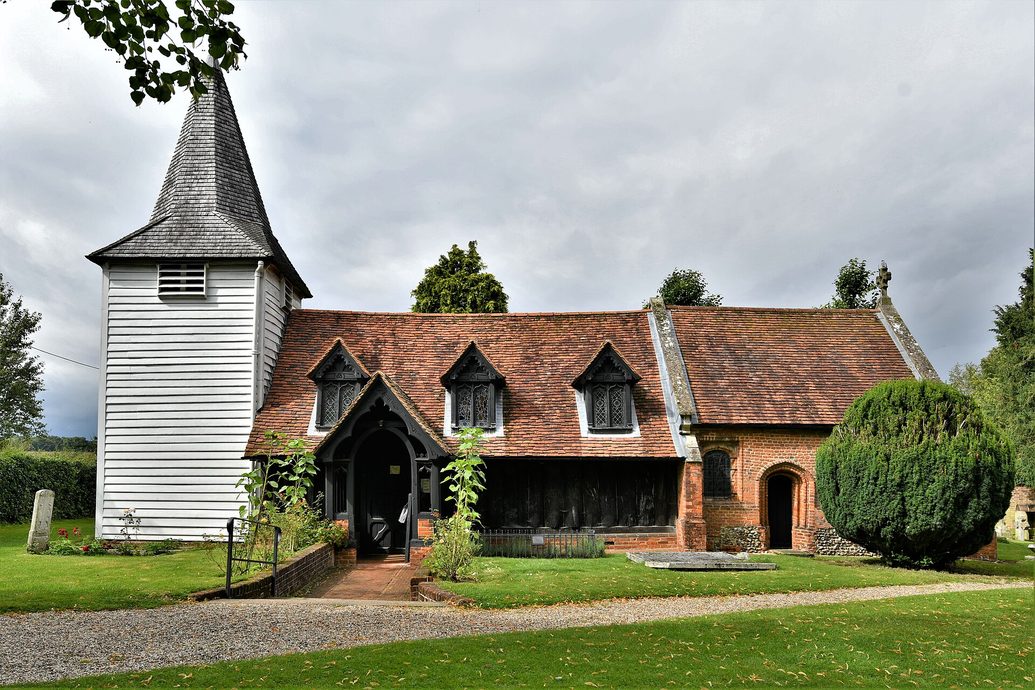
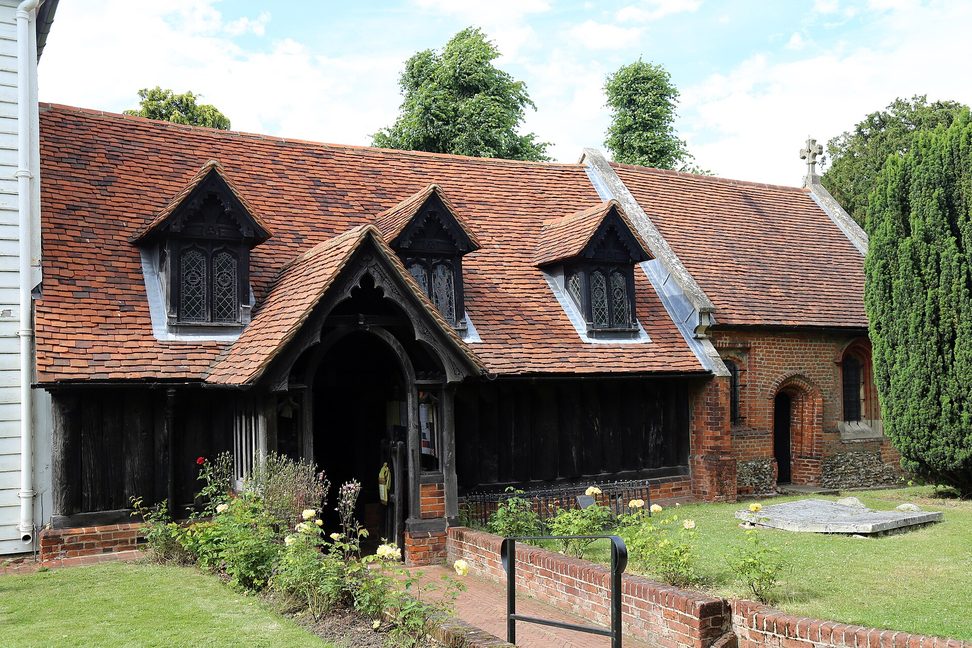
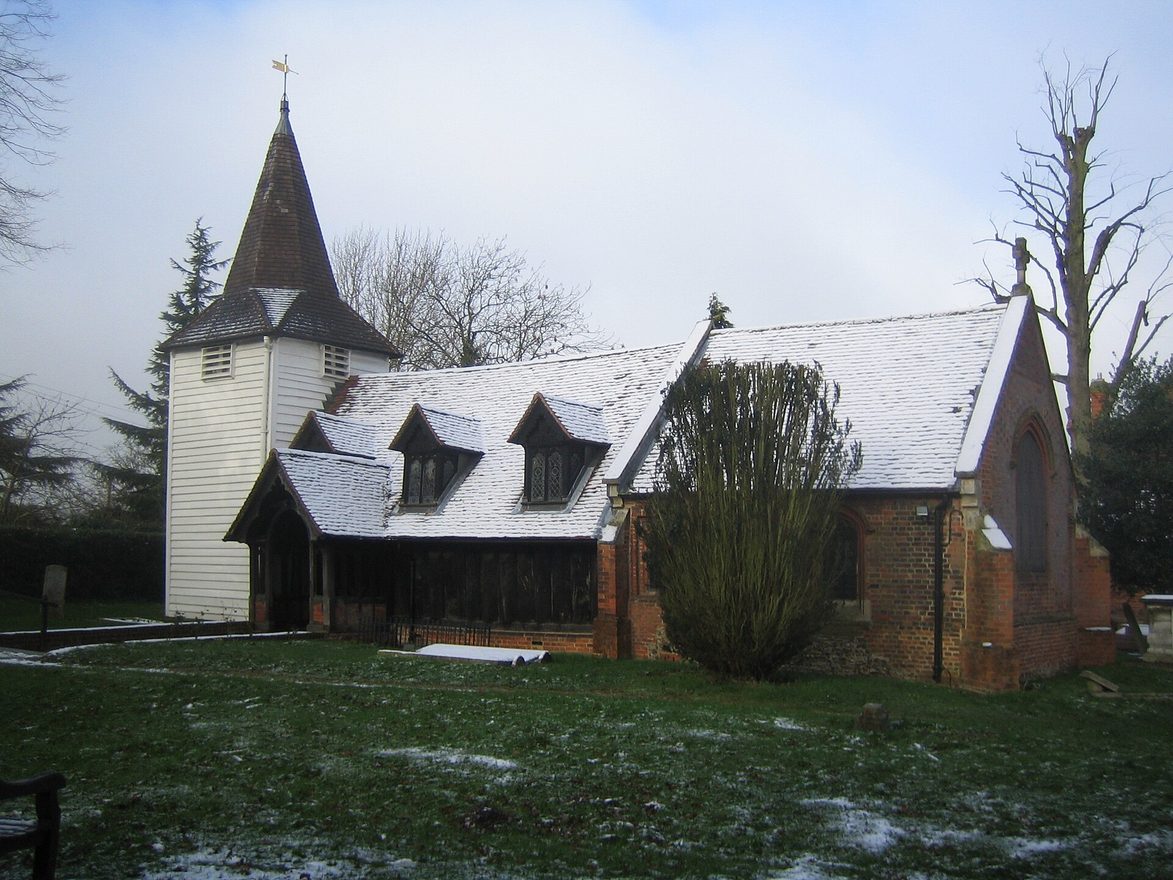
In the fields a mile west of Chipping Ongar, St Andrew’s at Greensted is often described as the oldest wooden church in the world. Its nave walls are built of split oak logs set upright, and tree-ring dating suggests those timbers were probably felled about 1063–1100. A Tudor brick chancel and a white weatherboarded tower complete a small, much-loved village church that is open to visitors most days.
A church of split oak
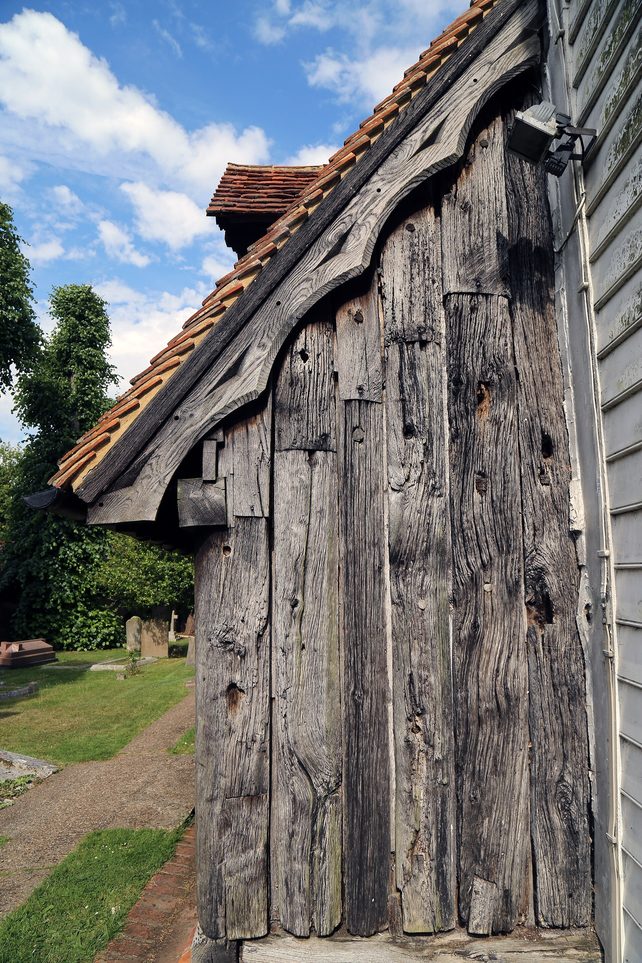
Greensted’s fame rests on the walls of its nave. They are made of oak trunks split down the middle and set upright side by side – a way of building in timber known as stave construction. The church counts 51 of these timbers; the tree-ring survey of 1996 identified 53 that are probably original.
Excavations in 1960 found traces of two earlier timber structures under the chancel, which the church dates to the sixth and seventh centuries.
How old is it? The tree-ring evidence
For many years the nave was dated to about 845, on the strength of a “dendro-magnetic” test made in 1960, and that figure is still repeated in some older descriptions, including the text of the official listing. In 1996 a tree-ring study by Ian Tyers, reported to English Heritage (now Historic England), measured the timbers. The measured rings span the years 878 to 1053. Because the outer sapwood has gone, the exact felling year cannot be read, but the report concludes that the trees were probably felled between about 1063 and about 1100. It says plainly that the 845 date is refuted.
That places the building around the time of the Norman Conquest, and the report suggests, tentatively, that it might have been built as a private chapel for a new lord of the manor. It also means that the church is not “the oldest wooden church in the world” in any simple sense. The claim holds only for the nave walls, not the later chancel, tower and roof. What can be said is that it is one of the oldest timber buildings in Europe still standing.
St Edmund, the Victorians and the Tolpuddle Martyrs
The church is dedicated to St Andrew, but its best-known story concerns St Edmund, the king of East Anglia killed by the Danes in 869 or 870. Tradition says that in 1013 his body rested at Greensted on its way back to Bury St Edmunds. The 1996 report points out that, if this happened, it cannot have been in the present building, though an earlier church is not ruled out. Edmund appears again and again inside, in glass, paint and carving.
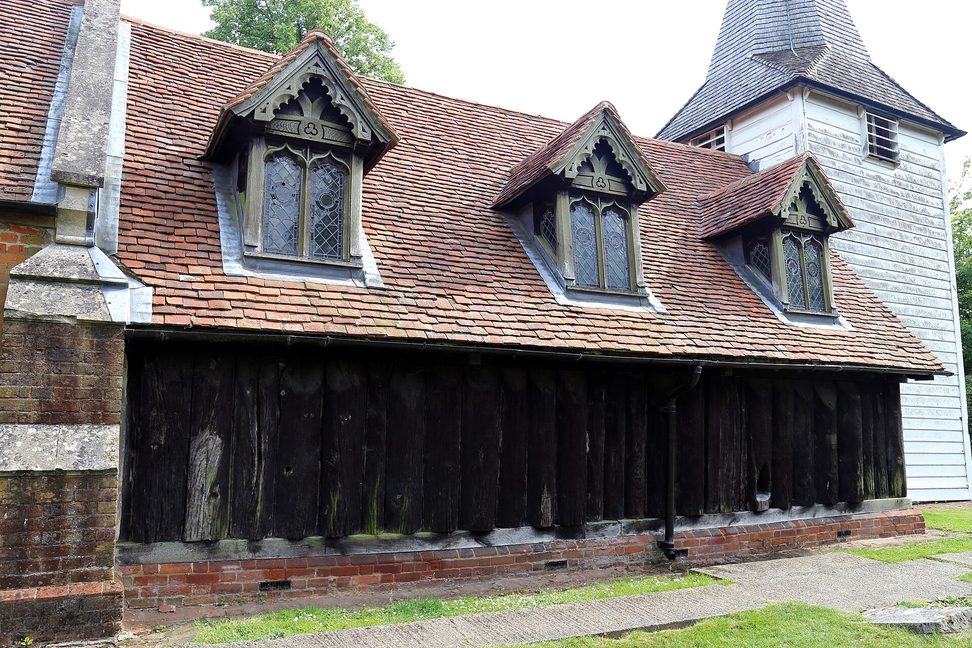
In about 1500 the chancel was rebuilt in brick, and the nave was re-roofed, probably in the reign of Henry VII (the listing says so). The church was heavily restored in the 1840s, when the sills under the timbers were replaced and dormer windows were added. In 1891–2 the roof was renewed in oak by the architect Frederic Chancellor. A different chapter began in 1837, when some of the Tolpuddle Martyrs were given tenancies at Greensted and High Laver. On 20 June 1839 James Brine married Elizabeth Standfield here. Further stabilisation work was done in 1990, and the church is listed Grade I.
The visitor’s cheat sheet
| Where | Church Lane, Greensted, Ongar, Essex CM5 9LD; about a mile west of Chipping Ongar, signposted from the A414 and Ongar High Street |
|---|---|
| Opening hours | Most days, usually from around 10am to about 4pm in winter and about 6pm in summer (volunteer-run, and closed to sightseers during services; check before you go) |
| Admission | Free; donations towards the upkeep welcome |
| Services | A Church Near You currently lists Book of Common Prayer Matins at 9.30am on the first Sunday of the month; other services are not listed there, so check before you go |
| Tours | Free guided visits for groups by arrangement with the church (donations welcome) |
| Access | The church’s website says there are no facilities for wheelchair access; the National Churches Trust lists level access to the main areas. Disabled parking bay by the gate |
| Parking | Cars and coaches in Church Lane; please follow the local parking signs |
| Toilets | None at the church; the nearest are in Ongar |
| How long | 30–45 minutes; half a day with the circular walk from Ongar |
Hours and admission checked against the official site in November 2026. They change; the official site is always the last word.
What to see
Start outside, from Church Lane, where you can walk right round the nave before going in.
The churchyard and the “Crusader’s grave”
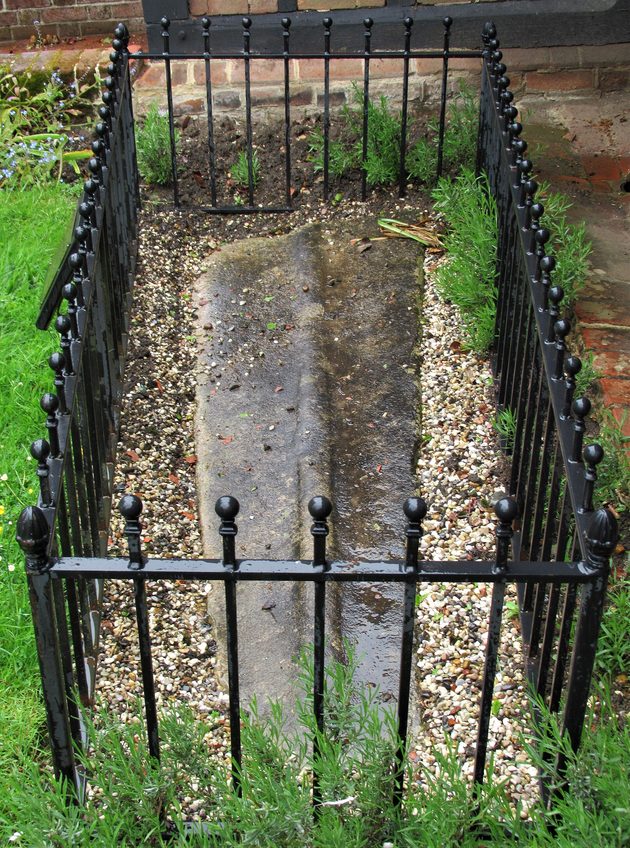
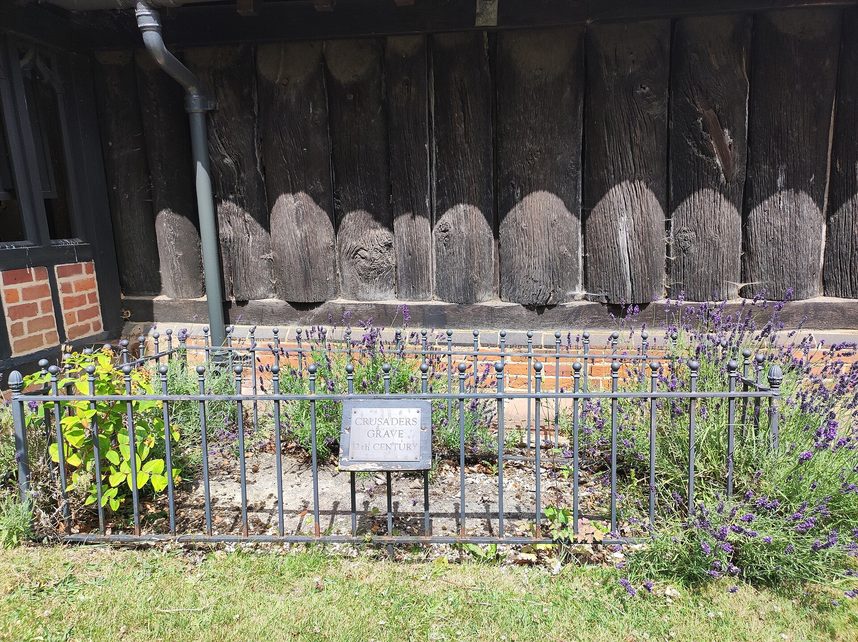
Just outside the south porch, inside a low iron railing, lies a worn stone slab with a carved cross. It is known as the Crusader’s grave and is said to belong to a twelfth-century crusader – the church calls him a bowman, others a knight. Nobody knows for certain whose grave it is.
The porch and the nave walls
The red-tiled timber porch was rebuilt in the 1840s in the style of fifteenth-century work. Walk round the nave to see the split oak timbers properly: rough, grey and weathered outside, standing on their Victorian sill and low brick wall. Above them are the dormer windows, three each side, added in the Victorian restoration.
The tower and the chancel
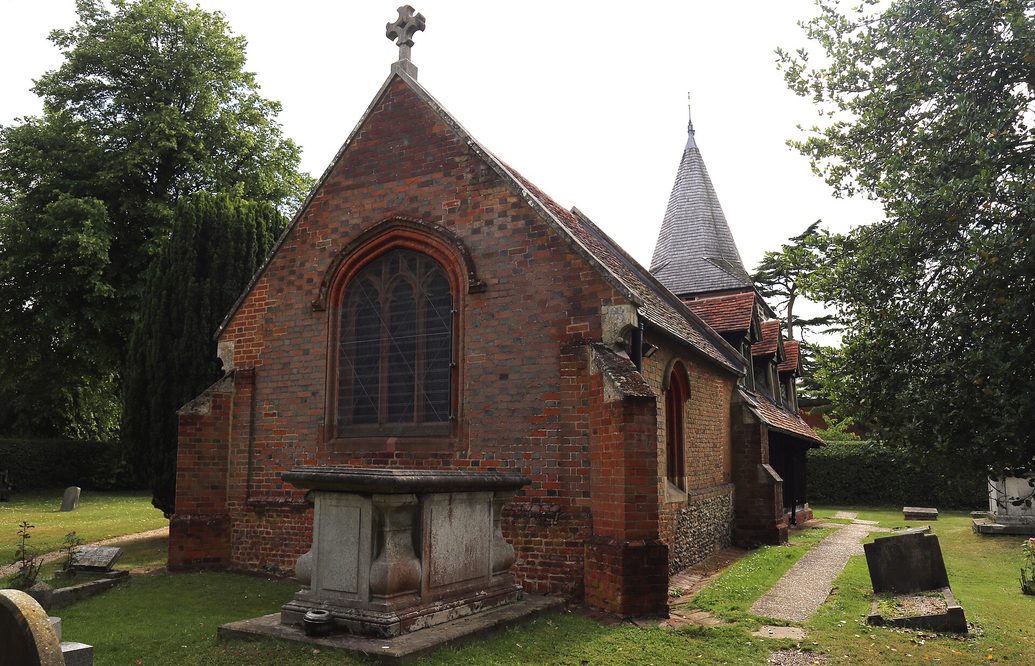
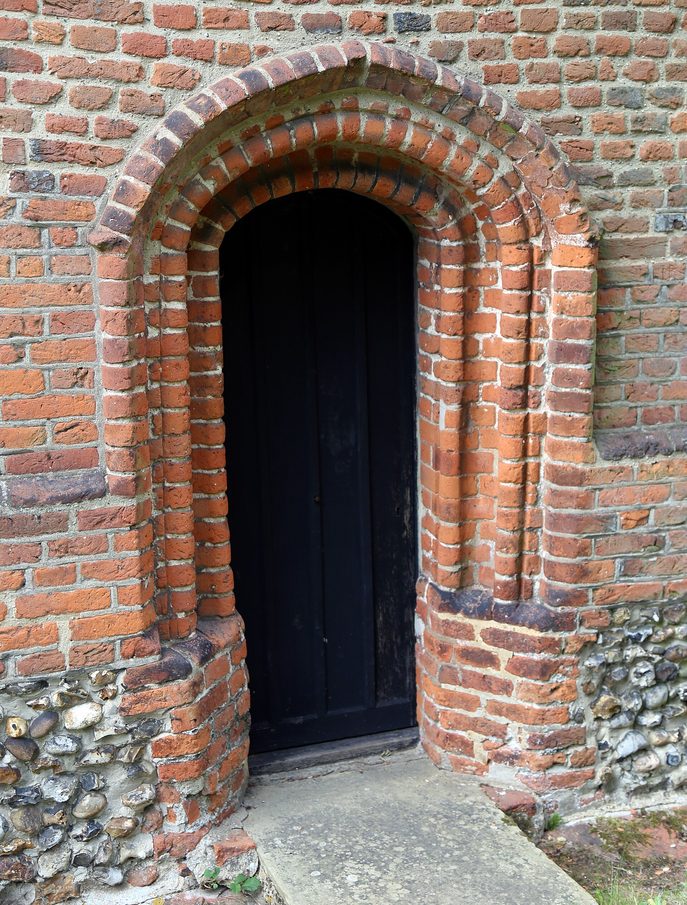
The white weatherboarded tower at the west end is timber-framed, with a shingled spire; its date is uncertain, with estimates from the fifteenth to the seventeenth century. The spire was re-shingled in oak in 2005, and the bell inside is inscribed “William Land made me 1618”. At the east end, the chancel is red Tudor brick of about 1500, with round-headed windows, a small doorway in the south wall and a flint base that may survive from a Norman chancel.
Inside the nave
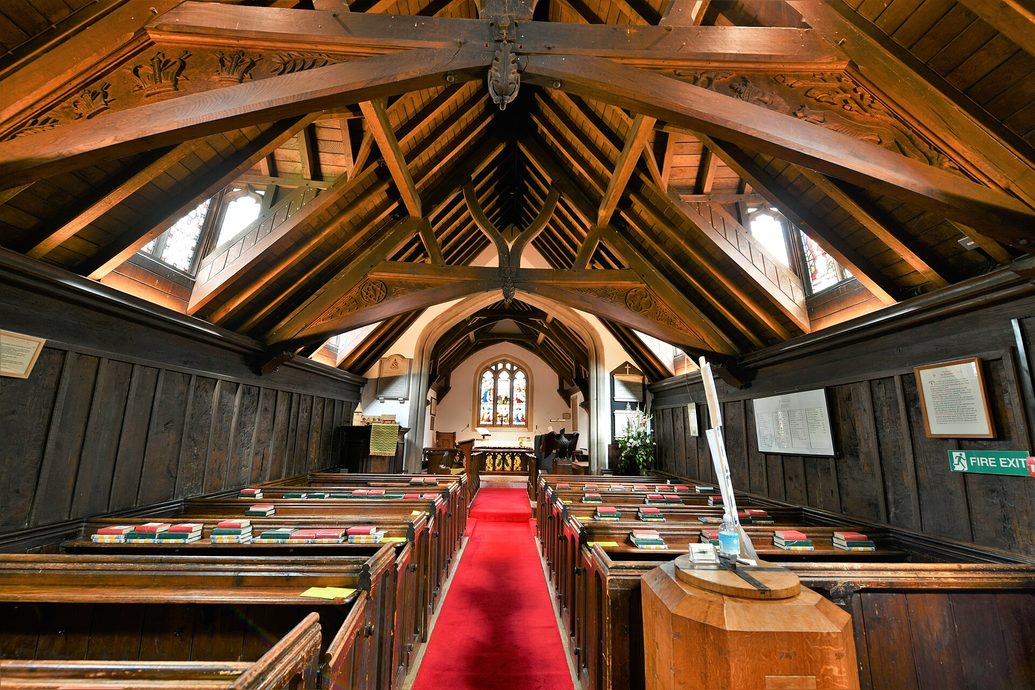
Inside, the staves are dark and close, with oak strips covering the joints between them. Look up at the timber roof braces; carved spandrels showing the legend of St Edmund were added in the Victorian restoration. On the north side is a small opening through the wall, traditionally called the leper’s squint and said to have let lepers receive a blessing from outside; it is now thought more likely to have been a window for seeing who was coming. It sits beside the original north doorway, blocked in the 1840s.
St Edmund in glass and paint
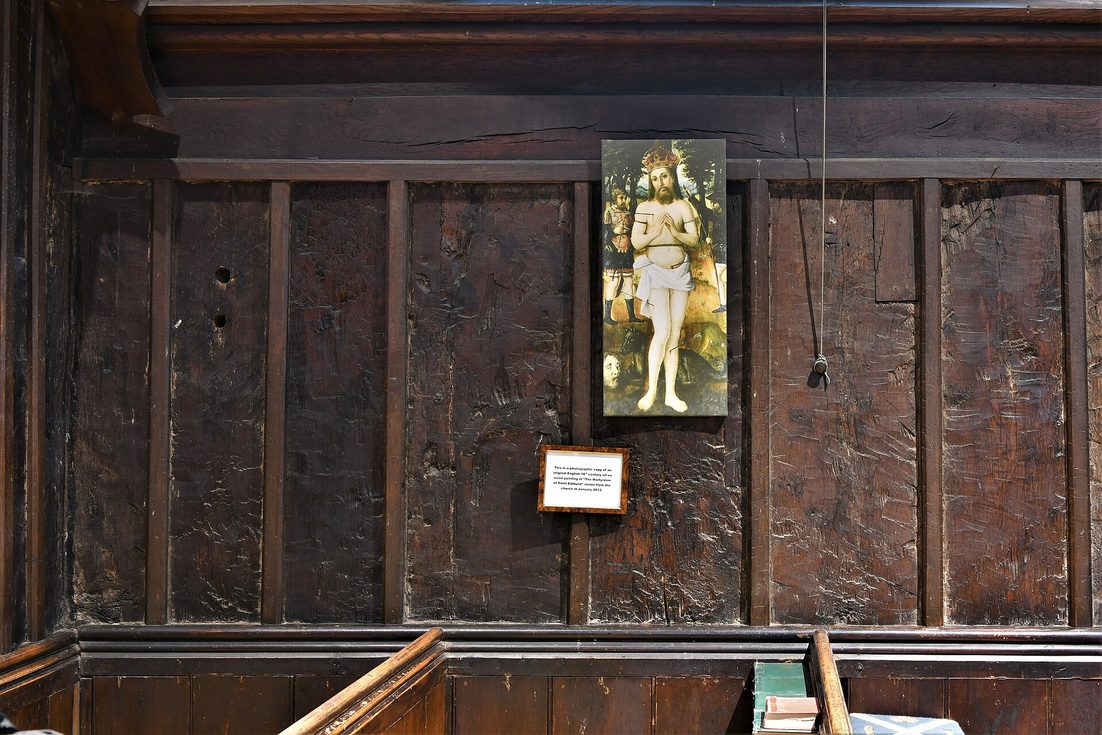
In the window of the west gable is a small roundel of glass of about 1500 showing a man’s head in a crown, reputedly St Edmund. A small oil painting on a round-headed wooden panel, also of about 1500, shows his martyrdom, pierced by arrows; descriptions differ on where it hangs, so look in both the nave and the tower.
The pulpit, the font and the chancel
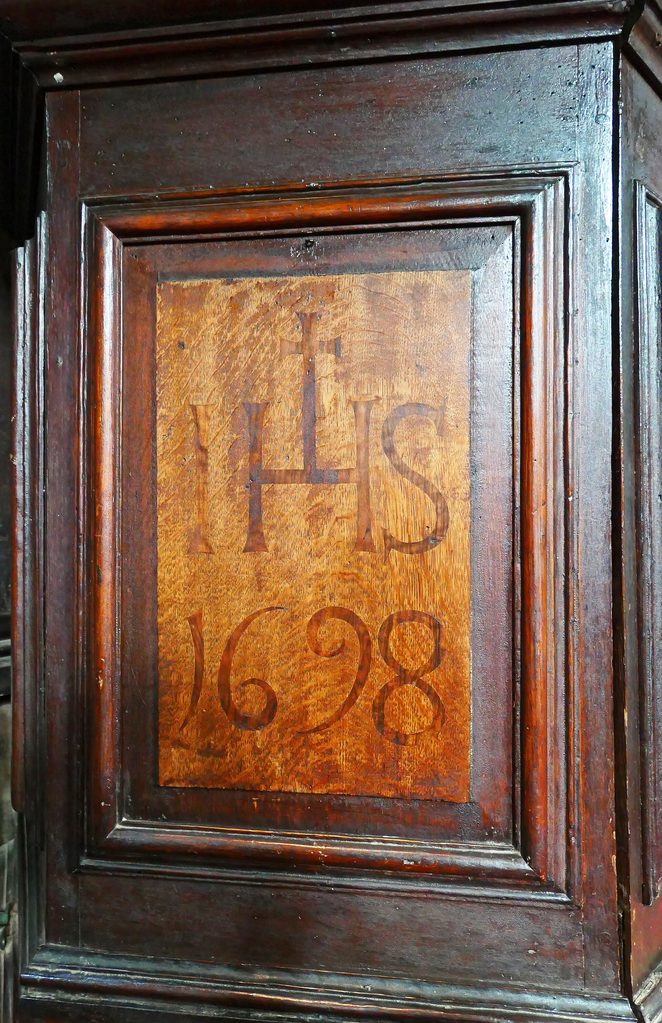
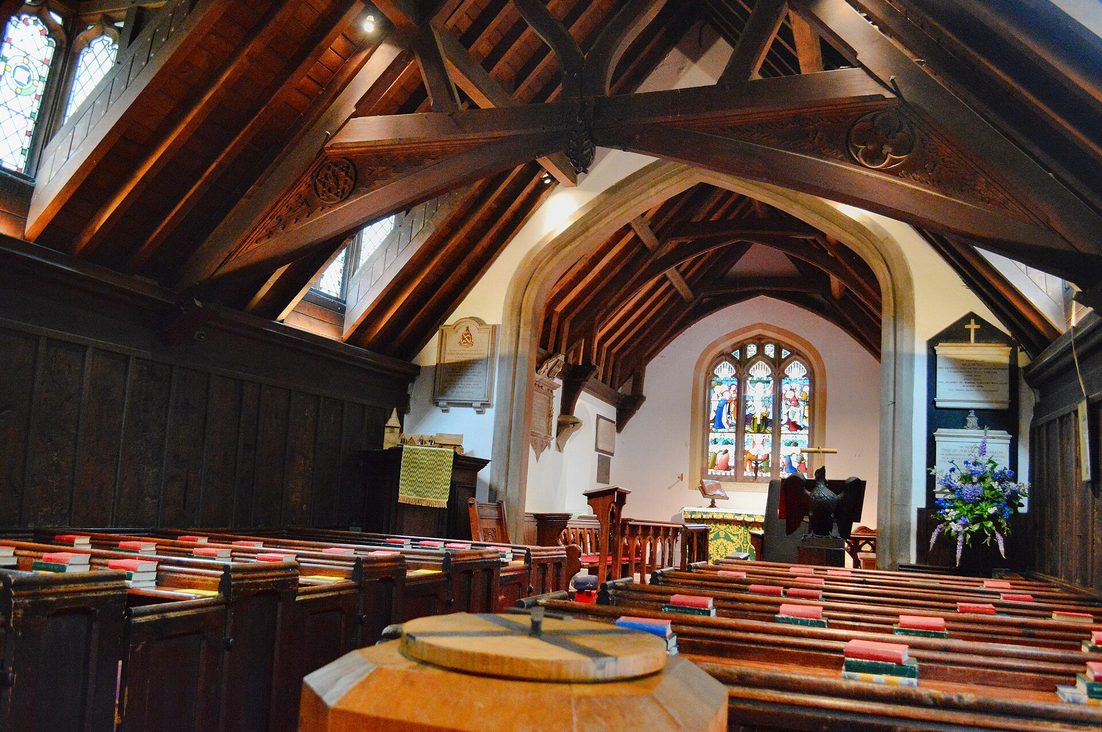
The octagonal oak pulpit dates from 1698 and was given by Alexander Cleeve. The oak font was added in 1987; it is said to have been designed by Hugh Casson and made by Russell Thomas. Through the sixteenth-century brick chancel arch, the chancel has a pillar piscina, a tablet to Jone Wood of 1585 and later memorials. The east and north windows were given in memory of William Smith (died 1871): the north shows the martyrdom of St Edmund, the east the Last Supper and the Crucifixion.
Before you leave
A table in the church sells guidebooks, postcards and home-made jams, marmalades and pickles, and donations towards the upkeep are welcome.
Getting there
Greensted is about a mile west of Chipping Ongar. The nearest Underground station is Epping, the end of the Central line, about eight miles from Ongar. From Epping station, buses 20 and 21 (Central Connect) run to Ongar in about 25 minutes (check times). From Ongar it is about a mile’s walk along Greensted Road to Church Lane. In summer, the heritage bus 339 links Epping with Ongar at weekends alongside the Epping Ongar Railway, whose Ongar station is about 0.8 miles from the church; that service ended for 2026 at the end of September.
A pleasant alternative is the 4.5-mile circular walk from Ongar High Street, partly on the Essex Way, which passes Greensted Hall and the church and returns by Penson’s Lane; allow two to three hours, and expect mud after rain. By car, the church is signposted from the A414 and Ongar High Street, about seven miles from junction 7 of the M11 and junction 28 of the M25.
Where to stay
Chipping Ongar, a mile away, may have a few places to stay; Epping, at the end of the Central line, has more.
This link goes to Booking.com. This site earns nothing from it at present — it is here because it is the quickest way to check what is actually available.
Don’t miss
- The split-oak nave walls Timbers probably felled about 1063–1100.
- The Crusader’s grave A worn slab by the south porch.
- The leper’s squint A small opening in the north wall.
- St Edmund in glass A crowned head of about 1500.
Insider tips
Walk in from Ongar. The circular walk by the Essex Way and Greensted Hall makes a half-day of it; good boots help on Penson’s Lane after rain.
Go round the outside first. The split logs are best seen from outside, especially on the north side, before the dark interior.
Christmas. No Christmas 2026 services were listed on A Church Near You at the end of November; check there nearer the time.
Common questions
Is it really the oldest wooden church in the world?
It is often described that way, and the church itself makes the claim, but it should be read with care. What is old is the nave: tree-ring dating reported in 1996 found that its oak timbers were probably felled between about 1063 and 1100. The earlier date of 845, from a 1960 test, was shown to be wrong. The chancel, tower, porch and roof are later.
When is the church open?
The church says it is open most days, usually from around 10am to about 4pm in winter and about 6pm in summer. It is run by volunteers and services take priority, so check before a long journey.
Does it cost anything to visit?
No. There is no charge; donations towards the upkeep are welcome, in the church or online through the church’s website.
Can I get there without a car?
Yes, with a little effort. Take the Central line to Epping, then bus 20 or 21 to Ongar (about 25 minutes), and walk about a mile west along Greensted Road to Church Lane. The bus does not go to Greensted itself.
Are there toilets or wheelchair access?
There are no toilets at the church; the nearest are in Ongar. The church’s own website says it has no facilities for wheelchair access, though the National Churches Trust lists level access to the main areas. There is a disabled parking bay by the gate.
Can groups have a guided visit?
Yes. Guided visits for groups, schools and colleges can be arranged through the church, depending on whether a trained guide is free. There is no charge, but a donation is appreciated.
More English churches
- Bradford-on-Avon Saxon Church — a rare surviving Saxon church in Wiltshire
- St Edmundsbury Cathedral — in the town where St Edmund was enshrined
- Chelmsford Cathedral — the cathedral of Essex
See all the cathedrals and churches worth visiting in England →