
St Sepulchre-without-Newgate, City of London
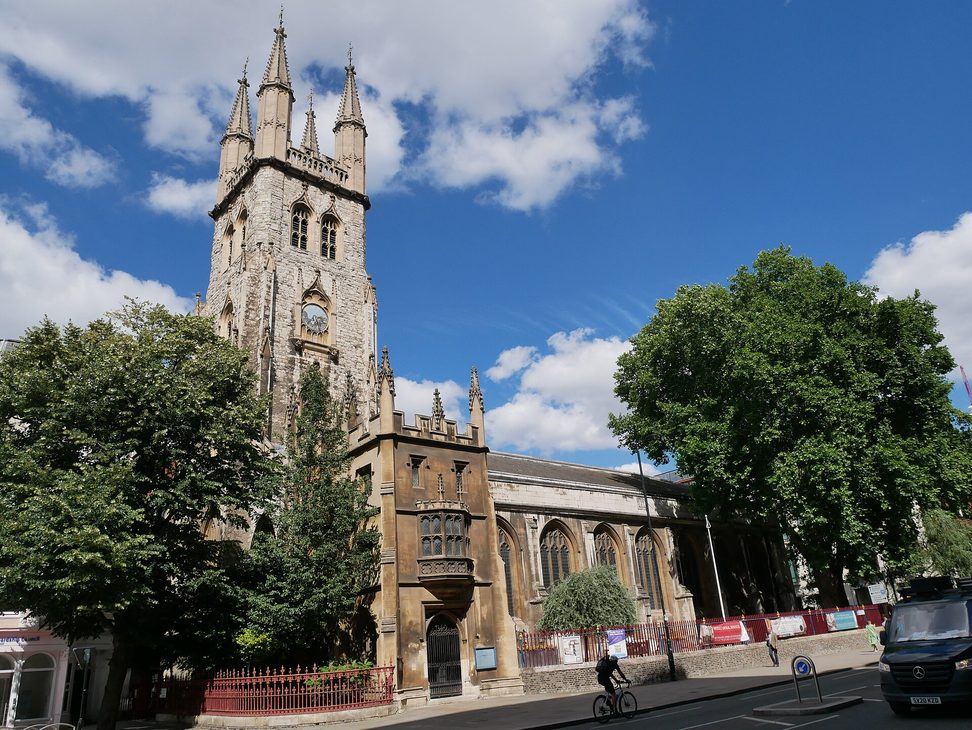
Across the road from the Old Bailey, St Sepulchre-without-Newgate – now calling itself Holy Sepulchre London – has a fifteenth-century tower and porch, a Wren-era nave, the handbell once rung for prisoners condemned at Newgate, the burial place of Captain John Smith of Virginia and a chapel dedicated to musicians.
A church outside the gate
The name places the church just outside Newgate, one of the gates in the City wall. Tradition speaks of a Saxon church here, but the church’s own history starts in 1137, when a charter records Rahere appointing Hagno the Clerk as its priest. In about 1450 it was rebuilt, with Sir John Popham’s help, and the walls, the south porch and most of the tower of that church still stand.
John Rogers was vicar from 1550 to 1553; he was burnt at Smithfield on 4 February 1555. In 1631 Captain John Smith of Jamestown, Virginia, remembered for his link with Pocahontas, was buried in the south aisle. Newgate prison stood close by, and the church became tied to its executions through a bequest of 1605 for a bell to be rung the night before a hanging.
Fire, rebuilding and war
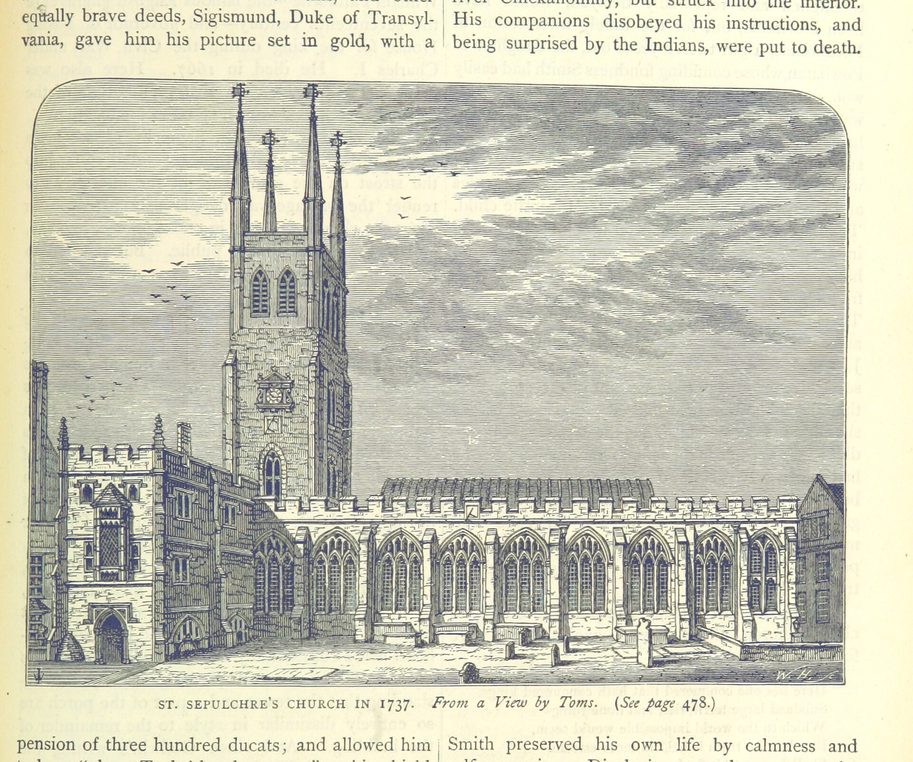
The Great Fire of 1666 gutted the church but left the walls and tower standing. Rebuilding ran from 1667 into the late 1670s. It is often credited to Wren: the church cites payments in Wren’s ledgers from 1670 to 1677, while other accounts give the work to Joshua Marshall, the King’s Master Mason, without Wren. The interior was altered many times between 1712 and 1955, and the plaster ceilings were reconstructed in 1837.
Bombing in 1941 destroyed the east window. After the war the church took on two roles it still keeps: a chapel for the Royal Fusiliers (City of London Regiment), dedicated in 1950, and a chapel for musicians, re-dedicated in 1955. It was listed Grade I in 1950. Since 2013 it has worked in partnership with Holy Trinity Brompton, and it now uses the name Holy Sepulchre London, while still calling itself the national Musicians’ church.
The visitor’s cheat sheet
| Where | Holborn Viaduct, London EC1A 2DQ, opposite the Old Bailey |
|---|---|
| Opening hours | Monday 11am–3pm; Tuesday and Thursday 8.30am–2.30pm; Wednesday 8.30am–6.30pm; Friday 10am–4pm (also listed as 3pm); Sunday 10.30am–4pm. Saturday times vary (sometimes listed as 10am–3pm). Different in August; check before you go |
| Admission | No admission charge is listed; some special events are ticketed |
| Services | Usually (not in August): Sunday 10.30am; Morning Prayer 8.30am Tuesday–Thursday; Tuesday 1pm lunchtime service; Wednesday 1pm Eucharist and 5.15pm Choral Evensong |
| Concerts | Friday lunchtime concerts 1–2pm, free with a retiring collection; Thursday evening “Songs from the Viaduct” |
| Tours | No public tower tours; no guided tours listed; a 3D virtual tour is on the church website |
| Access | Not stated by the church |
| Toilets | Not listed by the church |
| How long | Forty-five minutes to an hour |
Hours and admission checked against the official site in November 2026. They change; the official site is always the last word.
What to see
The walk follows the building from the tower on the pavement, through the porch and the nave, to the chapels.
1. The tower and the bells of Old Bailey
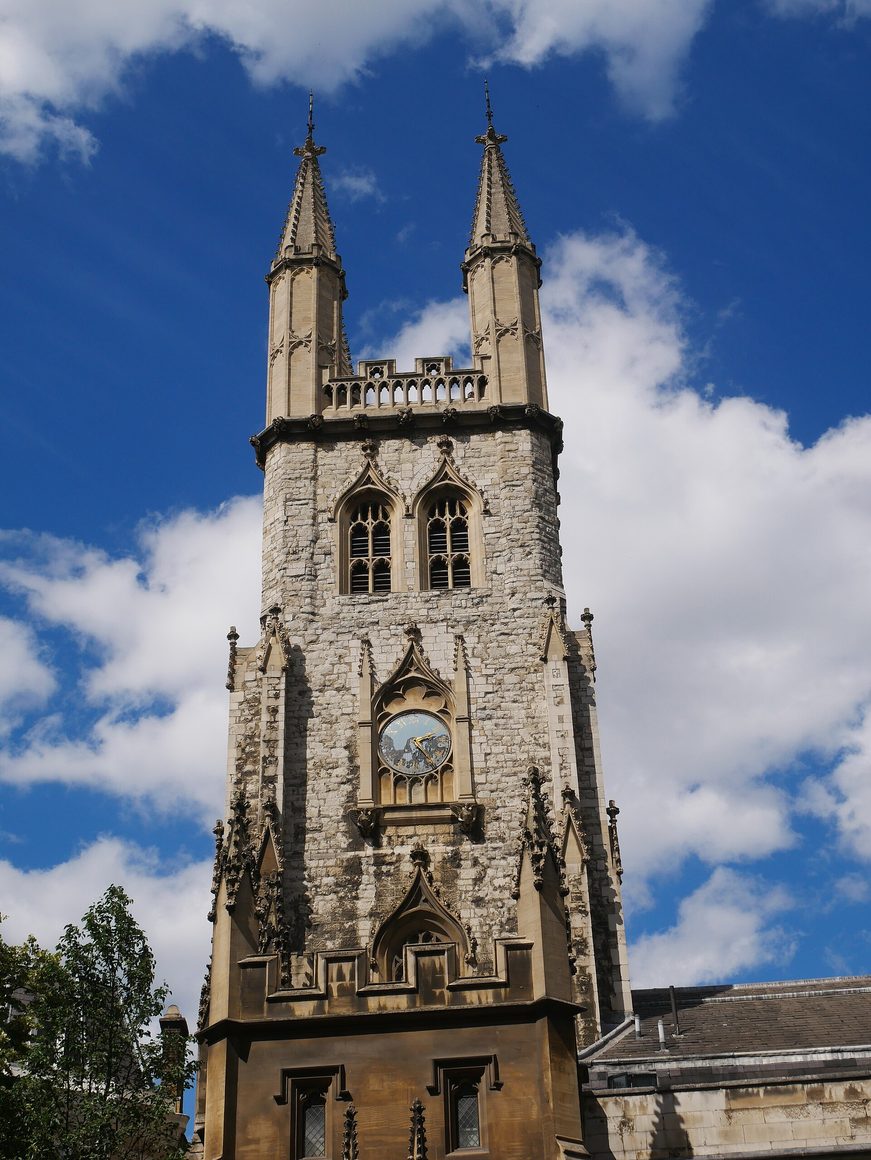
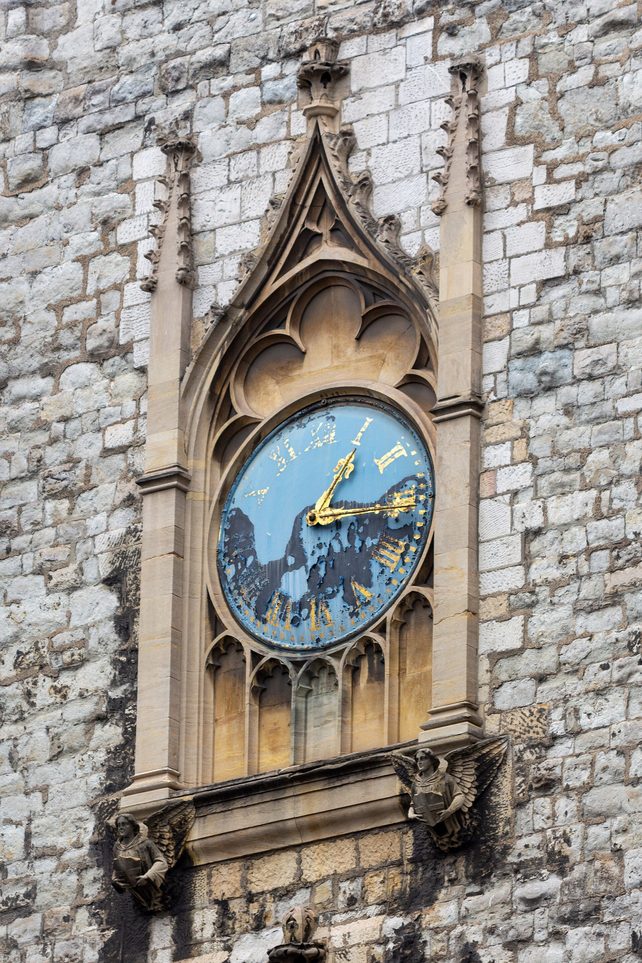
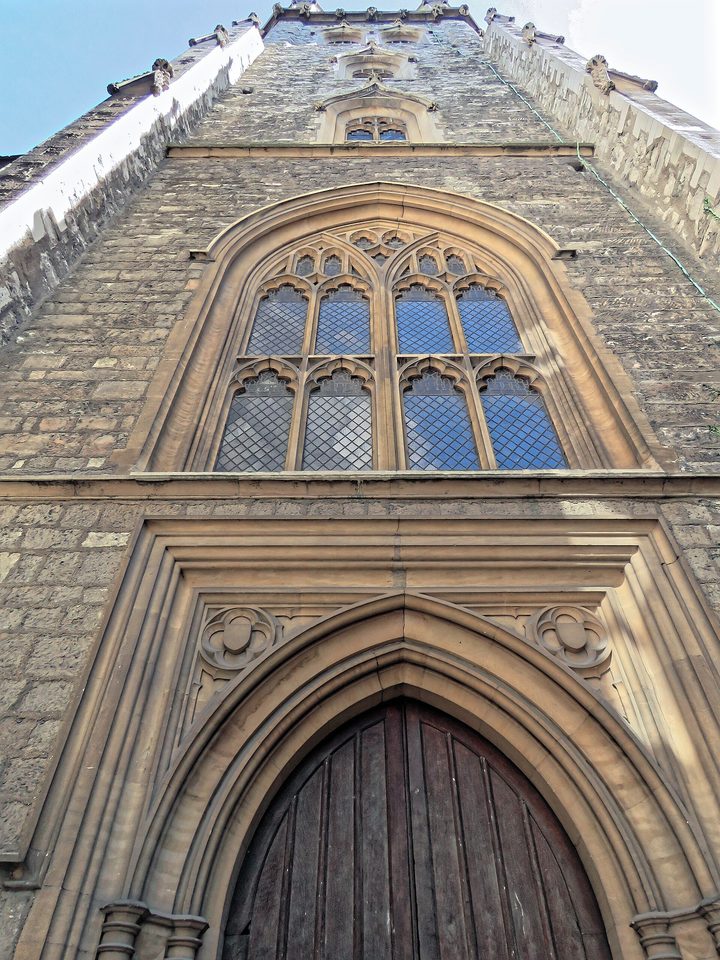
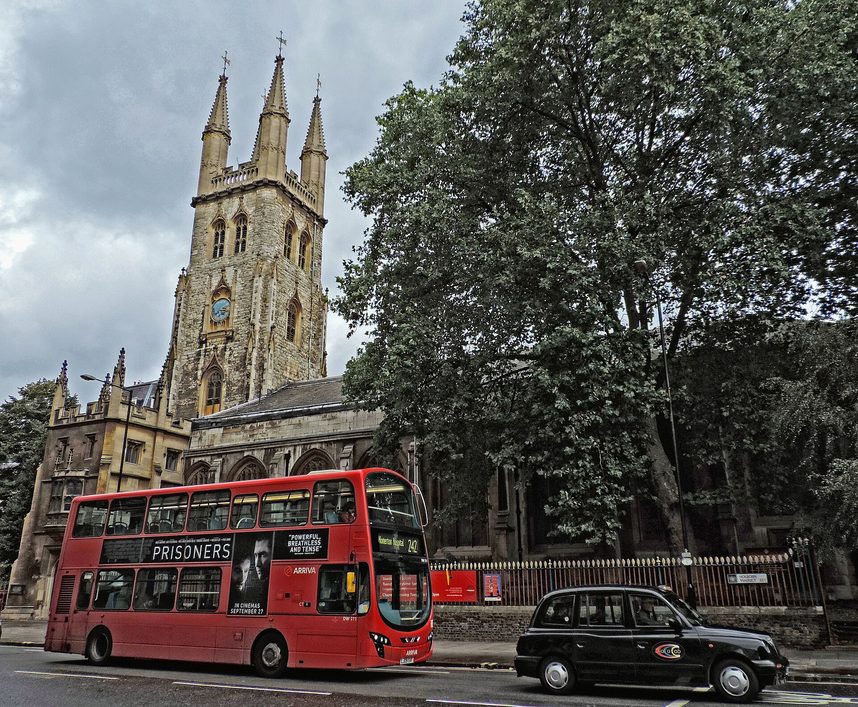
Start on the pavement. The tower is 150 feet high to the top of its pinnacles and survived the fire of 1666, though its bells did not. The church claims the line “When will you pay me? say the bells of Old Bailey” from “Oranges and Lemons”. Today there is a ring of 12 bells (ten were restored and two added in 1984), and this is the home tower of the Ancient Society of College Youths, a ringing society founded in 1637. Look up at the large window above the west door.
2. The south porch
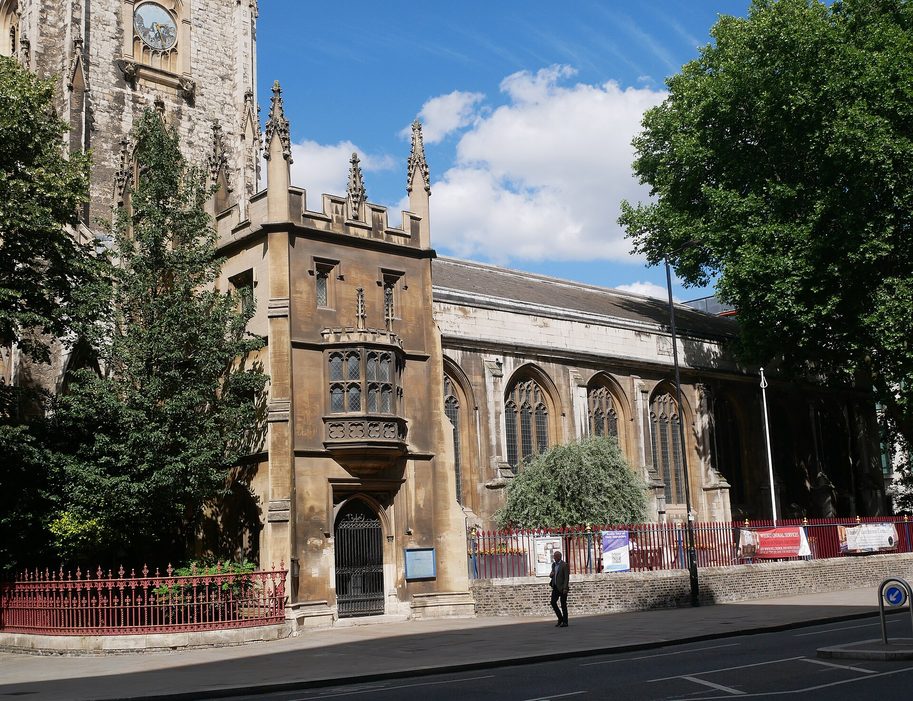
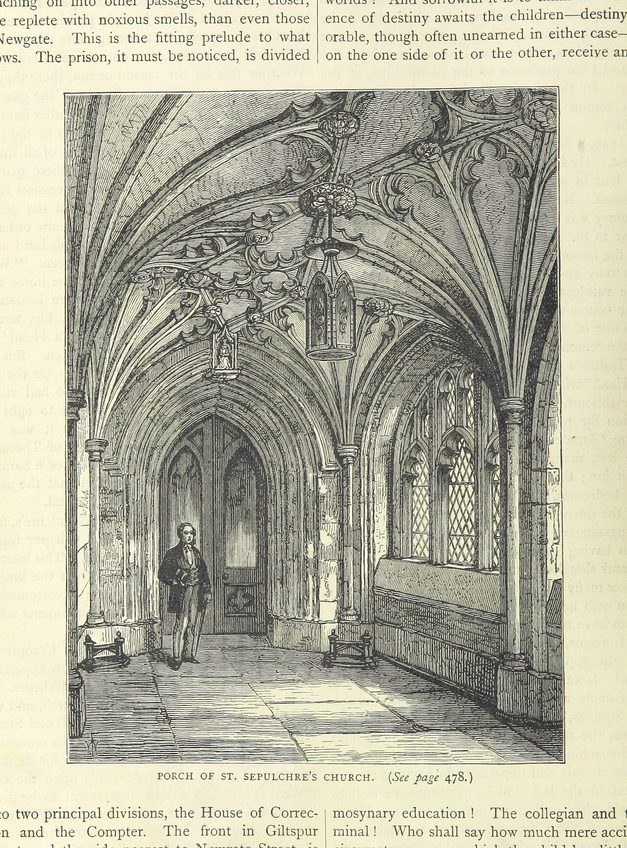
The three-storey south porch is part of the fifteenth-century church, with a seventeenth-century sundial on the south side and an eighteenth-century wrought-iron gate. Inside it is vaulted. The window in the porch shows the Blessed Virgin and remembers Ann Woodhill, who died in 1891.
3. The nave
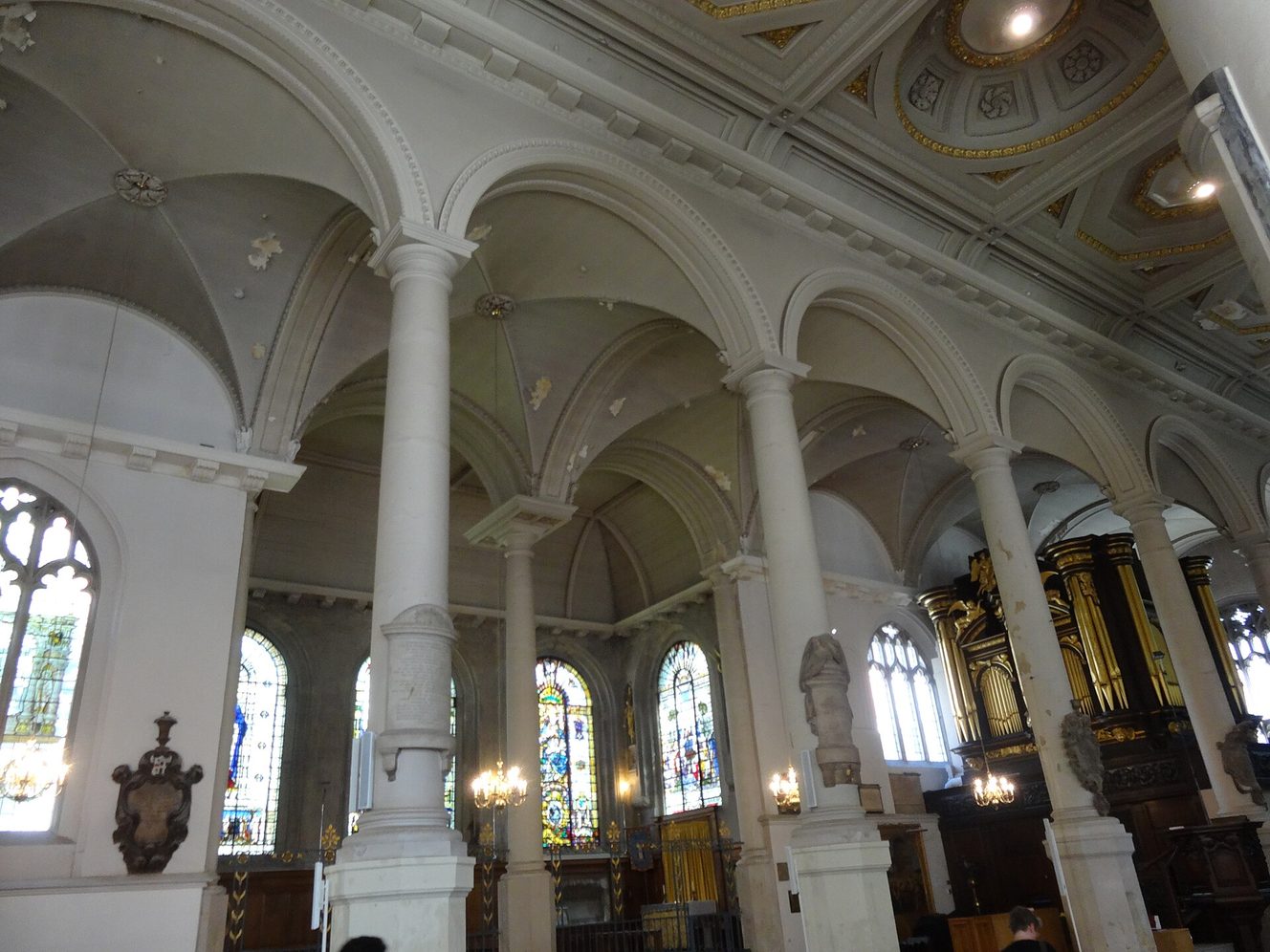
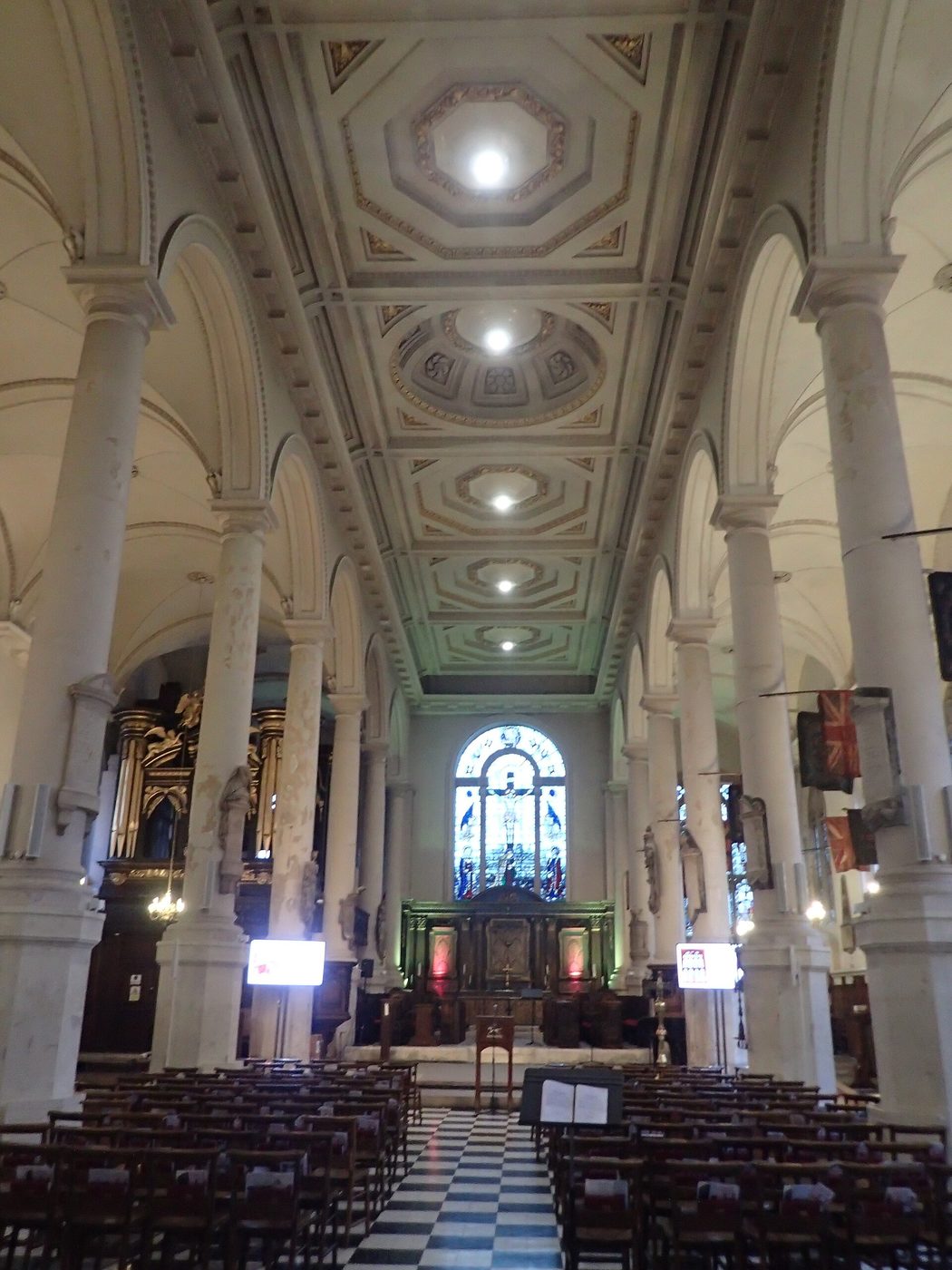
Inside, the nave is of the rebuilding after the fire: late seventeenth-century classical arcades of seven bays, under a coffered ceiling.
4. The execution bell
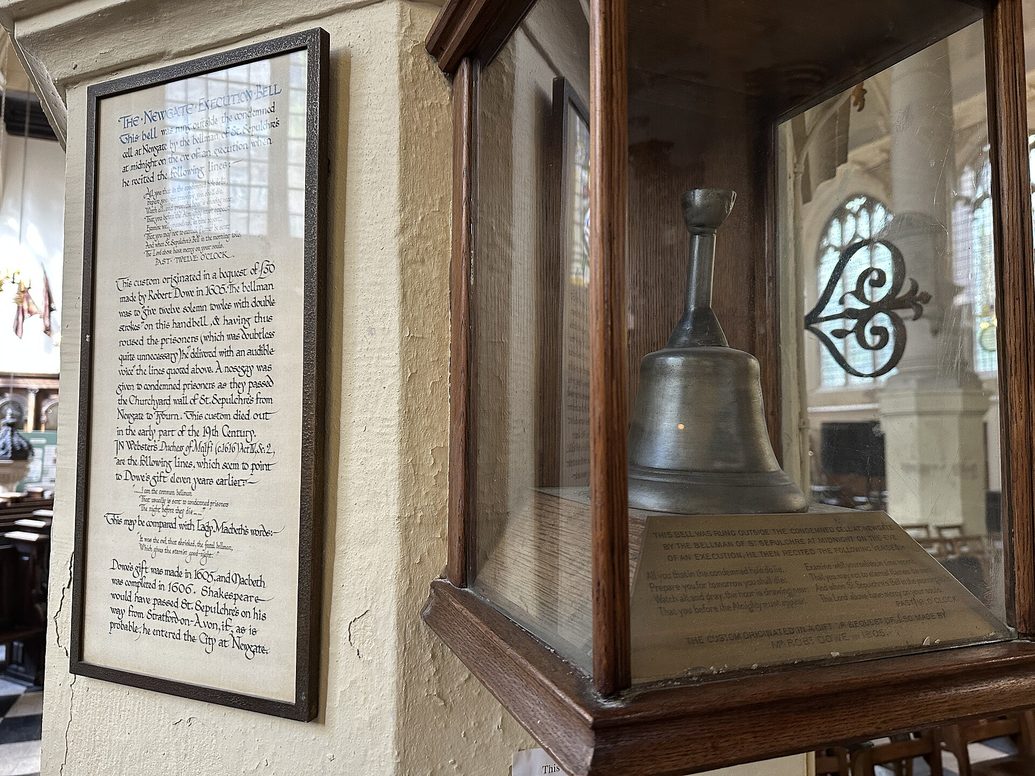
In a glass case in the nave is the Newgate execution handbell. Under the 1605 bequest, of £50, the bellman went to ring a bell under Newgate the night before an execution. The church gives the donor’s name as John Dow; other accounts call him Robert Dowe, a Merchant Taylor.
5. Captain John Smith
In the south aisle, where Smith is buried, a stained-glass window by Francis W. Skeat, installed in 1968, remembers him. The south aisle also has a Resurrection window by Gerald E. R. Smith.
6. The organ
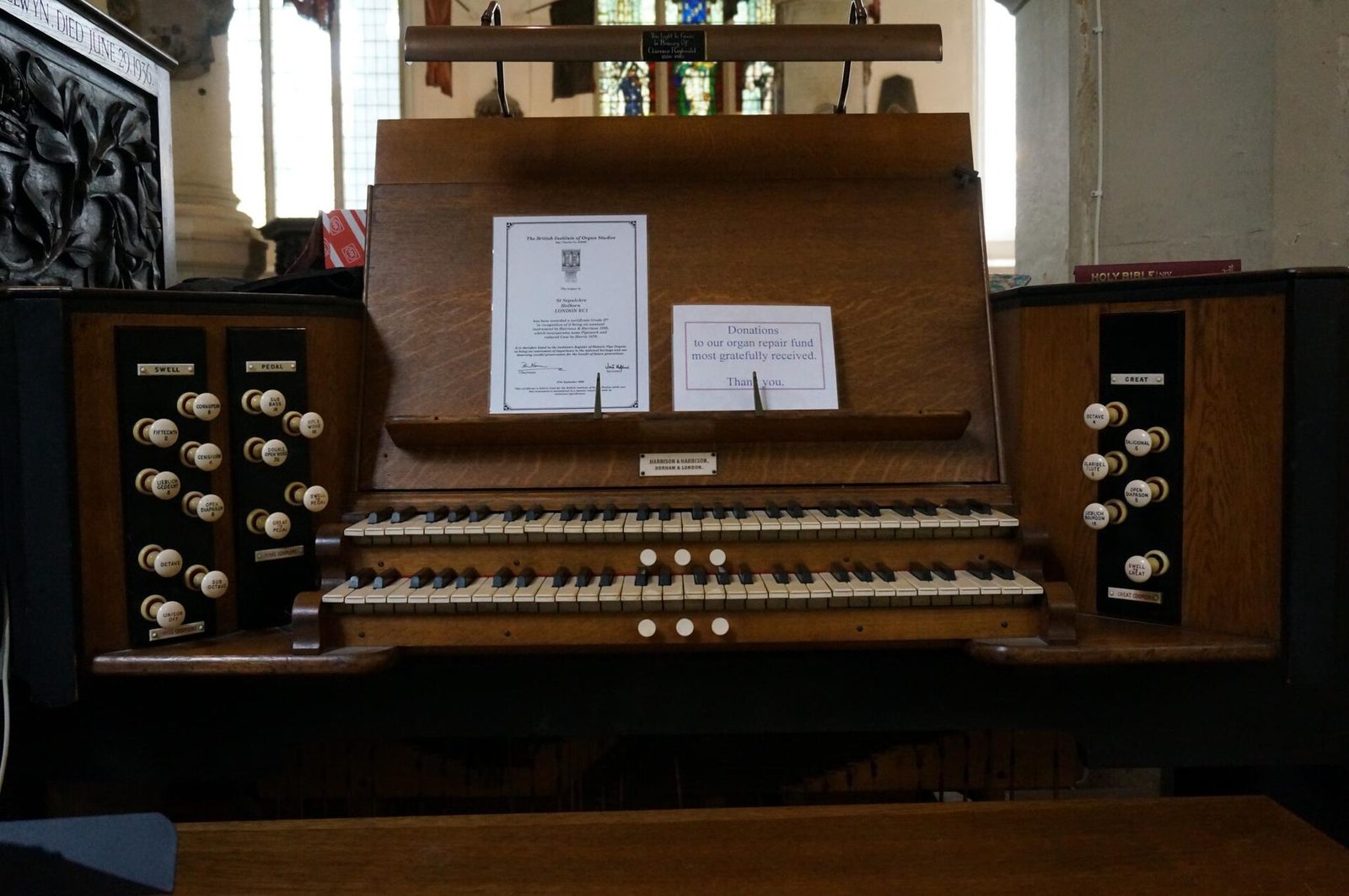
The organ’s story goes back to 1670 and the work of Thomas and Renatus Harris, with work by Harrison & Harrison in 1932. Look out for the organ console. It has been silent for some years and is due to be restored as part of the church’s Renewal and Regeneration programme; services use a digital organ meanwhile.
7. The east end
The east window of 1949, the Victorious Christ by Gerald E. R. Smith, replaced the one lost in 1941. On the east wall is a bust of Charles Lamb, who died in 1834, moved here from Christ Church Newgate Street.
8. The Royal Fusiliers Chapel
The regimental chapel, off the south aisle, was dedicated in 1950 by Dr W. R. Matthews, Dean of St Paul’s. Its east window, by Gerald E. R. Smith, shows St Paul and St George and was dedicated on Remembrance Day 1952. A Garden of Remembrance adjoins it.
9. The Musicians’ Chapel
End on the north side, in the Musicians’ Chapel. Sir Henry Wood, who learnt the organ here as a boy, died in 1944 and his ashes lie here; his memorial window by Gerald E. R. Smith was unveiled in 1946. Other windows remember Walter Carroll (1959), Dame Nellie Melba (1962, by Brian Thomas, with Mimi and Desdemona) and John Ireland (1963, also by Thomas). The Friends of the Musicians’ Chapel keep a Book of Remembrance, and an annual service gives thanks for musicians. Elsewhere in the church are a St Stephen Harding window of 1932 by A. K. Nicholson and the Cordwainers’ window for John Came, made in 1896 and installed in 1973.
A note on our pictures. Most of the twentieth-century stained glass here is by Gerald E. R. Smith, Francis W. Skeat and Brian Thomas, whose windows may still be in copyright, so we describe them rather than show them.
Getting there
The church stands on Holborn Viaduct, opposite the Old Bailey. The north entrance of City Thameslink is across the road (no Sunday service). St Paul’s (Central line) is about five minutes’ walk, Farringdon about six minutes (Elizabeth line) or seven (Underground), and Blackfriars about seven. Buses 8, 25, 46, 59, 133, 242 and 521 stop outside. The church suggests the Smithfield car park, about five minutes away, at about £3 an hour.
The Viaduct Tavern, a Victorian pub, is a few steps away on Newgate Street, and St Paul’s Cathedral and St Bartholomew the Great are a few minutes’ walk. The City of London church walk passes close by.
Where to stay
The City, Farringdon and Holborn all have plenty of places to stay within walking distance.
This link goes to Booking.com. This site earns nothing from it at present — it is here because it is the quickest way to check what is actually available.
Don’t miss
- The execution bell The Newgate handbell in the nave.
- The Musicians’ Chapel Sir Henry Wood’s resting place.
- Captain John Smith His window in the south aisle.
- The tower The “bells of Old Bailey”.
Insider tips
Come on a Wednesday. It has the longest opening hours, 8.30am to 6.30pm, and Choral Evensong at 5.15pm (not in August).
Christmas 2026. There are Christmas Carols on Tuesday 8 December at 1pm and Carols by Candlelight on Wednesday 9 December at 5.15pm. Both are free but booking is essential, with a suggested £5 donation.
Fridays at lunchtime. Concerts from 1pm to 2pm, with a retiring collection instead of tickets.
Common questions
When is St Sepulchre’s open?
The church lists Monday 11am–3pm, Tuesday and Thursday 8.30am–2.30pm, Wednesday 8.30am–6.30pm, Friday 10am–4pm and Sunday 10.30am–4pm. Saturday times vary (another part of its website gives 10am–3pm), Friday may close at 3pm, and hours change in August. For a special trip, contact the church to confirm.
Is there a charge to visit?
No admission charge is listed for a casual visit. Most concerts and services need no ticket, though a few special events are ticketed.
What is the execution bell?
A handbell, now in a glass case in the nave. Under a bequest of 1605 a bellman went to nearby Newgate prison to ring a bell the night before an execution. The church names the donor as John Dow; other accounts give Robert Dowe.
Did Wren rebuild the church?
Accounts differ. The church points to payments recorded in Wren’s ledgers in 1670–77, but other accounts credit the mason Joshua Marshall, so “Wren-era” is safer.
Can I climb the tower?
No. Public tower tours are not offered for health and safety reasons, although private visits may be arranged for a charge. The church has a 3D virtual tour on its website.
Who is buried here?
Captain John Smith, an early leader of Virginia, who died in 1631, lies in the south aisle, and the ashes of Sir Henry Wood, who died in 1944, are in the Musicians’ Chapel.
More English churches
- St Bartholomew the Great — a few minutes’ walk away at Smithfield
- St Paul’s Cathedral — Wren’s cathedral a few minutes away
- St Bride’s, Fleet Street — Wren’s church off Fleet Street
See all the cathedrals and churches worth visiting in England →