
St Bavo’s Cathedral, Ghent
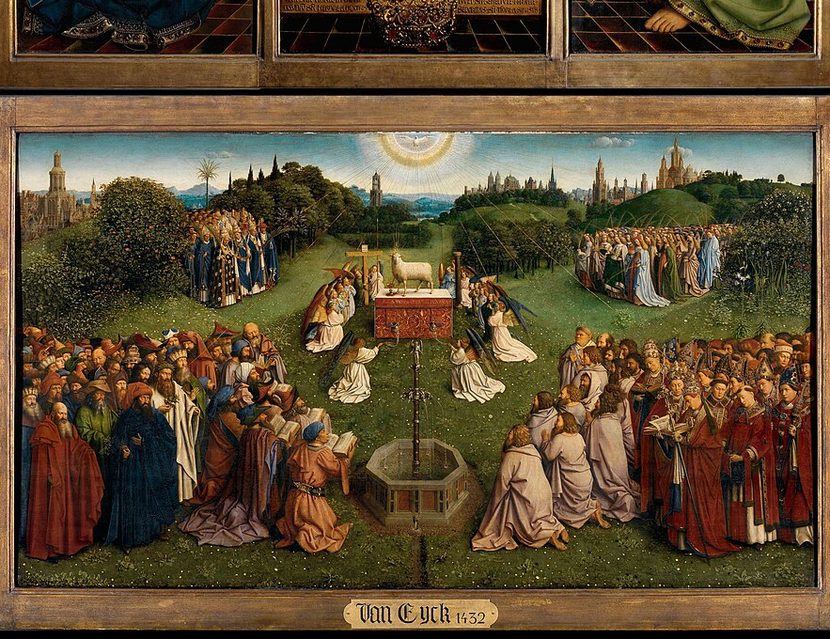
In the heart of Ghent, beside the Belfry, stands the cathedral that holds one of the most famous paintings in the world: the Ghent Altarpiece, the Adoration of the Mystic Lamb, completed by Jan van Eyck in 1432. The cathedral itself, Gothic outside and richly Baroque within, is free to enter; the altarpiece, in its own chapel, has a ticket and an augmented-reality tour.
From parish church to cathedral
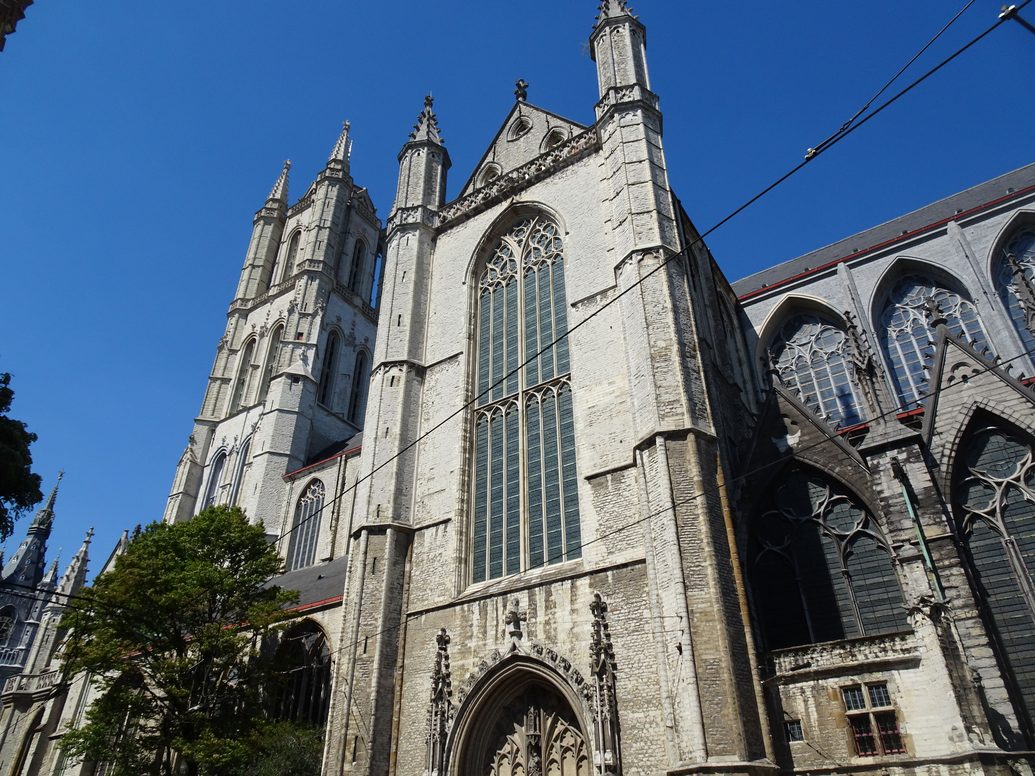
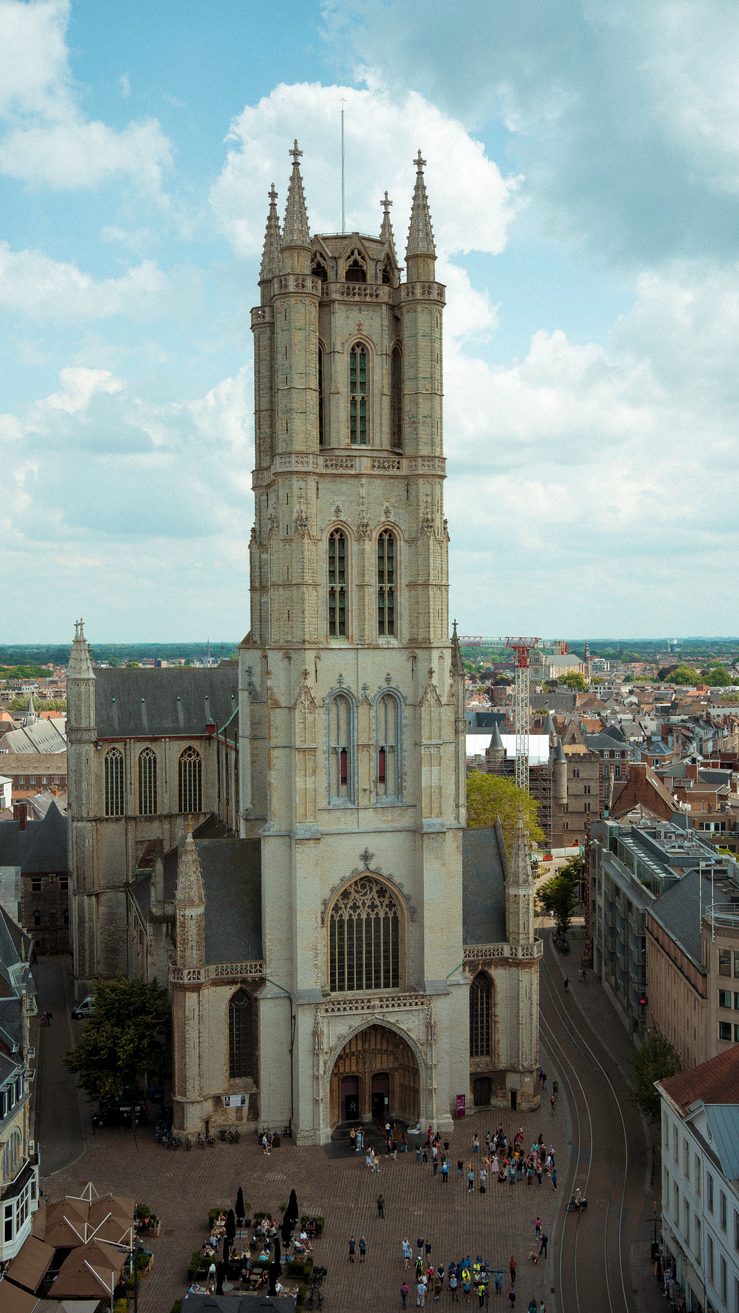
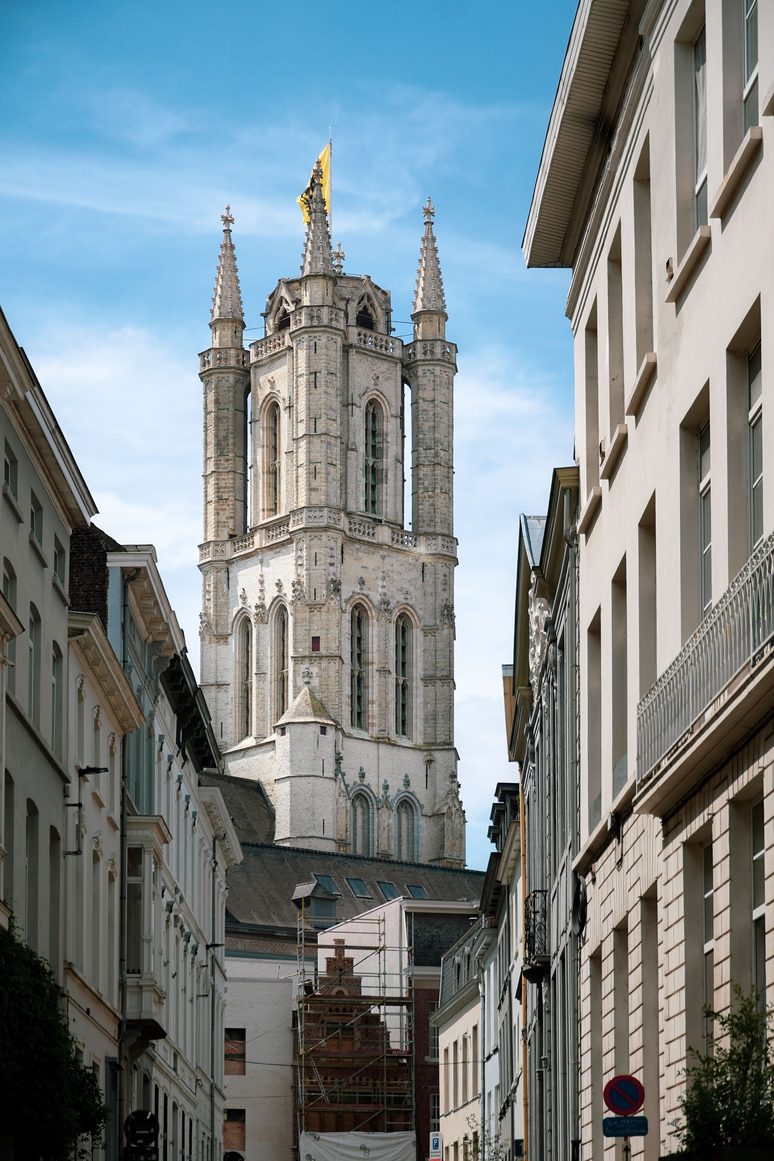
A church of St John the Baptist is said to have been consecrated here in 942; a Romanesque church followed in the twelfth, and its crypt survives under the choir. The Gothic choir was begun in the late thirteenth century, the ambulatory with its ring of chapels followed, and the nave and the 89-metre west tower were completed in the sixteenth century. The tower was finished in 1534.
The name came later. In 1540, after Ghent rebelled against the emperor Charles V, who had been baptised in this church, he had the city’s great Abbey of St Bavo pulled down to build a citadel. The abbey’s monks, now canons, moved here, and St John’s became St Bavo’s; in 1559 it became the cathedral of the new Diocese of Ghent. Calvinist iconoclasts wrecked much of the interior in 1566, and the Baroque furnishings you see today came in the next two centuries.
The visitor’s cheat sheet
| Where | Sint-Baafsplein, 9000 Ghent, opposite the Belfry |
|---|---|
| Opening hours | Mon–Sat 8.30am–5.30pm; Sun 1pm–5.30pm |
| Altarpiece | Mon–Sat 10am–5pm, Sun 1pm–5pm; last entry for the AR tour 4pm |
| Admission | Cathedral free; altarpiece €16 with AR tour, €12.50 altarpiece only, €8 under 12 (EUR 10 off with the Ghent CityCard, online only) |
| Mass | Sunday 11am (in the crypt in winter); weekdays 8.45am in the crypt (Tue, Wed, Thu, Sat) |
| Closed | 1 January |
| Getting there | Tram 1 from Gent-Sint-Pieters to Gent Zuid, then a 10-minute walk; or about 30 minutes on foot (roadworks: check De Lijn) |
| How long | Half an hour for the cathedral; 90 minutes with the altarpiece |
Hours and admission checked against the official site in November 2026. They change; the official site is always the last word.
The Ghent Altarpiece
The altarpiece was commissioned by Joos Vijd and his wife Elisabeth Borluut for their chapel, and installed on 6 May 1432. Its inscription says it was begun by Hubert van Eyck and finished by his brother Jan. Opened, it shows God enthroned between the Virgin and St John the Baptist, angels singing and playing, Adam and Eve, and below, in a paradise meadow, the whole of humanity converging on the Lamb of God.
It may be the most stolen artwork in history. French Revolutionary forces took the central panels to Paris in 1794 (they came back in 1815); most of the wings were later sold and ended up in Berlin, returning only in 1920, under the Treaty of Versailles. In April 1934 two panels were stolen from the cathedral; St John the Baptist was returned, but the Just Judges has never been found, and the panel you see is a copy by Jef Van der Veken. In the Second World War the Nazis seized the altarpiece, and it was recovered from the Altaussee salt mine in Austria by the Monuments Men in 1945.
Restoration and the visitor centre
Since 2012 the altarpiece has been restored in stages by the Royal Institute for Cultural Heritage (KIK-IRPA), revealing the original fifteenth-century face of the Lamb, painted over in the sixteenth century. In 2021 it moved into a climate-controlled glass case in a new visitor centre, with an augmented-reality tour that begins in the crypt. The final phase, the seven upper panels, has been under way at the Museum of Fine Arts in Ghent since 2023; the restoration is due to finish in spring 2027, and until the panels come back they are shown in the cathedral as photographs.
What to see
The nave and the pulpit
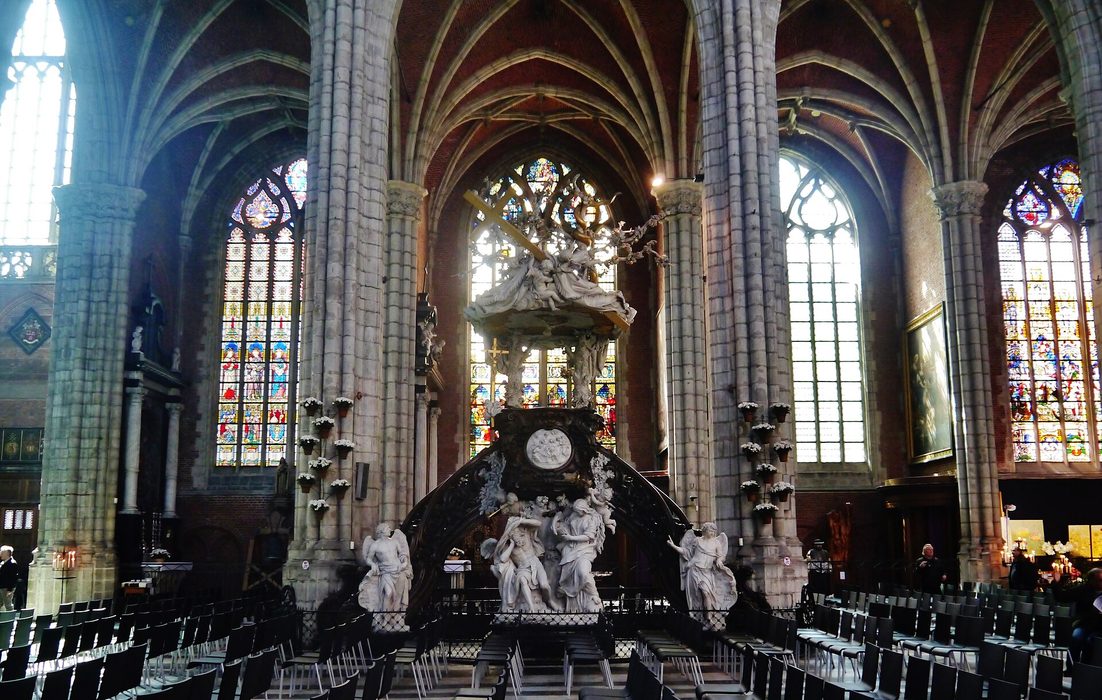
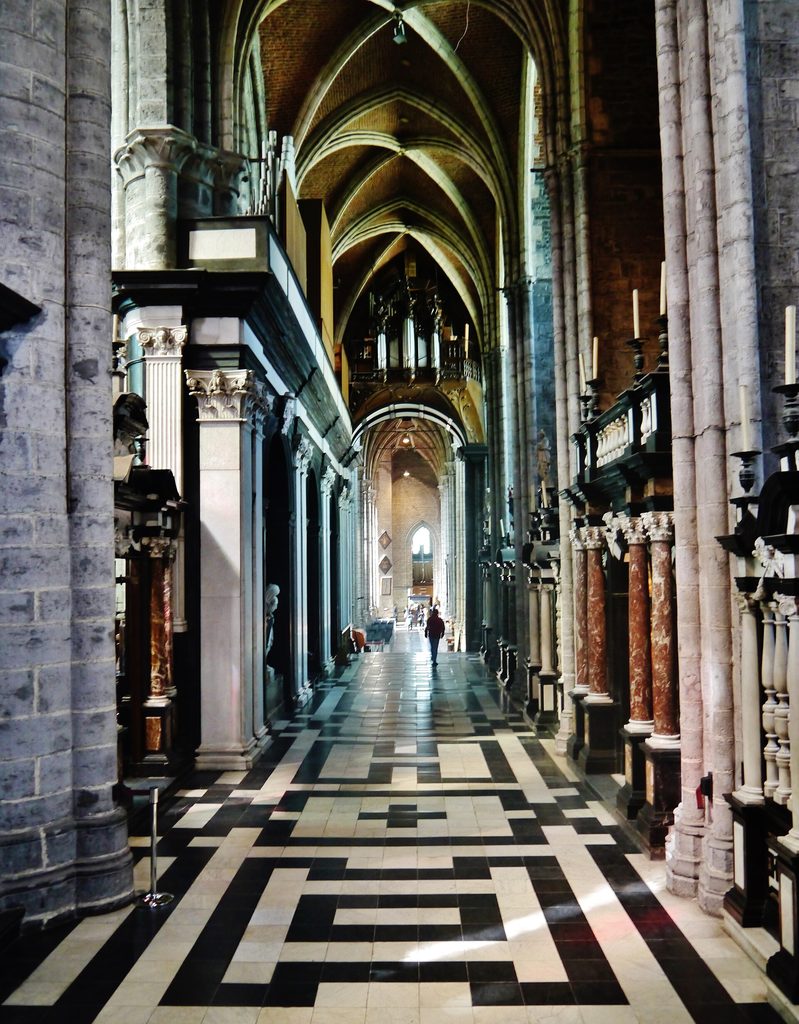
The tall Gothic nave leads to a choir full of black and white marble. Halfway along is Laurent Delvaux’s Rococo pulpit of 1741–45, in oak, gilded wood and white marble: a marble group of Time, roused from sleep, lifting the veil from Truth, beneath a carved tree whose branches wind round the pulpit.

The choir and the high altar
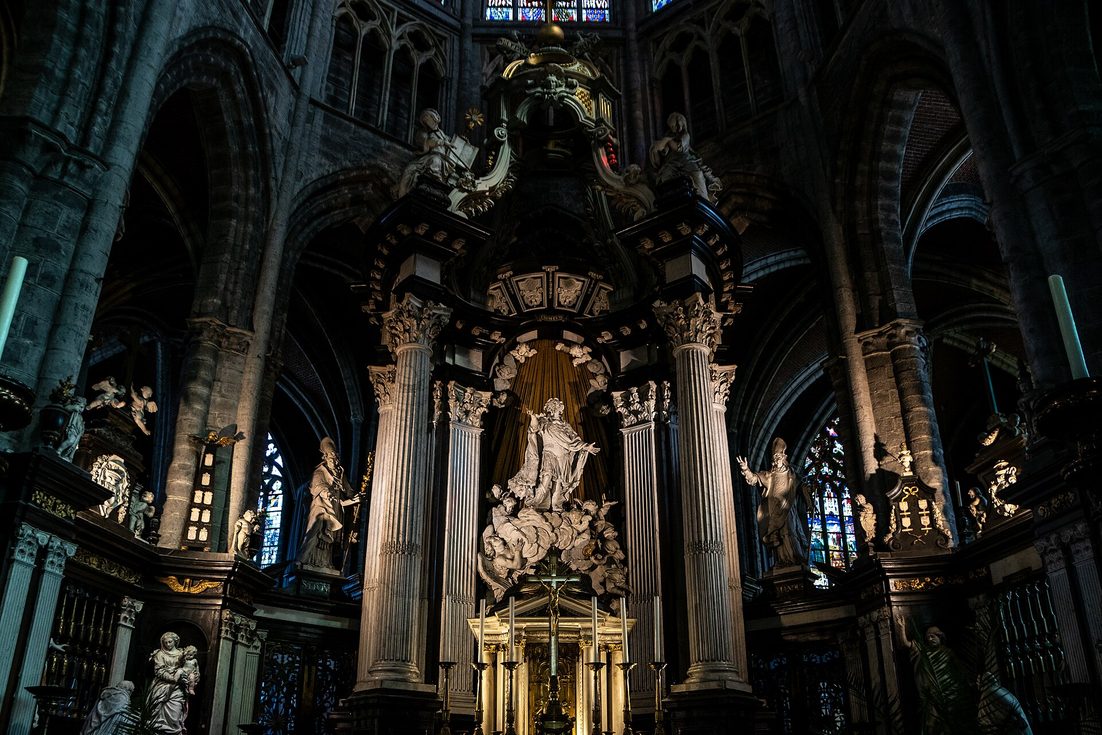
The Baroque high altar, in black, white and red marble, shows St Bavo carried to heaven on a cloud. Around the choir are the tomb of Bishop Antonius Triest by Jérôme Duquesnoy the Younger (1652–54), and candlesticks made by Benedetto da Rovezzano for Henry VIII’s tomb. Rubens’s great Conversion of St Bavo (1624) hangs in one of the chapels.
The crypt
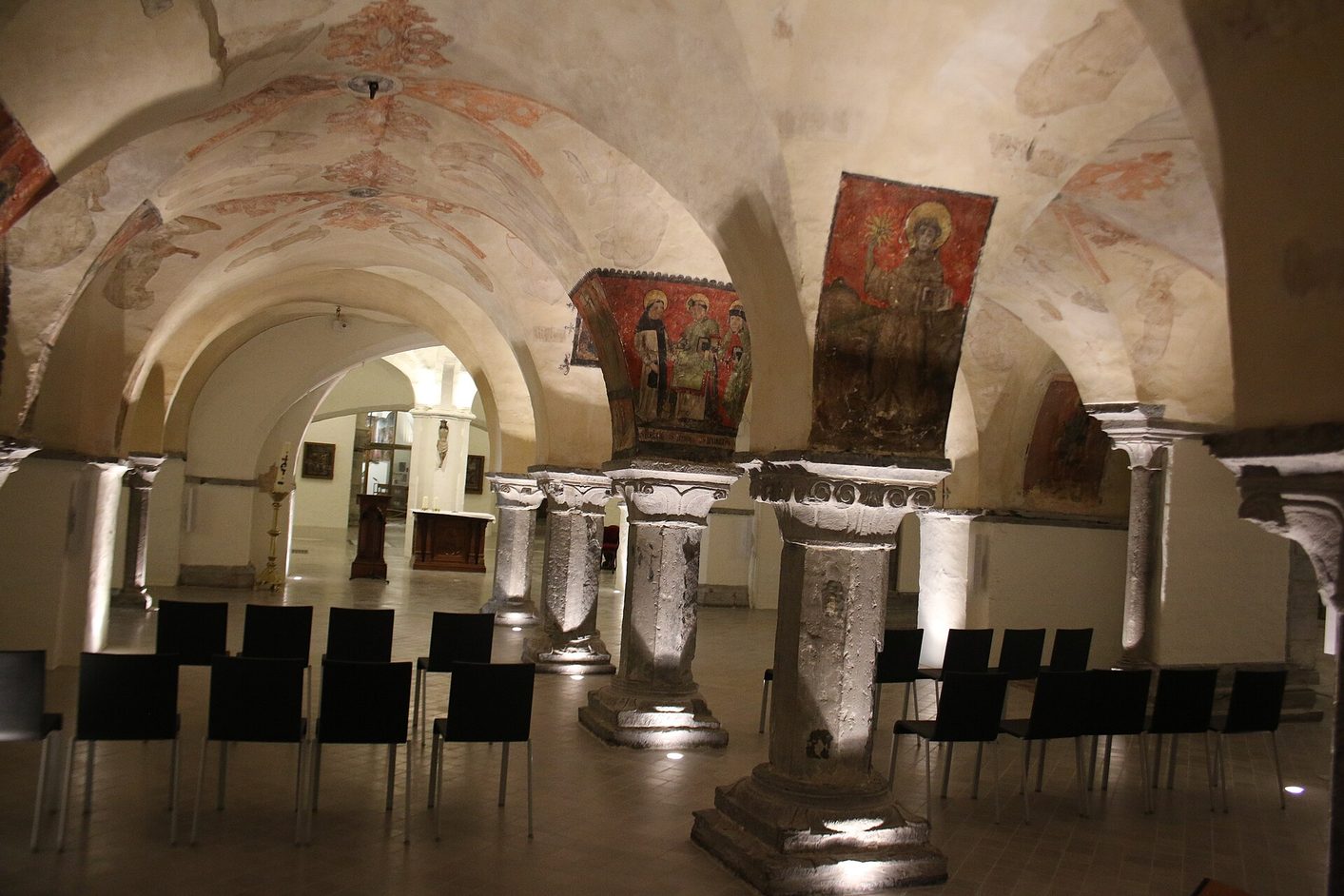
The Romanesque crypt, with its round pillars and arches, runs under the choir. Its walls carry paintings of about 1480–1540, and it holds tombstones of the bishops of Ghent. In the winter months Sunday Mass is said here.
Getting there
The cathedral is on Sint-Baafsplein in the old centre, a few steps from the Belfry and St Nicholas’ Church. From Gent-Sint-Pieters station take tram 1 to Gent Zuid and walk about 10 minutes, or walk the whole way in about half an hour. Tram routes through the centre are changing because of long-running roadworks (line 3 is suspended until May 2027), so check the De Lijn journey planner. The centre is a low-emission zone: if you come by car, use the P1 Vrijdagmarkt or P2 Reep car parks.

Tickets and where to stay
Altarpiece tickets are sold at the cathedral and online on the cathedral’s own website; booking ahead avoids the queue. Ghent is an easy day trip from Brussels or Bruges, but it is worth a night.
This link goes to Booking.com. This site earns nothing from it at present — it is here because it is the quickest way to check what is actually available.
Don’t miss
- The Mystic Lamb The central panel of the Ghent Altarpiece.
- Delvaux’s pulpit Rococo marble and oak in the nave.
- Rubens’s St Bavo In one of the cathedral’s chapels.
- The crypt Romanesque pillars and late-medieval paintings.
Insider tips
Book the first or last slot. The altarpiece is opened in the morning and closed in the evening, so the first and last time slots may let you see its painted outer panels too.
Come in the morning on a weekday. On Sundays the cathedral opens to visitors only at 1pm, and afternoons bring the day-trip crowds.
Common questions
Is St Bavo’s Cathedral free?
The cathedral itself is free. Seeing the Ghent Altarpiece costs €16 with the augmented-reality tour (about an hour) or €12.50 for the altarpiece alone; children under 12 pay €8. Booking online is recommended.
Is the Ghent Altarpiece complete?
Not at the moment. The seven upper panels are being restored at the Museum of Fine Arts (MSK) in Ghent and are shown in the cathedral as high-quality photographs. The restoration is due to finish in spring 2027, after which the panels return to the cathedral. The lower panels, including the Adoration of the Mystic Lamb, and the outer panels are the originals.
Is the Just Judges panel the original?
No. It was stolen in 1934 and has never been found. The panel in its place is a copy painted by Jef Van der Veken, installed in 1945.
Can you climb the tower?
Only during the Gentse Feesten, the city’s festival in July. For a view over Ghent the rest of the year, climb the Belfry across the square.
More churches nearby
- Church of Our Lady, Bruges — Michelangelo’s Madonna, half an hour away by train.
- Antwerp Cathedral — four Rubens altarpieces under Belgium’s tallest spire.