
Santo Domingo de Guzmán, Oaxaca
At the top of the pedestrian street of Oaxaca, the Dominican church of Santo Domingo looks like a fortress from outside, and inside is one of the most dazzling interiors of Mexican Baroque: the nave and the Rosary Chapel covered in gilded and painted plaster, much of it carefully restored after the church served as barracks. Next door, the former convent holds the Museo de las Culturas de Oaxaca, with the treasure of Tomb 7 at Monte Albán, and behind it a garden of the plants of Oaxaca.

The Dominicans in Oaxaca
The Dominican friars arrived in Oaxaca at the end of the 1520s, soon after the Spanish conquest, and began their great convent in the second half of the sixteenth century. It was in use, though unfinished, by the early 1600s, and the decoration of the church took most of the seventeenth century; the Rosary Chapel was begun in the 1720s. Earthquakes in 1603 and 1604 destroyed the Dominicans’ other convent in the city, San Pablo, and hurried the work on Santo Domingo.
In the nineteenth century the convent was taken over by the army, and the church was closed until 1902. After a long restoration in the 1990s the convent became the Museo de las Culturas de Oaxaca, and the old convent garden was replanted as the ethnobotanical garden. The church and convent are part of the Historic Centre of Oaxaca, a UNESCO World Heritage Site with Monte Albán.

The visitor’s cheat sheet
| Where | Calle Macedonio Alcalá, at the north end of the pedestrian street, historic centre of Oaxaca |
|---|---|
| Admission | Free to the church; the museum in the convent charges (below) |
| Church hours | Open daily, but times are not published and visits stop during Mass |
| Museum | Museo de las Culturas de Oaxaca (INAH): 210 pesos foreign visitors, 105 pesos Mexicans (2026); Tuesday to Saturday 10am–4pm per INAH, though some sources list Sunday opening and later closing |
| Ethnobotanical garden | Guided tours only; check languages and times at the entrance on Calle Reforma |
| Photography | No flash in the museum; extra fee for professional cameras |
| How long | Half an hour for the church; two hours with the museum |
Hours and admission checked against the official site in November 2026. They change; the official site is always the last word.
What to see
The church
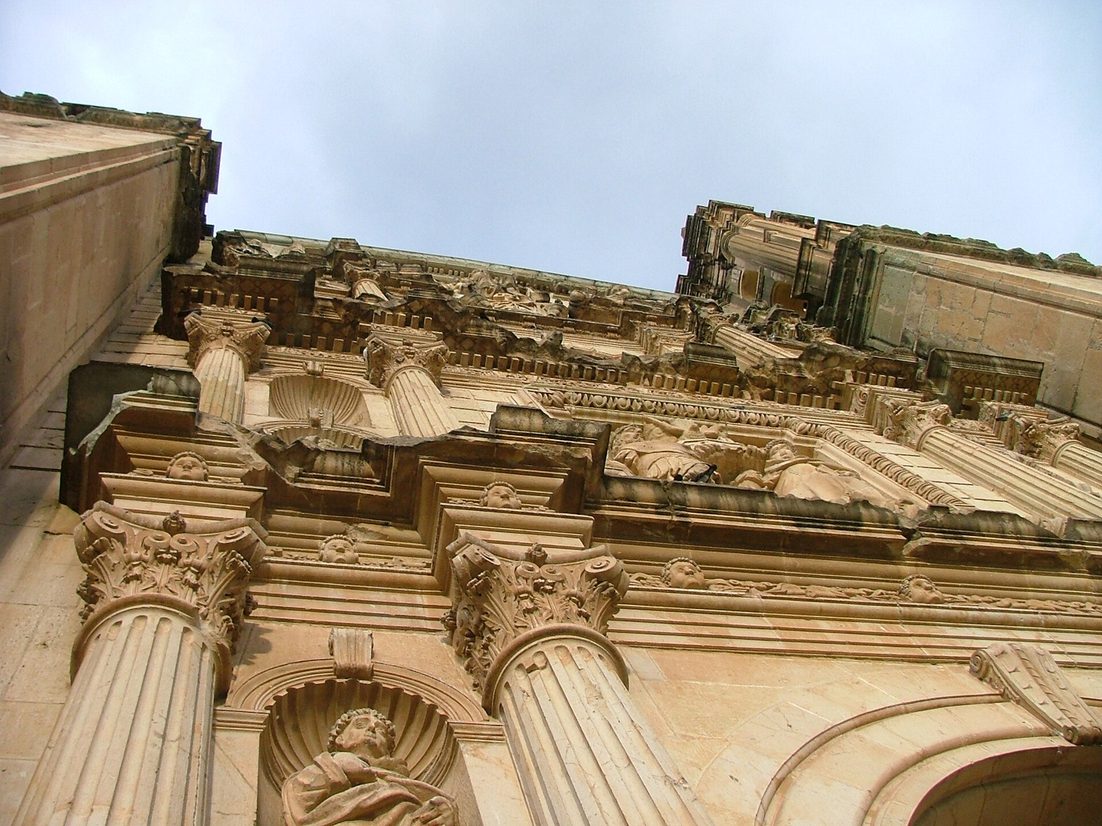
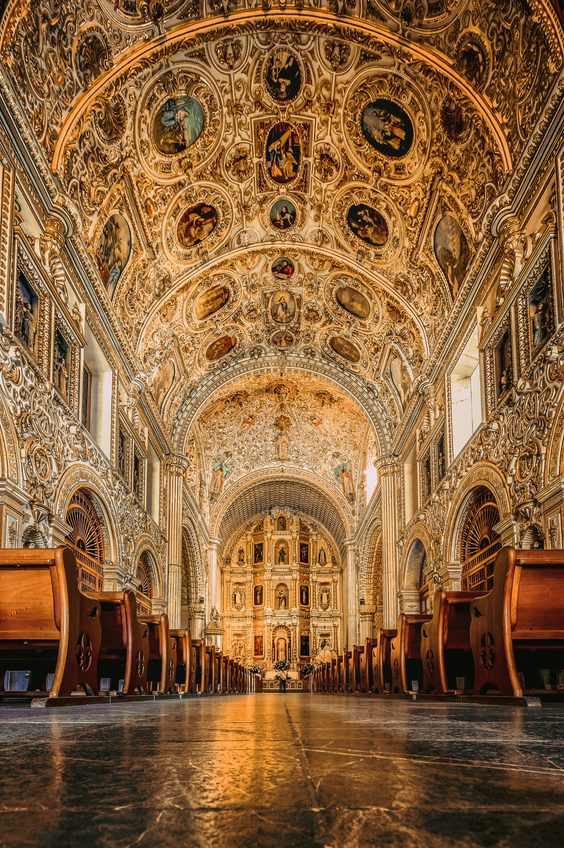
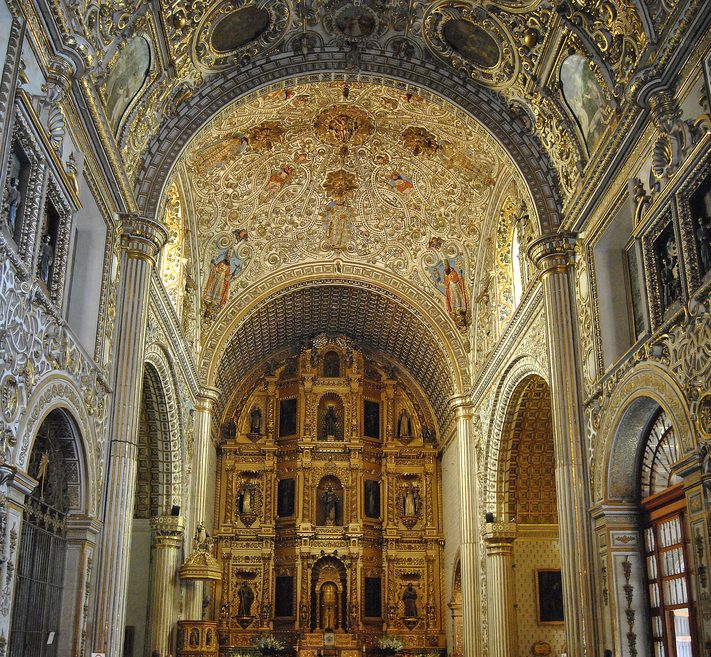
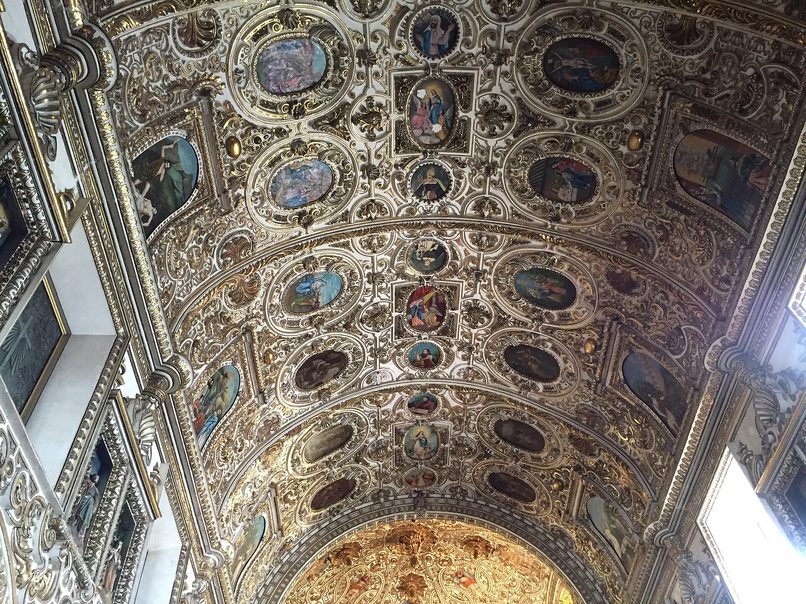
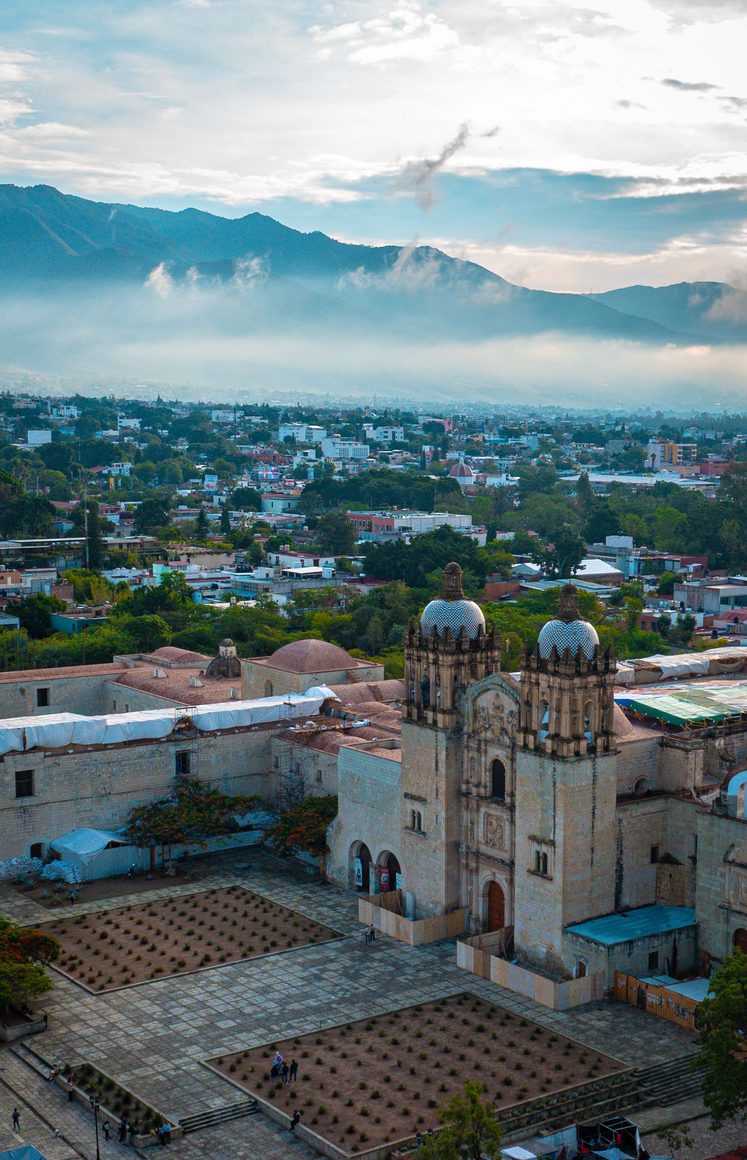
The front is of the green-tinged stone of Oaxaca, with St Dominic and St Hippolytus over the door, and the domes are covered in tiles. Inside, the vaults of the single nave are covered in white and gold plaster relief with painted medallions of saints and martyrs. Under the choir, just inside the door, look up at the genealogical tree of St Dominic: a painted and gilded plaster vine springing from the reclining figure of Don Félix de Guzmán, with members of the saint’s family, real and imaginary, among the branches. It is the oldest surviving decoration in the church. The high altarpiece, gilded like the rest, is a twentieth-century reconstruction (inaugurated in 1959); many of the original altarpieces were burned or lost while the church served as army barracks.

The Rosary Chapel
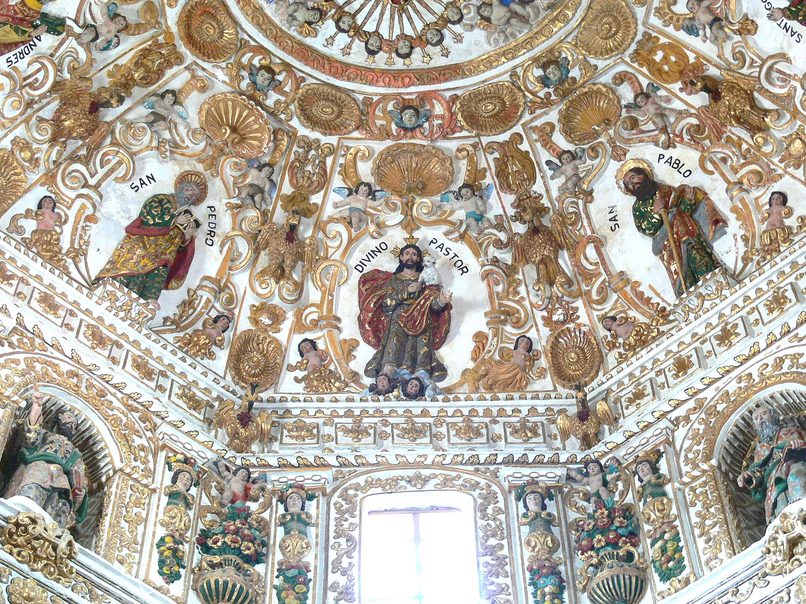
Off the right side of the nave, the Capilla del Rosario is even richer than the church: a dome and walls of gilded and painted plaster, with saints and a gilded altarpiece around the image of the Virgin of the Rosary.
The museum and the garden
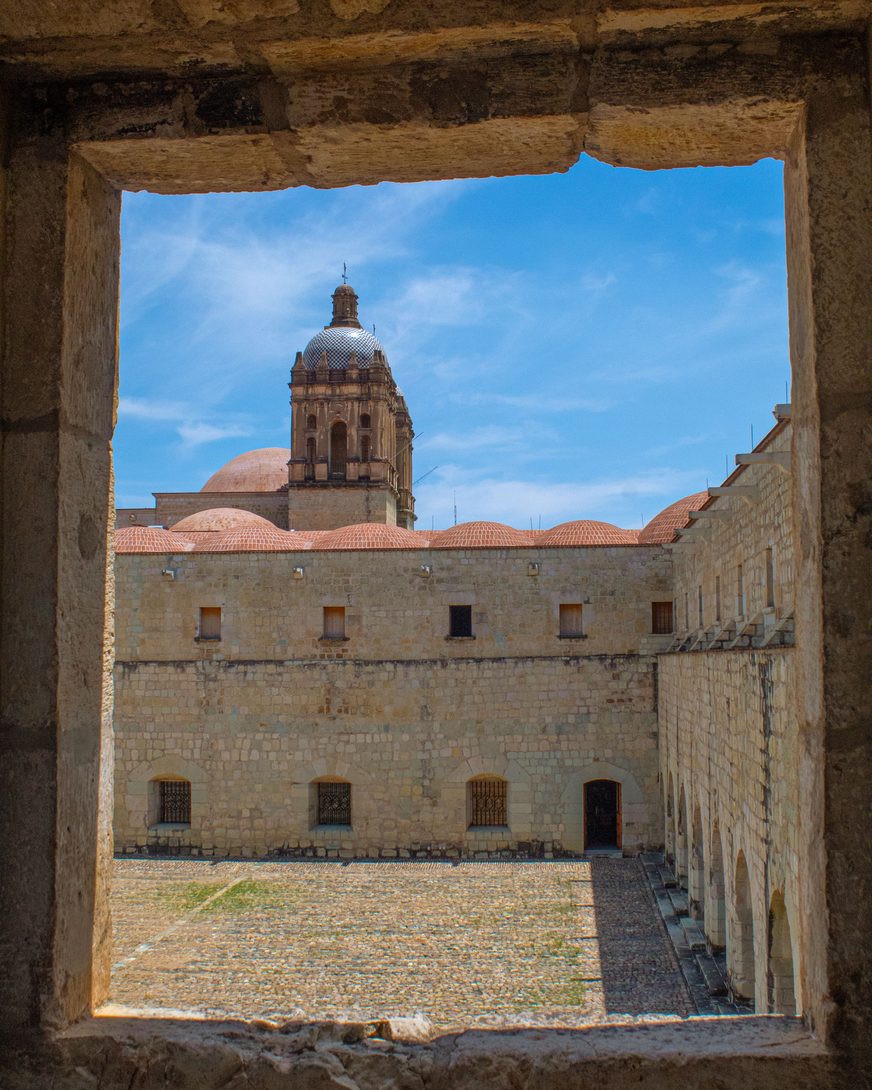
The Museo de las Culturas de Oaxaca fills the two-storey cloister and the rooms of the convent. Its great treasure is the gold, silver, jade and turquoise found in Tomb 7 at Monte Albán by Alfonso Caso in 1932, and the rooms take the story of the region from the ancient Zapotec and Mixtec cities to the colonial period and beyond. The Jardín Etnobotánico, designed by the artist Francisco Toledo and the ethnobotanist Alejandro de Ávila on the convent’s old land, is planted with the cacti, agaves and trees of Oaxaca, and can be visited only on a guided tour.
Around Santo Domingo
The Andador Macedonio Alcalá runs south from the church to the Zócalo and the cathedral, a walk of about ten minutes past shops, galleries and cafés. The ruins of Monte Albán, where the Tomb 7 treasure was found, are on a hill above the city, about half an hour by road.
Getting there
Oaxaca has flights from Mexico City and some US cities, and the airport is south of the city, a short taxi ride from the centre. Long-distance buses run from Mexico City. Santo Domingo is in the historic centre, within walking distance of most hotels.
Where to stay
The historic centre of Oaxaca is compact and walkable, and the streets around Santo Domingo are among the most pleasant to stay in.
This link goes to Booking.com. This site earns nothing from it at present — it is here because it is the quickest way to check what is actually available.
Don’t miss
- The genealogical tree Under the choir, just inside the door.
- The Rosary Chapel Gilded and painted from floor to dome.
- The Tomb 7 treasure In the museum in the convent.
- The garden On a guided tour.
Insider tips
Book the garden early in the day. Garden tours fill up and run only at set times, so ask at the entrance on Calle Reforma before you visit the church and the museum.
Come back at dusk. The front of the church and the agaves in front are at their best in the late afternoon light.
Common questions
Is Santo Domingo in Oaxaca free to visit?
Yes, the church is free. The Museo de las Culturas de Oaxaca, in the former convent next door, is run by INAH and costs 210 pesos for foreign visitors and 105 pesos for Mexicans in 2026; Mexicans enter free on Sundays.
Can you visit the ethnobotanical garden?
Yes, but only on a guided tour. Tours run in Spanish most days and in English on some days; times and prices are published by the garden and change, so check on arrival at the entrance on Calle Reforma.
What is the Tomb 7 treasure?
The gold, silver, jade and turquoise found by Alfonso Caso in Tomb 7 at Monte Albán in 1932, one of the richest finds of ancient Mexico. It is the highlight of the museum in the convent.
Can you take photos inside?
In the museum, flash is not allowed and professional cameras need an extra fee. In the church, be discreet and do not photograph during services.
More churches to visit
- Puebla Cathedral — the great grey-stone cathedral of Puebla.
- Metropolitan Cathedral, Mexico City — the largest cathedral in Latin America.
- Basilica of Guadalupe — the great Marian shrine of Mexico.