
Uppsala Cathedral
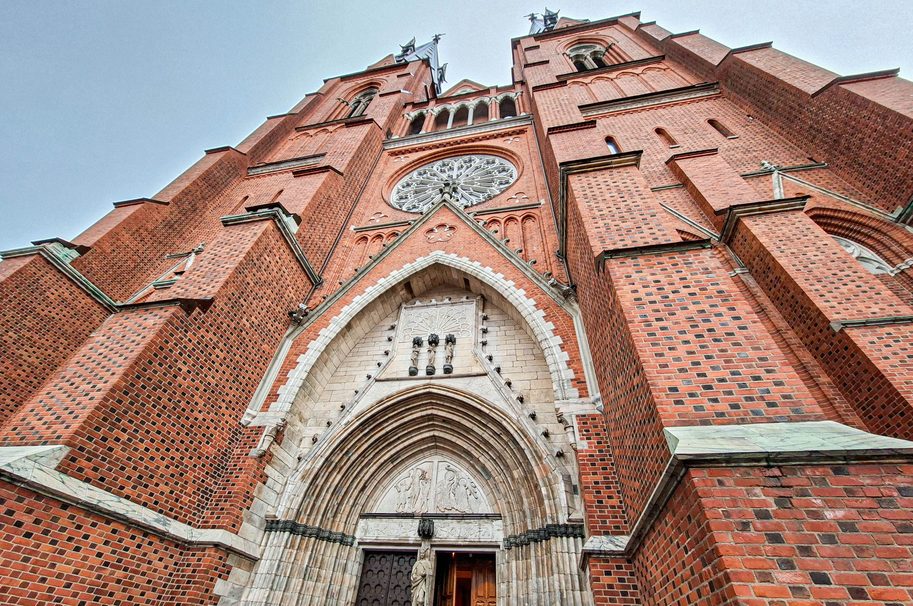
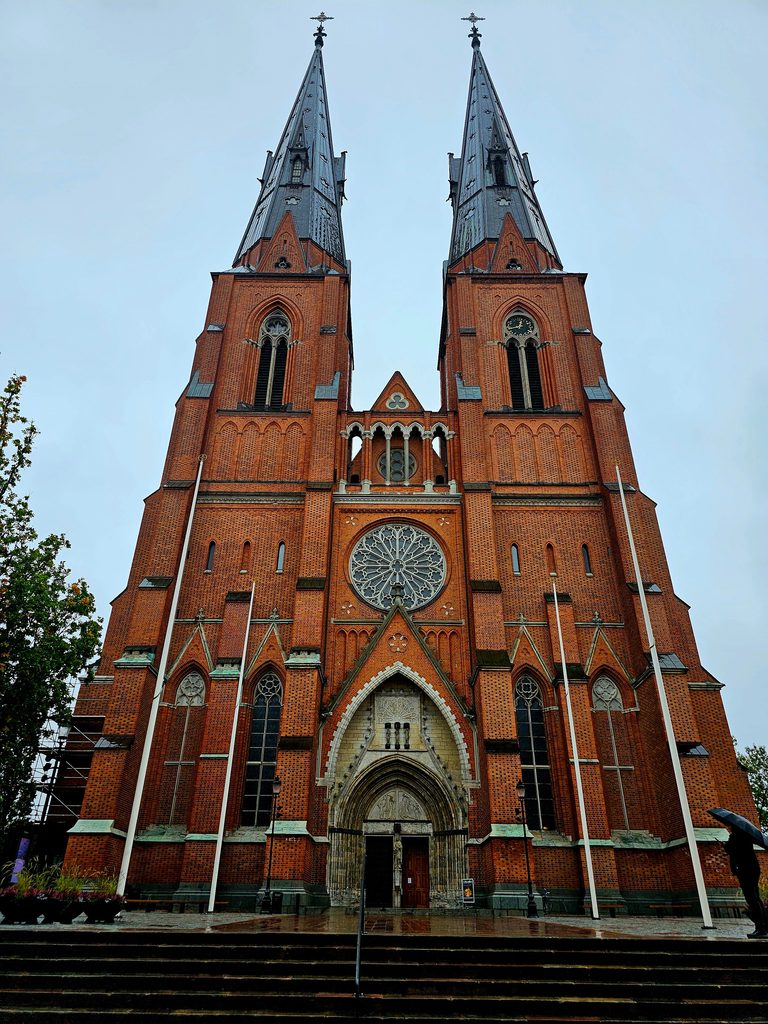
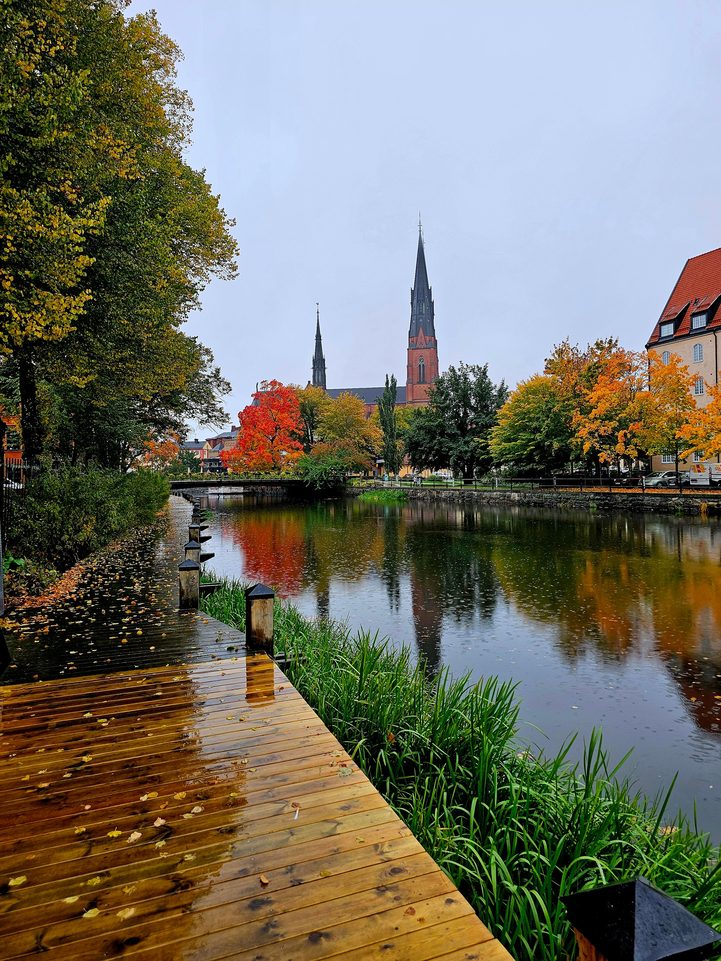
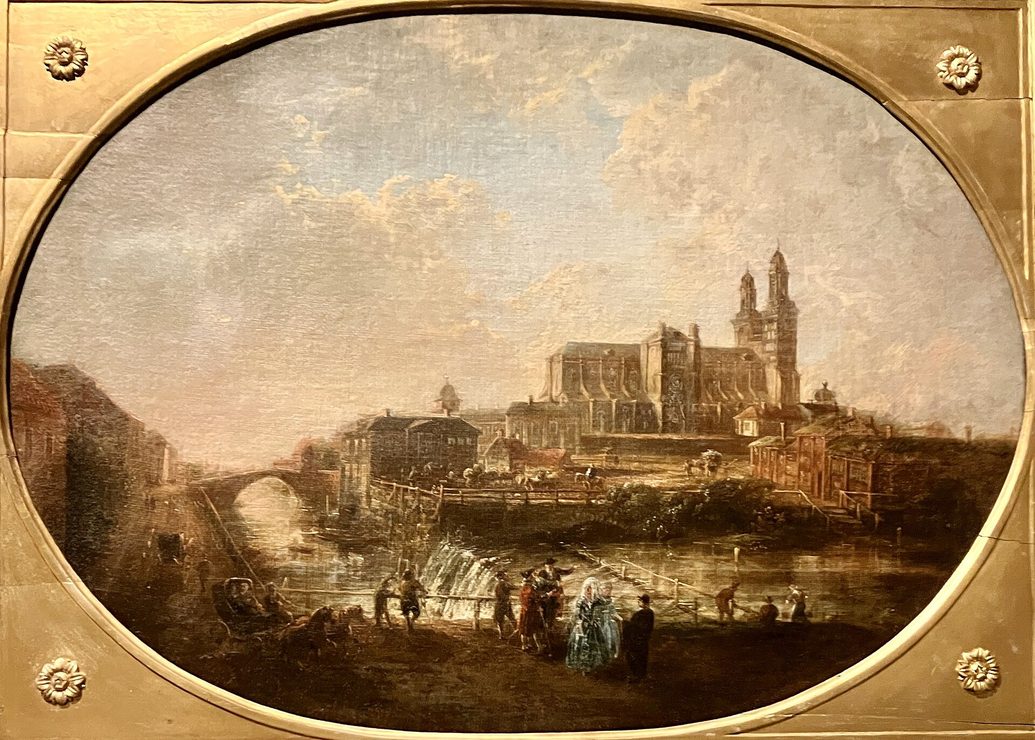
The twin spires of Uppsala Cathedral, 118.7 metres high, rise over Sweden’s oldest university town. The largest cathedral in the Nordic countries is a French Gothic church built in red brick, begun around 1270. It is the seat of the Archbishop of Uppsala and the resting place of King Gustav Vasa, Sweden’s patron saint Erik, the botanist Carl Linnaeus and the mystic Emanuel Swedenborg. It is free, open every day, and 18 minutes by train from Stockholm’s Arlanda airport.
From Old Uppsala to the cathedral
The archbishops of Sweden first had their church at Gamla Uppsala, the old royal and pagan centre a few kilometres north. After a fire there, the see moved south to the present town, and around 1270 work began on a new cathedral in the French High Gothic style; a French master builder, Étienne de Bonneuil, came to work on it in 1287. The relics of St Erik were moved here in 1273, and the cathedral was consecrated, still unfinished, in 1435. Most of Sweden’s monarchs were crowned here until 1719.
A great fire in 1702 destroyed most of the furnishings. In 1885–93 the architect Helgo Zettervall restored the cathedral in neo-Gothic style and gave it its present tall spires.
The visitor’s cheat sheet
| Opening hours | Daily 8am–6pm (to noon on 30 April and Midsummer Eve); no sightseeing during Sunday High Mass (11am to about 12.30pm) or concerts |
|---|---|
| Admission | Free; Treasury 80 SEK for adults, under-18s free |
| Treasury | Oct–Apr Mon–Sat 10am–4pm, Sun 12.30pm–4pm; to 5pm May–Sept; last entry 30 minutes before closing; closed Good Friday, 30 April and Midsummer Eve; not accessible for wheelchairs |
| Music | Evensong on Sundays at 4pm (check the programme); free organ music at 11.30am on some Saturdays |
| Photography | Allowed when no service or concert is under way |
| Getting there | Train from Stockholm 30–50 minutes, from Arlanda 18 minutes; 15 minutes’ walk from the station |
| How long | An hour; add half an hour for the Treasury |
Hours and admission checked against the official site in November 2026. They change; the official site is always the last word.
What to see
The nave
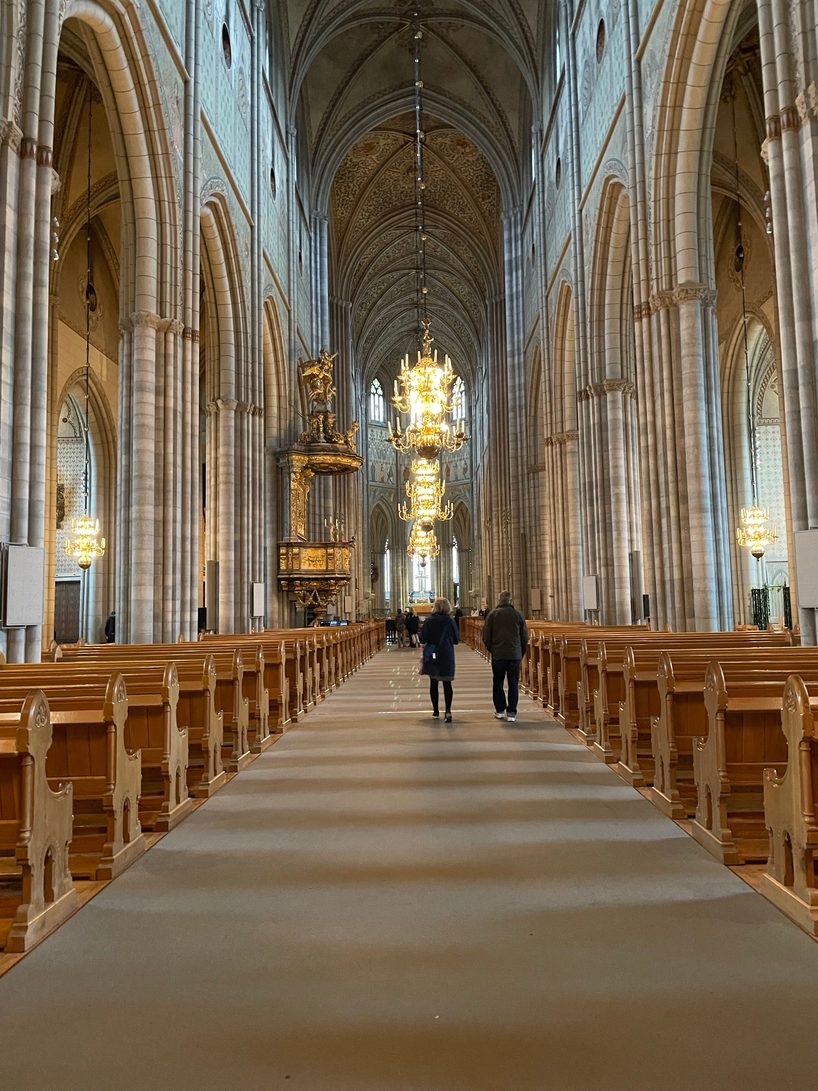
Inside, the nave is tall and narrow, its brick piers and vaults painted pale. Walk up to the chancel and round the ambulatory behind the high altar, where the chapels hold the cathedral’s great tombs.
The Vasa Chapel
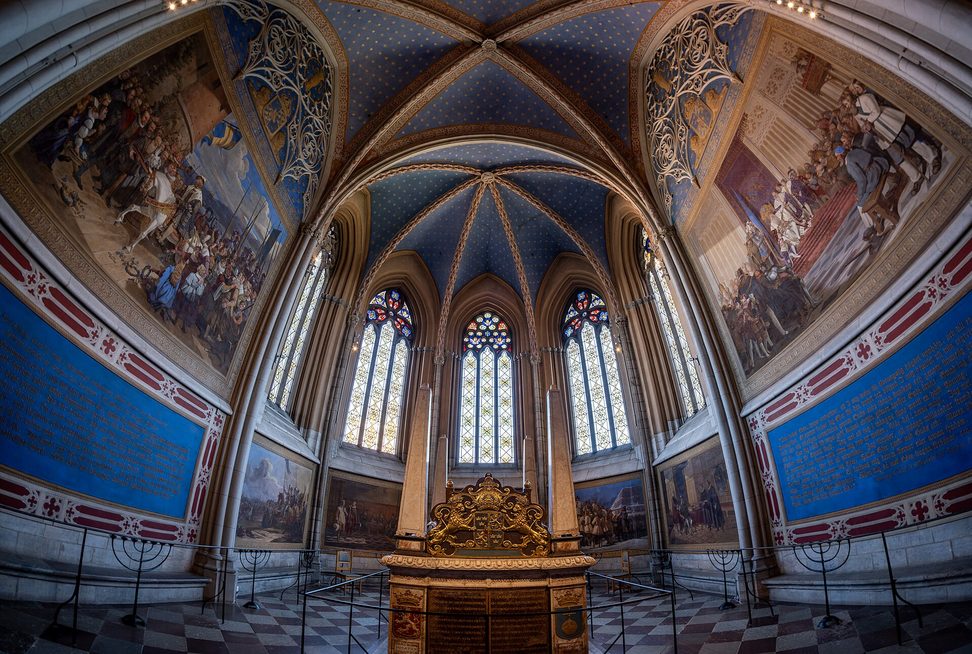
At the far east end, behind the high altar, the largest chapel holds the tomb of King Gustav Vasa, who broke away from Denmark in 1523 and began Sweden’s Reformation, and his queens. Its walls are covered by frescoes of his life painted by Johan Gustaf Sandberg in 1831–41.
St Erik’s shrine
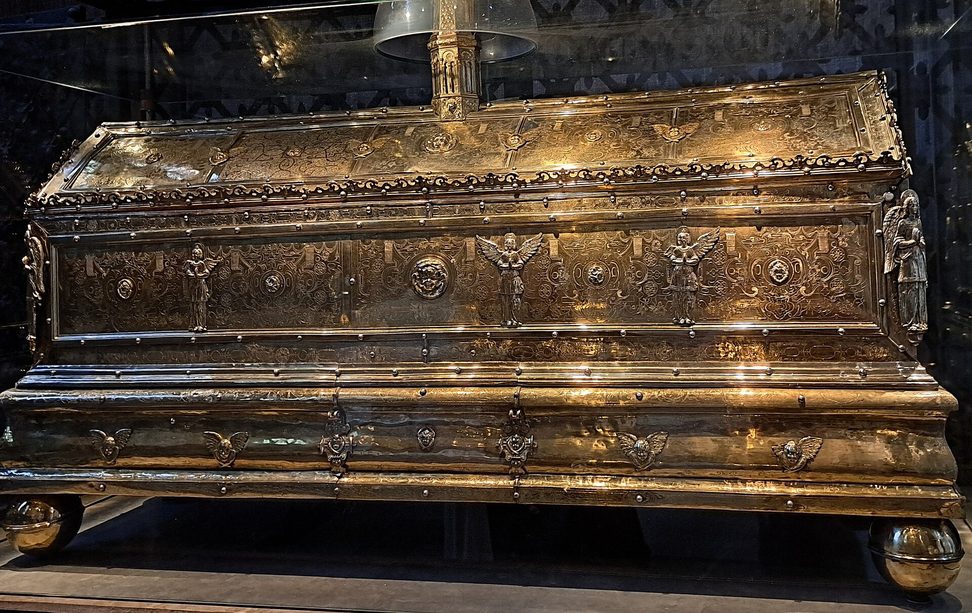
In the Finsta Chapel, beside the Vasa Chapel at the east end, a gilded reliquary holds the bones of St Erik, a 12th-century king killed in Uppsala and venerated as Sweden’s patron saint. The same chapel has a relic of St Birgitta and the gravestone of her parents.
Linnaeus and Swedenborg
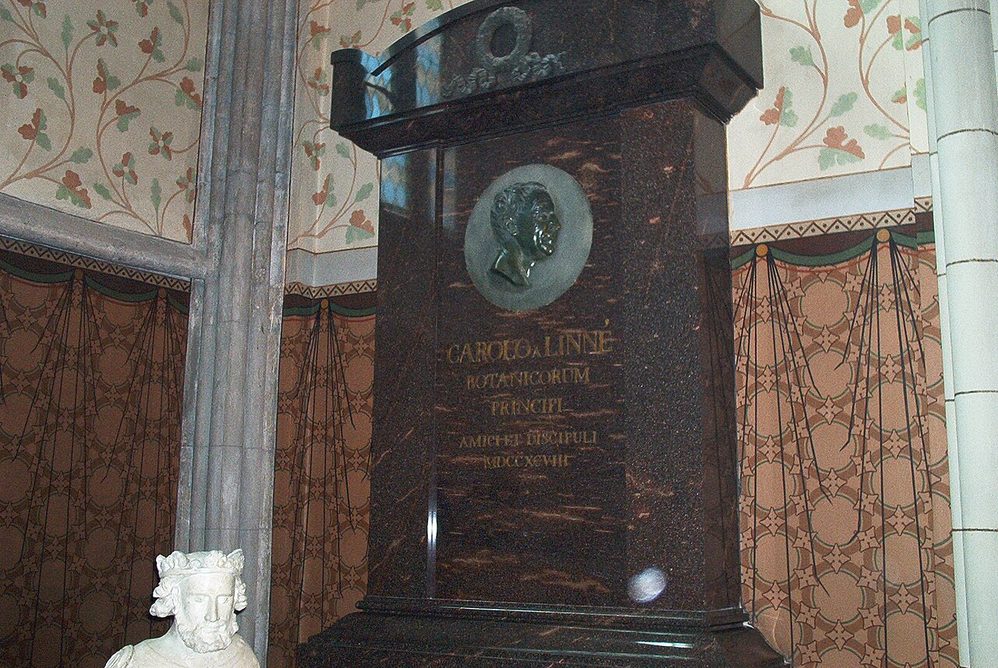
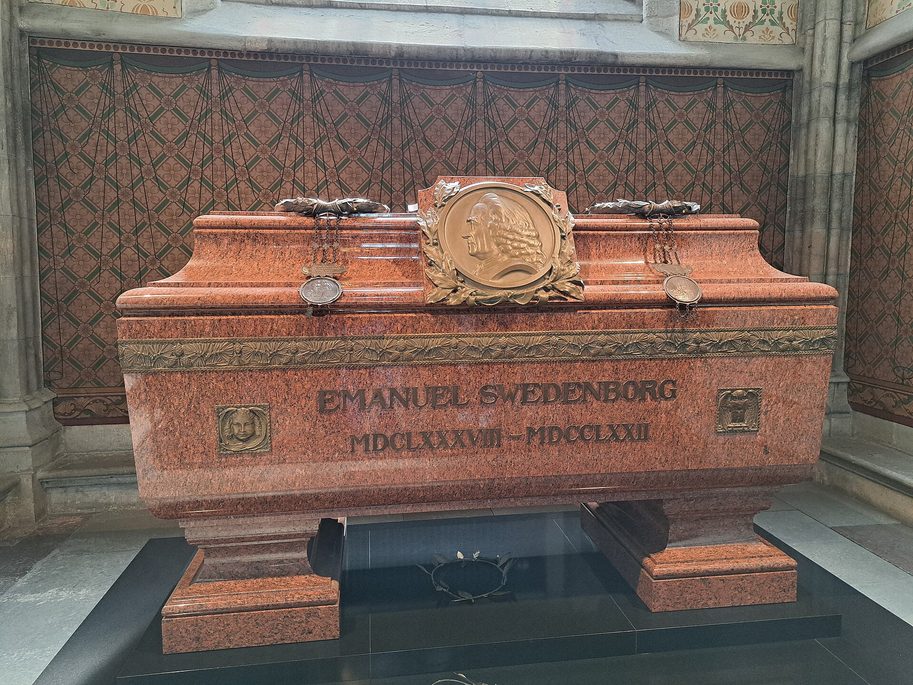
Carl Linnaeus, the Uppsala professor who gave plants and animals their two-part Latin names, is buried in a plain family grave just inside the cathedral, with a memorial to him in a chapel nearby. Emanuel Swedenborg, the scientist and mystic, lies in a red stone sarcophagus; his remains were brought here from London in 1908.
The Treasury
Up a lift in the north tower, the Treasury displays the cathedral’s silver, vestments and textiles. Among them are the clothes worn by members of the Sture family when they were murdered by King Erik XIV in 1567.
Getting there
The cathedral is on Domkyrkoplan, on the hill above the Fyris river, about 15 minutes’ walk from Uppsala Central Station. Trains from Stockholm Central take 30 to 50 minutes, and from Arlanda airport about 18 minutes. Gamla Uppsala, with its royal burial mounds, church and museum, is about 5 kilometres north by bus 2.
Tours and where to stay
The cathedral needs no ticket. Day trips from Stockholm often combine it with Gamla Uppsala.
These links go to GetYourGuide and Booking.com. This site earns nothing from them at present — they are here because they are the quickest way to check what is actually available.
Don’t miss
- The Vasa Chapel Behind the high altar.
- St Erik’s shrine In the Finsta Chapel.
- Linnaeus’s grave Just inside the cathedral.
- Sunday Evensong Usually at 4pm.
Insider tips
Avoid Sunday late morning. Sightseeing stops during High Mass, from 11am to about 12.30pm.
Stop on the way from the airport. Uppsala is on the train line north from Arlanda, so the cathedral fits into an arrival or departure day.
Common questions
Is Uppsala Cathedral free?
Yes, the cathedral is free to enter. The Treasury in the north tower charges 80 SEK for adults; under-18s go free.
What are the opening hours?
Every day from 8am to 6pm. There is no sightseeing during Sunday High Mass, from 11am to about 12.30pm. The Treasury is open Monday to Saturday 10am to 4pm and Sunday 12.30pm to 4pm from October to April, closing at 5pm from May to September.
Is Linnaeus buried here?
Yes. Carl Linnaeus, the botanist who devised the modern system for naming plants and animals, lies in a plain family grave just inside the cathedral, with a memorial to him in a chapel nearby.
How tall is Uppsala Cathedral?
The spires reach 118.7 metres, the same as the length of the church. It is the largest cathedral in the Nordic countries and is generally described as the tallest church in Scandinavia.
How do I get there from Stockholm?
Trains from Stockholm take 30 to 50 minutes, and from Arlanda airport about 18 minutes. The cathedral is about 15 minutes’ walk from Uppsala Central Station.