
Valle Crucis Abbey, Llangollen
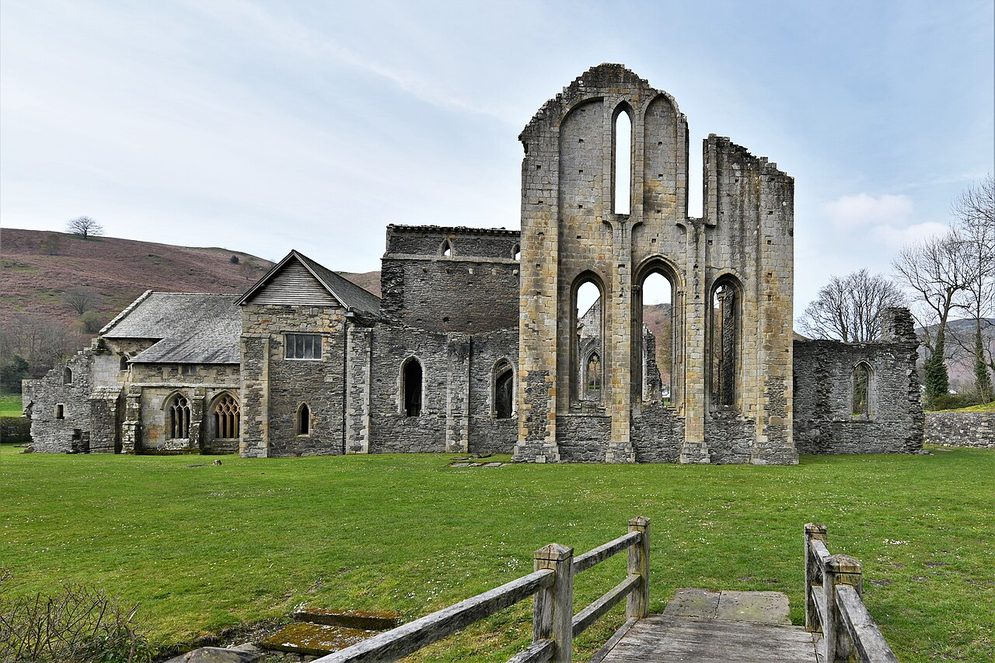
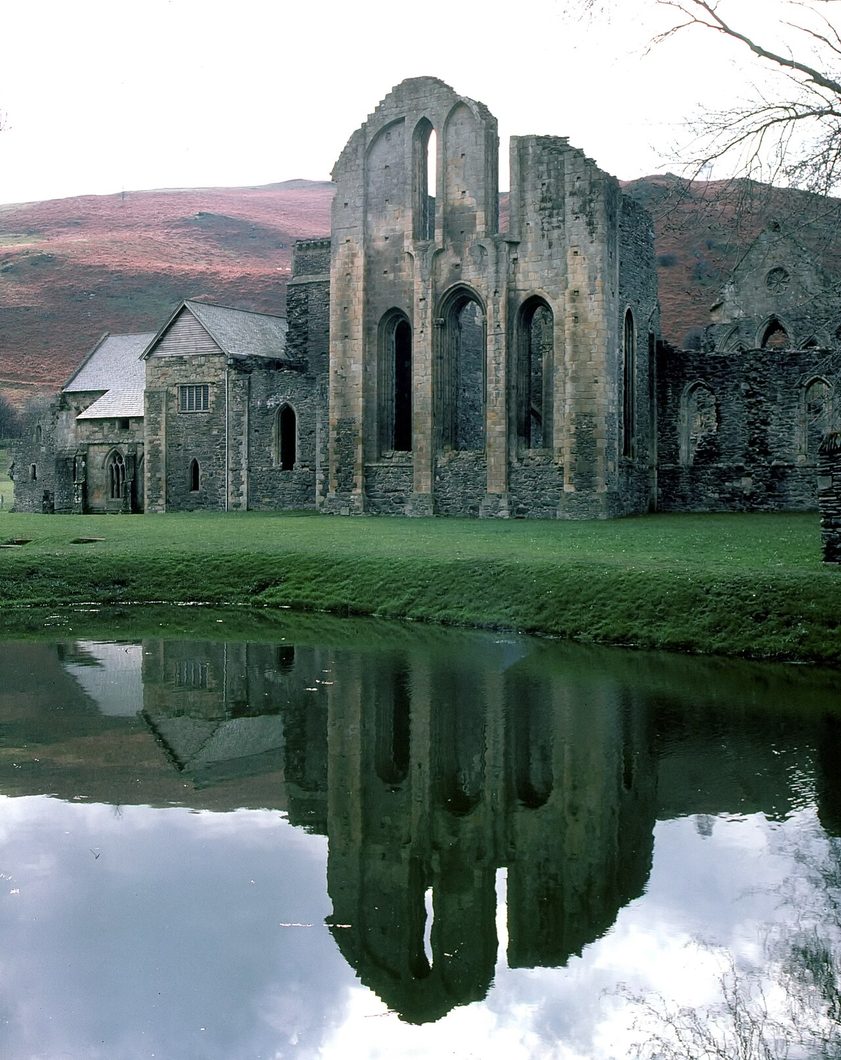
Valle Crucis lies in a narrow valley a couple of miles north of Llangollen, under the road to the Horseshoe Pass. It was founded in 1201 by a Welsh prince for Cistercian monks, and its ruins are some of the best preserved in Wales: the tall west front of the church, a vaulted chapter house, the monks’ dormitory, and the east end of the church reflected in the only monastic fishpond left in the country.
The valley of the cross
Madog ap Gruffydd Maelor, prince of northern Powys, founded the abbey in 1201, with monks from Strata Marcella near Welshpool. He named it after the cross that already stood in the valley: Eliseg’s Pillar, a ninth-century monument a few hundred yards to the north. Madog was buried at the abbey in 1236.
A fire damaged the first buildings, and much of what stands was rebuilt in the thirteenth century; the west front was finished by Abbot Adam, who ruled from 1330 to 1344. The abbey suffered in Edward I’s wars and in the Glyndŵr rising, but by the time it was dissolved in 1537 it was the second richest in Wales after Tintern. The church was stripped of its lead and left to fall; the east range became a house and later a farm, which is why it still has a roof.
The visitor's cheat sheet
| Where | Valle Crucis Abbey, Llantysilio, Llangollen, Denbighshire, LL20 8DD |
|---|---|
| Getting there | On the A542 about 2 miles north of Llangollen; about 6 parking spaces at the entrance; on foot from Llangollen by the canal towpath; buses 5/5C and TrawsCymru T3 from Wrexham to Llangollen |
| Opening hours | All year 10am–4pm; last entry 3.30pm; closed 24–26 December and 1 January |
| Admission | Free; the site is unstaffed |
| How long | An hour, more with Eliseg’s Pillar |
| Best time | A still morning, for the reflection of the east end in the fishpond |
| Dress code | Outdoor shoes; grass and uneven paths |
| Tours | No guided tours; a small exhibition and video in the east range |
Hours and admission checked against the official site in October 2026. They change; the official site is always the last word.
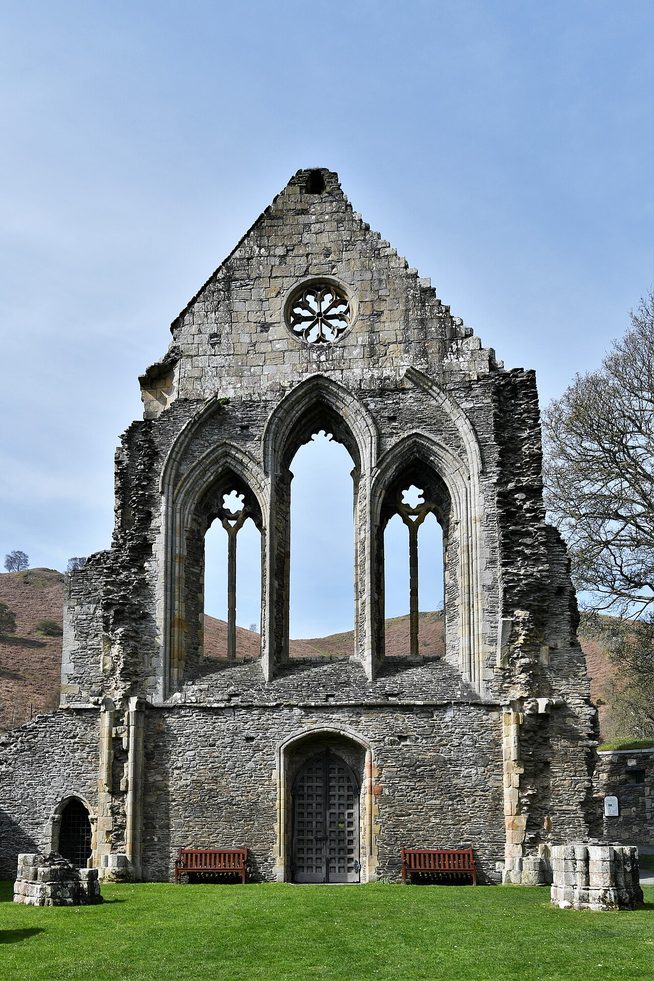
Signed in stone. High on the west front, by the rose window, a carved Latin inscription records that Abbot Adam did this work: a medieval abbot signing his building.
What to see, in the order you meet it
The west front
The church is entered from the west, under a gable that still stands to its full height. Look for the carved doorway, the three tall windows, the rose window at the top and Abbot Adam’s inscription. Inside, the nave is open to the sky.
The east end and the fishpond
Walk through the nave to the crossing and the east end, with its tall lancet windows. Then go round the outside to the fishpond behind the church: the reflection of the east end in the water is the classic view of Valle Crucis.
The chapter house
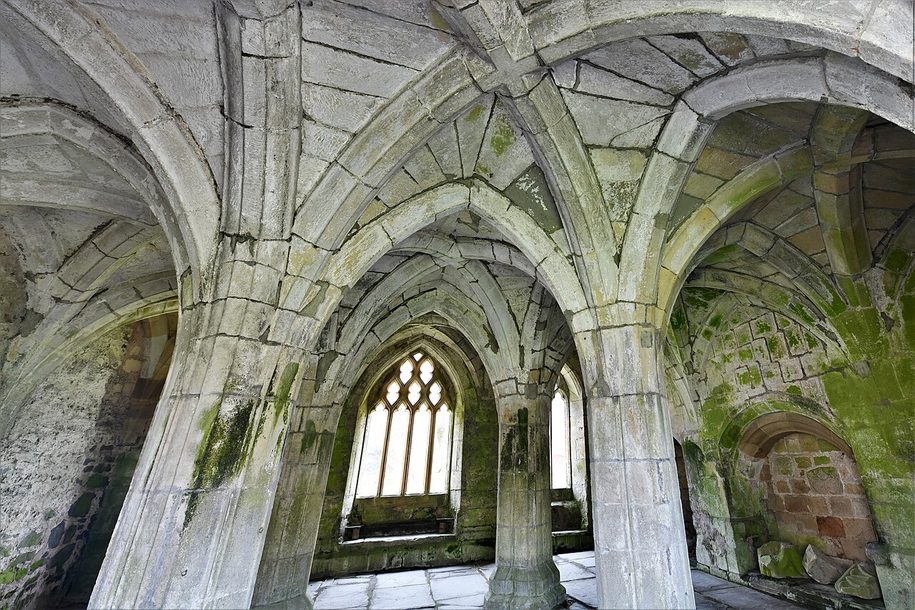
The east range is the best-preserved part of the abbey. On the ground floor, the chapter house, where the monks met each day, has a rib vault of the early fifteenth century springing from slender pillars; beside its door is a cupboard where the monks kept their books.
The dormitory
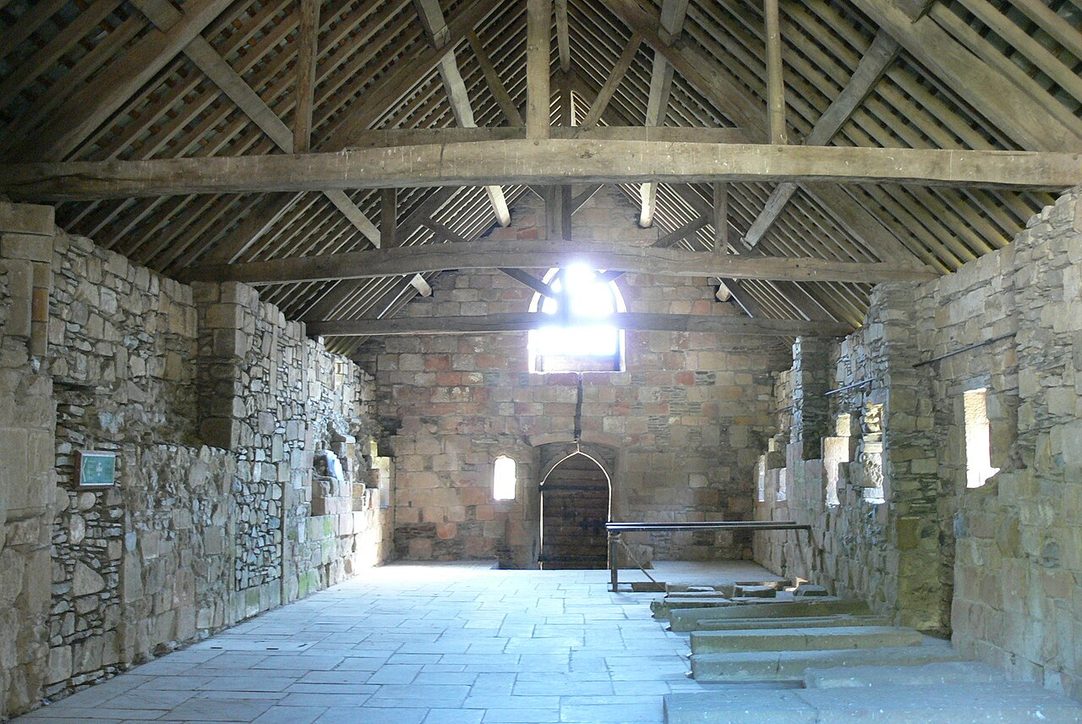
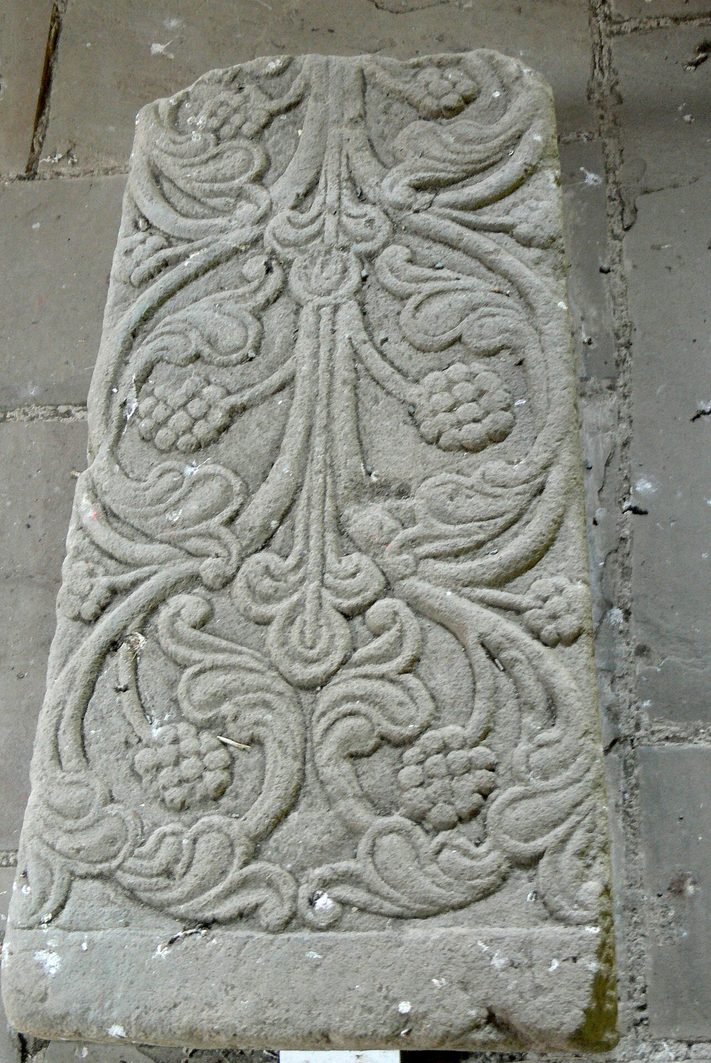
Stairs lead up to the monks’ dormitory, which runs the length of the range. It now holds a collection of carved medieval grave slabs and a small exhibition about the abbey. At the end are the rooms later made into the abbot’s lodging.
Visiting
Free to visit
There is nothing to book: the abbey is open and unstaffed, and entry is free.
The hotel link goes to Booking.com. This site earns nothing from it at present — it is here because it is the quickest way to check what is actually available.
Don't miss
- The west front With Abbot Adam’s inscription.
- The fishpond view The east end in the water.
- The chapter house A fifteenth-century vault.
- The grave slabs In the dormitory upstairs.
- Eliseg’s Pillar The cross that named the valley.
- Castell Dinas Brân The ruined castle on the hill above Llangollen.
Insider tips
Walk out by the canal. From Llangollen Wharf the towpath runs west towards the Horseshoe Falls, and the abbey is a short walk up from it near Pentrefelin. Parking at the abbey is very limited, so walking out is often the easier way. Come back by Eliseg’s Pillar and the lane.
Common questions
Is Valle Crucis Abbey free?
Yes. The abbey is cared for by Cadw and is open without staff, and there is no charge. A small car park by the entrance has room for about six cars.
When is Valle Crucis Abbey open?
Cadw lists it as open all year from 10am to 4pm, with last entry half an hour before closing. It is closed on 24, 25 and 26 December and 1 January, and may close at short notice in severe weather.
Can you walk to Valle Crucis from Llangollen?
Yes. The abbey is about two miles north of the town. The towpath of the Llangollen Canal, heading towards the Horseshoe Falls, passes close by: leave it near Pentrefelin. Allow about an hour each way at a gentle pace.
What is Eliseg's Pillar?
A ninth-century stone cross shaft about a quarter of a mile up the road, set up by Cyngen, king of Powys, in memory of his great-grandfather Eliseg. The abbey, “the valley of the cross”, takes its name from it. It stands in a field and is free to visit; use the abbey car park.
Why is there a caravan park around the abbey?
The fields around the abbey are a holiday park, which comes right up to its walls. The ruins themselves are fenced and quiet, and the view of the east end across the fishpond is unaffected.
Where to stay and eat nearby
There is nowhere to eat at the abbey. Llangollen, two miles away, has plenty of cafés, pubs and hotels, and the Pontcysyllte Aqueduct is a short drive or a canal-boat trip from the town.
More churches in Wales
- Strata Florida Abbey — another Cistercian house, in mid Wales
- Tintern Abbey — the only Welsh abbey that was richer
- Chester Cathedral — under an hour away, across the border