
Brecon Cathedral
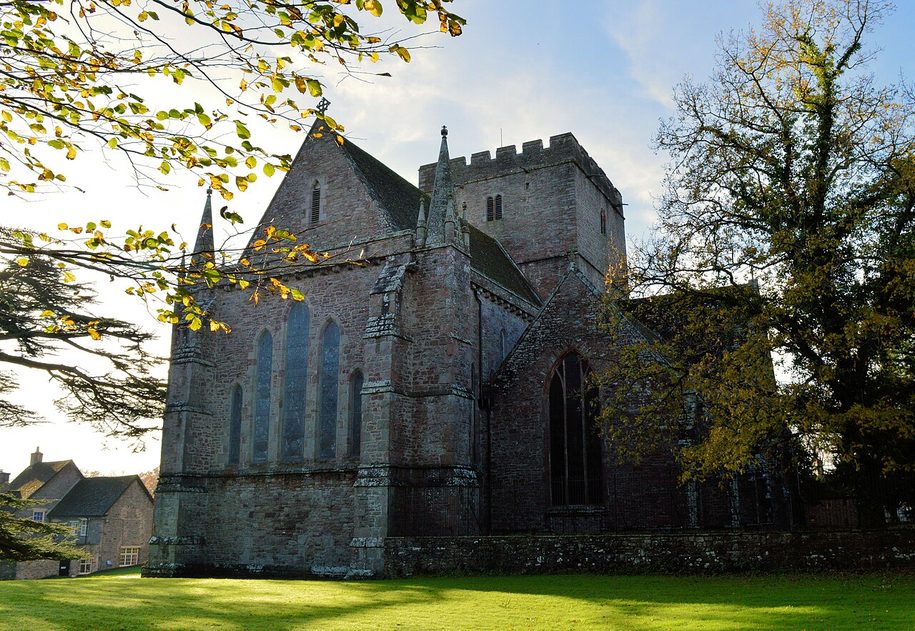
Brecon Cathedral stands in its own walled close on a hill above the town, at the edge of the Brecon Beacons. It was built as the church of a Benedictine priory, served the town as its parish church for four hundred years and became a cathedral only in 1923. Inside are a carved Norman font, the largest cresset stone in Britain and the regimental chapel of the soldiers of Rorke’s Drift.
From priory to cathedral
The round churchyard suggests that a church stood here before the Normans. In about 1093 Bernard de Neufmarché, the Norman lord who had taken Brycheiniog, gave the church of St John to a monk of Battle Abbey in Sussex, and it became a Benedictine priory dependent on Battle. The font survives from the first Norman church.
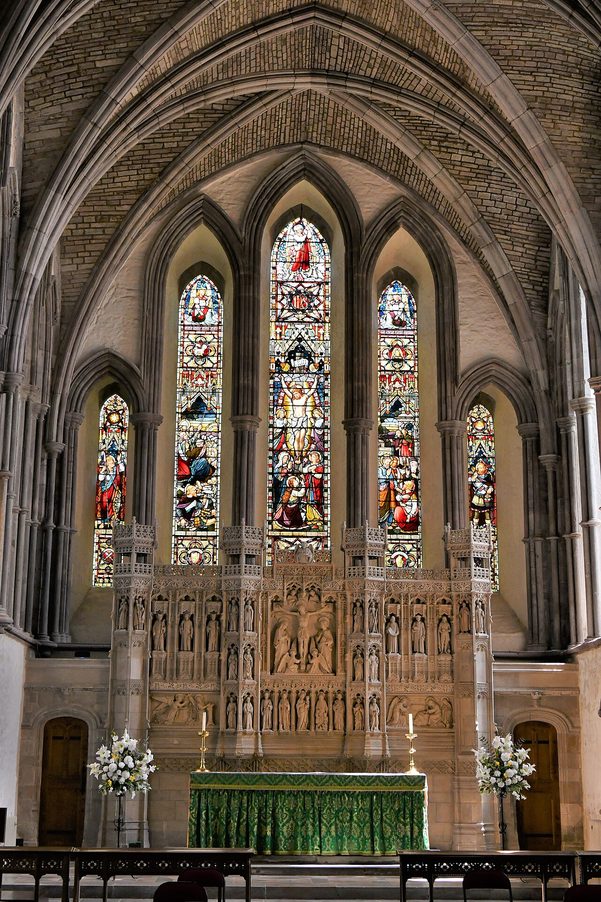
From about 1215 the church was rebuilt in the Gothic style, beginning with the east end in about 1230; the nave and aisles followed in the later thirteenth and fourteenth centuries. In the fifteenth century a great painted rood, the Golden Rood, drew pilgrims. When the priory was dissolved in the late 1530s the church became the parish church of Brecon. Sir George Gilbert Scott restored it between the 1860s and 1872, and in 1923 it became the cathedral of the new Diocese of Swansea and Brecon. The Caroës, father and son, did much of the later work, including the reredos behind the high altar.
The visitor's cheat sheet
| Where | Cathedral Close, Brecon, Powys, LD3 9DP |
|---|---|
| Getting there | On the hill above the town centre, signposted from the A40 and A470; TrawsCymru T4 from Cardiff and Merthyr, T6 from Swansea, and buses from Abergavenny; pay-and-display car park beside the cathedral |
| Opening hours | Daily 9am–6pm, with services through the day |
| Admission | Free; donations welcome |
| How long | About an hour |
| Best time | A weekday morning, then a walk down to the canal basin or up into the Beacons |
| Dress code | None; it is a working cathedral |
| Tours | Guided tours by arrangement with the cathedral office; virtual tour online |
Hours and admission checked against the official site in October 2026. They change; the official site is always the last word.
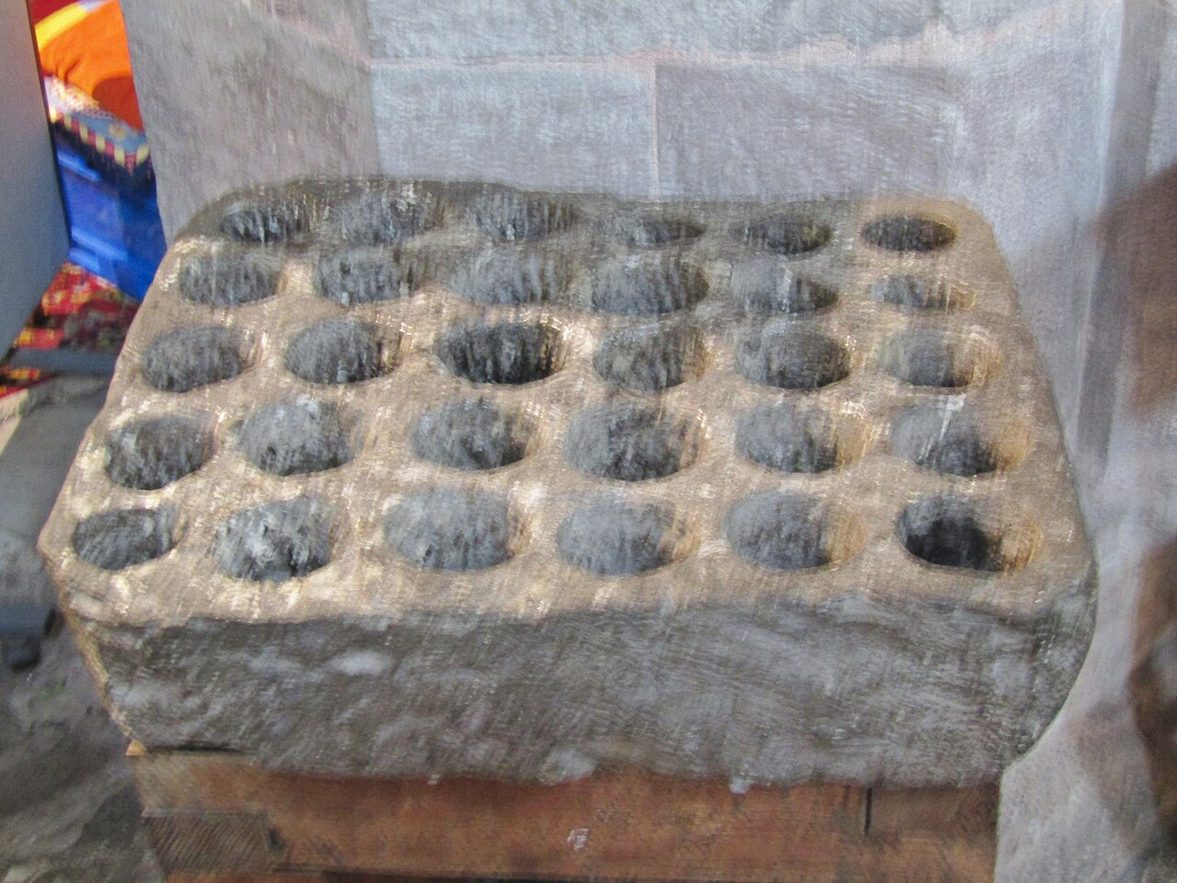
The cresset stone. Before candles were common, churches were lit by cressets: stones with cups cut into them, filled with oil or fat and floated with a wick. Brecon’s has thirty cups in five rows of six, more than any other known in Britain.
What to see, in the order you meet it
The close
The cathedral is the only one in Wales with a walled close. Around it are the old priory buildings, among them the deanery and the old tithe barn. Walk round the outside first to see the massive central tower and the long thirteenth-century choir.
The font
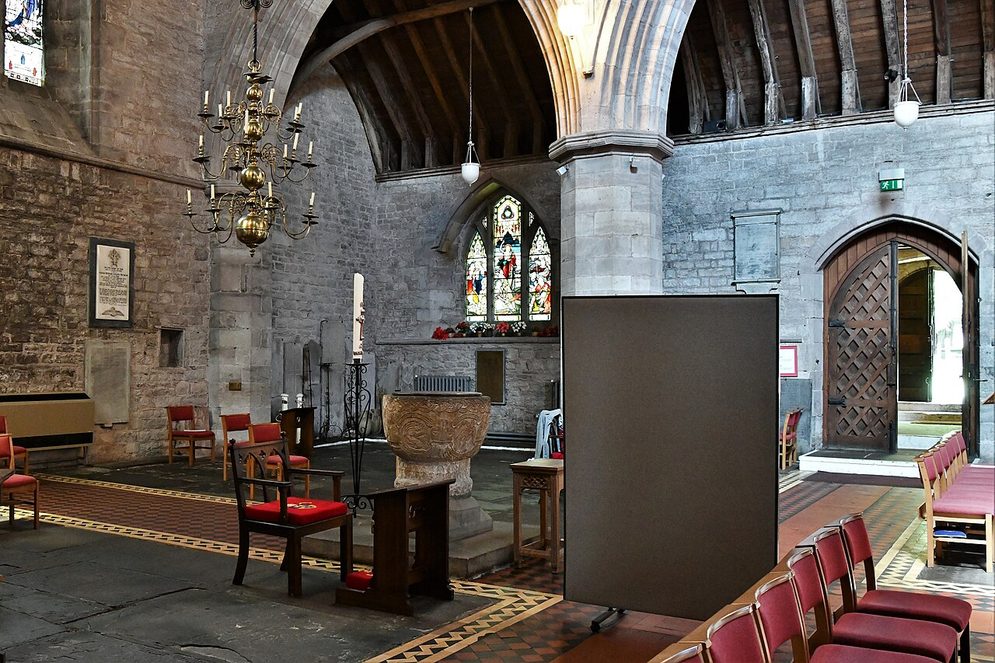
Most visitors come in by the north door, beside the Norman font of about 1130–50. Its bowl is carved with fantastic birds and beasts in the style of the Herefordshire school of sculptors, with a Latin inscription round the rim.
The nave and the cresset stone
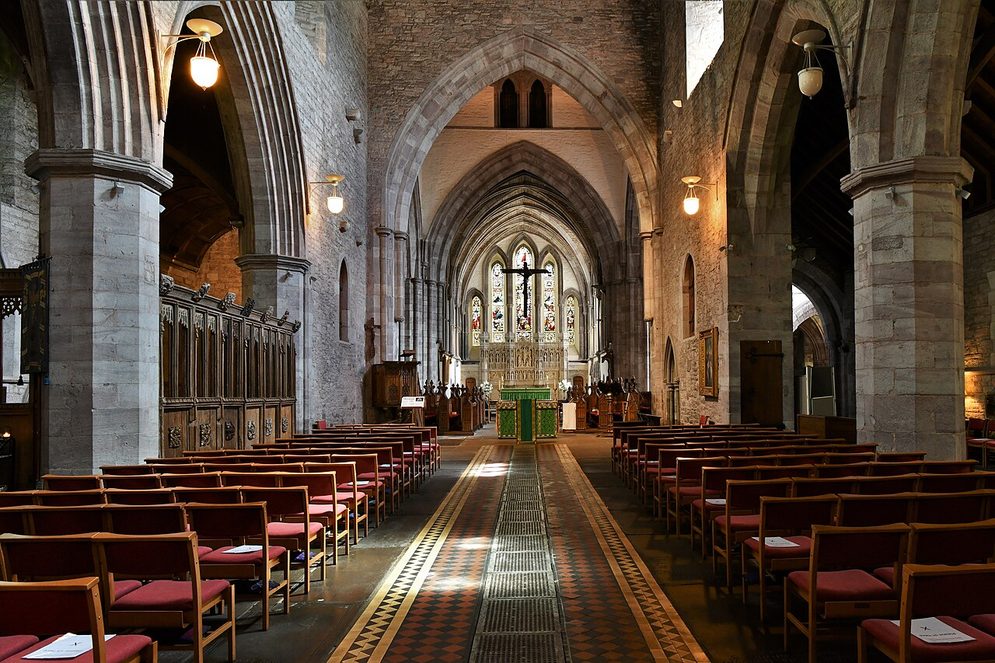
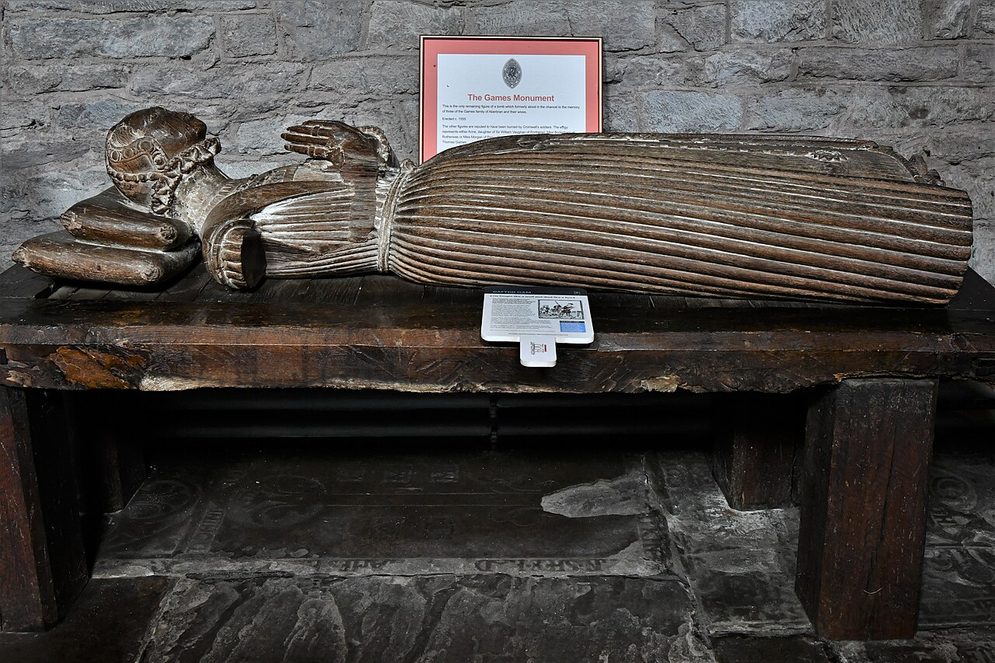
The nave is wide and light. Look for the cresset stone, and for the traces of the guild chapels that once lined the aisles: St Keyne’s Chapel was the chapel of the town’s shoemakers. Nearby is the tomb of the Games family, with a rare wooden effigy of a woman from the sixteenth century. In the north aisle are the alabaster effigies of Sir David Williams and his wife, of the early seventeenth century.
The Havard Chapel
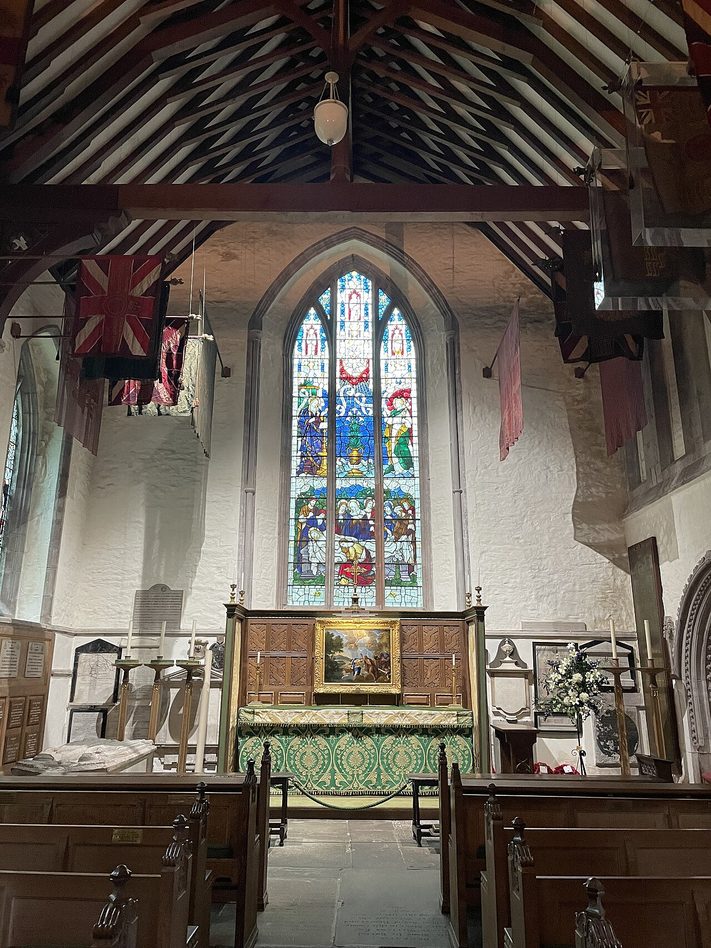
The fourteenth-century Havard Chapel is the regimental chapel of the 24th Regiment of Foot, later the South Wales Borderers and now part of the Royal Welsh. Its old colours hang here, and its memorials recall the regiment’s campaigns, from the Zulu War of 1879 onwards. The chapel also has the fourteenth-century tomb of Walter Aubrey and his wife.
The choir and presbytery
The east end, begun in about 1230, is the finest part of the building: tall lancet windows above the high altar and a vault added in Scott’s restoration. Look for the triple sedilia, the stone seats for the clergy.
Visiting
Free to visit
The cathedral is free and open every day. Groups wanting a guided tour should contact the cathedral office in advance.
The hotel link goes to Booking.com. This site earns nothing from it at present — it is here because it is the quickest way to check what is actually available.
Don't miss
- The Norman font Carved birds and beasts.
- The cresset stone Thirty cups for lights.
- The Havard Chapel The colours of the 24th Foot.
- The Games tomb A rare wooden effigy.
- The east lancets Early English at its best.
- The walled close The only one in Wales.
Insider tips
Building work in 2026. A National Lottery Heritage Fund project is under way to re-roof parts of the cathedral and to make a new step-free entrance at the west end. The cathedral has stayed open, but some areas may be screened off; the step-free entrance for now is at the south-west door, by the toilets.
Common questions
Is Brecon Cathedral free to visit?
Yes. There is no admission charge and donations are welcome. Parking in the pay-and-display car park next to the cathedral helps to support it.
When is Brecon Cathedral open?
The cathedral is open every day from 9am to 6pm. Services take place through the day, including a sung Eucharist at 11am and, in term time, Choral Evensong at 3.30pm on Sundays.
Are there guided tours?
Tours can be arranged by contacting the cathedral office; groups and schools should book ahead. There is also a virtual tour on the cathedral website.
Why is Brecon Cathedral connected with Rorke's Drift?
The Havard Chapel is the regimental chapel of the 24th Regiment of Foot, later the South Wales Borderers, whose depot was in Brecon. It holds the regiment’s old colours and memorials from its campaigns, including the Zulu War of 1879.
How do you get to Brecon by public transport?
Brecon has no railway station. The nearest are Abergavenny and Merthyr Tydfil, both linked to Brecon by bus; the TrawsCymru T4 runs from Cardiff and Merthyr and the T6 from Swansea. The cathedral is a short walk uphill from the bus station.
Where to stay and eat nearby
The cathedral has a café in the buildings of the close; check the cathedral website for current opening times. Brecon’s centre, five minutes’ walk downhill, has pubs, cafés and small hotels, and makes a good base for walking in the Brecon Beacons.
More churches in Wales
- Llandaff Cathedral — an hour south, in Cardiff
- Tintern Abbey — in the Wye Valley
- Hereford Cathedral — an hour east, across the border