
Buildwas Abbey
On the bank of the Severn two miles from Ironbridge, Buildwas Abbey is one of the best-preserved twelfth-century Cistercian churches in England: a roofless nave of massive round pillars that has hardly changed in eight hundred years, with a vaulted chapter house beside it. It is free and rarely busy.
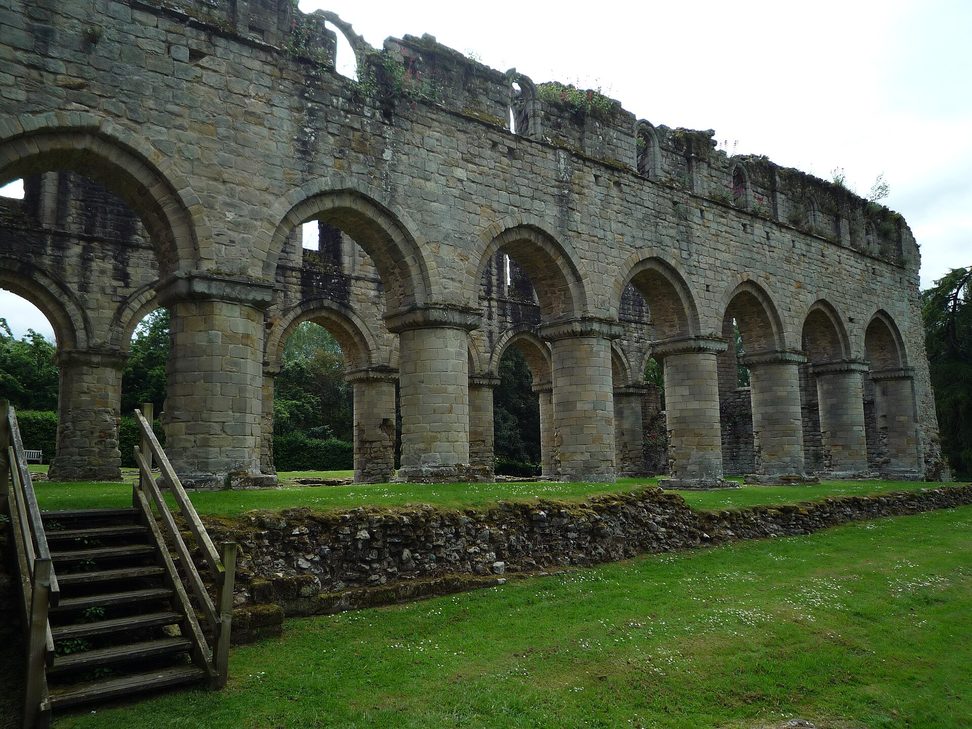
A Cistercian church on the Severn
Buildwas was founded in 1135 by Roger de Clinton, Bishop of Coventry and Lichfield, for monks of the order of Savigny, a reformed Benedictine congregation from Normandy. In 1147 the Savigniac houses joined the Cistercians, and Buildwas became Cistercian. Under Abbot Ranulf, from 1155 to 1187, the stone church and the cloister buildings were largely built, and they have changed remarkably little since. The abbey was never large or rich; it was dissolved in 1536, and in 1539 the site passed to Edward Grey, Lord Powis, whose son converted the abbot’s house and infirmary into a mansion.

The visitor’s cheat sheet
| Where | Buildwas, near Ironbridge, Telford, Shropshire TF8 7BW, on the A4169 on the south bank of the Severn |
|---|---|
| Opening hours | Daily 10am–5pm April to October, 10am–4pm November to March; closed 24, 25, 26 and 31 December |
| Admission | Free (English Heritage) |
| Parking | On site; £2 for non-members according to English Heritage, free for members |
| Facilities | No toilets; nearest in the Wharfage car park, Ironbridge. Volunteer second-hand bookshop some days |
| Access | Steps into the cloister, crypt and chapter house; uneven ground |
| How long | An hour |
Hours and admission checked against the official site in November 2026. They change; the official site is always the last word.
What to see
The church
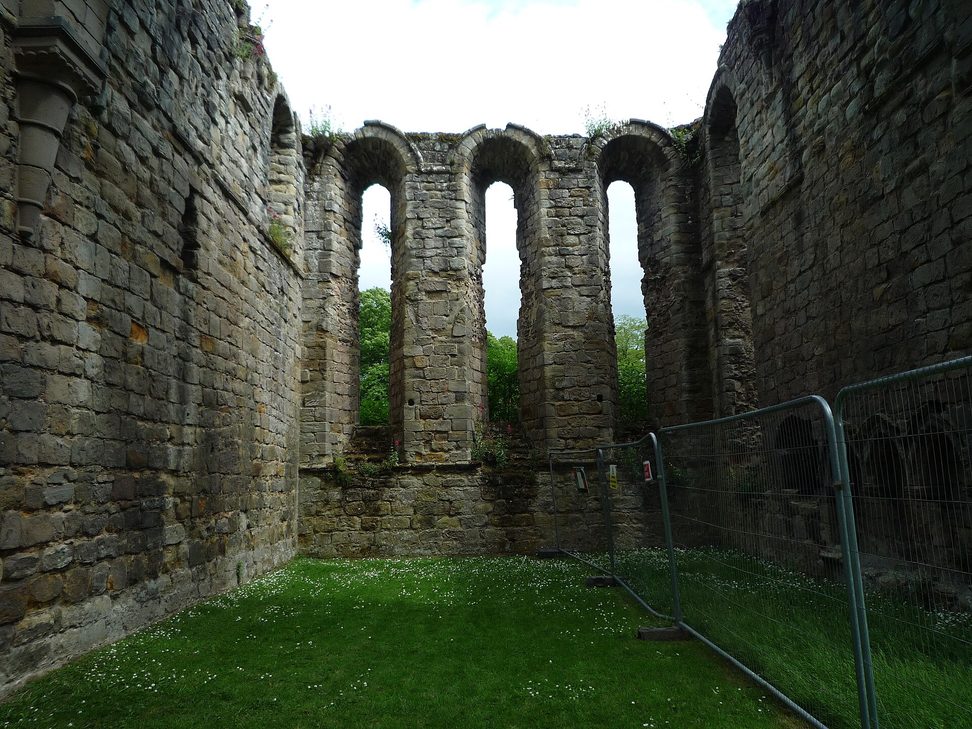
The roofless church is almost complete in plan and stands to a good height: a seven-bay nave of massive round pillars and pointed arches, the crossing, the transepts and a plain east end with three tall windows. It is a fine example of the austere early Cistercian style, with almost no ornament.

The chapter house
North of the church, the east range of the cloister keeps its vaults. The chapter house has nine rib-vaulted bays on four pillars, two round and two octagonal, with fragments of a medieval tiled floor and grave slabs; there is also a crypt chapel, reached by steps.


Getting there
Buildwas is on the A4169, two miles west of Ironbridge, on the south bank of the River Severn. Telford Central is the nearest station, about six miles away; English Heritage lists bus 96, but check the timetable. Wenlock Priory is a few miles to the south, and the museums of the Ironbridge Gorge are close by.
Where to stay
Ironbridge, two miles east, has inns and hotels in the gorge; Much Wenlock is a quieter alternative.
This link goes to Booking.com. This site earns nothing from it at present — it is here because it is the quickest way to check what is actually available.
Don’t miss
- The nave arcade Massive round pillars of the twelfth century.
- The chapter house Nine vaulted bays and medieval tiles.
- The east end Three tall windows.
- Ironbridge Two miles away.
Insider tips
Combine with Wenlock and Ironbridge. Buildwas, Wenlock Priory and the Iron Bridge make an easy day.
Wear sensible shoes. There are steps, low walls and uneven ground.
Common questions
Is Buildwas Abbey free?
Yes, entry is free. English Heritage lists a parking charge of £2 for non-members, paid by text; members park free.
Is Buildwas Abbey open in winter?
Yes. It is open daily, 10am–4pm in winter and 10am–5pm from April to October, but closed on 24, 25, 26 and 31 December.
What is special about the chapter house?
It keeps its stone vault, in nine rib-vaulted bays on four pillars, and fragments of a medieval tiled floor and grave slabs.
Can you visit Abbey House?
No. The house beside the ruins, built from the abbot’s lodging, is private and not open to the public.
More English churches
- Wenlock Priory — a Cluniac ruin a few miles south
- Shrewsbury Abbey — the abbey church of Shrewsbury
- Rievaulx Abbey — a great Cistercian abbey in Yorkshire
See all the cathedrals and churches worth visiting in England →