
Santa María del Naranco
On the slopes of Monte Naranco above Oviedo stand two small buildings that are among the most remarkable in Europe: Santa María del Naranco, a stone hall built for King Ramiro I of Asturias and dedicated in 848, and, a few hundred metres up the hill, the church of San Miguel de Lillo. Built when most of Spain was under Muslim rule, they are masterpieces of Asturian pre-Romanesque, part of a UNESCO World Heritage Site, and can be seen together on one €5 guided visit.
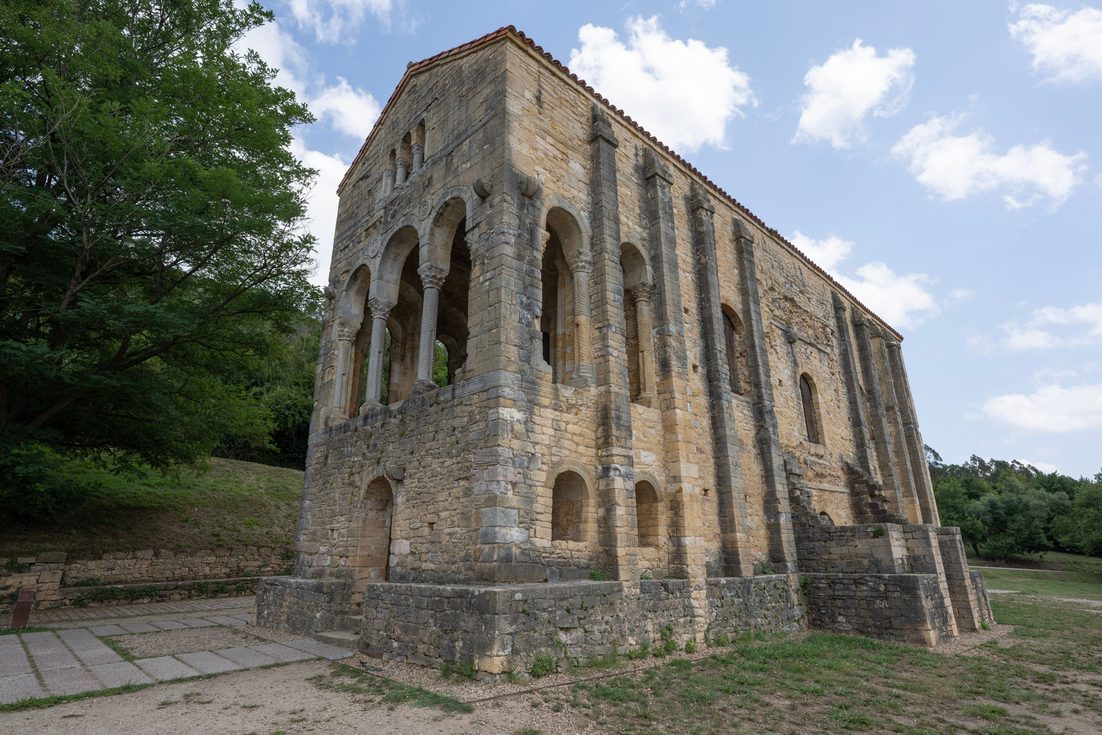
A king’s hall
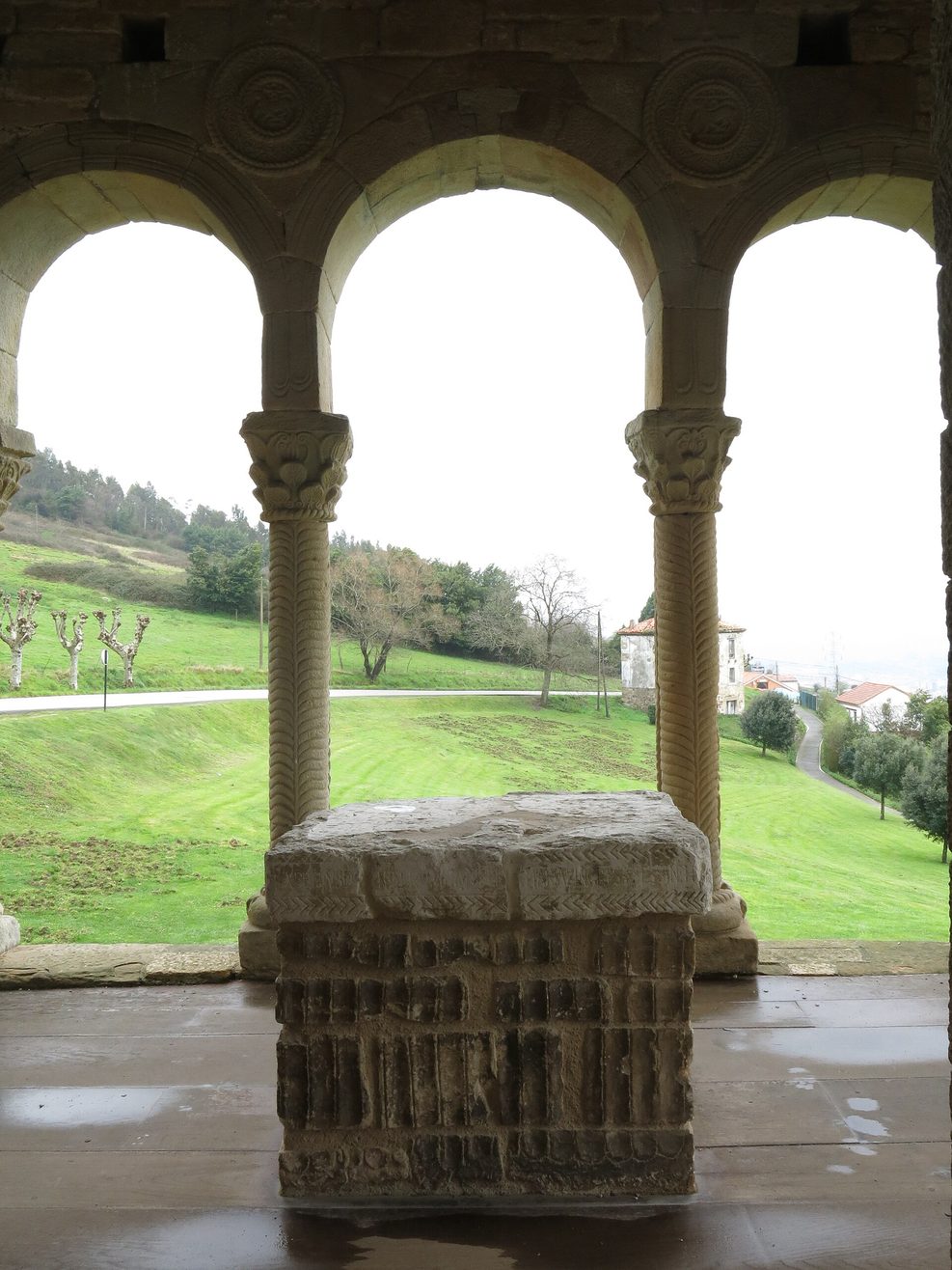
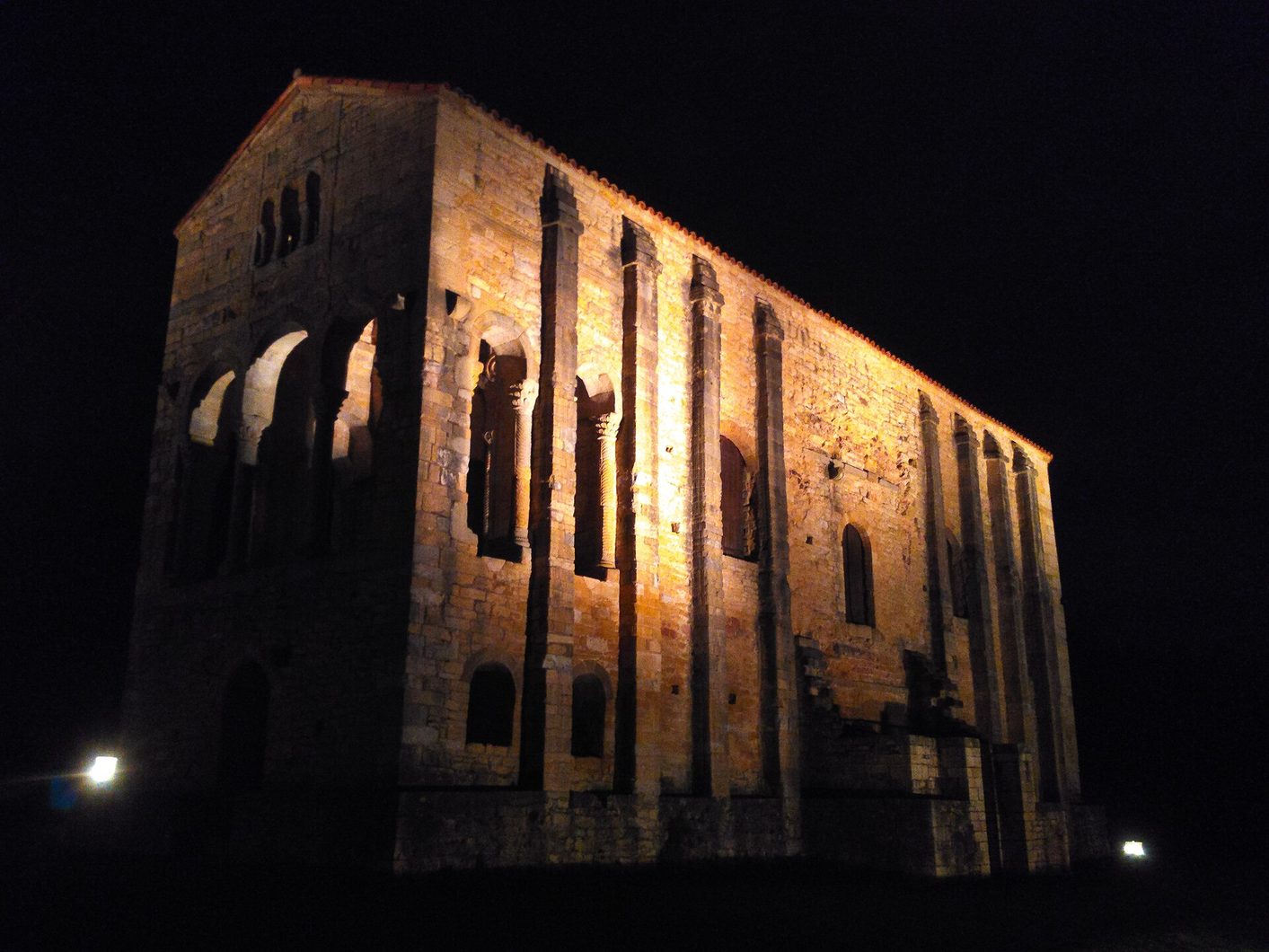
In the 9th century the little Christian kingdom of Asturias, in the mountains of northern Spain, held out against the Muslim south. Its king Ramiro I, who reigned from 842 to 850, built a group of buildings on Monte Naranco, outside his capital, Oviedo. An inscription on the altar stone names Ramiro and his wife Paterna and dates the building to 848. Whether it was built as a palace, a royal hall or a church is uncertain; by the 12th century it had become the church of St Mary.
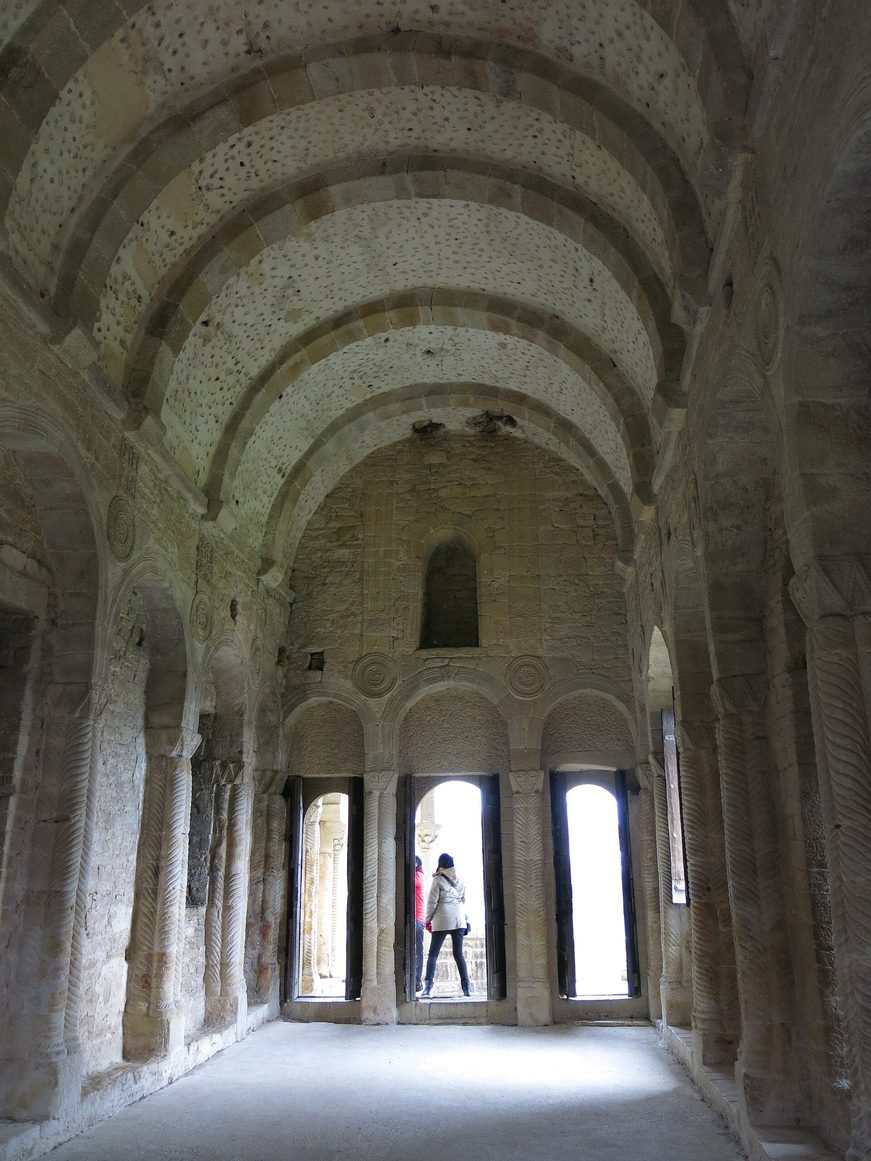
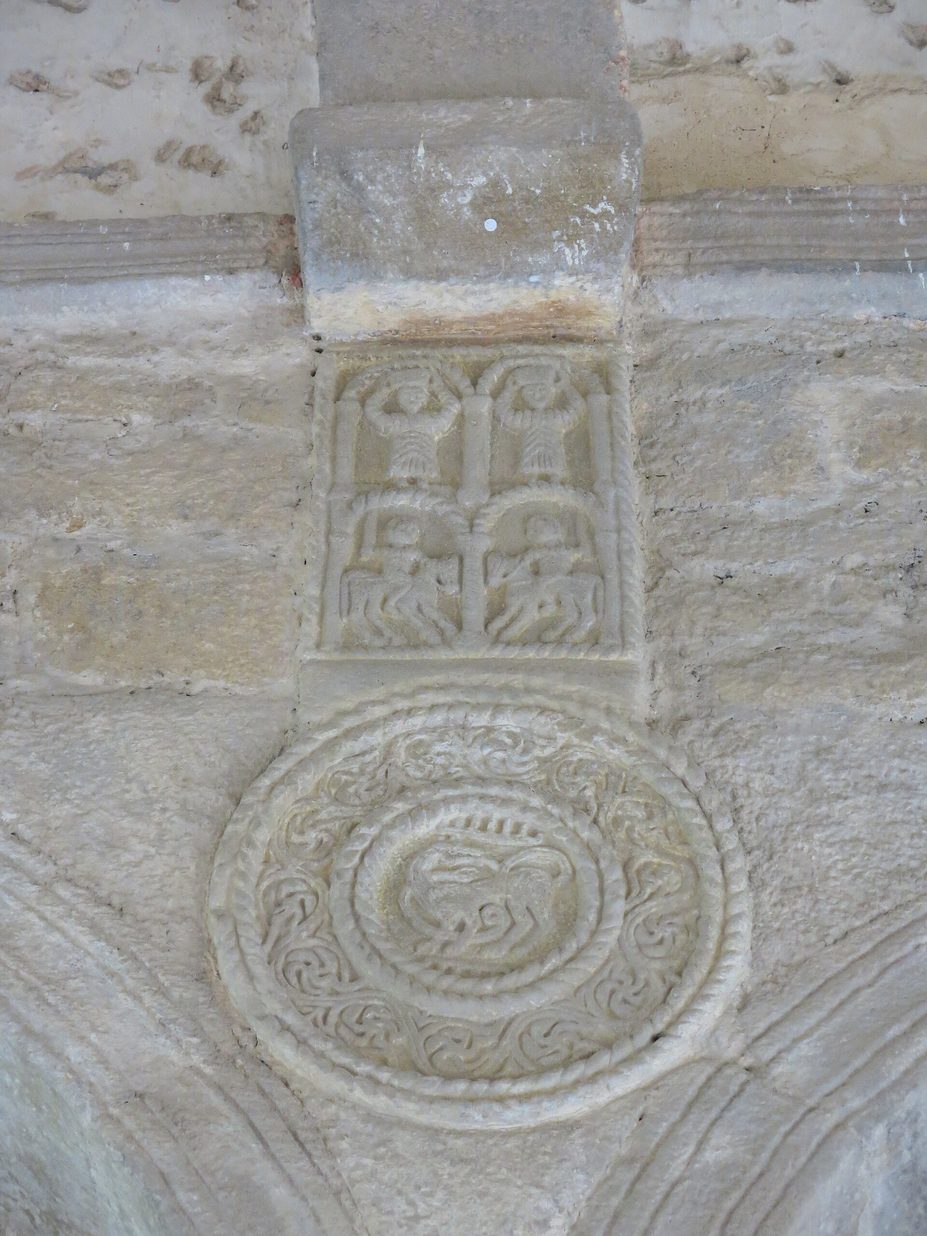
What makes it extraordinary is how advanced it is. It is entirely vaulted in stone, on two floors, with buttresses outside, open loggias at both ends, columns carved with twisted rope patterns, and carved medallions where the arches meet the walls, almost two centuries before Romanesque churches did the same. Since 1985 it has been part of the UNESCO World Heritage Site now called the Monuments of Oviedo and the Kingdom of the Asturias.
The visitor’s cheat sheet
| Where | Avenida de los Monumentos, Monte Naranco, about 3 km above central Oviedo |
|---|---|
| Opening hours | October–March: Tue–Sat 10am–2.30pm, Sun 10am–12.30pm. April–September: Tue–Sat 9.30am–1pm and 3.30pm–7pm, Sun 9.30am–1pm. Monday mornings: free, unguided |
| Admission | €5 for both monuments, by guided visit; groups of 20 or more €4. Free on Monday mornings |
| Guided visits | About 40 minutes, usually in Spanish, up to 25 people; starting at Santa María. No booking needed for individuals |
| Closed | 25 December, 1 and 6 January; 8 and 21 September |
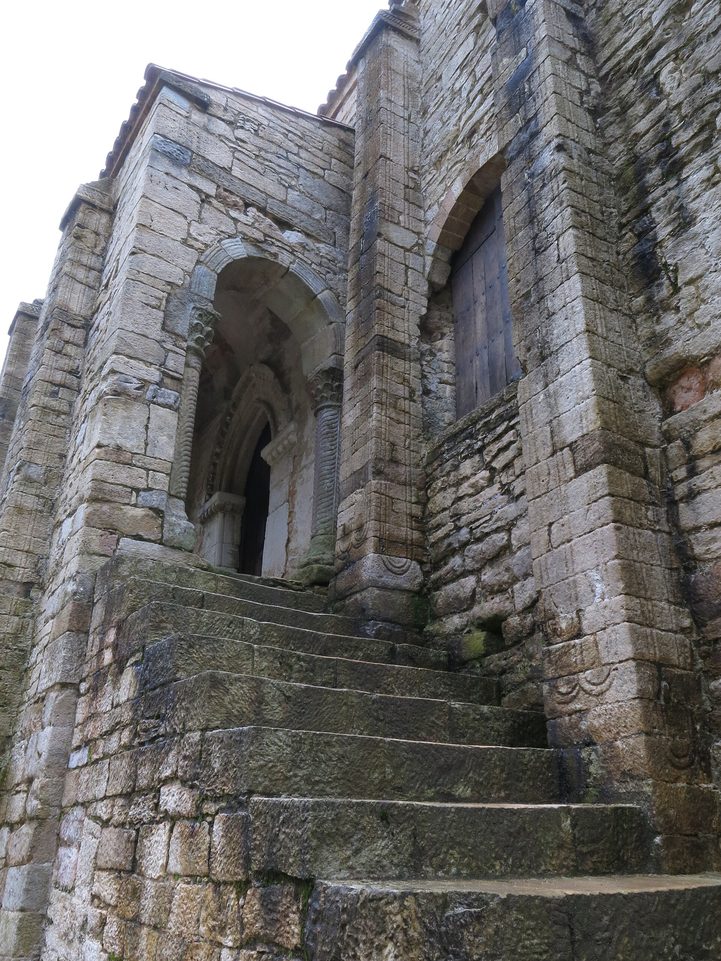
| Access | The main hall is upstairs, reached by an outside stone staircase; no step-free access |
| How long | An hour and a half for both monuments |
Hours and admission checked against the official site in November 2026. They change; the official site is always the last word.
What to see
The upper hall
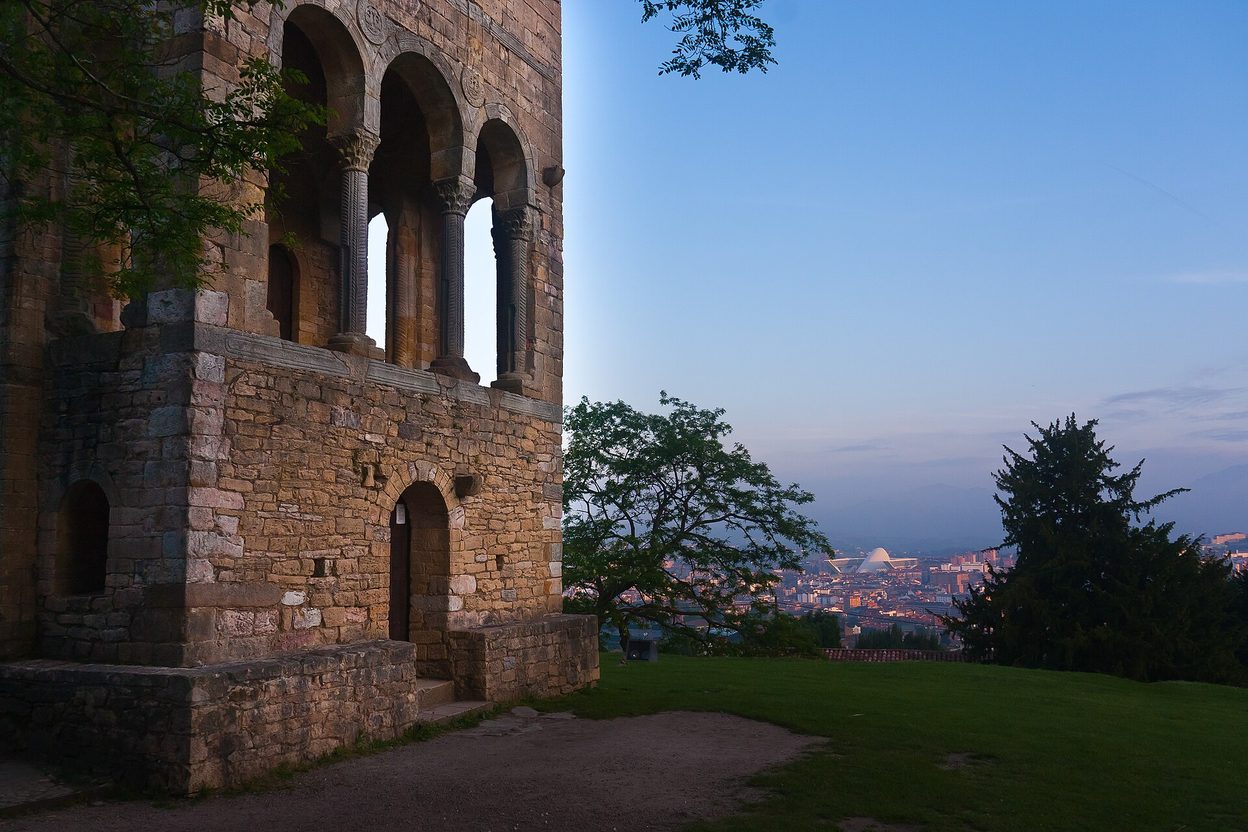
An outside stair leads up to the main hall, a long room under a stone barrel vault supported by transverse arches. At each end, a triple arcade on rope-carved columns opens onto a belvedere with views across the valley. Look at the carved medallions and the decorated bands below them on the walls. In the east belvedere stands the altar stone with the inscription of 848.
The lower floor
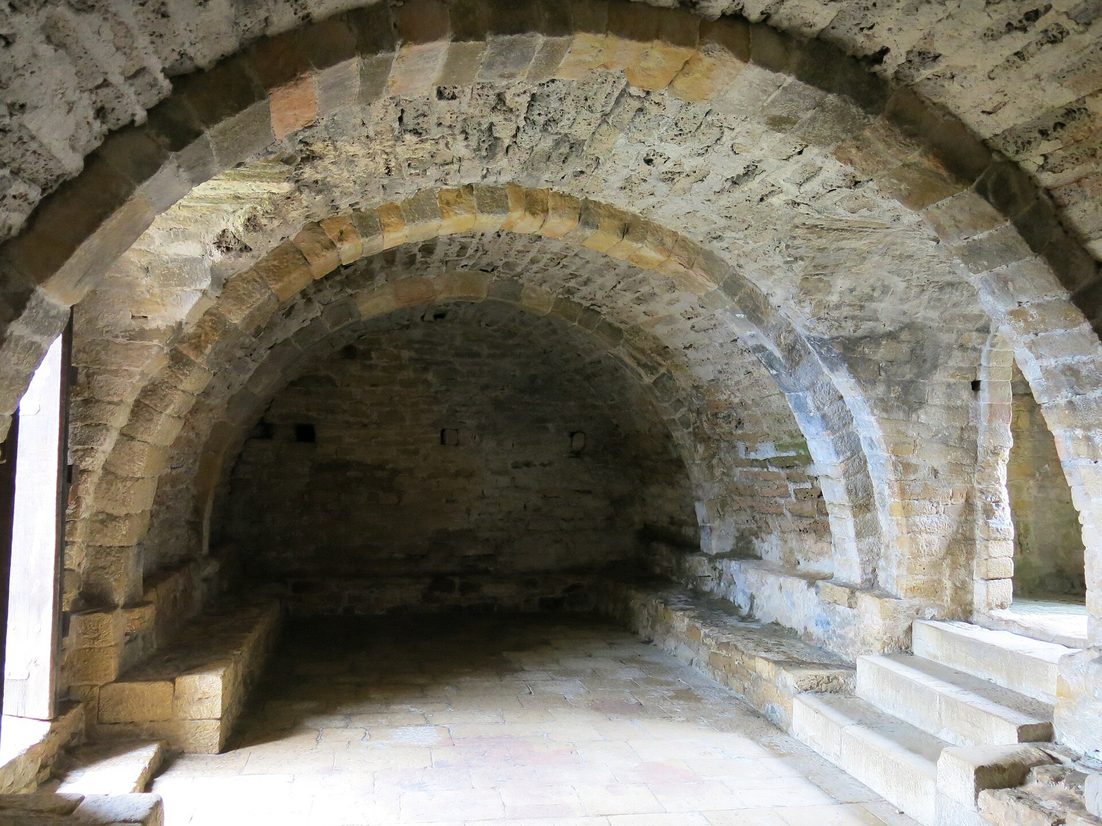
Below the hall, entered from outside, is a plainer vaulted chamber, perhaps used as a crypt or for the king’s household. The visit usually takes in both floors.
San Miguel de Lillo
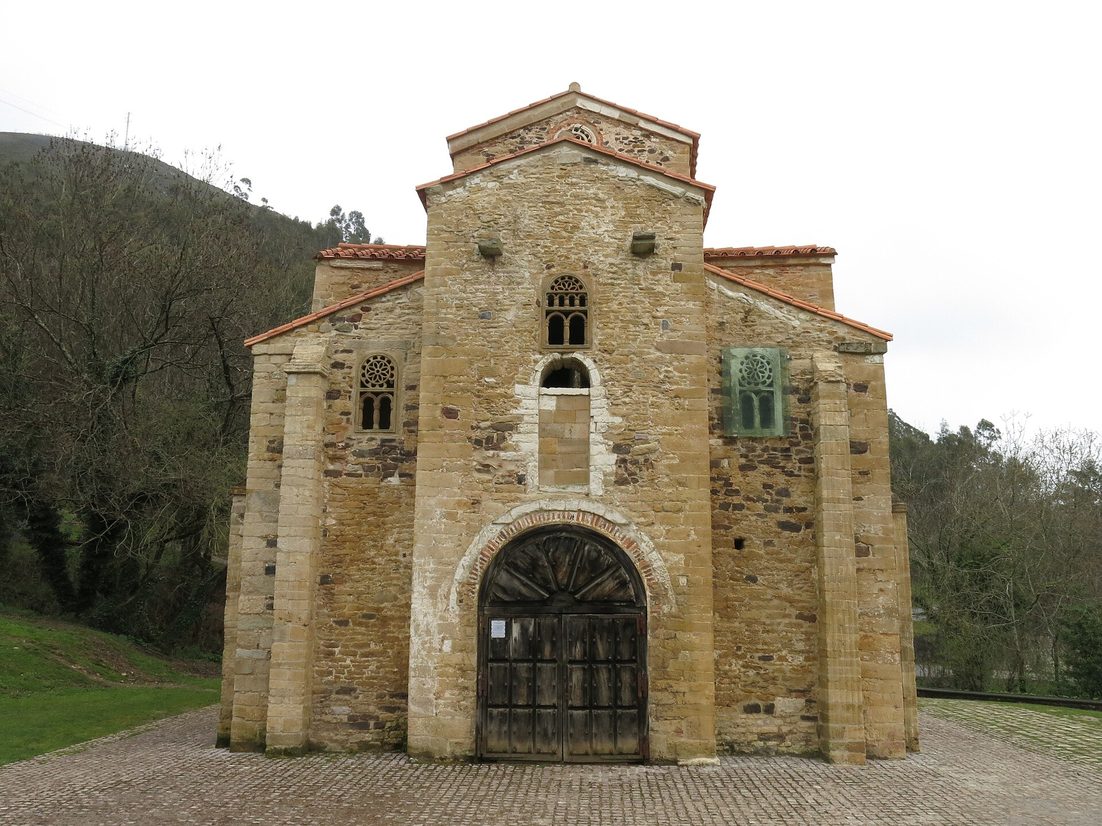
A few hundred metres up the road is San Miguel de Lillo, built at the same time as the royal chapel of the complex. Most of it collapsed in the Middle Ages, and only the western third survives: the entrance, with a royal tribune above, and the start of the nave. Its door jambs are carved with a king and his courtiers above a lion, an acrobat and a dancer, possibly inspired by a 6th-century Byzantine ivory diptych, and its carved stone window lattices survive. The guided visit includes it.
Getting there
The two monuments are on Monte Naranco, about 3 km above central Oviedo. City bus line A (roughly hourly) stops near the monuments; on foot, allow about 45 minutes uphill from the cathedral. Drivers will find free parking at the foot of the monuments, up to 10 minutes’ walk away. Oviedo is about three and a half hours by fast train from Madrid. In the town, the Cámara Santa in the cathedral and the church of San Julián de los Prados belong to the same World Heritage Site.
Tours and where to stay
Tickets are sold at Santa María itself. For guided tours of Oviedo and Asturias, and for hotels in Oviedo, try these.
These links go to GetYourGuide and Booking.com. This site earns nothing from them at present — they are here because they are the quickest way to check what is actually available.
Don’t miss
- The belvederes Triple arches over the valley.
- The rope-carved columns The signature of Asturian builders.
- The altar inscription Ramiro, Paterna and the year 848.
- The Lillo door jambs A king above a circus act.
- The view over Oviedo From the grass outside.
Insider tips
Come on a weekday morning, or Monday. Groups are limited to 25, so in summer you may wait for the next tour; come early. On Monday mornings you can go in free and at your own pace, though without the guide’s explanations. Facilities at the monuments are limited, so bring water on the climb.
Common questions
How much does Santa María del Naranco cost?
€5, which covers both Santa María del Naranco and San Miguel de Lillo on a guided visit. On Monday mornings entry is free, without a guide.
Can you visit without a guide?
Only on Monday mornings, when entry is free. The rest of the week visits are guided, about 40 minutes, usually in Spanish, in groups of up to 25. Individuals do not need to book; buy tickets at Santa María.
When is Santa María del Naranco open?
From October to March, Tuesday to Saturday 10am to 2.30pm and Sunday 10am to 12.30pm. From April to September, Tuesday to Saturday 9.30am to 1pm and 3.30pm to 7pm, and Sunday 9.30am to 1pm. Monday mornings are free and unguided.
Was Santa María del Naranco a church or a palace?
It was probably built as a palace or royal hall for King Ramiro I of Asturias, and it became a church of St Mary by the 12th century. Nobody is quite sure what it was first used for.
How do I get there from Oviedo?
City bus line A (roughly hourly) stops near the monuments; check tua.es. On foot it is about 3 km and 45 minutes uphill from the cathedral. There is free parking at the foot of the monuments, up to 10 minutes’ walk.
More churches in Spain
- San Isidoro, León — the Romanesque royal pantheon of the kings who succeeded the Asturian monarchy.
- Santiago de Compostela Cathedral — the shrine of St James, whose tomb was discovered in the time of the Asturian kings.
- León Cathedral — about an hour south by train, the great Gothic cathedral of glass.