
Basilica of San Isidoro, León
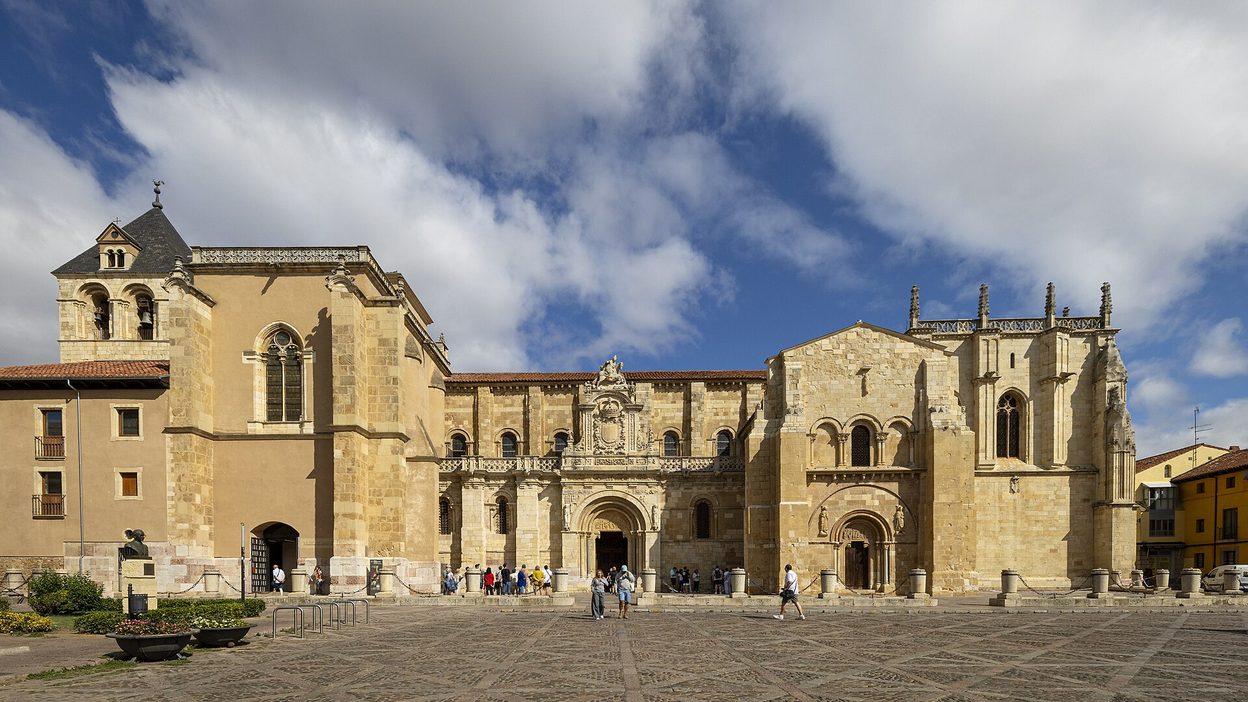
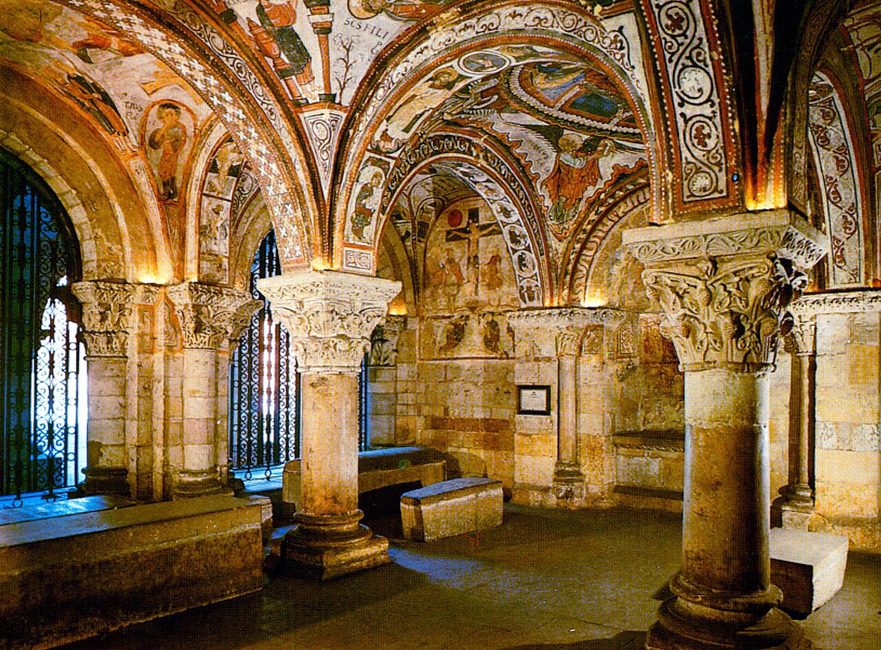
A short walk from León’s Gothic cathedral stands the older royal church of the city, built by the kings of León to house the relics of St Isidore of Seville. Its Panteón de los Reyes, the burial vault of the kings, is covered in some of the finest Romanesque paintings in Europe and is often called the Sistine Chapel of Romanesque art. The basilica is free; the Panteón is seen with the museum.
A royal church on the Camino
An earlier church on this site, dedicated to St John the Baptist, was destroyed in Almanzor’s raids at the end of the 10th century and rebuilt in brick and rubble by Alfonso V. In the mid-11th century King Fernando I and Queen Sancha rebuilt it in stone and made it the burial place of their dynasty, and in 1063 the relics of St Isidore were brought from Seville and the church rededicated to him. Their daughter Urraca enriched it, and the present basilica grew through the 12th century; the main chapel was rebuilt in late Gothic style by Juan de Badajoz in the 16th century.
San Isidoro stands on the Camino Francés, the main pilgrim route to Santiago, and in 1188 King Alfonso IX held the Curia Regia here, whose decrees UNESCO lists as the earliest documentary record of the European parliamentary system. The basilica keeps the old privilege of having the Blessed Sacrament exposed day and night, so it is a place of quiet prayer as well as a monument.
The visitor’s cheat sheet
| Where | Plaza de San Isidoro, in the old town of León, about five minutes’ walk from the cathedral |
|---|---|
| Opening hours | Basilica: daily from 10am until about 9pm (later on Sundays), except during services. Museum and Panteón: Tue–Sat 10am–2pm and 4pm–7pm (5pm–8pm from late March to mid-October), Sun 10am–2pm; closed Mondays |
| Admission | Basilica free. Museum and Panteón €6, guided €8, full guided tour €10; under-12s free |
| Free entry | Free guided visits Wednesday 4pm–6pm, first come, first served (check times in summer, when the museum reopens at 5pm) |
| Guided tours | In Spanish, with tours in English and French at set times; book ahead |
| Photography | Generally not permitted in the Panteón; ask at the desk |
| Closed | Museum closed Mondays, 1 January, 25 December and for about two weeks in January |
| How long | An hour for the museum; 20 minutes for the basilica |
Hours and admission checked against the official site in November 2026. They change; the official site is always the last word.
What to see
The Panteón de los Reyes
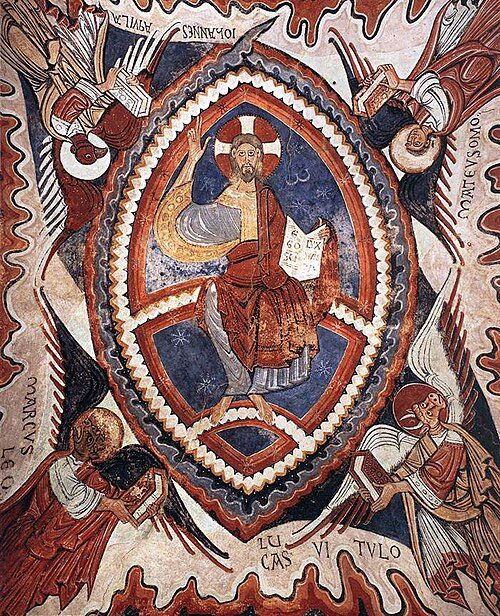
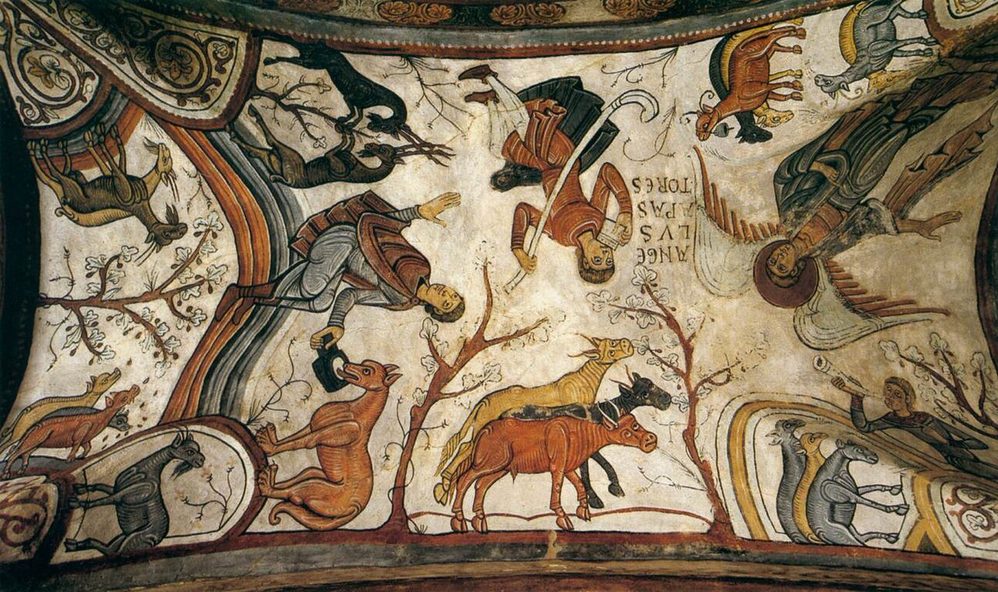
The royal pantheon is a low, vaulted porch at the west end of the church, its stout columns topped with some of the earliest Romanesque figurative capitals in Spain. Its vaults and walls were painted, probably in the 12th century (the date is debated), with scenes of the life of Christ in strong reds, ochres and greys: Christ in majesty surrounded by the evangelists, the Last Supper, and the Annunciation to the Shepherds, with goats, cattle and a sheepdog. On one arch is a calendar of the labours of the months. Kings, queens and princes of León are buried here, though the tombs were desecrated by Napoleon’s troops during the occupation of 1808–1812. Photography is generally not permitted.
The portals
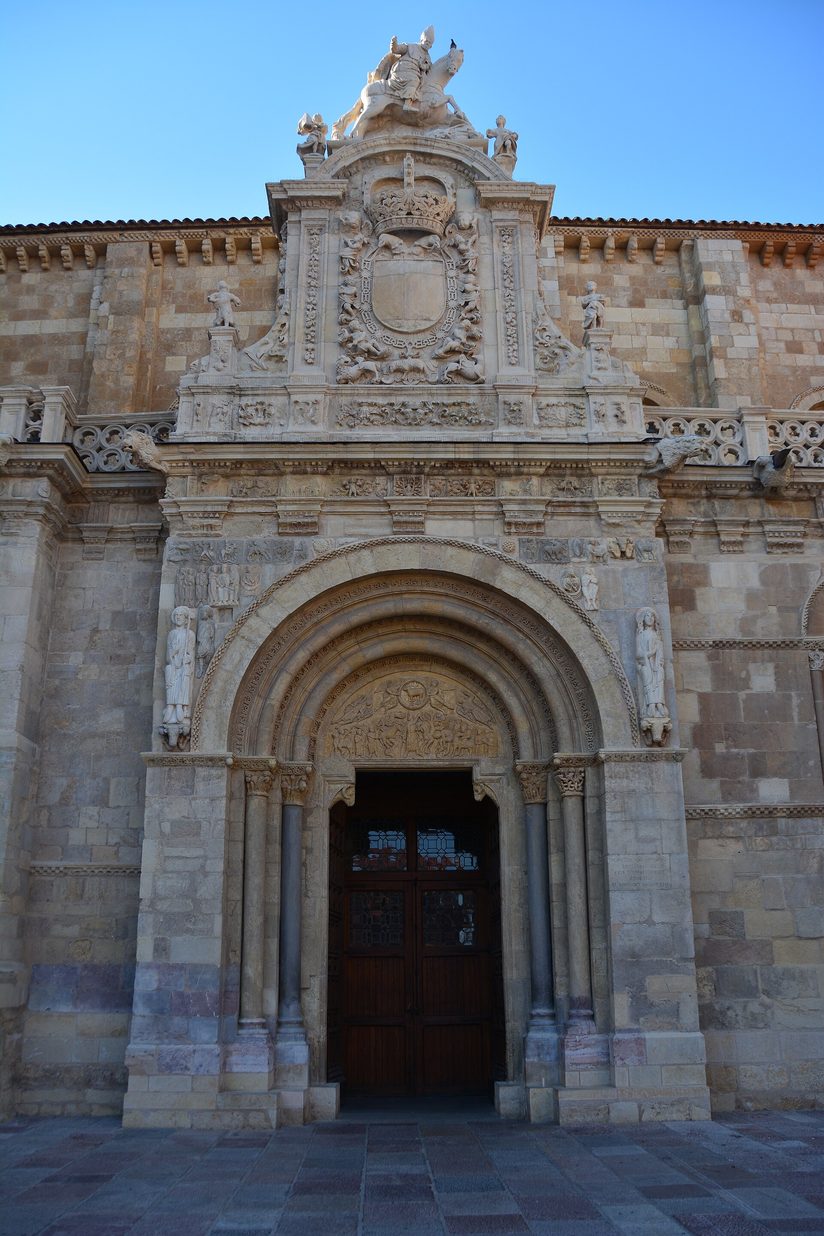
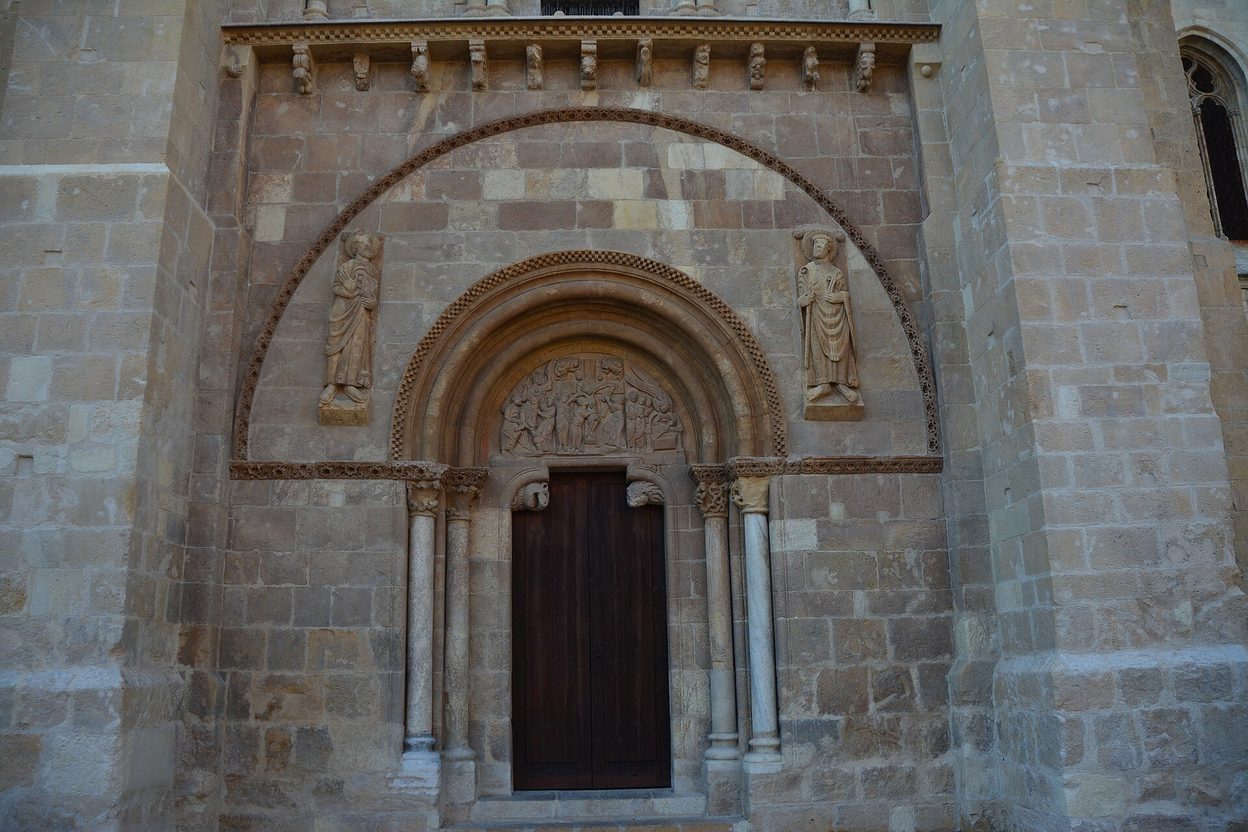
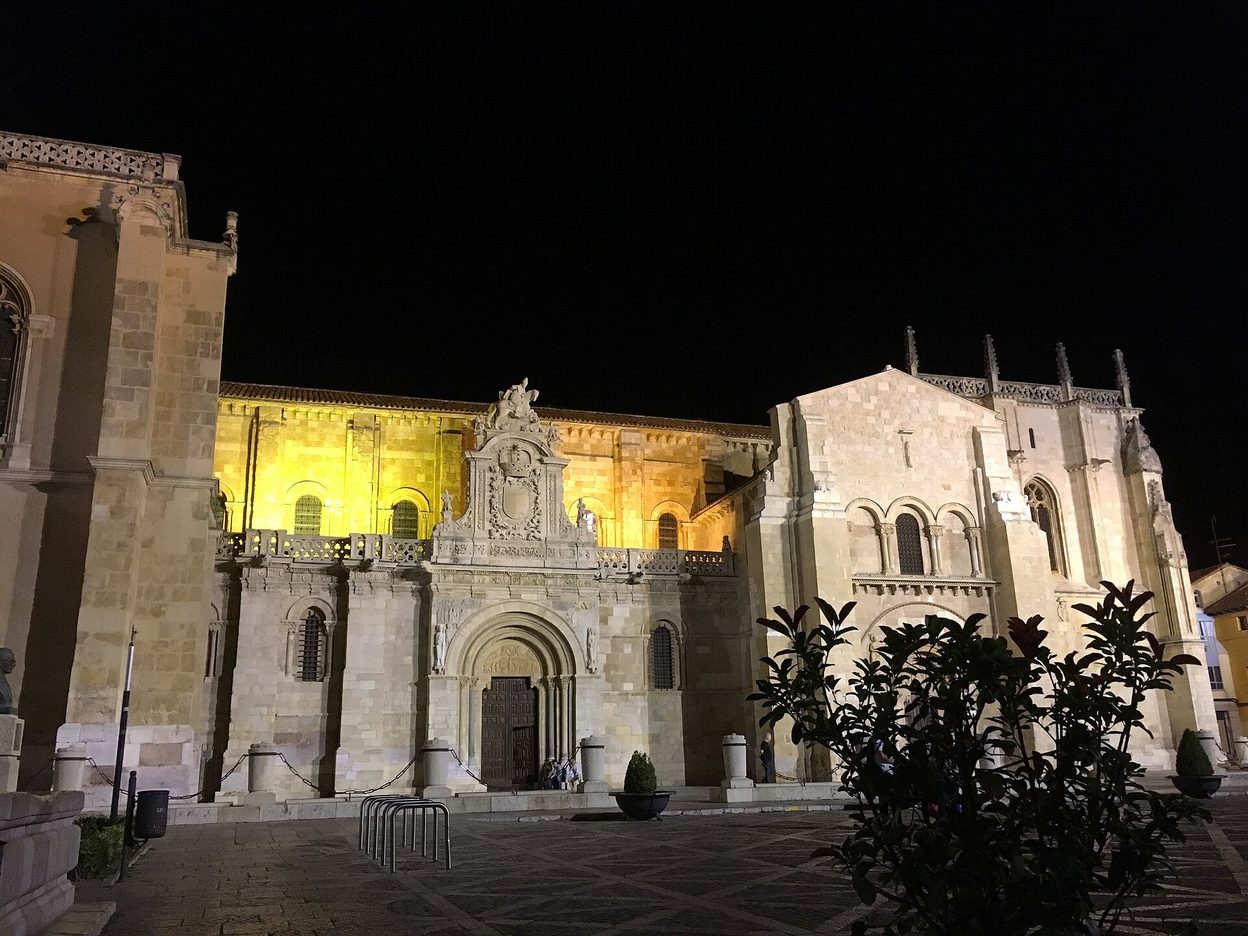
Two Romanesque doorways open onto the square. The Puerta del Cordero, the main door, has a tympanum with the Lamb of God and the sacrifice of Isaac, with a later Baroque crown above it. The Puerta del Perdón in the south transept, attributed to Master Esteban, who later worked at Santiago, shows the Descent from the Cross, the three Marys at the tomb and the Ascension. Its name recalls the tradition that pilgrims too weak to go on to Santiago could gain the same pardon here.
The museum
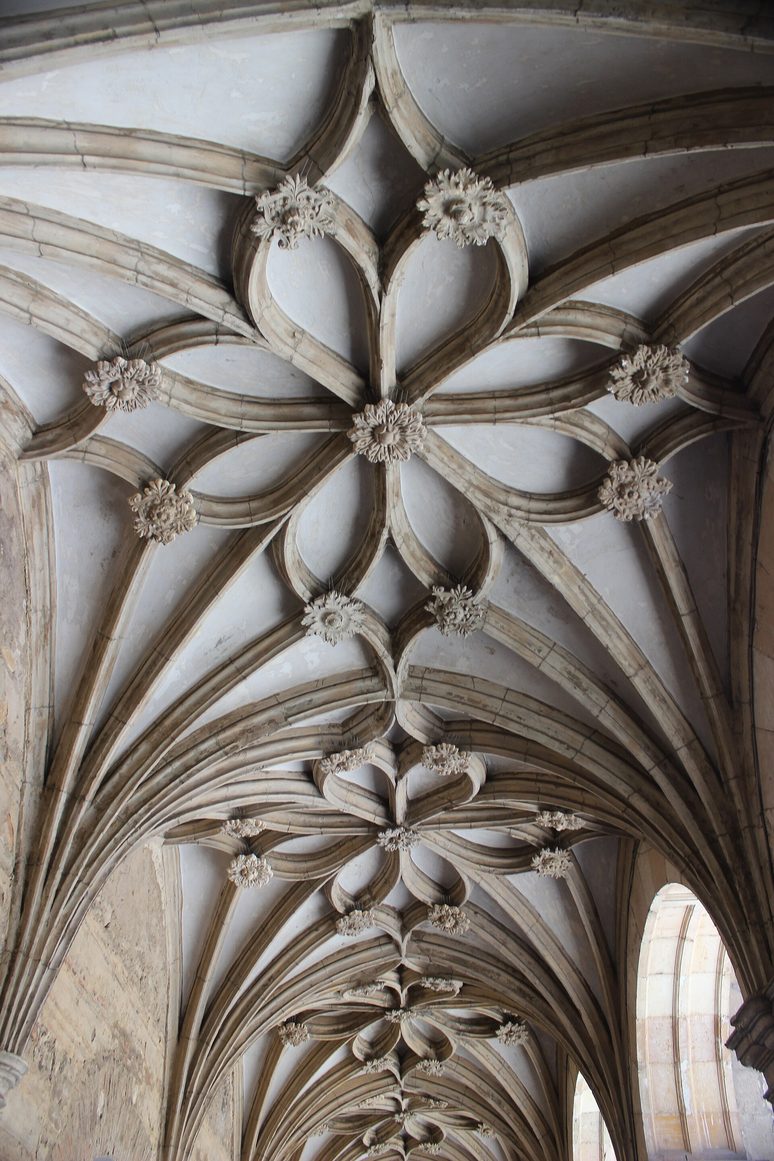
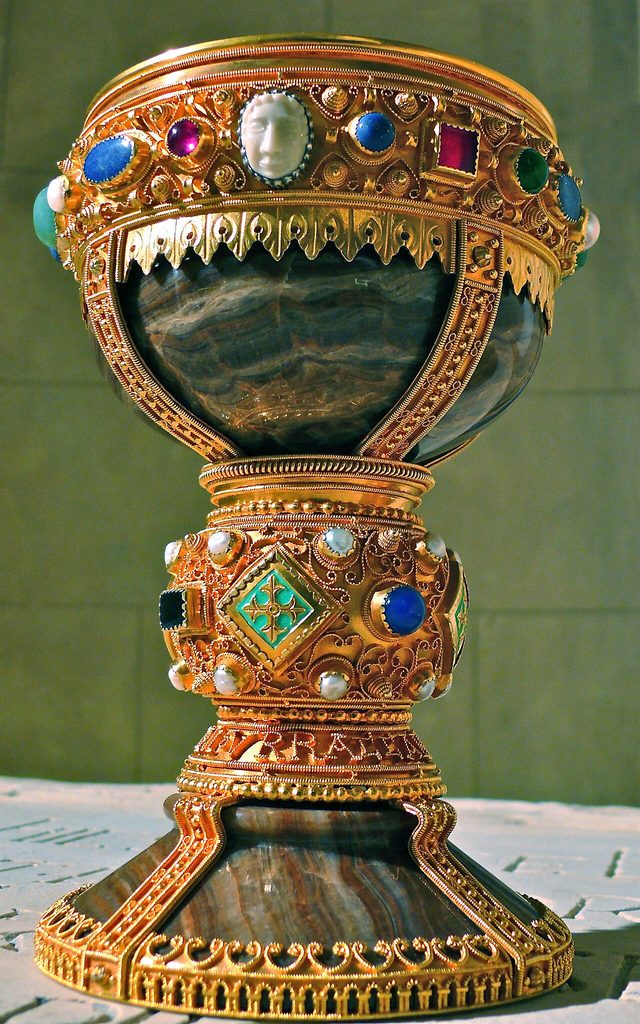
A reform completed in 2024 tripled the museum’s space. The route takes in the cloister, the chapter house, the rooms of the prior’s quarters and a walk along the wall, as well as the treasury. Its most famous piece is the Chalice of Doña Urraca: two ancient onyx cups mounted in gold and gems for Fernando I’s daughter in the 11th century. In 2014 two historians argued that the upper cup is the Holy Grail; the claim is disputed, but it has made the chalice famous. The museum also has a celebrated library, including a Bible of 960.
The basilica
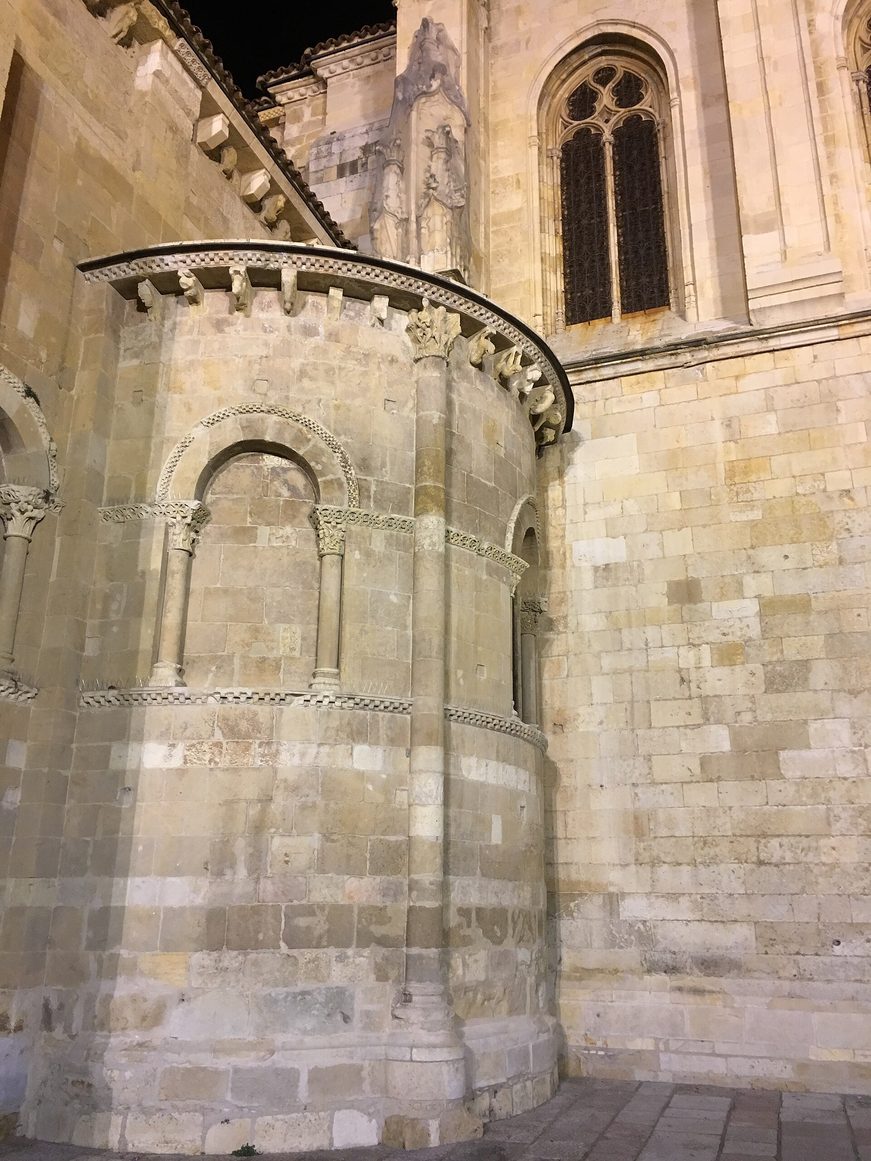
The church itself is free. It is a Romanesque basilica with a nave and aisles, Moorish-style polylobed arches in the transept, and the 16th-century main chapel, where a 19th-century silver urn holds the relics of St Isidore. Because the Sacrament is exposed, visitors are asked to keep quiet.
Getting there
San Isidoro is in the north-west corner of León’s old town, beside the Roman walls, about five minutes’ walk from the cathedral and 20–25 minutes on foot from the railway station. Part of the collegiate complex is now a hotel, the Hotel Real Colegiata San Isidoro, so you can stay inside the complex.
Where to stay
Museum tickets are sold at the desk and online. León is a major stop on the Camino Francés, so the old town fills up in summer and in Holy Years, and 2027 is one.
This link goes to Booking.com. This site earns nothing from it at present — it is here because it is the quickest way to check what is actually available.
Don’t miss
- The Panteón The reason to come.
- The shepherds And their dog.
- The calendar The labours of the months on one arch.
- The chalice Grail or not.
- The Puerta del Perdón The pilgrims’ door.
Insider tips
Pair it with the cathedral. San Isidoro and the cathedral are five minutes apart and make a perfect contrast: Romanesque paint and stone in one, Gothic glass in the other. The museum closes at lunchtime and on Mondays, so plan San Isidoro for a morning from Tuesday to Saturday, and save the cathedral, which stays open longer, for the afternoon.
Common questions
Is San Isidoro free to visit?
The basilica is free. The museum, which includes the Panteón de los Reyes, costs €6 on your own, €8 with a guided tour or €10 for the full guided tour. Under-12s go free.
Is there a free time to see the Panteón?
On Wednesday afternoons, from 4pm to 6pm, the museum runs free one-hour guided visits, first come, first served. Arrive early.
When is the museum closed?
Every Monday, on 1 January and Christmas Day, and for about two weeks in January. On Sundays it opens in the morning only.
Can I take photos in the Panteón?
Generally not: photography is not permitted in the Panteón. Ask at the desk about the other rooms.
Is the chalice in San Isidoro the Holy Grail?
Two historians argued in 2014 that the upper onyx cup of the Chalice of Doña Urraca is the Holy Grail. The claim is disputed, and Valencia Cathedral has a rival chalice, but the cup itself is a genuine ancient vessel set in 11th-century goldwork.
More churches in Spain
- León Cathedral — the Gothic cathedral and its glass, five minutes away.
- Santa María del Naranco — the Asturian royal hall that came before.
- Burgos Cathedral — the next great cathedral east along the Camino.