
Holy Cross Church, Crediton
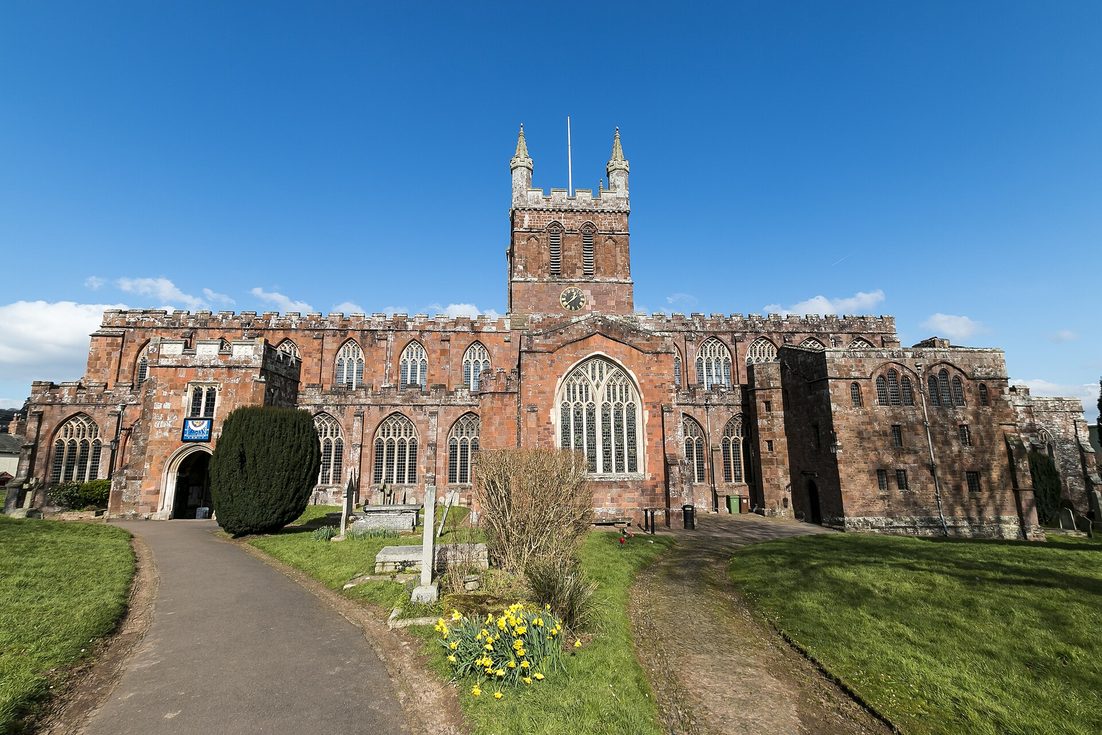
Crediton was the seat of the bishops of Devon for more than a century before the see moved to Exeter in 1050, and it is the traditional birthplace of St Boniface. Its great red-stone church of the Holy Cross, once a collegiate church of canons, has been owned by its parishioners since they bought it from the Crown in 1547.
The Saxon see and the canons
A copy of a charter of 739 records land given for a monastery here, though its authenticity is uncertain. In about 909, when the diocese of Sherborne was divided, Crediton became the seat of a bishop for Devon and Cornwall; Cornwall had its own bishop from 926 until the two sees were joined again under Leofric. The cathedral, probably of wood, stood a little north of the present church. In 1050 Bishop Leofric moved the see to Exeter, a walled city, and Crediton was left with a college of canons. Their Norman church was being built in the 1130s; its dedication changed from St Mary to the Holy Cross in the thirteenth century. Described as ruinous in 1413, it was rebuilt in the Perpendicular style, helped by a canon’s bequest.
The college was dissolved in 1545. Two years later the parishioners bought the church from the Crown for £200, and Edward VI’s charter of 1547 set up twelve Governors, who still own it. The church was restored between 1848 and the 1880s by John Hayward, and is listed Grade I. St Boniface is said to have been born in Crediton in about 680; the church has a chapel and a carved figure of him, and a statue of the saint, unveiled in 1960, stands in Newcombes Meadow below.
The visitor’s cheat sheet
| Where | Church Lane, Crediton, Devon EX17 2AH |
|---|---|
| Opening hours | Open daily in daylight hours |
| Admission | Free; led tours free, with a suggested donation of £2 a head (book on 01363 773226) |
| Services | Sundays 8am Holy Communion and 9.30am Parish Eucharist; weekday services vary, so check the parish website |
| Access | Ramped church entrance; the Boniface Centre next door has a hearing loop and an accessible toilet |
| Parking | Large car park below the church |
| Toilets | Public toilets in Newcombes Meadow, below the church |
| How long | An hour |
Hours and admission checked against the official site in November 2026. They change; the official site is always the last word.
What to see
The outside
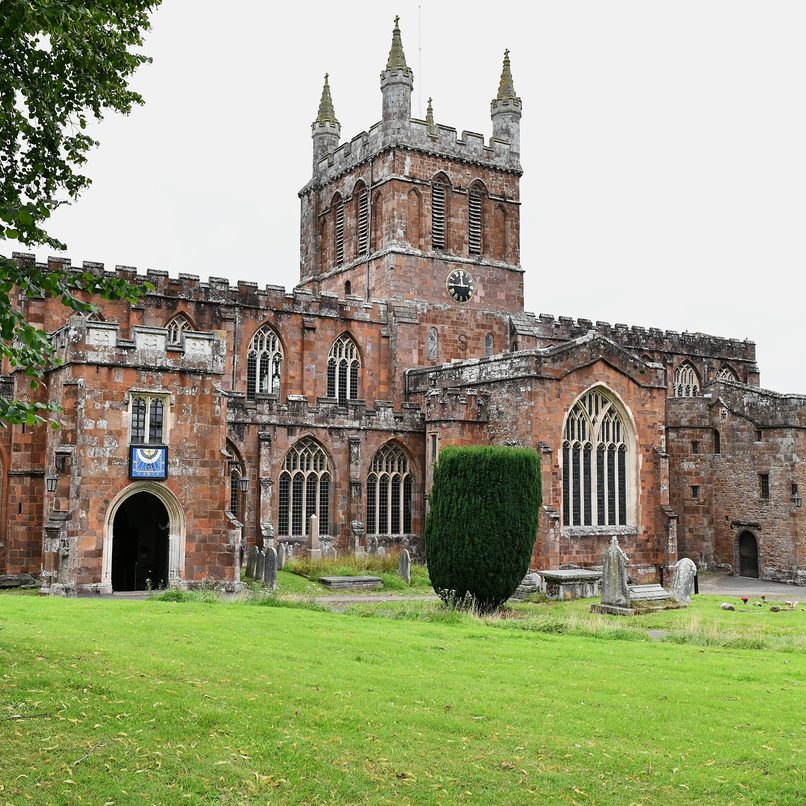
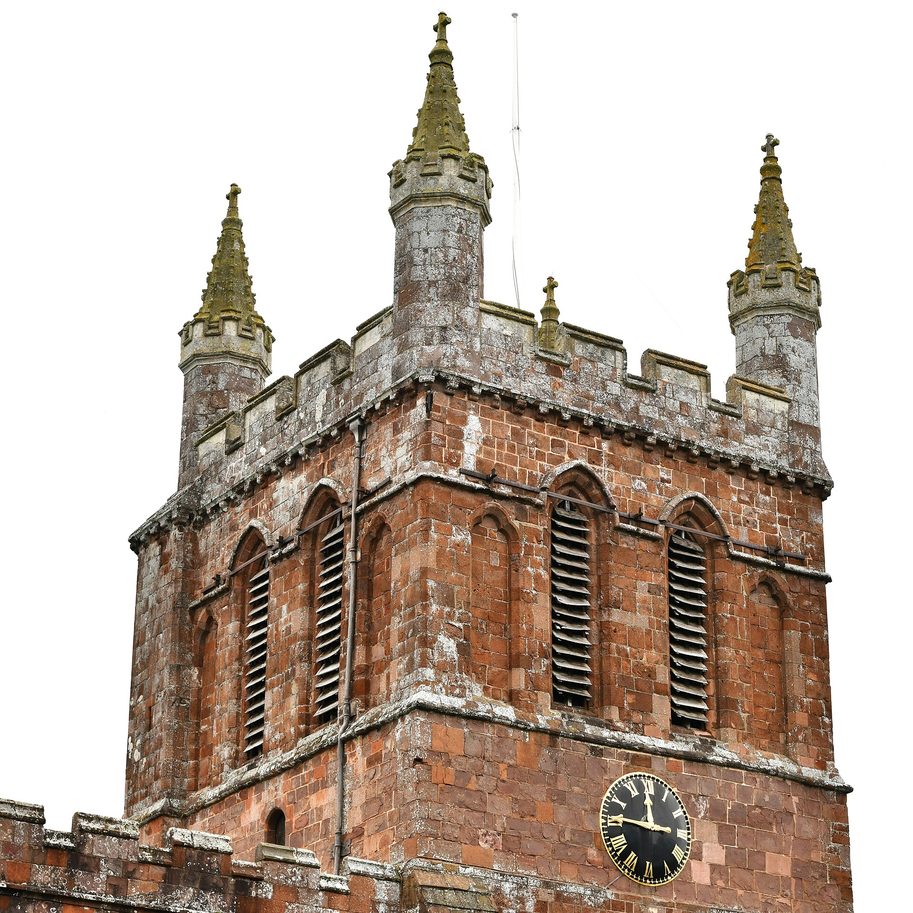
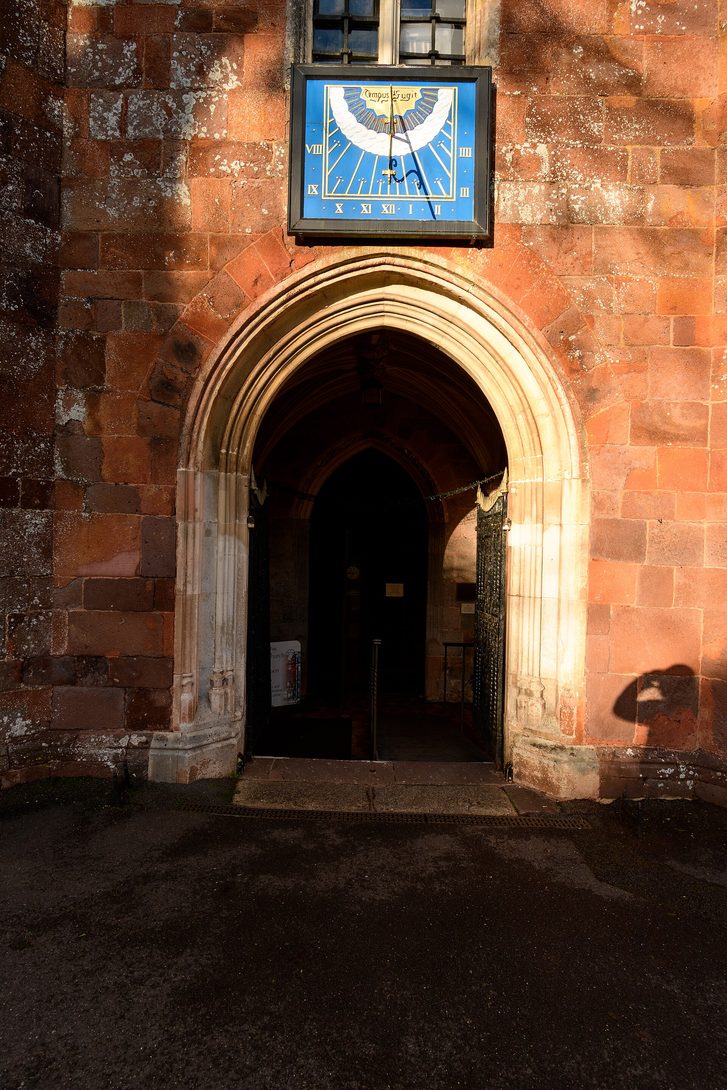
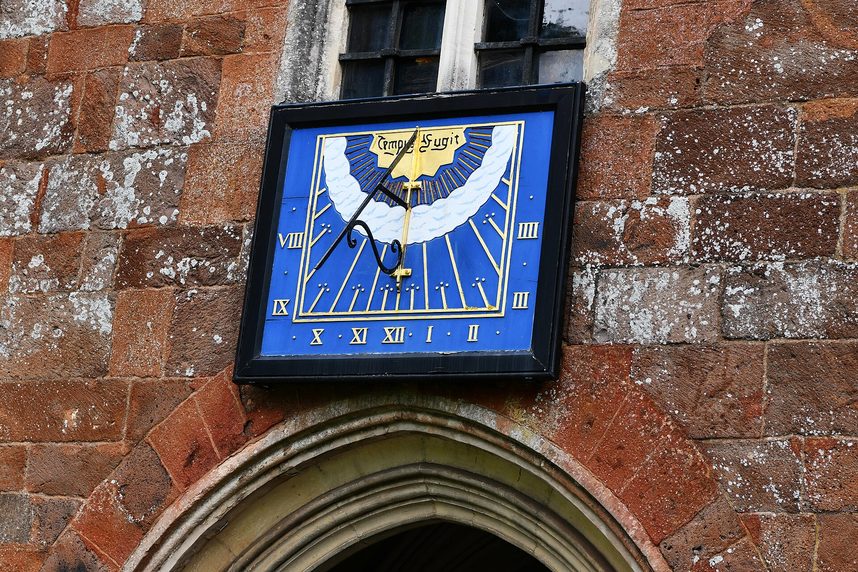
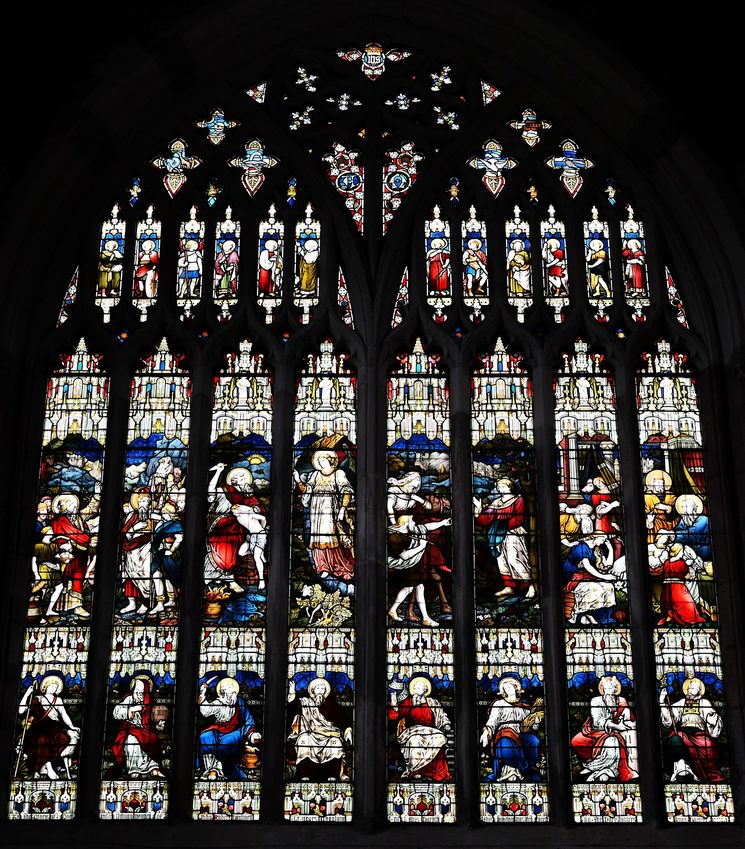
The church is built of local red sandstone and purple volcanic trap, with dressings of Beer and Bath stone. The central tower is Norman in its lower parts and thirteenth-century above, with tall octagonal pinnacles; tree-ring dating is reported to show that timbers in it were felled in the 1530s. Enter by the two-storey south porch, which has a vaulted ceiling with carved bosses; the sundial above it was put up in 2003. At the west end is a great eight-light Perpendicular window, and at the south-east the chapter house of 1864, with the Governors’ Room above it.
The nave
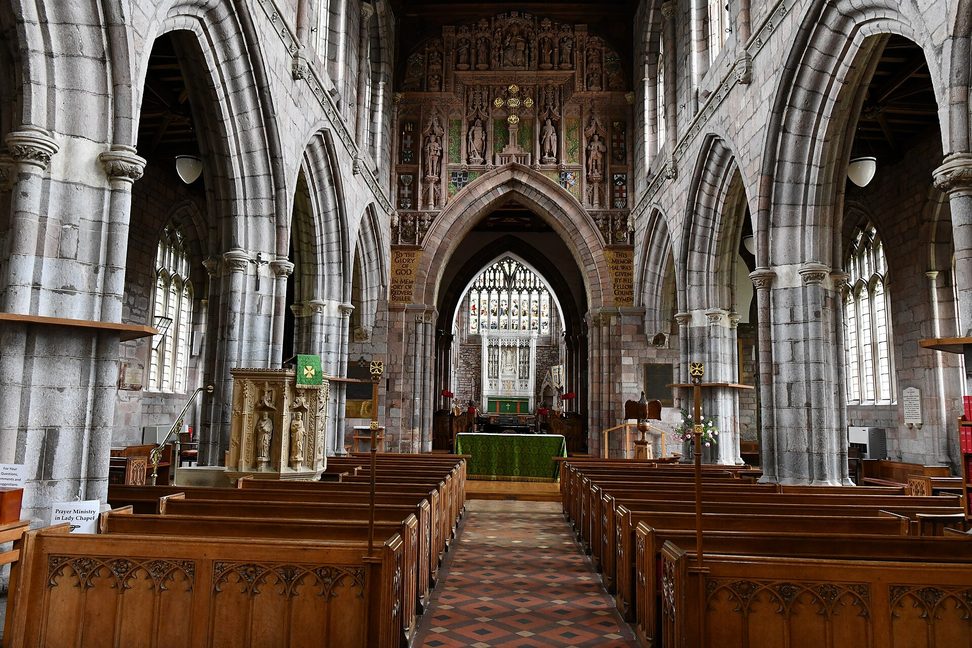
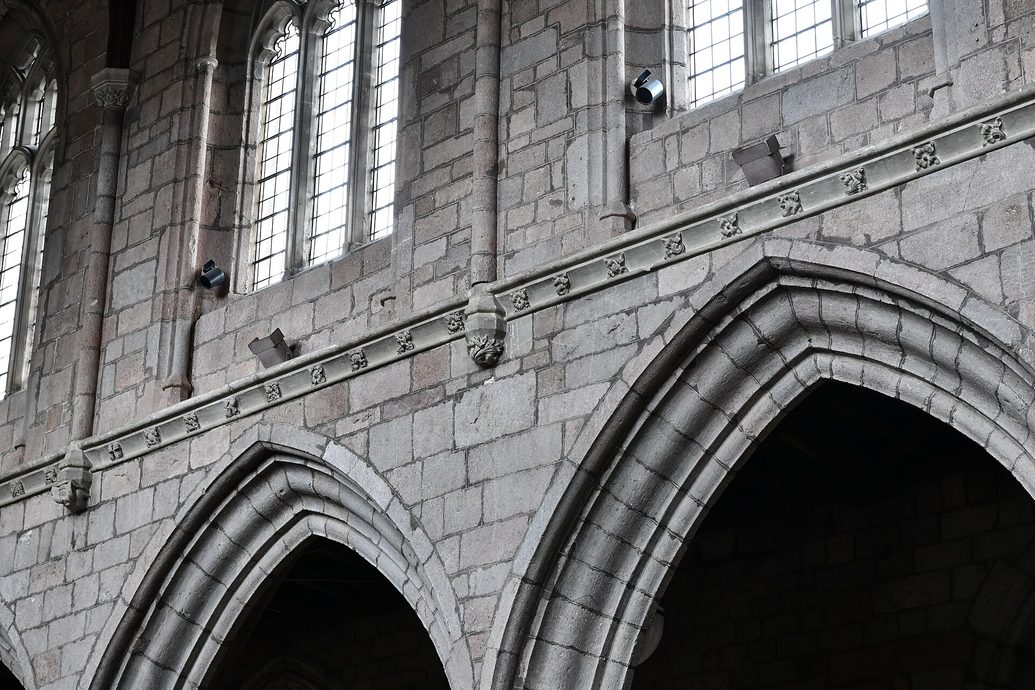
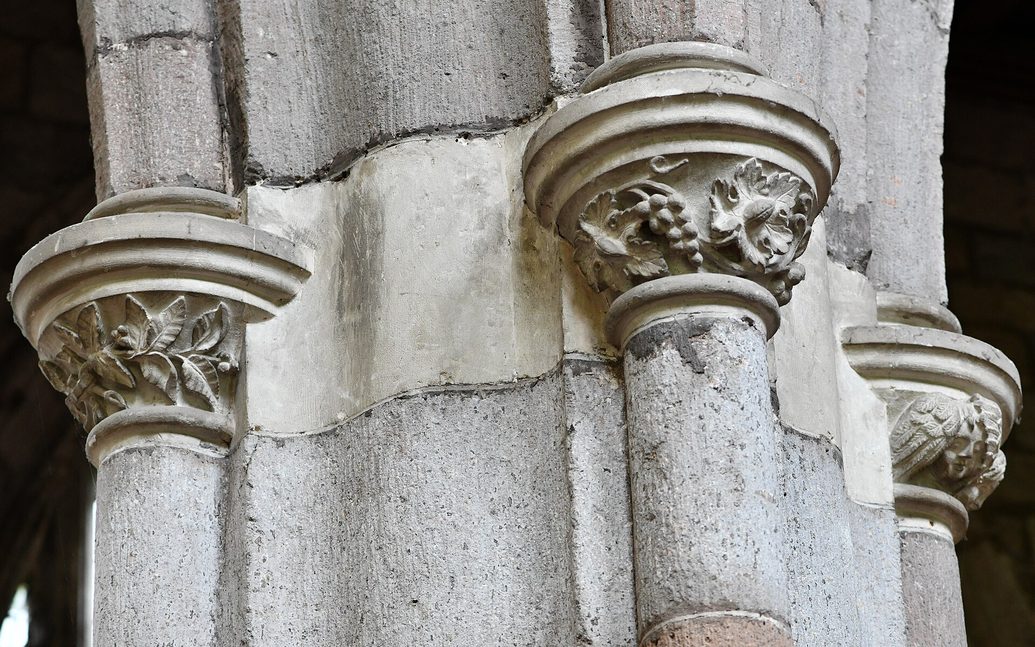
Inside, the walls are bare stone, a striking mauve volcanic trap. The six-bay nave has early fifteenth-century arcades and a clerestory, under Hayward’s roofs. The square Norman font stands on a thick central shaft with corner shafts, under a tall carved cover designed by W. D. Caroë and given in the early twentieth century. A wooden figure of St Boniface in the north aisle is by the Polish sculptor Witold Kawalec, who lived near Crediton. The drum pulpit carries carved figures of saints.
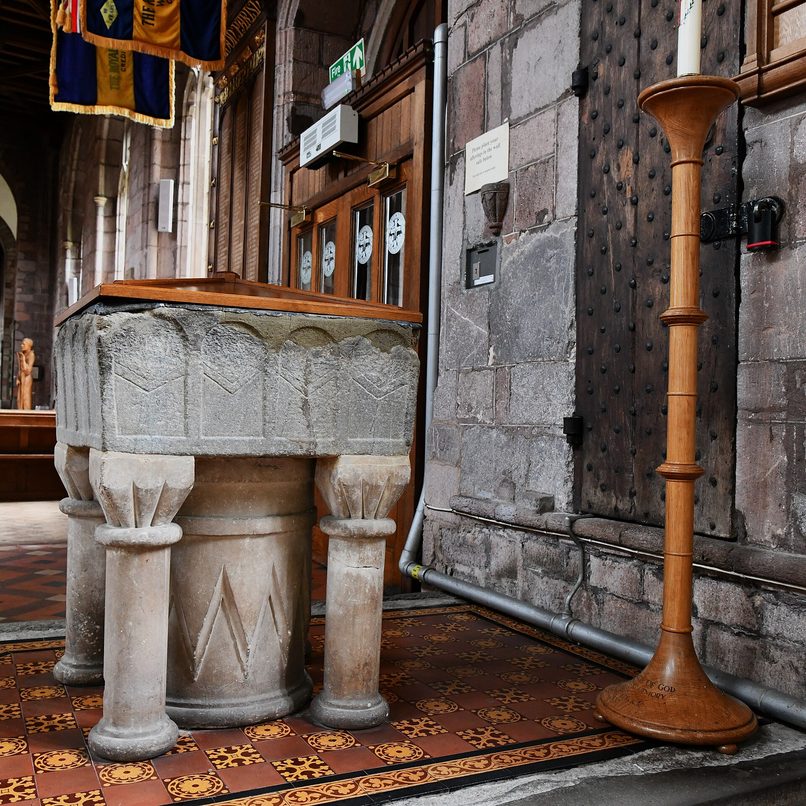
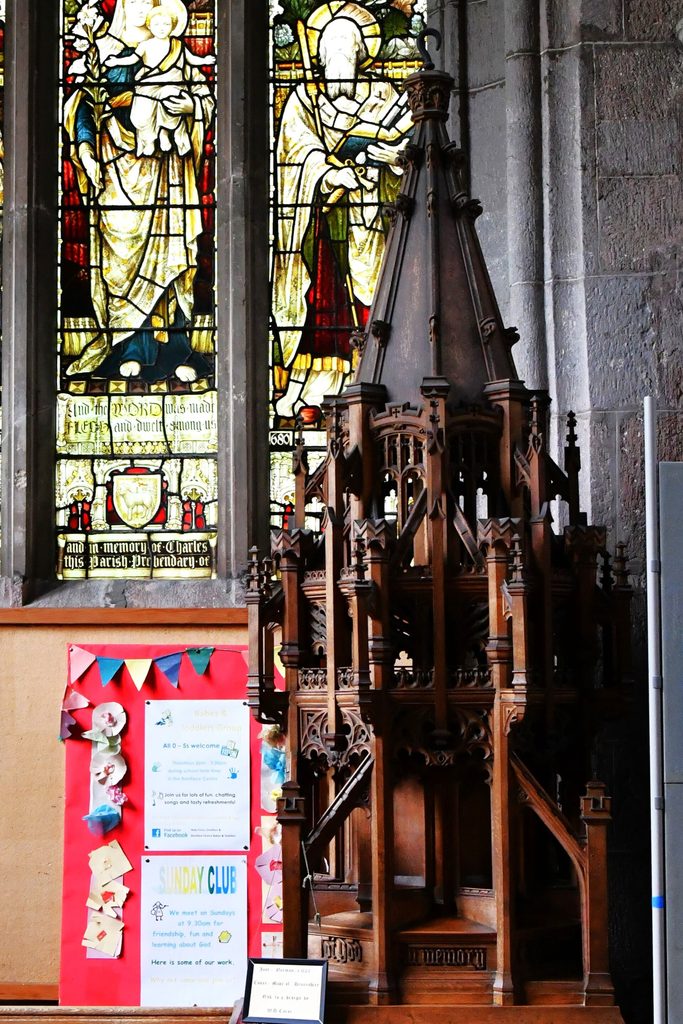
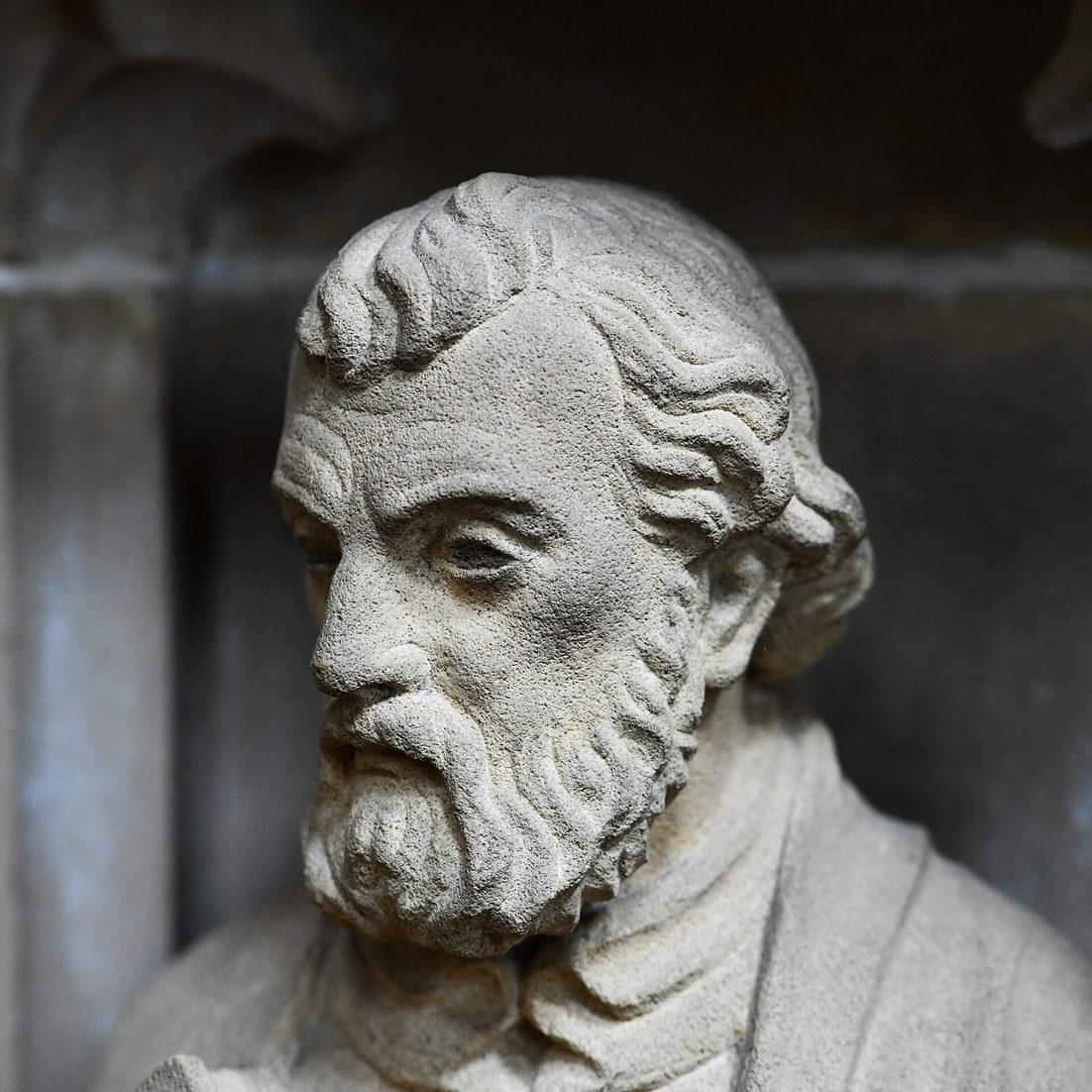
The Buller memorial
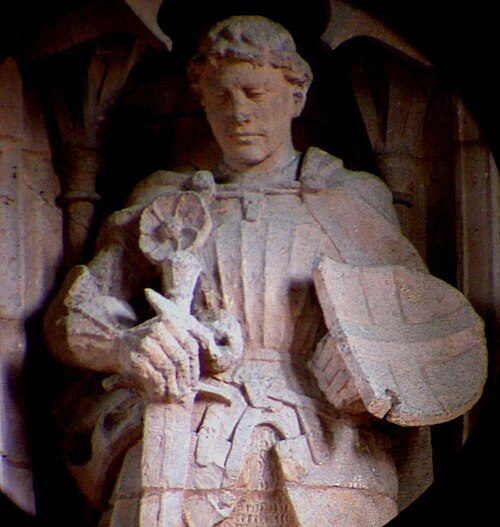
Filling the west face of the tower arch is the memorial to General Sir Redvers Buller (1839–1908), who was born near Crediton. Designed by Caroë and carried out by Dart and Francis of Crediton, it was unveiled on 2 June 1911, the third anniversary of his death. Christ the Lawgiver is at the top, with the archangels, Joshua and Godfrey de Bouillon beside a gilded cross, and St George below; a gold mosaic panel carries the dedication, and the Victoria Cross and his orders are represented.
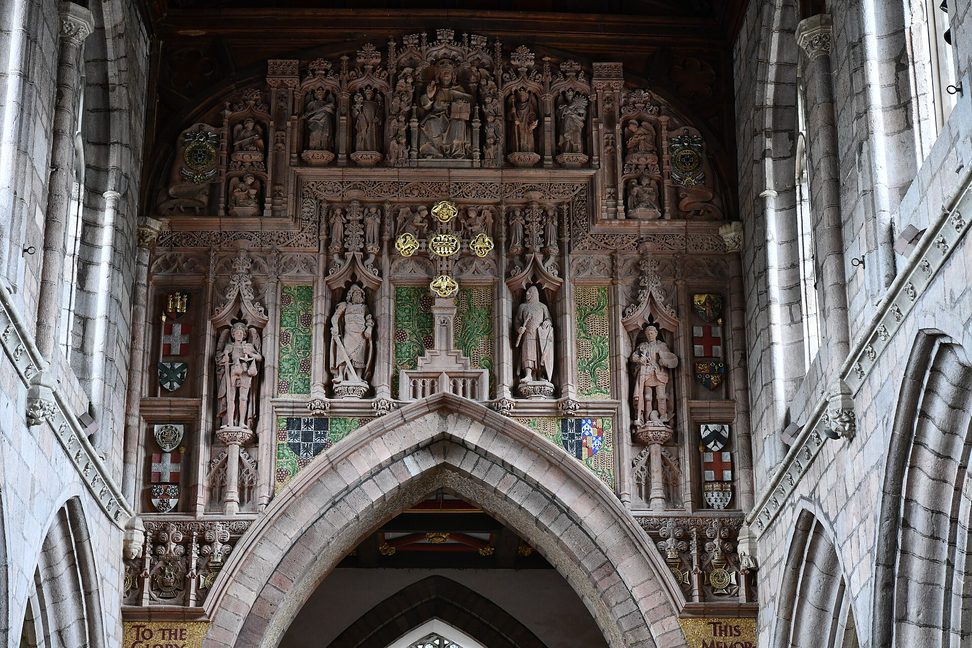
The chancel and its tombs
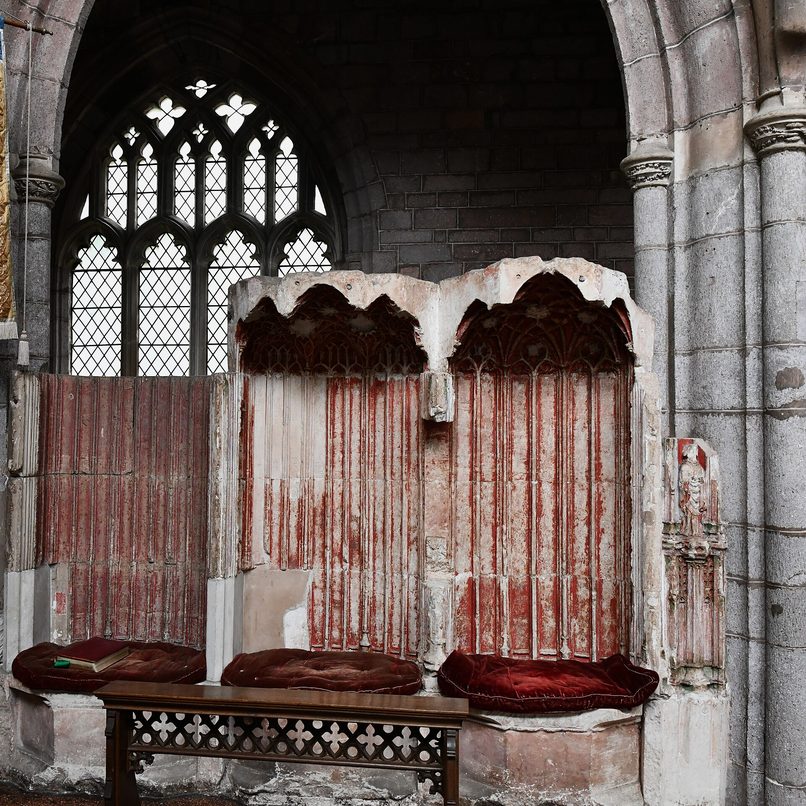
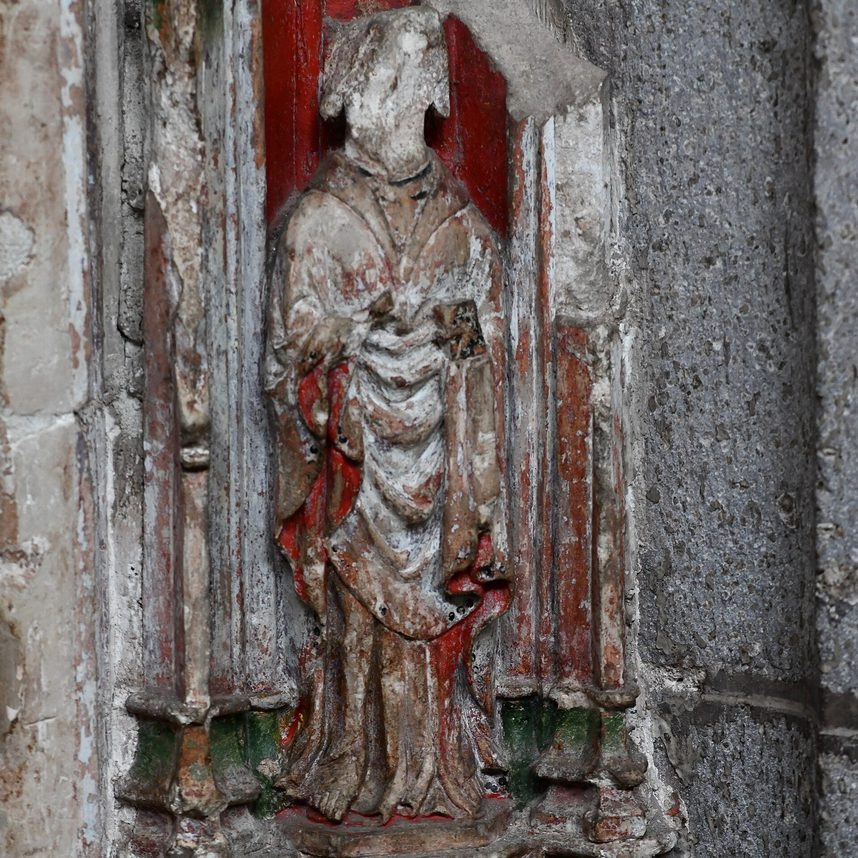
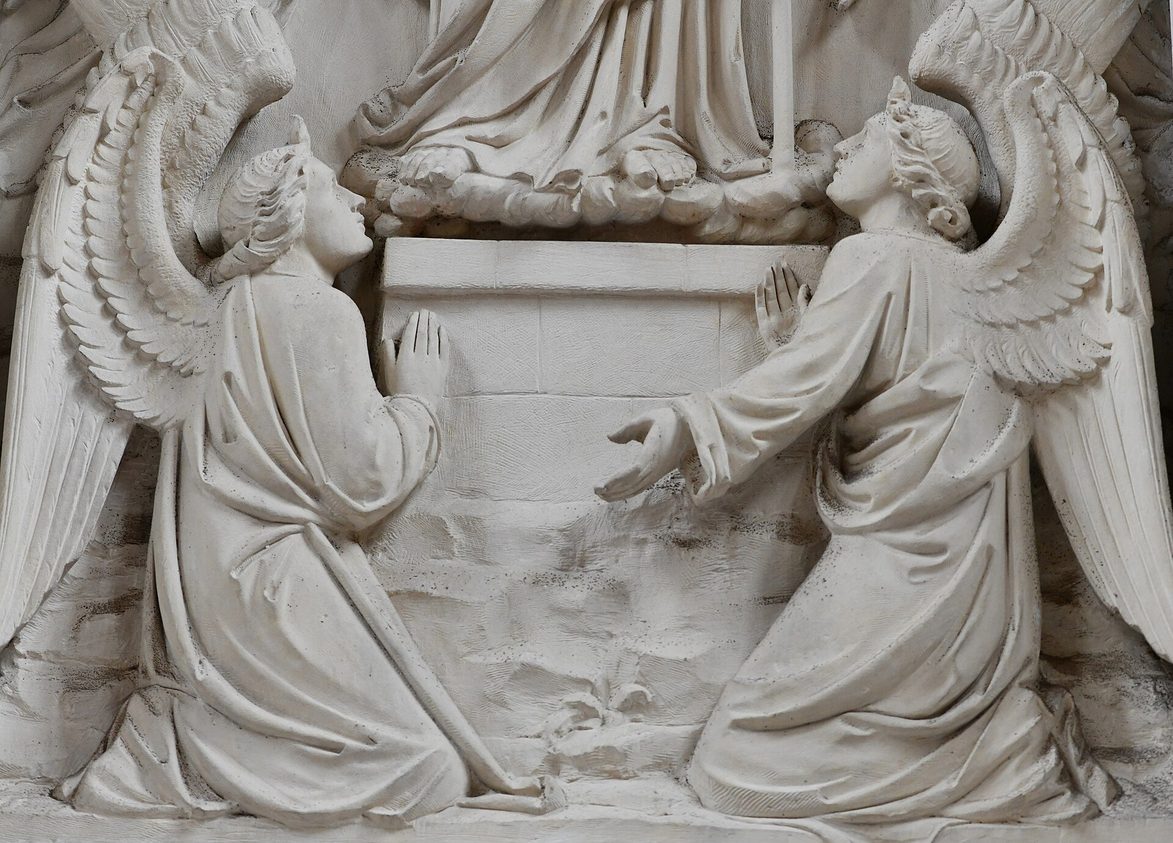
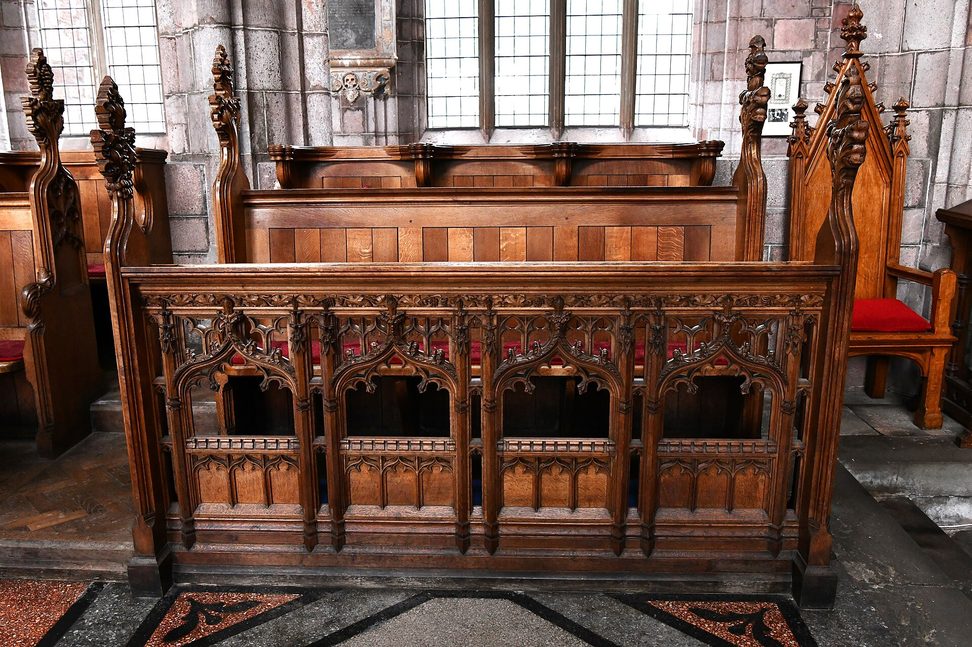
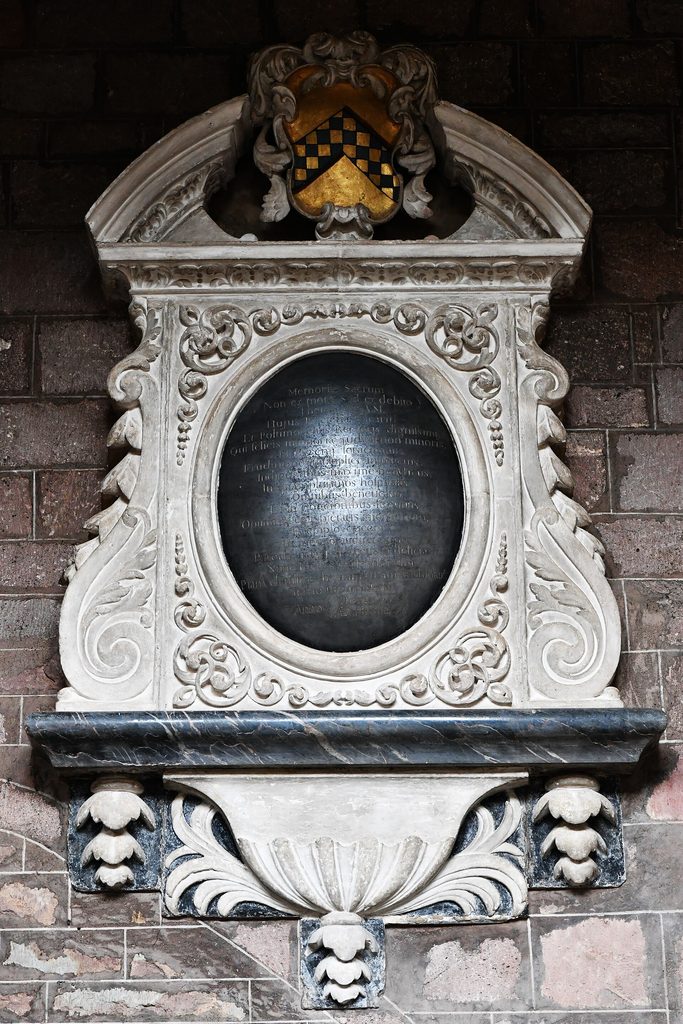
In the chancel the early fifteenth-century sedilia, the three priests’ seats, sit beside a recessed tomb made, it seems, by the same mason, with a frieze of the Ascension, the Adoration of the Magi and the Assumption, and traces of red, green and gold paint; the person commemorated is not known. On the north side is the monument to the judge Sir William Peryam, who died in 1604 or 1605, reclining in his robes above his three wives and four daughters, and the Tuckfield monument of the early 1630s, in which Elizabeth Tuckfield leans on a desk with her hand on a skull. The oldest of the large tombs, in the south choir aisle, is that of Sir John Sully, who died in 1387, said to have been over a hundred, and his wife Isobel. The reredos of the 1920s is by G. H. Fellowes Prynne.
The organ, the glass and the bells
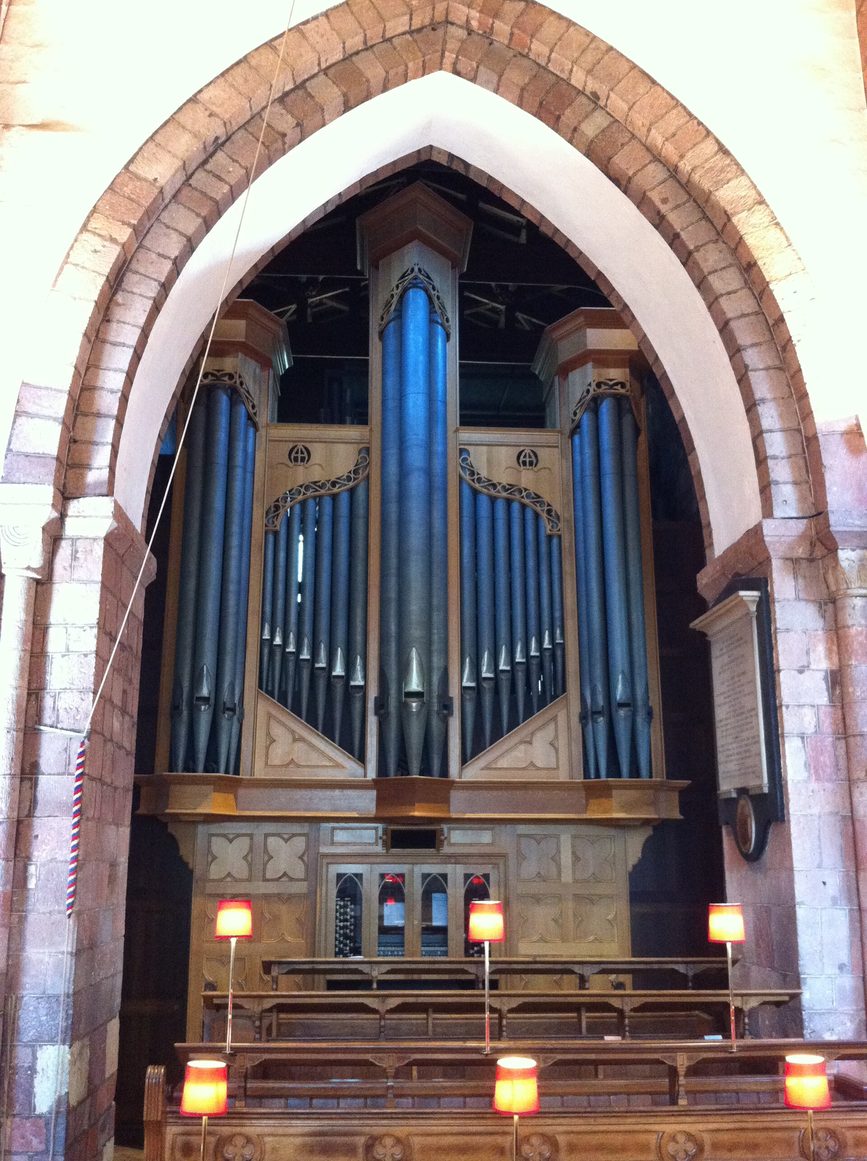
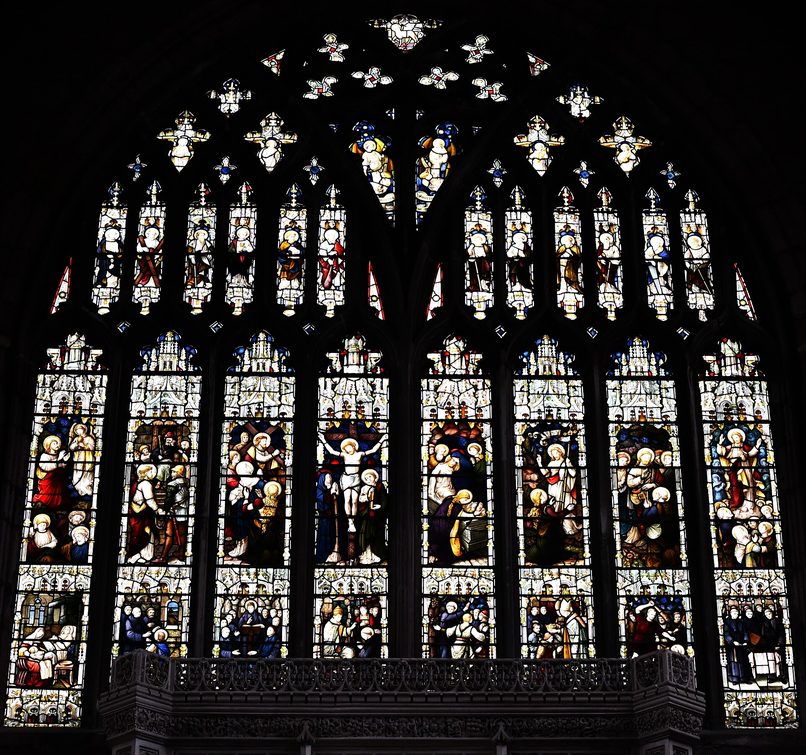
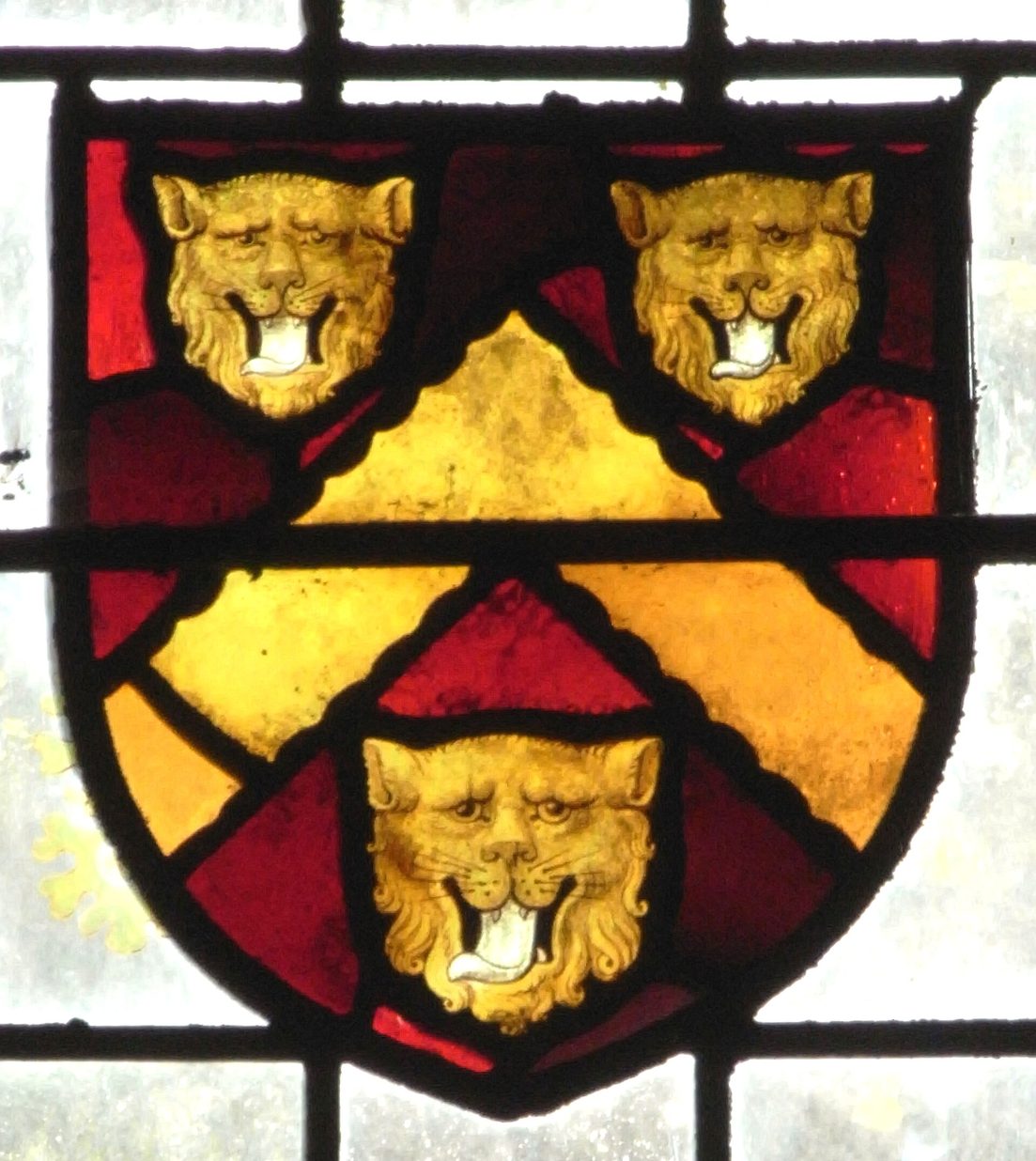
The Harrison and Harrison organ in the north transept was opened in 1921 as a war memorial; it was planned by Harold Organ, who was killed in action in 1917, and given a new oak case in 2001. The east window tells the life of St Boniface, from his birth to his martyrdom in 754. Several windows are by Lavers, Barraud and Westlake, a north aisle window of 1913 by Hugh Arnold shows the Saxon cathedral, and a heraldic window in the south transept has the arms of local families. The tower holds a ring of twelve bells, complete since 2007; there were eight before they were recast in 2004.
Getting there
Crediton is eight miles north-west of Exeter. The station, on the lines from Exeter to Barnstaple and Okehampton, is about a mile’s walk from the church, according to the parish. Stagecoach bus 5 runs from Exeter bus station in about half an hour, with a stop by the church on the way into town (check times). Drivers will find a large car park below the church. Public toilets are in Newcombes Meadow, beside the Boniface statue, and the town has cafés. The Roman Catholic church of St Boniface in Park Road is the national shrine of the saint.
Where to stay
Crediton has a few places to stay; Exeter, eight miles away, has many more.
This link goes to Booking.com. This site earns nothing from it at present — it is here because it is the quickest way to check what is actually available.
Don’t miss
- The Buller memorial Caroë’s gilded monument of 1911.
- The sedilia Fifteenth-century carving and paint.
- The Norman font Under Caroë’s cover.
- The east window The life of St Boniface.
Insider tips
Come for the Christmas Tree Festival. In 2026 it runs from 3 to 6 December, with free entry, a café and concerts.
Book a tour. Led tours are free, with a suggested £2 donation; the parish office takes bookings on 01363 773226.
Common questions
Was Crediton a cathedral?
Yes, in the Saxon period. In about 909 Crediton became the seat of the bishop for Devon and Cornwall (Cornwall had its own bishop from 926, and Leofric held both sees from 1046), and it stayed so until Leofric moved the see to Exeter in 1050. The Saxon cathedral, probably of wood, stood a little north of the present church; nothing of it is visible.
Was St Boniface born in Crediton?
Tradition says so. Boniface, the eighth-century missionary to the Germans, was born in about 680, and the Crediton tradition was promoted by Bishop Grandisson in the fourteenth century.
Is it free?
Yes. Led tours are free too, with a suggested donation of £2 a head; book them through the parish office on 01363 773226.
Is it accessible?
The church entrance is ramped; the Boniface Centre next door has a hearing loop and an accessible toilet.
When is it open?
The church is open every day in daylight hours, except during some services, weddings and funerals.
More English churches
- Exeter Cathedral — where the see moved in 1050
- Cullompton Church — a great Devon wool church
- Ottery St Mary Church — another collegiate church in Devon
See all the cathedrals and churches worth visiting in England →