
St Andrew’s Church, Cullompton
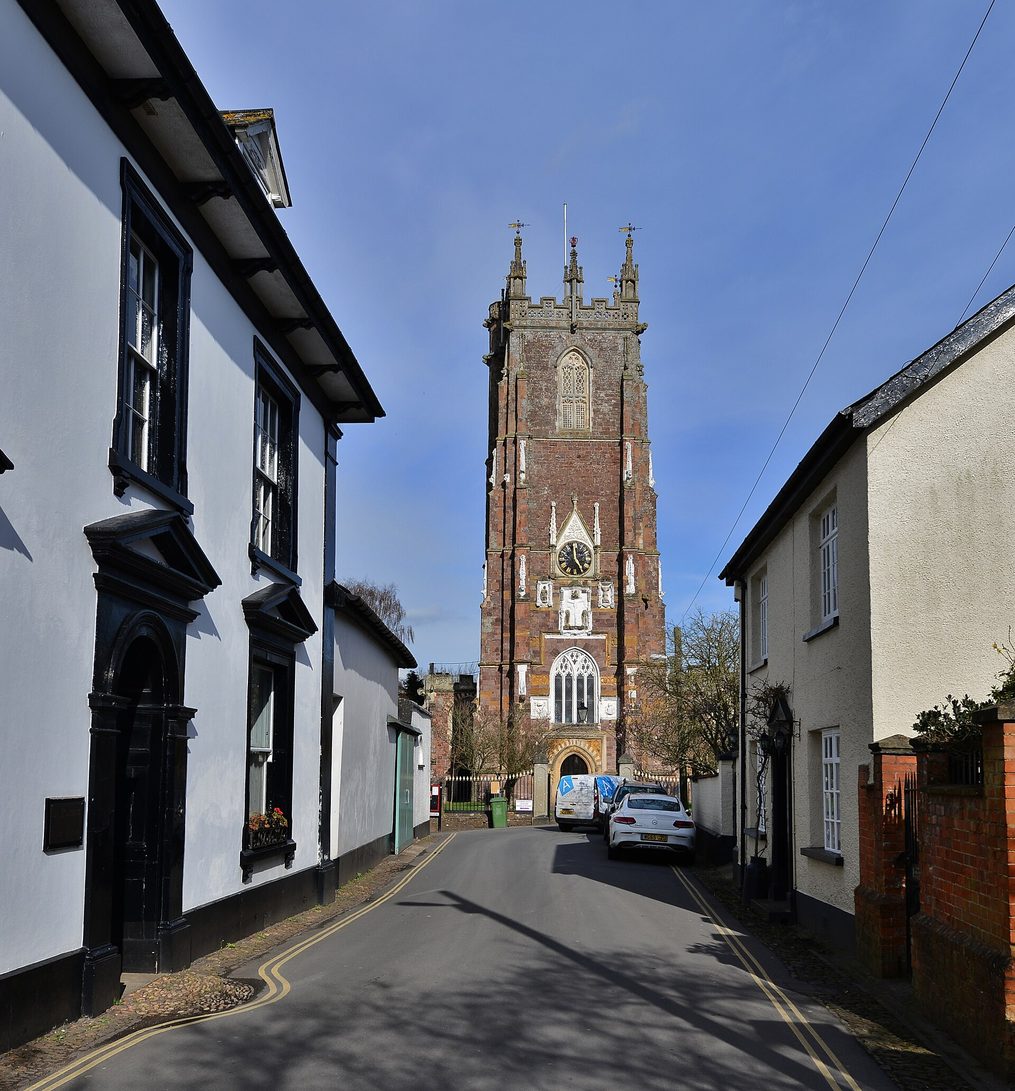
In a small Devon market town, St Andrew’s at Cullompton shows what the cloth trade could pay for: a red sandstone tower, a wagon roof painted in blue, crimson and gold, a long carved screen across the church, and the Lane Aisle, begun by a clothier in 1526, with a stone fan vault and carvings of ships, cloth shears and teasel frames outside.
The church of a cloth town
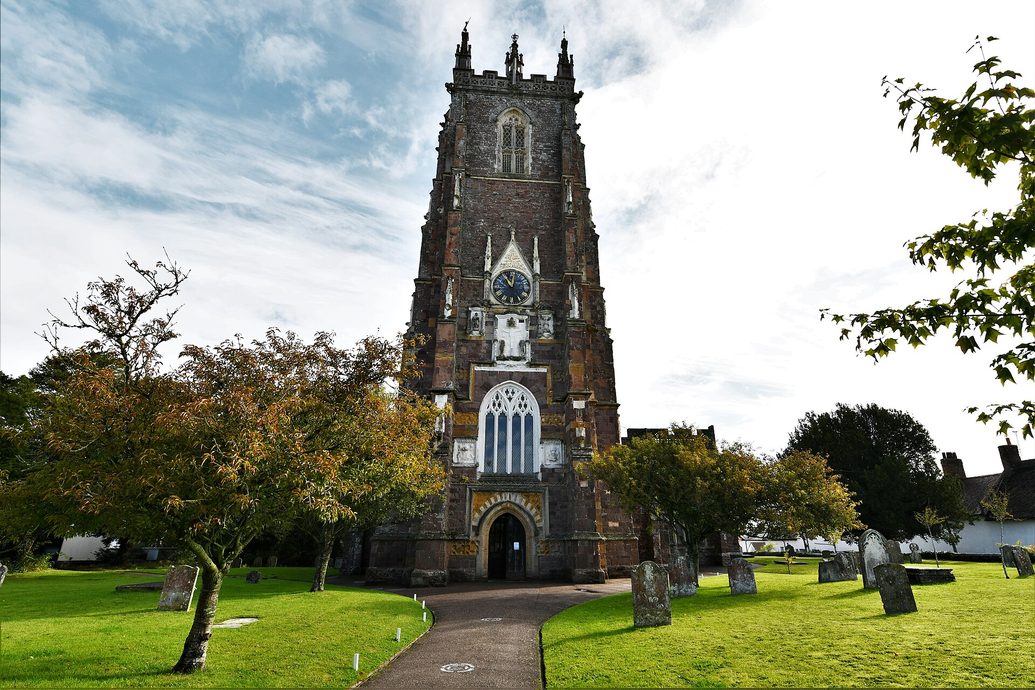
Cullompton grew rich on the cloth trade, and its church shows it. The nave and aisles date mainly from the fifteenth century. In 1526 John Lane, one of the town’s clothiers, began the outer south aisle that bears his name; he died in 1528, and his widow Thomasine continued the work. The great west tower, of red sandstone, was begun in 1539 and was still being built in 1545. The National Churches Trust gives its height as about 100 feet to the parapet, with the pinnacles rising some 20 feet higher. The chancel was rebuilt in 1849–51 by Edward Ashworth. The church is listed Grade I.
The visitor’s cheat sheet
| Where | Church Street, Cullompton, Devon EX15 1JU |
|---|---|
| Opening hours | Usually weekdays from 9am to early afternoon (1pm or 2pm); may close for weddings and funerals |
| Admission | Free (donations welcome) |
| Services | Sundays at 9.30am, 11am and 6.30pm (check the church website) |
| Access | Level access to the main areas; toilets in the neighbouring Community Centre |
| Parking | Car park at the church and public car parks nearby |
| How long | An hour |
Hours and admission checked against the official site in November 2026. They change; the official site is always the last word.
What to see
Outside: the tower and the Lane Aisle
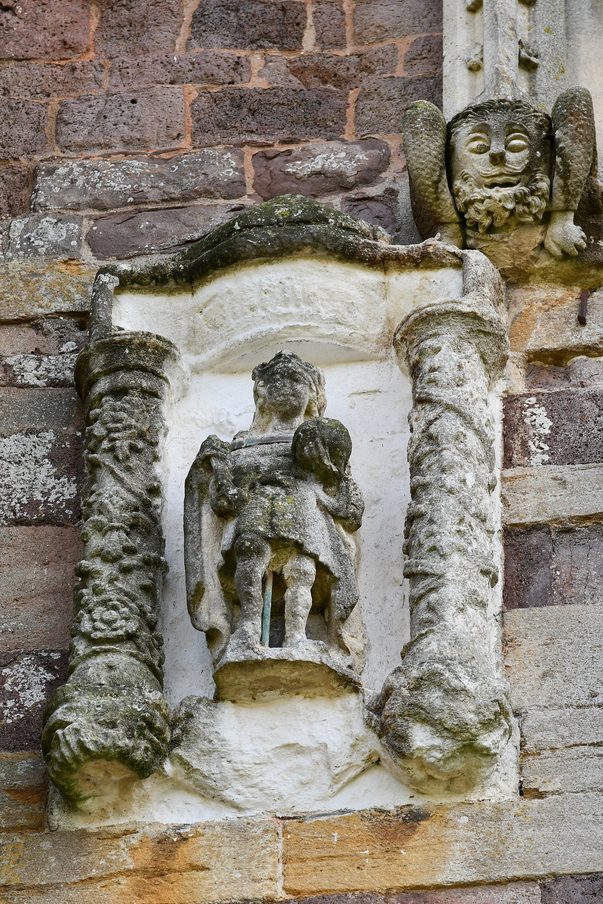
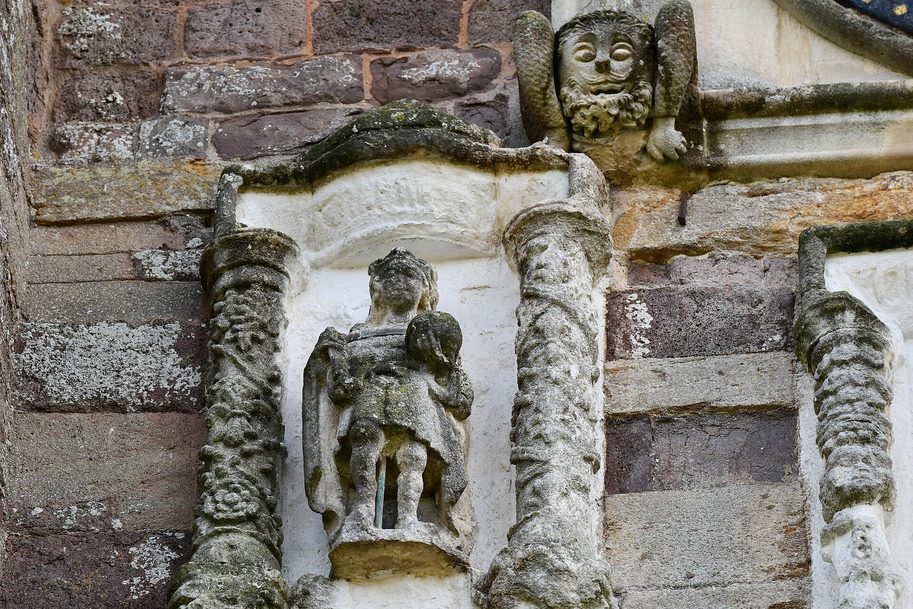
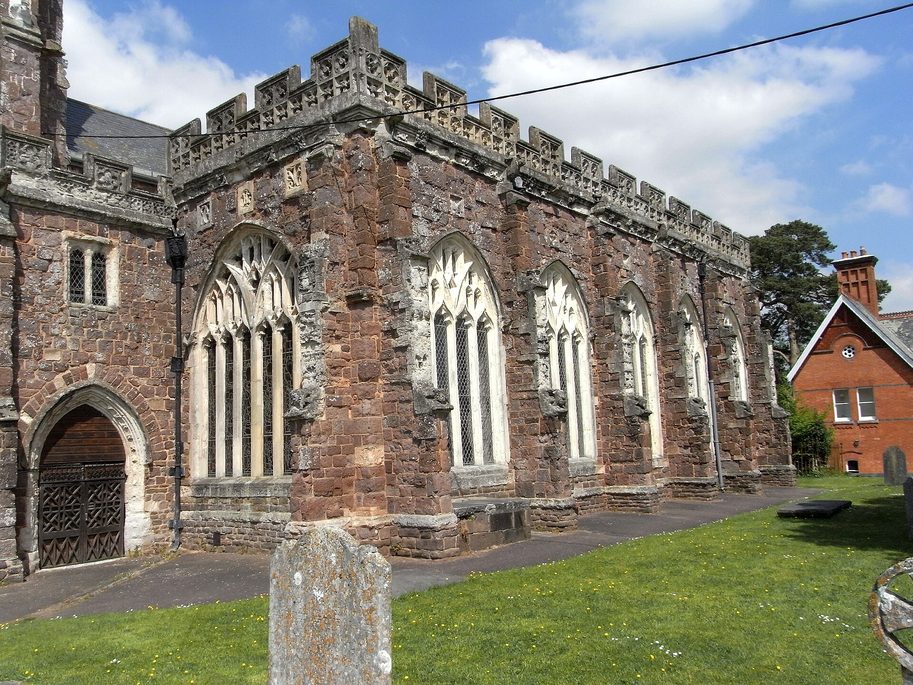
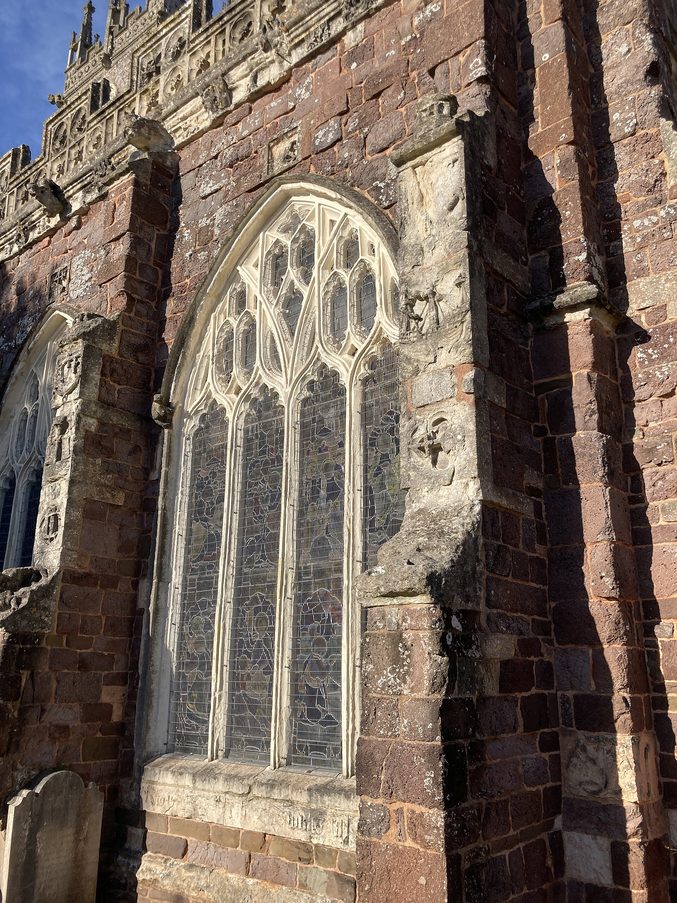
The west face of the tower has worn sculpture: a badly worn Calvary panel, identified by Historic England as flanked by St George and St Edmund, and heraldic panels. Walk round to the south side to see the Lane Aisle. Its buttresses are carved with ships, cloth shears and teasel frames, the emblems of a clothier who finished and exported cloth. Low down beneath the windows, running round three sides of the aisle, is a worn black-letter inscription of 1526 asking for prayers for John and Thomasine Lane.
The roof and the screen
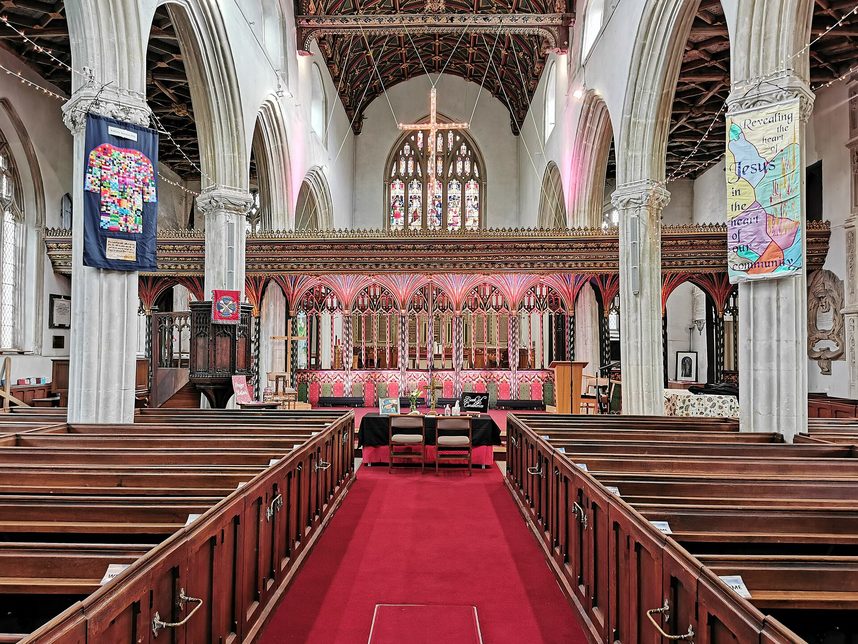
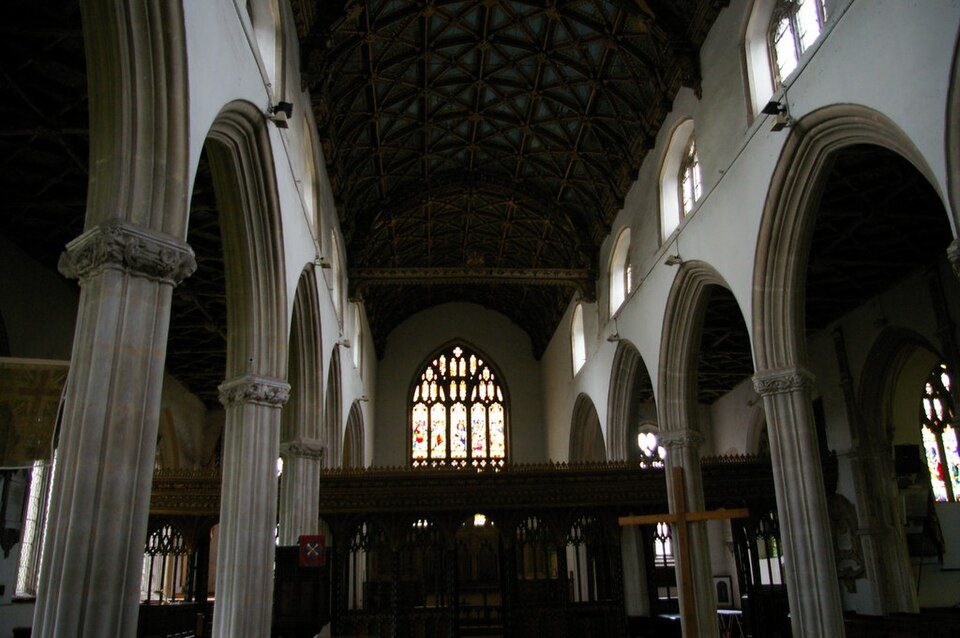
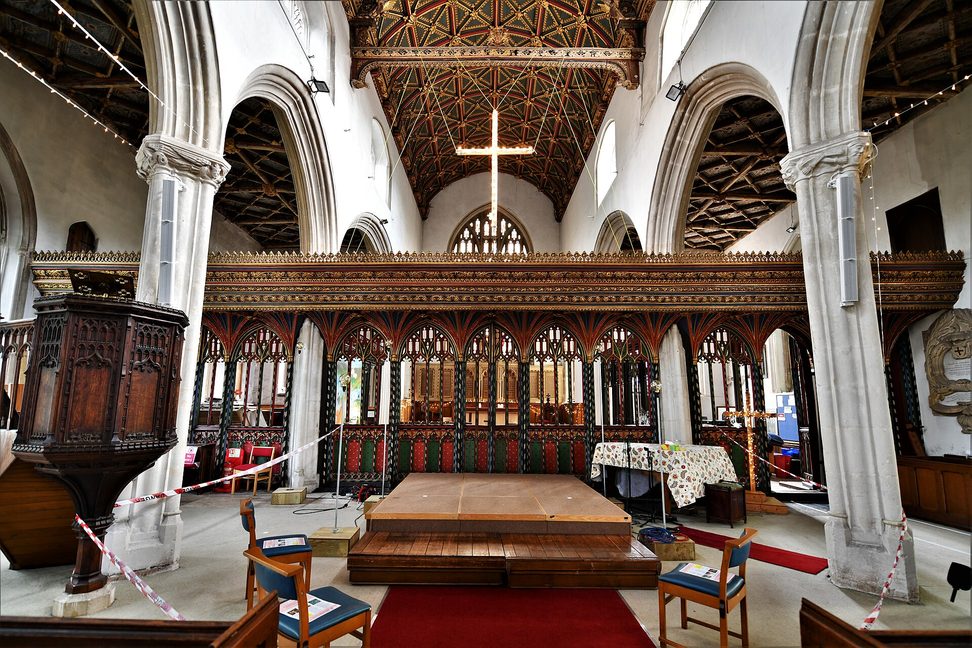
Inside, nave and chancel form one long space with no chancel arch. Above it runs the wagon roof, divided into many panels, with carved bosses, pendants and angels on small hammerbeams, painted in blue, crimson and gold. Below it a late fifteenth-century screen of eleven bays runs across the church, with tiers of carved foliage; the rood beam above it carries small half-figures of a boy and a girl.

The Lane Aisle and the Moore chapel
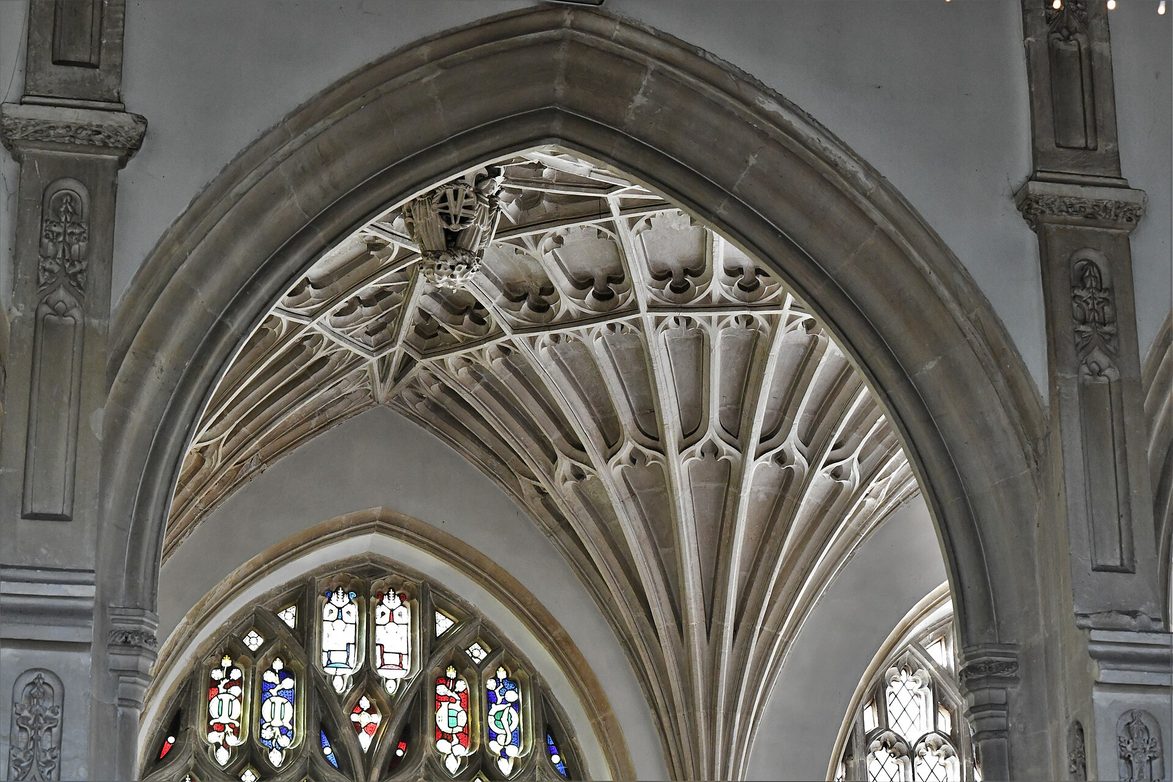
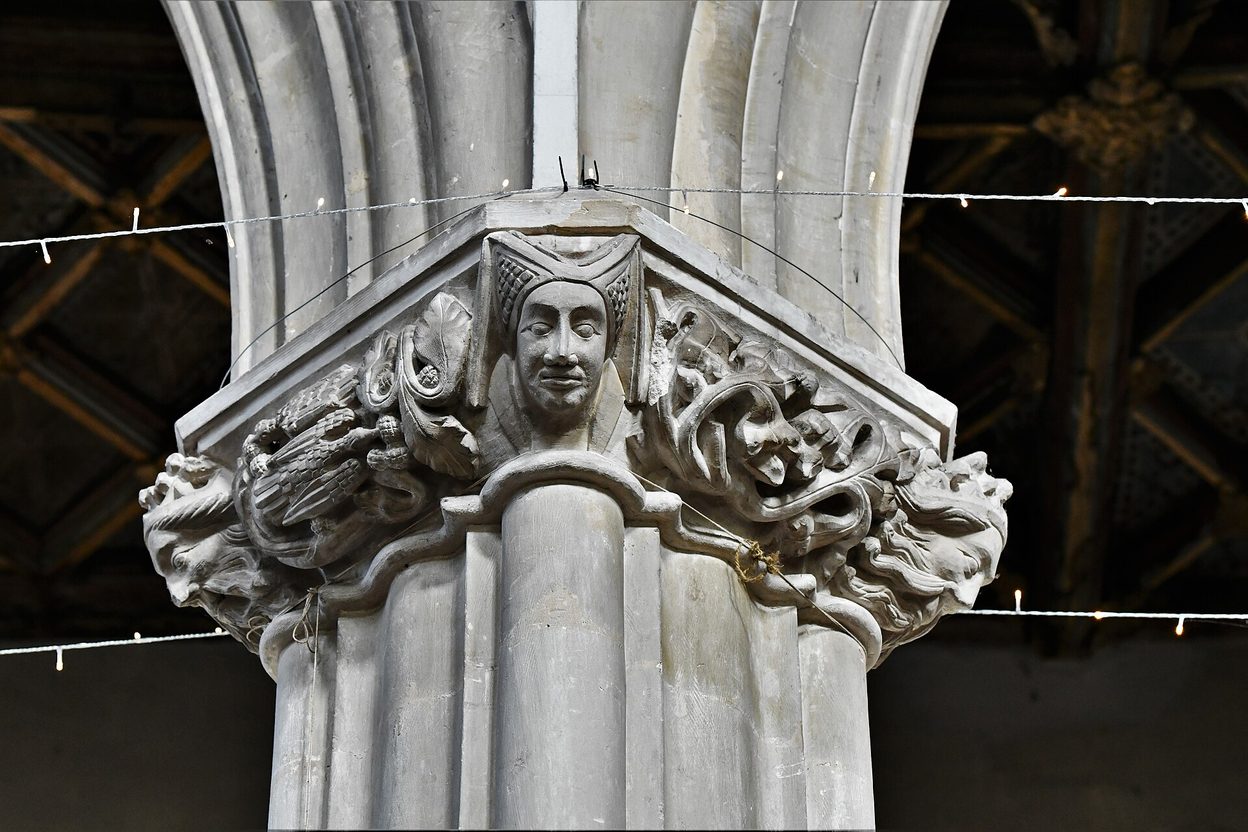
The Lane Aisle has a stone fan vault with carved bosses; Lane’s ledger stone, which has lost its brasses, is near the east end. At the east end of the north aisle is the chantry chapel of the Moore family, lords of the manor, behind a screen with sixteen shields held by angels. The arcades have capitals carved with foliage, faces and angels.
The Golgotha and the gallery
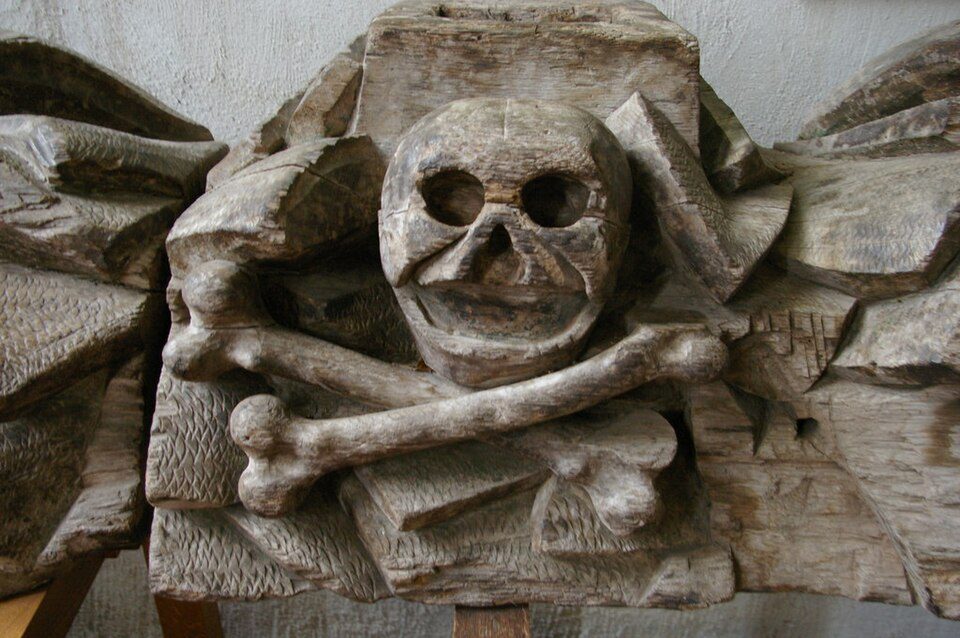
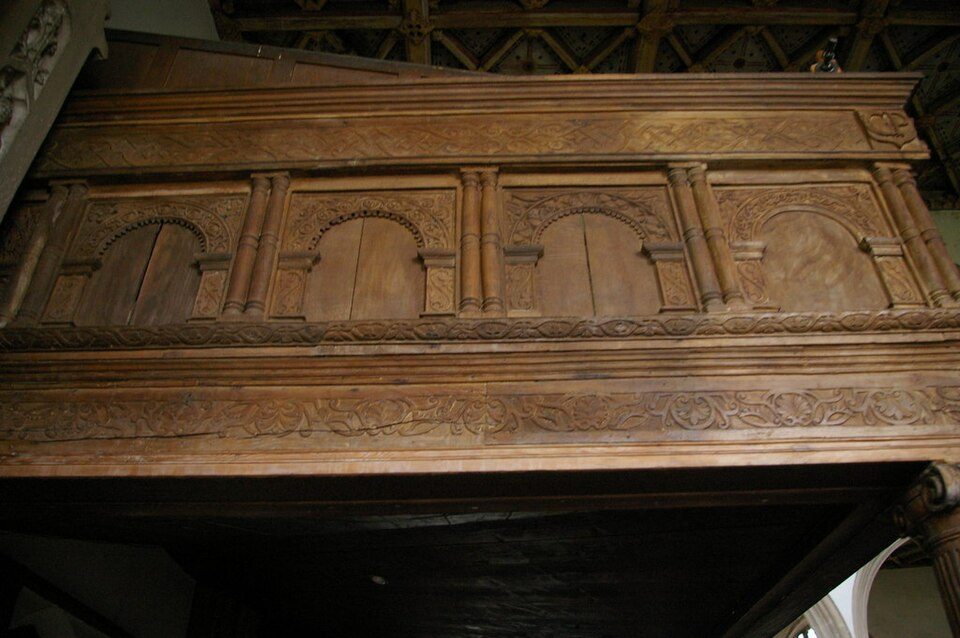
At the west end are the two blocks of the Golgotha, the carved base of the medieval rood, and above them the west gallery of 1637, carved with figures of the apostles and evangelists. In the Lane Aisle is a window by Morris and Co. of 1904, with the First World War memorial beneath it.
Getting there
Cullompton is just off junction 28 of the M5, about thirteen miles north-east of Exeter. The church is on Church Street, a short walk from the town centre; the best view of the tower is from Church Street. Tiverton Parkway is the nearest station, and buses run from Exeter and Tiverton. The town centre, a few minutes’ walk away, has cafés and pubs. The Walronds, a Grade I house of about 1605, is also in the town.
Where to stay
Exeter has the widest choice; Cullompton and Tiverton have a few hotels.
This link goes to Booking.com. This site earns nothing from it at present — it is here because it is the quickest way to check what is actually available.
Don’t miss
- The roof Blue, crimson and gold.
- The screen Eleven bays across the church.
- The Lane Aisle A fan vault, begun 1526.
- The Golgotha The base of the medieval rood.
Insider tips
Come on a weekday, before 1pm to be safe. The church is usually open only on weekdays, until 1pm or 2pm.
See Bradninch too. The church at Bradninch, about three miles away, has a screen painted with saints.
Common questions
What is the Lane Aisle?
An outer south aisle begun in 1526 by John Lane, a Cullompton clothier who died in 1528; his widow Thomasine carried on the work. It has a stone fan vault inside and carvings of the clothier’s trade outside.
What is the Golgotha?
Two great oak blocks carved as rocks with skulls and bones, which once formed the base of the medieval rood, with sockets for the cross and the figures of Mary and John. They were probably taken down around 1549 and lay in the churchyard for years; they are now at the west end of the church.
When is the church open?
Usually on weekdays: the church’s own page says normally 9am to 2pm Monday to Friday, the National Churches Trust 9am to 1pm, with other times by arrangement. It may close for weddings and funerals, so check before a special trip.
Is it free?
Yes; entry is free.
How do you get to Cullompton?
Cullompton is just off junction 28 of the M5, about thirteen miles north-east of Exeter. Tiverton Parkway is the nearest station, about five miles away.
More English churches
- Exeter Cathedral — a great unbroken Gothic vault
- Ottery St Mary — a collegiate church in east Devon
- Launcells Church — an unspoilt Cornish church
See all the cathedrals and churches worth visiting in England →