
St Swithin’s Church, Launcells
In a wooded valley near Bude, St Swithin’s at Launcells escaped the Victorian restorers, and John Betjeman is said to have called it the least spoilt church in Cornwall. Inside are carved bench ends, Georgian box pews, Barnstaple tiles, a painting of the Sacrifice of Isaac in Tudor dress and clear glass windows full of light.
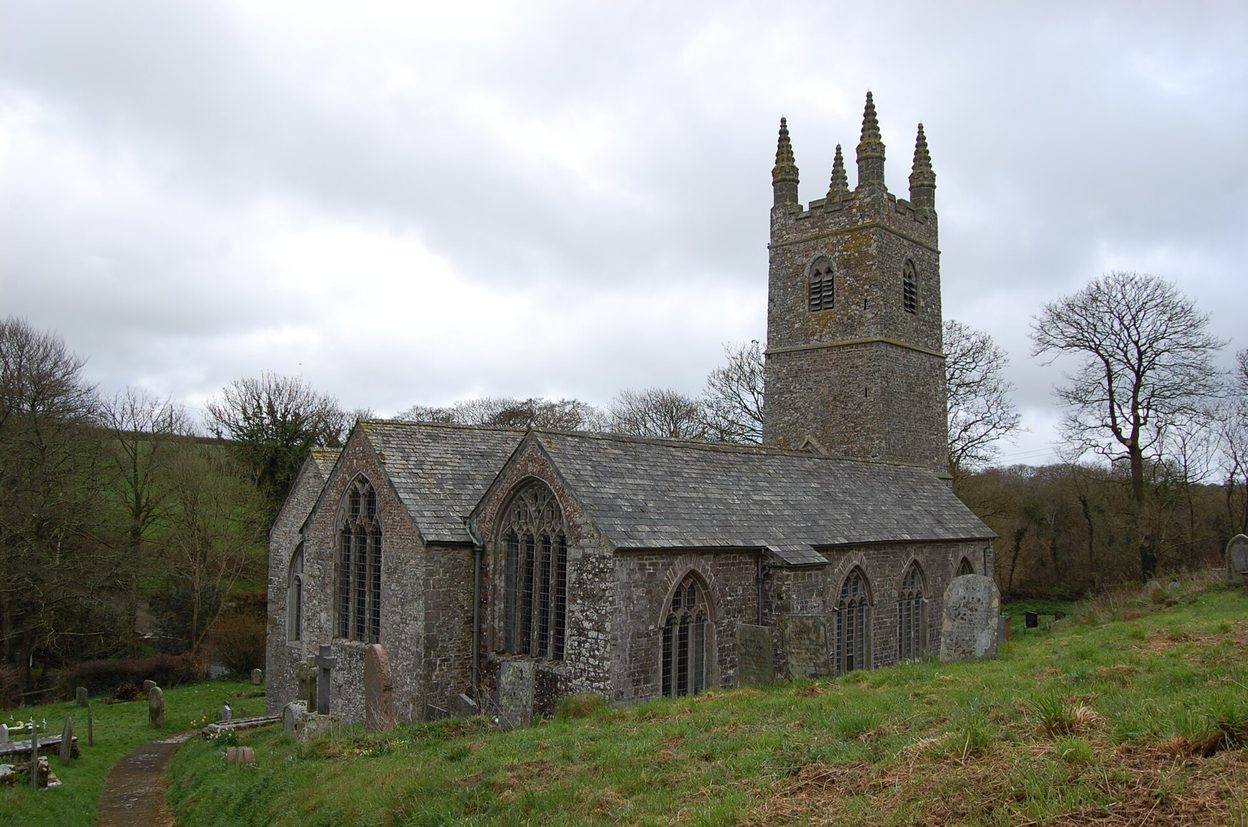
A church that escaped the restorers
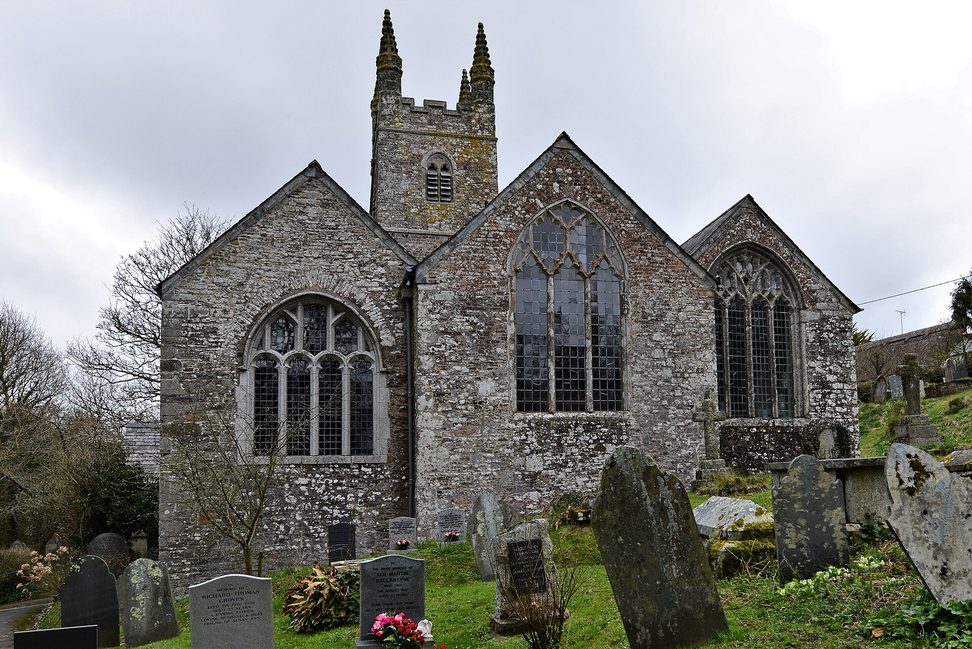
In the Middle Ages the church belonged to Hartland Abbey in Devon, to which it was granted in the early twelfth century; in 1321 it was rededicated from St Andrew to St Swithin. The building is mainly of the late fifteenth century, of stone rubble with granite dressings, with a fourteenth-century south doorway and a three-stage tower of the sixteenth century. Unlike many Cornish churches it escaped heavy Victorian restoration, so its interior keeps furnishings from several centuries. It is listed Grade I.
The Chamond family bought the neighbouring manor house, Launcells Barton, in 1553; it was enlarged in 1765–77 by Sir John Call, who gave the church its marble Commandment tablets. The house is a private farm.
The visitor’s cheat sheet
| Where | Launcells, Bude, Cornwall EX23 9NQ; off the A3072 east of Stratton |
|---|---|
| Opening hours | Usually open daily (listed as always open, or 10am until dusk) |
| Admission | Free |
| Services | Sunday service at 11.15am on the first, second and fourth Sundays; Taizé at 6pm on the third Sunday |
| Access | Not described by the church; ask if you need step-free access |
| Parking | By the church |
| How long | Three-quarters of an hour |
Hours and admission checked against the official site in November 2026. They change; the official site is always the last word.
What to see
The porch and the roofs
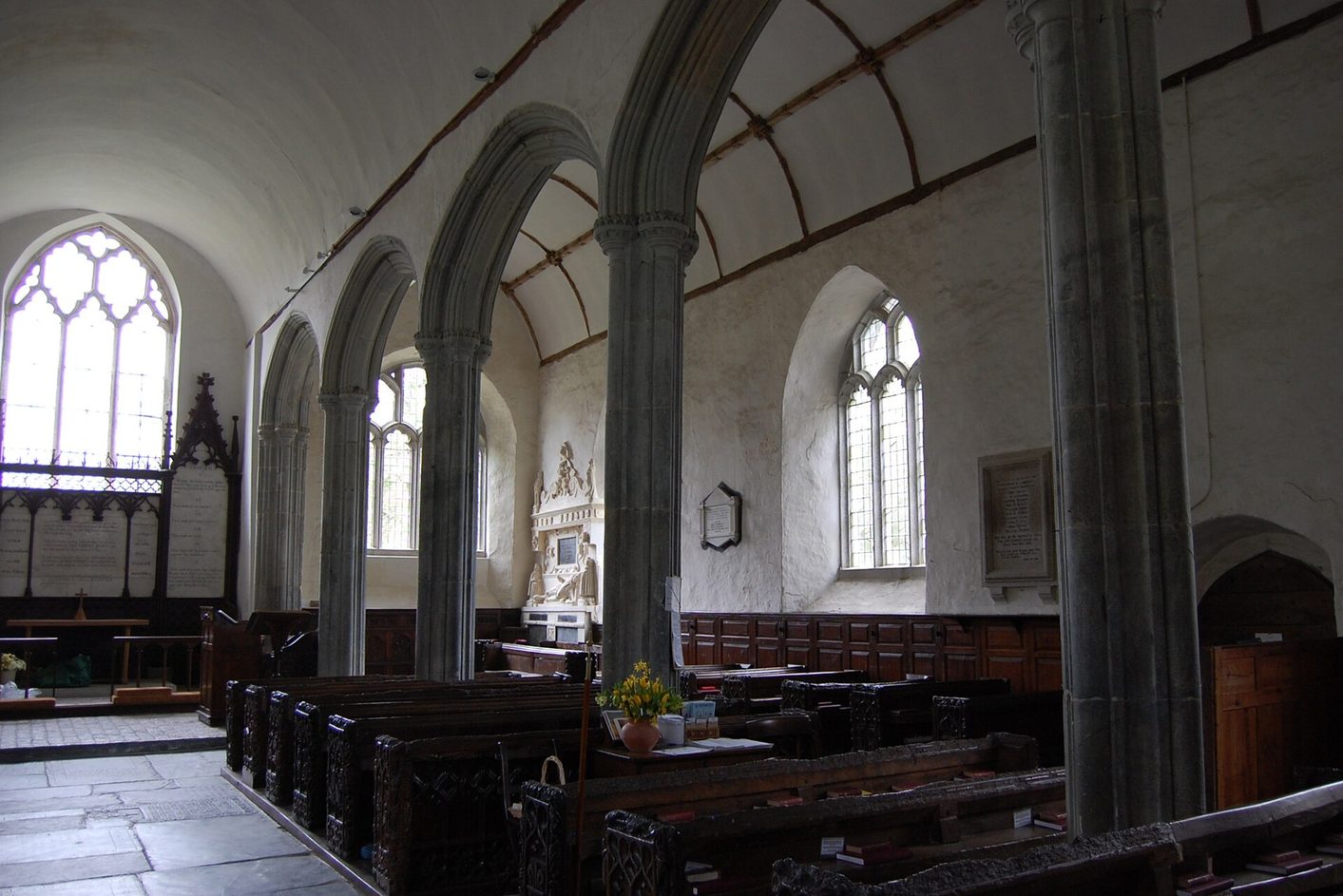
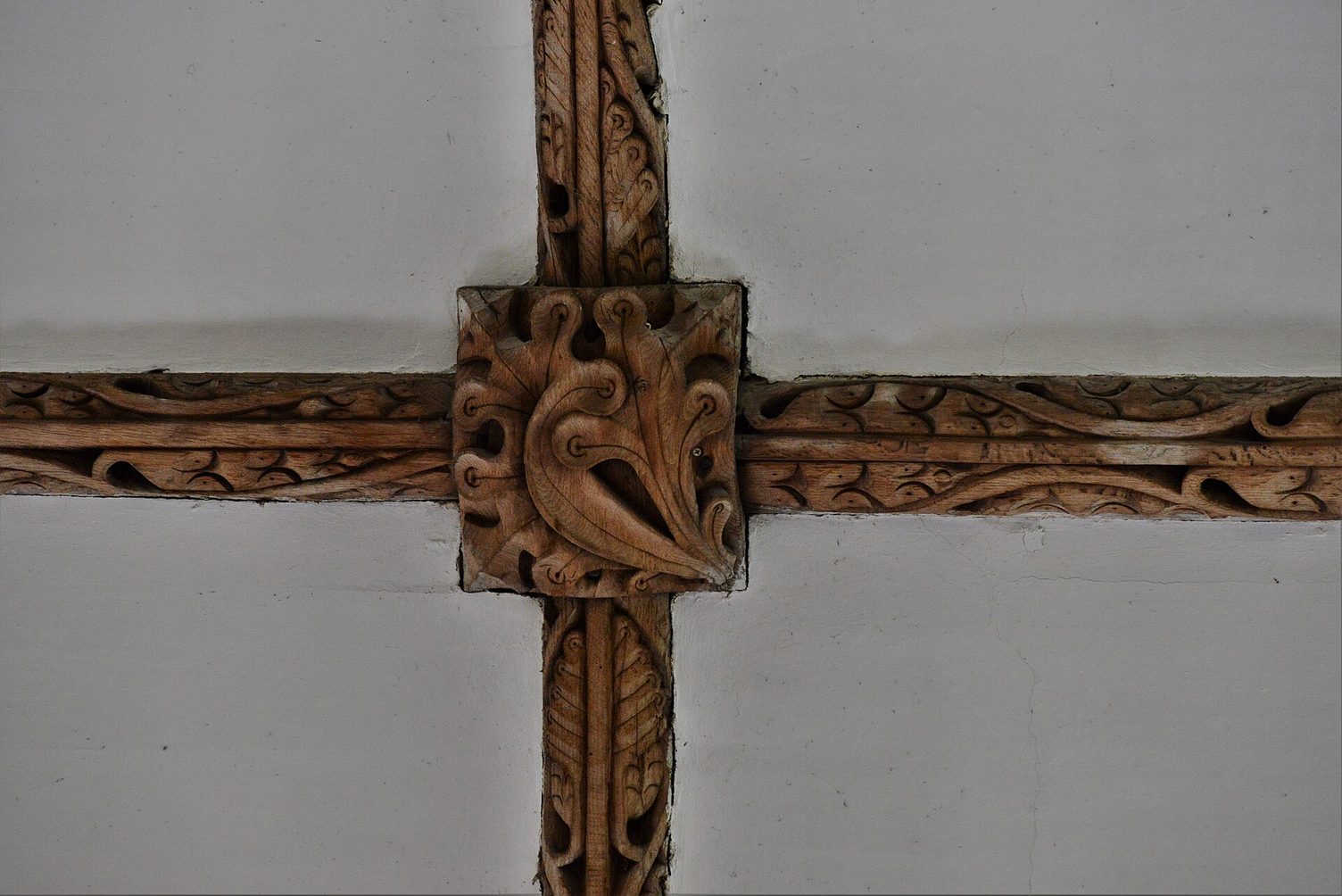
The south porch has stone benches, a holy-water stoup and an old door with its original ironwork. Inside, the light comes through clear glass onto plastered walls and slate floor slabs. The two arcades are of different stones, granite on one side, and the fifteenth-century aisle roofs have carved ribs and bosses, the north aisle’s with foliage and the Grenville arms.
The wall paintings
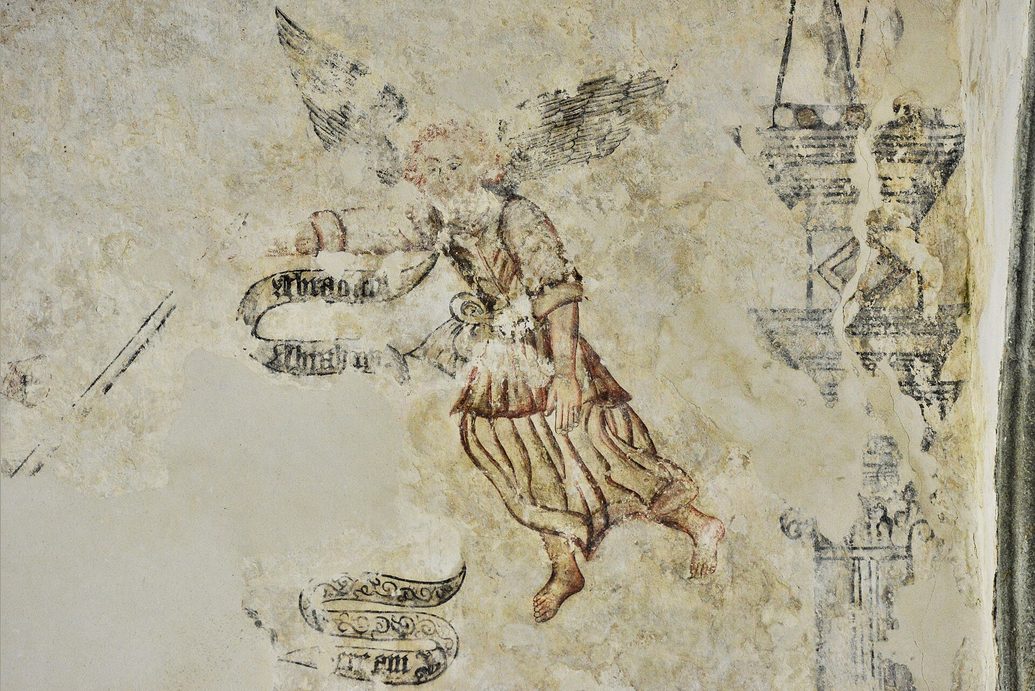
On the west wall of the south aisle is a large painting of the Sacrifice of Isaac, with Abraham and Isaac in dress usually described as Tudor and angels above a ram caught in a thicket; it has been conserved. On the north wall a painted text is said to be based on Charles I’s letter of thanks to the Cornish in 1643, and patches of other paintings show through the plaster.
The woodwork
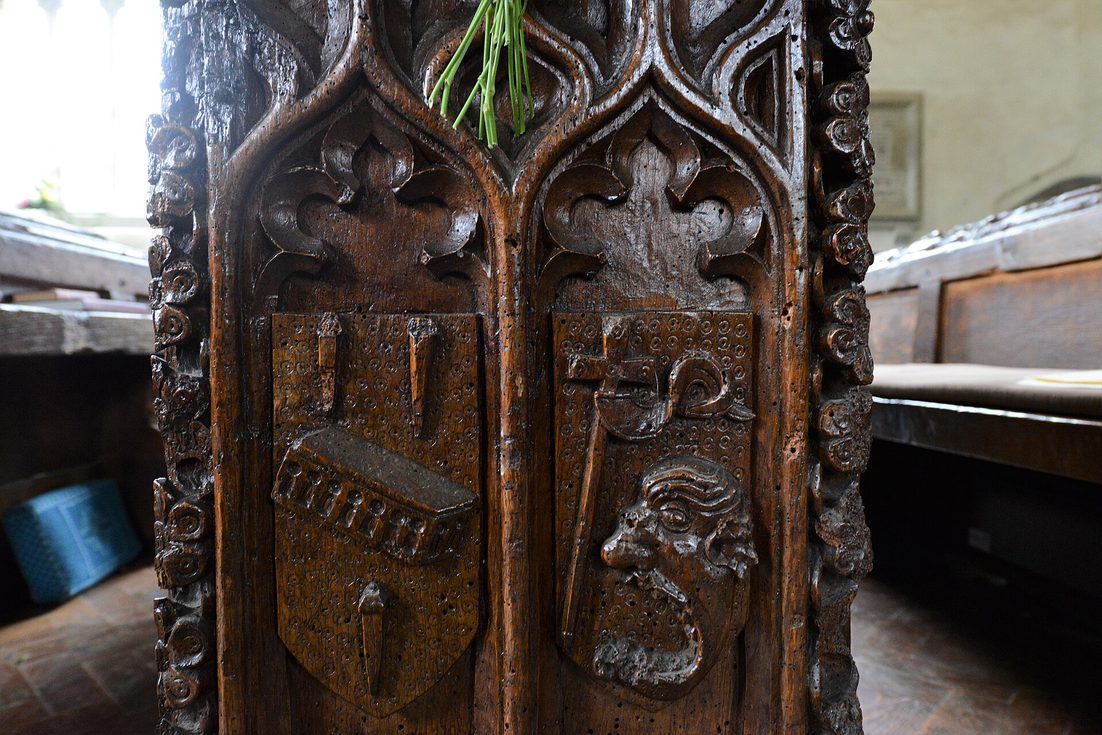
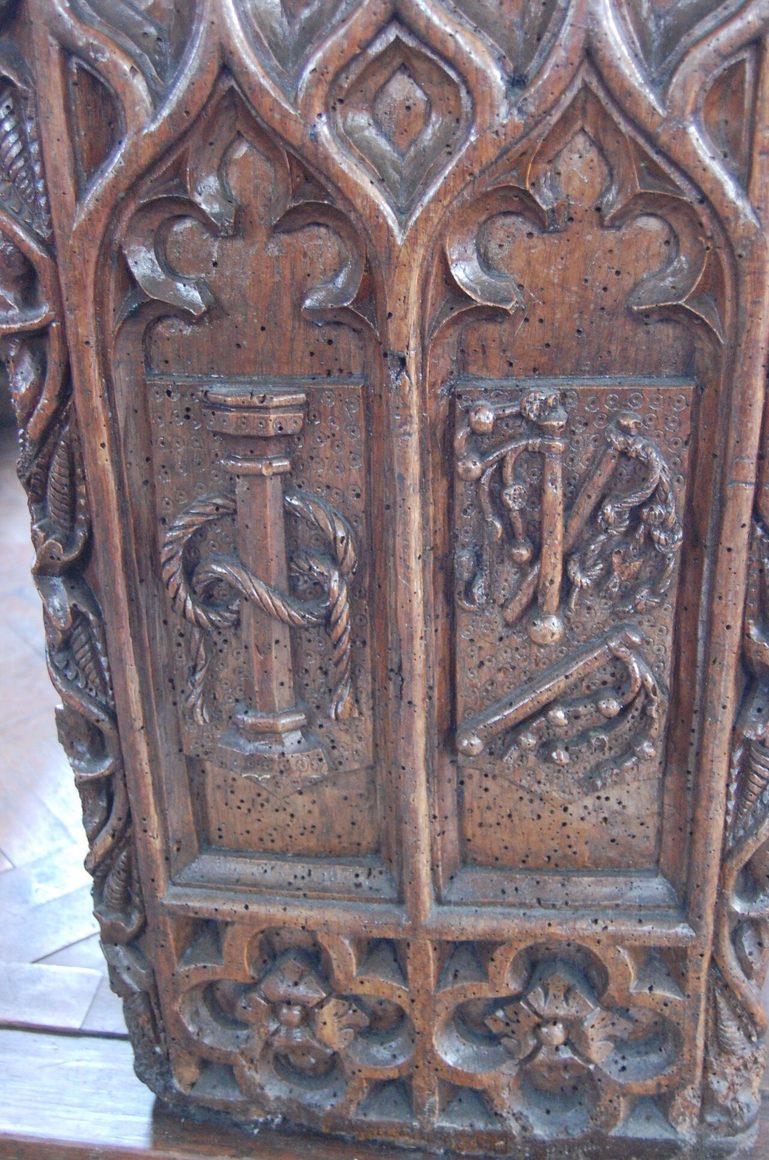
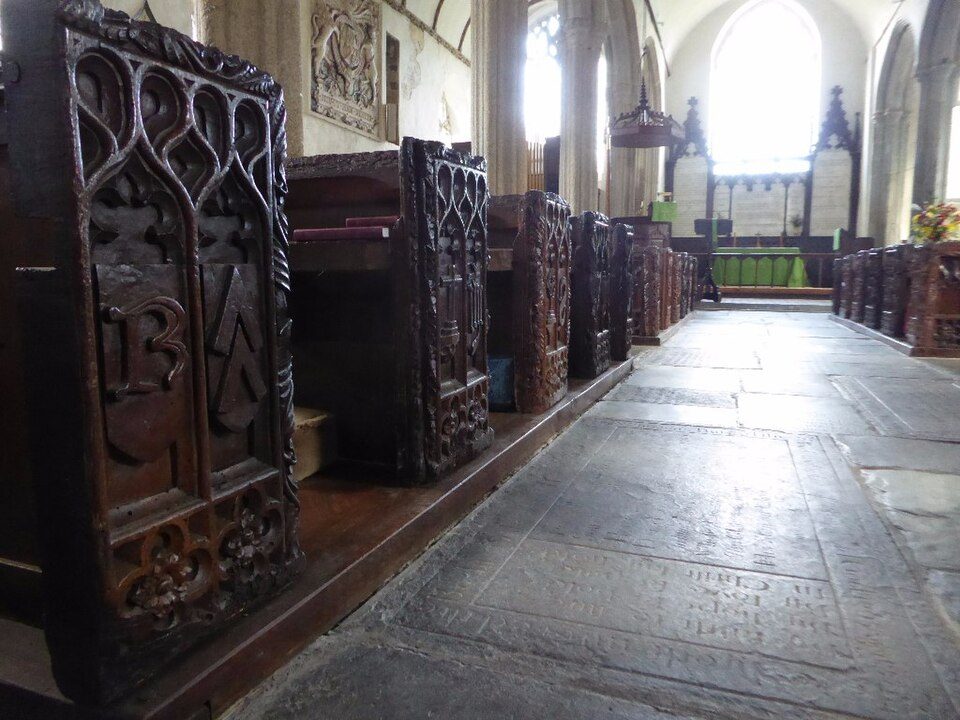
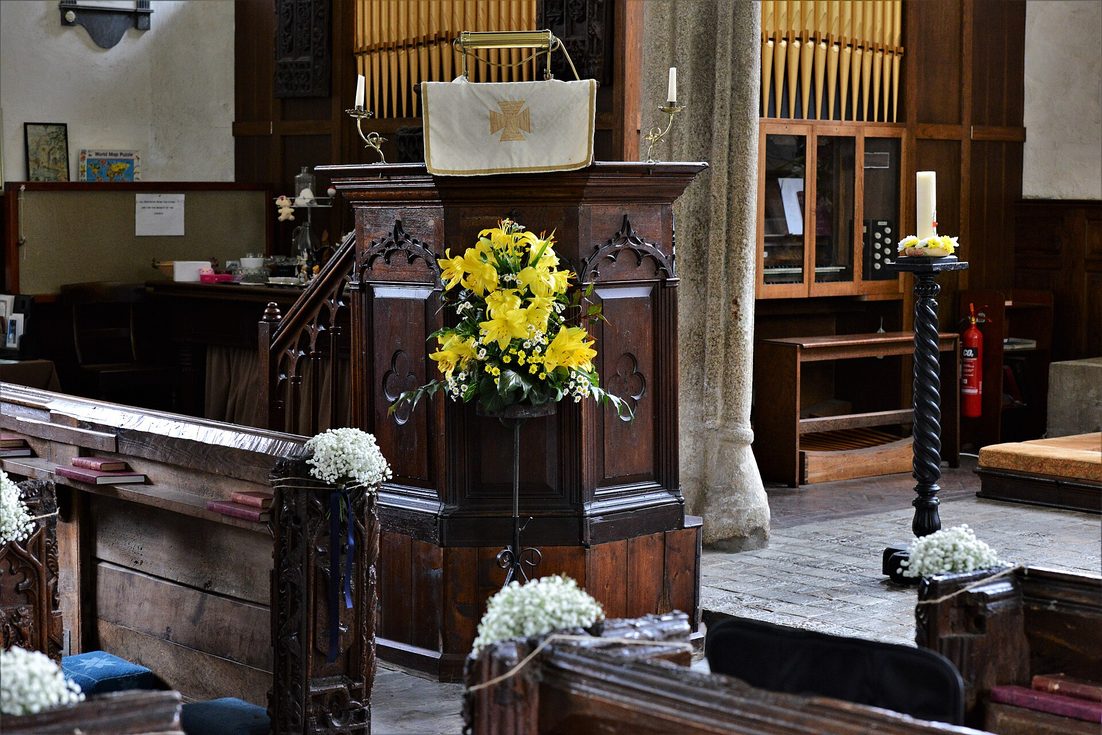
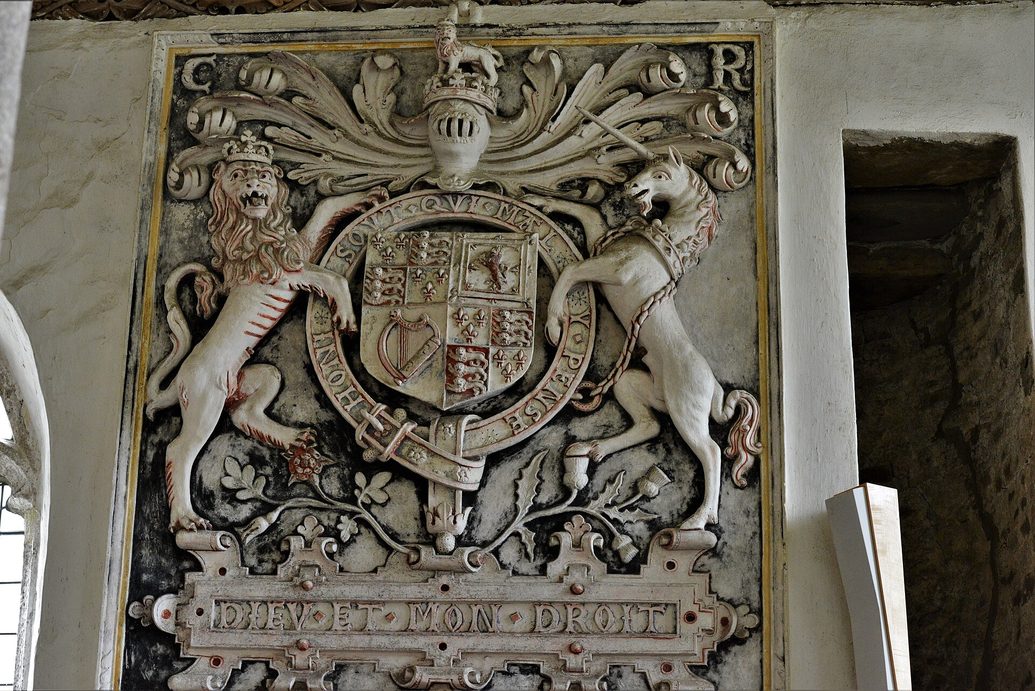
The carved bench ends of the sixteenth century, which are said to resemble those at Kilkhampton, show symbols of the Passion, the Lamb of God, initials and the Grenville arms. In the north aisle are Georgian box pews, and the pulpit of about 1800 has Gothick tracery and a matching tester. The large Royal Arms of Charles II are attributed to Michael Chuke, the local carver.
The chancel, monument and font
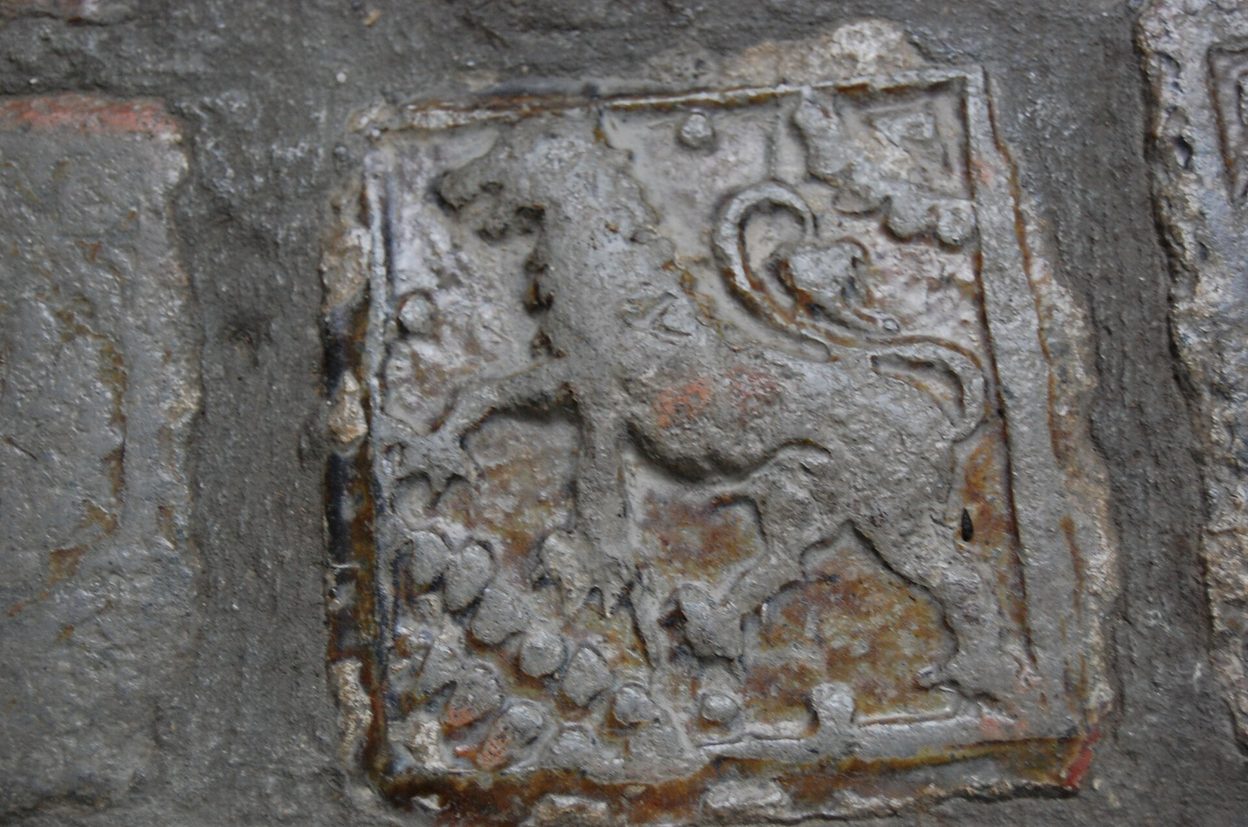
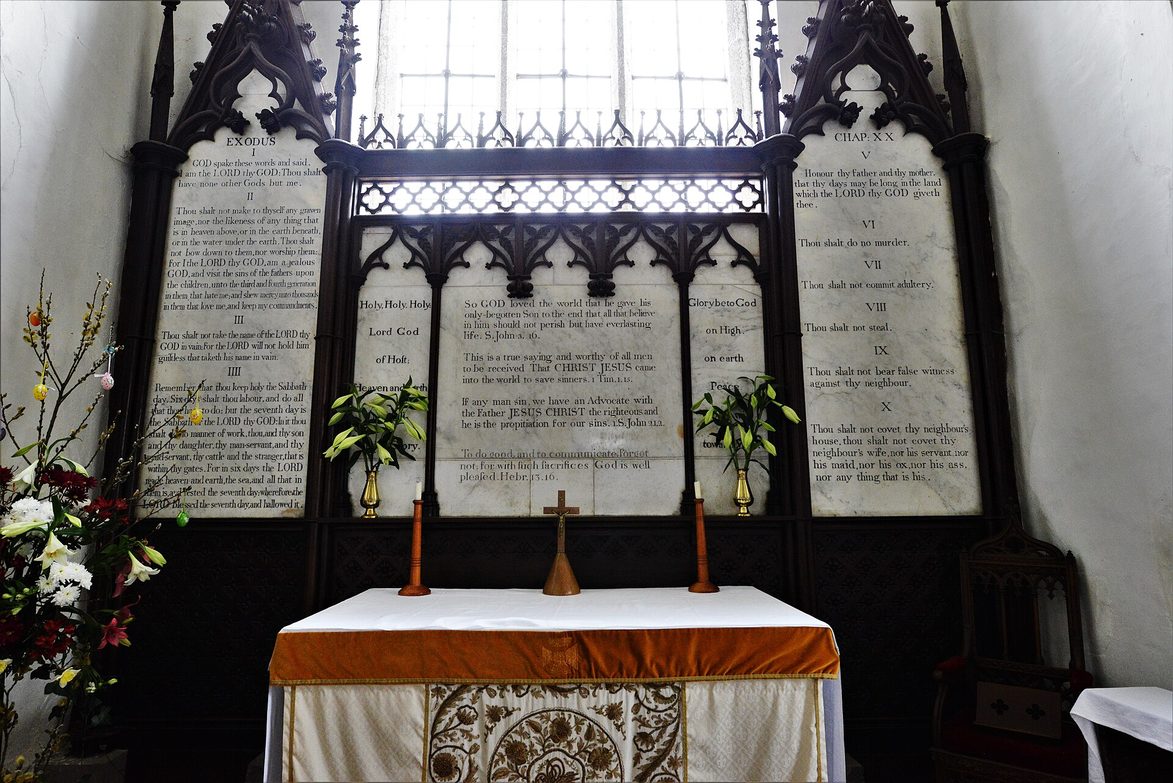
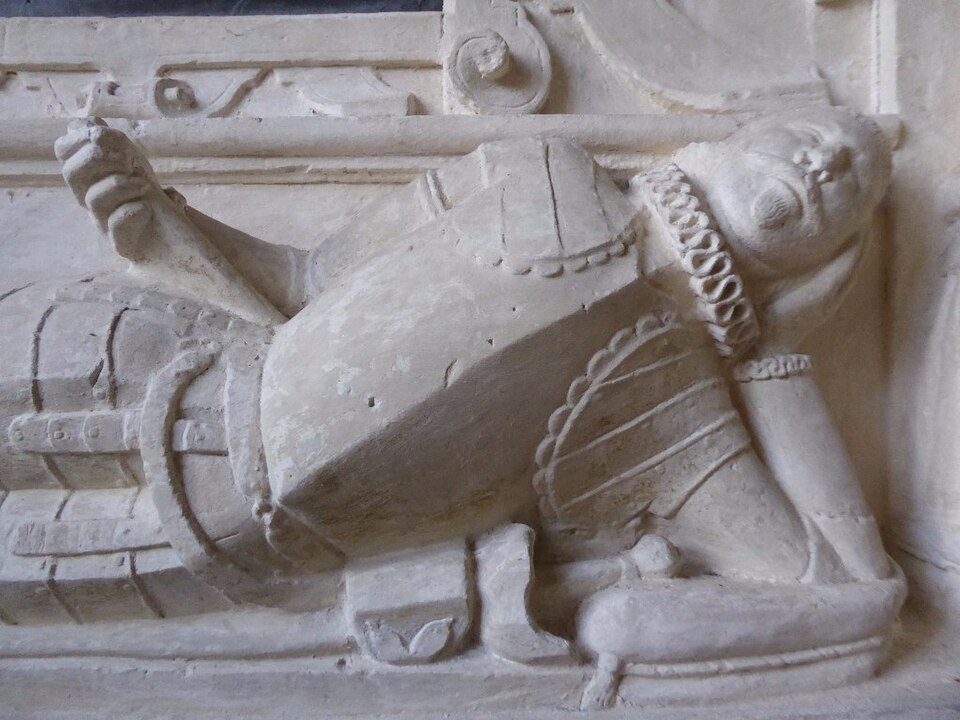
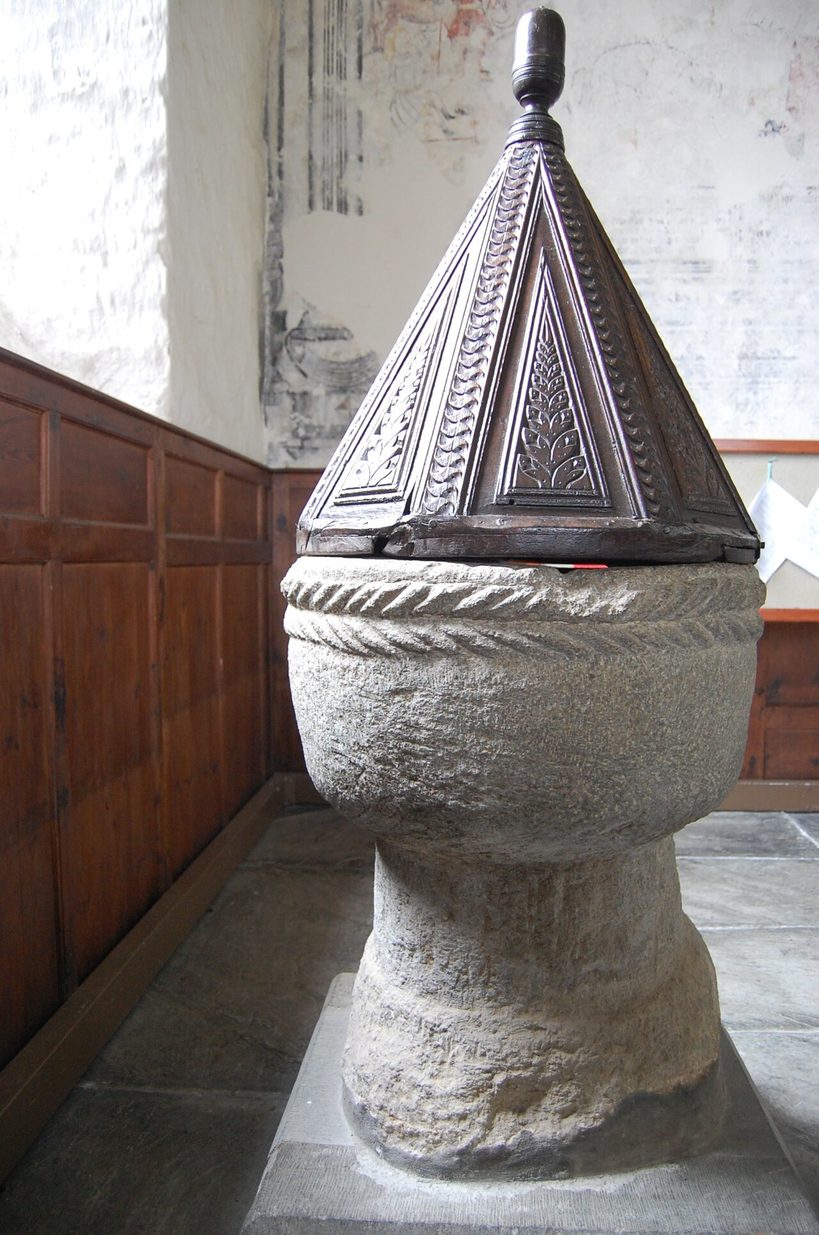
The chancel has Barnstaple relief tiles of pelicans, lions, Tudor roses and fleurs-de-lys. On the east wall are the marble Commandment and Communion tablets given by Sir John Call. In the south aisle is the monument to Sir John Chamond, who died in 1624, with an effigy in armour and a Latin anagram on his name. The font is Norman, of the twelfth century, with a cable moulding.
The churchyard and the well
A gravestone said to be the oldest, dated 1574, is by the south porch, and the inventor Sir Goldsworthy Gurney is buried in the churchyard, reportedly close to it. St Swithin’s holy well is a few steps from the churchyard, under an iron grate.
Getting there
Launcells is just off the A3072 between Stratton and Holsworthy, about three miles east of Bude. The church is in a quiet wooded valley by a stream, with parking by the church. The nearest bus stop, opposite the garden centre on the main road, is a short walk away, but very few buses call, so a car is the practical way to come. No toilets or café are listed at the church; Stratton and Bude have both. Stratton, with its own medieval church and the site of a Civil War battle of 1643, is just over a mile away.
Where to stay
Bude, about three miles away, has the most places to stay; Holsworthy, further inland, is another option.
This link goes to Booking.com. This site earns nothing from it at present — it is here because it is the quickest way to check what is actually available.
Don’t miss
- The wall painting The Sacrifice of Isaac.
- The bench ends Sixteenth-century carving.
- The tiles Barnstaple relief tiles.
- The light Clear glass windows.
Insider tips
Combine with Kilkhampton. Kilkhampton church, with a large set of carved bench ends in a similar style, is a few miles to the north.
Find the holy well. Look for the iron grate just outside the churchyard.
Common questions
Why is Launcells church special?
Because it was never heavily restored in the nineteenth century, so it keeps its old woodwork, clear glass, tiles, plaster and wall paintings. Betjeman is quoted as calling it the least spoilt church in Cornwall.
What is the wall painting?
A large painting of the Sacrifice of Isaac on the west wall of the south aisle, with Abraham and Isaac in dress usually described as Tudor and a ram caught in a thicket.
What are the tiles?
Glazed relief tiles made at Barnstaple, with designs including a pelican, a lion, a Tudor rose and a profile head, in the chancel. Their date is given variously from about 1400 to the sixteenth century.
When is it open?
The church’s own listing says it is always open; the National Churches Trust gives 10am until dusk.
Who is buried in the churchyard?
Sir Goldsworthy Gurney (1793–1875), inventor of the steam carriage and the Bude Light, who lived at Bude; his grave is reported to be close to the south porch.
More English churches
- Altarnun Church — the Cathedral of the Moor
- Blisland Church — a jewel on Bodmin Moor
- Truro Cathedral — the cathedral of Cornwall
See all the cathedrals and churches worth visiting in England →