
St Mary the Virgin, Stoke-sub-Hamdon
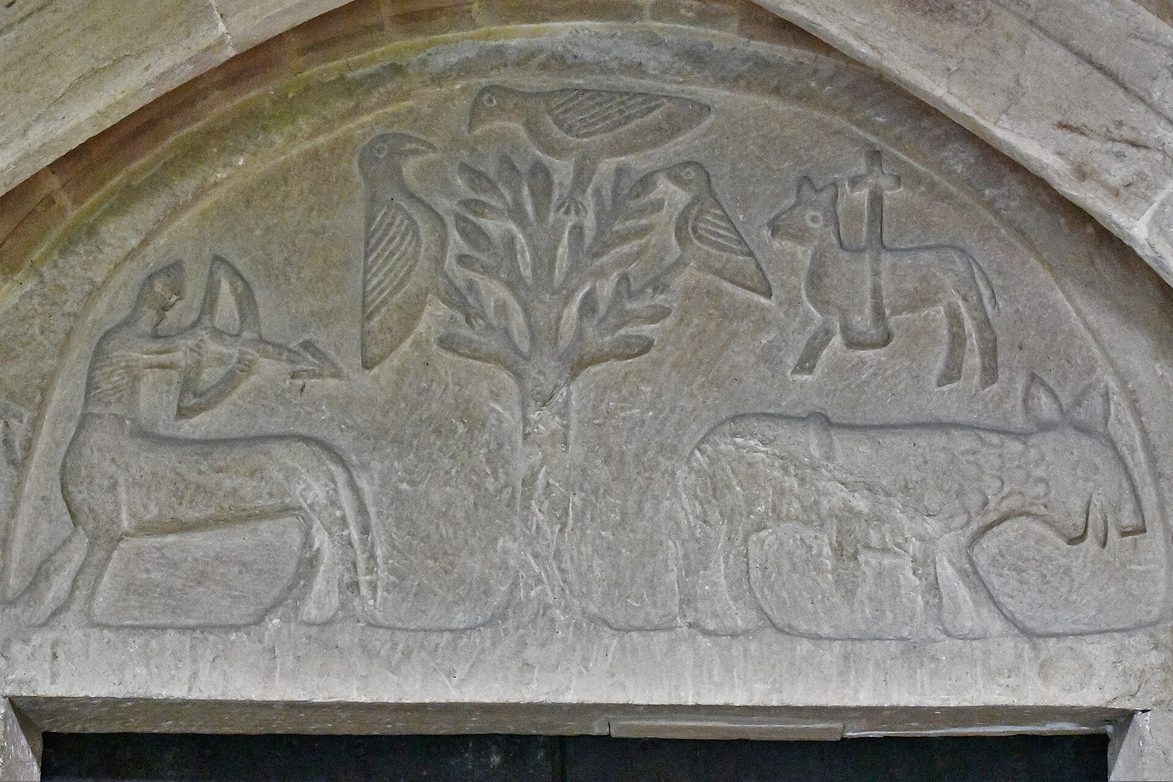
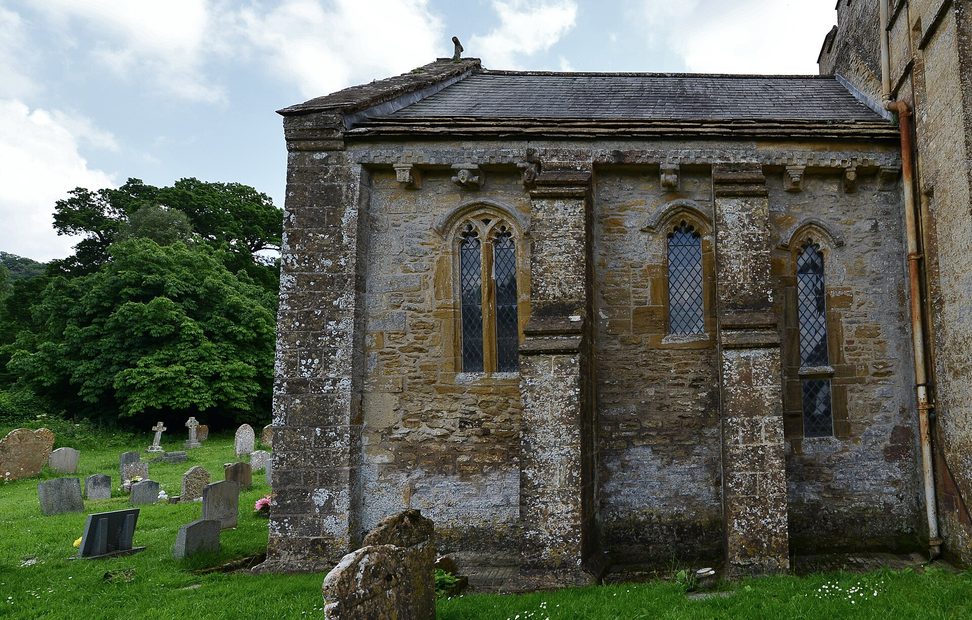
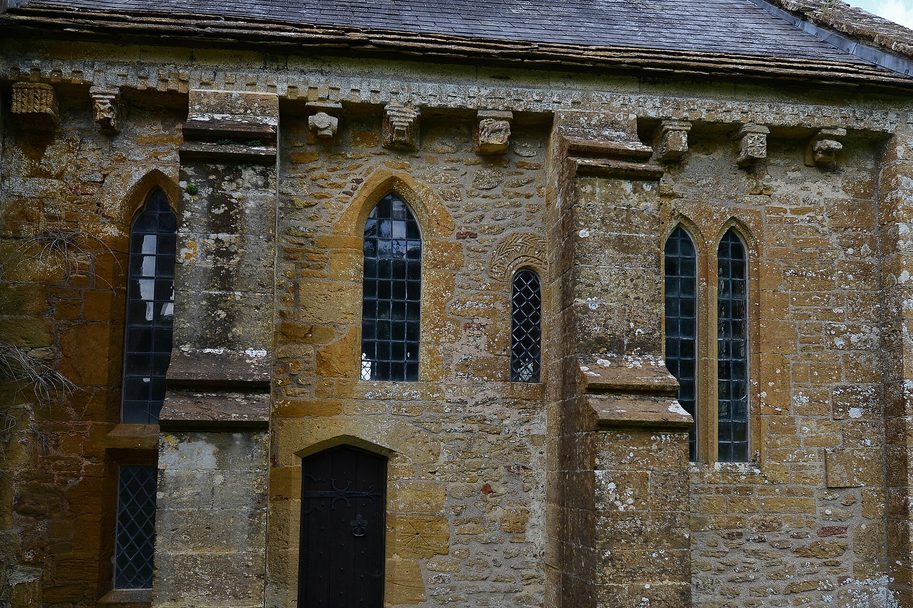
Below Ham Hill in south Somerset, the church of St Mary the Virgin at Stoke-sub-Hamdon is built of the golden stone quarried on the hill. It keeps a Norman chancel and chancel arch, a carved tympanum where a centaur labelled as Sagittarius shoots at a beast labelled Leo, and a corbel table of strange carved heads and figures.
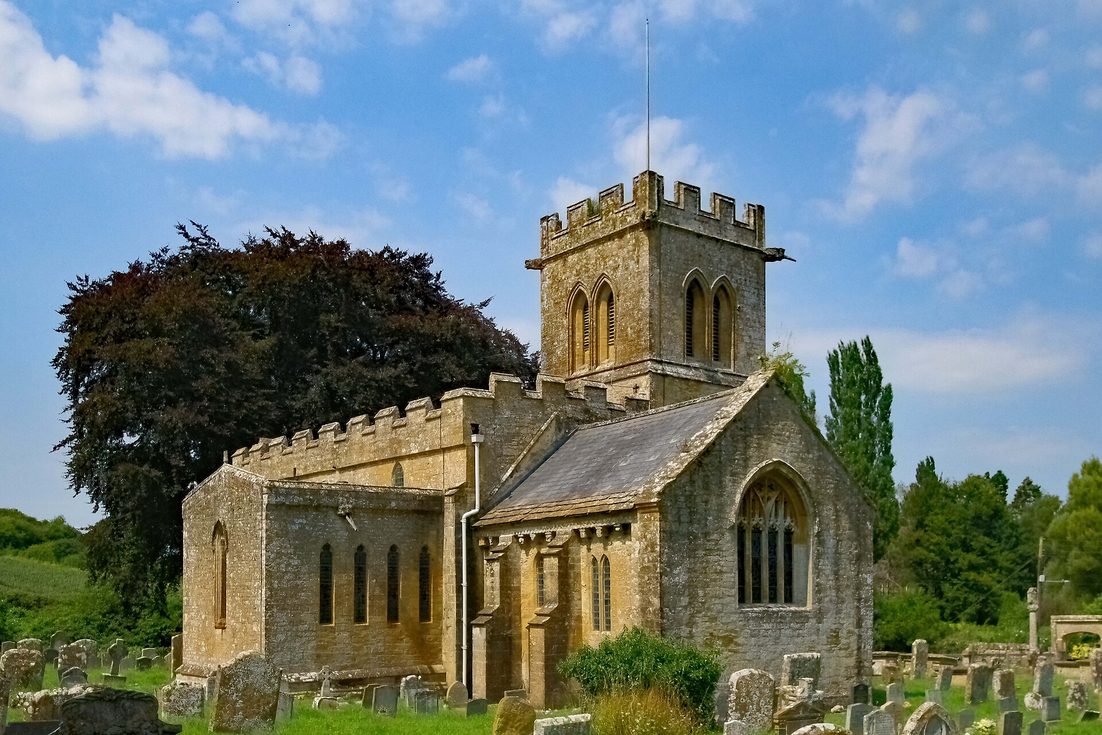
A Norman church of Ham stone
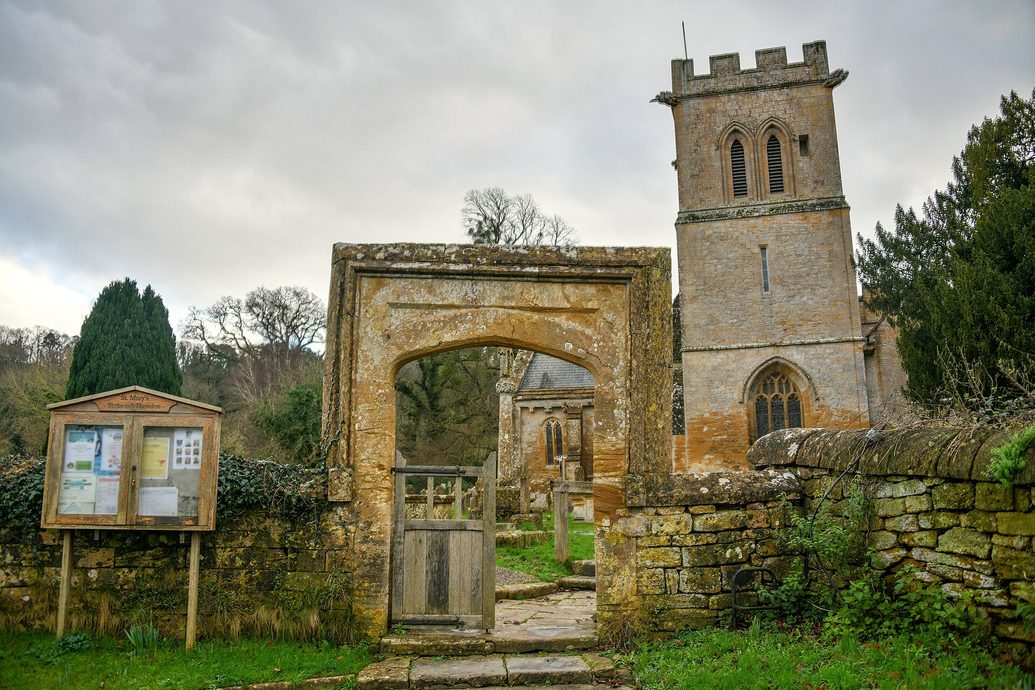
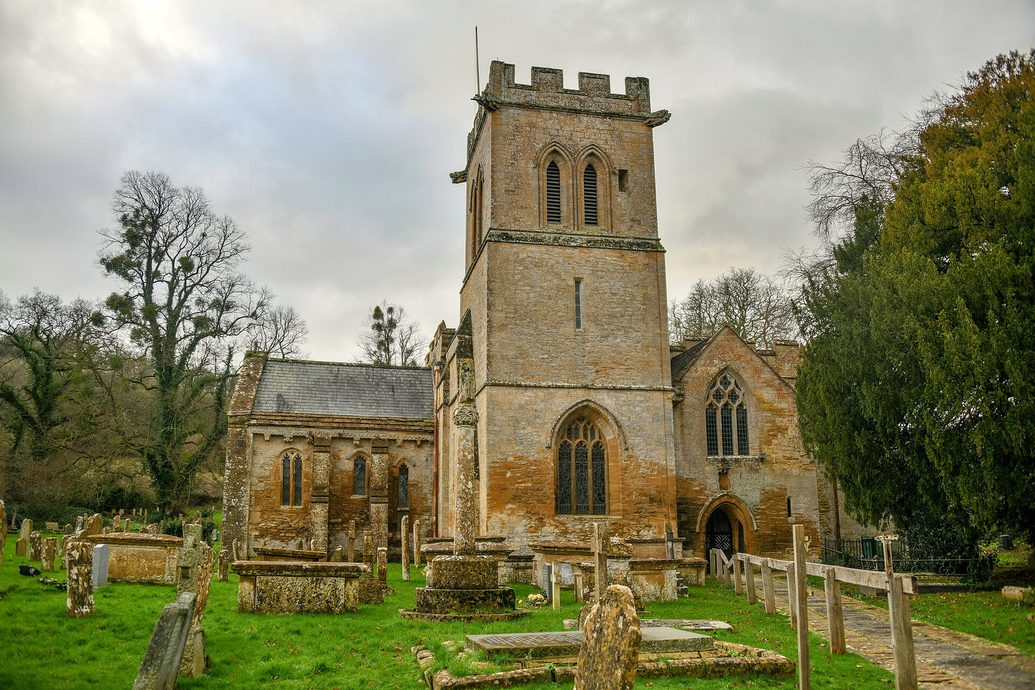
The church stands in East Stoke, the eastern hamlet of the parish, below Ham Hill, whose golden limestone has been quarried since Roman times. The nave and chancel are Norman, of the twelfth century, though the chancel east window and parapets are later. About 1200 the north transept was built as the base of a tower; the upper tower followed in the thirteenth century and the battlements in the fifteenth. The south transept was added about 1300 and the north porch about 1325. The church was restored in the nineteenth century and is listed Grade I. The manor of Stoke Beauchamp passed to the Duchy of Cornwall in the fifteenth century.
The visitor’s cheat sheet
| Where | Church Lane, East Stoke, Stoke-sub-Hamdon, Somerset TA14 6UF |
|---|---|
| Opening hours | Daily 9am–4pm, except during services (per the parish) |
| Admission | Free |
| Services | Holy Communion on the second Sunday at 11am; Morning Praise on the third Sunday at 11am; BCP Communion on the second and fourth Wednesdays at 9am |
| Access | Three steps and a paved path with a handrail; a step from the porch into the church; ramps on request; hearing loop |
| Parking | Roadside parking in East Stoke |
| How long | Three-quarters of an hour |
Hours and admission checked against the official site in November 2026. They change; the official site is always the last word.
What to see
The tympanum
Inside the north porch, over the twelfth-century doorway with its carved shafts, is the tympanum: a tree of life with three birds, a centaur labelled SAGITARIUS (so spelt) aiming an arrow at a beast labelled LEO, and the Lamb of God above the beast. It was hidden under plaster until the nineteenth century.
The corbels and carvings outside
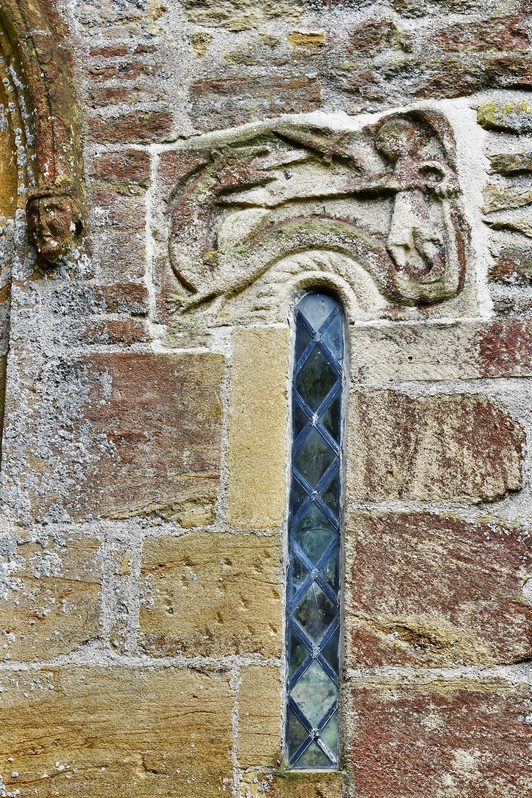
Round the chancel runs a Norman corbel table. On the north side, counting from the east, are an ear of corn, a severed head between two drinking horns, and a sheela-na-gig (a female figure carved with exposed genitals); on the south side is a leaping hare. On the north wall of the nave, above a small Norman window, a carving shows a figure fighting a dragon, taken by Historic England as St George but by others as St Michael. Later carvings include grotesques at the corners of the tower and a second sheela-na-gig, of gargoyle type, on the south side of the nave.
Inside
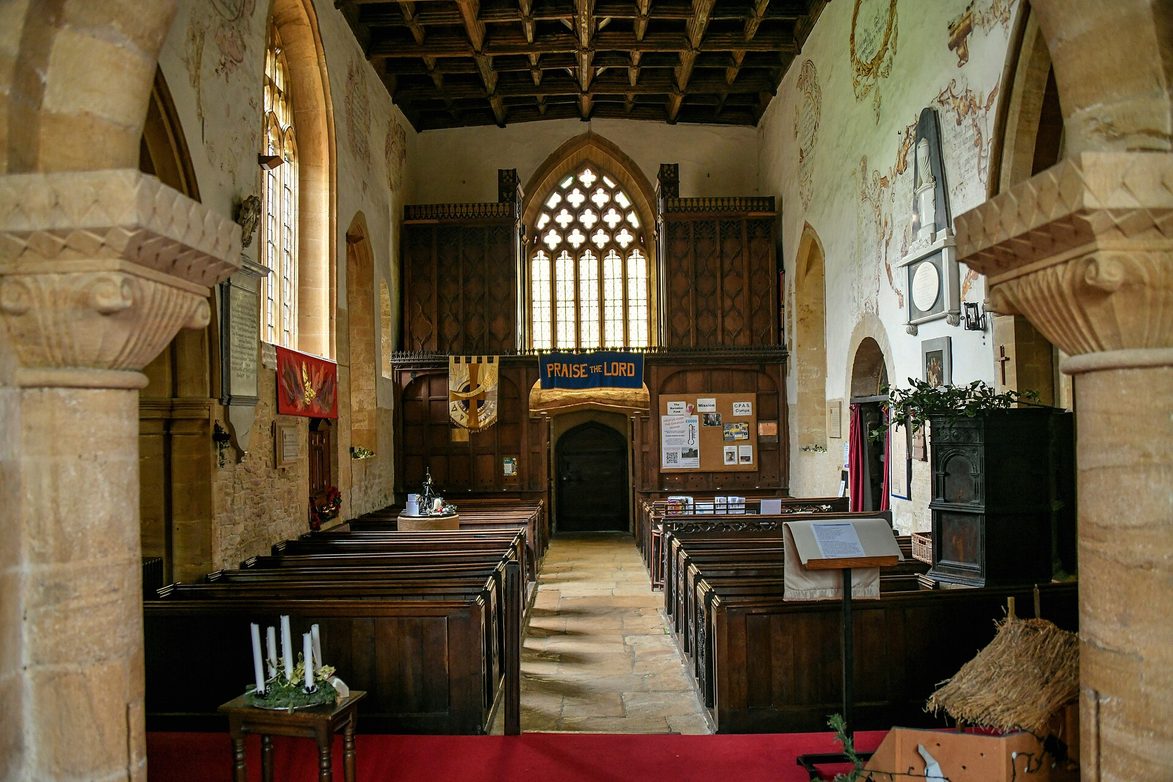
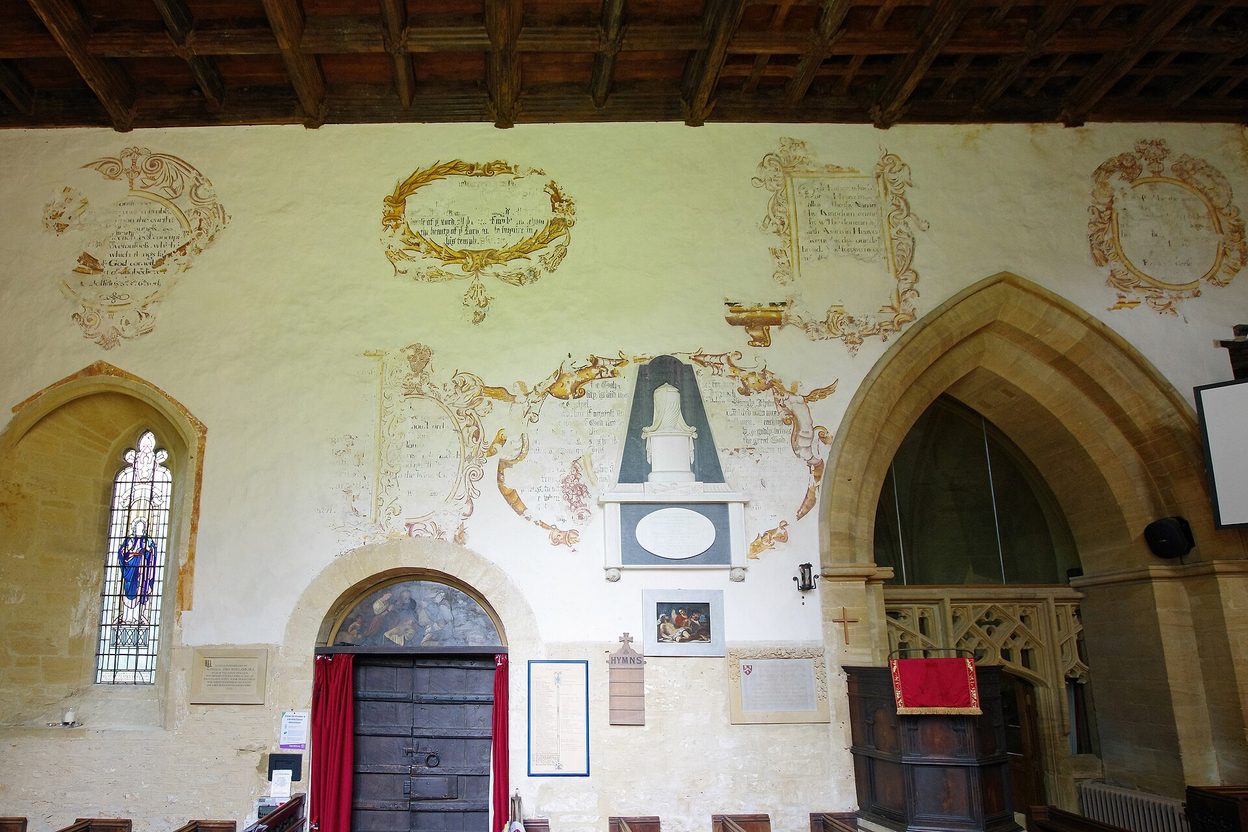
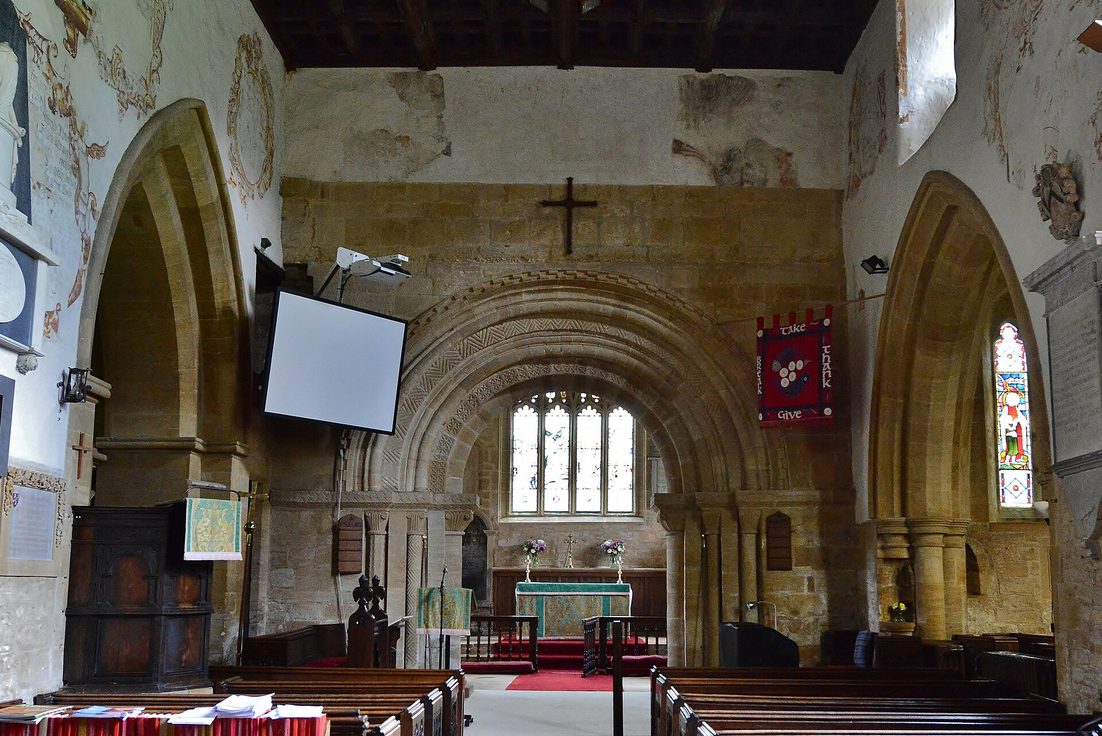
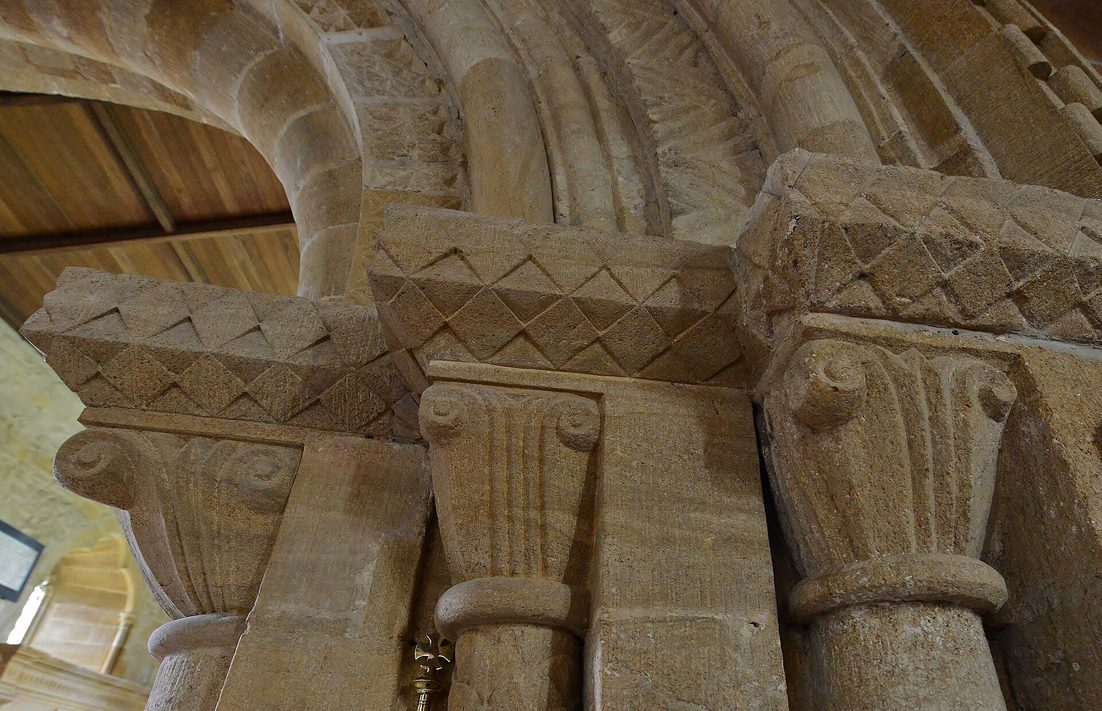
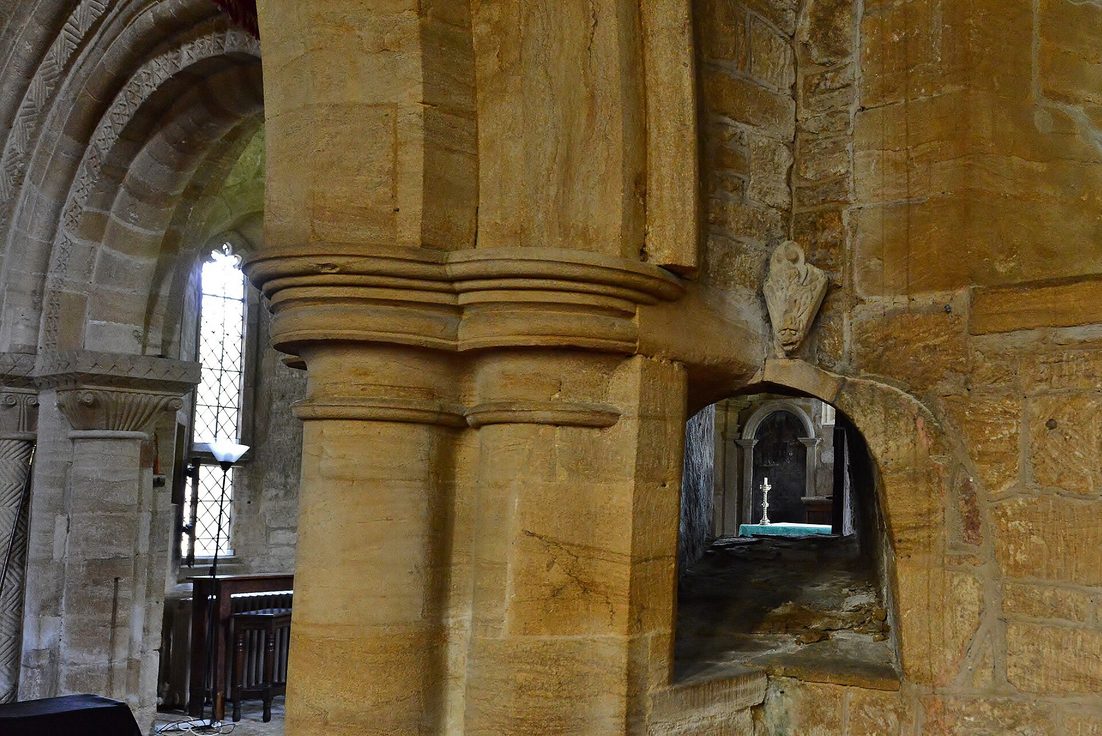
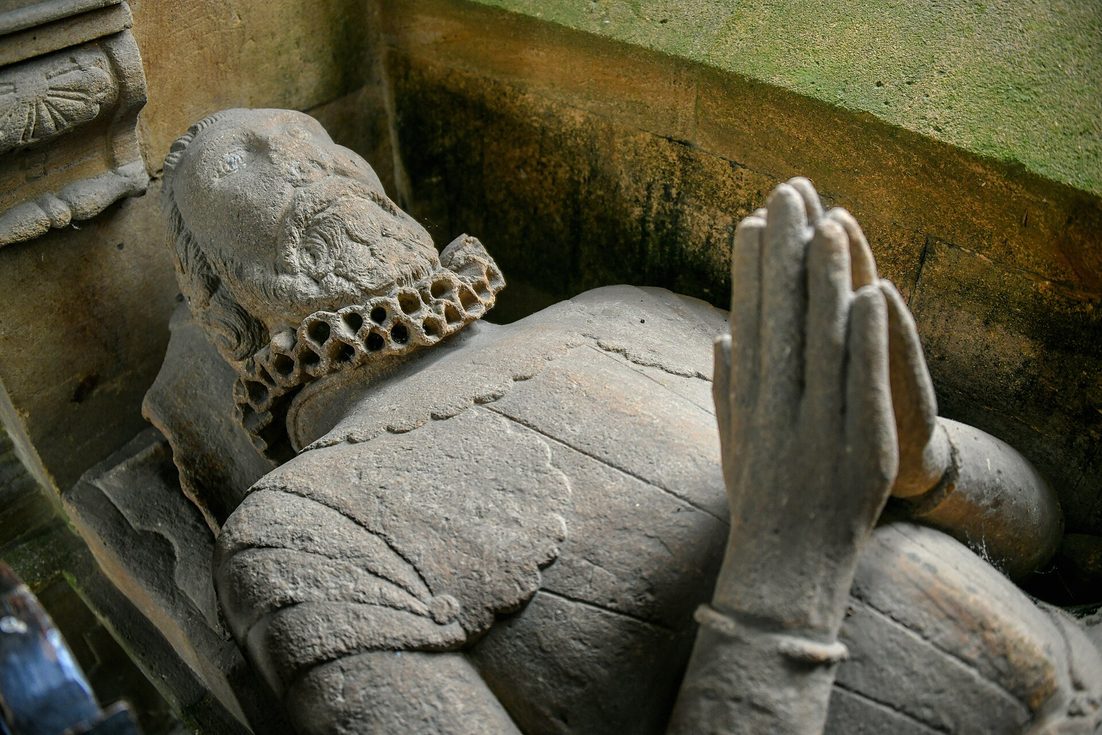
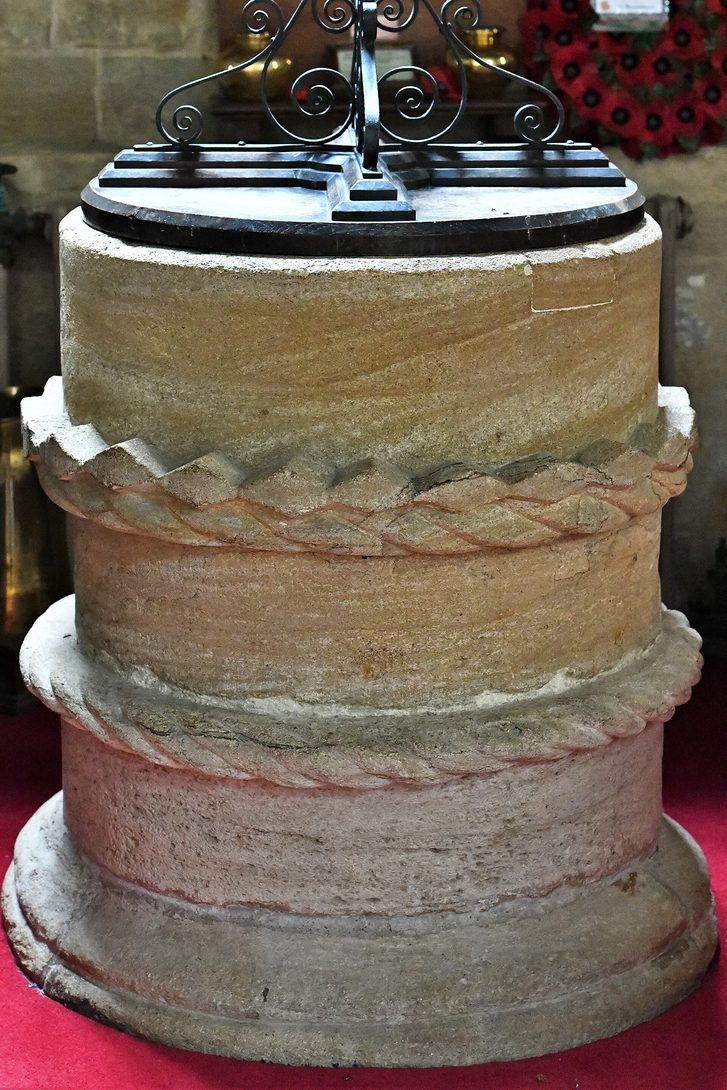
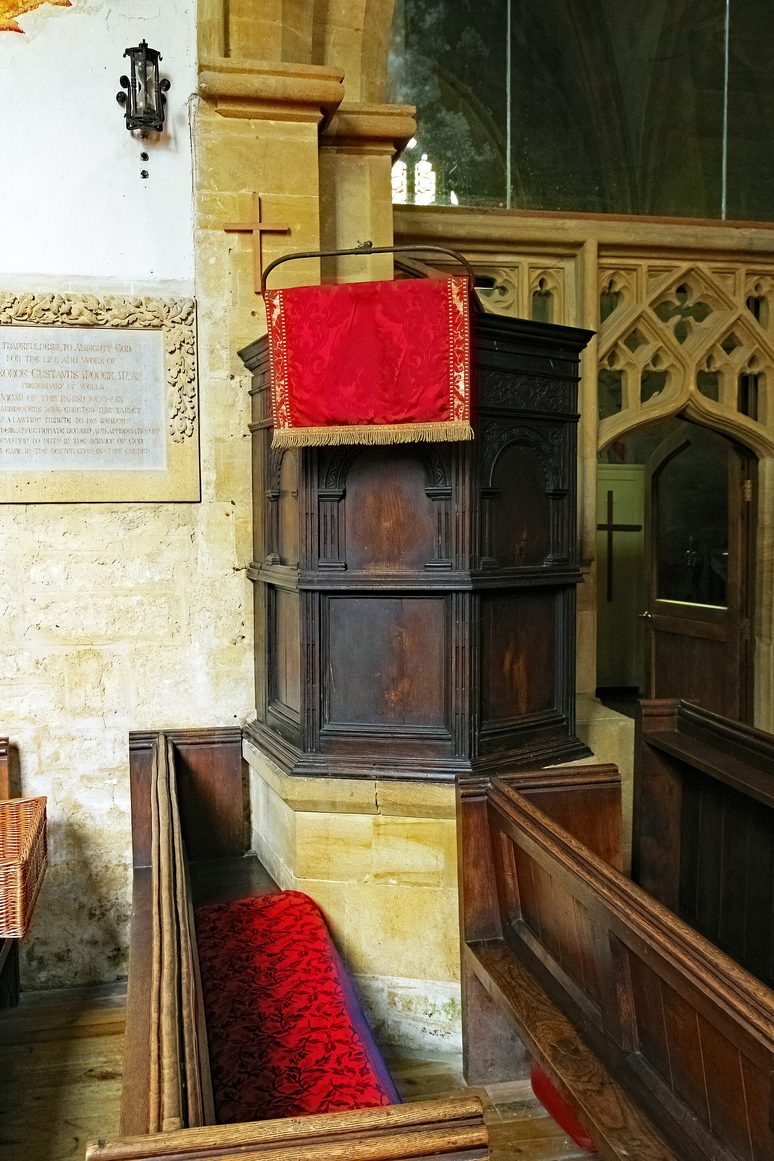
The Norman chancel arch is carved with billet and chevron ornament, and squints on either side gave a view of the altar. On the nave walls are painted texts of the seventeenth century, and traces of earlier painting survive above the arch. The north transept, the old tower base, has a stone vault and a reused fifteenth-century stone screen; the south transept has a tomb recess with the effigy of a fourteenth-century knight. In the north wall of the chancel is the canopied tomb of Thomas Strode, who died in 1595. Look also for the round Norman font with cable mouldings and the seventeenth-century pulpit.
Getting there
Stoke-sub-Hamdon is just off the A303, about five miles west of Yeovil. The church is on Church Lane in East Stoke, about a mile east of the main village. Bus 81 (South West Coaches) runs from Yeovil, Monday to Saturday, about six times a day; the journey takes about half an hour, and the nearest stop is Stonehill in East Stoke. Check the walk to Church Lane on a map first. No toilets or refreshments are listed at the church. Ham Hill Country Park, with its Iron Age hillfort, visitor centre and café, is on the hill above.
Where to stay
Yeovil, five miles east, has the most places to stay.
This link goes to Booking.com. This site earns nothing from it at present — it is here because it is the quickest way to check what is actually available.
Don’t miss
- The tympanum A centaur and a beast labelled LEO.
- The corbels Norman heads and figures.
- The chancel arch Billet and chevron.
- The stone Golden Ham stone.
Insider tips
Walk up Ham Hill. The country park above has wide views over Somerset and the earthworks of a great Iron Age hillfort.
Look for the hare. The leaping hare is on the south side of the chancel, under the eaves.
Common questions
What is carved on the tympanum?
The Norman tympanum over the north door shows a tree of life with three birds, the Lamb of God above a beast labelled LEO, and a centaur labelled SAGITARIUS (so spelt on the stone) shooting an arrow at it. Scholars have read it as good against evil, or summer and winter; its meaning is not certain.
How old is the church?
The nave and chancel are Norman, of the twelfth century. The north transept and the base of the tower were built about 1200, the upper tower in the thirteenth century, the south transept about 1300 and the north porch about 1325. It is listed Grade I.
When is it open?
The parish says daily from 9am to 4pm, except during services; the National Churches Trust says there are no regular hours, so check before a special trip.
Is it free?
Yes; there is no charge to visit.
Where is it?
In East Stoke, about a mile east of the main village of Stoke-sub-Hamdon, below Ham Hill and just off the A303, five miles west of Yeovil.
More English churches
- Wells Cathedral — an early masterpiece of English Gothic
- Sherborne Abbey — fan vaulting in north Dorset
- Kilpeck Church — Norman carving in Herefordshire
See all the cathedrals and churches worth visiting in England →