
St Mary’s Church, Mildenhall
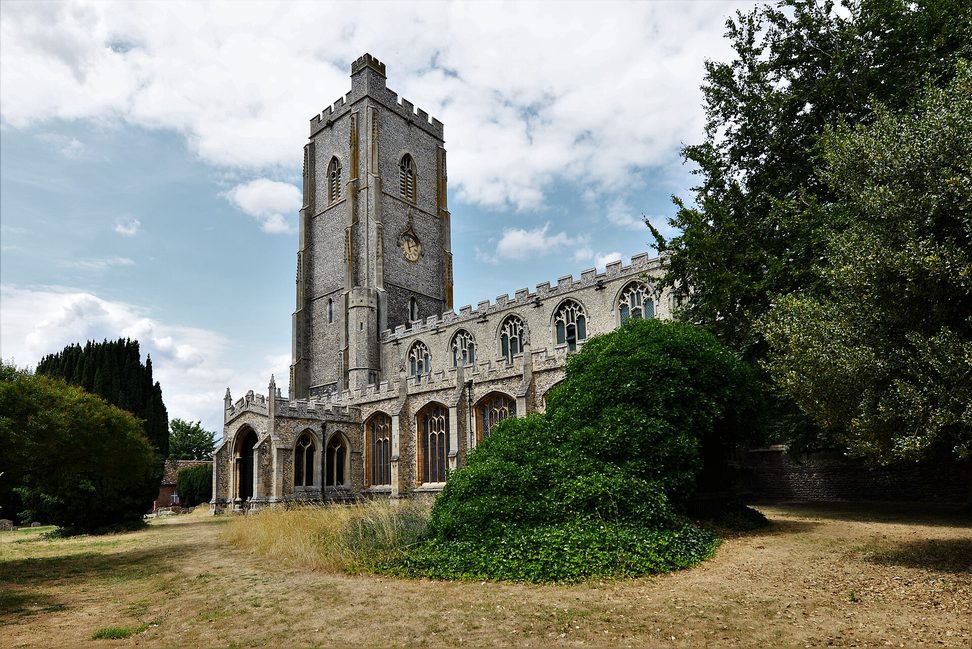
In a Suffolk market town on the edge of the Fens, St Mary’s at Mildenhall is a large and richly furnished church, with a tower about forty metres high and fifteenth-century roofs crowded with carved angels. Historic England calls its north aisle roof, with hammerbeams and carved scenes, exceptionally fine.
A great Suffolk church
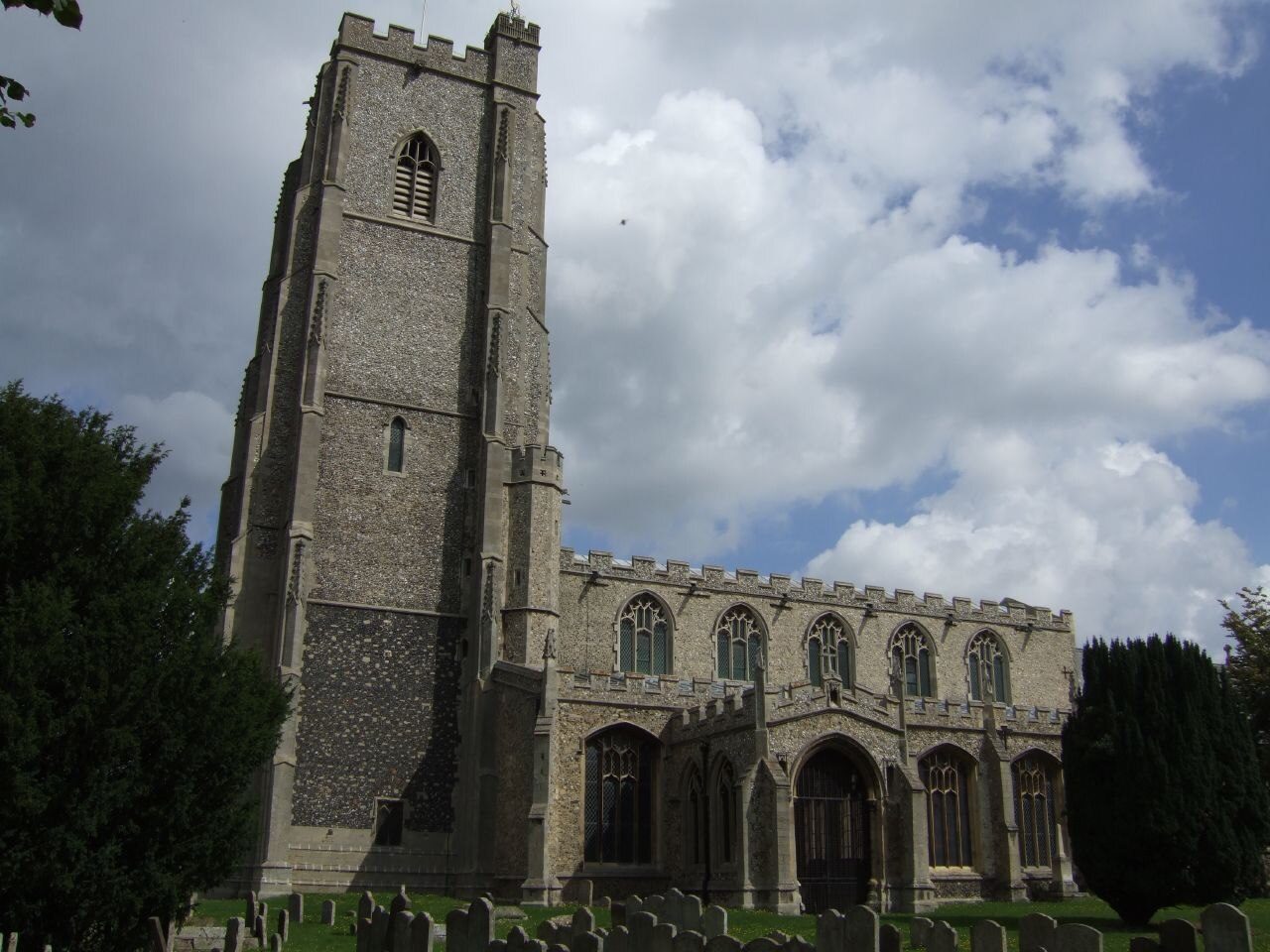
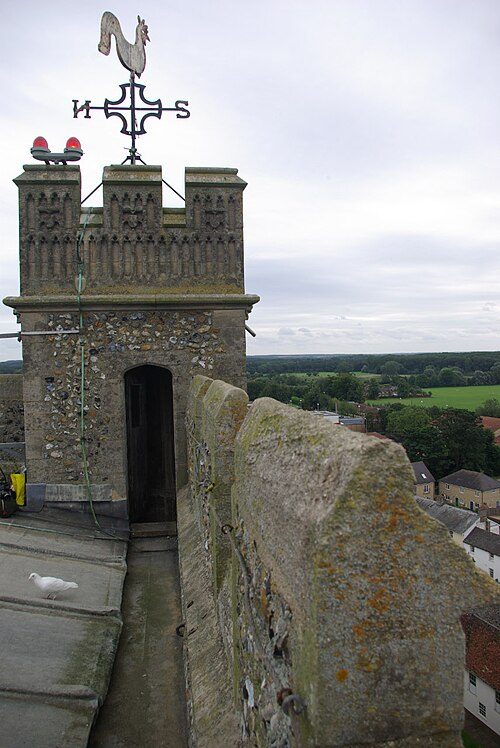
The oldest part of the church is the vaulted vestry of the early thirteenth century. The chancel was lengthened in the early fourteenth century and given its great east window, and in the fifteenth century the nave, aisles, porches and tower were rebuilt. In 2026 the church marked six hundred years since the completion of its nave, angel roof and tower, though Simon Knott, whose Suffolk Churches website is a standard guide, dates the tower to the 1460s. The stair turret above the battlements is Victorian. The church is listed Grade I.
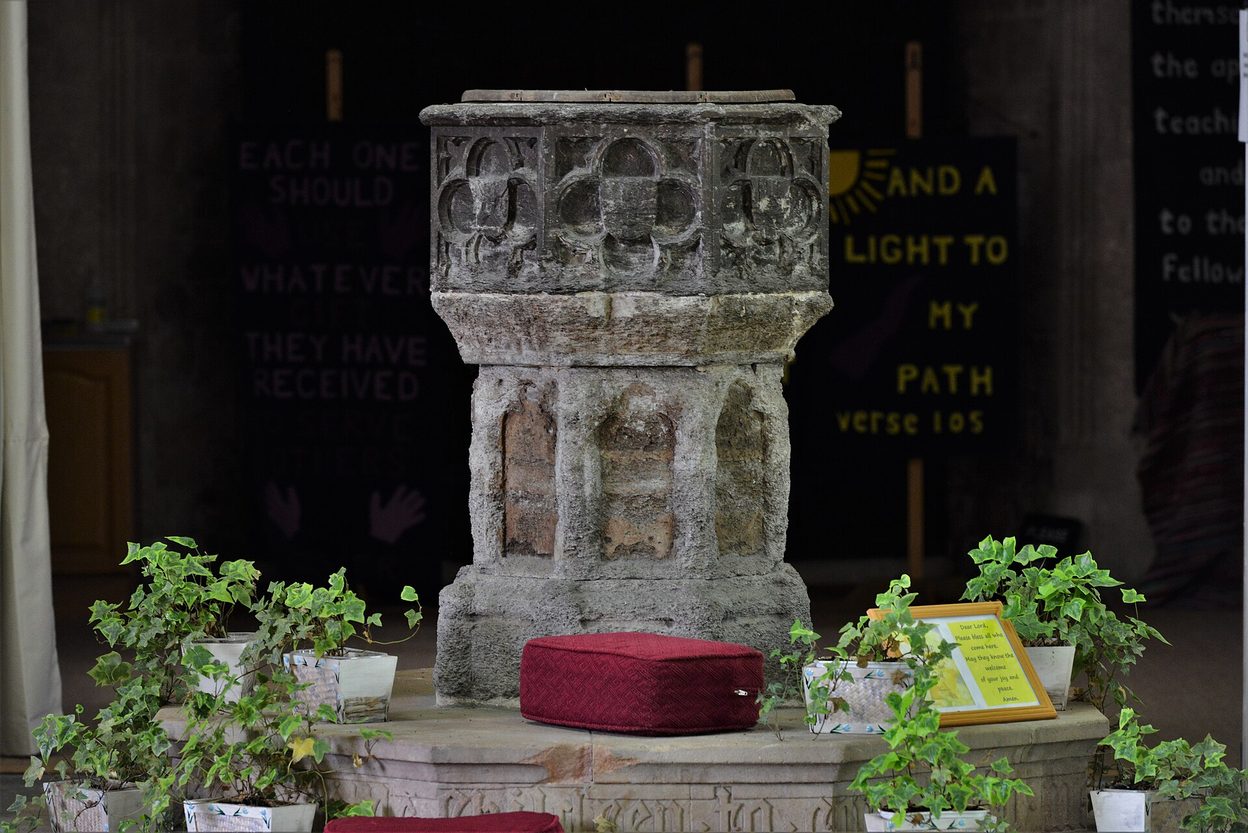
The parish is, by Simon Knott’s account, the largest in Suffolk by area, taking in West Row, Beck Row and other hamlets, and the church dominates the little town. Sir Henry Barton, Lord Mayor of London in 1416 and 1428, is commemorated by a cenotaph in the south aisle, and his arms are on the font.
The visitor’s cheat sheet
| Where | High Street, Mildenhall, Suffolk IP28 7EA |
|---|---|
| Opening hours | Monday–Saturday 10am–3pm; Sunday 1pm–3pm; and during services (per the church) |
| Admission | Free |
| Services | Sundays: Holy Communion at 11am; also BCP Communion at 8am on the third Sunday |
| Access | Ramp; hearing loop; accessible toilet in the Church Cottage Rooms (key from the welcome team during services) |
| Parking | On the street near the church and in town car parks |
| How long | An hour; bring binoculars for the roofs |
Hours and admission checked against the official site in November 2026. They change; the official site is always the last word.
What to see
Outside: the porch and the tower
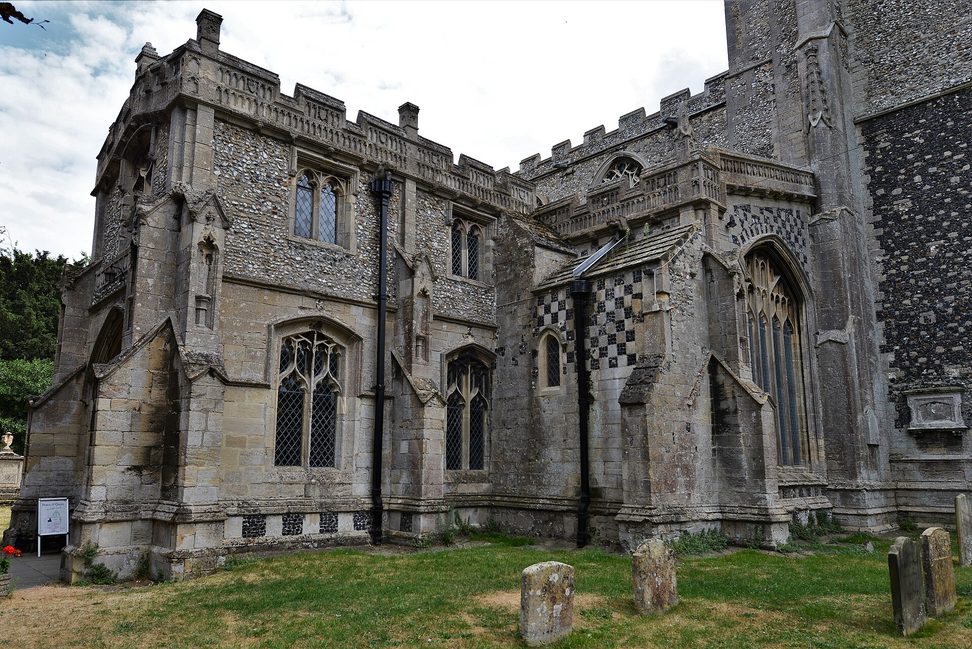
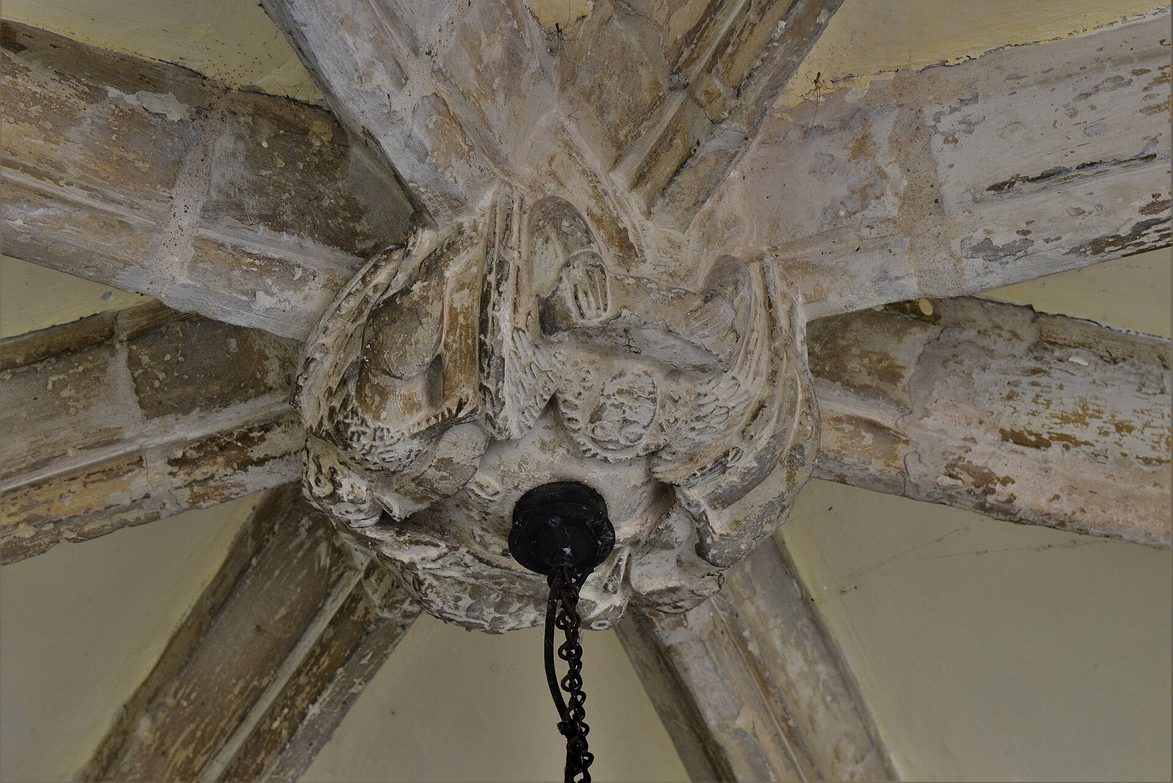
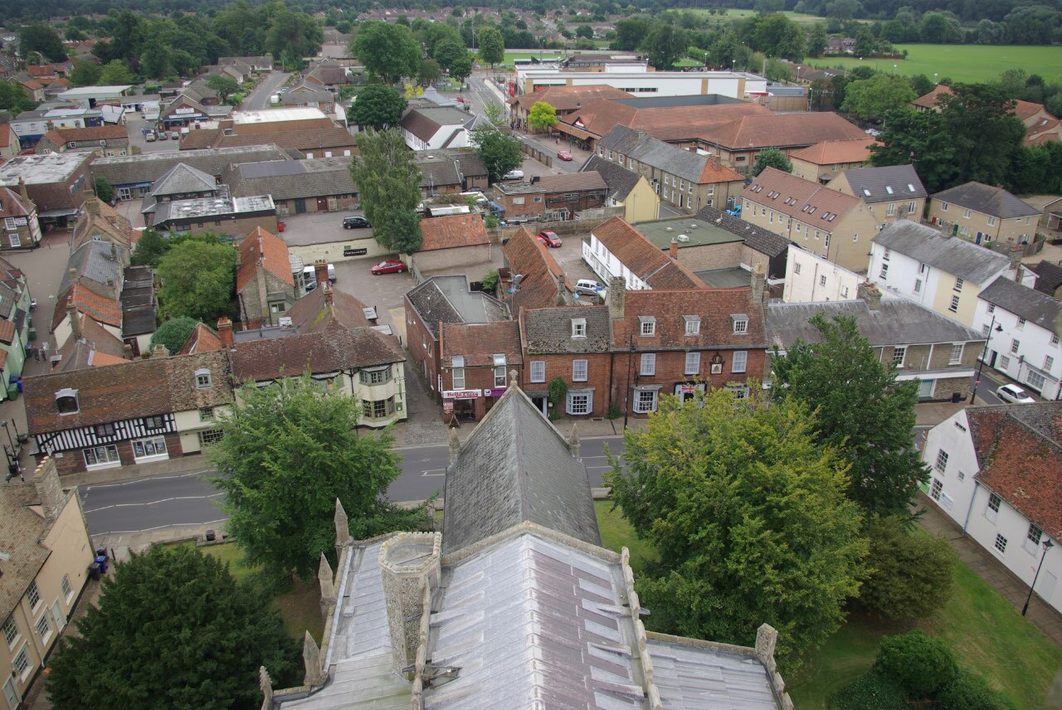
The north porch, of about 1420, is unusually large for a Suffolk porch, with flushwork, a vaulted ceiling with carved bosses and a room above that was a Lady chapel before the Reformation and later the town school. From inside the church you can see two openings from the room above looking down into the aisle. In the south-east corner of the churchyard are the remains of a charnel chapel founded in 1387, tidied into a picturesque ruin in the nineteenth century. The tower is opened only on occasional open days (ask at the church); the view takes in the town and the surrounding countryside.
The angel roofs
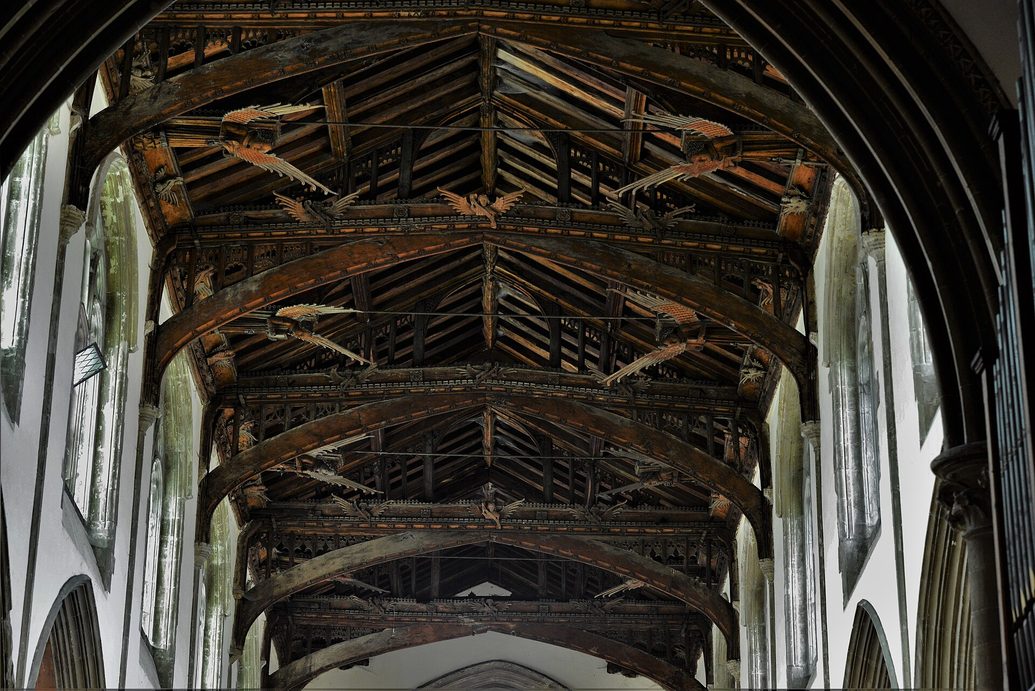
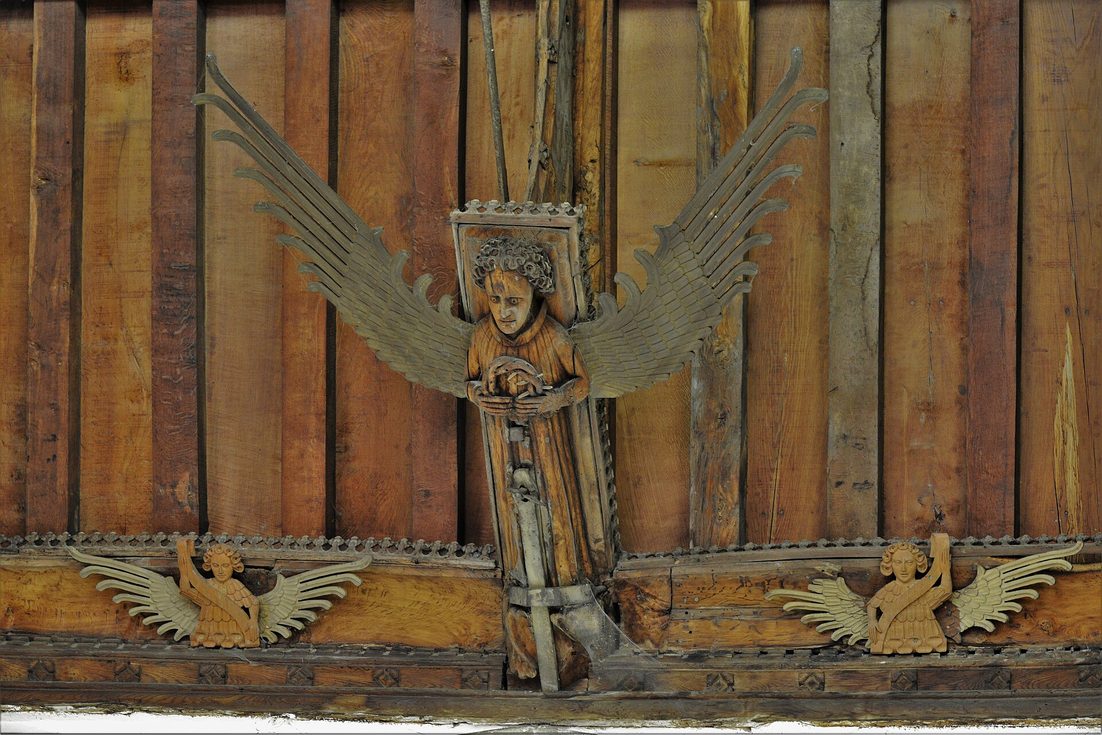
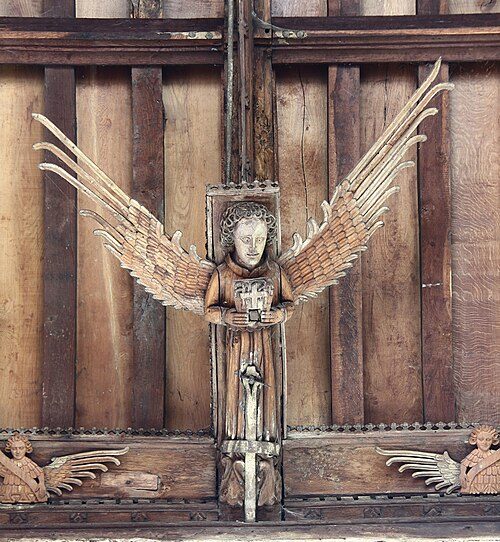
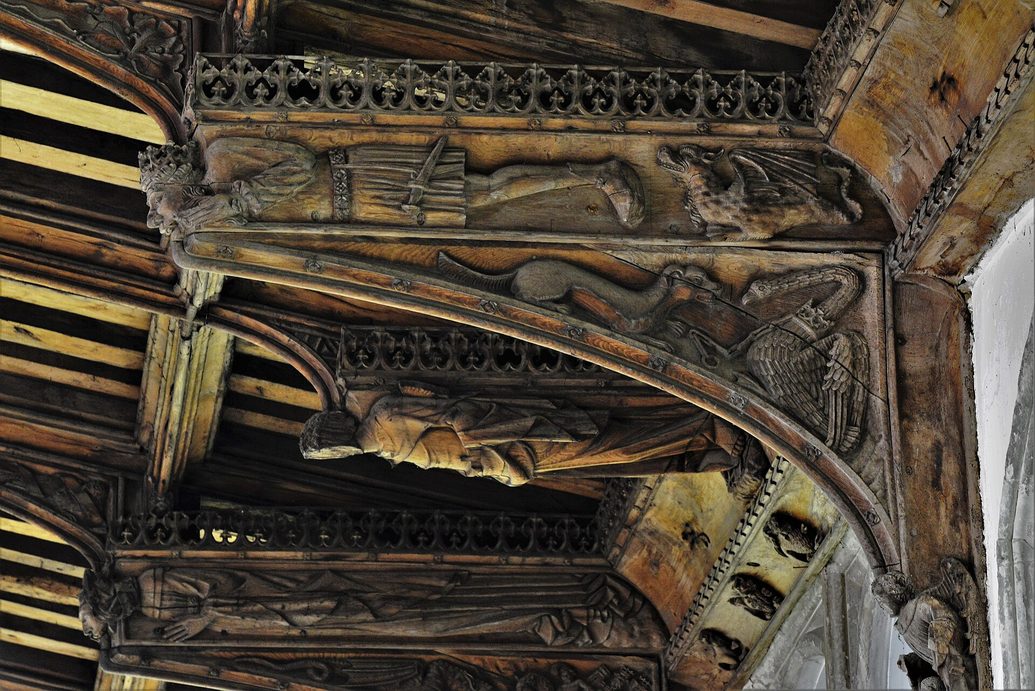
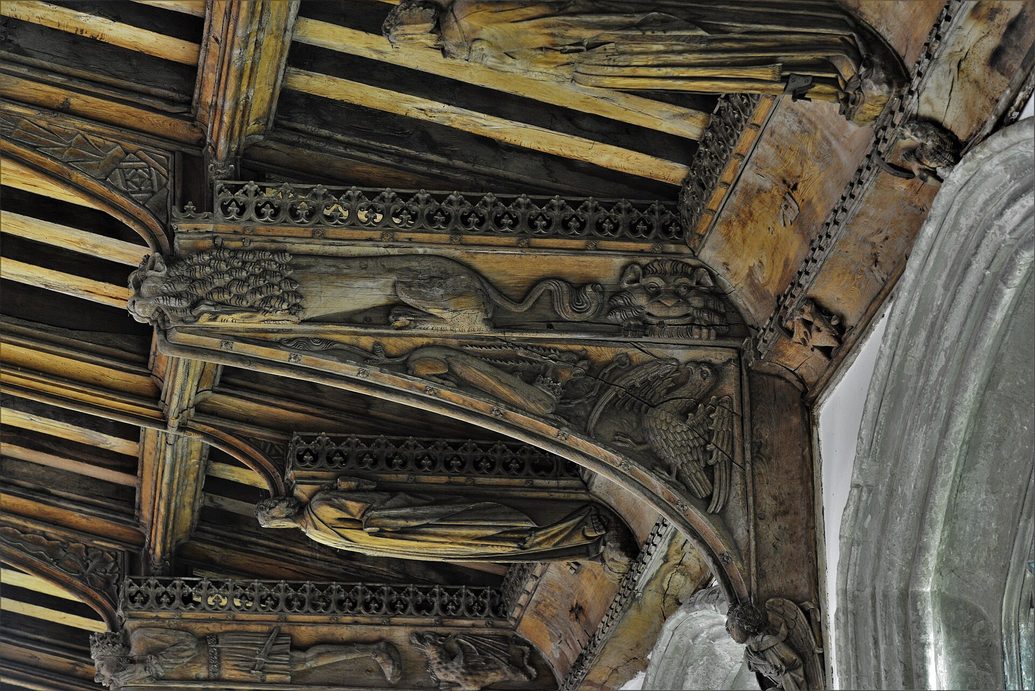
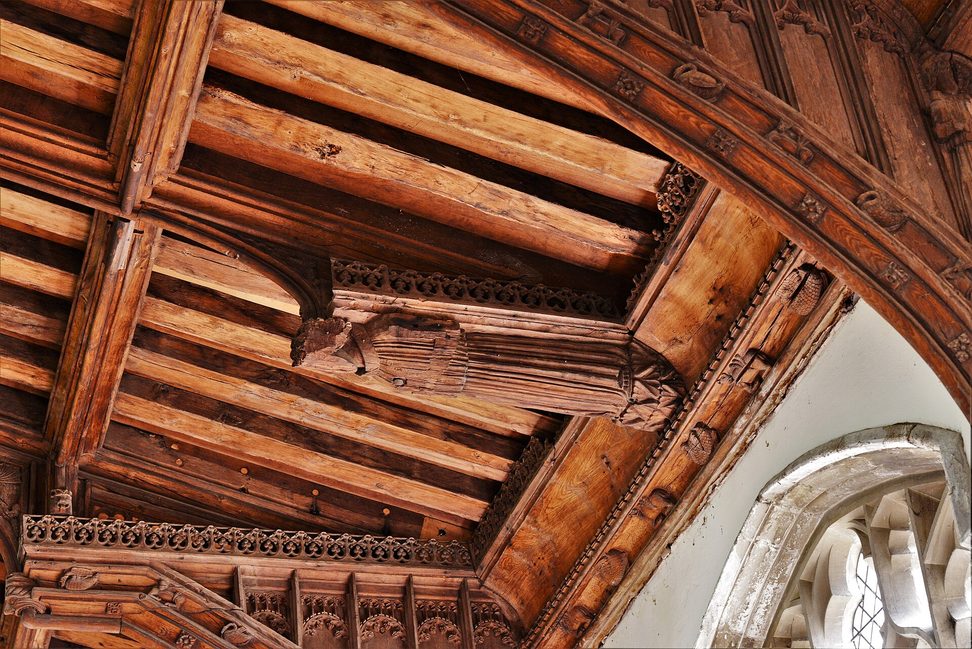
Look up. The nave roof has tie-beams enriched with tracery, and angels on the intermediate trusses, cornices and beams; they have been restored. The aisle roofs are the real glory. Their hammerbeams, according to Simon Knott, are decorative rather than structural, and the north aisle roof is the finer: look in the carved spandrels for the Annunciation, the shepherds coming to Bethlehem and St Michael with his dragon, among many figures. Some angels still carry shot. Binoculars help.
The chancel
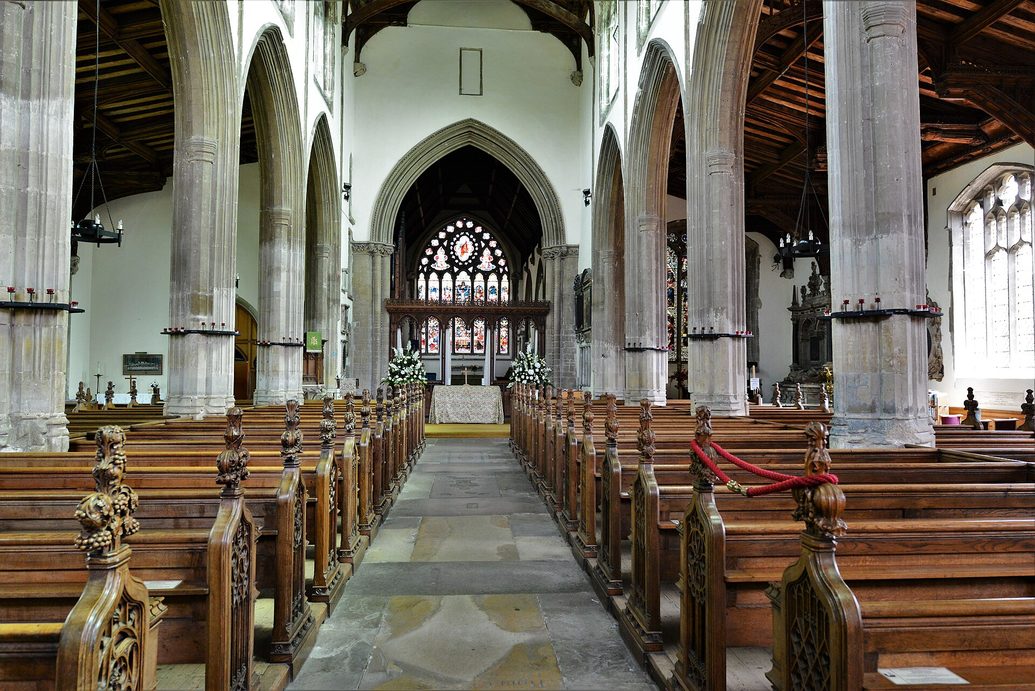
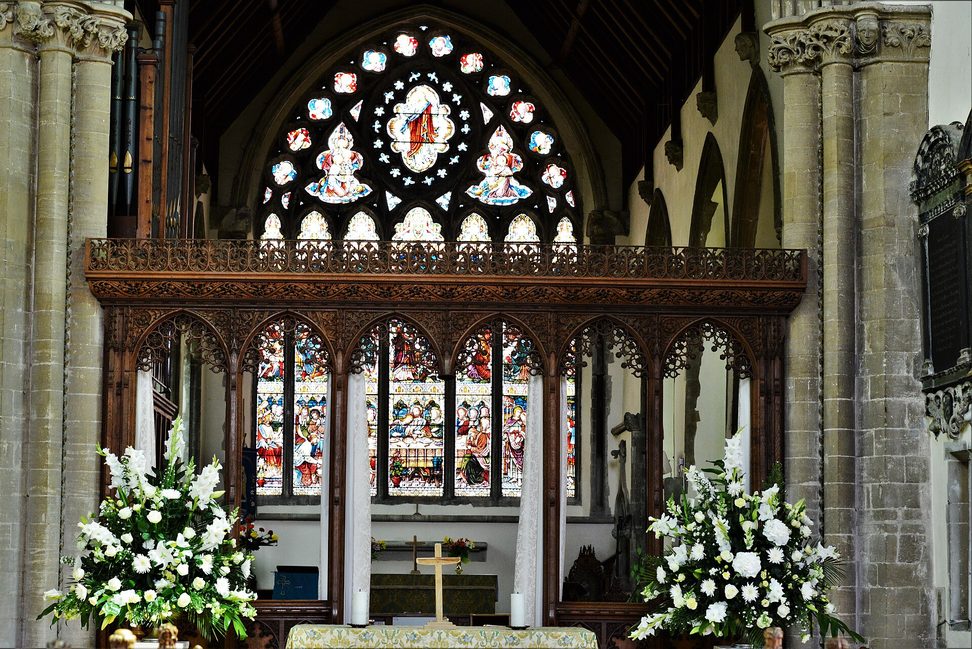
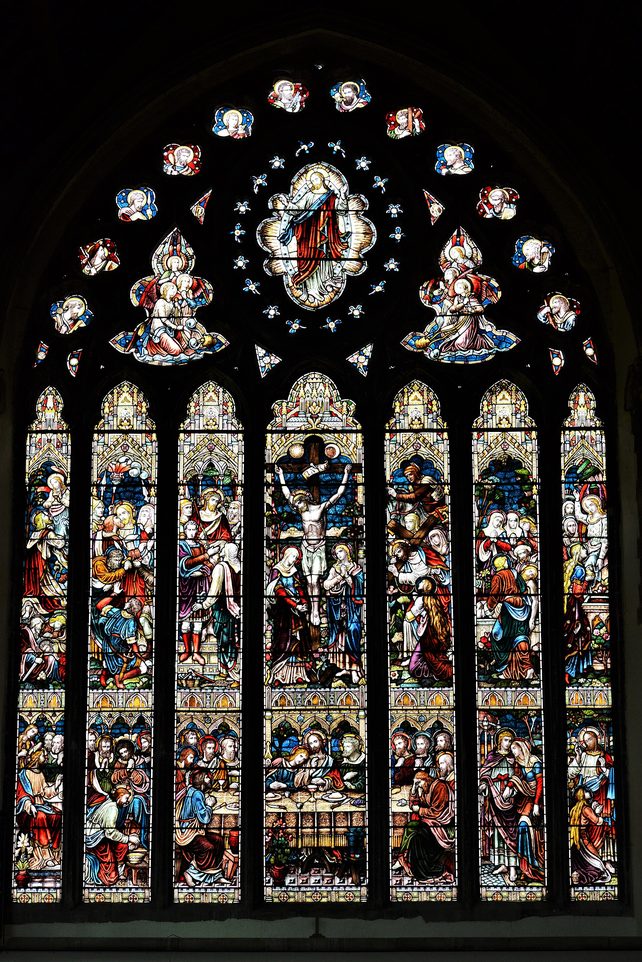
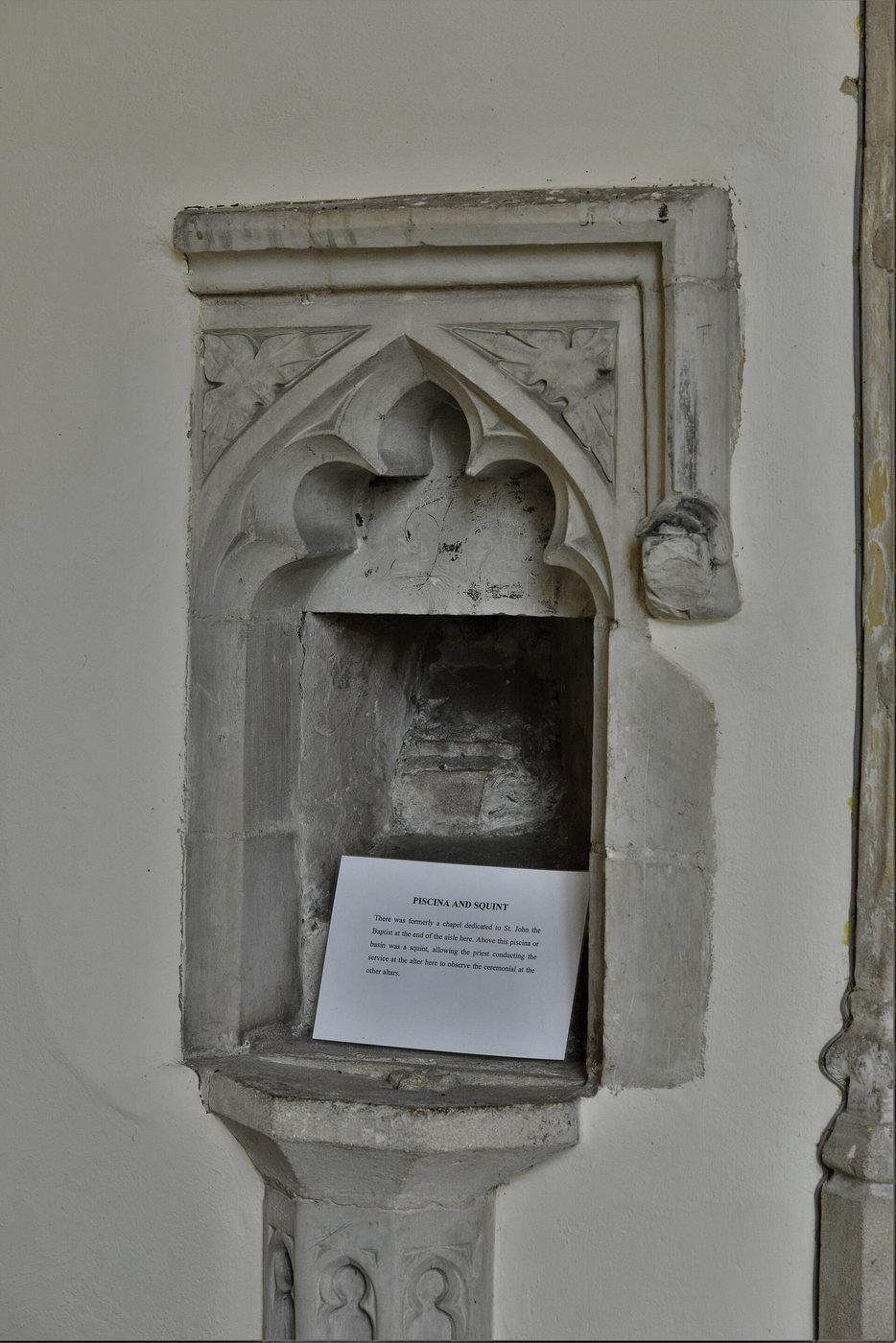
The chancel arch has keeled shafts and stiff-leaf capitals. Beyond the rood screen of 1903 is the east window of seven lights, its outer lights rising into a frieze of quatrefoils; the glass is Victorian. Look for the double piscina and the triple sedilia, and in the sanctuary floor the slab of Richard de Wichford, who died in 1344. In an aisle, a piscina with a squint marks a lost chapel of St John the Baptist. Many of the furnishings are of the 1950s, designed and given by the Suffolk church architect Munro Cautley.
Font, arms and monuments
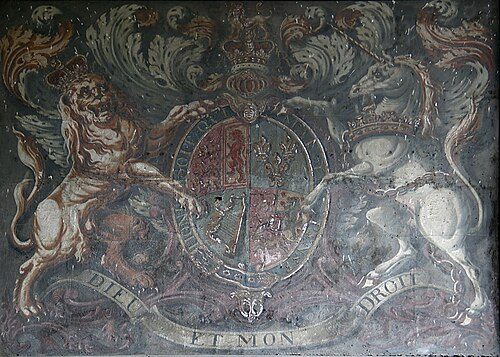
The octagonal Purbeck marble font of the early fifteenth century bears the arms of Sir Henry Barton. At the west end, in the tower, hang the large Royal Arms of George II, dated 1758; the west gallery below stands on a fan vault. In the south aisle are the alabaster tomb of Sir Henry North, who died in 1620, with effigies of him and his family, and other memorials of the North family.
Getting there
Mildenhall is a small market town in north-west Suffolk, about twelve miles north-west of Bury St Edmunds. The church is in the town centre, a short walk from the market place and the bus station. There is no station; buses include the 355 and 357 from Bury St Edmunds and the 16A from Newmarket; check times before you go. Mildenhall Museum, on King Street, tells the story of the Mildenhall Treasure and the airbase; it opens Tuesday to Saturday, 2pm to 4pm, with Fridays from 10am. Nearby churches include All Saints, Icklingham, about four miles south-east, and St Mary’s, Lakenheath, about five miles north, with its medieval wall paintings.
Where to stay
Bury St Edmunds, about twelve miles away, is the nearest large town with hotels.
This link goes to Booking.com. This site earns nothing from it at present — it is here because it is the quickest way to check what is actually available.
Don’t miss
- The aisle roofs Carved hammerbeams and spandrels.
- The angels Some still carrying shot.
- The east window Seven lights, early 14th century.
- The north porch Vaulted, with a room above.
Insider tips
Bring binoculars. The roof carvings are high up, and the scenes in the north aisle spandrels are easy to miss.
Come in Advent. In 2026 the church’s Advent festival is themed on angels and runs from 27 November into early January.
Common questions
What is special about Mildenhall church?
Its roofs. The nave and both aisles have carved timber roofs of the fifteenth century full of angels. The north aisle roof, with hammerbeams and carved spandrels, is called exceptionally fine by Historic England, and the writer Simon Knott thinks the aisle roofs the best in England.
Why is there shot in the angels?
The usual story is that iconoclasts in the seventeenth century, unable to reach the angels, fired at them; shot and an arrowhead have been found in the roof. Simon Knott suggests most of the damage came instead from eighteenth-century churchwardens firing at jackdaws.
When is the church open?
The church’s own listing gives Monday to Saturday 10am to 3pm and Sunday 1pm to 3pm, and it is open during services. Other listings give longer summer hours, so check before a special trip.
Is it free?
Yes; no charge is listed, and donations are welcome.
Is there an angel festival?
Yes. The church’s Advent festival for 2026 has an angel theme, with handmade angels filling the building. It opens on 27 November at 10am and runs for 37 days, into early January.
Are there toilets?
Yes: an accessible toilet in the Church Cottage Rooms in the churchyard, with a key from the welcome team during services; at other times, ask whether it can be opened.
More English churches
- St Edmundsbury Cathedral — the cathedral of Suffolk
- Ely Cathedral — the Ship of the Fens
- Walpole St Peter — the Queen of the Marshland
See all the cathedrals and churches worth visiting in England →