
St Nonna’s Church, Altarnun
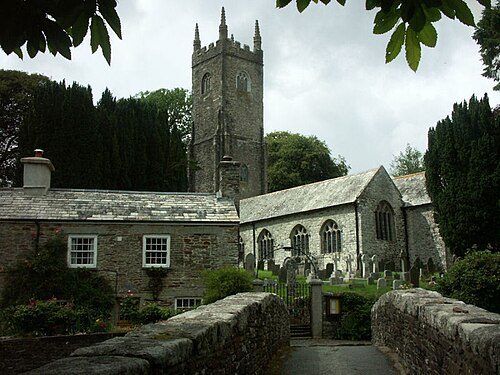
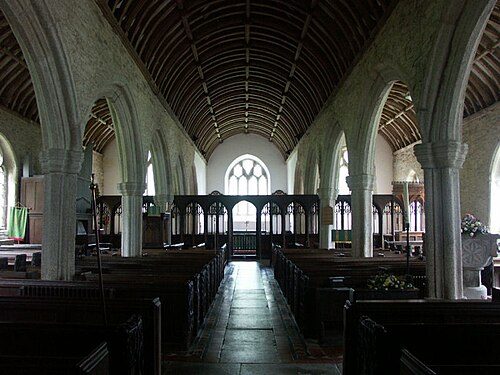
In a granite village on the north-east edge of Bodmin Moor, St Nonna’s at Altarnun is known as the Cathedral of the Moor for its size and its tall tower. Its treasure is a set of 79 carved oak bench ends of the early sixteenth century: a bagpiper, a fiddler, a jester, dancers, a flock of sheep, and the signature of the man who made them.
A moorland church and its saint
Altarnun means the altar of Non: St Nonna, by tradition the mother of St David of Wales, said to have come here in the sixth century. Nothing of her church survives. Of the Norman church that followed, the font, a piscina and a carved capital built into the vestry wall remain. The present church was rebuilt in granite in the fifteenth century, with granite arcades and wide aisles, and its tower was begun in the late fourteenth century and finished in the fifteenth, rising about 109 feet. The church was restored in 1867 and is listed Grade I.
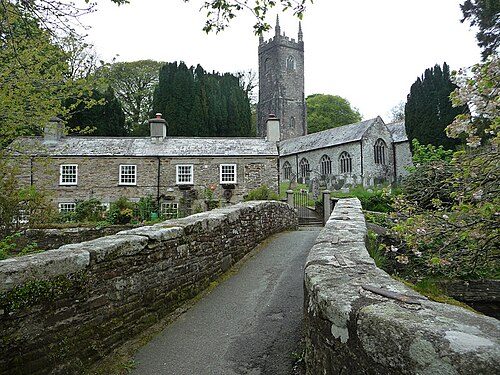
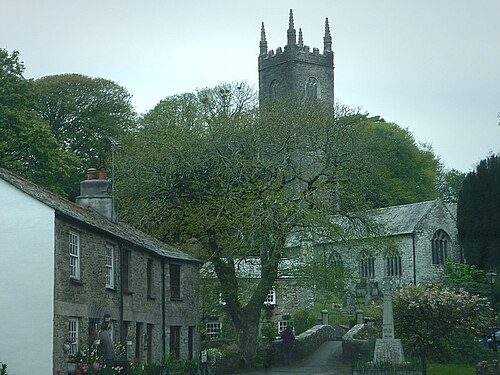
The setting is part of the pleasure: the church stands beside Penpont Water, with the old packhorse bridge and the war memorial a few steps away. Daphne du Maurier used Altarnun in Jamaica Inn, making Altarnun’s fictional vicar a sinister figure.
The visitor’s cheat sheet
| Where | St Nonna's Close, Altarnun, Launceston, Cornwall PL15 7SJ; just north of the A30, about seven miles west of Launceston |
|---|---|
| Opening hours | No regular hours published; check before a special trip |
| Admission | Free |
| Services | Holy Communion on the second and fourth Sundays at 11.15am; Morning Prayer on Thursdays at 10am |
| Access | Steps into the churchyard and church |
| Parking | On the street in the village |
| How long | Three-quarters of an hour; longer with the well and the bridge |
Hours and admission checked against the official site in November 2026. They change; the official site is always the last word.
What to see
The churchyard
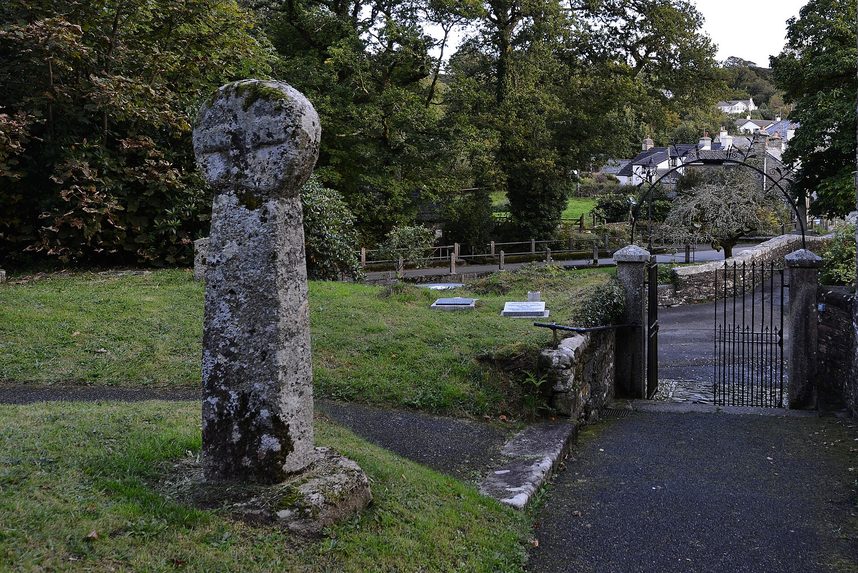
Near the south-east entrance stands the churchyard cross, a round granite head carved with an equal-armed cross on both faces. Tradition makes it as old as St Nonna; the scholar V. E. Nash-Williams dated it to the tenth or eleventh century. The shaft it stands on is modern. Look also for the railed chest tomb of Digory Isbell, who died in 1795: he and his wife Elizabeth gave lodging to John Wesley’s preachers at Trewint from 1743. The porches have fifteenth-century wagon roofs.
The bench ends
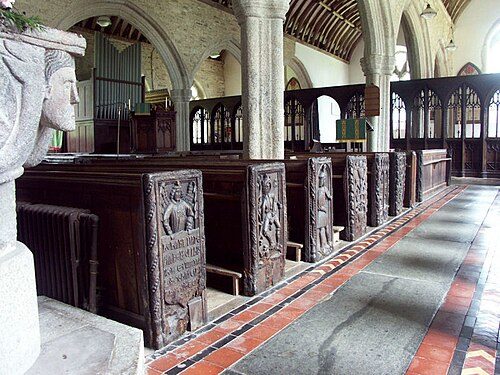
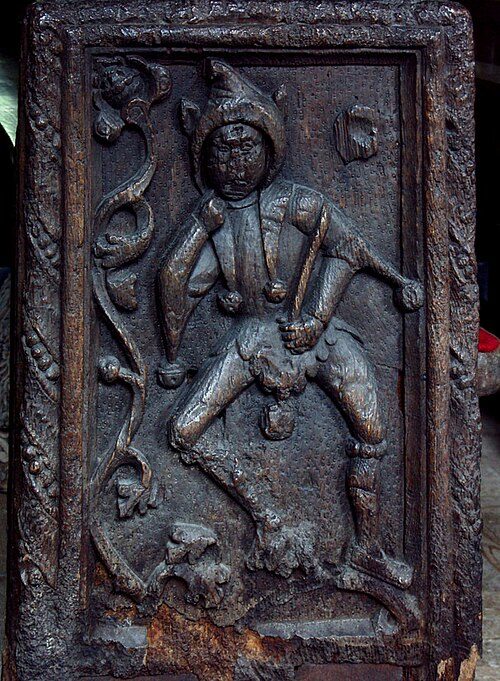
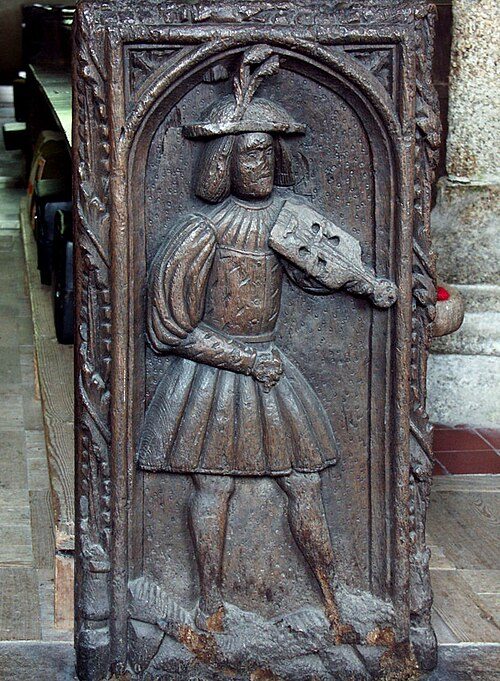
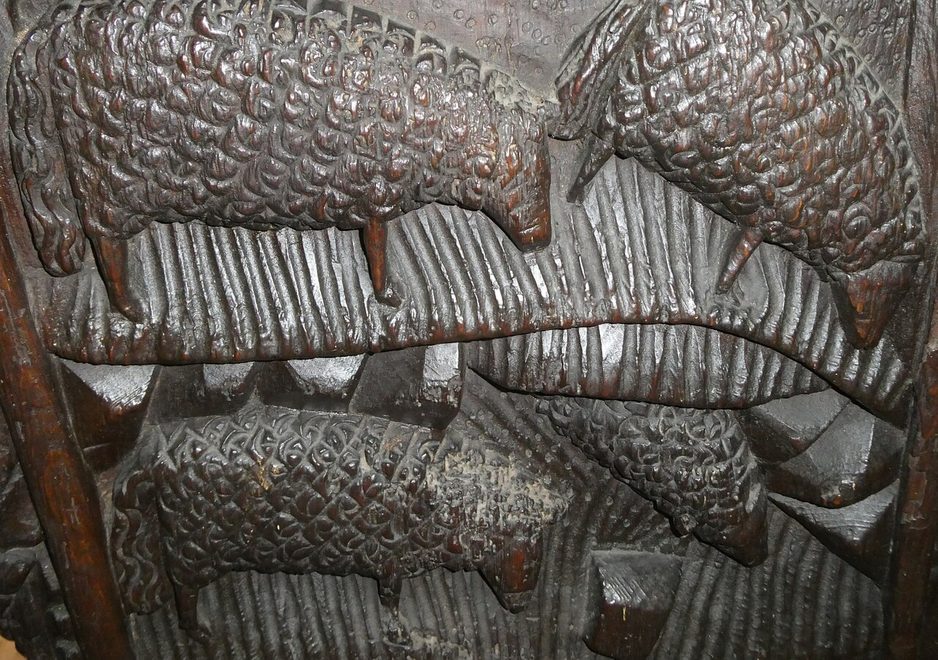
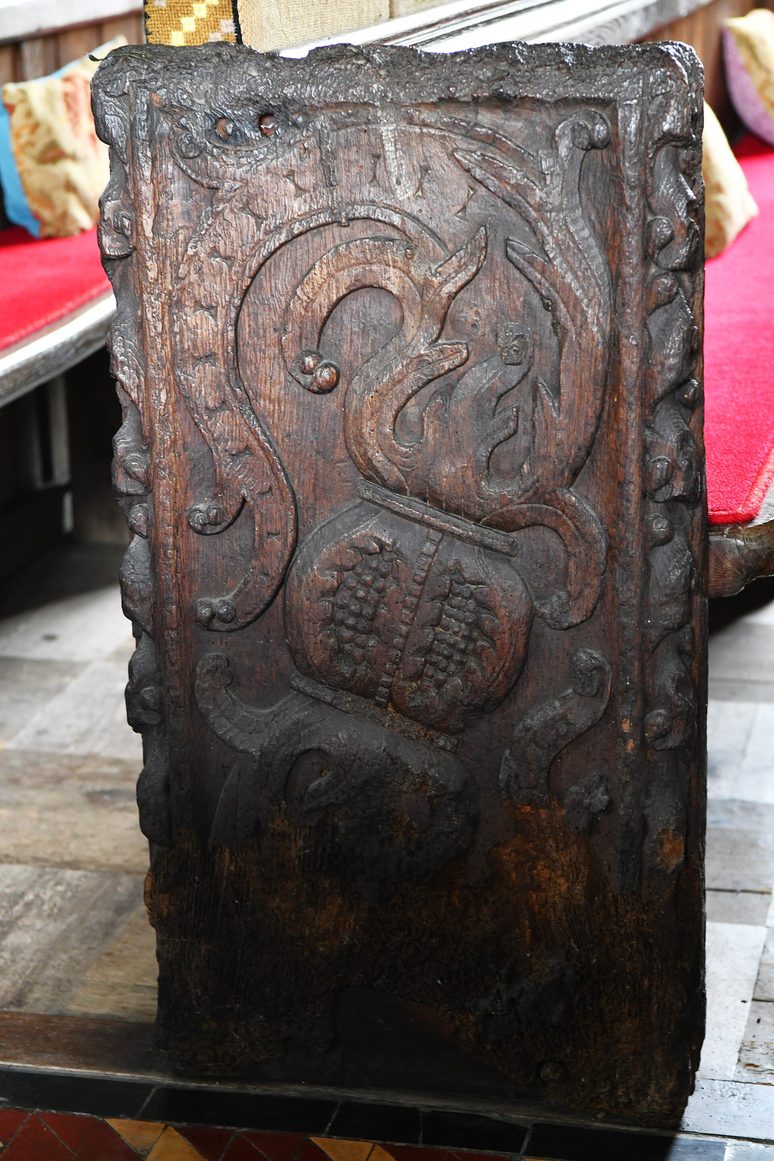
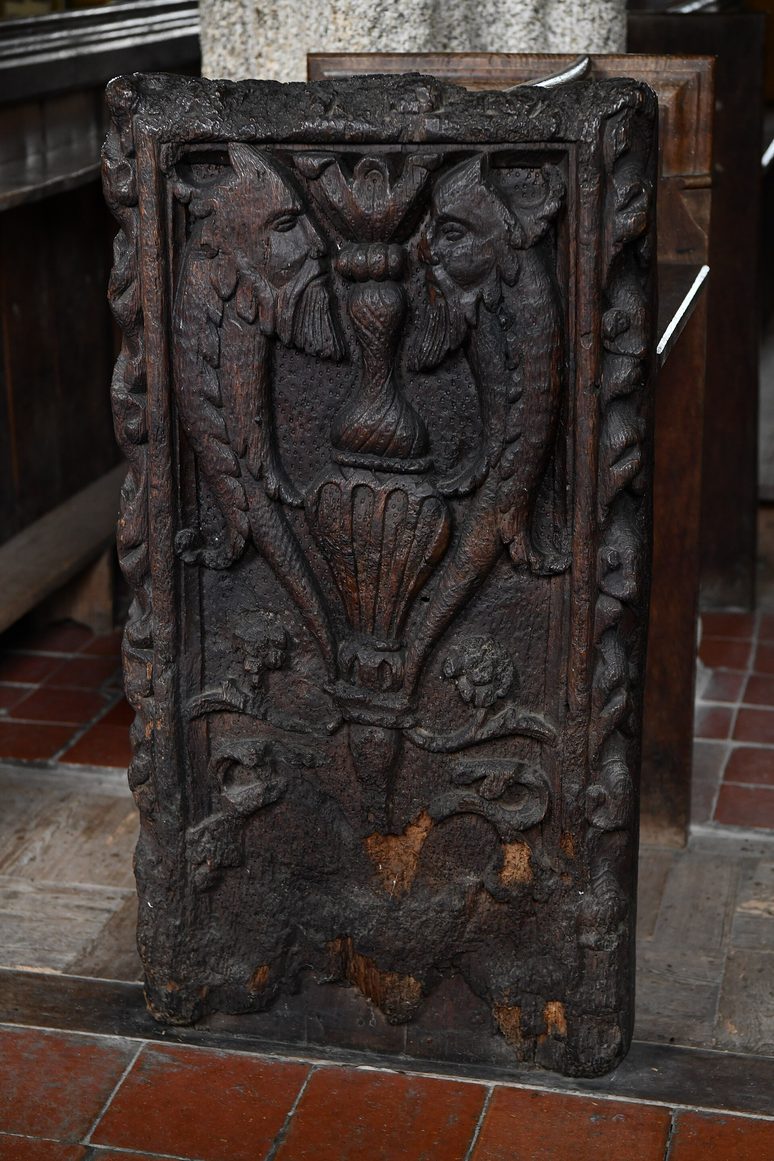
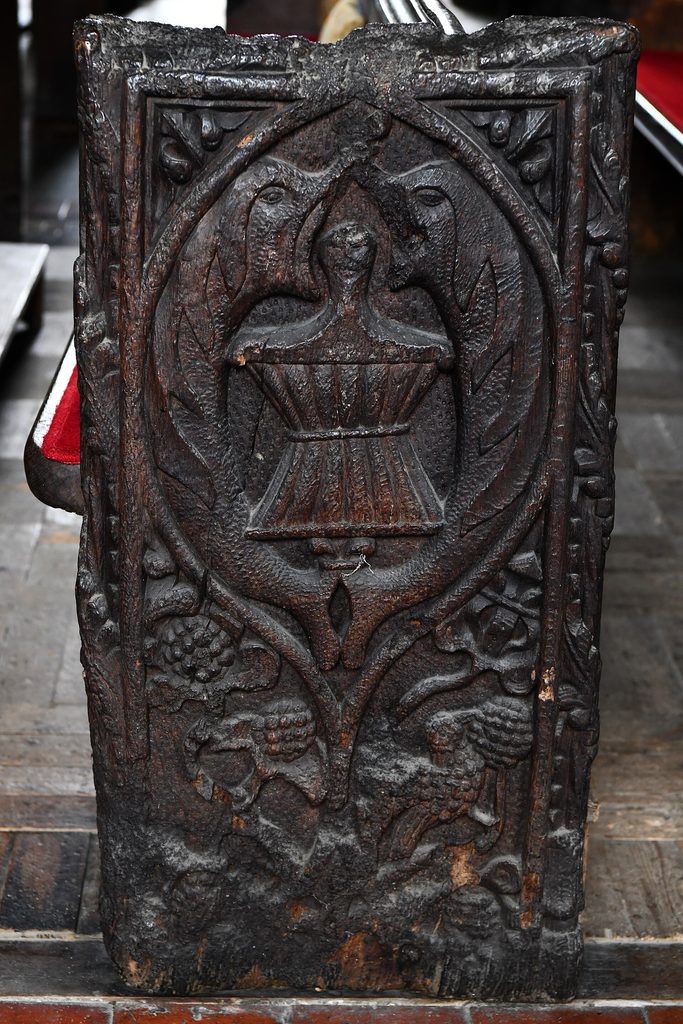
The church’s glory is its 79 carved oak bench ends, made in the early sixteenth century by Robert Daye. One of them, near the font, records him as the maker of the work, with the curate and the clerk. Each is different. Look for the bagpiper with his double chanter, the fiddler with a boxy three-string fiddle (his bow has been lost), a jester, two sword-dancers, a man stirring a great vat, a sea monster and a flock of sheep, among many panels of symbols and ornament. One damaged end was restored in the 1980s.
The font, the screen and the rails
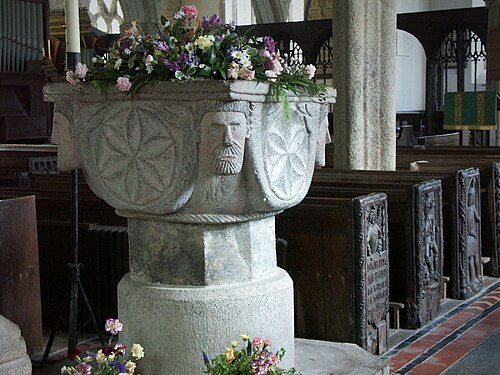
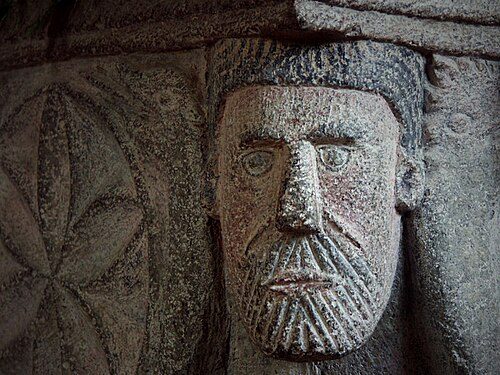
The font is Norman, of the early twelfth century: a square bowl with a bearded head at each corner, still with traces of paint, and large rosettes between them. It gives its name to the “Altarnun group” of similar fonts in Cornwall and Devon. A carved rood screen runs across the east end of the nave and both aisles; it has been restored, and only part of the original survives. The oak communion rails across the east end of the church are dated 1684 and name the minister and the two churchwardens. The aisle roofs are fifteenth-century wagon roofs, partly restored, with carved bosses.
In the village
St Nonna’s holy well is in a field below the old vicarage, a short walk from the church through a gate. Over the door of the former Methodist chapel, now privately owned and seen from the road, is a relief portrait of John Wesley, said to have been carved by Nevil Northey Burnard (1818–78), the Altarnun-born sculptor, as a teenager; a plaque marks his birthplace nearby.
Getting there
Altarnun is just north of the A30, about seven miles west of Launceston and a short drive from Jamaica Inn at Bolventor. The church is in the village centre, beside the stream and the old bridge, with parking on the street. There is no station nearby and buses are infrequent, so most visitors come by car. Wesley Cottage at Trewint, where Wesley stayed on his preaching tours, is listed as opening from May to October, Thursday to Saturday, 10am to 3pm; check before going. No toilets or refreshments are listed at the church.
Where to stay
Launceston, about seven miles east, is the nearest town with hotels and inns.
This link goes to Booking.com. This site earns nothing from it at present — it is here because it is the quickest way to check what is actually available.
Don’t miss
- The bench ends 79, by Robert Daye.
- The bagpiper and fiddler Tudor musicians in oak.
- The font Norman, with bearded heads.
- The bridge An old packhorse bridge.
Insider tips
Find Robert Daye’s signature. The bench end with his inscription is near the font.
Walk to the holy well. Go through the gate below the old vicarage; local legend says the water once cured madness.
Common questions
Why is Altarnun called the Cathedral of the Moor?
Because of its size, surprising for such a small village. Its tower, about 109 feet high, is among the taller church towers in Cornwall.
Who carved the bench ends?
Robert Daye. One bench end, near the font, carries an inscription naming him as the maker, with William Bokyngham, the curate, and John Hodge, the clerk; its date is now hard to read. The 79 ends are usually dated about 1510–30.
What do the bench ends show?
The carvings vary widely. Among them are a bagpiper, a fiddler, a jester, two sword-dancers, a man who is probably the clerk stirring a vat of church ale, a sea monster and a flock of sheep, as well as religious symbols.
Is Altarnun church open?
No regular opening hours are published, and the National Churches Trust advises checking with the parish before a special trip.
Is it free?
Yes; there is no charge to visit.
What else is there to see nearby?
The old packhorse bridge below the church, St Nonna’s holy well in the fields nearby, the former Methodist chapel (private, seen from the road) with a relief of John Wesley said to be by Nevil Northey Burnard, and Wesley Cottage at Trewint (open in summer).
More English churches
- Blisland Church — a restored moorland church on the other side of the moor
- St Neot Church — medieval glass on Bodmin Moor
- Launcells Church — said to be the least spoilt church in Cornwall
See all the cathedrals and churches worth visiting in England →