
Reading Abbey and the Abbey Quarter
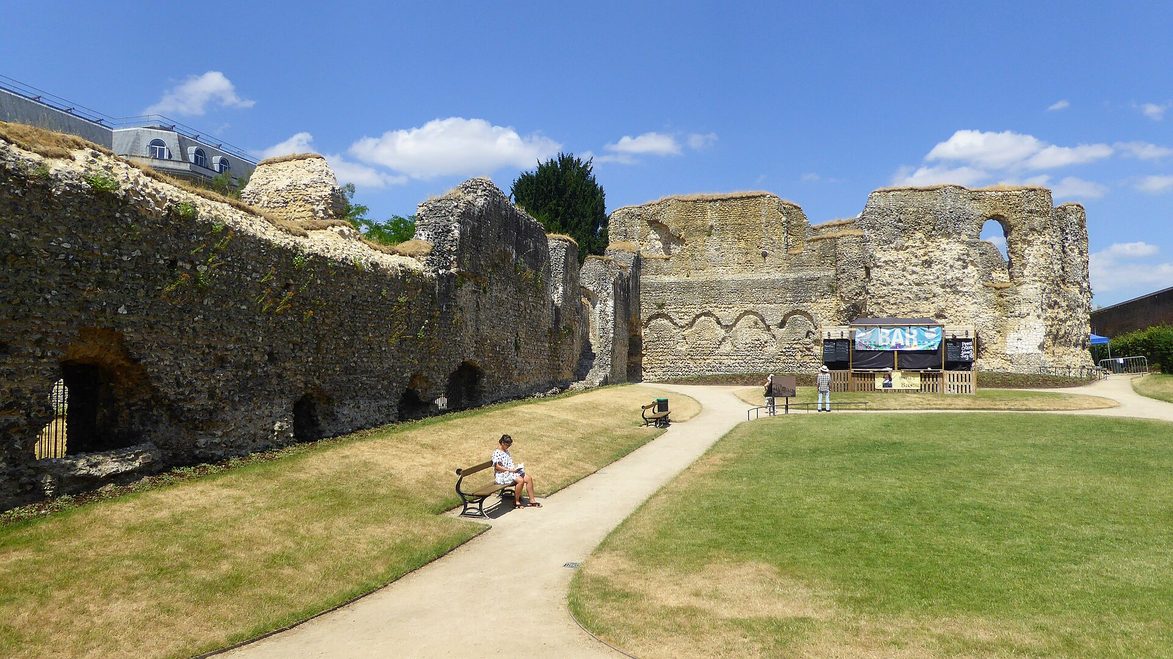
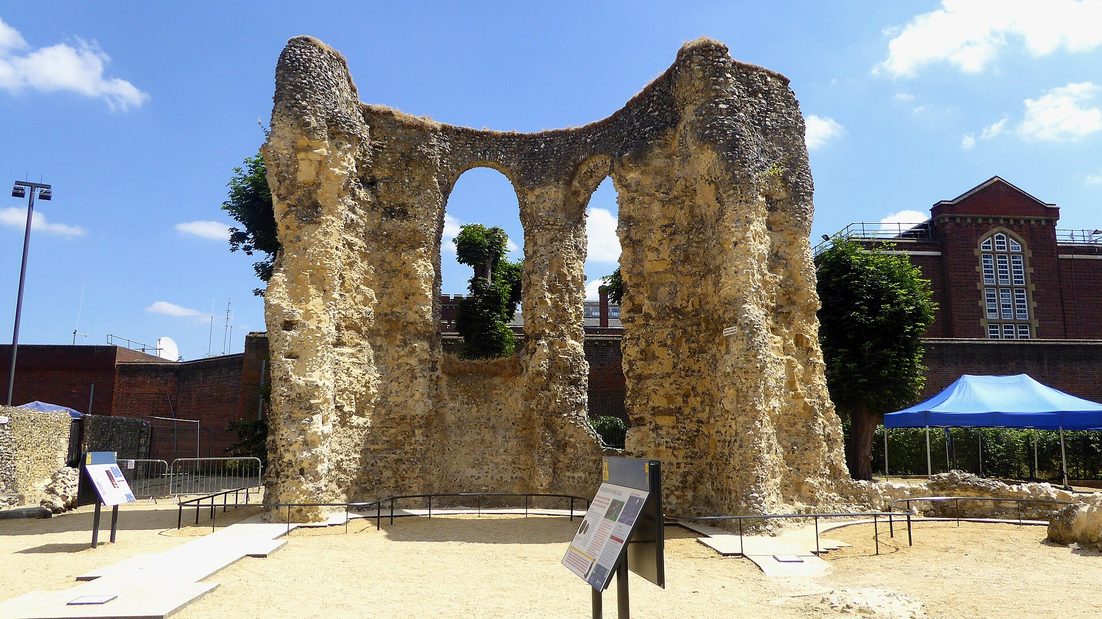
Henry I founded Reading Abbey in 1121 and was buried before its high altar. Its church, about 450 feet long, was among the longest in England; what survives includes tall flint walls of the south transept, the chapter house, the dormitory and the refectory, with the rebuilt Abbey Gateway, Forbury Gardens and Pugin’s St James’s Church close by. The ruins reopened in 2018 after nine years of conservation.
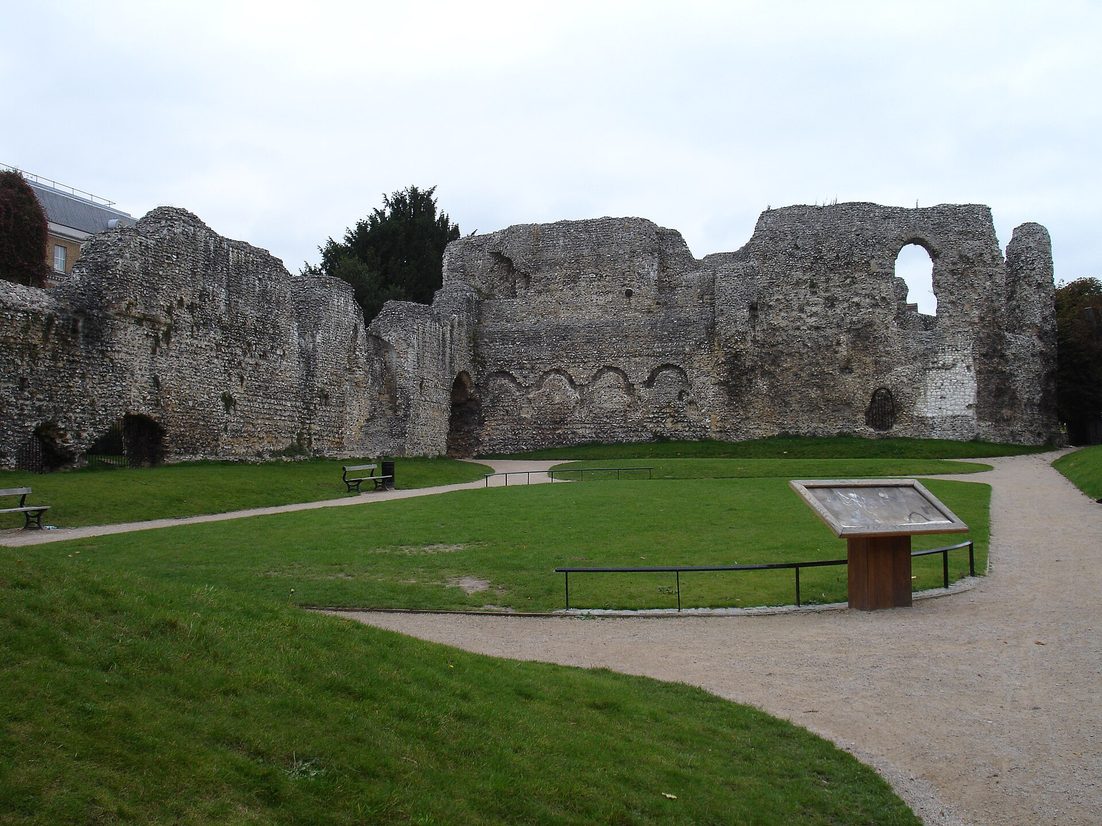
Henry I’s abbey
Henry I founded the abbey on 18 June 1121, for Cluniac monks who came from Cluny and from Lewes, and dedicated it to the Virgin Mary and St John the Evangelist. Hugh of Amiens became the first abbot in 1123. The king died in Normandy in December 1135; his embalmed body was held up for weeks by Channel weather and buried before the high altar in January 1136. It was dedicated in April 1164, and a Lady Chapel was added in 1314.
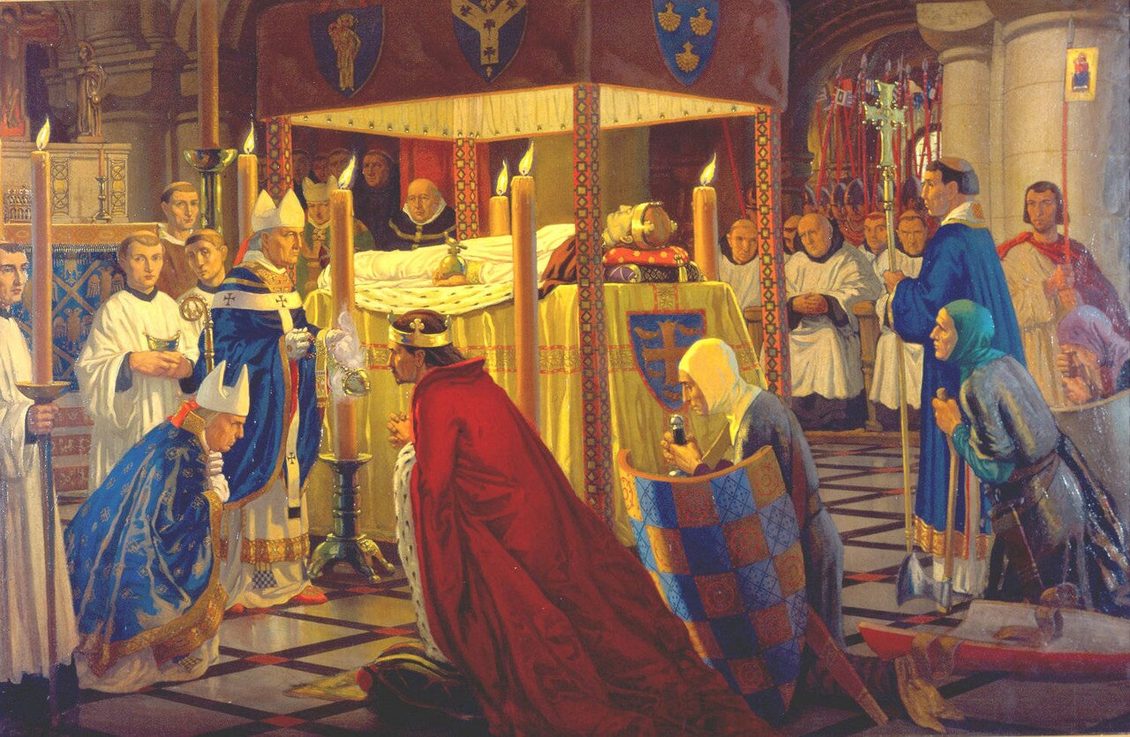
The Norman church was about 450 feet (137 metres) long, with an apsidal east end. The abbey held more than 230 relics, traditionally including the hand of St James. The round “Sumer is icumen in” is traditionally said to have been written down here in about 1240, and Parliament met at the abbey in 1453.
Dissolution, siege and prison
The abbey was dissolved in 1539, and the last abbot, Hugh Faringdon, was hanged, drawn and quartered in Reading. The abbot’s lodging became a royal residence, which Elizabeth I visited. In the Civil War siege of 1643 the ruins were quarried for stone. In 1785–86 the young Jane Austen attended a girls’ boarding school in the room over the Abbey Gateway. From 1786 a gaol was built over the eastern end, destroying the apse and the Lady Chapel; the present cross-shaped prison dates from 1844, and Oscar Wilde was held there in 1895–97. The prison closed in 2013–14.
The ruins were scheduled as a monument in 1915. Parts were closed in 2008 and the whole site in 2009; after the £3.15 million Reading Abbey Revealed project they reopened on 16 June 2018.
The visitor’s cheat sheet
| Where | Abbey Ruins, Abbey Street, Reading RG1 3BA; also entered from Forbury Gardens (RG1 3BB) and Chestnut Walk |
|---|---|
| Opening hours | Ruins: daily, dawn to dusk, closed for occasional ticketed events and private hire (check before you go). Reading Museum: Tuesday–Friday 10am–4pm, Saturday 10am–5pm; closed Sunday, Monday and bank holidays |
| Admission | Free (no charge is listed; the museum described the ruins as free to visit when they reopened in 2018). Reading Museum is free, with a suggested donation of £5 |
| Services | St James’s Church (Catholic): Saturday 6pm; Sunday 11am and 12.30pm; weekdays 12.30pm |
| Tours | Abbey Quarter tours, including the inside of the Abbey Gateway, are run in summer and booked through the museum; free Abbey Town Trail and sculpture trail maps |
| Access | The council describes much of the waterside as accessible; the ruins have gravel floors (see our photographs). Six Blue Badge spaces at the museum, which has no car park |
| Toilets | None listed at the ruins |
| How long | An hour for the ruins and Gateway; two hours with the museum |
Hours and admission checked against the official site in November 2026. They change; the official site is always the last word.
What to see
Reading Museum
Start in the museum in the Town Hall, close to the station. Its Abbey gallery, opened in 2018, has a reconstructed cloister with original Romanesque carved stones, a full-scale replica column and arch painted in white, red and black, a twelfth-century Latin book and a diorama of the abbey wharf. The museum also shows Britain’s Bayeux Tapestry, a full-size replica made in 1885–86 by the Leek Embroidery Society. Entry is free, with a suggested donation of £5.
The Abbey Gateway
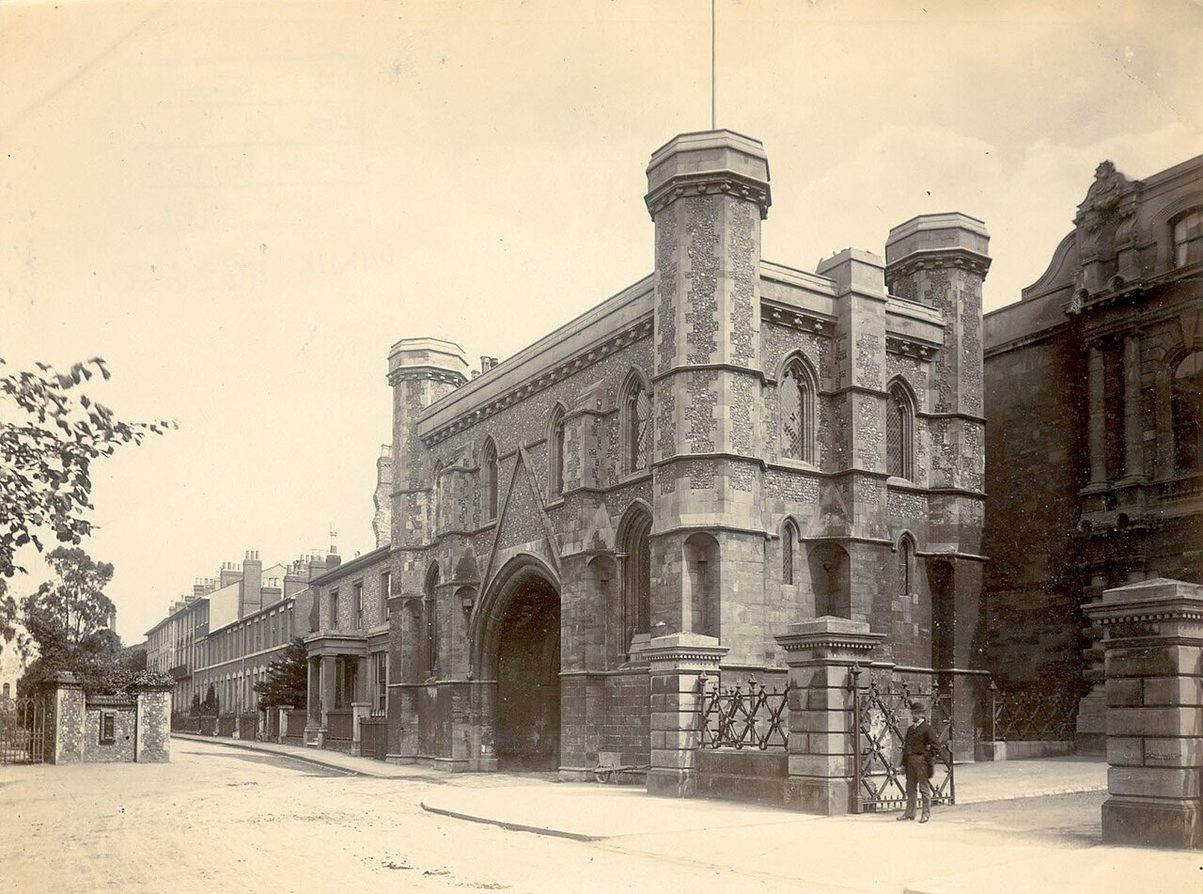
From the museum, walk to the Gateway, the abbey’s old inner gatehouse and later the entrance to the royal lodging. It collapsed in a gale in 1861 and was rebuilt by Sir George Gilbert Scott; the twelve carved heads were added in 1900 by Andrew Ohlson. It was restored in 2017–18 and is listed Grade I. Walk through the arch freely; the upper room, where Jane Austen went to school, is seen only on a booked tour.
Forbury Gardens
The Forbury, beside the abbey, was laid out as a public park in the 1850s (sources give dates from 1855 to 1861). The great Maiwand Lion, by George Blackall Simonds, was unveiled in the 1880s. Look also for the grey stone memorial cross to Henry I of 1909, the bandstand and the Forbury mound, which core samples taken in 2017 suggest is probably a Civil War earthwork rather than a Norman castle. A kiosk sells coffee, ice cream and light lunches.
The south transept and Henry I’s plaque
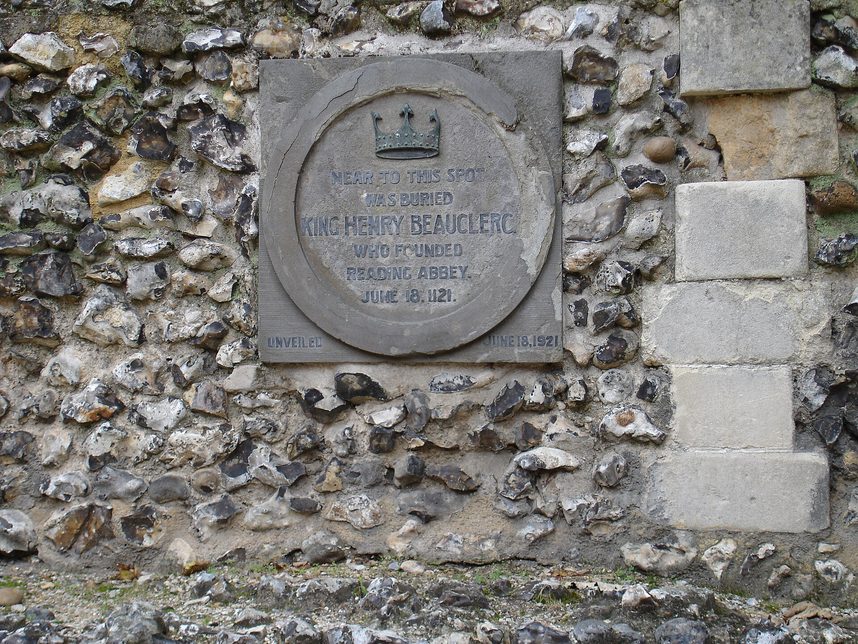
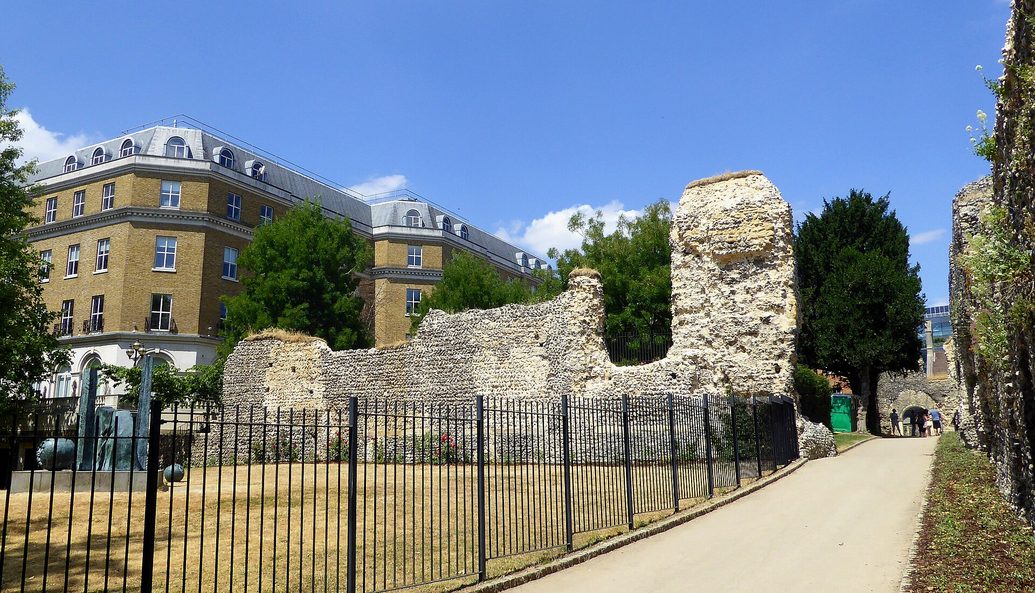
Enter the ruins from the gardens through the archway. The tall flint walls of the south transept survive better than the north. On the wall opposite, which is now part of a day nursery, is the plaque to Henry I, first put up for the 800th anniversary on 18 June 1921 and recreated in 2018.
The chapter house
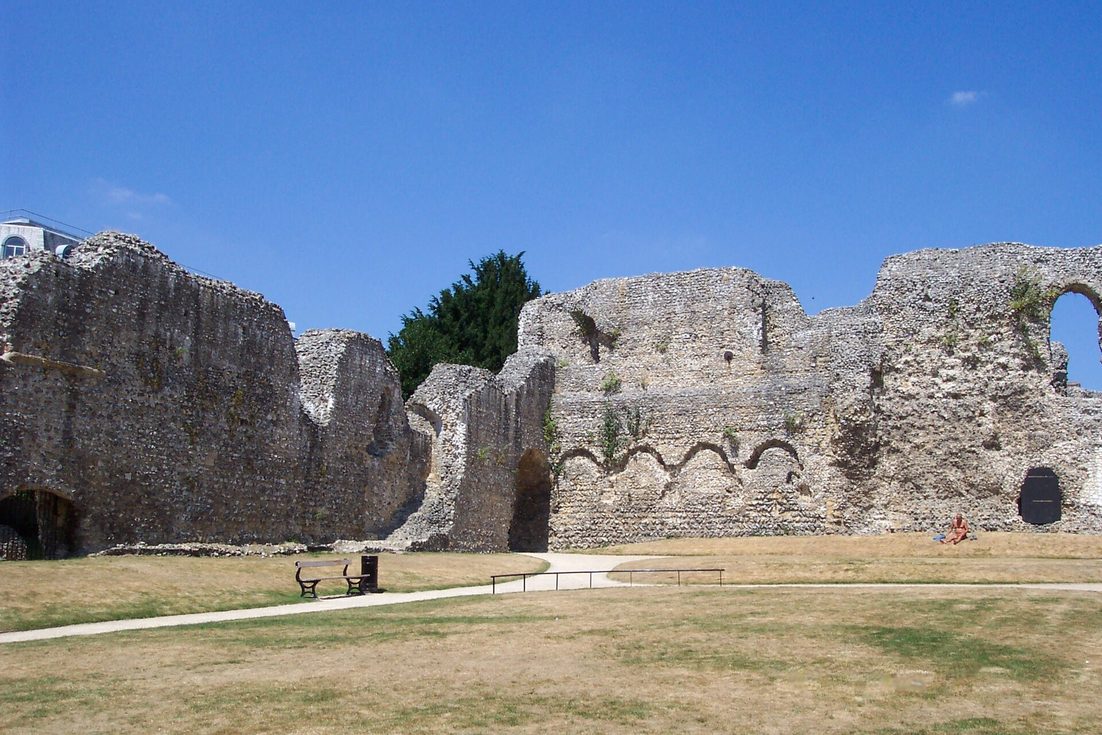
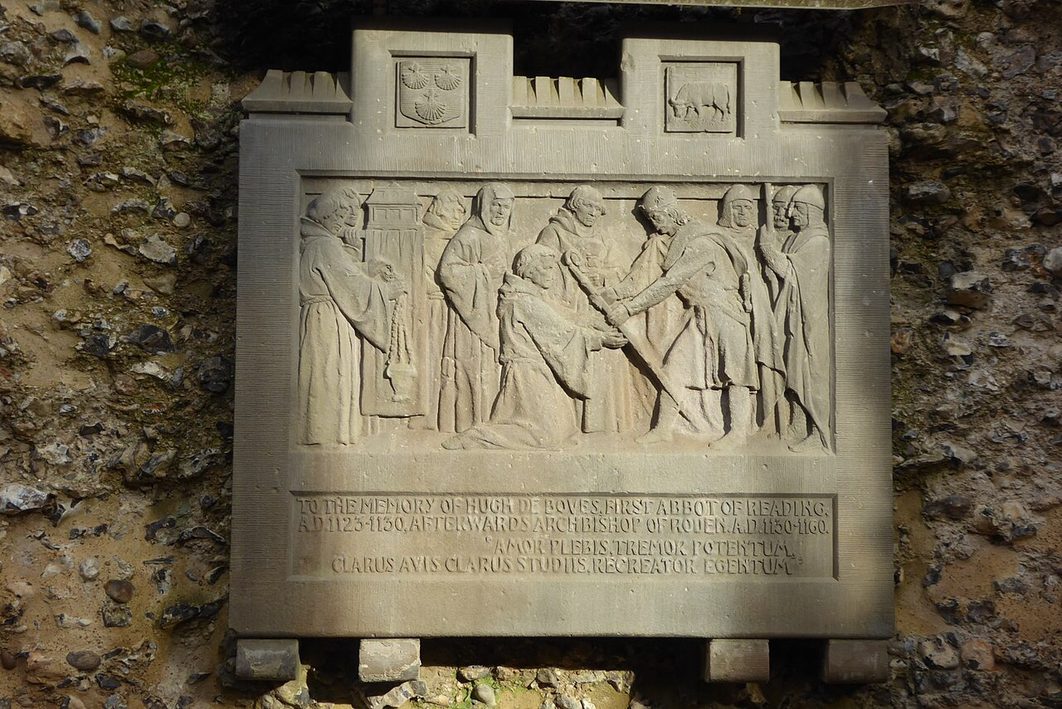
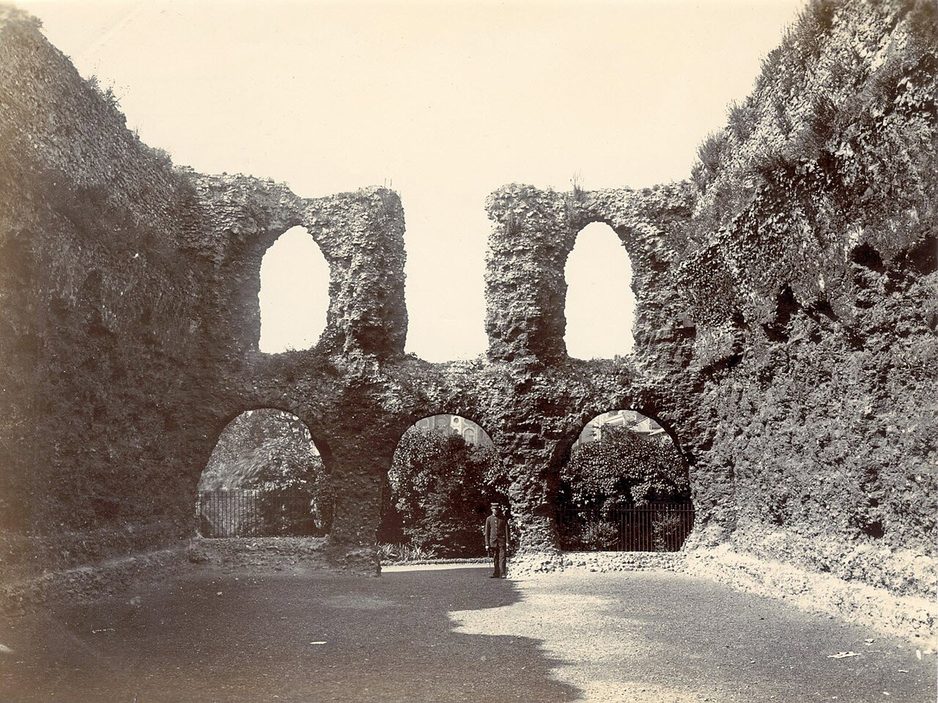
Next to the treasury, the apsidal chapter house is the most complete room, with a triple entrance and three great windows above. Inside are two stone plaques of 1911 to the first and last abbots, and a carved plaque with the words of “Sumer is icumen in” (dated 1911 or 1913); stainless-steel canopies were added in 2019 to protect them.
The dormitory and the refectory
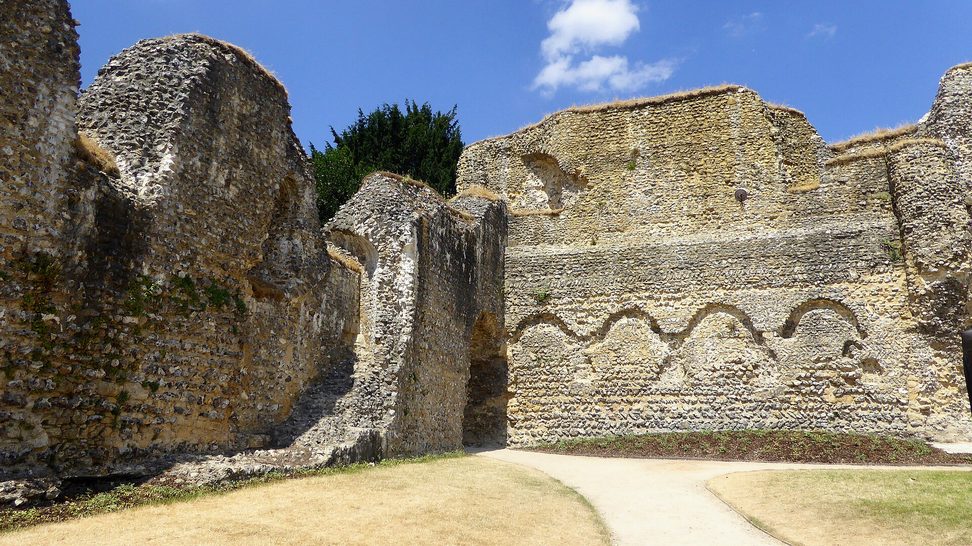
The dormitory survives as a basement that runs beyond the line of the cloister, with the necessarium beyond. Of the refectory, on the south side of the cloister, only the east corner and the south wall can be traced. Information panels around the site explain each part.
Two modern sculptures
In the Abbey Gardens beside the ruins stands Elisabeth Frink’s bronze Robed Figure of 1988, a standing figure bought by public subscription. Close by is a bronze of 2000 by Jens-Flemming Sørensen, which has no formal title.
The mill arch and St James’s Church
Off Abbey Street, behind the tower called The Blade, an arch over the Holy Brook is all that remains of the abbey mill, used until the twentieth century. Next to the ruins, St James’s Catholic church was designed by A. W. N. Pugin in Norman style, of flint with stone dressings and partly of abbey stone; it opened in 1840 and was enlarged in the twentieth century.
The Hospitium and the gaol
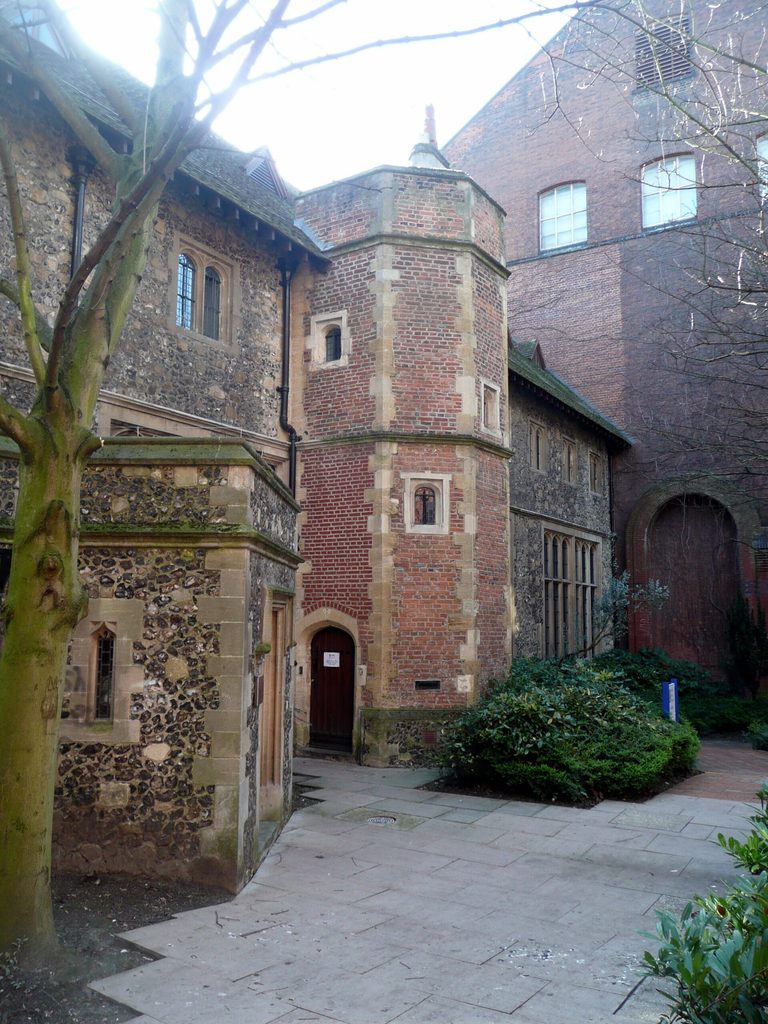
West of the Gateway, beside St Laurence’s churchyard, the Hospitium of St John the Baptist was founded in 1189. Its surviving building later housed the grammar school and is now a children’s nursery, seen only from outside. To the east, Reading Gaol can be seen from Chestnut Walk, where there is a memorial to Oscar Wilde. The Riverside Museum at Blake’s Lock, open April to October, is about five minutes along the towpath.
A note on our pictures
We do not show Frink’s Robed Figure or Sørensen’s bronze, because both artists died within the last seventy years and their works are still in copyright.
Getting there
Reading station is the best way in: the museum is about a two-minute walk from it and from the main bus stops, and the ruins a further five to ten minutes through Forbury Gardens. There is no car park at the museum; the nearest are in Garrard Street and Queen’s Road.
Where to stay
Reading town centre, a short walk from the ruins, has the most places to stay.
This link goes to Booking.com. This site earns nothing from it at present — it is here because it is the quickest way to check what is actually available.
Don’t miss
- The chapter house The most complete room of the abbey.
- The Abbey Gateway Where Jane Austen went to school.
- The Henry I plaque Near the king’s lost grave.
- The Abbey gallery Carved Romanesque stones in the museum.
Insider tips
Do the museum first. The Abbey gallery’s carved stones and replica arch help you picture the ruins; allow two hours for both.
Christmas. The museum’s opening-times page gives it as open on Thursday 24 December 2026, closed 25 December to 1 January and reopening on Saturday 2 January 2027; another page says it closes from Christmas Eve, so check.
Book a Gateway tour. The inside of the Gateway is open only on tours, which are run in summer and on Heritage Open Days.
Common questions
When are the ruins open?
The Reading Museum opening-times page gives the Abbey Ruins as open daily, dawn to dusk, closing for occasional ticketed events and private hire. Check before a special trip.
Is there a charge?
No charge is listed for the ruins, and the museum said on their reopening in 2018 that they were free to visit. Reading Museum is free, with a suggested donation of £5.
Is Henry I still buried there?
He was buried before the high altar in January 1136, but the tomb was lost. A 2016 ground-penetrating radar survey found possible graves, with no direct connection to Henry I, so nobody knows whether he still lies there.
Can I go inside the Abbey Gateway?
Only on a booked tour. Anyone can walk through the archway and see the building from outside; tours of the Abbey Quarter, including the Gateway, are booked through the museum’s website.
How far is it from the station?
The museum gives itself as a two-minute walk from Reading station and the main bus stops, and the ruins as a further five to ten minutes through Forbury Gardens.
Can I visit Reading Gaol?
No; the former prison is closed, and plans for its future were still unsettled in early 2026. You can see its walls from the Abbey Quarter and Chestnut Walk.
More English churches
- St George’s Chapel, Windsor — royal chapel and burial place of kings
- Dorchester Abbey — an abbey church on the Thames in Oxfordshire
- Christ Church Cathedral, Oxford — a Norman priory church turned cathedral
See all the cathedrals and churches worth visiting in England →