
St George’s Chapel, Windsor Castle
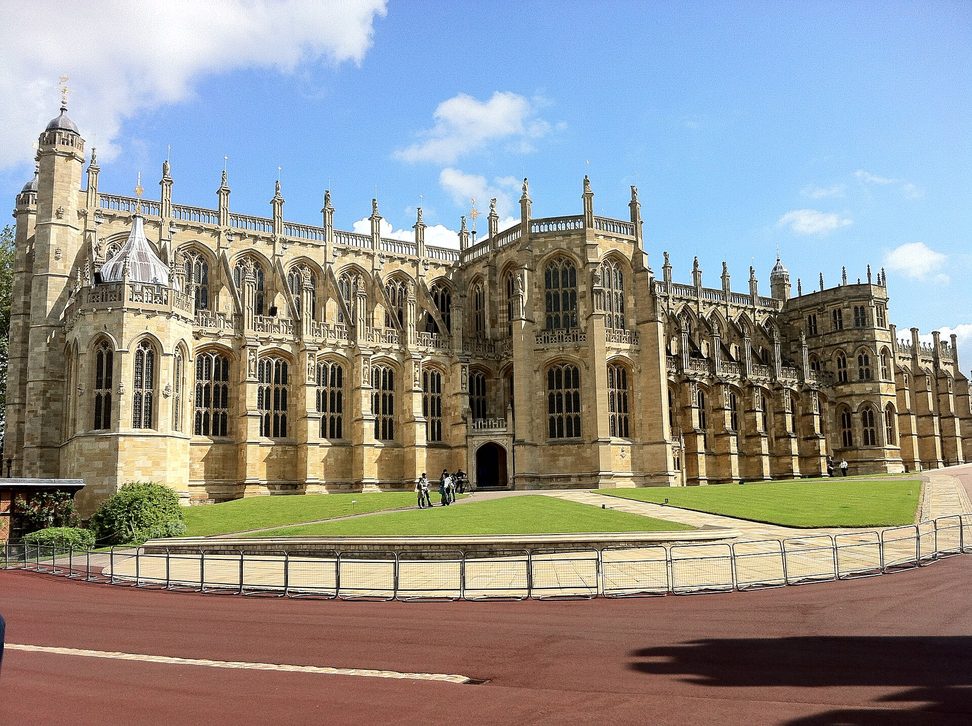
In the Lower Ward of Windsor Castle, St George’s Chapel is the church of the Order of the Garter and one of the great Perpendicular Gothic buildings of England. Begun by Edward IV in 1475 and finished under Henry VIII in 1528, it has a stone fan vault, the carved Garter stalls with their banners, and the tombs of kings and queens from Edward IV to Elizabeth II.
The chapel of the Garter
In 1348 Edward III founded the College of St George at Windsor, together with the Order of the Garter, and gave them the older chapel of St Edward the Confessor built by Henry III. The present building was begun by Edward IV in 1475, with Henry Janyns as master mason. Edward IV died in 1483 and was the first king buried here; the next year Richard III had the body of Henry VI moved to Windsor. The quire was roofed by about 1484. After a pause, work resumed in 1504, paid for by the will of Sir Reginald Bray; the nave was finished by 1509 and the stone vault in 1528, under Henry VIII.
The chapel was plundered during the Civil War, and in 1649 Charles I was buried in the vault under the quire. George III built a royal vault beneath the chapel in 1804–10. In the nineteenth century the old Lady Chapel at the east end was remade as the Albert Memorial Chapel. In 1948 George VI revived the annual Garter Service. The King George VI Memorial Chapel was added in 1962–69. A royal wedding took place here in 2018, and Elizabeth II was buried in the chapel in 2022.
The visitor’s cheat sheet
| Where | Windsor Castle, Windsor, Berkshire SL4 1NJ; on the north side of the Lower Ward. Enter through the Castle Admission Centre |
|---|---|
| Opening hours | For visitors: Monday, Thursday, Friday and Saturday, 10am–4pm; access may be limited after 2.30pm on busy days. Closed to visitors on Tuesdays, Wednesdays and Sundays. The Castle can close at short notice, so check before you go |
| Admission | Included in the Windsor Castle ticket. 2026 prices (advance / on the day): adult £32 / £36; 18–24 £21 / £24; 5–17 and disabled visitors £16 / £18; under 5 free; an access companion travels free with a disabled ticket. Check the Royal Collection Trust website |
| Services | Free, no ticket. Evensong Monday–Saturday at 5.15pm (Evening Prayer on Wednesdays); Sundays at 8.30am, 10.45am, 12 noon and 5.15pm. Arrive at the King Henry VIII Gate 15 minutes early |
| Tours | A free multimedia guide covers the Castle and the chapel, with a family version for ages 7–11 |
| Access | Three steps with a handrail at the south door; a step-free entrance is available through staff, with ramps inside. Cobbled, sloping roads up to the chapel. Assistance dogs welcome; assistive listening system; expect airport-style security checks at the Castle entrance |
| Toilets | In the Castle; a Changing Places toilet is in Engine Court |
| How long | About an hour for the chapel; half a day with the Castle |
Hours and admission checked against the official site in November 2026. They change; the official site is always the last word.
What to see
The visitor route is one-way and staff-directed: in at the south door, round the nave, along the north quire aisle, through the quire, back along the south quire aisle and out through the Dean’s Cloister and the Galilee Porch.
Outside: the Lower Ward
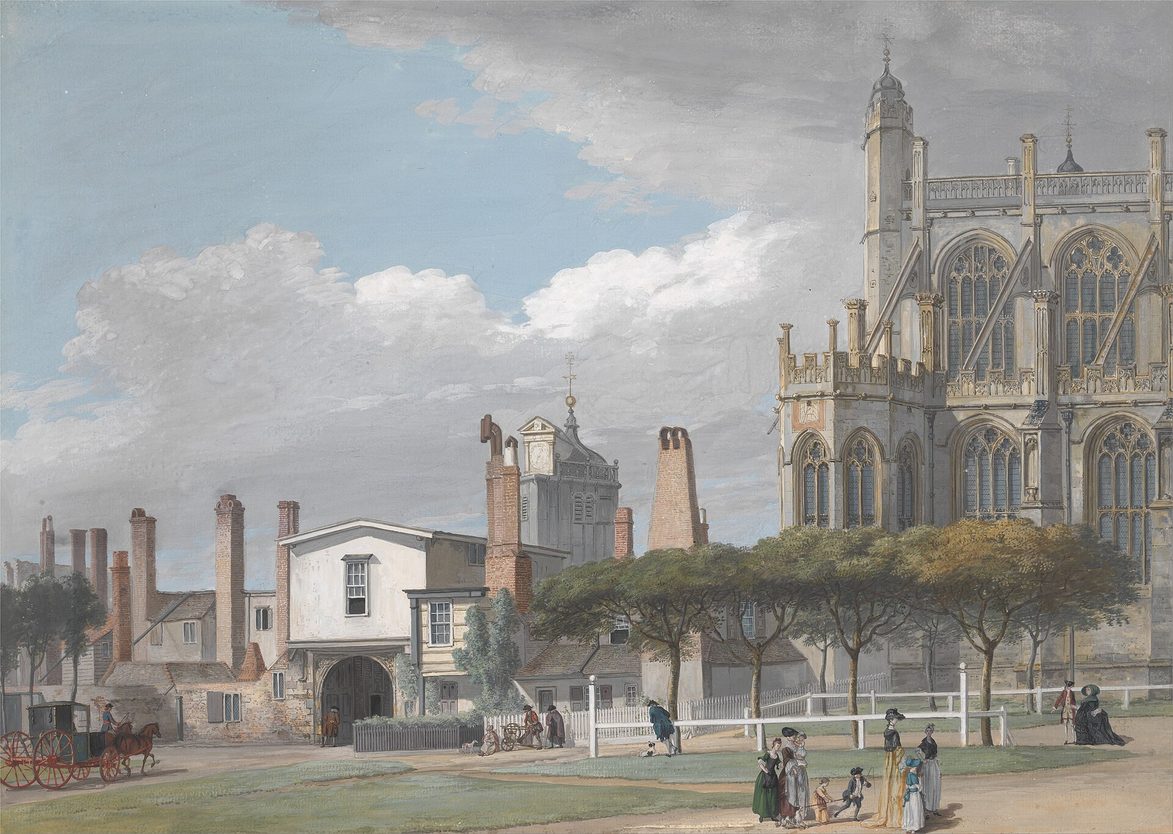
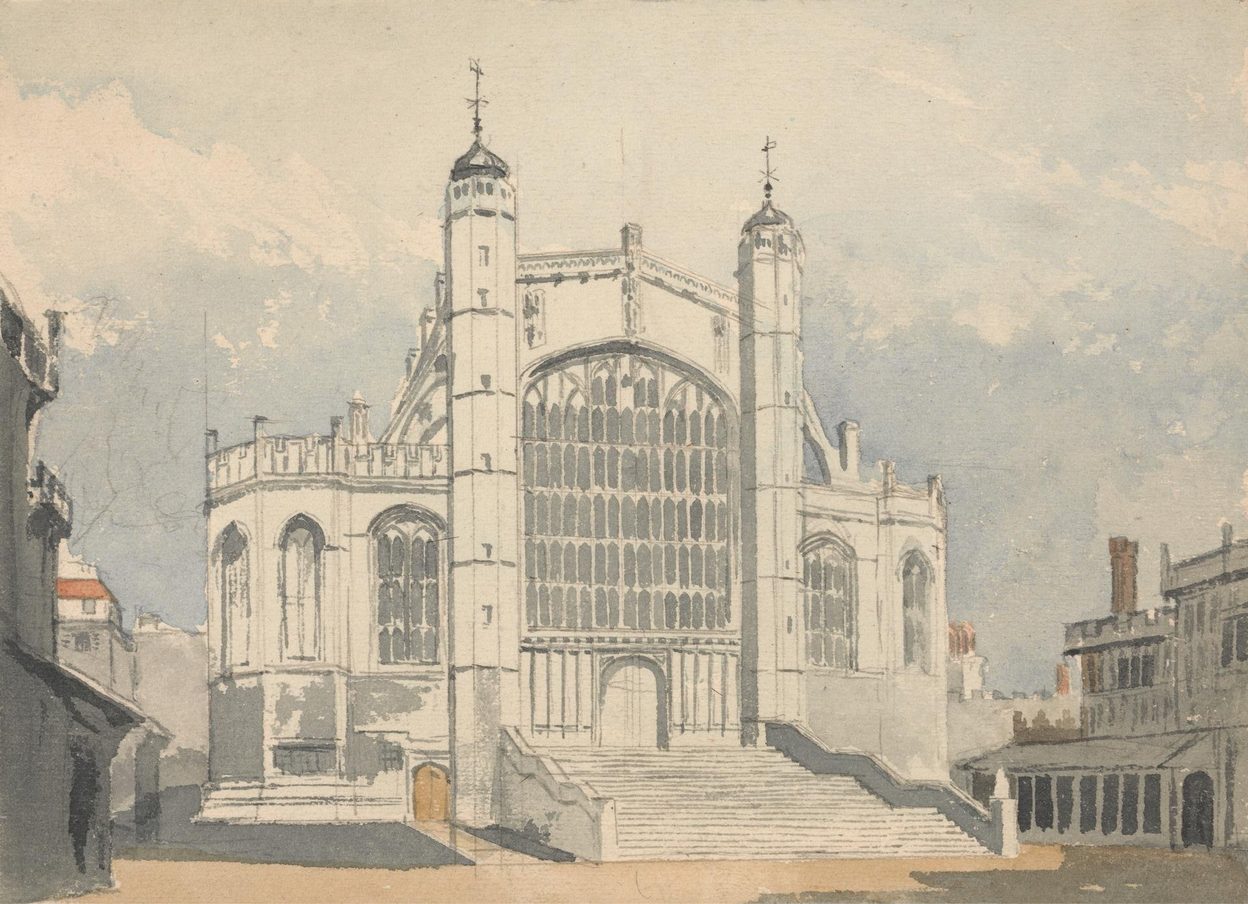
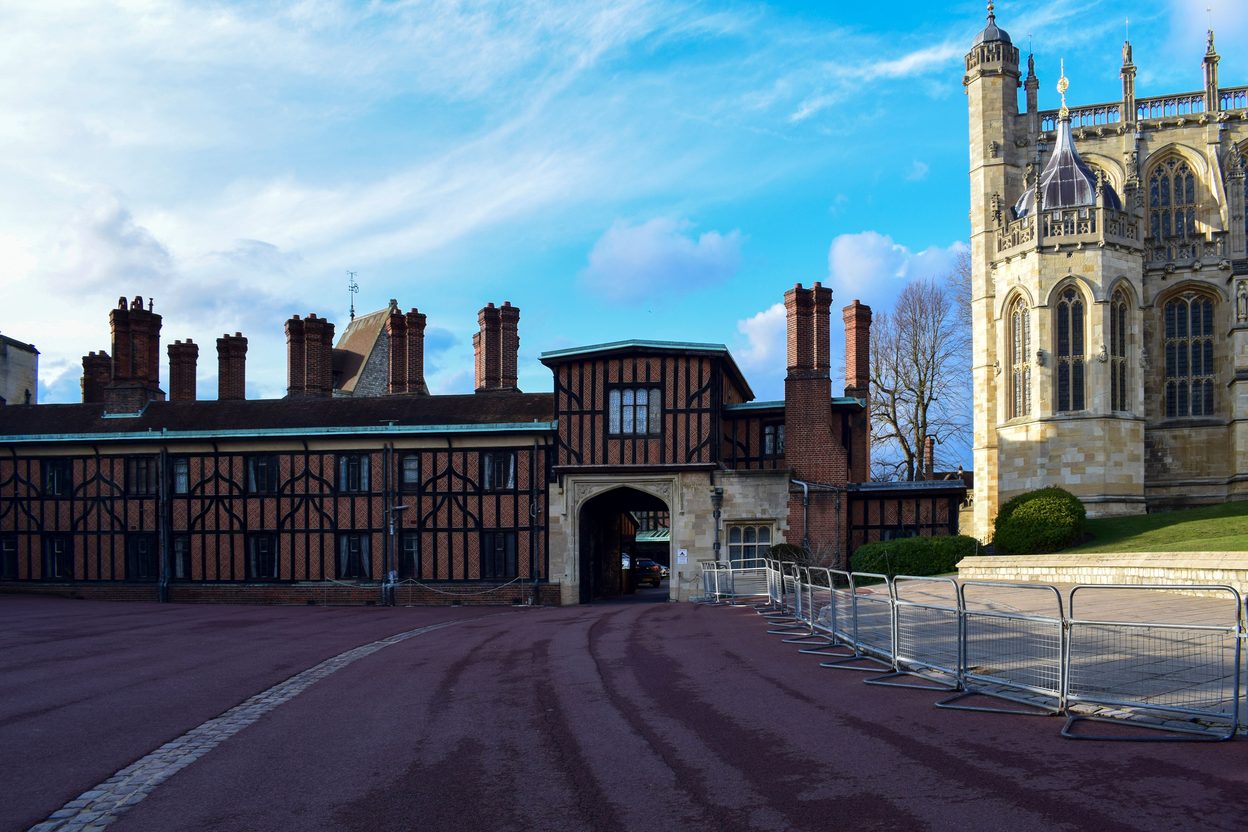
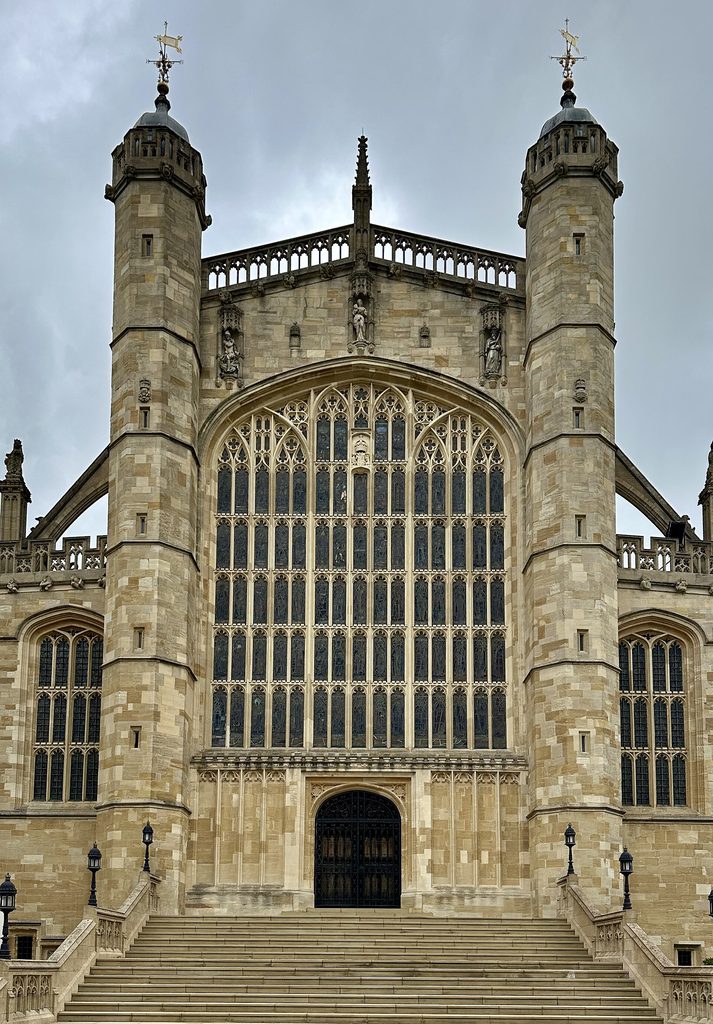
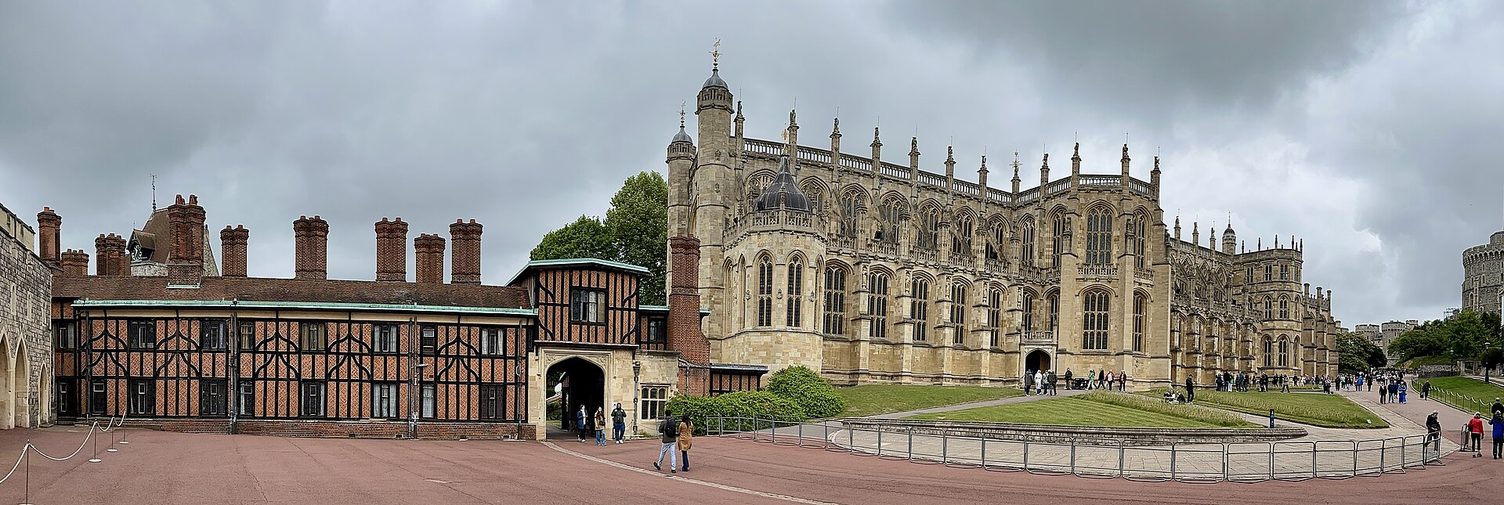
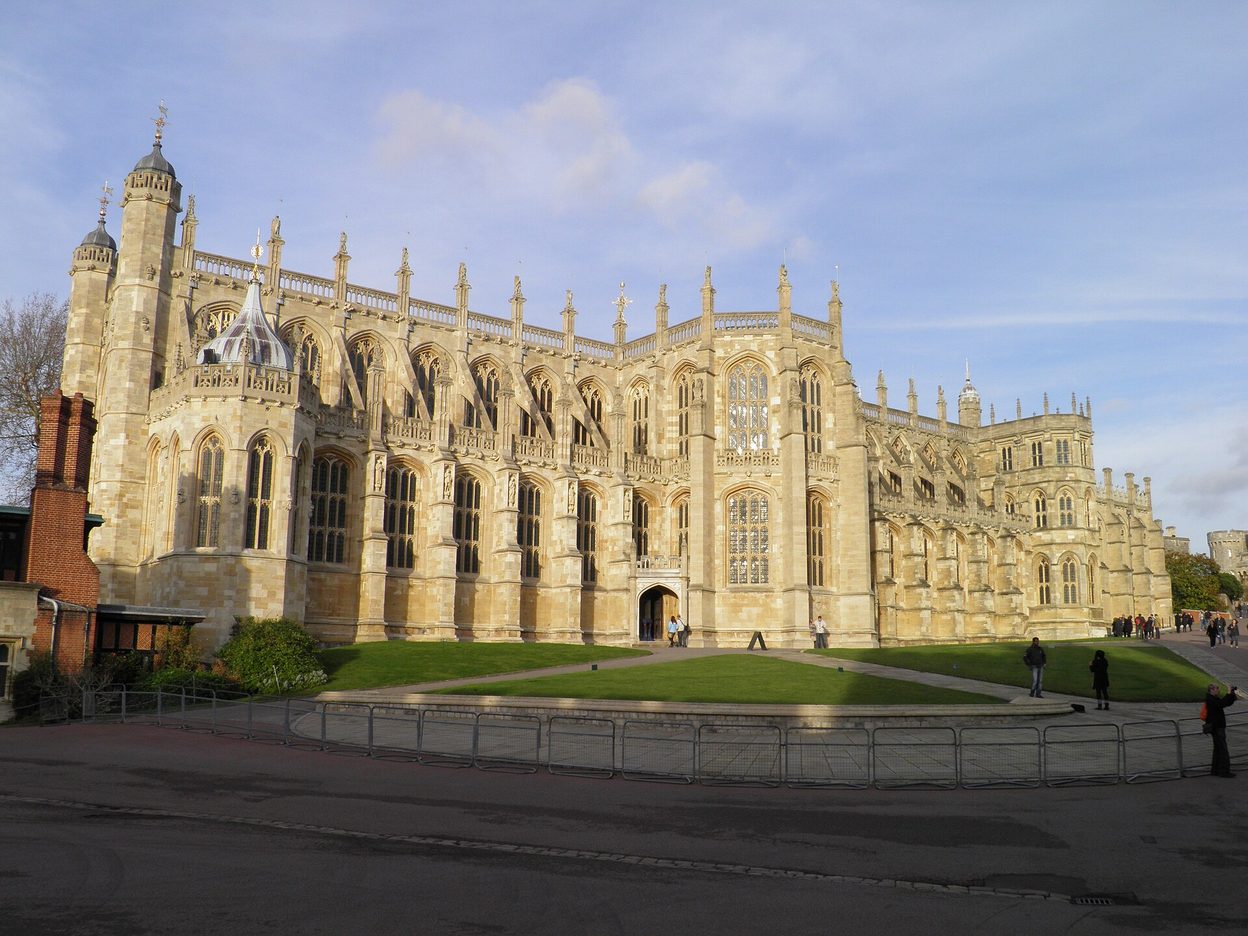
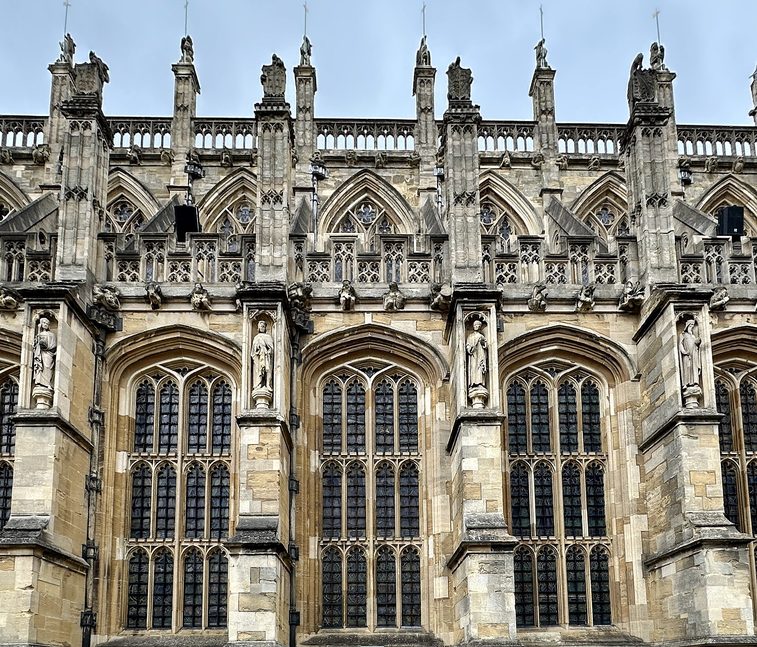
In the Lower Ward you see the chapel’s west front and its great window above a flight of steps. Opposite the west end is the half-timbered Horseshoe Cloister. Along the south side, look up at the pinnacles on the buttresses: the carved heraldic beasts there are of 1925, replacing earlier ones taken down in 1682 when the stone had weathered.
The south door and the nave
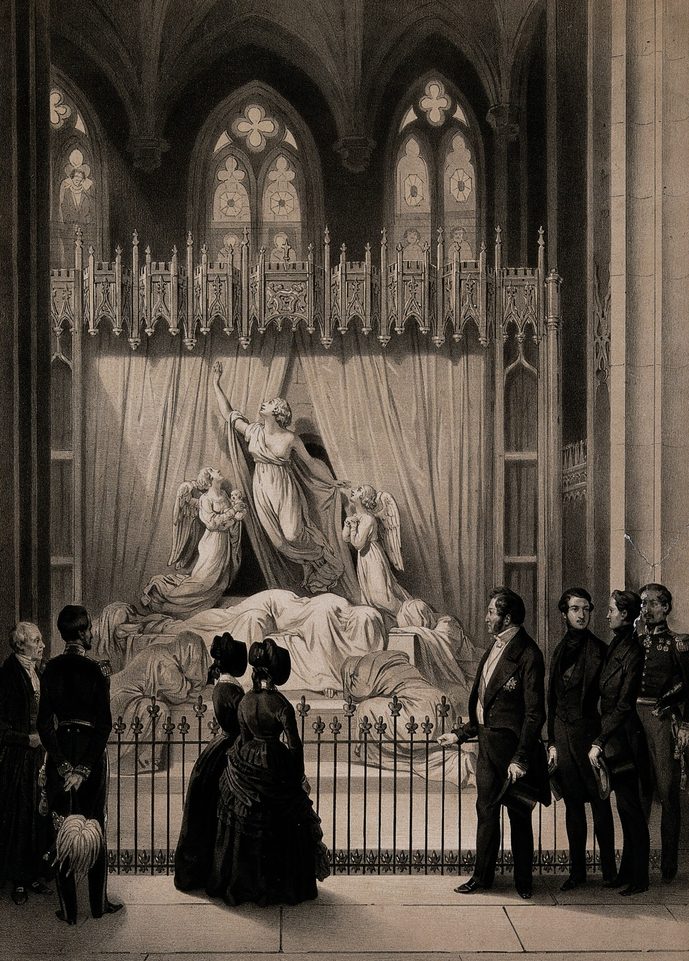
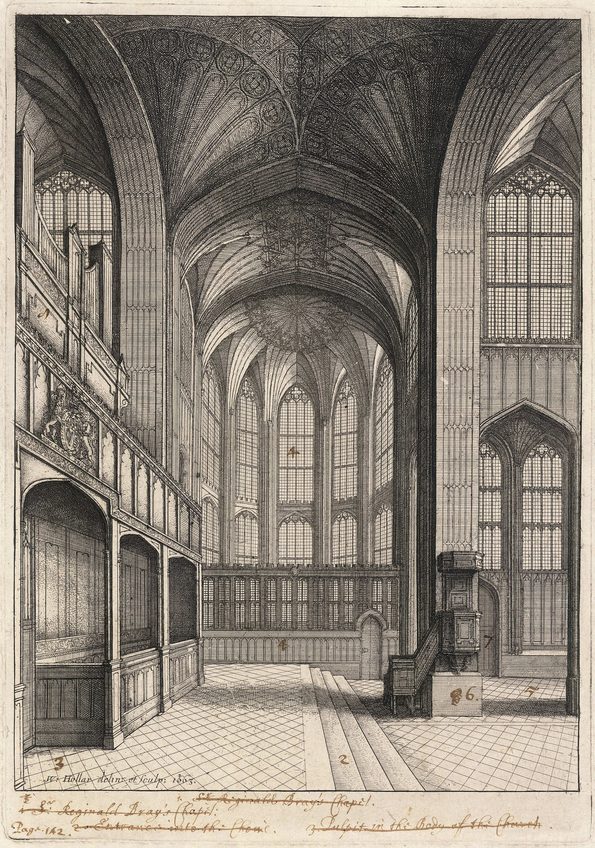
Enter by the south door and turn left into the nave, under its stone fan vault. At the west end the great West Window, about 11 metres high and nearly 9 metres wide, holds glass completed in 1509 with some 75 figures of kings, saints and popes. The font is in the south aisle. The Urswick Chantry, built in 1507, holds the marble monument to Princess Charlotte, who died in 1817. It is by Matthew Cotes Wyatt and shows a shrouded figure rising, with an angel carrying her baby, above mourners. In the nave you also pass the tomb of George V and Queen Mary, the Beaufort Chantry and the chantry of Sir Reginald Bray, who died in 1503.

The north quire aisle
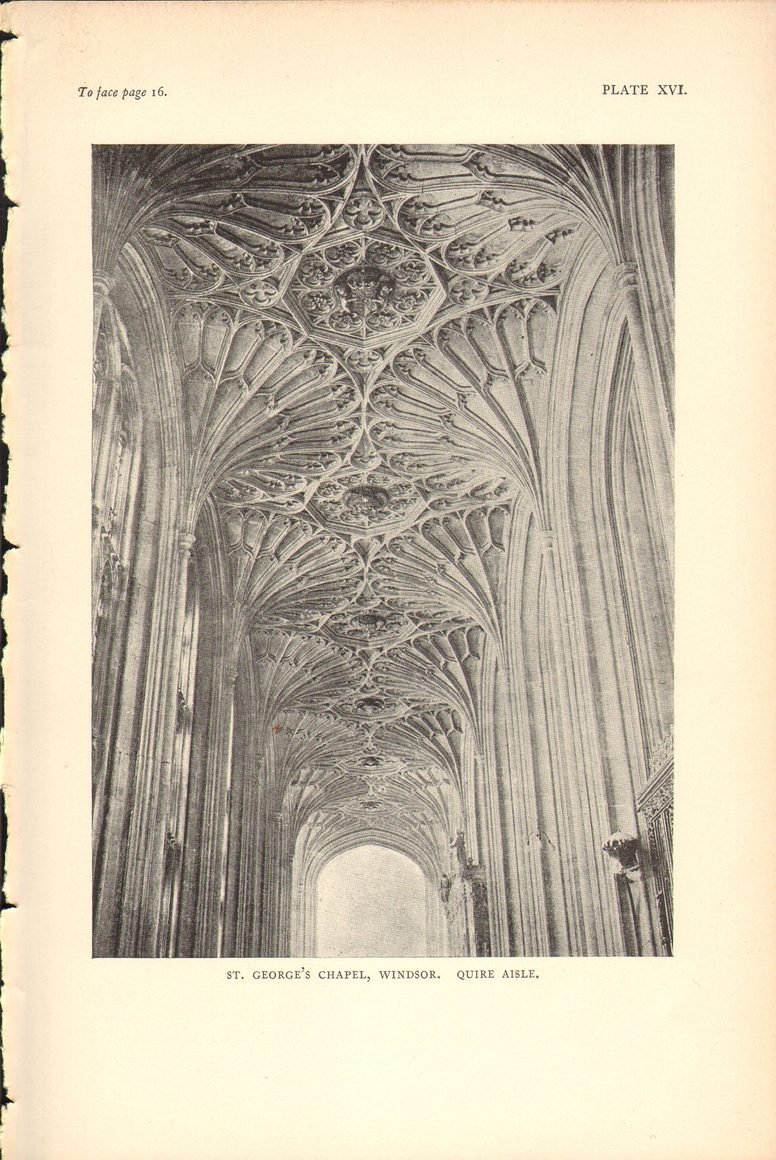
The aisles have their own fan vaults. Off the north quire aisle is the King George VI Memorial Chapel, the only addition to the outside of the building since 1528. Its ledger stone carries the names of George VI, Queen Elizabeth the Queen Mother, Elizabeth II and Prince Philip, with a metal Garter star. Further on, the Hastings Chantry, built for the family of William, Lord Hastings, who was executed in 1483, has painted scenes from the life of St Stephen. Near the end of the aisle is the tomb of Edward IV, whose iron gates were made in 1477–84 by the smith John Tresilian. Its position was forgotten and found again in 1813.
The quire
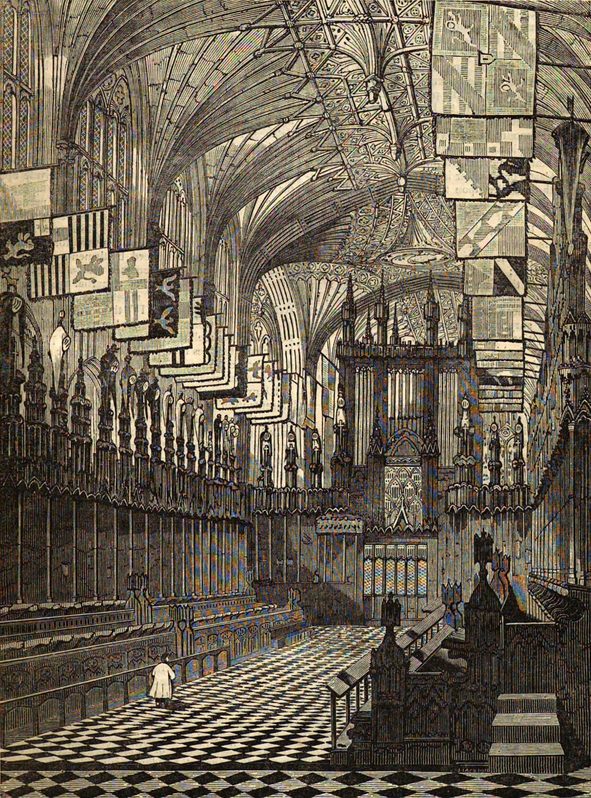
The quire, begun in 1475, is the heart of the Order of the Garter. Its oak stalls were carved from about 1478 into the 1480s, and above each knight’s seat hang his banner, helm and crest; when a knight dies his banner is taken down, but the small engraved brass plates on the stalls stay, and there are now some 700–800 of them. The stone vault over the quire was built by William Vertue and John Hylmer under a contract of 1505. Look up for the carved wooden oriel window made by Henry VIII for Katherine of Aragon. In the centre of the floor a black marble slab marks the vault of Henry VIII, Jane Seymour and Charles I. You leave the quire under the organ screen.

The south quire aisle
Here are the door of the Oxenbridge Chantry, carved with a punning ox and bridge, a painting of Edward III and his great sword, 6 feet 8 inches long. Henry VI lies here too, beside an iron box once used for pilgrims’ offerings, and the chapel points out a red ironwork door more than 700 years old. Display cases show treasures of the Chapter Library and Archives.
The Dean’s Cloister and the Galilee Porch
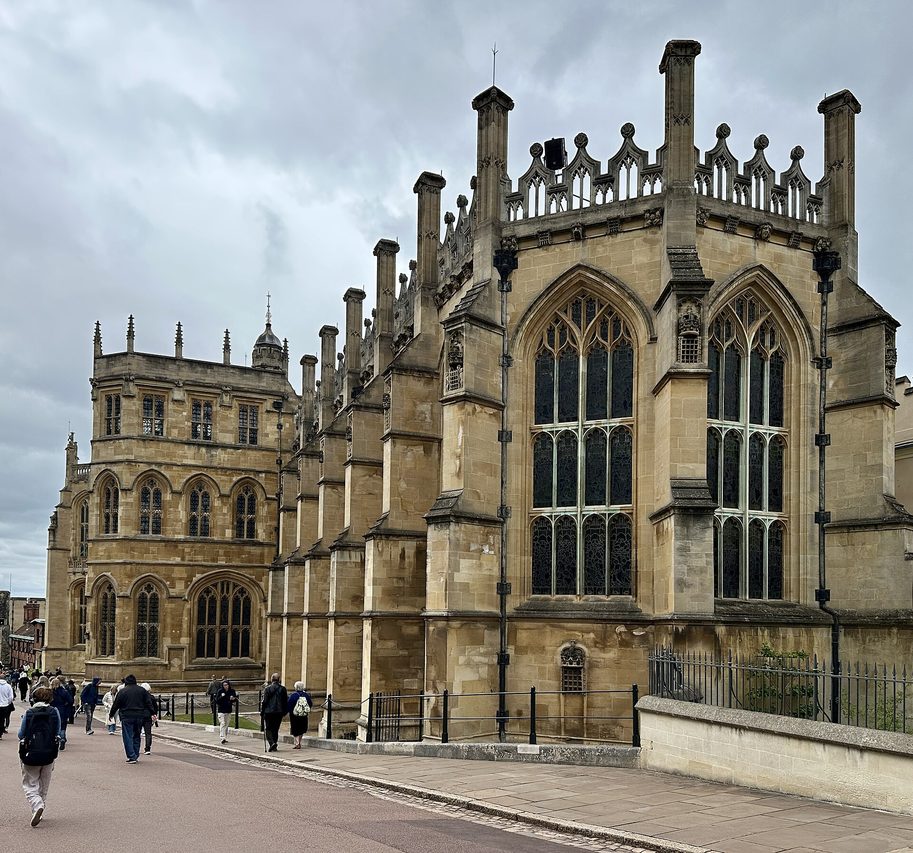
The route ends in the Dean’s Cloister, with tracery of 1352 and the chapel shop, and you leave through the Galilee Porch. Outside, walk round to the east end to see the Albert Memorial Chapel, remodelled in 1862–75 by Sir George Gilbert Scott as a memorial to Prince Albert. It is not part of the chapel’s described route.
A note on our pictures
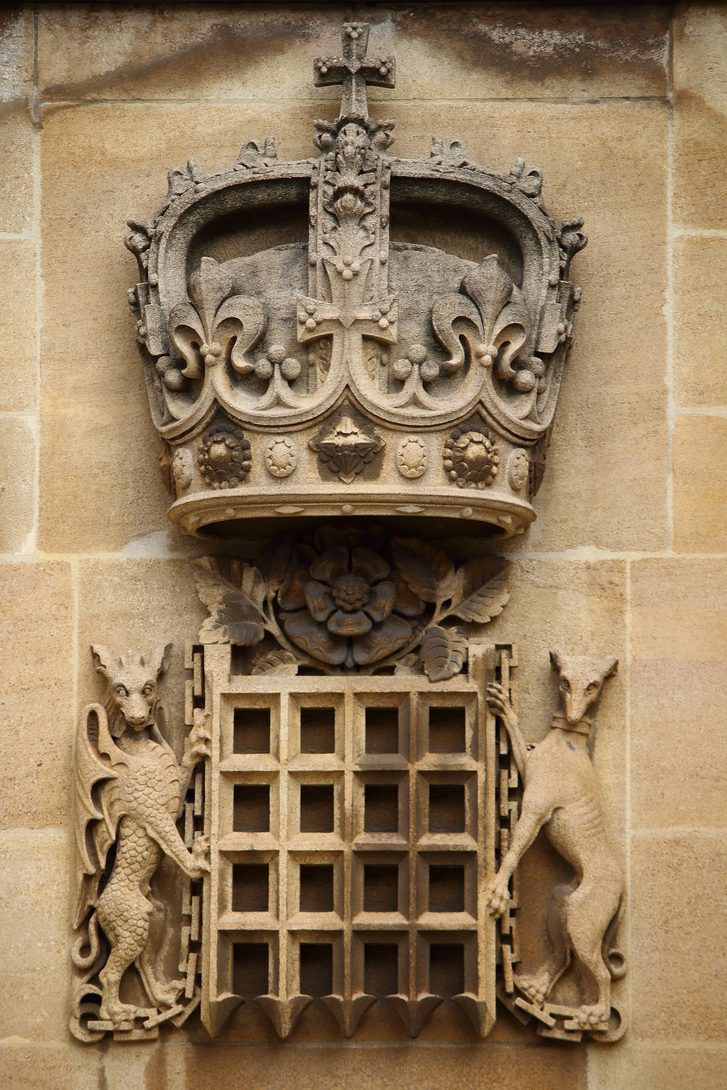
Photography is not allowed inside St George’s Chapel, so all our interior pictures are old prints and photographs, from Hollar’s seventeenth-century etching to early twentieth-century photographs. Our modern photographs show only the outside. The King George VI Memorial Chapel, designed by George Pace, and the embroidered panels by Beryl Dean in the Rutland Chantry are modern work still in copyright, so we describe them in words only.
Getting there
From London Paddington, GWR trains run to Windsor & Eton Central with a change at Slough, roughly every 20 minutes; the journey takes about 30–45 minutes. South Western Railway runs from London Waterloo to Windsor & Eton Riverside in under an hour. Both stations are in the town centre, a short walk uphill to the Castle. Buses run from Heathrow, about 25–30 minutes away, and from Slough, Staines and Bracknell. There is no visitor parking at the Castle; use the town-centre long-stay car parks.
Where to stay
Windsor has hotels and guest houses within walking distance of the Castle; Eton, across the Thames, is another option.
This link goes to Booking.com. This site earns nothing from it at present — it is here because it is the quickest way to check what is actually available.
Don’t miss
- The Garter stalls Banners, helms and brass plates in the quire.
- The fan vaults Stone vaulting, completed in 1528.
- Princess Charlotte’s monument Wyatt’s marble in the Urswick Chantry.
- Evensong Free, at 5.15pm most days.
Insider tips
Go early in the day. The chapel closes to visitors at 4pm, and access may be limited after 2.30pm when the Castle is busy.
Plan round the closed days. The chapel is not open to visitors on Sundays, Tuesdays or Wednesdays. Book Castle tickets for a Monday, Thursday, Friday or Saturday.
Christmas 2026. A third-party listing says the chapel closes early on 7 December (noon) and 11 December (1pm), and the Castle is closed on 24–26 December; the Festive Weekend is on 12–13 December. Confirm with the Royal Collection Trust.
Common questions
Can I take photographs inside?
No. Photography and filming are not allowed inside the chapel or the State Apartments, and phones must be switched off. You are welcome to take photographs in the Castle precincts outside.
Is the chapel open on Sundays?
Not to visitors. The Castle is open on Sundays, but the chapel is used only for worship that day. Anyone may come to a Sunday service free of charge.
Do I need a separate ticket for the chapel?
No. The chapel is part of the Windsor Castle visit, and there is no separate chapel ticket. In 2026 an adult ticket was £32 bought in advance or £36 on the day; check the Royal Collection Trust website.
Can I go to Evensong for free?
Yes. Services are free and need no ticket: arrive at the King Henry VIII Gate at least 15 minutes before the start. You see the chapel during the service, but not the visitor route or the State Apartments.
Is the Albert Memorial Chapel open?
It is not on the chapel’s own description of the standard visitor route, so expect to see it from outside only. Check on the day.
More English churches
- King’s College Chapel — another royal Perpendicular chapel with a fan vault
- Bath Abbey — a late-Gothic church with fan vaulting
- St Martin-in-the-Fields — on Trafalgar Square, London
See all the cathedrals and churches worth visiting in England →