
Alexander Nevsky Cathedral, Tallinn
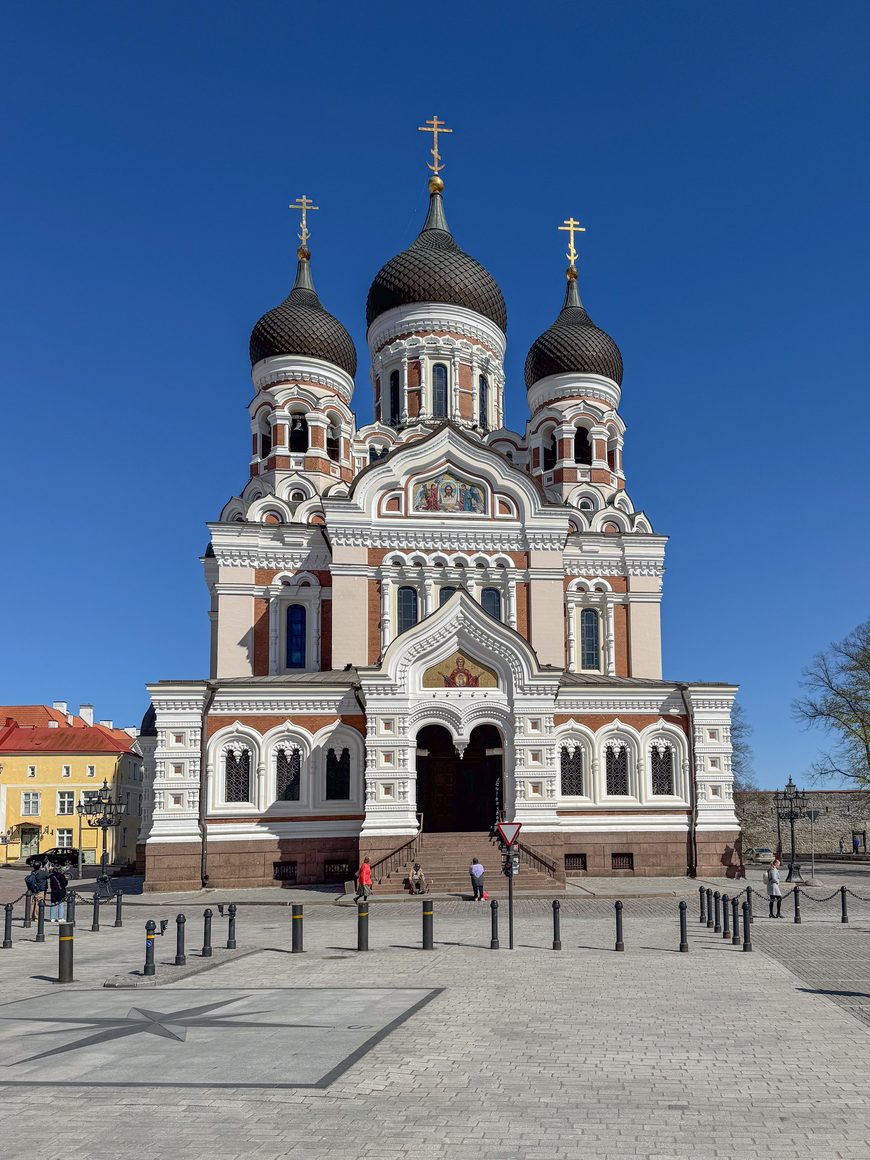
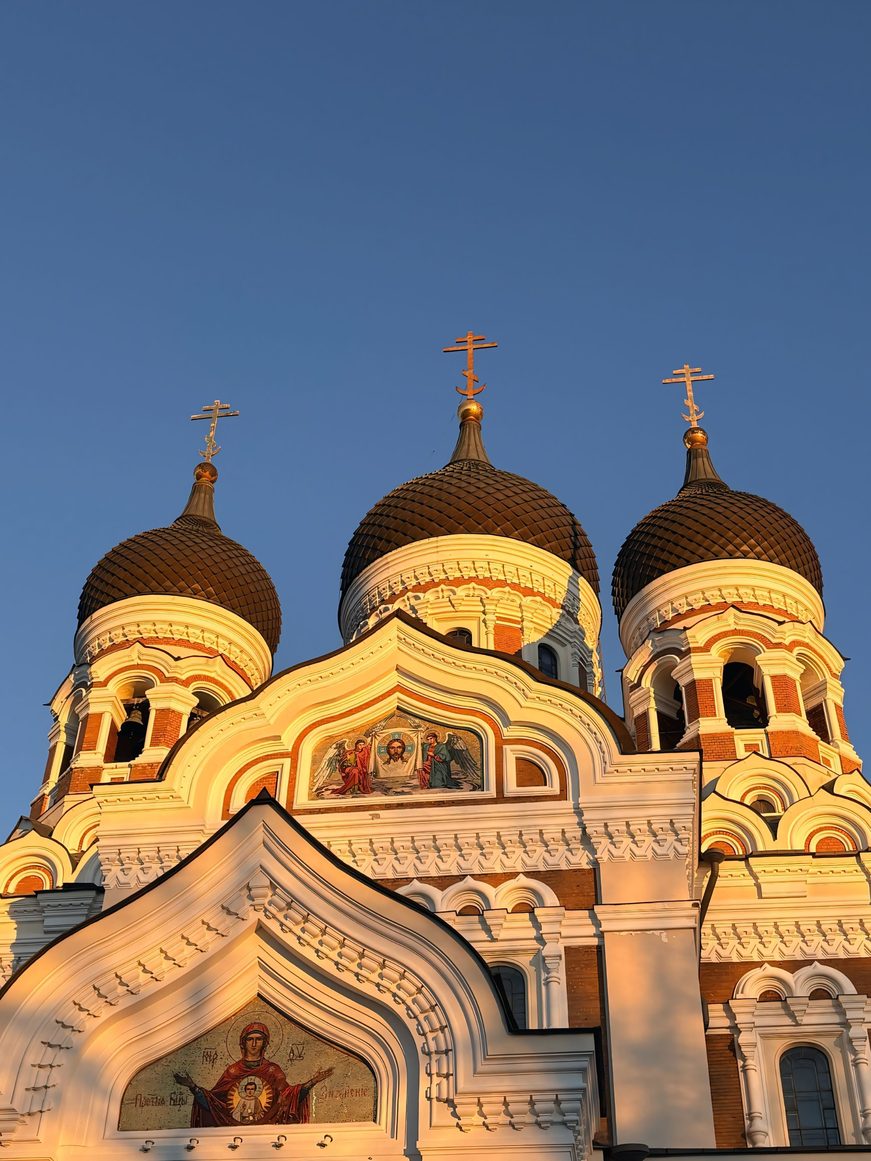
On the hill of Toompea, facing the castle where Estonia’s parliament sits, stands a church that looks as if it had been lifted out of Moscow: five onion domes, gold mosaics and the biggest bell in Tallinn. Alexander Nevsky Cathedral was built between 1894 and 1900, when Estonia was part of the Russian Empire. It is free to enter, its gilded iconostases glow in the candlelight, and it has been argued over almost since the day it was finished.

A Russian cathedral on Toompea
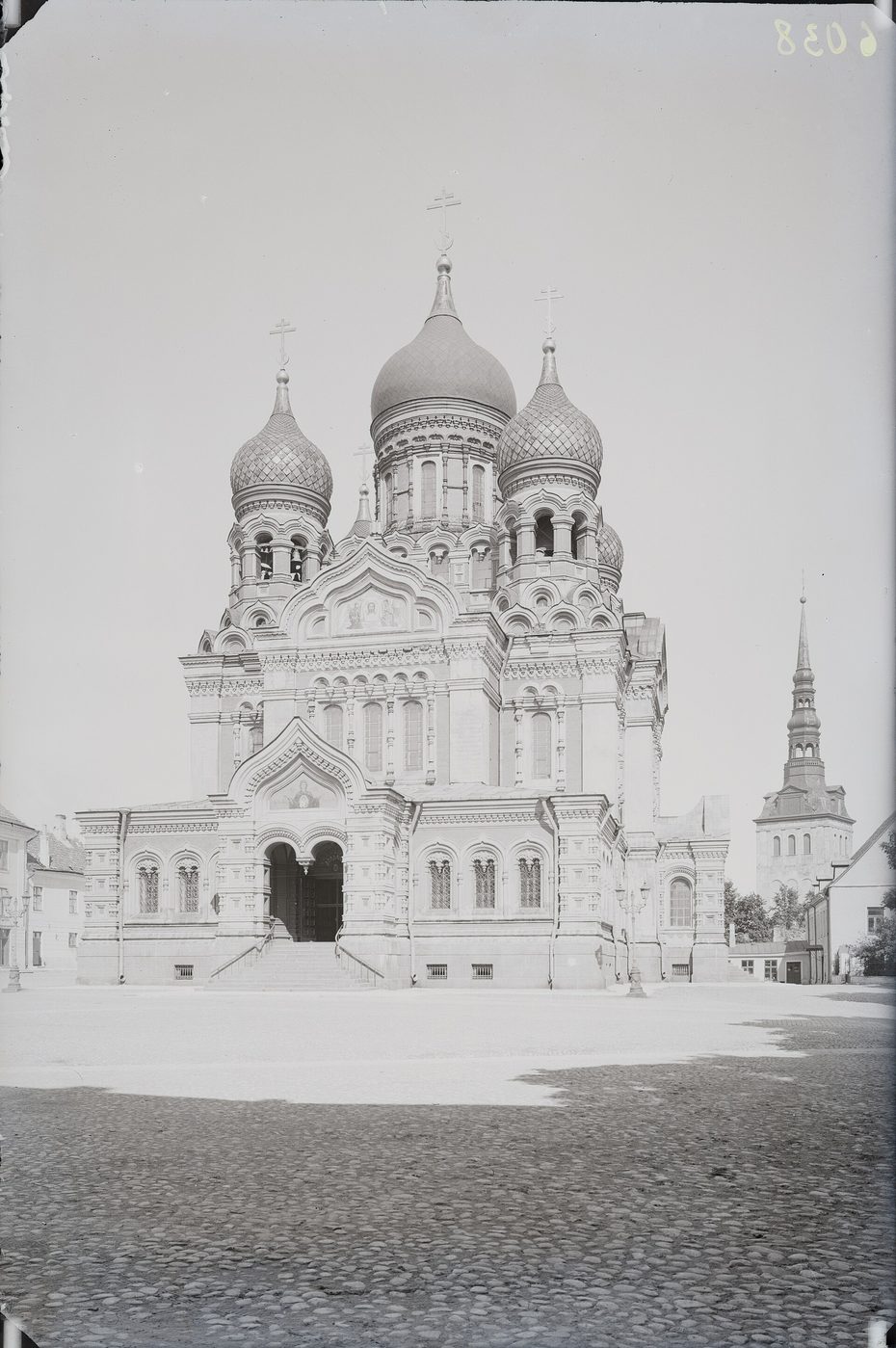
In the 1880s Tallinn’s Orthodox clergy and the governor, Prince Sergei Shakhovskoy, asked for a new cathedral to replace their small church in the lower town, and in 1888 the Tsar allowed money to be collected across the empire. After the imperial train crash at Borki that October, which Alexander III and his family survived, the church was dedicated to Alexander Nevsky, the Tsar’s patron saint. The site chosen was a garden in front of the governor’s residence on Toompea, the heart of the old German nobility’s upper town. The architect was Mikhail Preobrazhensky of St Petersburg, who modelled it on the churches of seventeenth-century Moscow and Yaroslavl, and it was consecrated in 1900. To many Estonians it was a symbol of the Russification of their country.
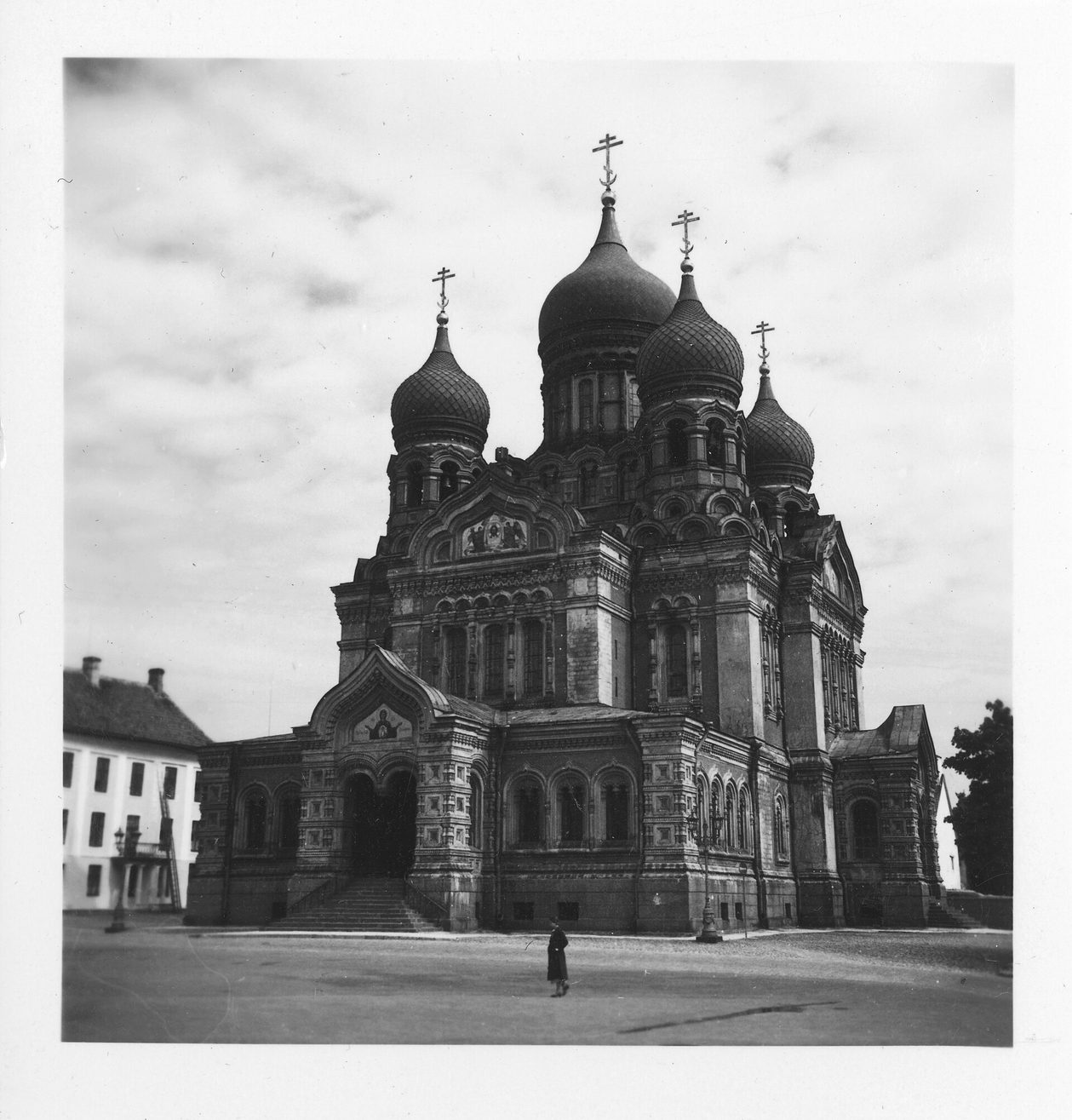
After Estonia became independent, there were proposals in the 1920s to pull it down or rebuild it as a monument to independence, and in 1928 a bill to demolish it went to parliament before it was dropped. In 1936 the head of the Estonian Apostolic Orthodox Church, Metropolitan Aleksander, moved his seat here, and the Russian parish exchanged churches with an Estonian-speaking parish. The cathedral was closed during the German occupation; in 1945 the exchange was reversed and the cathedral came under the Moscow Patriarchate. It survived the Soviet period as a working church.
The cathedral today
This is the cathedral church of the Estonian Christian Orthodox Church, known until 2025 as the Estonian Orthodox Church of the Moscow Patriarchate. The building is owned by the City of Tallinn, which has leased it rent-free to the parish since 2001. Under amendments to Estonia’s Churches and Congregations Act passed in 2025 and in force since 27 June 2026, the church has until 28 December 2026 to end its administrative ties to the Moscow Patriarchate; the church has challenged the law at the European Court of Human Rights. There has been public debate about the building’s future, but no change to the lease has been announced, and services continue every day. Visitors are welcome; check locally if you are planning a visit early in 2027.
The visitor’s cheat sheet
| Where | Lossi plats 10, on Toompea hill in the upper town, opposite Toompea Castle |
|---|---|
| Opening hours | May–September: daily 8am–6pm, Saturday to 7pm. Winter hours are not published: the cathedral is generally open around the daily services; to check, phone the parish office on +372 644 3484 (Mon–Fri 8am–4pm) |
| Admission | Free: no admission charge is published; donations welcome |
| Services | Divine Liturgy at 8.30am (7.30am on Saturdays) and an evening service at 5pm; on Saturdays also a Liturgy in Estonian at 10am (times change week by week; see nevskysobor.ee). Orthodox Christmas falls on 7 January |
| Photography | Reportedly not allowed inside; the outside can be photographed freely |
| Dress | Shoulders and knees covered; men remove hats; women traditionally cover their hair |
| Getting there | 5–10 minutes uphill on foot from Town Hall Square by Pikk jalg or Lühike jalg; about 20–25 minutes on foot from the Old City Harbour |
| How long | 20–30 minutes; longer if you stay for part of a service |
Hours and admission checked against the official site in November 2026. They change; the official site is always the last word.
What to see
The exterior and the mosaics
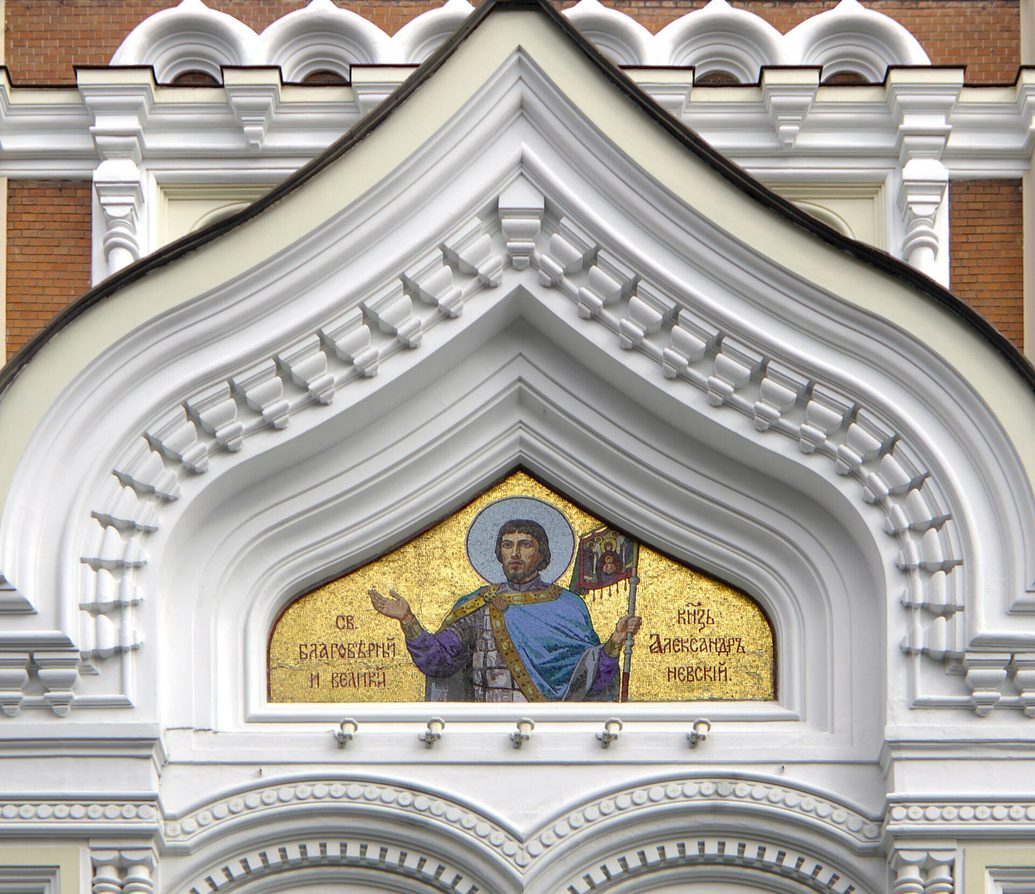
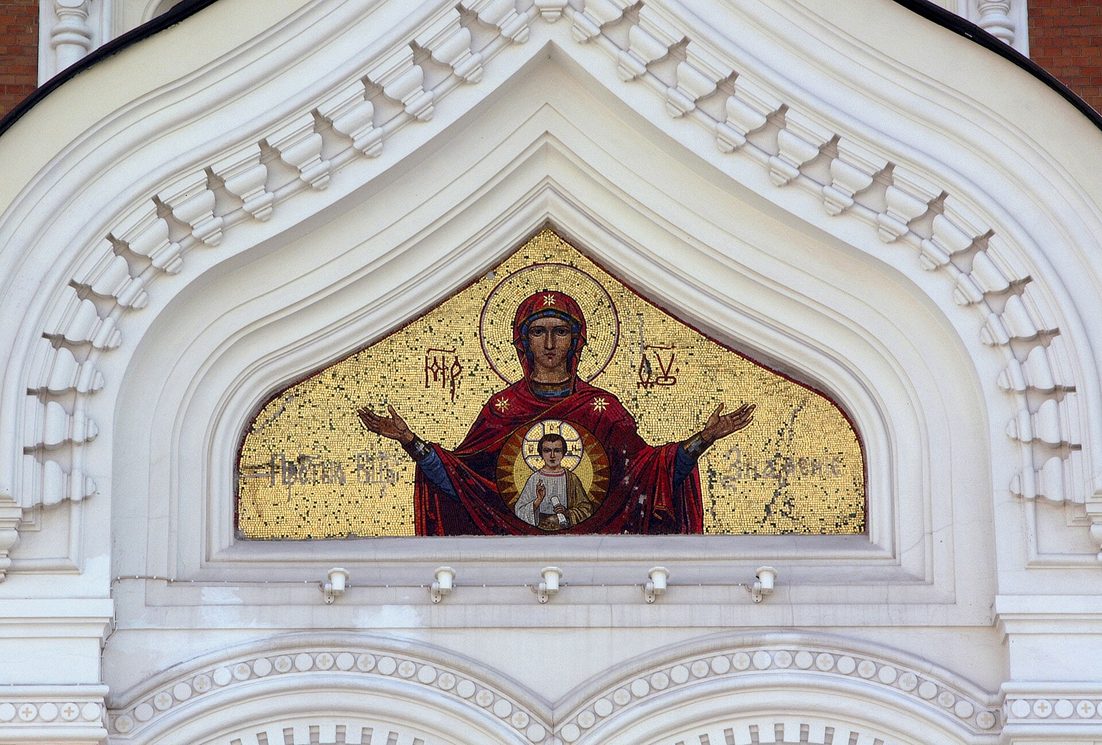
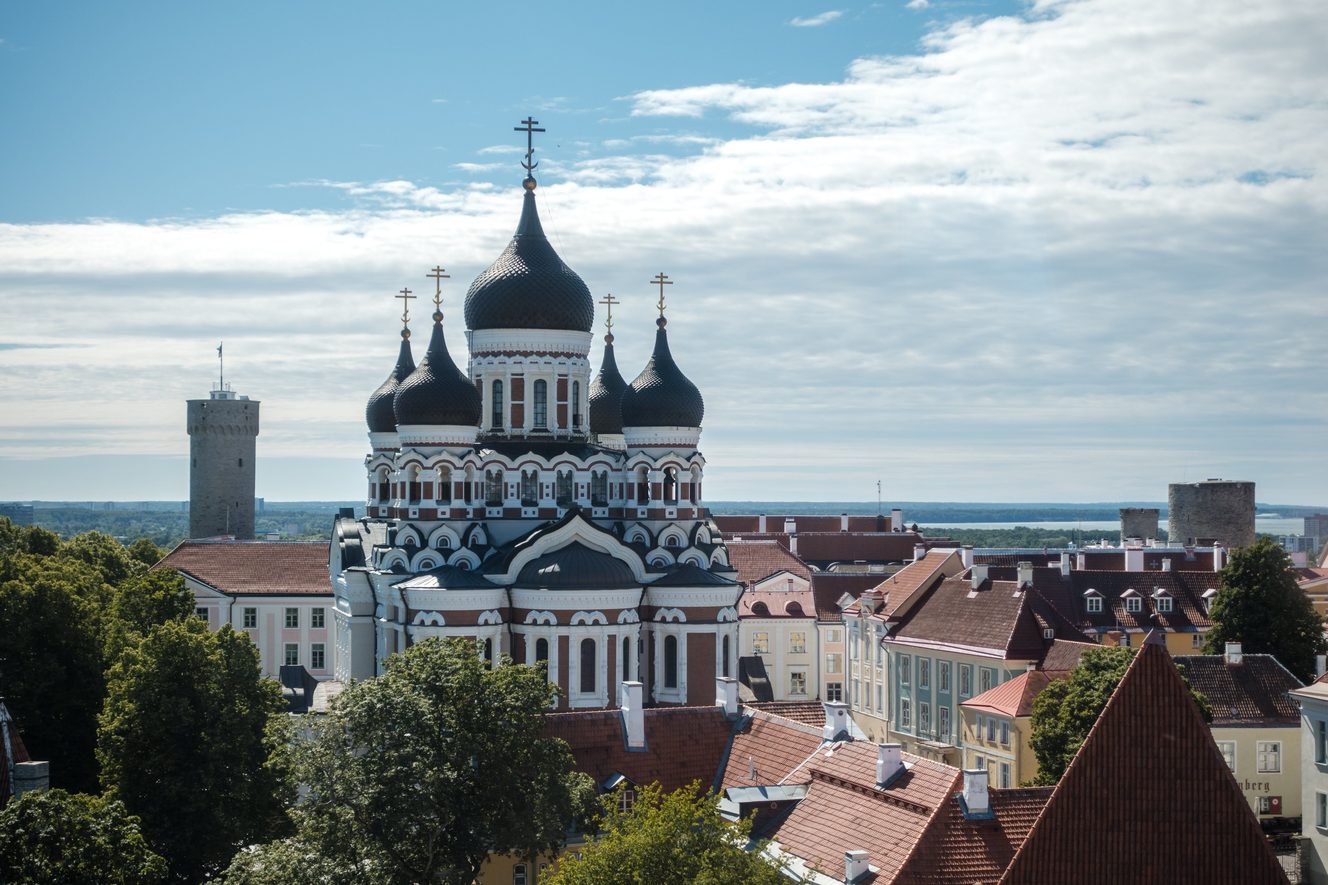
The cathedral is built of local limestone faced with brick, on a granite plinth, and carries five domes with gilded crosses. Over its three entrances are mosaics from the St Petersburg workshop of Alexander Frolov: Our Lady of the Sign over the main west door, St Alexander Nevsky over the south door and St Nicholas over the north door. According to the cathedral, nothing else in Estonian architecture matches them for scale and craftsmanship; the west front catches the afternoon sun.
Inside
The interior is tall and dim, lit by candles and gilt bronze chandeliers. Three carved and gilded wooden iconostases screen the main altar and the two side chapels, of St Sergius of Radonezh on the right and St Vladimir on the left. Their icons, painted on zinc and copper, came from the St Petersburg workshop of Alexander Novoskoltsev. As in most Orthodox churches there are few seats: people stand for the services, which are sung in Church Slavonic, with a Saturday Liturgy in Estonian.
The bells
The tower holds eleven bells cast in St Petersburg and hung in 1898. The largest weighs about 15 tonnes, the biggest in Tallinn. They ring before the services, and the full peal on a feast day carries across the whole Old Town.
A note on our pictures. Photography inside is reportedly not allowed, so this page shows only the outside of the cathedral.
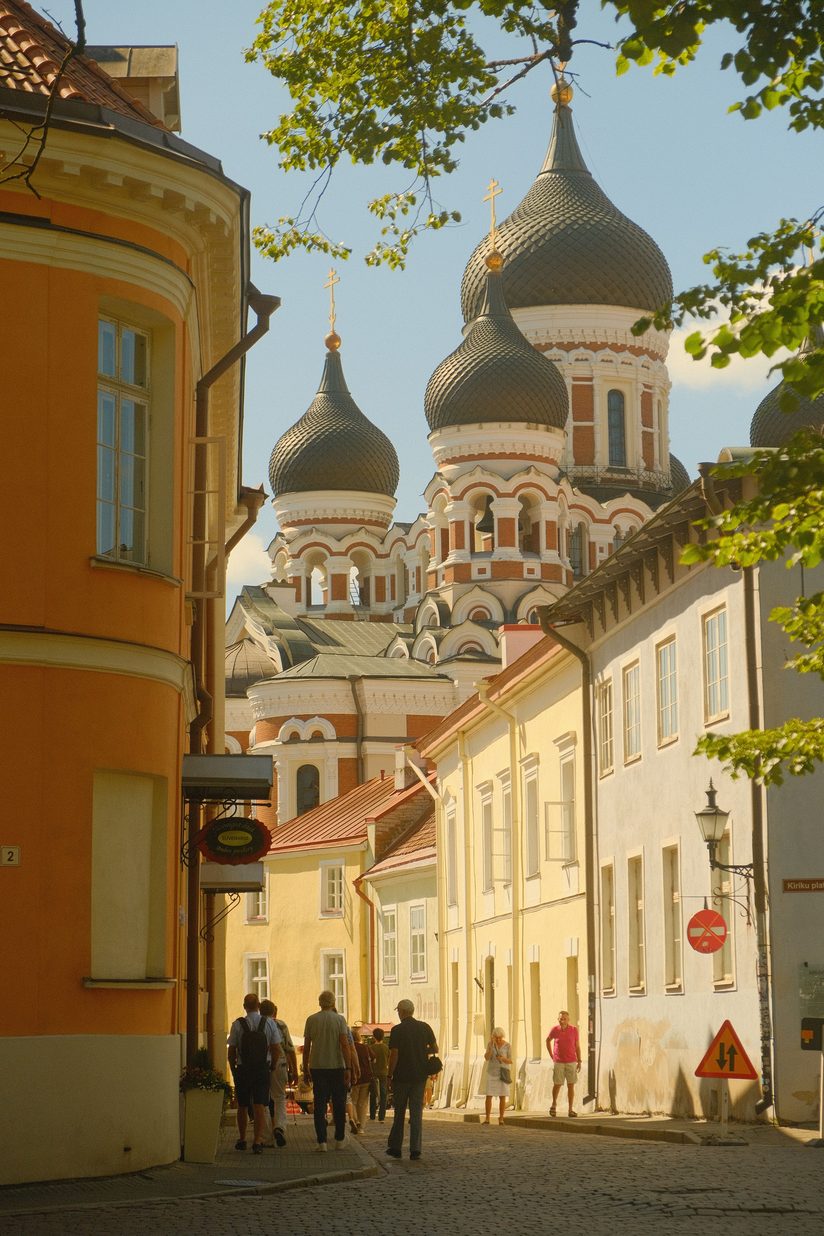
Getting there
The cathedral stands on Lossi plats, the square at the top of Toompea, directly opposite the pink front of Toompea Castle. From Town Hall Square in the lower town, walk up Pikk jalg (“Long Leg”) or the steeper Lühike jalg (“Short Leg”): five to ten minutes uphill. Balti jaam, the railway station, is a short walk below Toompea, and the cruise and ferry terminals of the Old City Harbour are 20–25 minutes away on foot. Tram T2 links the airport, the centre and the port. The Lutheran Dome Church, St Mary’s, is a couple of minutes’ walk away, and the viewing platforms of Kohtuotsa, just beyond it, and Patkuli, a few minutes further on, have the classic views over the red roofs of the lower town.

Tours and where to stay
Entry is free, and most walking tours of Tallinn’s Old Town stop in front of the cathedral. Hotels in and around the Old Town put Toompea within a short walk.
These links go to GetYourGuide and Booking.com. This site earns nothing from them at present — they are here because they are the quickest way to check what is actually available.
Don’t miss
- The door mosaics Gold-ground saints over all three entrances.
- The iconostases Three gilded screens glowing in the candlelight.
- A service The sung liturgy, most mornings at 8.30.
- The view from Kohtuotsa A few minutes’ walk away, over the roofs of the lower town.
Insider tips
Be discreet during services. Services are held every morning and evening; you are welcome to slip in, but stay at the back, keep quiet and do not walk in front of people praying.
Come early or late. Cruise-ship walking tours fill Lossi plats in the middle of the day in summer. In summer the cathedral opens at 8am.
Bring a scarf. Covering the head is the custom for women in Orthodox churches, and shoulders and knees should be covered.
Common questions
Is Alexander Nevsky Cathedral free to visit?
No admission charge is published, and visitors simply walk in. Candles are sold inside, and a small donation is welcome.
When is the cathedral open?
From May to September it is open daily from 8am to 6pm, to 7pm on Saturdays. No winter hours are published; the cathedral holds services every morning and evening, and is generally open around them.
Can you take photographs inside?
Many guides say photography inside is not allowed: follow the signs at the door, ask before taking any pictures and never photograph during services; the outside, with its mosaics, can be photographed freely.
What should I wear?
Dress modestly: cover shoulders and knees. Men take off their hats, and women traditionally cover their hair, so a scarf is useful.
More churches to visit
- Riga Cathedral — the great brick cathedral of the next Baltic capital, with its famous organ.
- Helsinki Cathedral — about two hours away by ferry across the Gulf of Finland.
- Church of the Savior on Spilled Blood — the same Russian Revival style, in St Petersburg.
- Uppsala Cathedral — Scandinavia’s largest medieval church.