
Kizhi Pogost
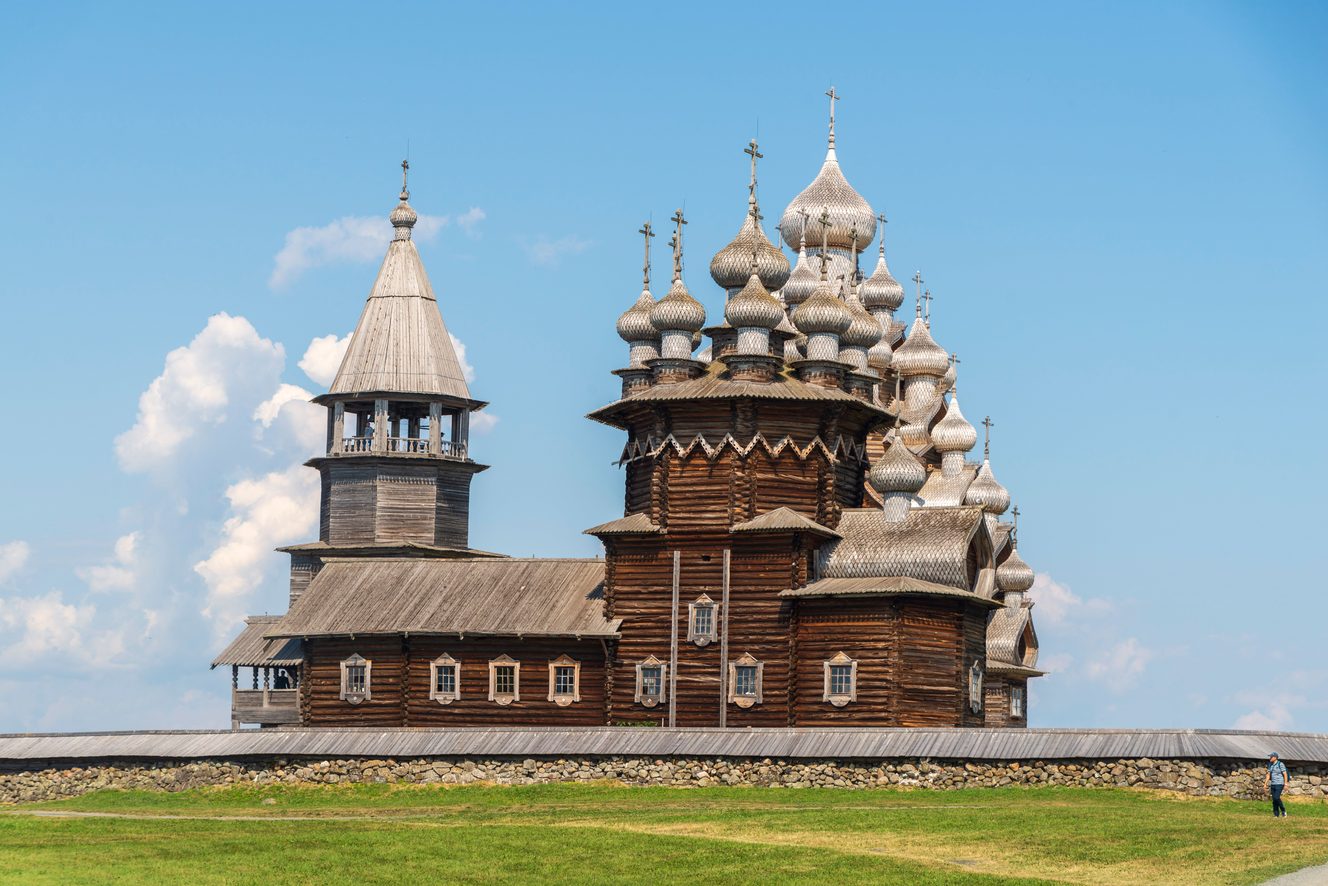
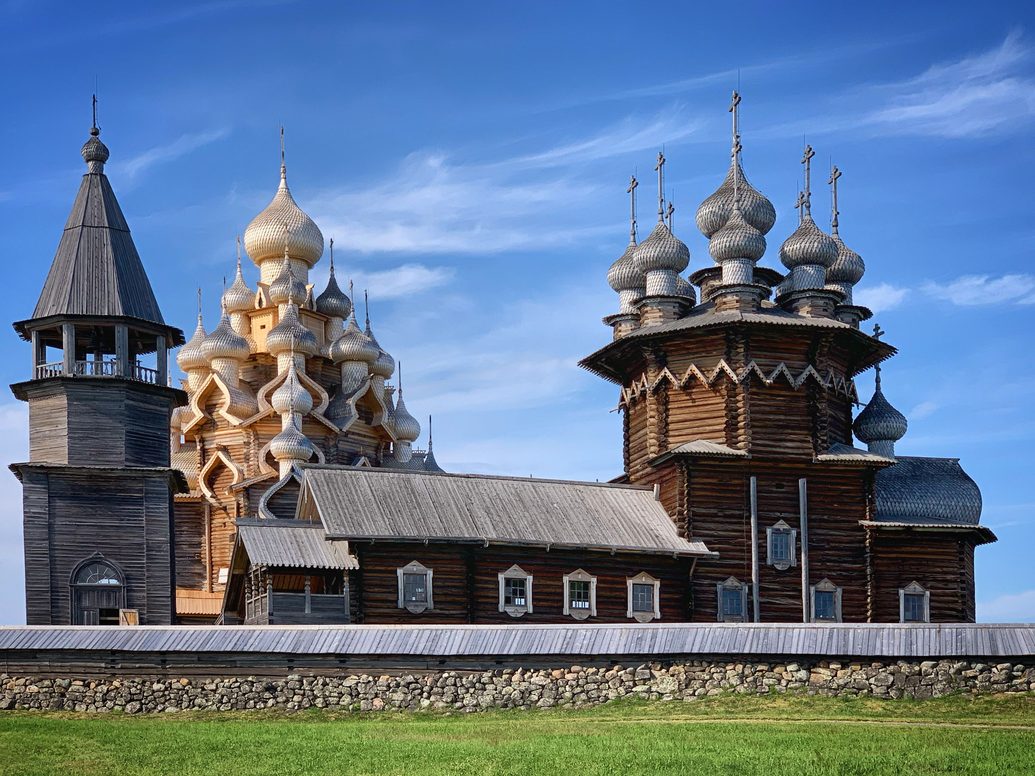
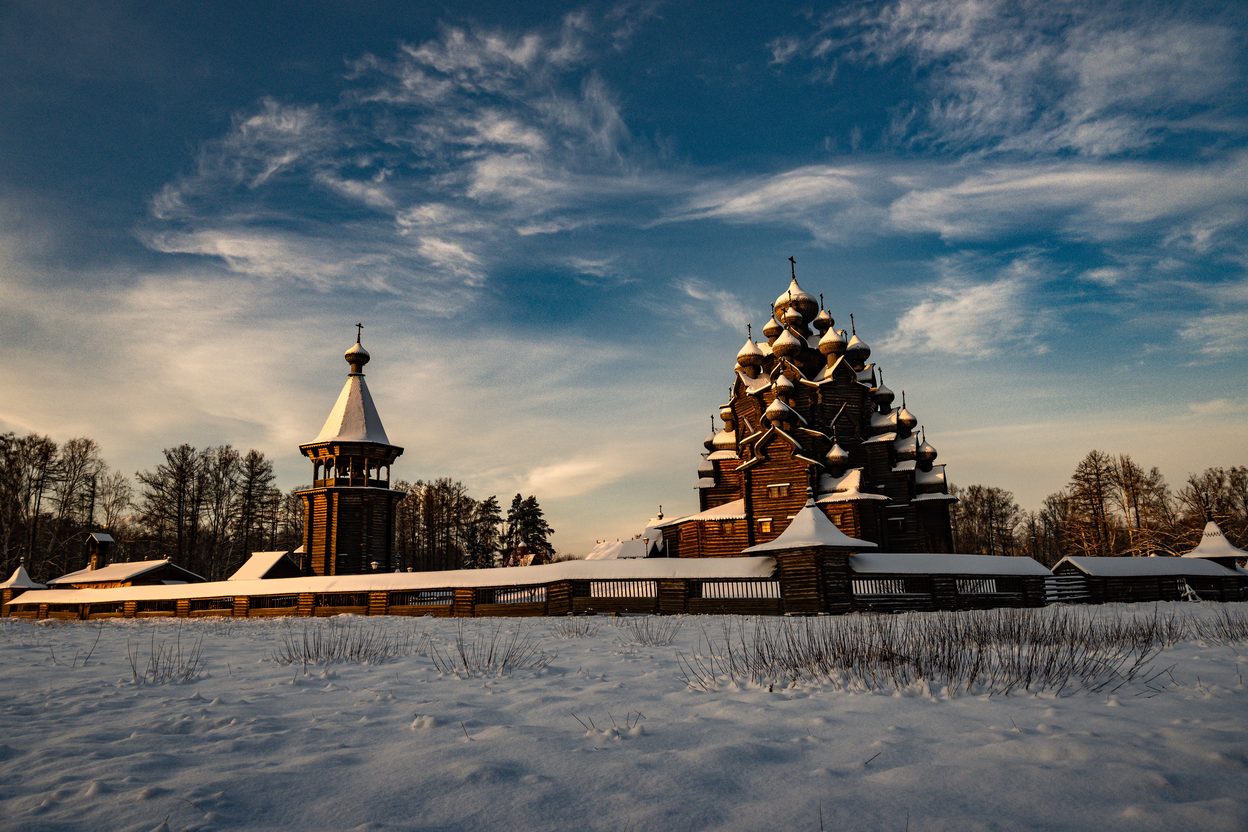
On a long, low island in Lake Onega, in Russian Karelia, stands one of the most extraordinary buildings in the world: the Church of the Transfiguration, a wooden church of 1714 crowned with twenty-two onion domes rising 37 metres above the meadows. With the smaller Church of the Intercession and a bell tower, inside a log fence, it forms the Kizhi Pogost, a UNESCO World Heritage Site and the centre of an open-air museum of wooden buildings.
Read the travel advice first. In October 2026 the UK Foreign Office advised against all travel to Russia, and the US State Department’s advice was “Reconsider travel”; travel insurance may not cover you if you go against your government’s advice. British, American and Australian visitors need a full visa, not the e-visa. Visa and Mastercard cards issued abroad do not work in Russia, and international booking sites such as Booking.com withdrew from Russia in 2022, so there are no tour or hotel links on this page.
Twenty-two domes
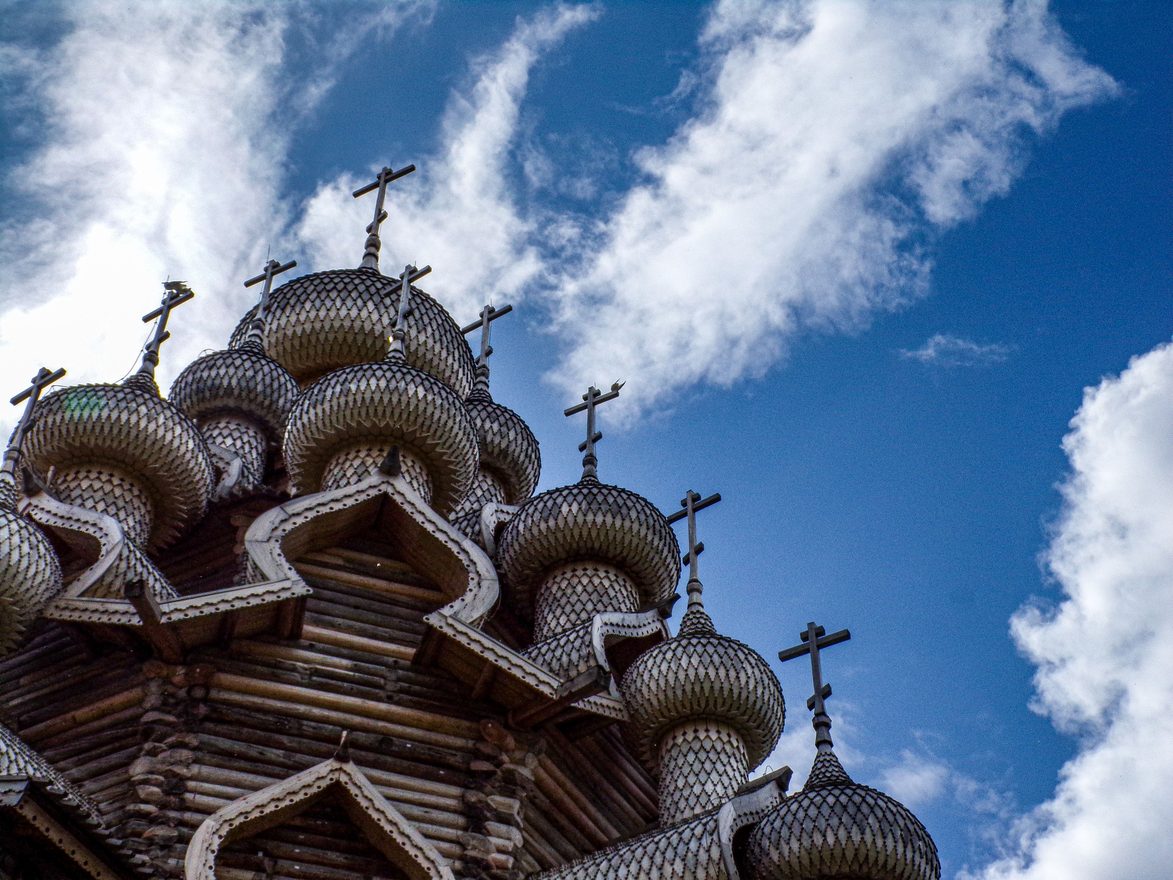
A pogost was a parish enclosure in the old Russian north: a churchyard with its churches, serving the scattered villages around. The Church of the Transfiguration was begun in 1714, according to an inscription on a cross inside, and is built entirely of logs, with tier upon tier of domes covered in aspen shingles that weather to a silvery grey. Beside it the Church of the Intercession of 1764, with nine domes, was the heated “winter church”; the unheated Transfiguration was used in summer. The bell tower was built in 1862 and rebuilt in 1874.
Legend says the master builder threw his axe into the lake when he had finished, saying that there had never been, and never would be, another church like it. Another legend says it was built without nails: the log walls are, but the domes are covered in shingles fixed with iron nails. UNESCO listed the Kizhi Pogost in 1990.
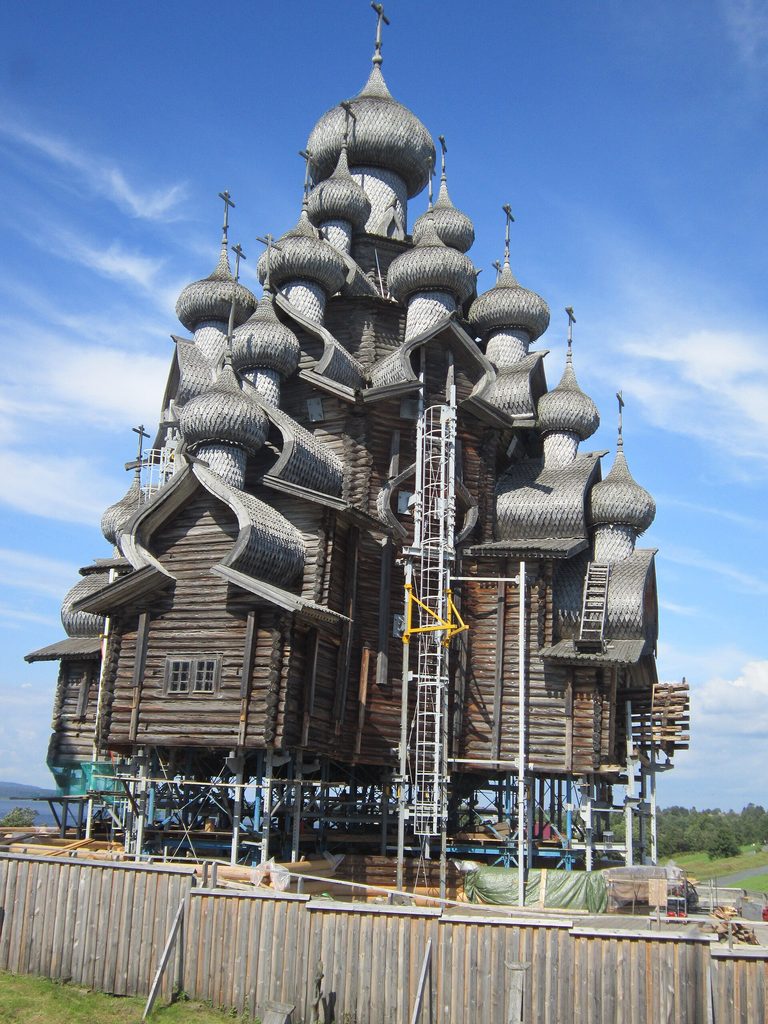
By the late 20th century the Transfiguration was in danger. It was closed to visitors around 1980, when a metal frame was put inside to hold it up. A decade-long restoration followed: the log frame was jacked up and repaired from the bottom up, tier by tier, with about a third of the timber replaced. The work was largely complete by 2020, and the church reopened to visitors in June 2021.
The visitor’s cheat sheet
| Where | Kizhi Island, Lake Onega, Republic of Karelia; about 68 km by water from Petrozavodsk |
|---|---|
| Travel advice | In October 2026 the UK advised against all travel to Russia, and the US said “Reconsider travel” |
| Opening hours | Daily all year: 10am–4pm November to April, 8am–7pm from mid-May to August, shorter in May, September and October |
| Admission | 2026 summer season: basic ticket 1,200 roubles (with the Intercession church); combined ticket 1,900 roubles (May–September, with the Transfiguration church), or a 600-rouble supplement for it; bell tower 500 roubles. Tickets generally valid for five days. Winter prices not yet published |
| Getting there | Hydrofoil from Petrozavodsk, mid-May to mid-October (about 1¼–1½ hours each way) |
| Money | Foreign Visa and Mastercard cards do not work in Russia: bring roubles in cash |
| Visas | The Russian e-visa is not open to British, American or Australian citizens |
| How long | Most hydrofoil trips allow about four hours on the island |
Hours and admission checked against the official site in October 2026. They change; the official site is always the last word.
What to see
The Church of the Transfiguration
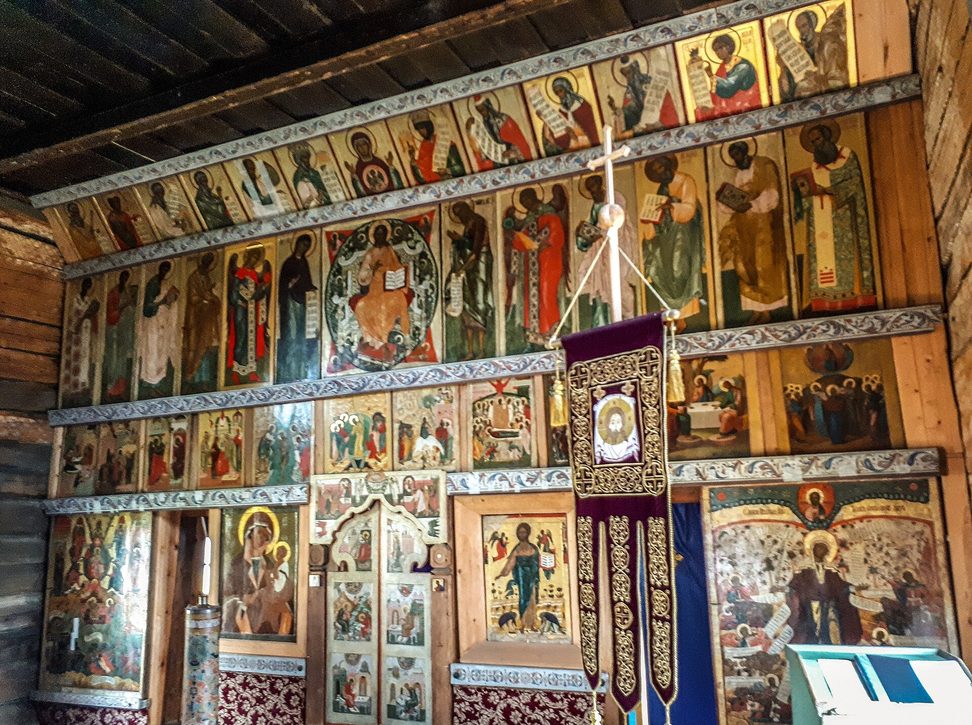
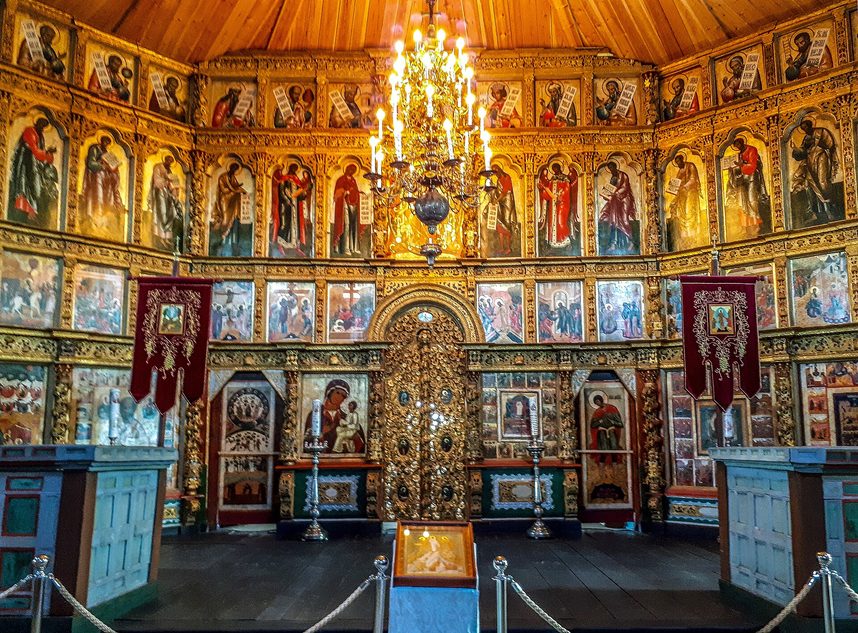
From outside, the church rises in a pyramid of domes over an octagonal log frame. Inside it is surprisingly low and dark. The restored gilded iconostasis, about 24 metres long and four tiers high, holds icons of the 17th and 18th centuries, and the painted ceiling, the “heaven”, is shown to visitors through augmented reality while it is studied for restoration. In 2026 it could be visited from May to early November.
The Church of the Intercession and the bell tower
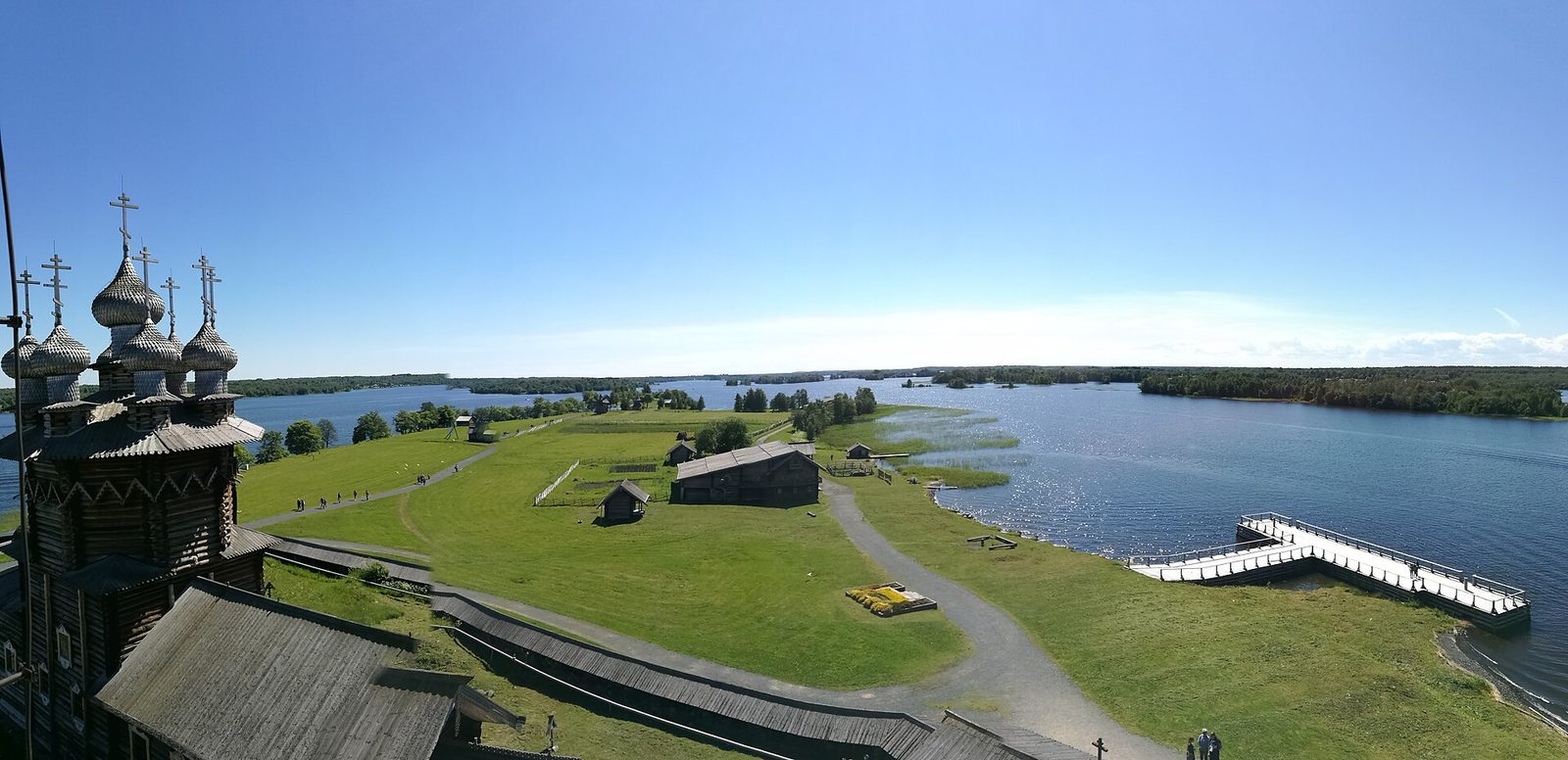
The Church of the Intercession, with its ring of eight domes around a central one, is included in the basic ticket and keeps an iconostasis of old icons. In summer the bell tower can be climbed in small groups, for the view over the island and the lake.
The open-air museum
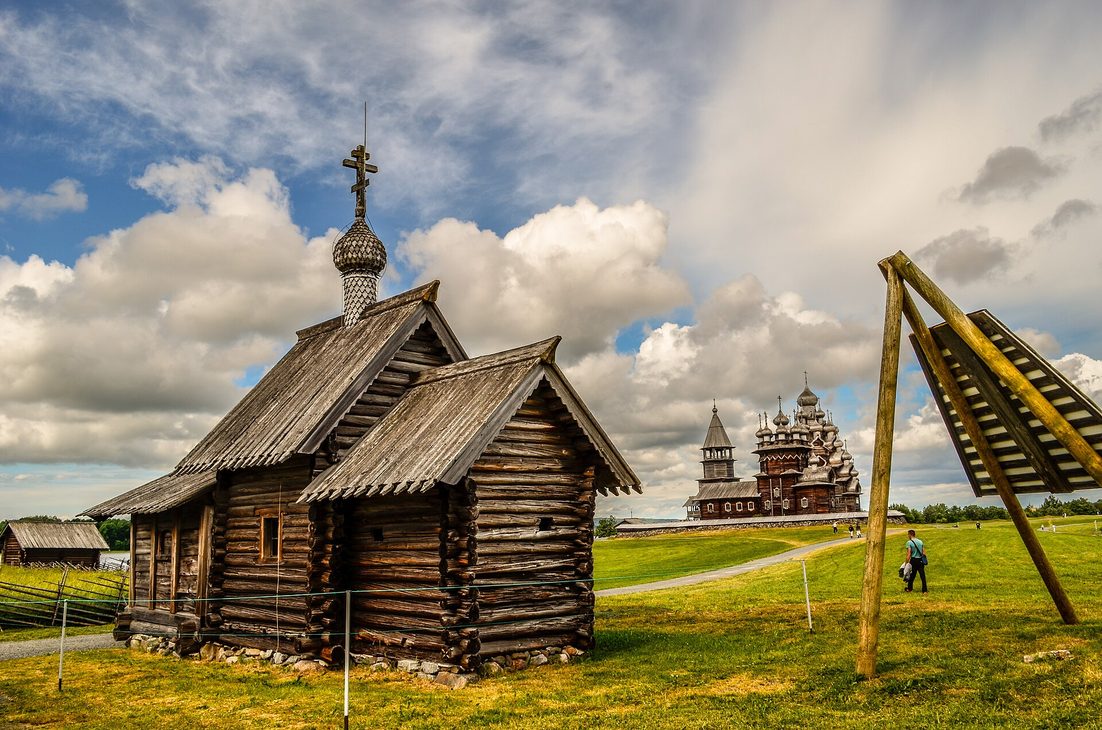
Since the 1950s dozens of wooden buildings from across Karelia have been moved to the island: peasant houses, chapels, windmills and granaries. The best known is the small Church of the Resurrection of Lazarus from the Murom monastery, traditionally dated to the 14th century and often called the oldest wooden church in Russia. Most visits include a walk through the villages and a look inside one of the big log farmhouses, with their living rooms and barns under one roof.
Getting there
Kizhi is reached from Petrozavodsk, the capital of Karelia, about five and a half to six hours by train from St Petersburg or eleven hours from Moscow. From mid-May to mid-October hydrofoils cross the lake in about an hour and a quarter to an hour and a half each way, usually leaving in the morning and allowing about four hours on the island. Out of season, drive to Oyatevshchina on the mainland and cross on the museum’s boat; in mid winter, once the ice is safe, private hovercraft usually run from Petrozavodsk and the nearer villages. River cruises between Moscow and St Petersburg often call here.
Tickets
Museum tickets are sold on the island and on the Kizhi museum’s own website, and hydrofoil tickets from the operators at the Petrozavodsk river station. International booking sites such as Booking.com and Viator withdrew from Russia in 2022, so there are no tour or hotel links on this page.
Don’t miss
- The Transfiguration Twenty-two domes, inside and out.
- The bell tower For the view, in summer.
- The Lazarus church Small, dark and very old.
- The farmhouses Whole households under one roof.
- The lake Walk to the far side of the Pogost for the view across the water.
Insider tips
Wear boots and bring cash. The paths are unpaved and the island has adders and ticks, so stay on the paths. Bring roubles for tickets and the audio guide deposit. The light is best in the evening, but most hydrofoil trips leave the island by late afternoon, so a cruise stop or an overnight stay nearby gives you the Pogost at its quietest.
Common questions
Is it safe to visit Kizhi?
In October 2026 the UK Foreign Office advised against all travel to Russia, and the US State Department’s advice was “Reconsider travel”. Read your own government’s current advice before planning a trip; travel insurance may not be valid against it.
How do you get to Kizhi?
By hydrofoil from Petrozavodsk, about an hour and a quarter to an hour and a half each way, from mid-May to mid-October. Out of season the only way is by road to Oyatevshchina and across on the museum’s boat, and in deep winter by hovercraft once the lake has frozen. River cruises between Moscow and St Petersburg often stop here.
Can you go inside the Church of the Transfiguration?
Yes, since June 2021, after about forty years closed. In 2026 it was open from May to early November on the combined ticket (until 30 September) or a 600-rouble supplement. The Church of the Intercession is included in the basic ticket.
Was Kizhi really built without nails?
Only in part. The log walls are held together by joints, without nails, but the domes are covered in tens of thousands of aspen shingles fixed with iron nails. The story of a church built without a single nail is a legend.
How much is a ticket?
In the 2026 summer season the basic ticket was 1,200 roubles and the combined ticket 1,900 roubles; foreigners pay the standard prices. Foreign Visa and Mastercard cards do not work in Russia, so bring cash.
More churches in Russia
- St Basil’s Cathedral — the other great many-domed church of Russia, on Red Square in Moscow.
- Church of the Savior on Spilled Blood — St Petersburg’s revival of the old Russian style.
- St Isaac’s Cathedral — the great domed cathedral of St Petersburg.