
Church of St Nicholas, Demre
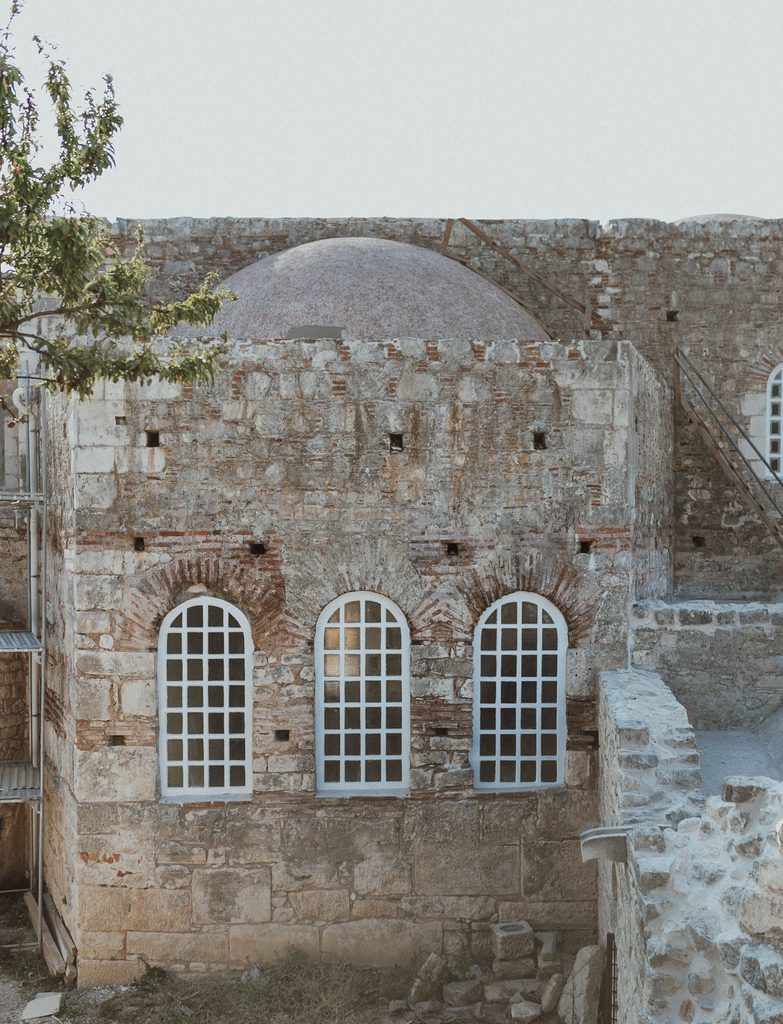
Long before he became Santa Claus, Nicholas was a bishop here, in the Lycian city of Myra, on the south coast of Turkey. The Byzantine church built over his tomb survives in the modern town of Demre, sunk below the level of the street by centuries of river silt: a warren of vaulted aisles, chapels and faded wall paintings, now a state museum under a protective roof.

The bishop of Myra
Nicholas was born at Patara, further west along the coast, and became bishop of Myra, probably in the fourth century. He died on 6 December, traditionally in the middle of that century, and was buried here. Stories of his generosity, above all the dowries he secretly gave to three poor girls, spread across Christendom, and over many centuries he became the gift-bringer of Christmas.
A church stood over his tomb from early times. Myra was raided by Arab fleets, and the church was rebuilt more than once: much of what survives dates from the eighth century, and it was restored again in 1043, when the emperor Constantine IX added a walled monastery. In 1087 sailors from Bari broke into the tomb and carried most of the saint’s bones away to Italy.
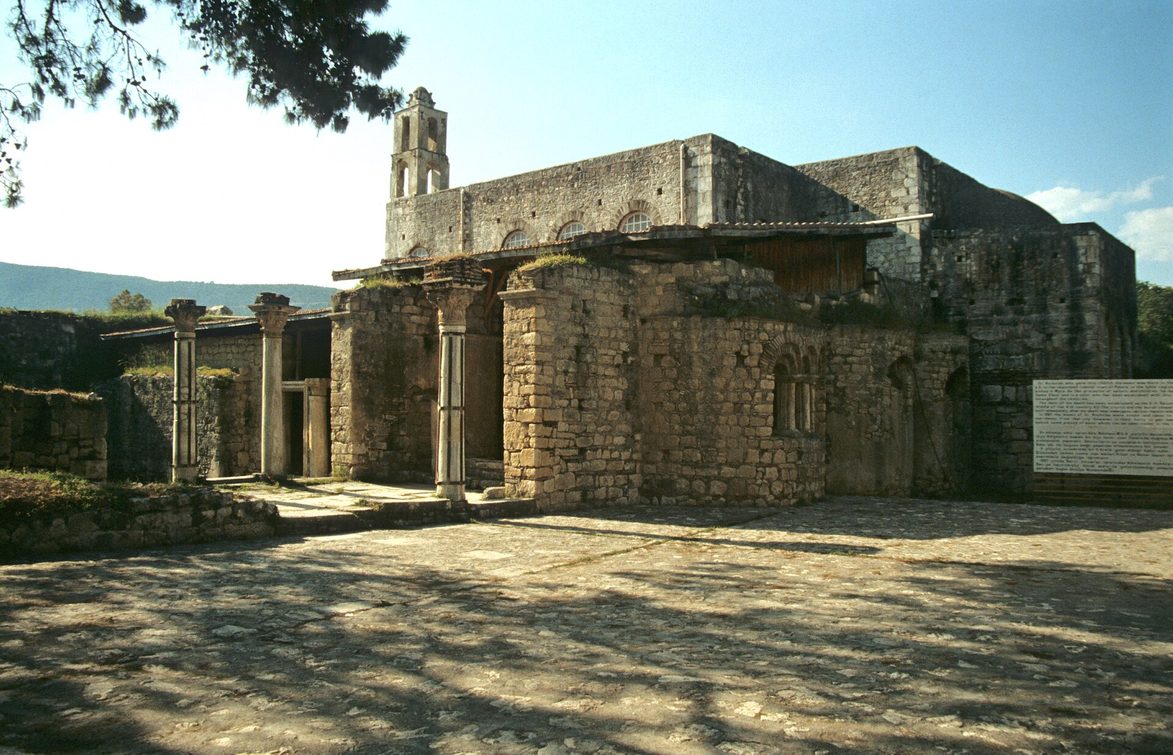
Over the following centuries the River Demre buried the church in silt. In the mid-nineteenth century Russia bought the site and, after the death of Tsar Nicholas I, a restoration was carried out in 1862 under Alexander II, which replaced the dome with a vault and added the bell tower. The mud was cleared from the church in 1962, excavation has gone on since the late 1980s, and a protective roof was later put up over the ruins.
The visitor’s cheat sheet
| Where | Müze Caddesi, Demre (Kale), Antalya province, in the town centre |
|---|---|
| Opening hours | Daily 8.30am–7pm, last entry 6.30pm, according to the Ministry of Culture; some sources give shorter winter hours, so check locally |
| Admission | €17; audio guide available. Myra rock tombs and theatre €13 (separate ticket) |
| 6 December | St Nicholas’s feast: an Orthodox liturgy is usually held with government permission; access may be limited |
| Getting there | About 145 km (2.5–3 hours) by road from Antalya; 45 km from Kaş; buses run along the coast road |
| How long | An hour; half a day with Myra and Andriake |
Hours and admission checked against the official site in November 2026. They change; the official site is always the last word.
What to see
The church
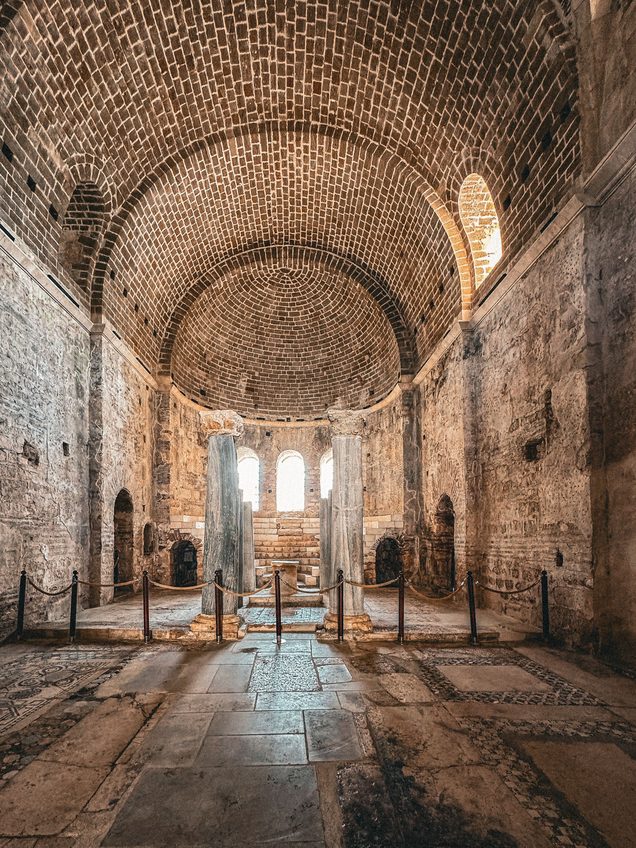
You go down from the street into the courtyard. The church is a basilica with a nave and aisles, a narthex and an outer narthex, and chapels added on both sides, so it feels more like a small village of vaulted rooms than a single hall. In the apse, the stepped stone benches of the synthronon, where the clergy sat, survive, and patches of the patterned marble floor (opus sectile) remain in the nave and aisles.


The wall paintings
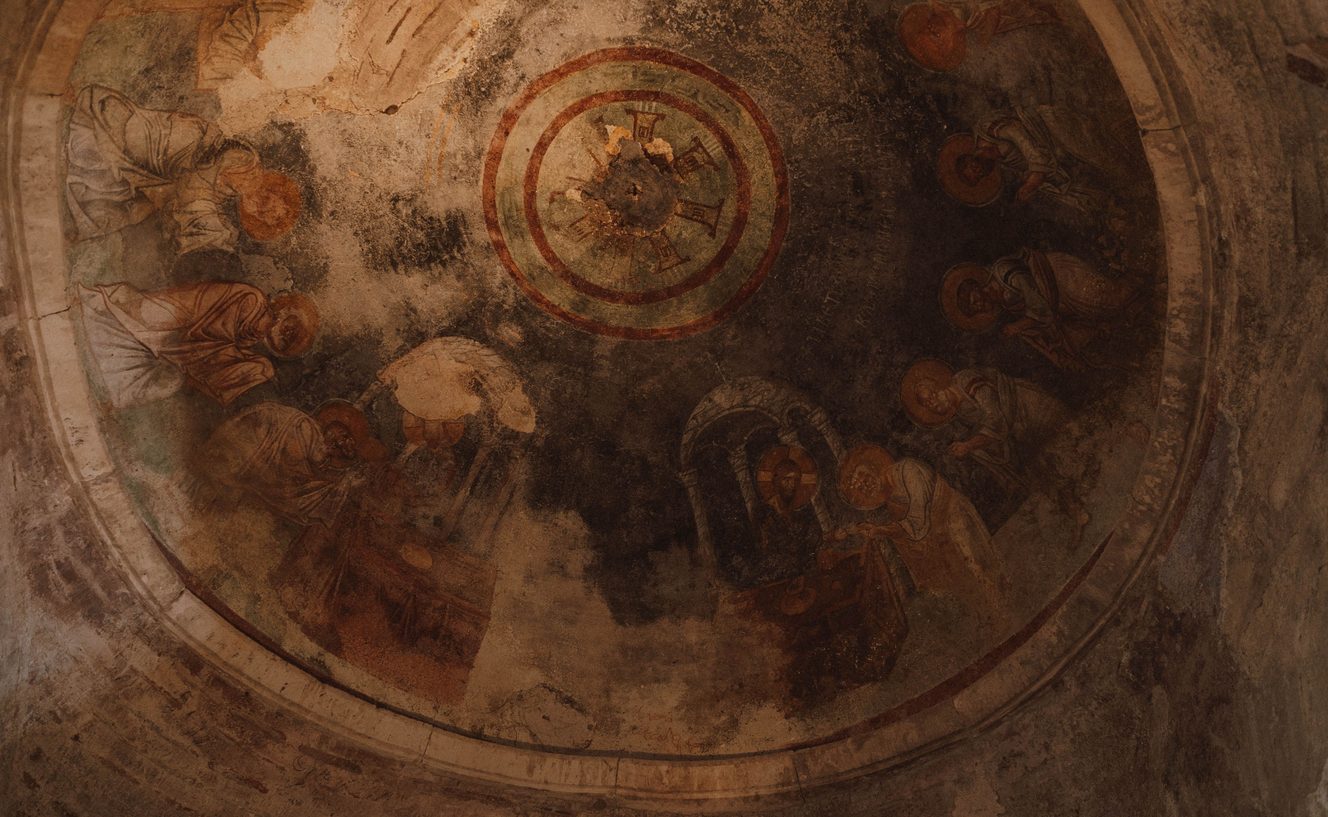
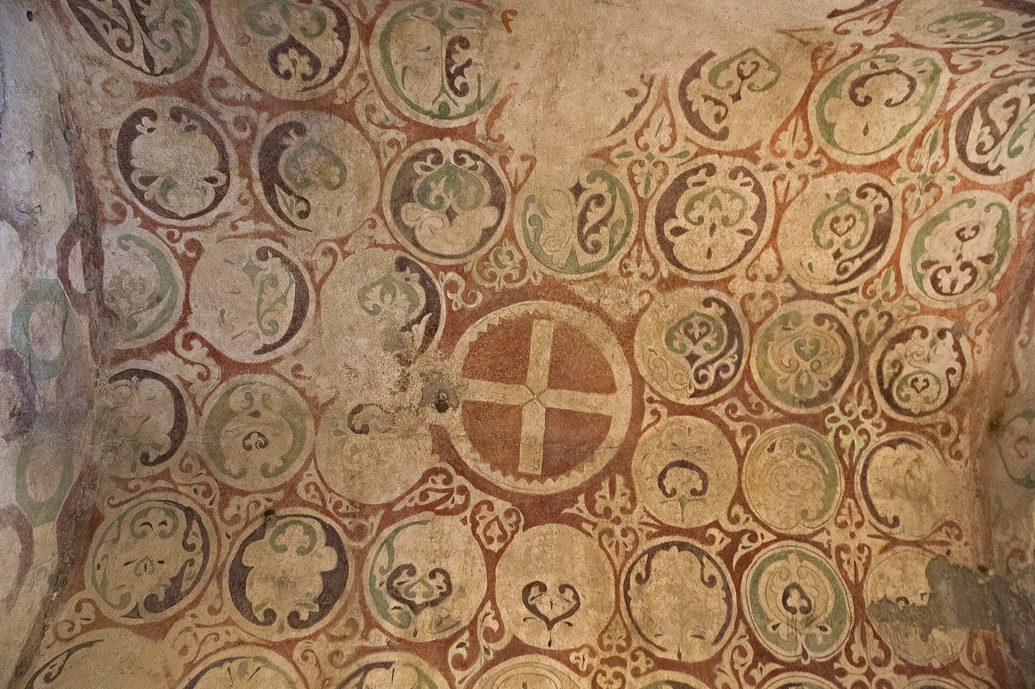
Fragments of Byzantine painting cover the domes, vaults and chapels: Christ, the Virgin, archangels, saints and bishops, and in one chapel scenes from the life of St Nicholas. They are faded and patchy, and best seen with the audio guide or a good guidebook in hand.
The “tomb of St Nicholas”
In the south aisle stands a carved Roman sarcophagus, decorated with acanthus and scales, that has long been shown as the saint’s tomb. Whether it was really his is uncertain; it has been empty since the relics went to Bari. Excavation continues: a further sarcophagus found in 2024 has yet to be opened.

A note on our pictures. Outside the church stand several modern statues of St Nicholas and of Santa Claus; they are recent works still in copyright, so our pictures leave them out.
Around Demre
The ruins of Myra itself lie about a mile north of the church: a Roman theatre and the cliff behind it, carved with rock tombs whose fronts imitate Lycian timber houses (open 8am to 5pm; €13). Andriake, Myra’s ancient harbour, is about 5 km away by the beach at Çayağzı; its great Roman granary now houses the Museum of Lycian Civilizations. From Çayağzı and Üçağız, boats run to the half-sunken ruins along Kekova island.

Getting there
Demre lies on the D400 coast road between Antalya and Kaş. By car it is about 145 km from Antalya, two and a half to three hours, and about 45 km from Kaş. Buses run along the coast road from Antalya bus station, but from the airport it is a long trip with changes. The church is in the town centre, a short walk from the main square.
Where to stay
Demre has a few small hotels; Kaş, about an hour west, is a popular base, with Kekova and Myra within easy reach.
This link goes to Booking.com. This site earns nothing from it at present — it is here because it is the quickest way to check what is actually available.
Don’t miss
- The apse With the stepped benches where the clergy sat.
- The wall paintings Faded Byzantine saints in the domes and chapels.
- The sarcophagus Long shown as the saint’s tomb.
- Myra’s rock tombs A mile away, above the Roman theatre.
Insider tips
Go early or late. Day tours from Antalya and the resorts arrive in the middle of the day, and the narrow aisles fill quickly.
Do Myra first in summer. The rock tombs and theatre have no shade; see them in the morning and save the cool, roofed church for the afternoon.
Common questions
How much does it cost to visit the Church of St Nicholas in Demre?
€17, paid at the entrance; it is a state museum. The Myra rock tombs and theatre, about a mile away, have a separate ticket of €13. Ask about the Museum Pass Türkiye, which covers many state sites.
Is St Nicholas buried in Demre?
Not any more. Nicholas was bishop of Myra in the fourth century and was buried here, but in 1087 merchants from Bari carried most of his bones off to Italy, where they lie in the Basilica of San Nicola. A carved sarcophagus in the church is traditionally shown as his tomb.
Is the church open on 6 December?
The feast of St Nicholas is usually marked with an Orthodox liturgy in the church, held with the Turkish government’s permission, and access for ordinary visitors may be limited while it takes place. Check locally if you plan to visit on the day.
How do you get to Demre?
By car it is about 145 km (two and a half to three hours) from Antalya along the coast road, and about 45 km from Kaş. Many day tours from Antalya combine the church, Myra and a boat trip to Kekova.
More churches to visit
- Hagia Sophia, Istanbul — Justinian’s great church, now a mosque.
- Chora Church, Istanbul — the finest Byzantine mosaics and frescoes in Turkey.
- Göreme Open-Air Museum, Cappadocia — painted rock-cut churches in the valleys of Cappadocia.