
St James the Great, Kilkhampton
In the village square of Kilkhampton, north of Bude, the church of St James the Great is the church of the Grenvilles of Stowe. It has a carved Norman doorway, tall granite arcades under wagon roofs, about seventy benches with carved sixteenth-century ends, and the monument to the Royalist commander Sir Bevil Grenville.
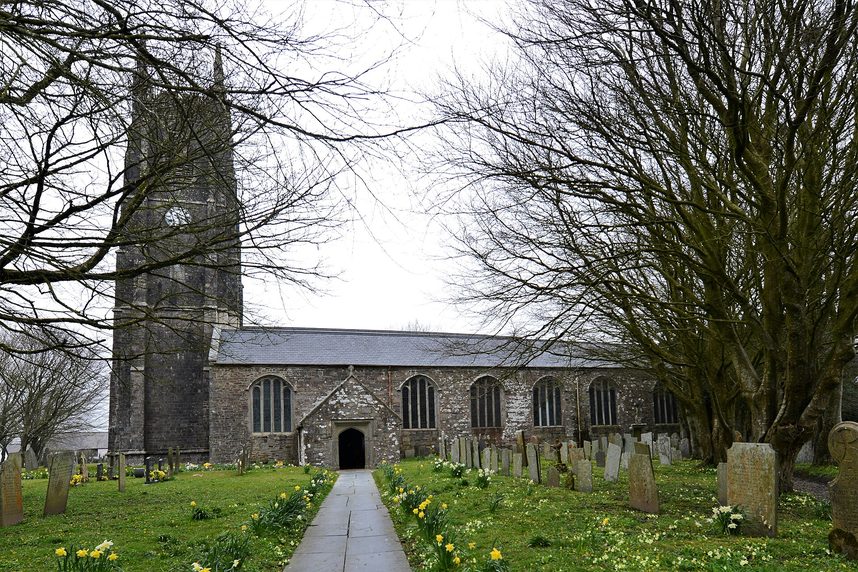
The church of the Grenvilles
Kilkhampton was a valuable manor at Domesday, and its church was presumably built new in the second quarter of the twelfth century, probably for a member of the Grenville family. Of that church the carved south doorway survives. The rest was rebuilt in the late fifteenth or early sixteenth century in the Perpendicular style, with a tall west tower, aisles of seven bays and wagon roofs. John Grenville, rector for more than half a century, added the south porch in 1567, and the bench ends were carved in the same century.
The Grenvilles lived at Stowe, west of the village. Sir Bevil Grenville, who led Cornish troops for Charles I, died of wounds after the Battle of Lansdown in 1643 and was buried here; his son John Granville, Earl of Bath, built a great new house at Stowe in about 1680; it was demolished in 1739. Their local carver, Michael Chuke, is credited with monuments and arms in the church. In 1860 Sir George Gilbert Scott rebuilt the east end. The church is listed Grade I.
The visitor’s cheat sheet
| Where | The Square, Kilkhampton, Bude, Cornwall EX23 9QQ, on the A39 |
|---|---|
| Opening hours | Dawn until dusk, according to the church |
| Admission | No charge is listed; donations welcome |
| Services | Sundays at 11am, usually Holy Communion or Morning Prayer (check the church calendar) |
| Access | Not described by the church; ask if you need step-free access |
| Parking | Ivy Cottages car park in the village (free; a two-hour limit is listed, so check the signs) |
| How long | Three-quarters of an hour to an hour |
Hours and admission checked against the official site in November 2026. They change; the official site is always the last word.
What to see
The tower, the porch and the Norman doorway
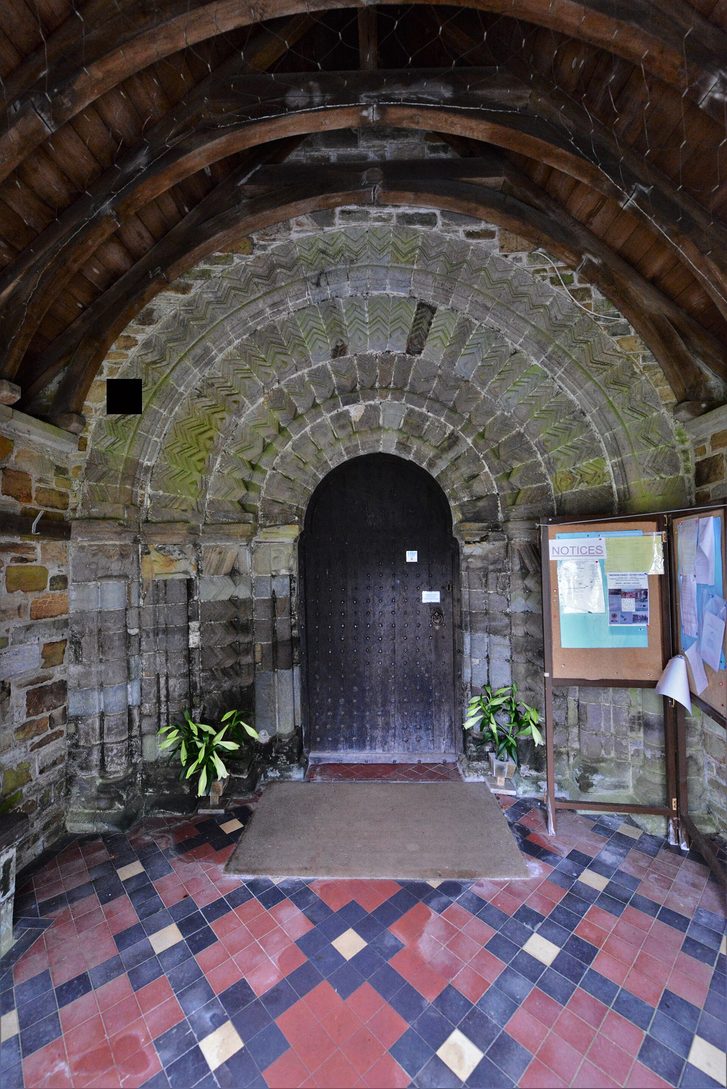
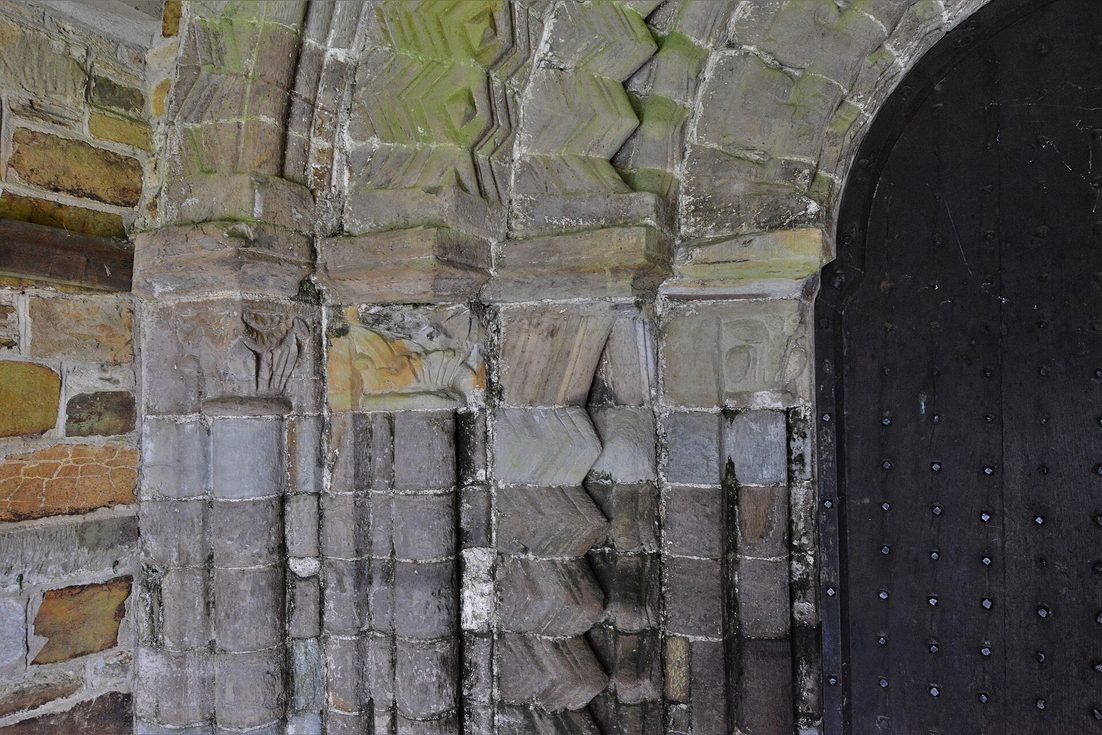
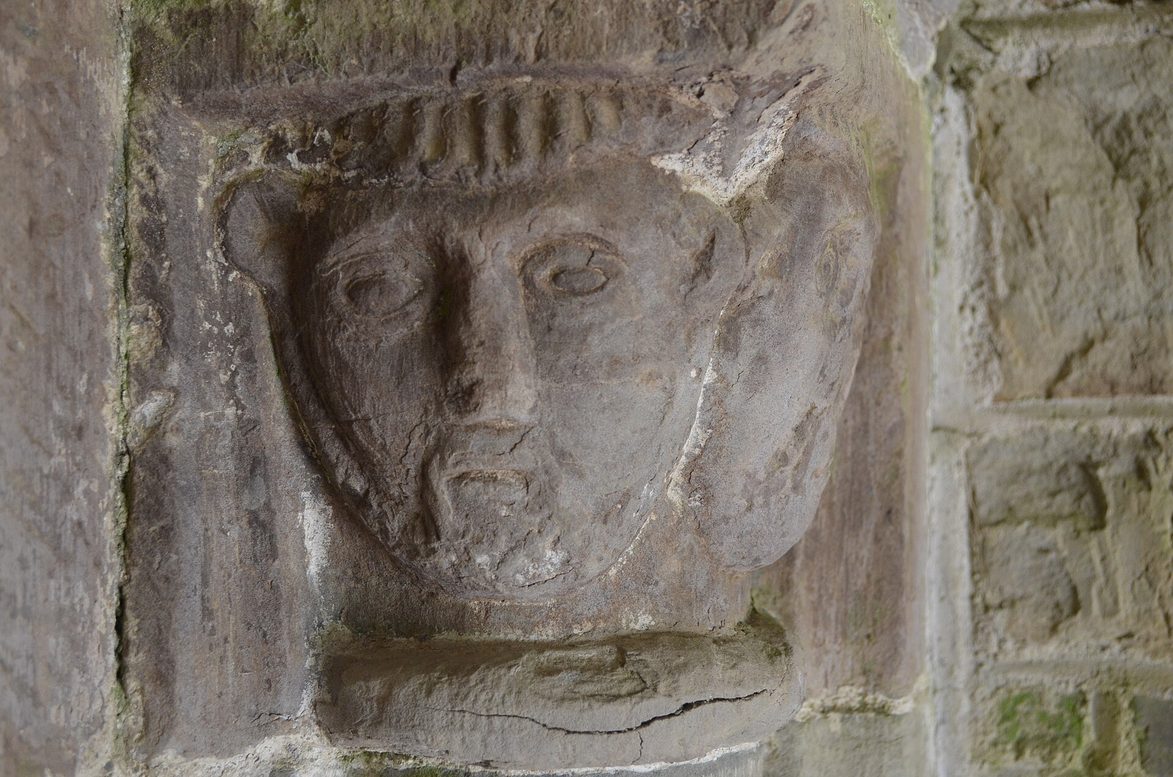
The church stands in the middle of the village, visible from the A39, with a three-stage tower of slatestone with granite dressings, crocketed pinnacles and a west doorway with quatrefoils. The south porch is dated 1567. Inside it is the Norman doorway, with four orders of carving: zigzag, lozenges and beakheads, the bird-like heads biting the moulding, with capitals of cones and beast faces. It is often ranked among the best Norman doorways in Cornwall, and it may not be in its original position: it may once have stood at the west end.
The nave and the roofs
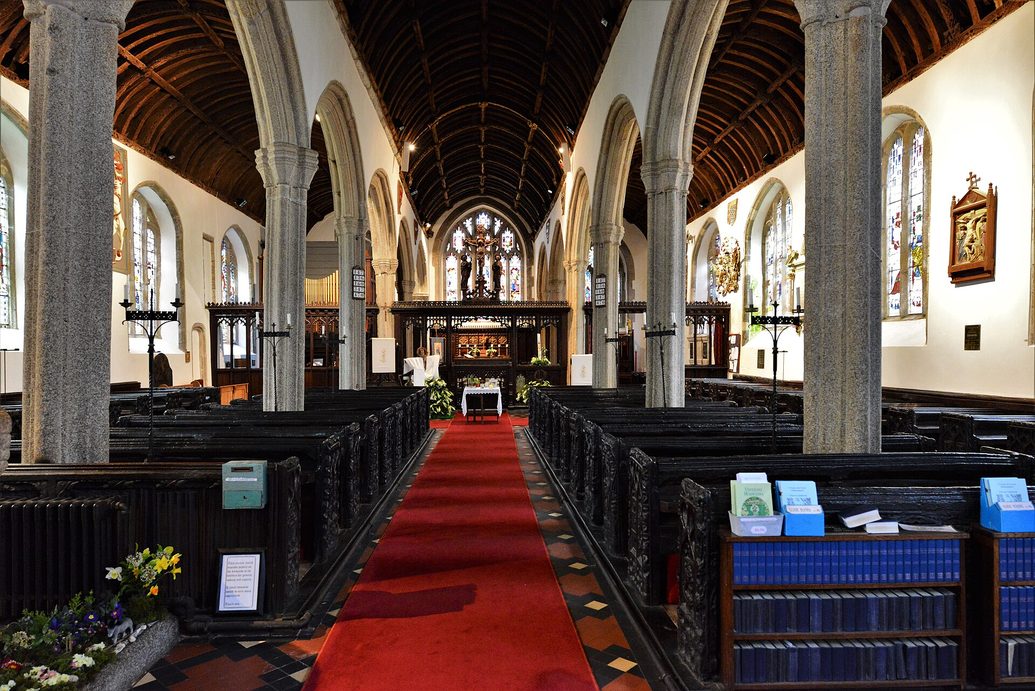
Inside, granite arcades run the length of the church on both sides, unusually high for Cornwall, under three unceiled wagon roofs with carved ribs and bosses; there are carved angels in the chancel roof. The church is light and long, and the woodwork fills it.
The bench ends
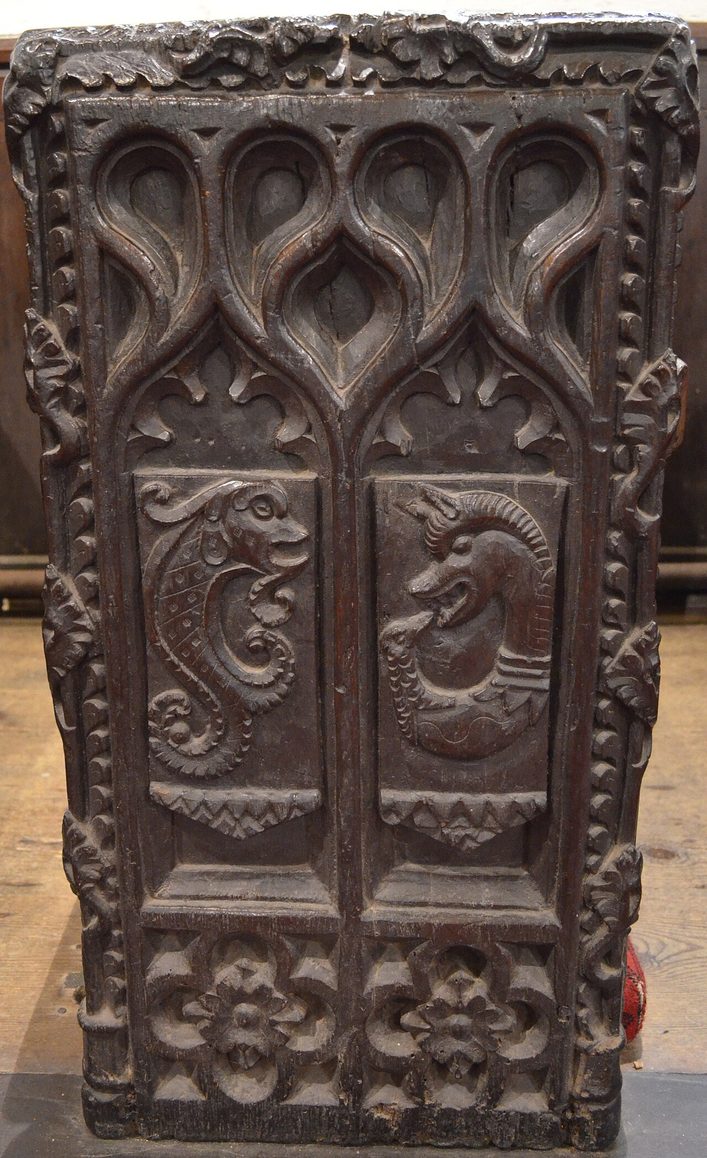
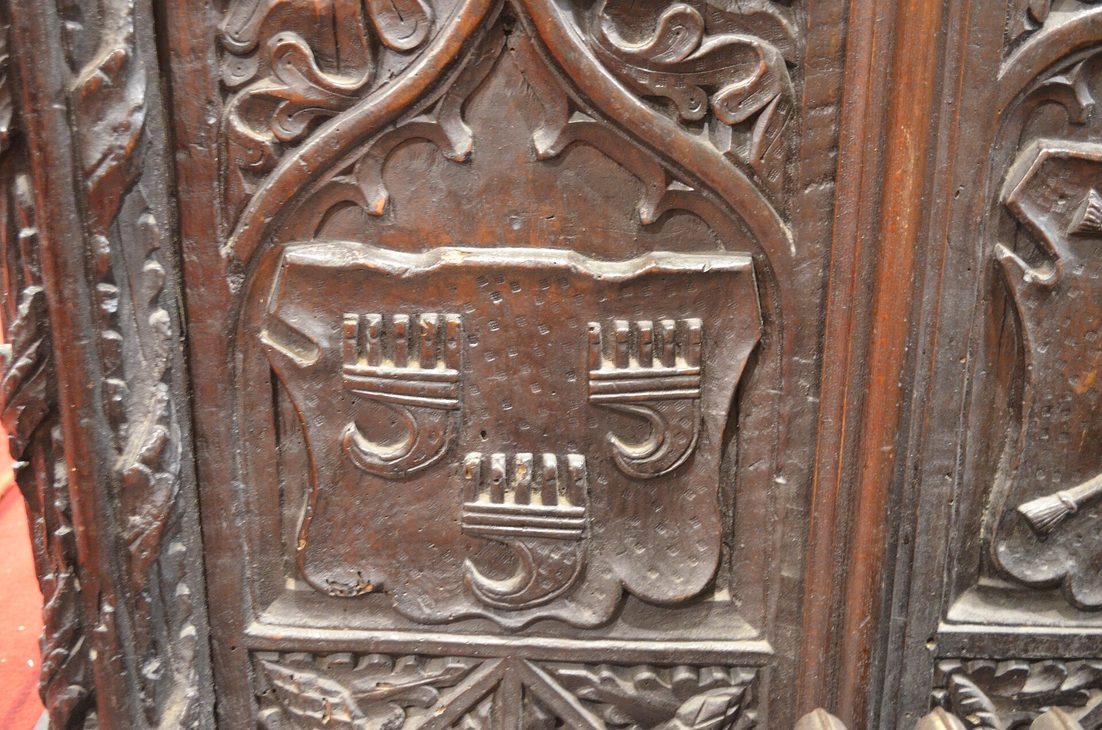
The carved oak bench ends of the sixteenth century are the church’s best-known feature. Historic England counts about seventy benches with carved ends, in the nave and both aisles. Their subjects include the instruments of the Passion, heraldry, heads in profile, grotesques and Renaissance scrollwork. Some panels were restored in Scott’s work of 1860. Compare them with the bench ends at Launcells, a few miles south.
The font and the Grenville Chapel
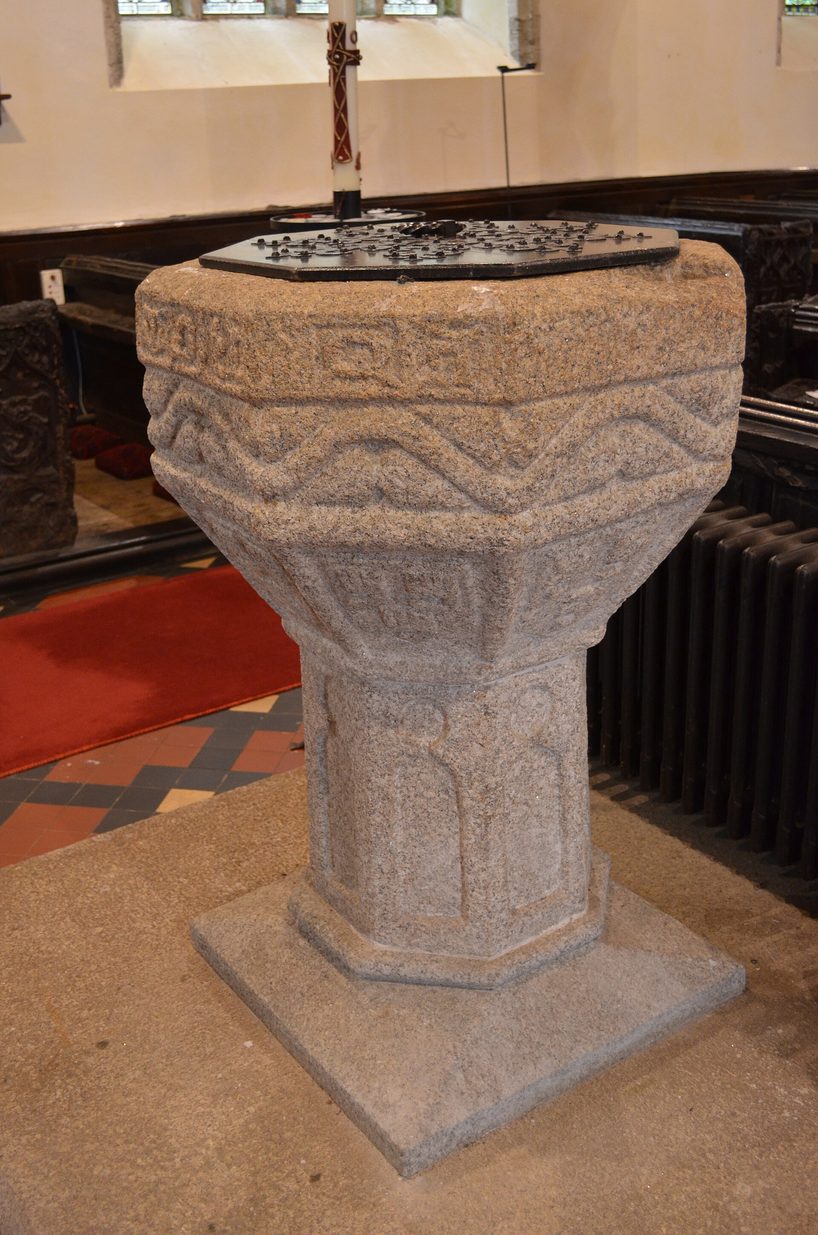
The octagonal granite font is of the sixteenth century; its inscription is in Lombardic letters, some of them upside down, which has never been satisfactorily explained. In the Grenville Chapel at the east end of the south aisle is the monument to Sir Bevil Grenville, with Corinthian columns and carved military trophies; it was put up early in the eighteenth century by his family and quotes the historian Clarendon’s praise of him. Nearby is a tablet of 1917, signed by Sir William Goscombe John, to Lieutenant-Colonel Algernon Thynne, who died of wounds in Palestine, with a bronze mounted figure and bronze reliefs.
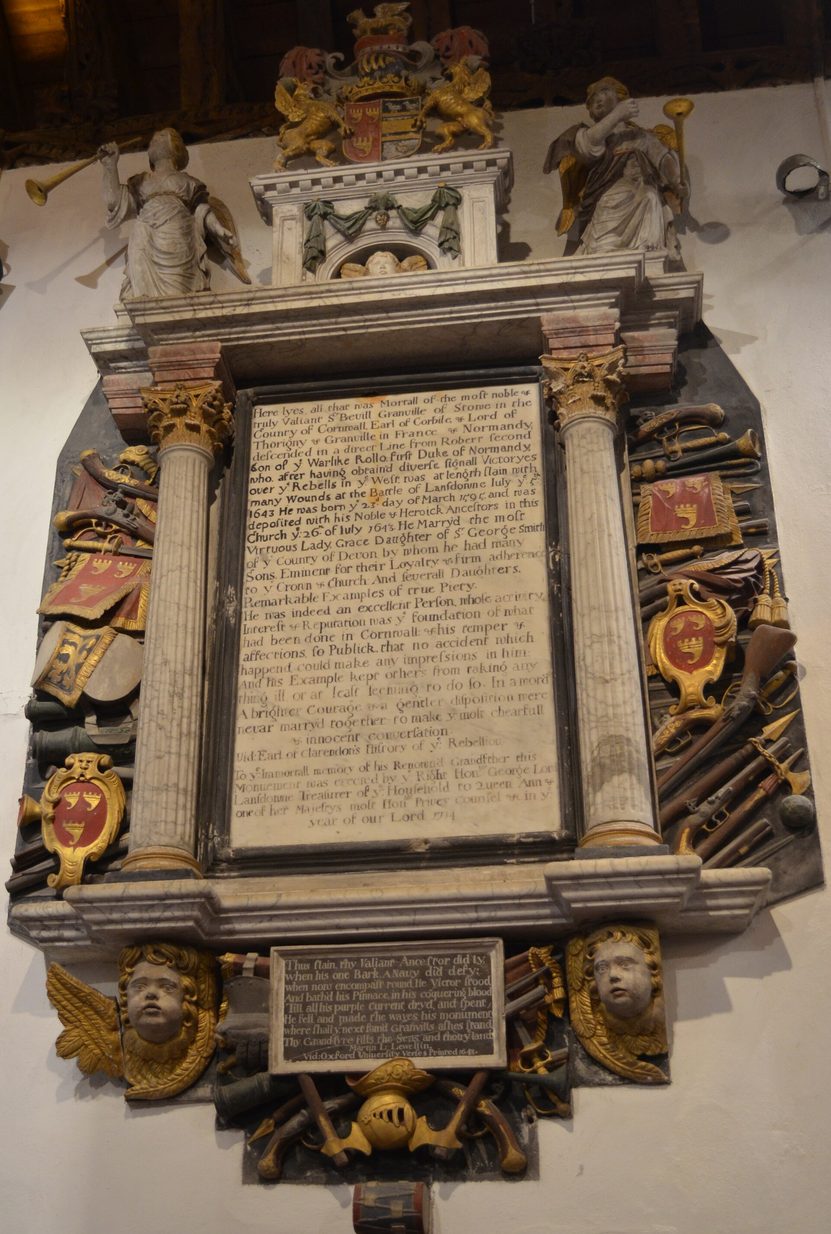
Michael Chuke’s monuments and arms
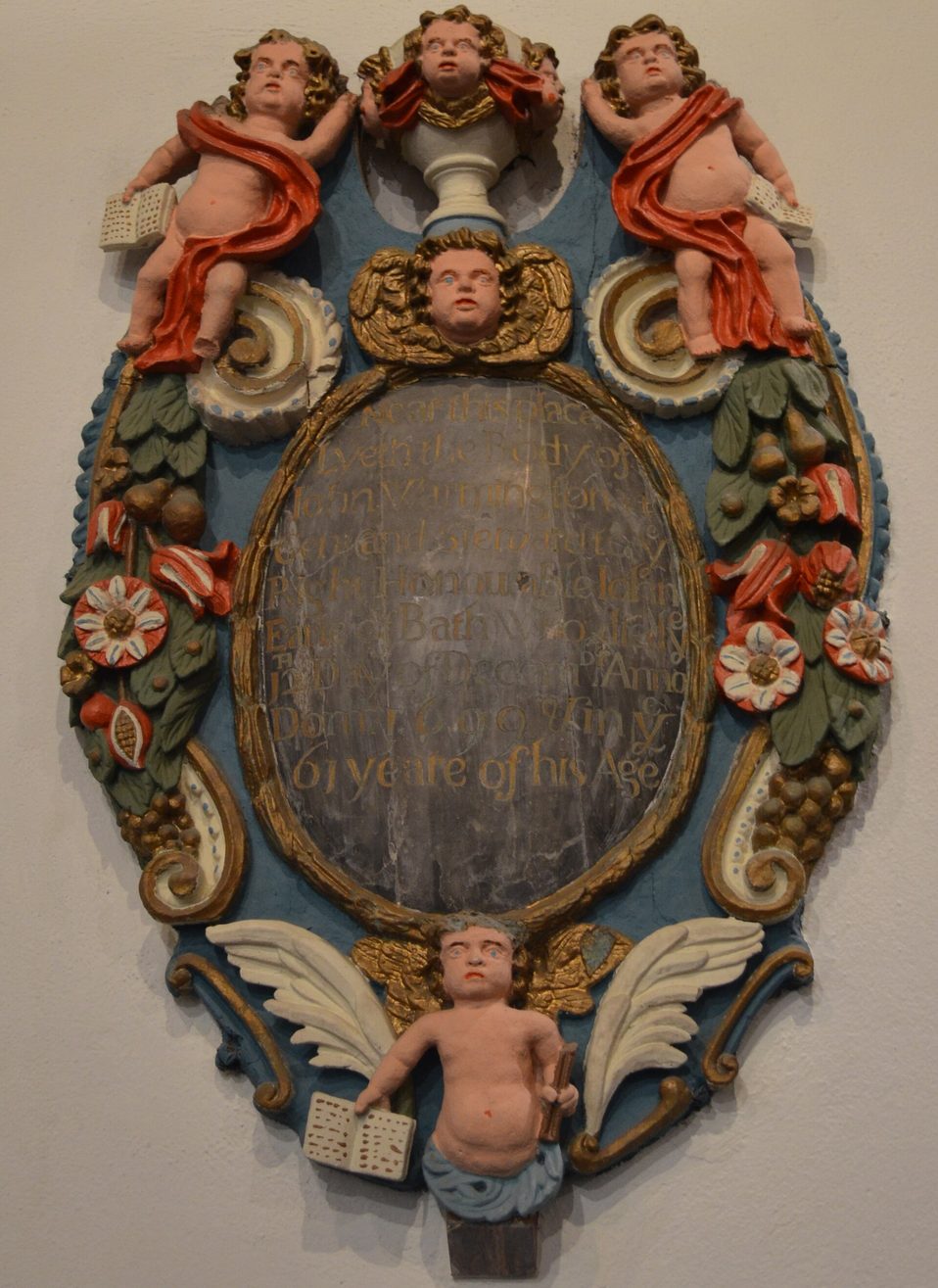
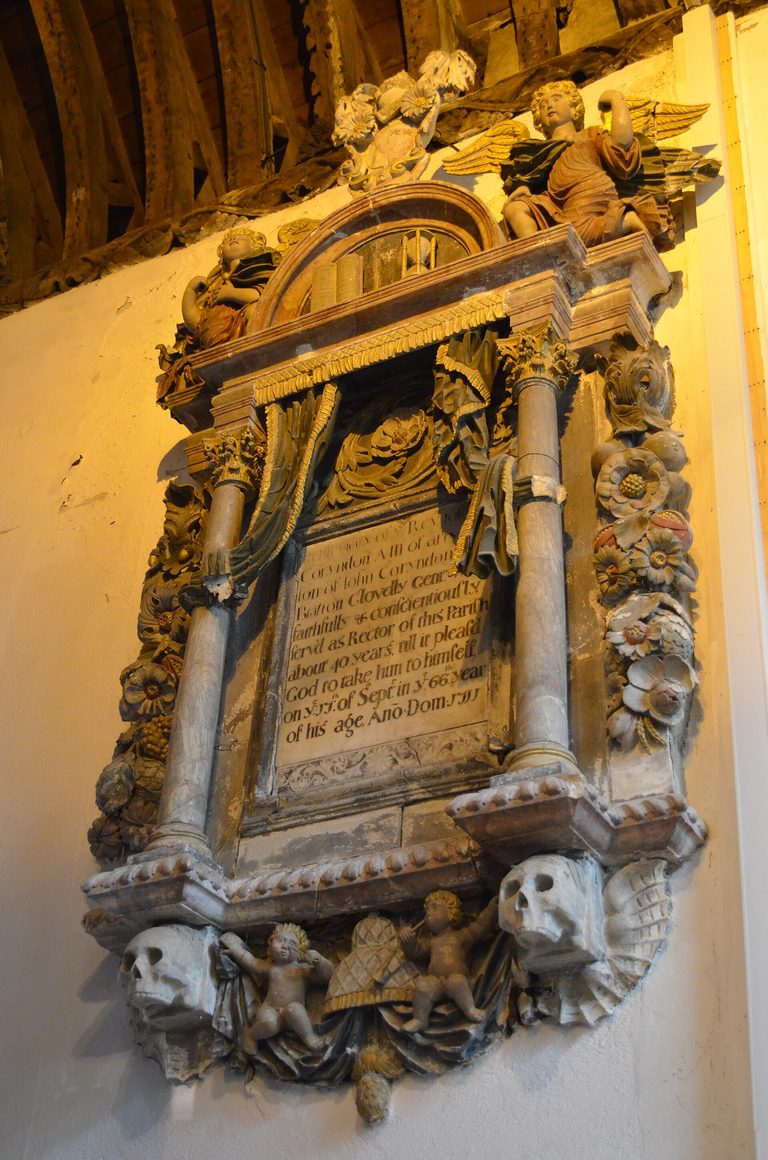
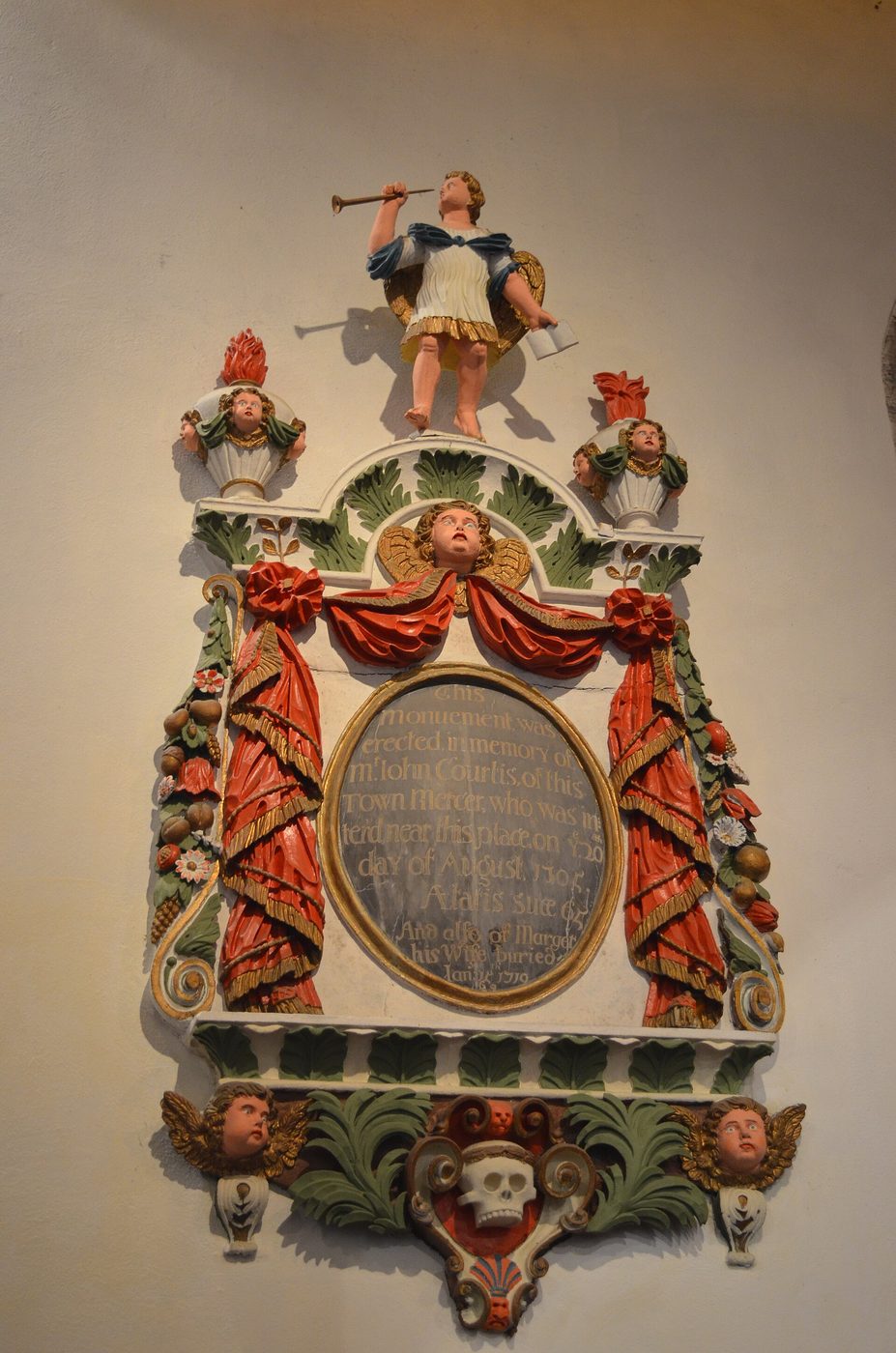
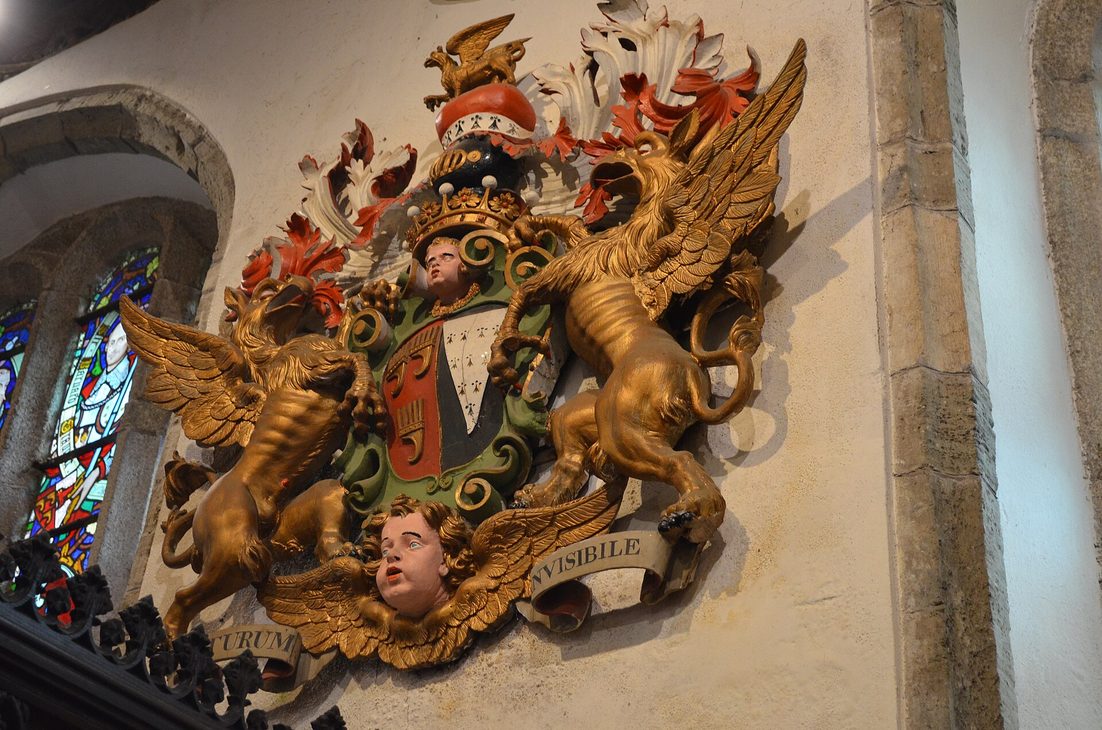
Michael Chuke (1679–1742), a Kilkhampton man said to have trained under Grinling Gibbons, is credited with several of the painted wall monuments, two of which keep early colouring. The arms of the Earl of Bath above the screen and the Royal Arms of George II on the north wall are both attributed to him. His own headstone, with a swan-necked top, stands in the churchyard north of the church.
The glass and the churchyard
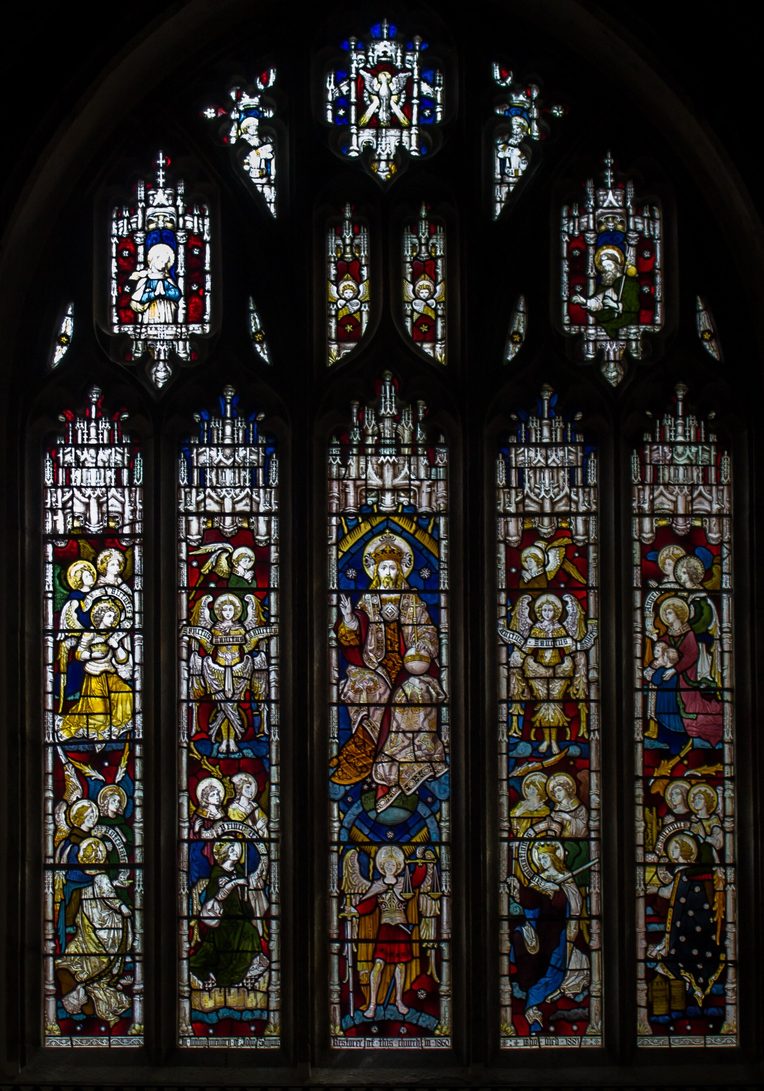
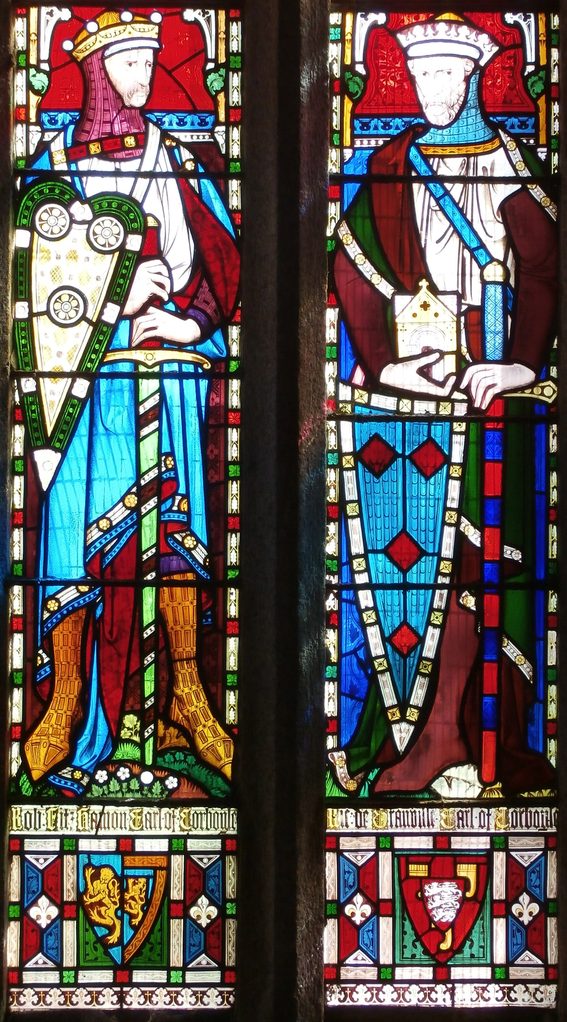
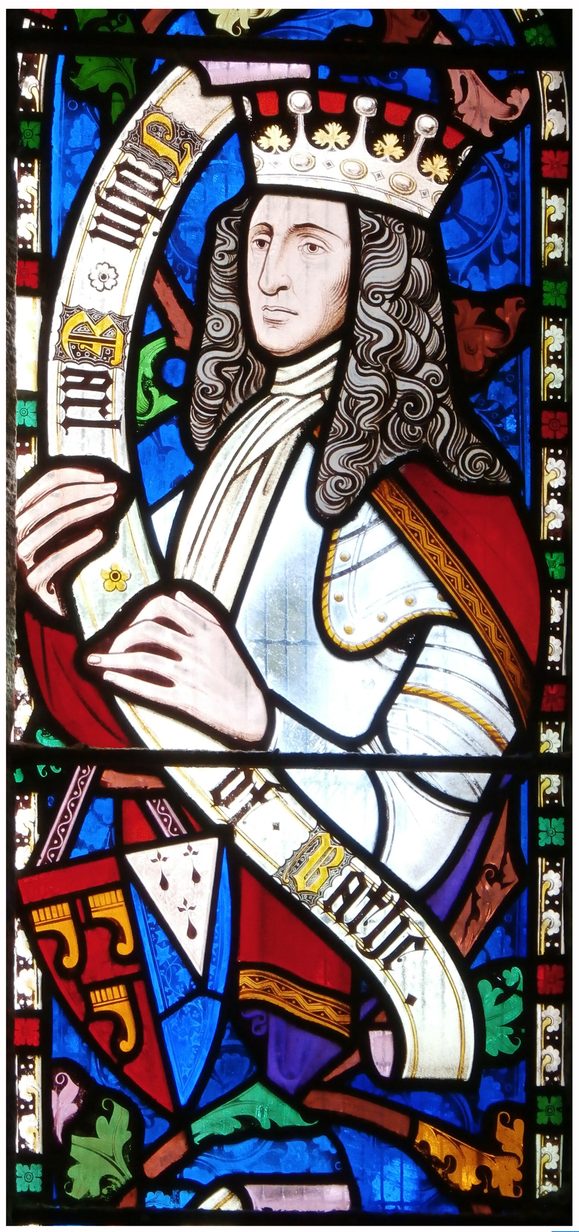
The five-light east window, deeply set in Scott’s chancel, is by Clayton and Bell, of 1860, and the same firm made windows of Grenville family history, with imagined figures of Robert Fitzhamon and Richard de Grenville, the family’s claimed ancestors; another light shows John Granville, Earl of Bath. The churchyard is said to have inspired James Hervey’s once-famous Meditations among the Tombs of 1746; by the boundary wall facing the square is a cross of 1909 to Arthur Thynne, the rector, with a bronze figure of Christ.
Getting there
Kilkhampton is on the A39 about four miles north of Bude. Bude has no railway station. Go Cornwall Bus route 219 between Bude and Hartland stops in The Square, by the church, about every two hours, but not on Sundays (check times). Ivy Cottages car park is in the village. No toilets are listed at the church; the London Inn in the village serves food (check times). Launcells church, with its unspoilt interior, is a few miles to the south, just inland from Stratton and Bude.
Where to stay
Bude and Stratton, about four miles away, have the most places to stay.
This link goes to Booking.com. This site earns nothing from it at present — it is here because it is the quickest way to check what is actually available.
Don’t miss
- The bench ends Sixteenth-century carving.
- The south doorway Norman beakheads and zigzag.
- Sir Bevil’s monument In the Grenville Chapel.
- The wagon roofs Three of them, end to end.
Insider tips
Combine with Launcells. St Swithin’s at Launcells, a few miles south, has bench ends in a similar style and an interior the Victorians left alone.
Come on a weekday by bus. The 219 does not run on Sundays.
Common questions
Is Kilkhampton church open?
The church says it is open from dawn until dusk.
Who was Sir Bevil Grenville?
The Grenville of Stowe who raised and led a Cornish regiment for the King in the Civil War. He was mortally wounded at the Battle of Lansdown, near Bath, in July 1643, and was buried here on 26 July. His monument was put up early in the eighteenth century.
How many bench ends are there?
Historic England counts about seventy benches with carved ends, in the nave and both aisles; some sources give a higher figure.
Is there anywhere to eat?
The London Inn in the village serves food (check times).
Is there a charge?
No admission charge is listed; donations are welcome.
More English churches
- Launcells Church — an unspoilt church near Bude
- Altarnun Church — more Cornish bench ends
- Blisland Church — a restored church on Bodmin Moor
See all the cathedrals and churches worth visiting in England →