
Church of St Donatus, Zadar
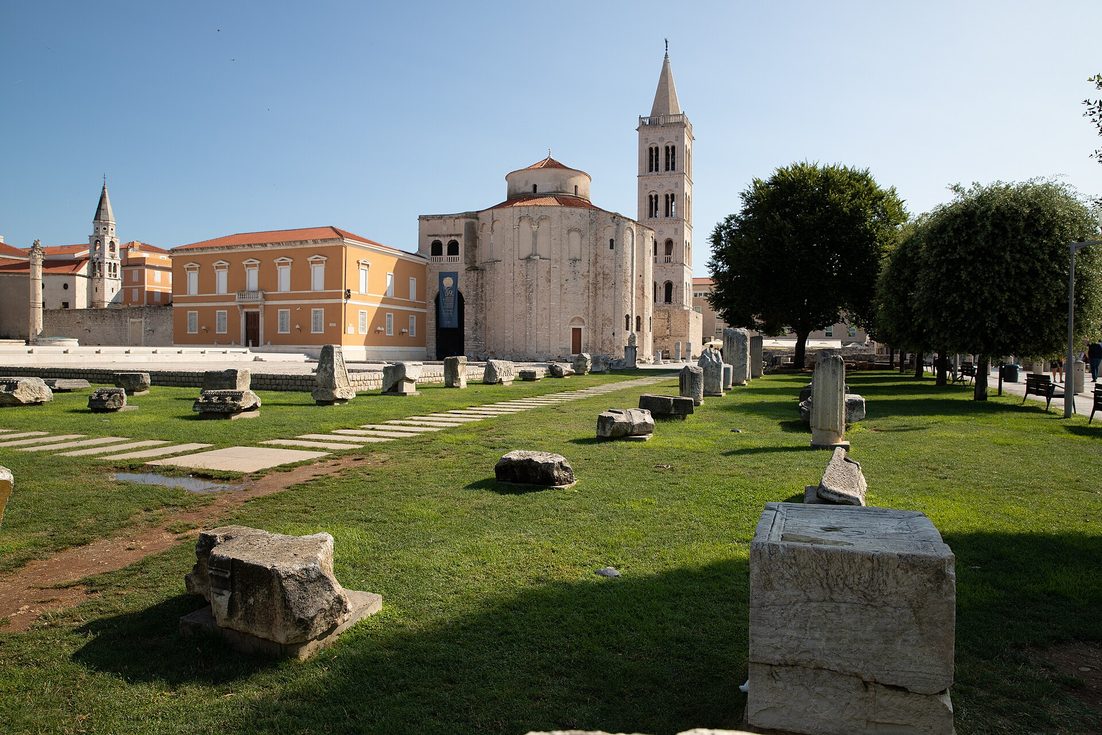
In the middle of Zadar, on the paving of the Roman forum, stands a tall round church of rough pale stone, built more than a thousand years ago and named after the bishop who is thought to have raised it. It is the largest pre-Romanesque building in Croatia and the symbol of the city, and its foundations are built of Roman columns, capitals and inscriptions taken from the ruins around it.

A church on the forum
The church is usually dated to the beginning of the ninth century, the time of Donatus, bishop of Zadar, who took part in the diplomacy between Charlemagne and Byzantium. It was first dedicated to the Holy Trinity, and only from the fifteenth century did it bear his name. The Byzantine emperor Constantine Porphyrogenitus described it in the middle of the tenth century.
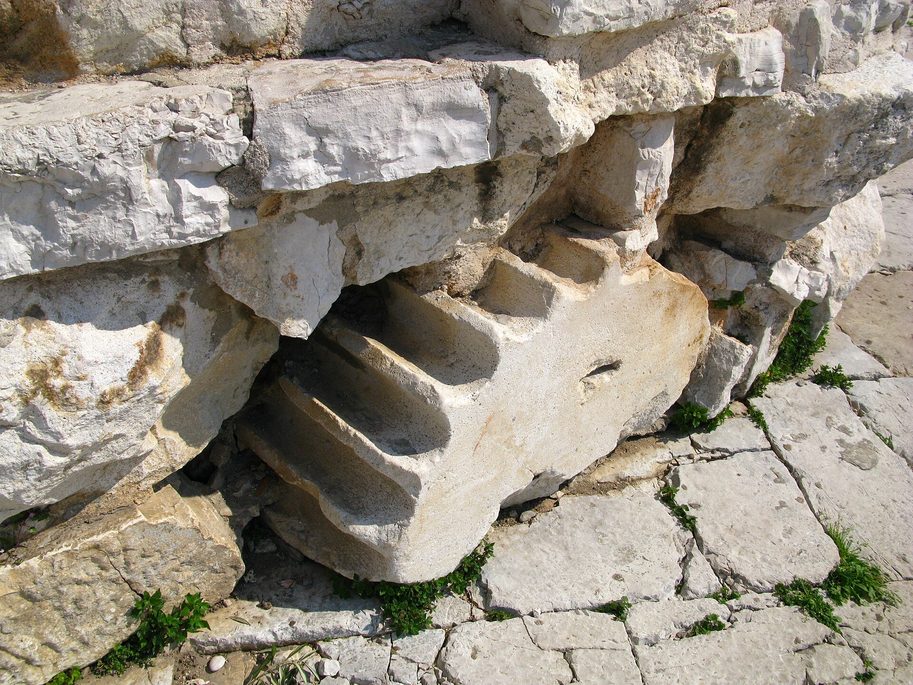
It was built on the Roman forum, and its builders used what lay to hand: broken columns, capitals and stones with Latin inscriptions from the temples and public buildings of Roman Iader. The church served for worship until 1798. In the next century it was an army store and then a wine association’s store, until in 1880 it was bought for the town’s museum. Between 1928 and 1932 the ground around it was lowered to the level of the forum, and inside, the church’s floor has been taken up to show the Roman paving and the stones in the foundations.
The visitor’s cheat sheet
| Where | Roman Forum, in the centre of Zadar old town, beside the cathedral of St Anastasia |
|---|---|
| Opening hours | Daily, April–December, from 9am: to 5pm in April, 7pm in May, 9pm in June, July (to the 12th) and September, 10pm from mid-July to August, 7pm to mid-October, 5pm to the end of October, 3pm in November and December. Closed January–March except by arrangement |
| Admission | €5; with the Archaeological Museum €10; under-10s free |
| Concerts | Musical Evenings in St Donatus, July and August; tickets about €20 |
| Works | A restoration was announced in February 2026, starting with the roof; check for closures |
| How long | Twenty minutes to half an hour; longer with the forum and the museum |
Hours and admission checked against the official site in November 2026. They change; the official site is always the last word.
What to see
The outside
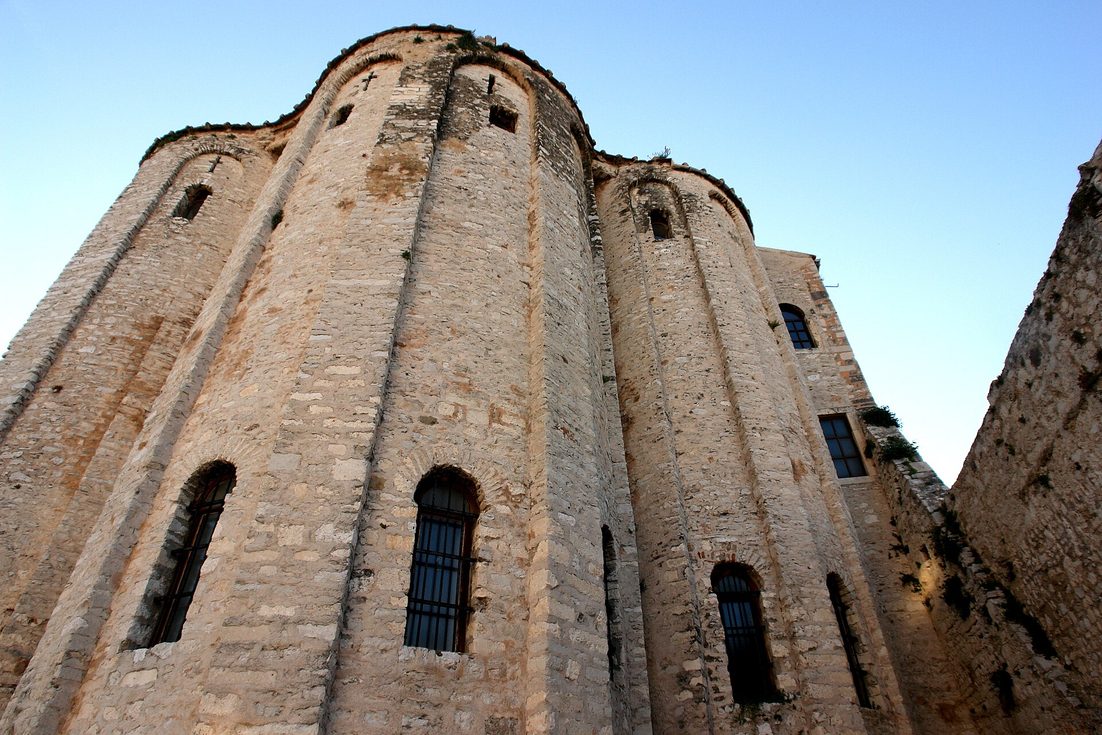
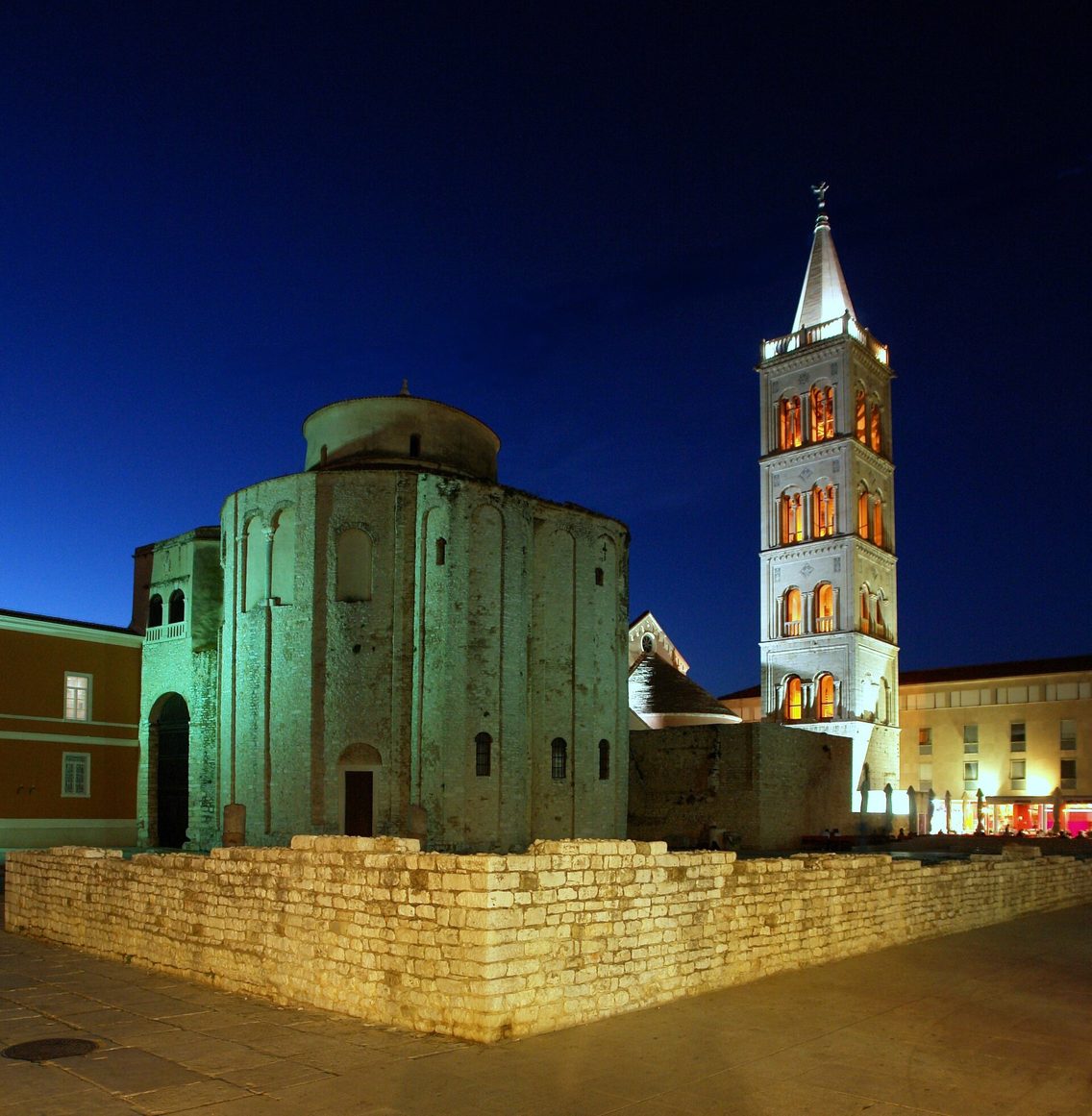
The church is a tall cylinder, about 27 metres high, with three rounded apses on the east side, and it is built of rough stone, with narrow windows. Walk round it to see the Roman pieces built into its base: column drums laid on their sides, and blocks carved with Latin letters.

Inside
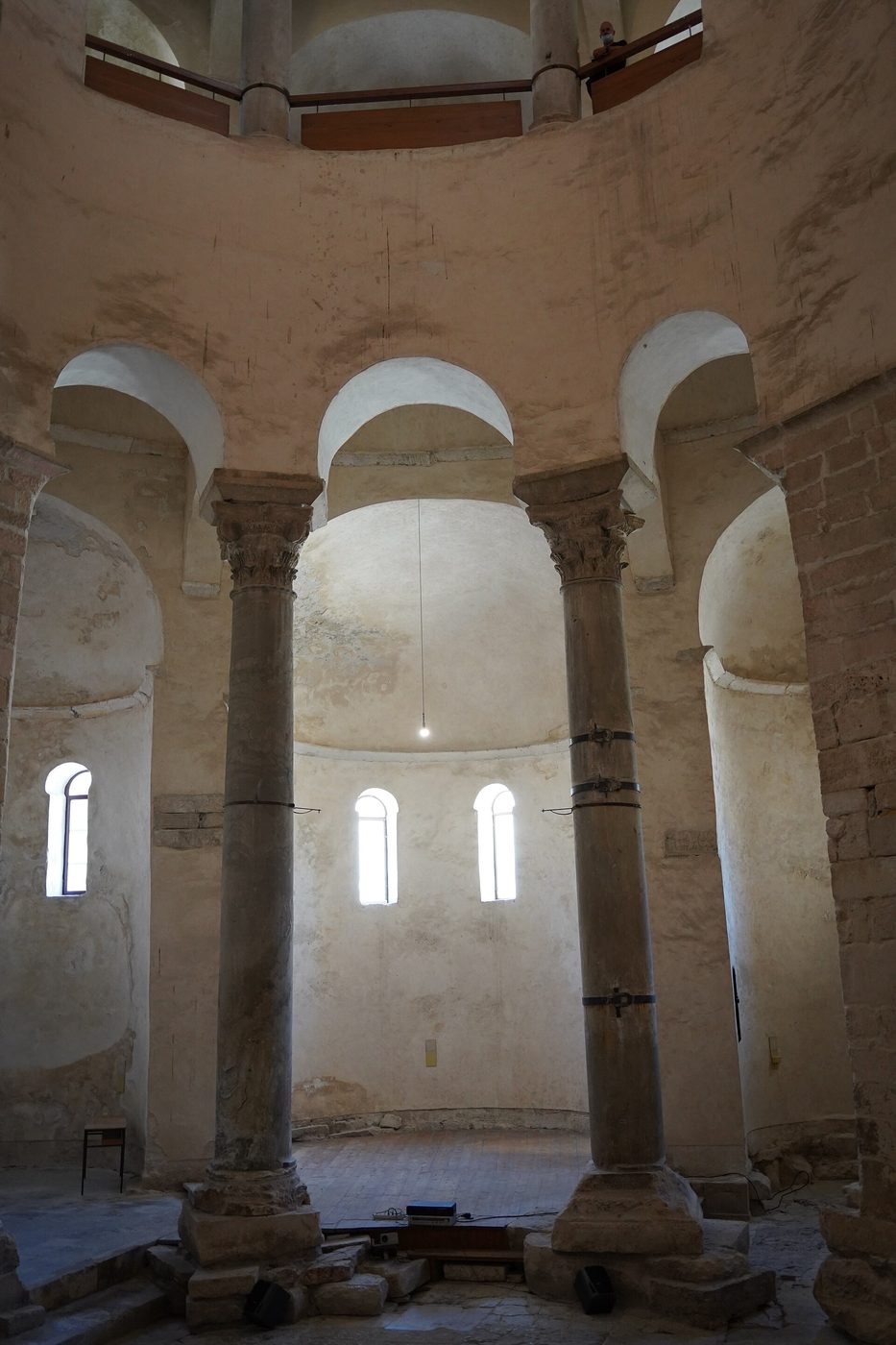
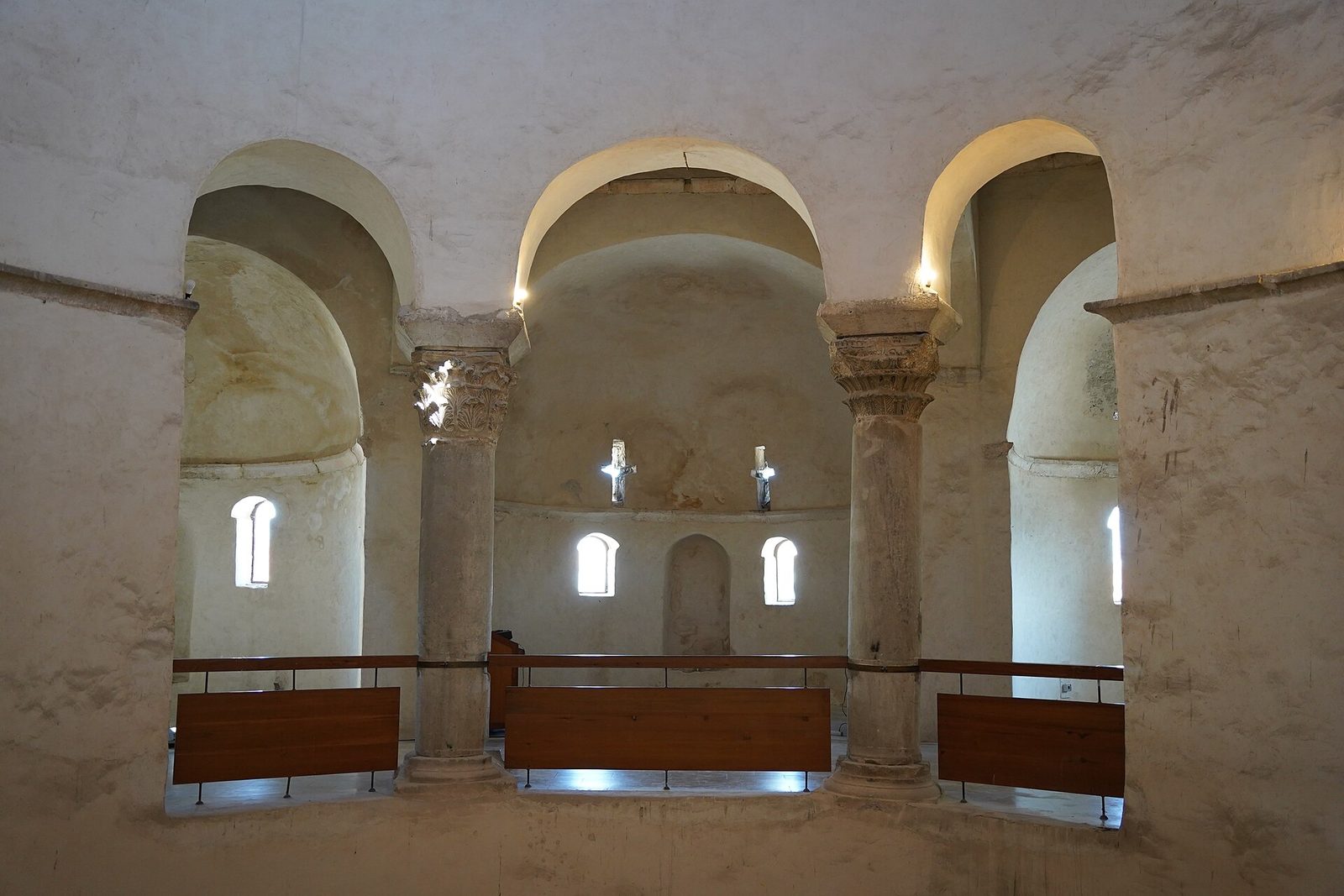
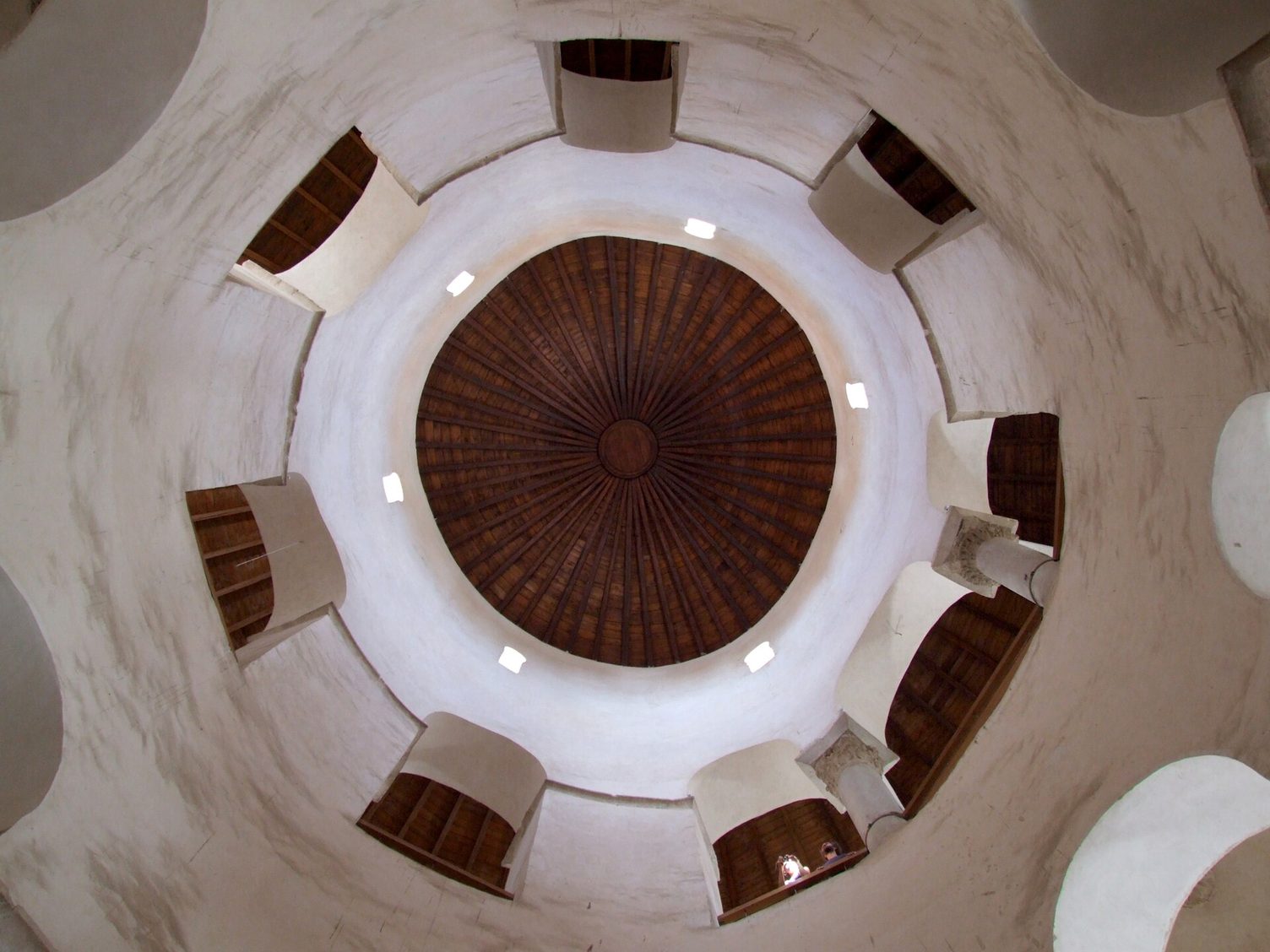
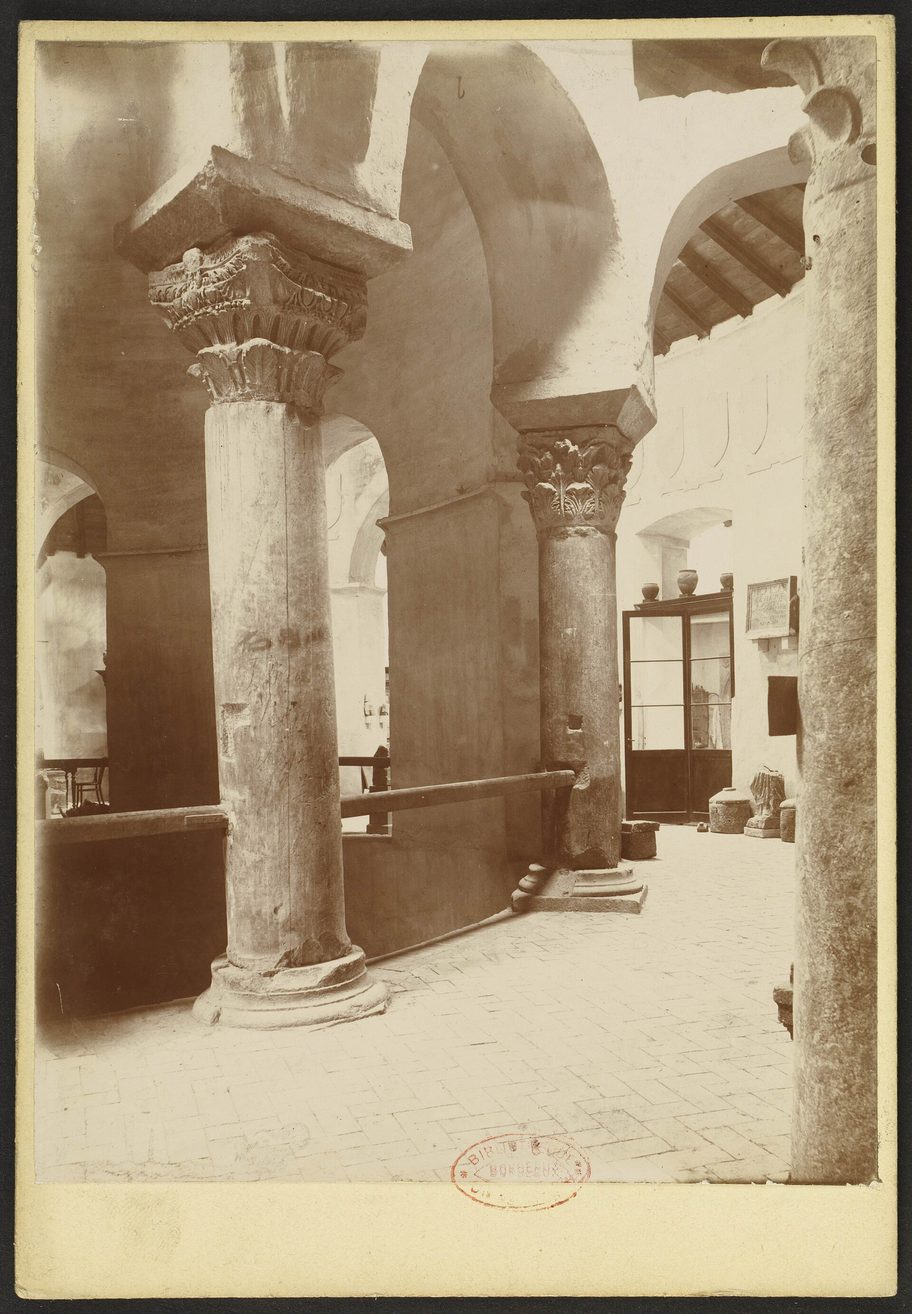
The interior is bare, without altars or furnishings, which makes the shape of the building easy to read: a tall central space, ringed by a lower passage behind piers and two Roman columns, and above it a gallery that repeats the plan of the ground floor. On the floor, where the church’s floor has been removed, the stones of the forum and the Roman fragments in the foundations are exposed. The acoustics are remarkable, which is why the church is used for concerts of early music in summer.
Around St Donatus
The Roman forum around the church is open and free, with a column that served as a pillory in the Middle Ages. Next door is the cathedral of St Anastasia, the largest church in Dalmatia, whose bell tower can be climbed for the view over the church and the sea. The Archaeological Museum is on the other side of the forum, and the waterfront, with the Sea Organ and the Greeting to the Sun, is about ten minutes’ walk away.

Getting there
Zadar old town stands on a peninsula and is largely closed to cars. From the bus and railway stations it is about twenty minutes’ walk, or a short ride on a local bus to the edge of the old town; the barkajoli, Zadar’s traditional rowing-boat ferrymen, also cross the harbour from the mainland side. St Donatus is in the middle of the peninsula, on the forum.
Tours and where to stay
Staying in or near the old town puts the forum, the churches and the waterfront within a few minutes’ walk.
These links go to GetYourGuide and Booking.com. This site earns nothing from them at present — they are here because they are the quickest way to check what is actually available.
Don’t miss
- The Roman foundations Columns and inscriptions under the walls.
- The gallery The view down into the round church.
- A summer concert Early music in July and August.
- The bell tower next door The view over St Donatus and the forum.
Insider tips
Climb the cathedral bell tower first. From the top you see St Donatus whole, with its apses, the forum and the sea; then go inside.
Come in the season. From January to March the church is closed unless a visit has been arranged with the Archaeological Museum, and in November and December it closes at 3pm.
Common questions
How much does it cost to visit St Donatus?
Entry costs €5. A combined ticket with the Archaeological Museum costs €10. Children under 10 go free.
When is St Donatus open?
It is open daily from April to December, from 9am, closing at 3pm in November and December, 5pm in April, and later in summer, up to 10pm in July and August. From January to March it is closed, except for visits arranged in advance with the Archaeological Museum.
Is St Donatus still a church?
No. It ceased to be used for worship in 1798 and has been in the care of the town’s museum, now the Archaeological Museum of Zadar, since 1880. In summer it is used for concerts, notably the Musical Evenings in St Donatus, held since 1961.
Why are there Roman stones in the church?
The church was built on the paving of the Roman forum, and its builders used stones from the ruined Roman buildings around it: column drums, capitals and inscribed blocks can be seen in the foundations, where the later floor has been removed down to the forum paving.
More churches to visit
- Cathedral of St James, Šibenik — the stone-vaulted cathedral with its frieze of heads, an hour down the coast.
- Cathedral of St Domnius, Split — a cathedral in an emperor’s mausoleum.
- San Vitale, Ravenna — the great octagonal church across the Adriatic.