
Boyana Church, Sofia
In a quiet park on the edge of Sofia, under the slopes of Mount Vitosha, stands a small church of brick and stone that holds some of the most admired medieval paintings in Europe. Painted in 1259, the frescoes of Boyana show saints and rulers with strikingly individual, lifelike faces. The church is a UNESCO World Heritage Site, and visits are short and strictly limited.
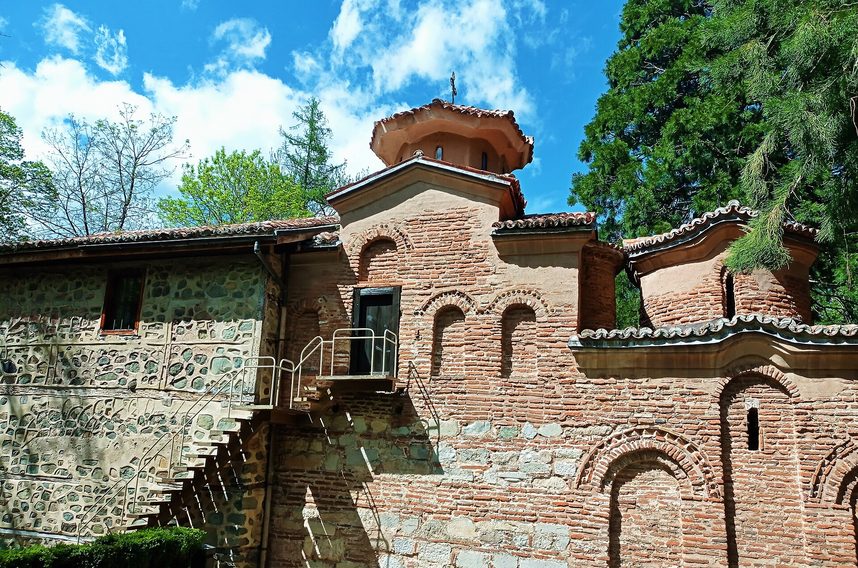
Three churches in one
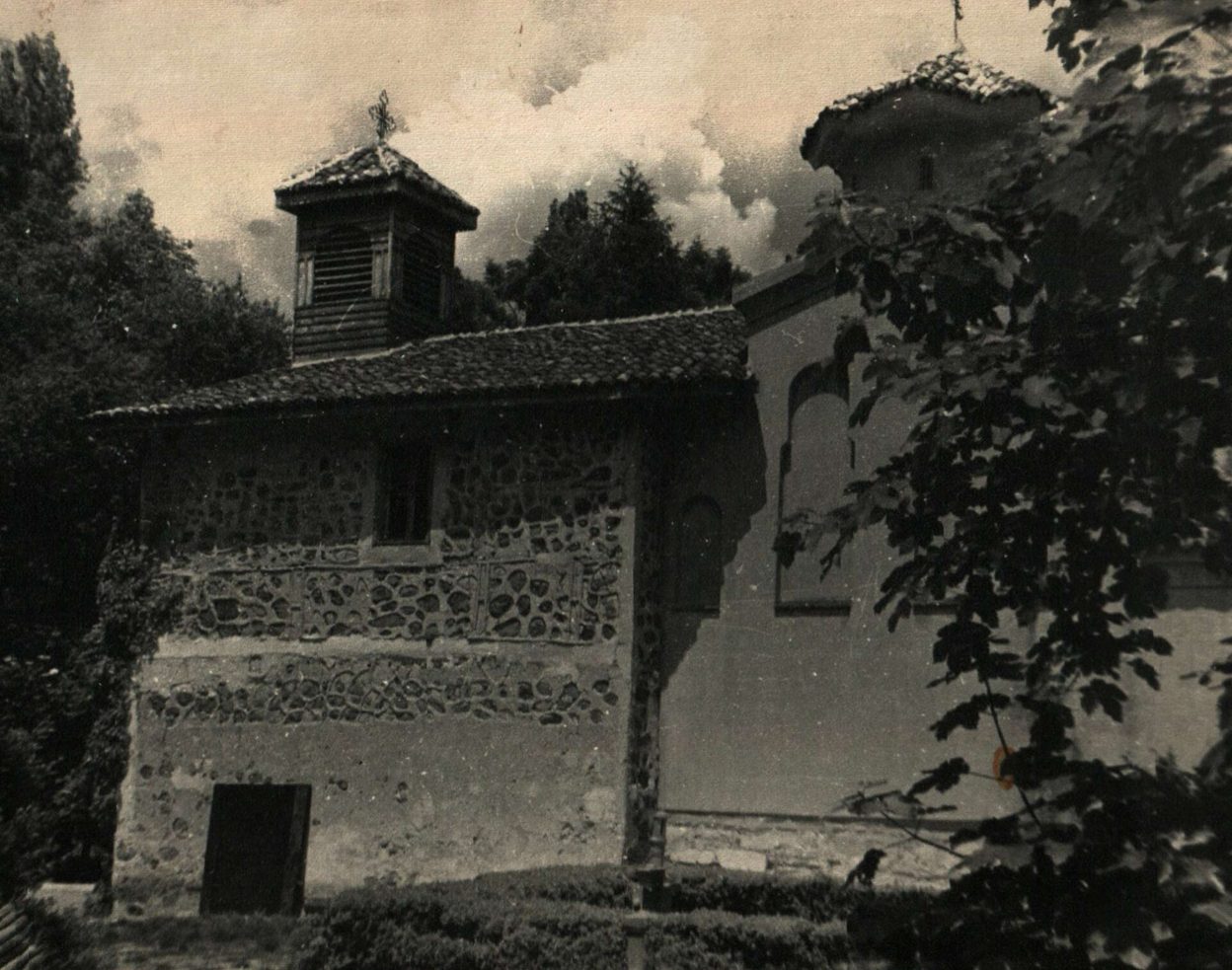
The church grew in three stages. The oldest part, at the east end, is a small cross-shaped church of the late tenth or early eleventh century. In the thirteenth century the sebastocrator Kaloyan, a lord of the Second Bulgarian Empire, and his wife Desislava added a two-storey building against its west side, with a family chapel above; an inscription dates its paintings to 1259. A third section was added on the west in the nineteenth century.
Boyana stopped functioning as a church in 1954 and became a museum, a branch of the National Museum of History. It was one of the first places in Bulgaria to be inscribed on the UNESCO World Heritage List, in 1979. After a long conservation, the paintings were reopened to visitors in 2008.

The visitor’s cheat sheet
| Where | 3 Boyansko Ezero Street, Boyana, Sofia, at the foot of Vitosha |
|---|---|
| Opening hours | November–March 9am–5.30pm; April–October 9.30am–6pm. Closed 1 January, Orthodox Easter Sunday, 24 and 25 December |
| Admission | €10; students €3; guided talk in a foreign language €10. Free on the last Monday of the month after 3pm, 18 May, 17 September and 1 November |
| Visits | No more than nine people inside at once, for about ten minutes; organised groups must book |
| Photography | Not allowed inside |
| Getting there | Bus 64 or 107, or a taxi (20–30 minutes from the centre) |
| How long | An hour, with the park and the waiting |
Hours and admission checked against the official site in November 2026. They change; the official site is always the last word.
What to see
The paintings of 1259
Inside, the walls are covered with paintings, some earlier than 1259 but most from that year, the work of an unknown master and his team. There are about 240 figures. Look for the portraits of the founders, Kaloyan, who holds a model of the church, and Desislava, and of the Bulgarian tsar Konstantin Asen and his wife Irina; the oldest known portrait of St John of Rila; a gentle, youthful Christ; and, in the narthex, eighteen scenes from the life of St Nicholas, including a shipwreck with sailors in vivid detail.
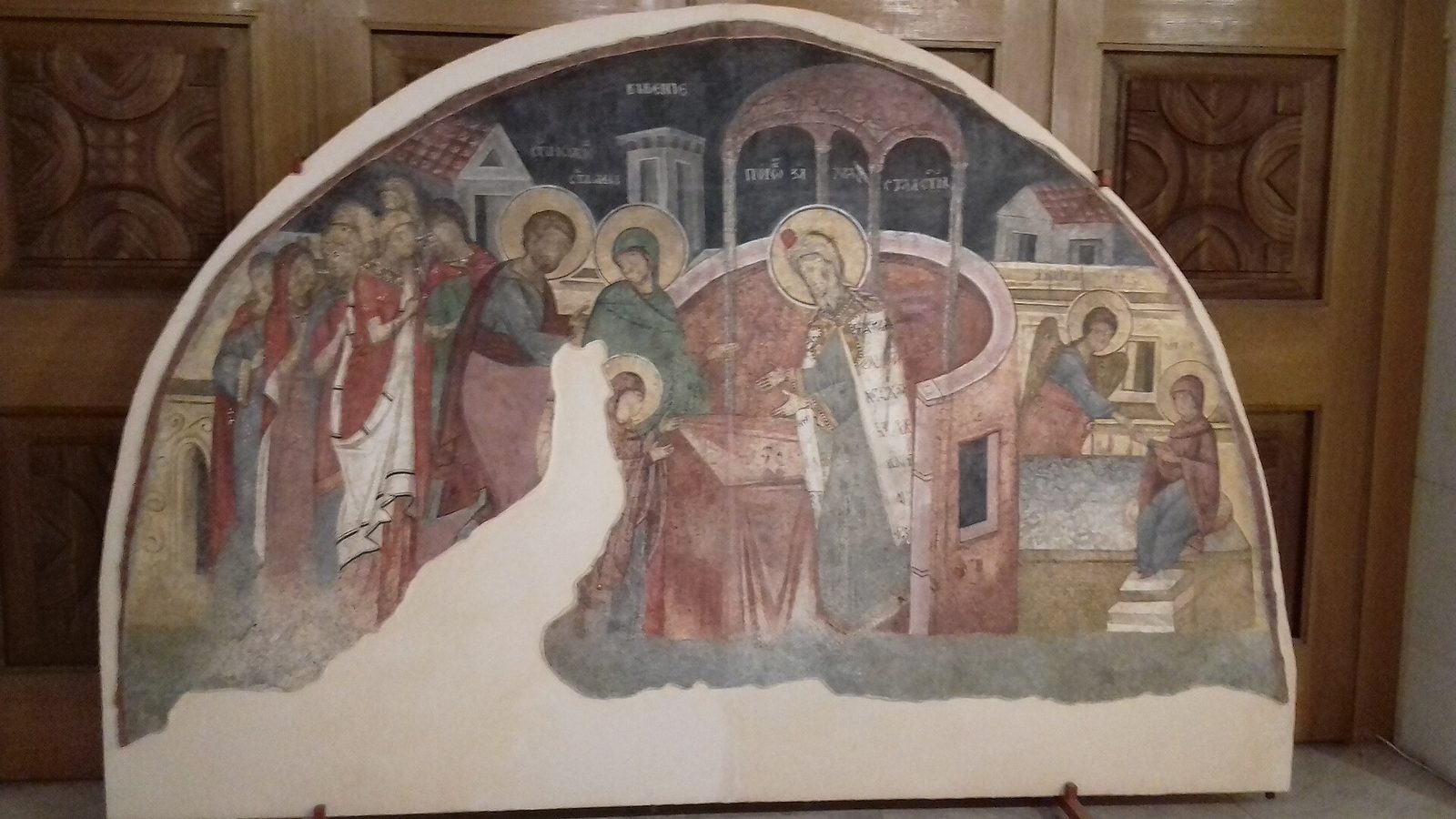
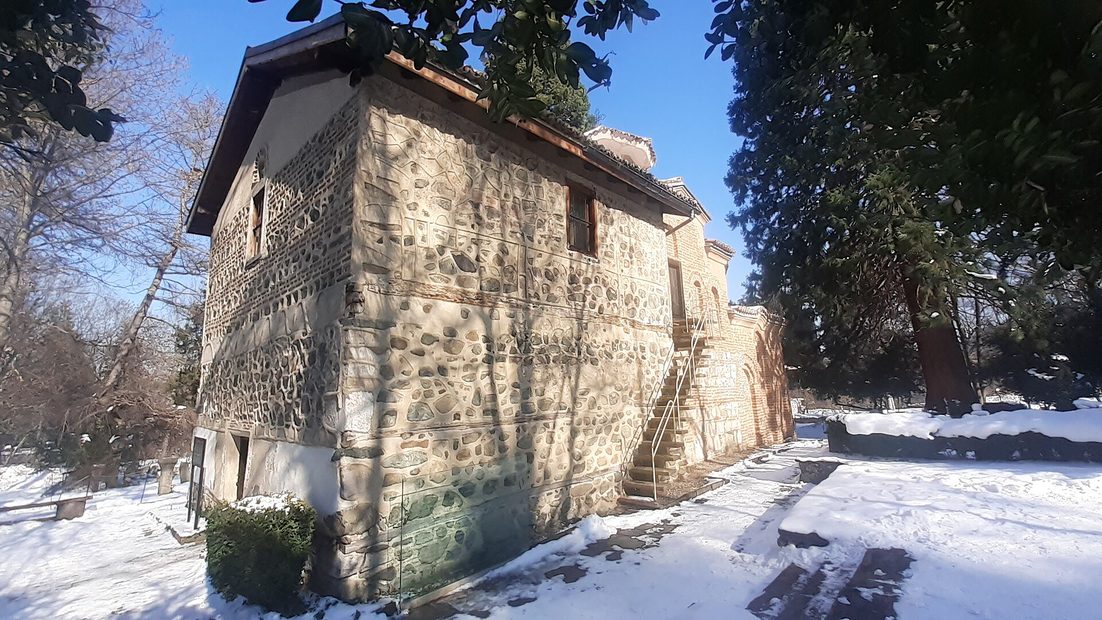
A note on our pictures. Photography is not allowed inside the church, so we show the outside, an old photograph, and a painting removed from the church that is now in a museum.
The building and the park
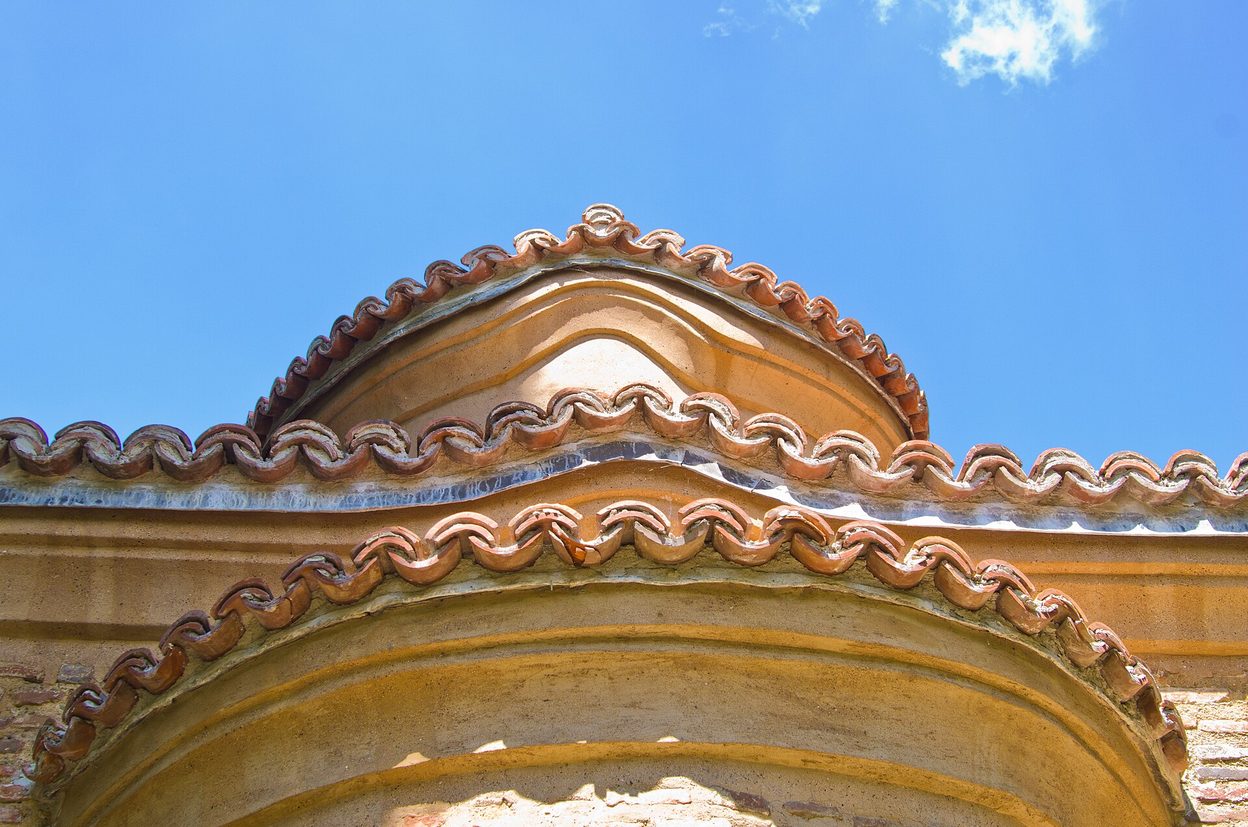
Outside, the medieval parts are of alternating brick and stone, decorated with blind arches and glazed ceramic details, with a small tower over the east end. The church sits in a park with giant sequoias planted in the early twentieth century, which is pleasant to walk round while you wait for your turn inside.

Around Boyana
The National Museum of History, Bulgaria’s largest museum, is in the former government residence in Boyana, a short taxi ride away; some of the paintings removed from Boyana Church are shown there. From Boyana, paths climb into the Vitosha Nature Park, past the Boyana waterfall, and Sofia’s own mountain rises to 2,290 m at Cherni Vrah.
Getting there
Boyana is about 8 km south-west of the centre of Sofia. City buses 64 and 107 run to Boyana; a taxi takes 20 to 30 minutes, depending on traffic. Many day tours from Sofia combine Boyana with the Rila Monastery.

Tickets, tours and where to stay
Central Sofia, around the Alexander Nevsky Cathedral and Vitosha Boulevard, is the easiest base.
These links go to GetYourGuide and Booking.com. This site earns nothing from them at present — they are here because they are the quickest way to check what is actually available.
Don’t miss
- Kaloyan and Desislava The founders’ portraits of 1259.
- St Nicholas’s miracles Eighteen scenes in the narthex.
- St John of Rila His oldest known portrait.
- The park Giant sequoias round the church.
Insider tips
Take the guided talk. The ten minutes inside go fast; a guided talk (€10 in a foreign language) tells you what to look at before you go in.
Go early in the day. Tour groups from Sofia arrive mid-morning, and only nine people can be inside at once.
Common questions
How much does it cost to visit Boyana Church?
€10 for adults and €3 for students. A guided talk in a foreign language costs €10. Entry is free on the last Monday of each month after 3pm, and on 18 May, 17 September and 1 November.
Can you take photographs inside Boyana Church?
No. The rules say that photography and filming with cameras or phones are prohibited, and drones are not allowed either.
How long can you stay inside?
About ten minutes in the medieval rooms, with no more than nine visitors inside at a time, so there may be a short wait at busy times.
How do you get to Boyana Church from central Sofia?
It is in the Boyana district at the foot of Vitosha, about 8 km south-west of the centre. Buses 64 and 107 run there, or a taxi takes 20 to 30 minutes depending on traffic.
More churches to visit
- Rila Monastery — Bulgaria’s great monastery in the mountains south of Sofia.
- Hosios Loukas, Greece — Byzantine mosaics in a mountain monastery.