
Leominster Priory
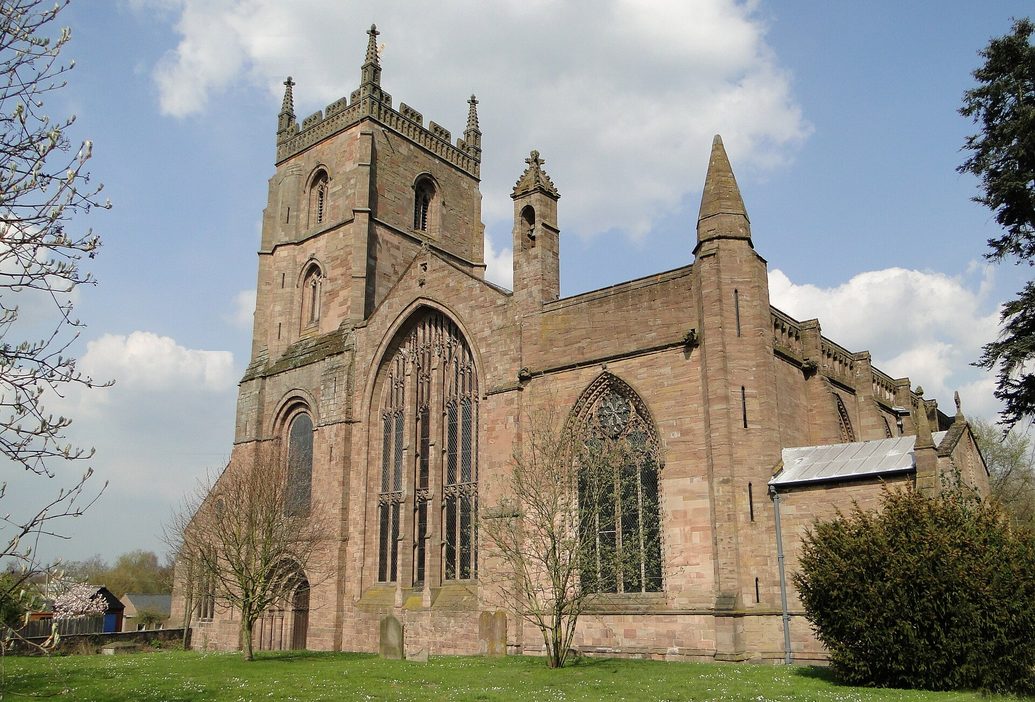
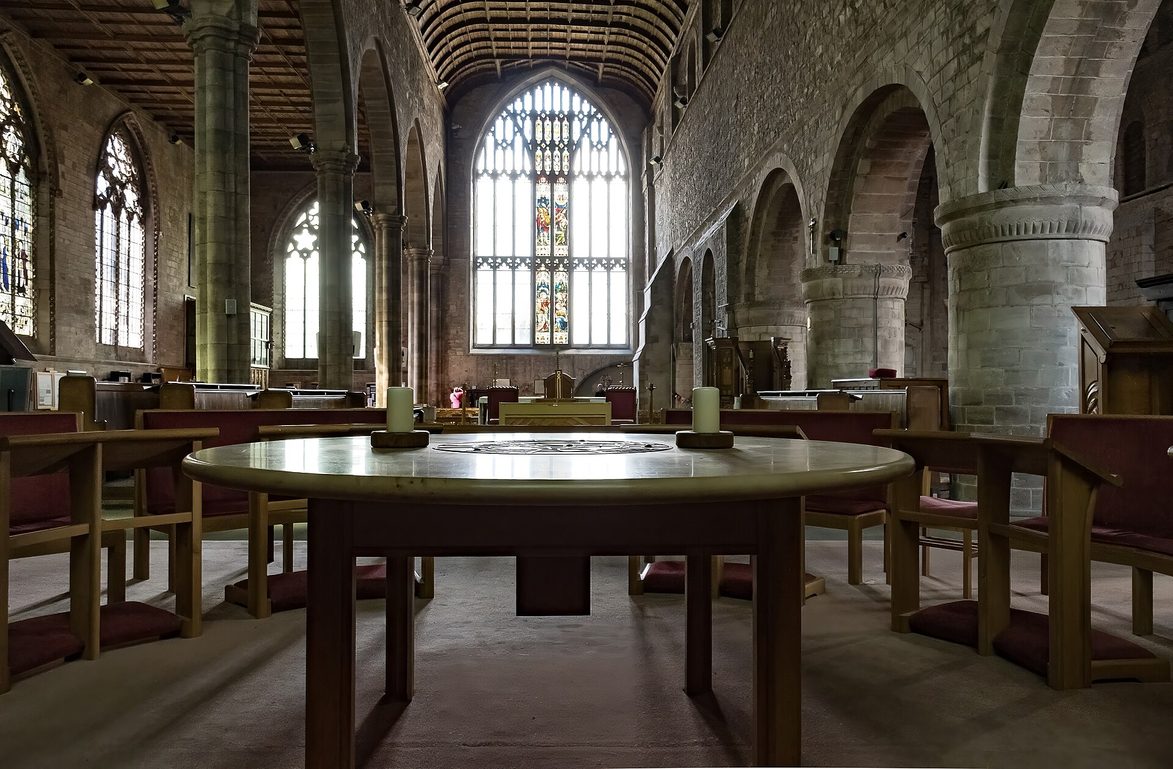
The Priory Church of St Peter and St Paul at Leominster is what the parish kept when the monastery was dissolved: a great Norman nave, a broad thirteenth-century parish nave and a fourteenth-century aisle, side by side. Outside is a richly carved Norman doorway by the Herefordshire School; inside, a ducking stool on wheels, reported to date from the late seventeenth century.
A minster, a monastery and a parish
Tradition says a minster was founded here in about 660 by Eadfrith, a monk from Lindisfarne, after he converted Merewalh, king of the local people. Earl Leofric of Mercia was a patron in the eleventh century, and a community of nuns is recorded until 1046. In the 1120s Henry I refounded Leominster as a priory of his new Reading Abbey (the year is given as 1121, 1123 or 1125), and the monks built the great Norman church, whose altar of the Holy Cross was consecrated soon after 1130. In the late twelfth century two women, Solicita and Matilda Ford, witnessed priory charters as medica; they are thought to be among the earliest women doctors recorded in England.
The townspeople worshipped in the same building, and in 1239 a new parish nave was consecrated beside the monks’ nave; a wide south aisle followed in the early fourteenth century. When the priory was surrendered in 1539 its east end, transepts and cloister were pulled down, but the parish kept the naves. A fire in 1699 destroyed the roofs and the south arcade, and the church reopened in 1705. It was restored in the 1860s and 1870s to designs by Sir George Gilbert Scott and is listed Grade I. A geophysical survey in 2023 confirmed that the foundations of the monks’ rounded east end still lie under the grass east of the church.
The visitor’s cheat sheet
| Where | Church Street, Leominster, Herefordshire HR6 8NH |
|---|---|
| Opening hours | Usually open daily, about 10am–4pm (some listings say from 9am or 9.30am); may close for special events |
| Admission | Free |
| Services | Sunday Eucharist at 10am; Wednesday Eucharist at 10.30am; Choral Evensong at 6pm on the first Sunday |
| Access | Step-free into the central nave; ramps to the Norman nave and St Paul’s Chapel; uneven floors; hearing loop |
| Parking | No parking by the church; Broad Street pay-and-display car park, with a footpath to the church |
| Toilets | In the church, usually open for services and events; public toilets on The Grange, about five minutes’ walk |
| How long | An hour |
Hours and admission checked against the official site in November 2026. They change; the official site is always the last word.
What to see
The west doorway
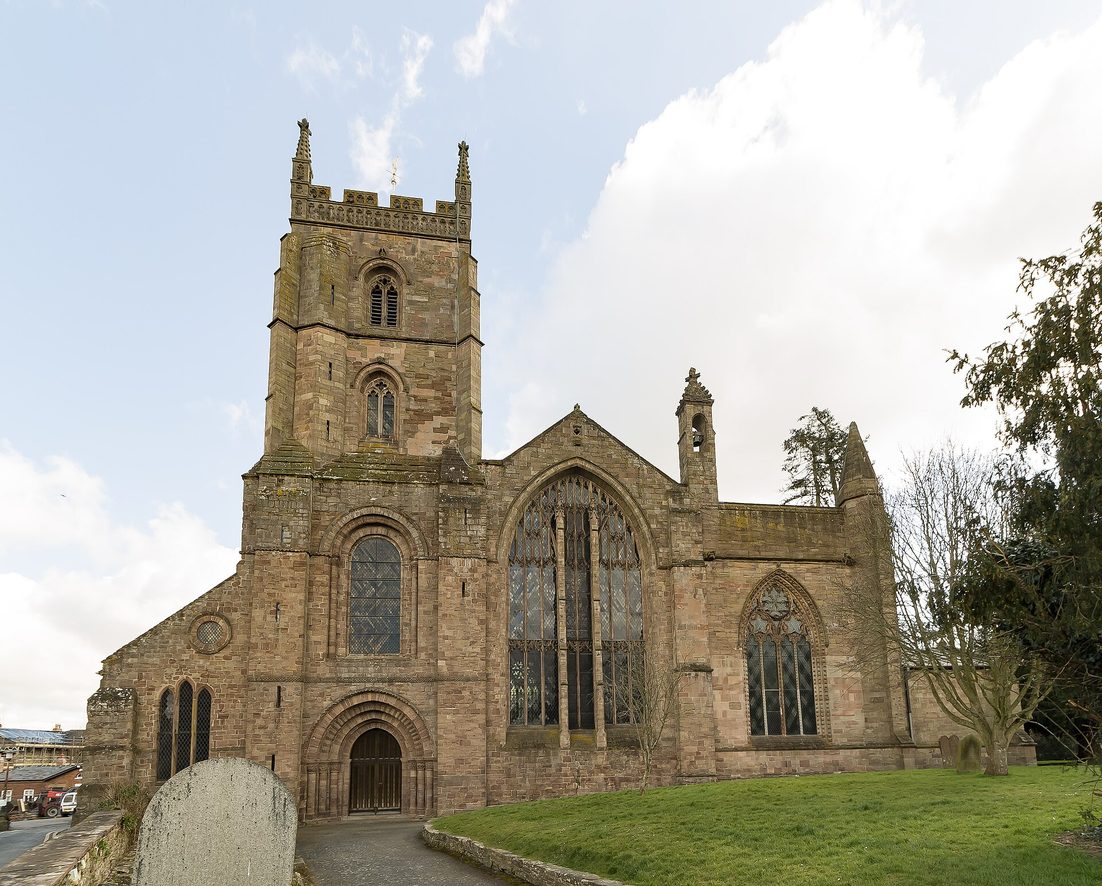
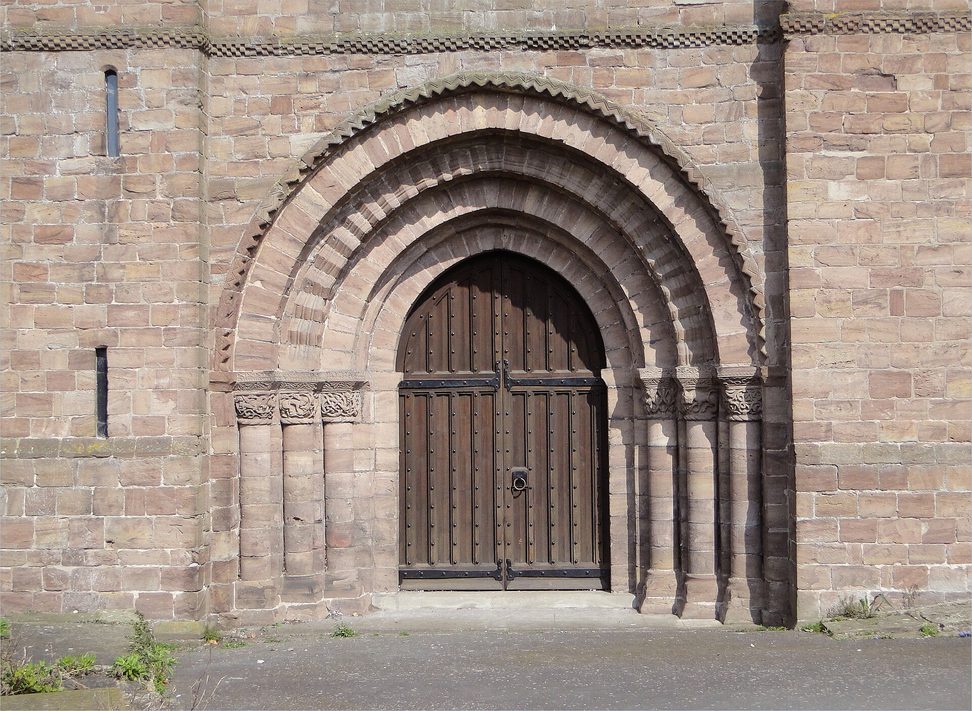
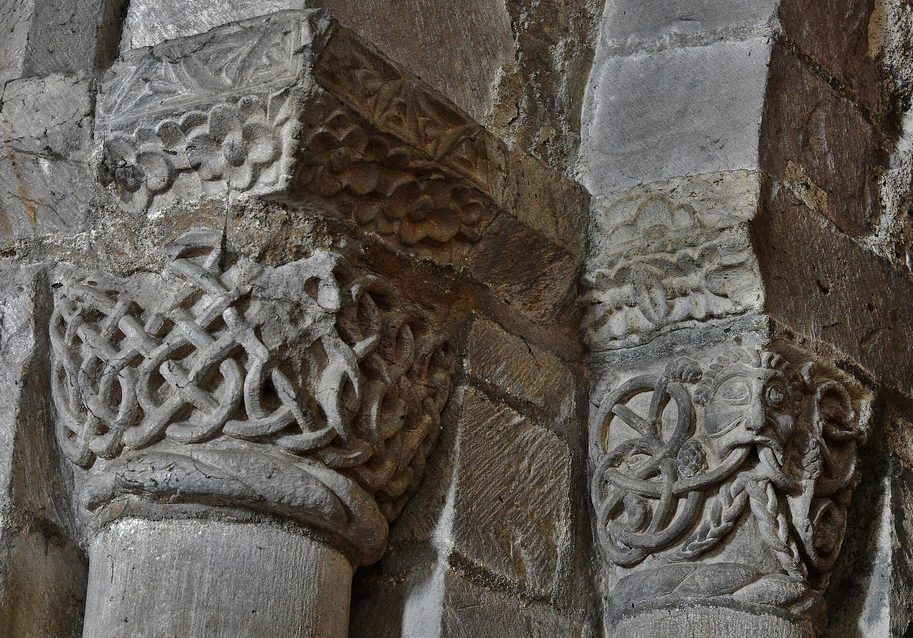
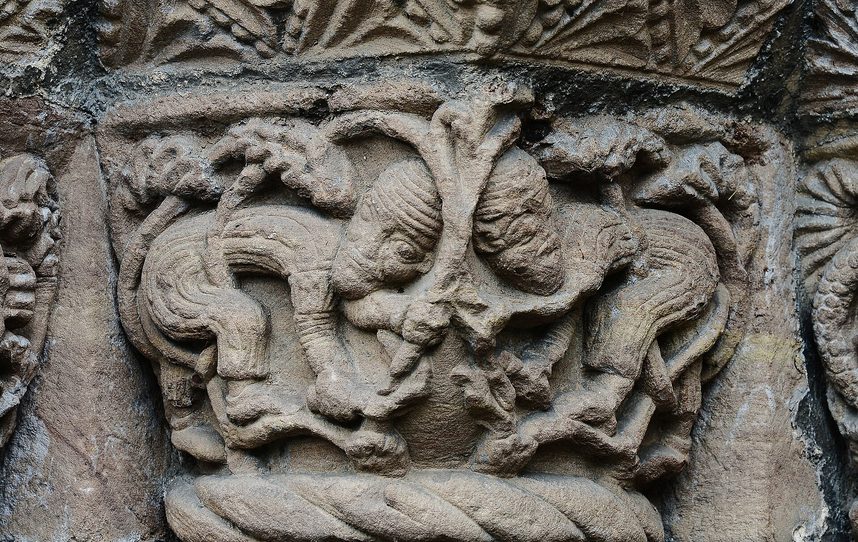
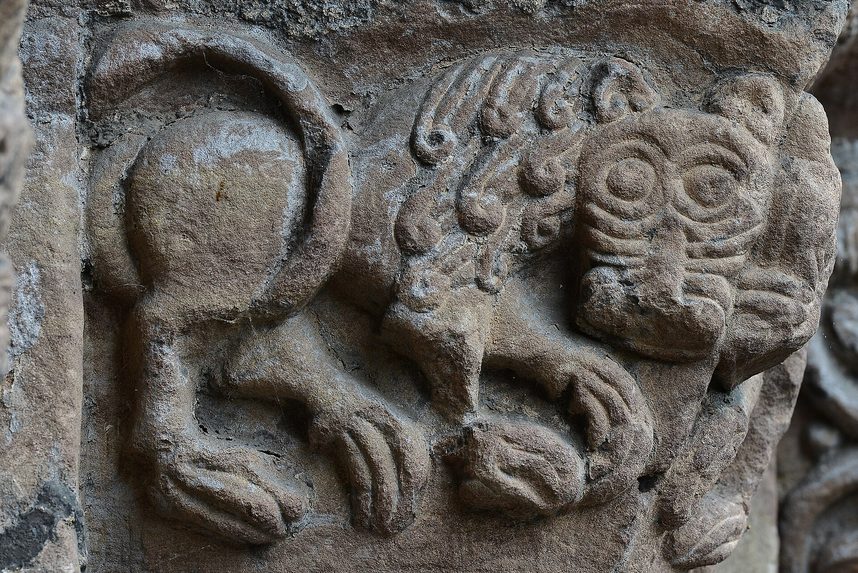
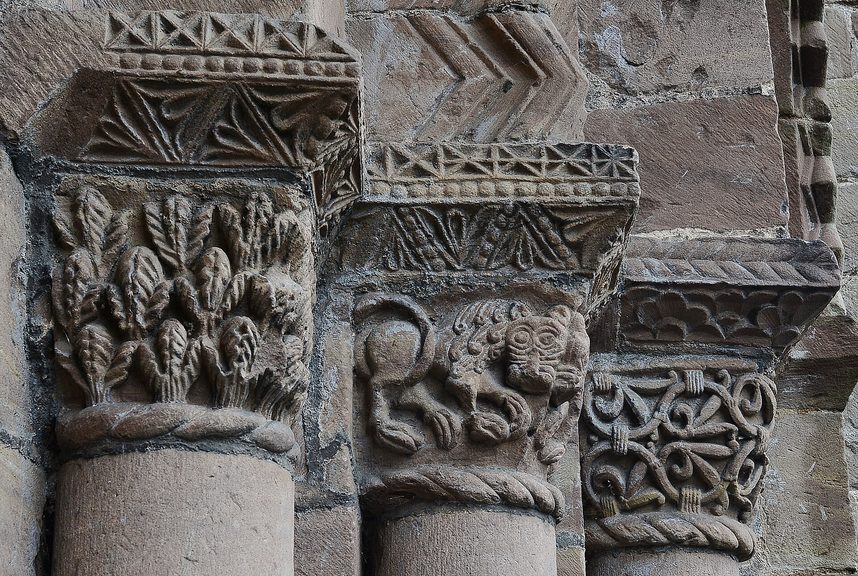
Start outside at the west front, below the tower. The Norman doorway has several receding orders of mouldings with chevron, and its capitals were carved in the mid-twelfth century by the sculptors known as the Herefordshire School, who also worked at Kilpeck and Shobdon. Look for doves, snakes, lions, a Green Man with foliage pouring from his mouth, small figures among plants (often described as men tending vines or harvesting) and a figure wrestling a lion, usually read as Samson. The carving is best seen from outside, in good light.
The tower and the south side
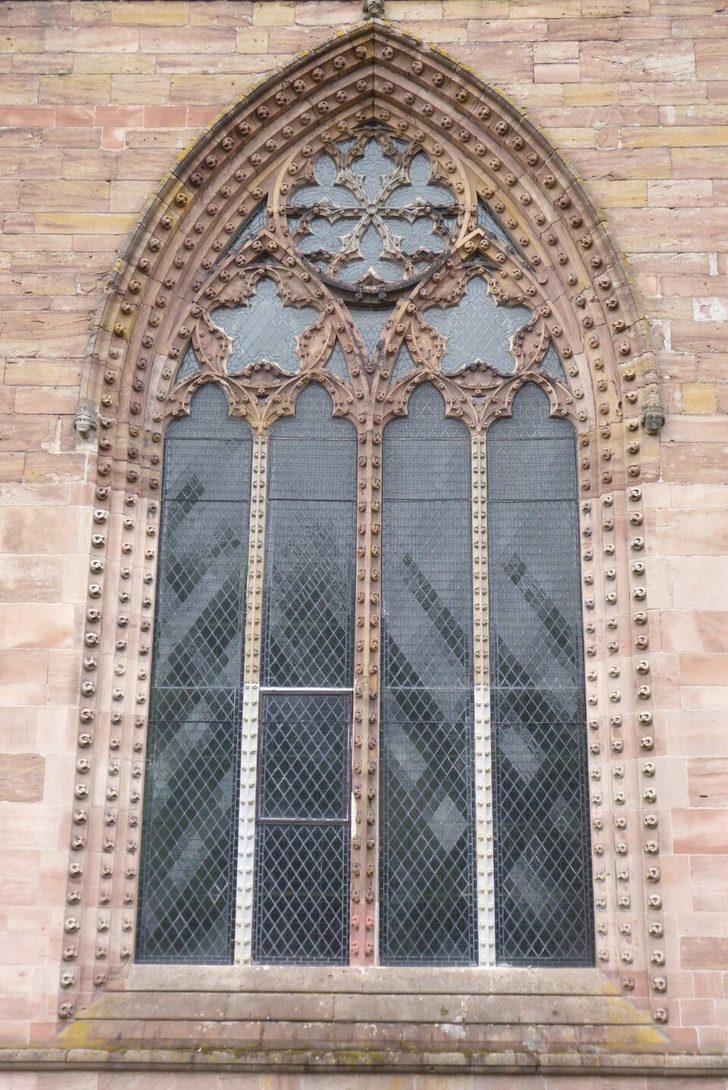
The tower is Norman in its lower stages, with upper stages of the fifteenth century, when the great west window of the parish nave was also made. Walk round the south side: the five big Decorated windows of the fourteenth-century aisle are studded with ballflower, the small carved balls typical of the period, and there is a sanctus bellcote on the nave wall and a rainwater head dated 1668. The ten bells include eight cast in 1755 by William Evans of Chepstow, said to have been brought up the Wye and the Lugg by barge.
The Norman nave
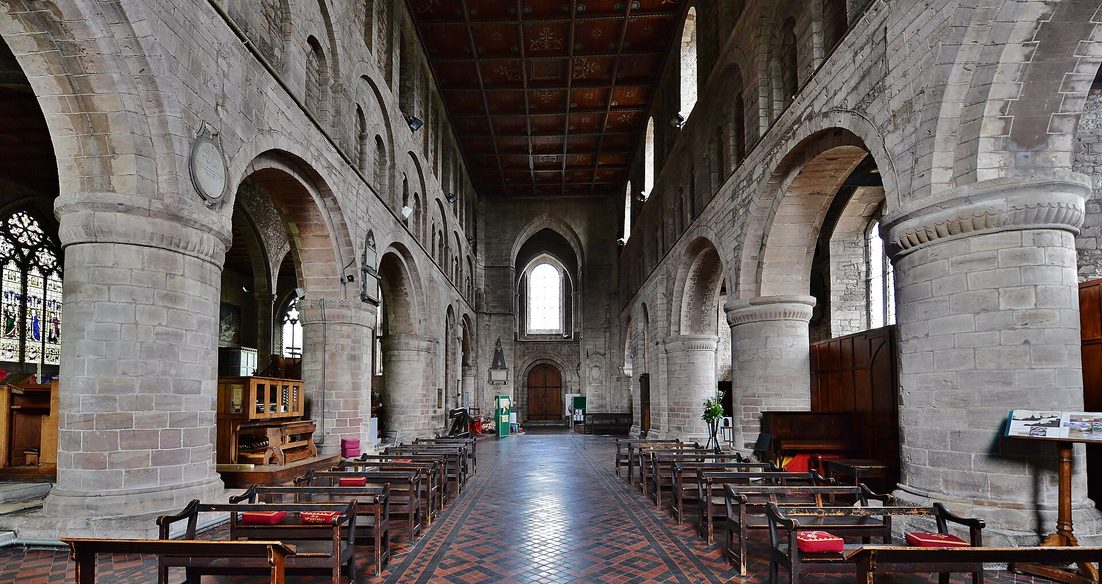
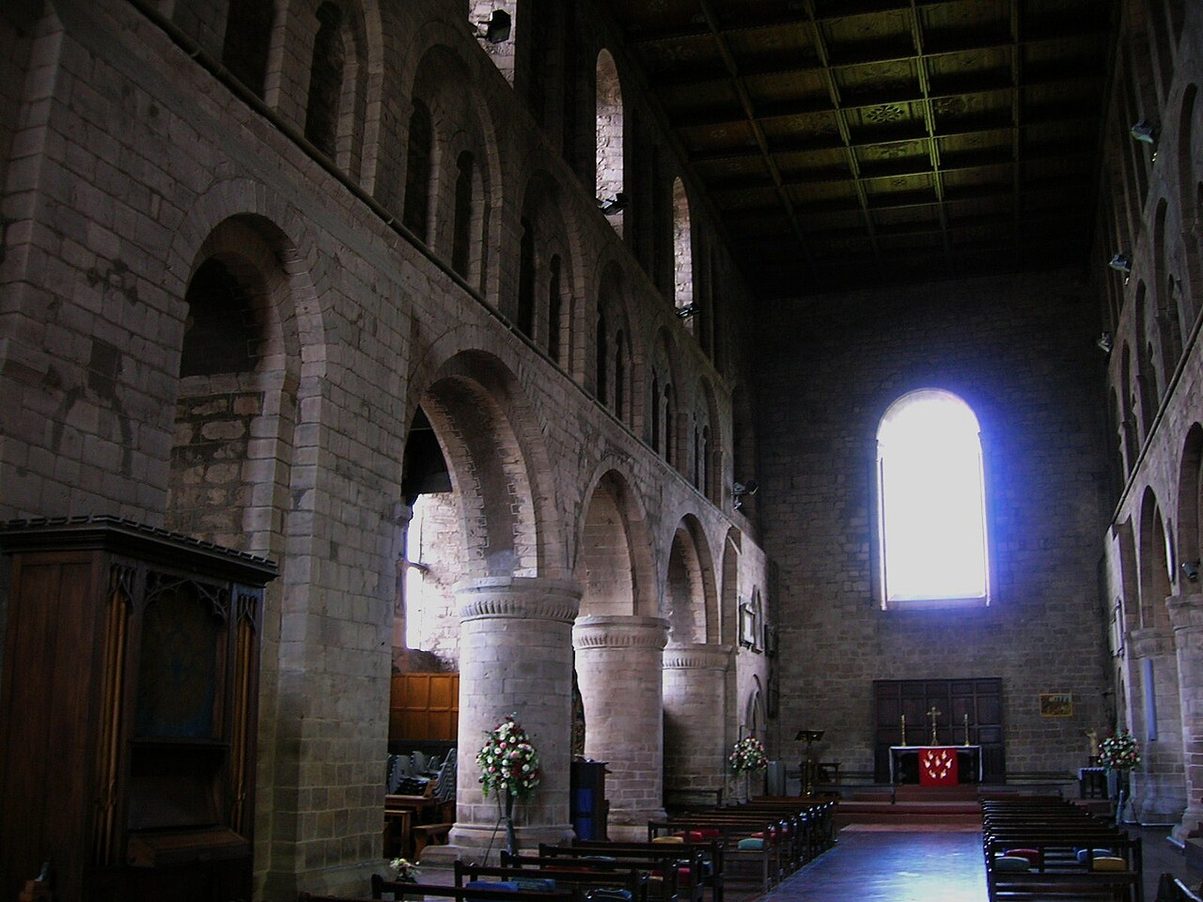
Inside, the oldest part is the north, Norman nave: massive round columns and round arches, with a triforium of smaller openings above and faint twelfth-century painted decoration high on the walls. The bays alternate in strength, and masons’ marks of the twelfth and fifteenth centuries can be found in the stonework. The monks’ choir lay beyond its east end, where the church now stops.
The ducking stool
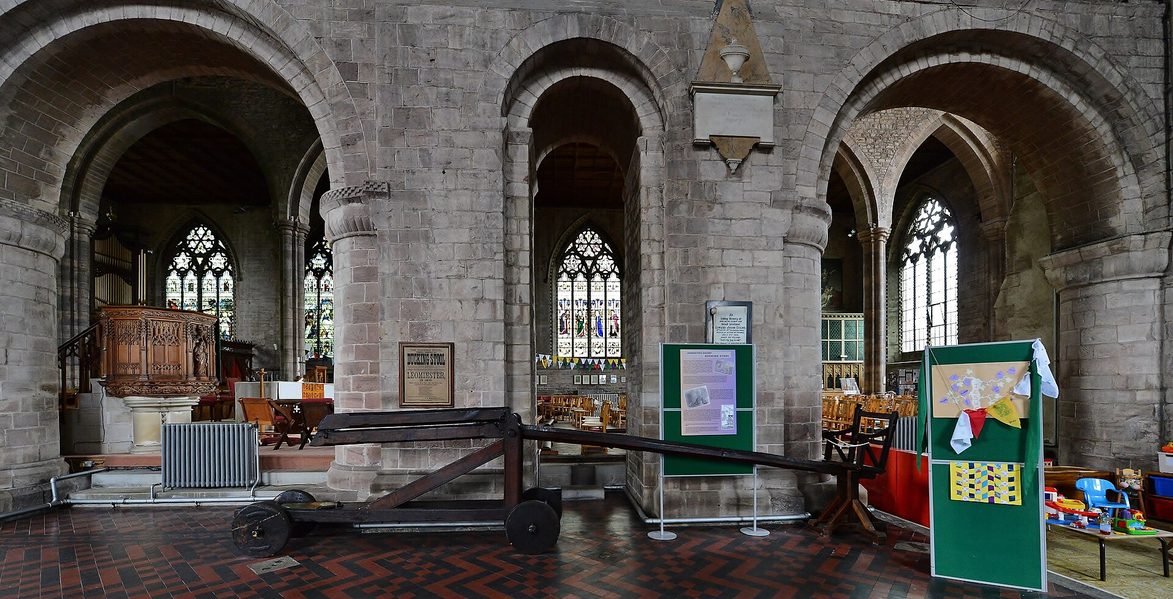
In the Norman nave stands the ducking stool, a chair on a long beam mounted on a wheeled carriage, used to duck women accused of scolding in the river. It came to the Priory in 1875, and tree-ring dating is reported to place its timber in the late seventeenth century. A woman named Jenny Pipes is recorded as ducked in 1809; in 1817 Sarah Leeke was wheeled round the town in it, but the river was too low for the ducking.
The parish nave and the south aisle
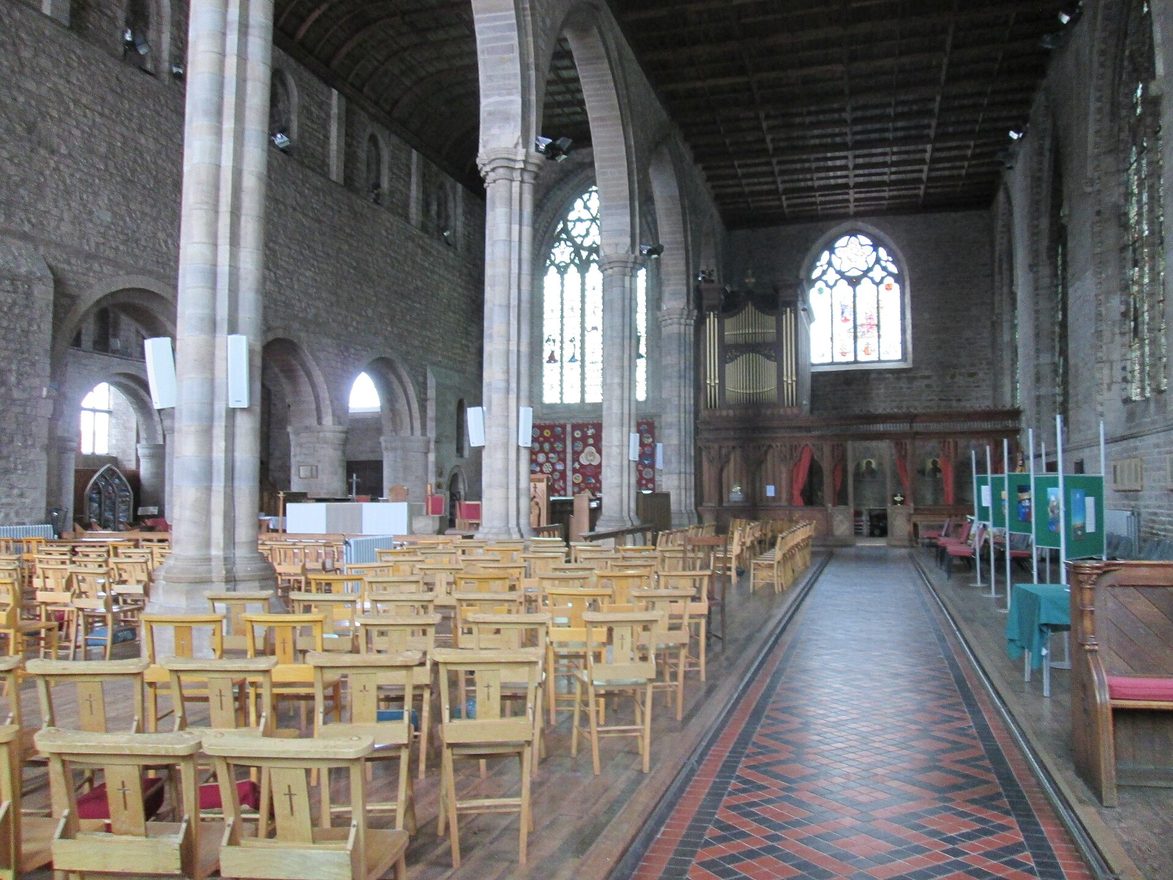
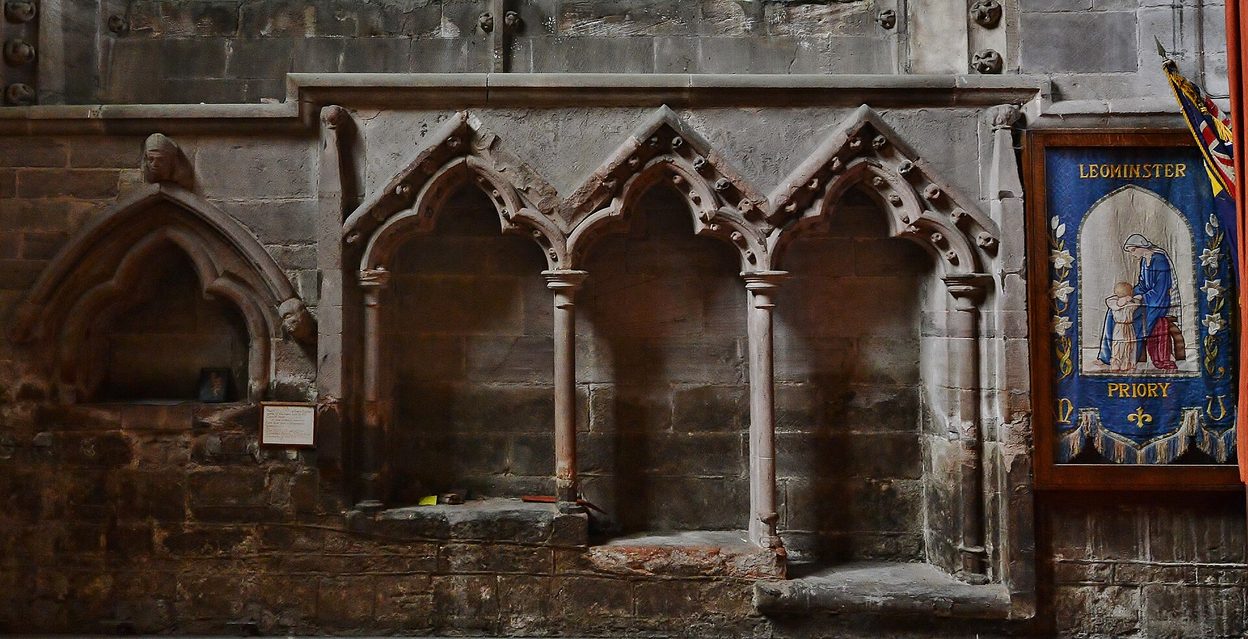
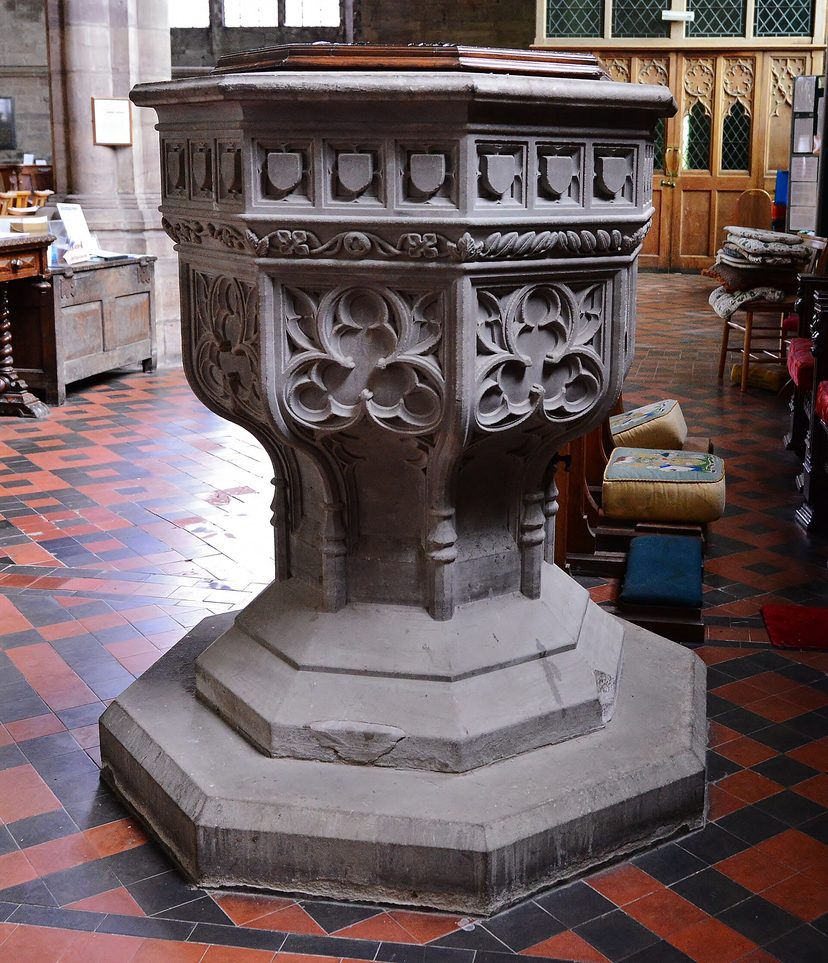
Step through into the light, wide parish nave of 1239, furnished with chairs and benches rather than fixed pews; Scott’s arcade replaced the columns put in after the fire of 1699. The stair to the lost medieval screen can still be seen. In the early fourteenth-century south aisle, now the Lady Chapel at its east end, are a thirteenth-century piscina and three sedilia, the priests’ seats, decorated with ballflower. The octagonal font stands on a tall base. In the west bay of the north aisle, now used as a vestry and not always open, is a wall painting of about 1275 of the Wheel of Life.
The glass and the organ
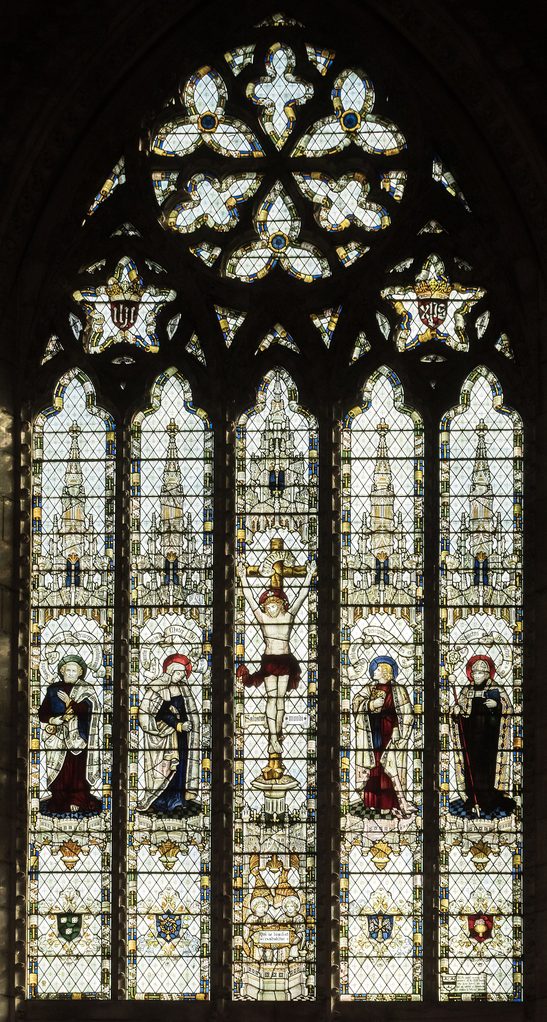
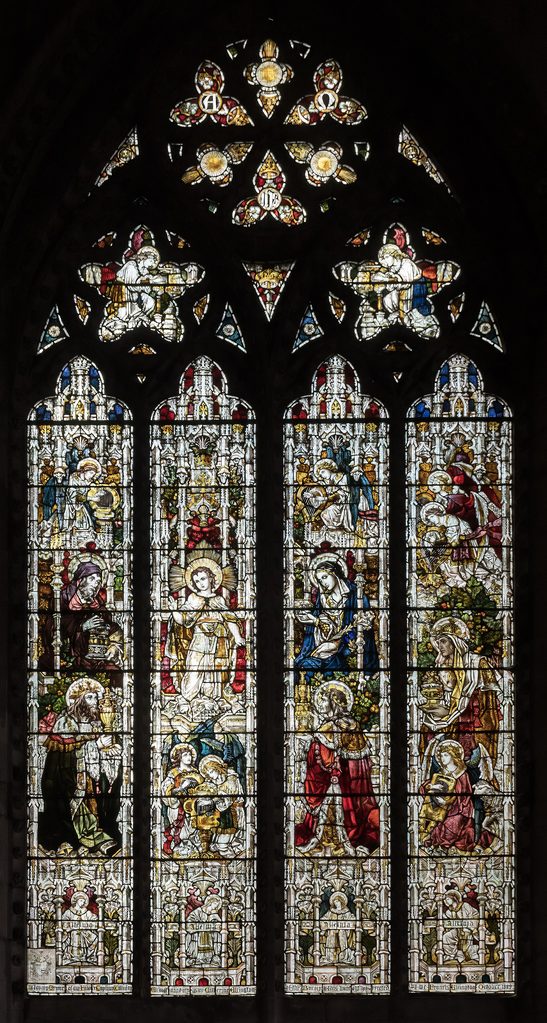
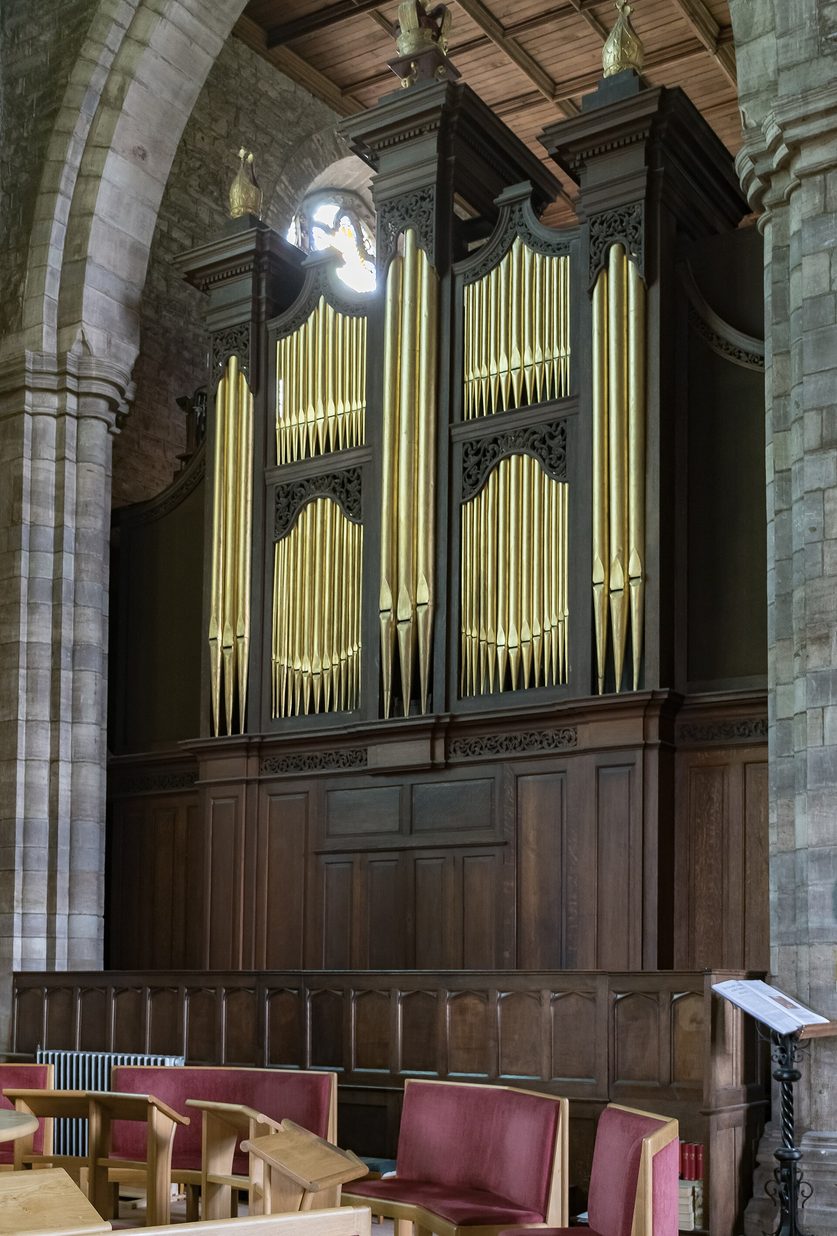
The glass is Victorian and later. The firm of Charles Eamer Kempe made windows in the south aisle in 1898 and 1903 and the east window of 1922, a Crucifixion with saints; there is also a Madonna and Child of 1889 by William Francis Dixon and a Presentation in the Temple of 1938 by Geoffrey Webb. The organ, built by Nicholson in 1924 and restored in 2015–16, keeps the case of its eighteenth-century predecessor.
Getting there
The Priory is on the north-east side of Leominster town centre, off Church Street. Leominster station, on the Transport for Wales line between Hereford and Shrewsbury, is under a mile away. Yeomans bus 492 runs from Hereford, about 12 miles south, roughly hourly on weekdays (check times, especially at weekends). There is no parking beside the church; use the pay-and-display car park in Broad Street, which has a footpath to the church. Grange Court, the timber-framed market house of 1633 by John Abel, stands a short walk away and has a heritage centre and café (Monday to Saturday, 10am to 4pm, closed bank holidays). Leominster Museum is closed for the winter until 20 March 2027. Berrington Hall (National Trust) is about four miles to the north.
Where to stay
Leominster has hotels and guest houses; Hereford, about 12 miles south, has the most choice.
This link goes to Booking.com. This site earns nothing from it at present — it is here because it is the quickest way to check what is actually available.
Don’t miss
- The west doorway Herefordshire School carving.
- The Norman nave Round columns of the twelfth century.
- The ducking stool On its wheeled carriage.
- The sedilia Ballflower in the south aisle.
Insider tips
Come for the Christmas Tree Festival. In 2026 it opens on 4 December and runs into early January, usually 10am to 4pm (check for Christmas closures).
Ask about the Wheel of Life. The thirteenth-century wall painting is in a vestry that is not always open, so ask if anyone is on duty.
Follow the carvers. The same school of sculptors carved Kilpeck church, south-west of Hereford.
Common questions
Is Leominster Priory free to visit?
No admission charge is listed; donations are welcome.
When is it open?
The church says it is usually open daily from about 10am to 4pm, but may close for special events; other listings give 9am or 9.30am to 4pm.
What is the ducking stool?
A chair on a long beam, mounted on wheels, used to punish women accused of scolding by ducking them in the river. It has been kept in the Priory since 1875; tree-ring dating is reported to place its timber in the late seventeenth century.
Why is the church so wide?
Because the monks and the parish each had their own nave. The Norman nave belonged to the monastery; the parish built a second nave alongside it in the thirteenth century and a wide aisle in the fourteenth. After the Dissolution the monastic east end was pulled down, but the parish kept all three.
Who carved the west doorway?
Sculptors of the so-called Herefordshire School, whose work is also found at Kilpeck and Shobdon. The section on the west doorway above describes what to look for.
More English churches
- Kilpeck Church — more Herefordshire School carving
- Hereford Cathedral — the cathedral of the diocese
- St Laurence’s, Ludlow — a great parish church to the north
See all the cathedrals and churches worth visiting in England →